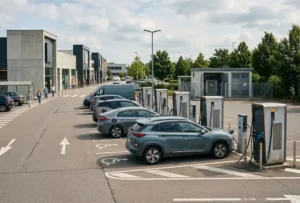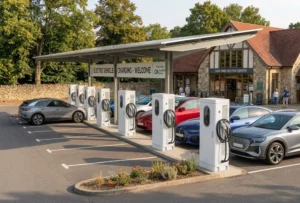
When evaluating level 1 vs level 2 vs level 3 charging, the core differences lie in power output, charging speed, grid installation requirements, total equipment cost, and primary business applications. Level 1 provides baseline AC charging via standard wall outlets for overnight residential use, Level 2 delivers faster AC charging ideal for daily home charging and commercial properties, while Level 3 (DC fast charging) utilizes direct current to deliver ultra-fast power suited for public highway hubs and commercial fleet turnarounds.
Picking the wrong charging architecture is an expensive mistake. As electrical engineers working on site infrastructure, we see property owners drop tens of thousands of dollars upgrading transformers for Level 3 chargers when a smart Level 2 setup would have handled their turnover just fine. In this guide, we break down the operational engineering behind every level—comparing charging power, speed, infrastructure footprint, equipment cost, and exact ROI scenarios—so you can invest in the right gear without burning cash.
Level 1 vs. Level 2 vs. Level 3 Charging: Which EV Charger Is Right for You?
Level 1 vs. Level 2 vs. Level 3 Charging: What Is the Difference?
At its core, the choice between level 1 vs level 2 vs level 3 charging for EVs boils down to how fast electrical energy moves from the power grid into a vehicle’s lithium-ion battery pack. Rather than locked figures, these categories represent distinct engineering tiers defined by input voltage, current capacity, and AC-to-DC conversion location.
| Feature | Level 1 Charging | Level 2 Charging | Level 3 Charging | Operational Impact / Buyer Benefit |
|---|---|---|---|---|
| Charging Type | AC (Alternating Current) | AC (Alternating Current) | DC (Direct Current) | DC bypasses onboard chargers, enabling high-speed power delivery. |
| Typical Power | 1.3 kW – 1.9 kW | 3.7 kW – 22 kW | 50 kW – 480 kW+ | Higher power output sharply reduces vehicle downtime for active fleets. |
| Charging Speed | Slow (3-5 miles range/hr) | Faster (12-60 miles range/hr) | Fastest (100+ miles in 15 mins) | Level 2 satisfies 8-hour dwell parking; Level 3 enables high vehicle turnover. |
| Typical Location | Single-family homes | Home, Workplace, Hotels, Retail | Highways, Public Hubs, Commercial Fleets | Matching charger location to parking dwell times optimizes initial CAPEX. |
| Equipment & Install Cost | Lowest ($0 – $300) | Moderate ($500 – $6,000) | High ($30,000 – $150,000+) | Level 2 deployment allows multi-port expansion without immediate utility upgrades. |
Note: Output ratings vary based on country grid voltage, vehicle onboard rectifiers, and thermal conditions. Always verify local electrical service capacity prior to equipment deployment.
What Is a Level 1 EV Charger?
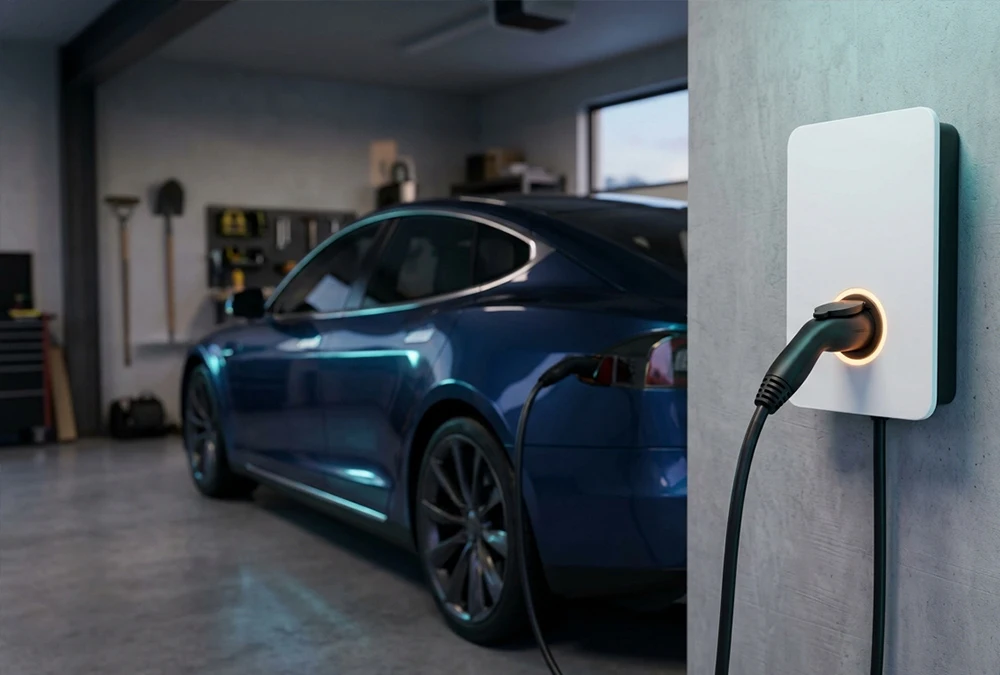
A Level 1 EV charger is the most straightforward cordset available, plugging straight into standard household wall outlets. While convenient, it serves limited commercial purpose due to its slow energy transfer.
How Level 1 EV Charging Works
Grid AC power travels through a portable cordset into the vehicle’s onboard converter. The vehicle converts AC to DC to charge the battery pack. Because standard outlets cap current at 12A to 15A on a 120V line (in North America), available EV charger power levels remain minimal, making energy transfer deliberate and slow.
Level 1 EV Charger Power and Charging Speed
Outcomes depend on battery pack size and thermal management. Typically operating between 1.3 kW and 1.9 kW, a Level 1 unit delivers roughly 3 to 5 miles of replenishment per hour. Charging time depends on vehicle battery capacity, onboard charger efficiency, state of charge, and available charging power.
Level 1 EV Charging Connectors and Plugs
In North American setups, Level 1 uses a standard NEMA 5-15 wall plug connecting to an SAE J1772 inlet on the vehicle side. International markets use regional wall plugs tied to Type 2 or localized cordsets.
How Long Does Level 1 Charging Take?
A typical EV with a 60 kWh pack may need 40 to 50 hours to charge completely from empty. It is designed for overnight top-ups rather than fast turnarounds.
Where Is Level 1 Charging Used?
- Single-family residential garages for low-mileage drivers.
- Emergency backup charging kept in the vehicle trunk.
- Long-term airport storage facilities where cars sit idle for days.
Advantages of Level 1 EV Charging
Zero equipment installation cost when an accessible outlet exists. It exerts minimal demand stress on building sub-panels.
Disadvantages of Level 1 EV Charging
Extremely slow. It fails to support high daily driving needs, commercial fleets, or customer turnover.
What Is a Level 2 EV Charger?
Deploying a Level 2 EV charger represents the sweet spot for commercial real estate, multi-family housing, and workplace infrastructure. Operating on split-phase 208V-240V or 400V three-phase supplies, these units strike a balance between deployment cost and charging performance.
How Level 2 EV Charging Works
Grid AC power feeds a wall-box or pedestal-mounted AC charging station. The unit manages safety checks, communication protocols, and energy metering before passing AC current directly to the vehicle’s onboard rectifier.
Level 2 EV Charger Power and Charging Speed
Power outputs span from 7.2 kW (30A-32A single phase) up to 22 kW (32A three-phase). However, actual throughput relies heavily on vehicle specifications. A 22 kW AC charger does not necessarily mean every EV will charge at 22 kW; if a vehicle’s onboard converter limits intake to 11 kW, the surplus charger capacity goes unused.
Level 2 EV Charging Connectors
Common plugs include SAE J1772 across North America, Type 2 (Mennekes) across Europe, and NACS (North American Charging Standard) adapters gaining broad market adoption.
How Long Does Level 2 Charging Take?
Using the general calculation (Battery Capacity ÷ Actual Charging Power ≈ Theoretical Charging Time), a standard 60 kWh battery reaches full charge in roughly 5 to 8 hours on an 11 kW line—ideal for overnight hotel stays or full work shifts.
Where Is Level 2 EV Charging Used?
Level 2 dominates destinations with multi-hour dwell times: commercial offices, underground parking garages, hospitality venues, and residential complexes.
Advantages of Level 2 EV Charging
Lower initial CAPEX relative to DC equipment, easy integration with smart software platforms, and compatibility with dynamic load control systems.
Disadvantages of Level 2 EV Charging
Requires a dedicated electrical branch circuit and upgraded wiring. It remains too slow for rapid highway stops or fast-turnaround commercial fleets.
What Is a Level 3 EV Charger?
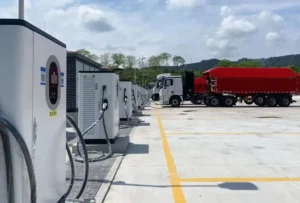
A Level 3 EV charger—widely recognized as a DC fast charger—is designed for rapid power delivery. By bypassing onboard converters altogether, Level 3 infrastructure supplies direct current straight into the vehicle battery, enabling fast turnarounds.
How Level 3 DC Fast Charging Works
High-voltage three-phase AC grid power enters internal liquid-cooled rectifier modules within the station cabinet. The converted high-power DC current feeds straight into the vehicle’s traction battery via liquid-cooled cables, governed by active CAN or PLC bus communication with the car’s Battery Management System (BMS).
Level 3 EV Charger Power and Charging Speed
Outputs range from 50 kW up to 480 kW+. However, a higher charger rating does not guarantee that the vehicle will always charge at that power. Battery voltage, internal cell temperature, state of charge (SOC), and BMS charging curve limits dictate actual real-time power delivery.
Level 3 EV Charging Connectors
Level 3 hardware requires specialized high-amperage connectors built for thermal safety:
| Region | Common DC Fast Charging Connectors |
|---|---|
| North America | CCS1 / NACS (SAE J3400) |
| Europe | CCS2 |
| Japan | CHAdeMO |
| China / Global Export | GB/T / ChaoJi standard |
How Long Does Level 3 DC Fast Charging Take?
DC charging operates fastest when SOC is low (e.g., 10% to 80%). Power throttles down significantly above 80% to protect cell chemistry. Expect a modern 180 kW charger to add 150+ miles of range in 15 to 20 minutes.
Where Is Level 3 Charging Used?
Highway corridors, public rapid charging hubs, commercial logistics depots, bus transit terminals, and high-turnover retail sites.
Advantages of Level 3 DC Fast Charging
Delivers quick vehicle turnarounds, supports long-distance travel, and reduces operational downtime for commercial fleets.
Disadvantages of Level 3 DC Fast Charging
High equipment costs, substantial utility transformer requirements, and potential demand charge penalties from power companies if deployed without intelligent load management.
Level 1 vs. Level 2 vs. Level 3 Charging Cost
When calculating total cost of ownership (TCO) for commercial level 2 vs level 3 EV chargers, buyers often focus strictly on initial hardware quotes. That approach can lead to unexpected budget overruns. As site planners, we break down deployment costs into three core buckets: hardware, utility infrastructure upgrades, and demand charge management.
Level 1 Charging Cost
Minimal. Equipment runs between $150 and $300 per portable unit with negligible installation expense if standard wall outlets are available.
Level 2 Charging Cost
Hardware ranges from $500 for single home units up to $3,500+ for commercial dual-port wall-boxes with RFID and OCPP payment controls. Installation costs typically range from $1,000 to $5,000 depending on trenching distances, conduit runs, and sub-panel additions.
Level 3 Charging Cost
Level 2 vs level 3 charging cost metrics differ significantly. A commercial 120 kW to 240 kW DC fast charger cabinet ranges from $30,000 to $90,000+ for hardware alone. Civil engineering, pad foundation work, step-down transformer additions, and utility interconnections can add another $40,000 to $100,000 per site.
💡 Engineering Reality Check: Why the Cheapest Option Isn’t Always the Most Cost-Effective
Buyers frequently ask: “Why shouldn’t I just buy cheap Level 2 chargers or jump straight to a single 180 kW DC charger?”
Here is the trade-off: Buying low-cost unmanaged Level 2 units without dynamic load balancing limits your expansion, while dropping a lone DC charger onto a weak grid connection risks high peak demand charges every time a vehicle plugs in. Select your hardware based on dwell times, transformer headroom, and total return on investment—not just the initial sticker price.
Which EV Charger Level Is Best for Commercial Applications?
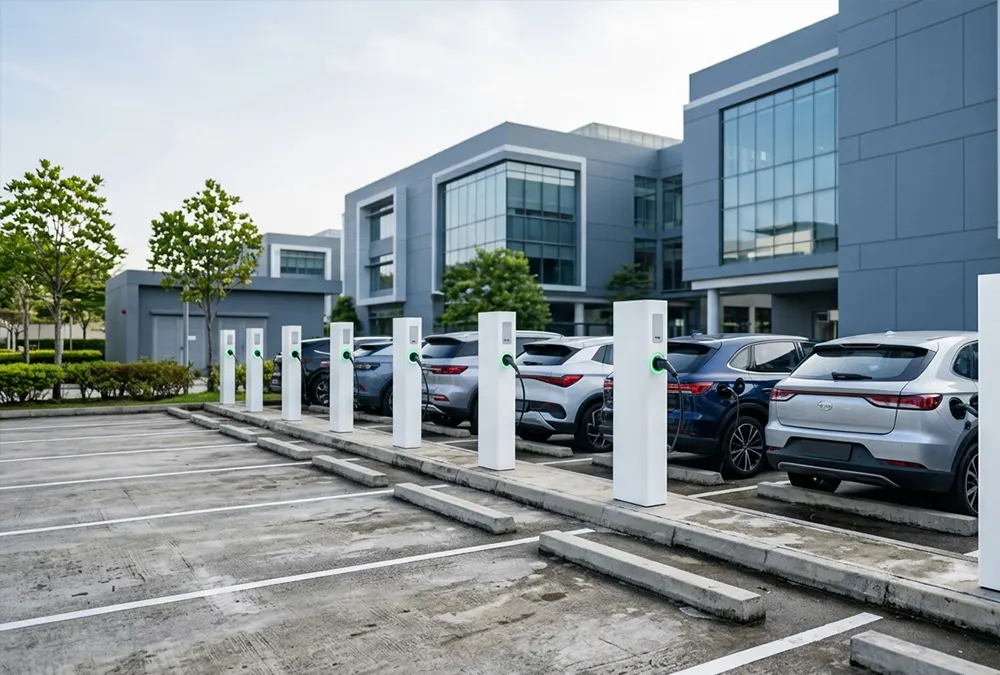
Determining the best EV charging level for businesses requires matching charger speed to typical driver parking times. Installing ultra-fast DC hardware where vehicles park for eight hours wastes capital; conversely, relying on Level 2 chargers along a high-speed highway corridor will frustrate drivers.
| Commercial Application | Recommended Level | Primary Reason | Strategic Business Advantage |
|---|---|---|---|
| Hotels & Hospitality | Commercial Level 2 | Guests park overnight (7-10 hrs) | Low CAPEX; charges multiple vehicles overnight without costly electrical service upgrades. |
| Workplaces & Corporate Parks | Commercial Level 2 | Employees park for 8-hour shifts | Supports corporate ESG goals while utilizing workplace load sharing during day hours. |
| Retail Hubs & Supermarkets | Level 2 + Level 3 Hybrid | Dwell times vary (30 mins to 2 hrs) | Level 2 suits longer shoppers; Level 3 attracts high-value drivers needing a quick boost. |
| Logistics & Commercial Fleets | Level 3 DC Fast Charging | Tight delivery schedules & fast turns | Maximizes fleet uptime, enabling multi-shift vehicle utilization. |
According to recent sector updates, global electrification trends highlight that over 75% of commercial public installations rely on robust Level 2 infrastructure for cost control, while high-power DC hubs are scaling along transport corridors to serve heavy-duty fleets and rapid transit.
Overcoming Grid Constraints: Commercial BESS Solutions for EV Hubs
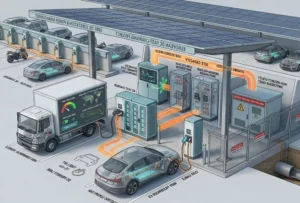
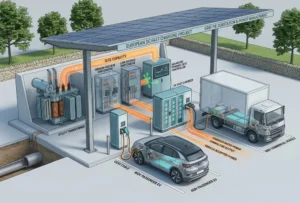
A common challenge with deploying multiple high-power chargers is grid capacity limits. When local utilities quote massive fees and multi-month delays for transformer upgrades, integrating a Battery Energy Storage System (BESS) provides an effective alternative.
By deploying an industrial energy storage system alongside your charging equipment, you can store lower-cost power off-peak or capture solar generation to supplement high peak loads. This peak-shaving approach lets you run high-capacity chargers without triggering severe utility demand charges.
| BESS Capacity Rating | Core Architecture & Battery Tech | Target Application | Operational Advantage / Buyer Benefit |
|---|---|---|---|
| 100 kWh Industrial Cabinet | Integrated LFP (Lithium Iron Phosphate) liquid-cooled pack with onboard fire suppression | Small hotels, retail stores, local car dealerships | Buffers peak draw from 2-4 Level 2 chargers, avoiding costly transformer replacement. |
| 261 kWh Commercial System | High-density outdoor IP55 LFP enclosure with smart HVAC thermal management | Workplace parks, larger hotels, highway service stations | Supports dual 120 kW DC fast chargers, reducing utility peak demand penalties. |
| 1 MWh Utility-Scale Container | Modular 20ft containerized LFP system with central EMS and bi-directional PCS | Logistics hubs, electric bus depots, public fast-charging plazas | Enables high-power fleet charging while enabling energy arbitrage and grid services. |
📘 Technical Breakdown: Battery Technology & Terminology
- LFP (Lithium Iron Phosphate): A battery chemistry known for thermal stability, safety, and long cycle life (6,000+ cycles), making it well-suited for stationary storage compared to standard NMC chemistries.
- EMS (Energy Management System): The control software that monitors real-time building electrical loads, solar output, and charger demand to automatically control battery charging and discharging.
- Peak Shaving: Discharging stored battery energy during high-demand periods to keep total grid draw below utility penalty thresholds.
Which EVs Use Which Charging Connectors?
Connector compatibility varies across vehicle models and global markets. Using standard physical inlets, vehicles adapt smoothly to their regional infrastructure.
J1772 (Type 1)
The long-standing standard for North American AC charging (Level 1 and Level 2). Fits nearly all non-Tesla EVs natively and works with Tesla vehicles via a simple plug adapter.
NACS (North American Charging Standard / SAE J3400)
Originally developed by Tesla, NACS handles both AC and DC charging through a single compact pin design. Major automakers in North America have transitioned to NACS inlets.
CCS1 & CCS2 (Combined Charging System)
CCS combines standard AC pins with two dedicated high-current DC pins below. CCS1 is widely used across North American DC networks, while CCS2 serves as the primary standard throughout Europe.
GB/T Standard
The national standard across China for both AC and DC charging systems, utilizing separate dedicated physical ports for AC and DC charging.
How to Choose the Right EV Charging Level
Choosing the proper setup comes down to evaluating four practical site factors:
- Choose Level 1 if: Vehicles remain parked for 24+ hours, daily driving is minimal, and zero installation budget is allocated.
- Choose Level 2 if: Cars sit parked for 2 to 8 hours, such as at hotels, workplaces, or residential complexes, providing a balance of charging speed and equipment cost.
- Choose Level 3 if: Driver dwell time is under 45 minutes, turnaround speed is critical, or you manage high-utilization commercial fleets along high-traffic corridors.
Frequently Asked Questions About Level 1, Level 2, and Level 3 Charging
Is Level 2 charging faster than Level 1?
Yes. Level 2 operates on 208V-240V power and delivers 3.7 kW to 22 kW, charging up to 5 to 10 times faster than a standard Level 1 outlet.
Is Level 3 charging the same as DC fast charging?
Yes. Level 3 refers to Direct Current (DC) fast charging, which supplies DC power directly to the vehicle battery pack, bypassing the onboard AC converter.
Which EV charging level is best for hotels?
Commercial Level 2 chargers are generally ideal for hotels. Because guests typically park overnight (7-10 hours), Level 2 provides a full charge cost-effectively without requiring expensive electrical service upgrades.
Can a Level 2 charger work on any electric vehicle?
Yes, provided the plug type matches or an appropriate adapter is used (such as J1772 to NACS). All standard production EVs support Level 2 AC charging.
Build the Right EV Charging Infrastructure for Your Site
Not sure whether your facility needs Level 2 wall-boxes, DC fast chargers, or a battery storage system to bypass grid bottlenecks? Tell us about your parking layout, electrical setup, and vehicle traffic goals—our engineering team will help design a solution tailored to your site.