Introduction
Managing modern factory energy is getting trickier. Spiking peak rates, sudden voltage drops, and carbon targets make old-school grid power a real financial bottleneck. This is why deploying a rugged industrial solar battery storage system is no longer just a green option—it is a critical tool to control your operational costs. By capturing cheap solar and shifting it to expensive peak hours, these commercial setups protect your assembly lines from sudden blackouts while slashing your monthly utility bills. Let’s dive into how industrial solar battery storage systems protect your cash flow and keep your machinery running 24/7.
What Is Industrial Solar Battery Storage?
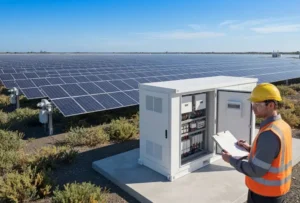
At its core, an industrial energy storage system is a heavy-duty battery setup. It pairs with onsite solar panels to capture, store, and dispatch electricity whenever your plant needs it most. It is the heart of any modern smart factory energy network.
Definition of Industrial Solar Battery Storage
An industrial solar battery storage system is a utility-scale or behind-the-meter setup. It uses high-capacity battery cells, smart inverters, and climate control to manage massive electric loads. Unlike small residential batteries or simple commercial systems, these systems handle high three-phase voltages. They run heavy heavy-duty cycles day in and day out under harsh factory conditions.
| Feature | Residential Systems | Commercial (C&I) Systems | Industrial Battery Storage | What This Means for Industrial Buyers |
|---|---|---|---|---|
| Typical Capacity | 5 kWh – 30 kWh | 50 kWh – 200 kWh | 250 kWh – 5 MWh+ | Handles heavy machinery startups and multi-megawatt factory baseloads without tripping. |
| Voltage Profile | Single-Phase (120V/240V) | Three-Phase (208V/480V) | High-Voltage Three-Phase (480V/1000V+) | Directly integrates with high-power industrial grids and heavy distribution machinery. |
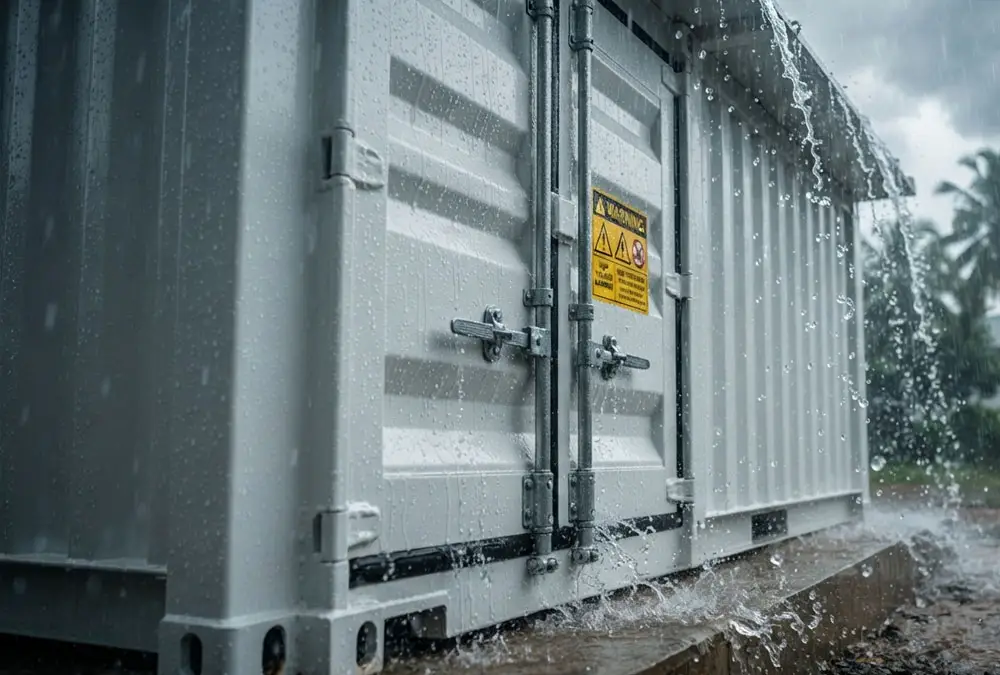
| Enclosure & Cooling | Basic wall-mount, natural cooling | Cabinet, simple HVAC or air cooling | Heavy outdoor containers with advanced liquid cooling | Guarantees stable continuous power and maximum safety under 24/7 high-load operations. |
How Industrial Solar Battery Storage Works
The system acts as an intelligent buffer between your solar panels, your factory loads, and the public grid. The power flows smoothly through a simple, automated process:
- The Generation Phase: Your rooftop solar PV array generates clean DC power from daylight.
- The Routing Phase: A Power Conversion System (PCS) converts this DC power to AC for your machinery.
- The Storage Phase: Any excess solar energy goes straight into your industrial battery storage bank instead of being wasted back to the grid.
- The Peak Shaving Phase: When grid rates spike or during sudden blackouts, the batteries discharge immediately. They power your high-draw factory equipment, keeping your utility bills low and your operations running.
Industrial Solar Battery Storage Technologies
Not all batteries are built the same way. For demanding factory settings, the chemistry you select directly impacts your long-term return on investment, site safety, and overall system lifetime.
Lithium-ion Battery Storage (LFP)
Lithium Iron Phosphate (LFP) is the undisputed king of modern industrial solar battery storage solutions. It is the safest, most stable, and most cost-effective chemistry on the market today. Here is why global heavy industries rely almost exclusively on LFP:
- High Thermal Stability: LFP cells resist thermal runaway even under high operating temperatures, making them incredibly safe.
- Long Cycle Life: These cells deliver 6,000 to 10,000 complete charge cycles before dropping to 80% capacity. This translates to over 15 years of reliable daily cycling.
- Low Maintenance: No water top-offs or periodic deep discharges are needed. The automated battery management system (BMS) handles everything.
- Eco-Friendly: LFP chemistry contains no toxic cobalt or nickel, making it much easier to recycle at the end of its life.
Other Industrial Energy Storage Technologies
While alternatives exist, they rarely match the sheer scalability of a modern industrial lithium battery storage setup:
- Flow Batteries: Great for very long-duration discharge (8 hours+), but they take up a massive physical footprint and have low round-trip efficiency.
- Lead-Acid Batteries: Inexpensive upfront, but they degrade fast (1,500 cycles max) and require regular maintenance, making them highly impractical for heavy industrial cycling.
- Flywheel & Compressed Air: Excellent for rapid, short grid-stabilization bursts, but they are too complex and expensive for simple factory energy bill optimization.
For modular, plug-and-play factory rollouts, LFP remains the absolute industry gold standard.
Benefits of Industrial Solar Battery Storage
Installing a commercial battery energy storage system is a strategic business upgrade that directly protects your bottom line. Here is how it delivers real economic value:
Reduce Industrial Electricity Costs
Most industrial utility bills are split into consumption charges (kWh) and demand charges (kW). Demand charges can make up over 50% of your total bill, based on your single highest 15-minute spike of the month. Our systems use intelligent peak shaving battery storage strategies to discharge when your machinery spikes, keeping your grid demand flat and saving you thousands of dollars each month.
Improve Power Reliability
A single voltage sag or brief power outage can stall production lines, ruin raw materials, and cost your business tens of thousands of dollars in downtime. Modern industrial solar battery storage systems provide ultra-fast backup power. They switch over in milliseconds to keep your critical control systems, assembly lines, and heavy machinery running smoothly during grid failures.
Increase Renewable Energy Utilization
Without a battery, excess daytime solar power is often sent back to the grid for pennies on the dollar. A high-capacity solar energy storage solutions setup lets you save every kilowatt-hour your panels produce. You can use that cheap solar energy at night or during peak afternoon rate windows instead of buying expensive grid power.
Generate Additional Revenue
Your BESS can also act as an active revenue generator. Depending on your local grid market, you can participate in demand response programs. This means the utility pays you to reduce your grid draw or feed stored power back into the system when the grid is stressed.
Support Sustainability Goals
Reducing your carbon footprint is key to keeping multinational clients and meeting strict ESG targets. Storing and using your own clean solar energy is the most direct, verifiable way to cut Scope 1 and Scope 2 emissions for your manufacturing site.
How Industrial Solar Battery Storage Works Throughout the Day
An industrial BESS works quietly in the background 24/7, adapting to your factory’s production schedules and shifting utility rates:
08:00 – 16:00 (Daytime Solar Harvest & Charge)
Your solar panels produce peak energy. The system directs power straight to your active production lines. Any extra, unused solar power is routed to charge your battery bank rather than being sent back to the grid.
16:00 – 20:00 (Evening Peak Shaving & Discharge)
Grid electricity rates reach their highest point of the day. The smart controller pauses grid power and discharges your stored solar energy. This cuts out expensive demand charges and keeps your operating costs low.
20:00 – 08:00 (Night Operations & Standby)
The system supports any night shifts using remaining battery capacity or cheap off-peak grid power. It stands ready to instantly supply emergency backup power if the local utility grid goes down.
Industrial Solar Battery Storage Applications
From heavy manufacturing to cold-chain logistics, different industries use smart battery storage to solve their specific energy challenges:
- Manufacturing Plants: High-power machinery causes massive peak demands. Using industrial solar battery storage for manufacturing keeps voltage levels stable and shaves down expensive demand charges.
- Food & Beverage Processing: Continuous cooling loads require 100% reliable power. The BESS acts as an instant backup to prevent spoilages during sudden grid outages.
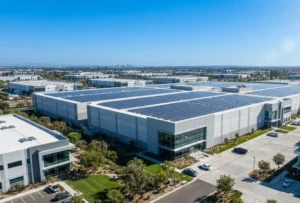
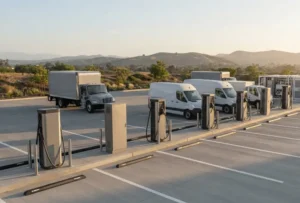
- Warehouses & Logistics Centers: Large, flat roofs are perfect for solar. Adding a battery lets these facilities charge electric delivery fleets overnight with clean energy generated during the day.
- Chemical & Pharmaceutical Sites: Even a millisecond power interruption can ruin a sensitive batch. High-speed industrial BESS units keep critical mixers and climate chambers running continuously.
How to Choose the Right Industrial Solar Battery Storage System
Selecting an industrial energy storage solution requires analyzing your specific plant layout, load profiles, and business goals. Focus on these core technical factors during your planning phase:
Choose the Right Battery Capacity
Your ideal battery size depends on your daily energy consumption profile. We offer modular, pre-configured industrial units designed for easy site integration and scaling:
| System Model | Usable Capacity | Continuous Output | Best Application Scenario | Key Benefits & Value for Buyers |
|---|---|---|---|---|
| ESS-100K | 100 kWh | 50 kW | Small factories, metal workshops, and commercial offices. | Low initial investment; easily fits into tight spaces to shave peak demand charges. |
| ESS-261K | 261 kWh | 125 kW | Medium-sized manufacturing plants and cold storage facilities. | Excellent balance of cost and power; easily runs critical assembly lines during short blackouts. |
| ESS-418K | 418 kWh | 200 kW | Heavy fabrication facilities and large logistics hubs. | High capacity allows for deep energy shifting and supports high-power EV charging fleets. |
| ESS-1000M | 1 MWh+ | 500 kW+ | Large energy-intensive industrial parks and chemical plants. | Complete microgrid foundation; enables maximum energy independence and solar self-consumption. |
Evaluate Battery Safety
Industrial settings require top-tier fire safety and system protection. Make sure any BESS you evaluate uses stable LFP chemistry and carries recognized safety certifications like UL 9540A, IEC 62619, and CE. Look for built-in, multi-stage fire suppression systems, such as clean-agent gas flooding and early aerosol detection at the cabinet level.
Scalability for Future Expansion
Your energy needs will likely grow as you add production lines or expand your facility. Choosing a modular system allows you to easily scale up. You can start with a single outdoor cabinet and add extra battery racks or containers later without needing to redesign your entire electrical room.
Energy Management System (EMS)
The hardware is only as good as the software controlling it. An advanced EMS uses smart algorithms to track local weather forecasts, monitor active factory loads, and analyze real-time utility rates. This ensures the system automatically charges and discharges at the most financially optimal times.
Why Choose Our Industrial Solar Battery Storage Solutions?
We build highly reliable, plug-and-play energy storage systems engineered for demanding industrial environments:
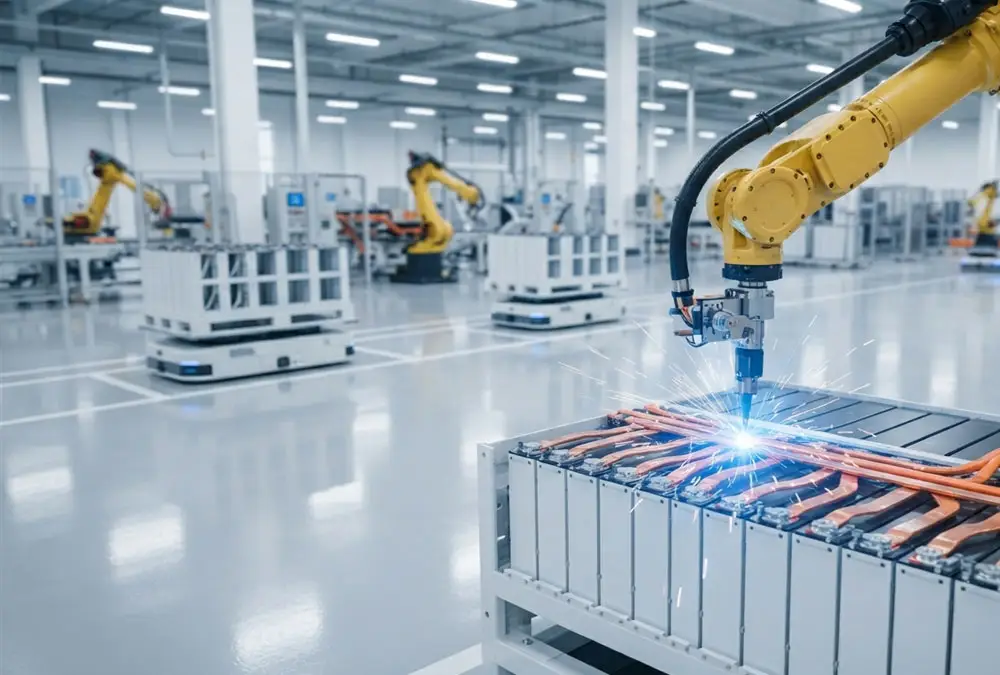
- Maximum Safety: We use high-grade LFP cells paired with multi-stage BMS protection and integrated liquid cooling to prevent overheating.
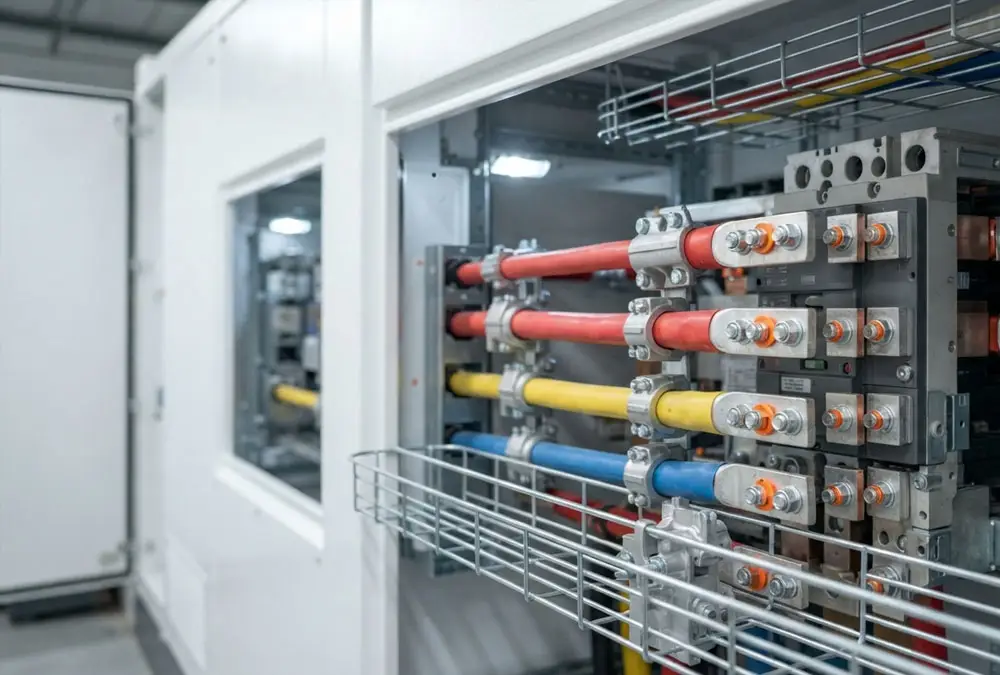
- Fully Integrated Design: Our outdoor cabinets arrive pre-wired with the battery racks, liquid cooling, HVAC, PCS, and smart EMS pre-installed for fast onsite setup.
- Global Certifications: Our systems are fully certified to major international standards, including IEC 62619, IEC 62477, CE, and UN38.3.
- Tailored Engineering: We analyze your factory’s 15-minute load profiles to build the most cost-effective BESS configuration for your business.
Industrial Solar Battery Storage FAQ
What is industrial solar battery storage?
It is a utility-scale, behind-the-meter battery system designed to store local solar generation and manage heavy factory electrical loads. It helps businesses reduce peak demand charges, provides backup power, and maximizes their solar investment.
How much does an industrial battery storage system cost?
Pricing varies based on your specific capacity requirements, site integration needs, and local grid code compliance. Generally, a high-quality industrial solar battery storage cost ranges from $180 to $280 per kilowatt-hour (kWh) for fully integrated, utility-scale outdoor cabinet systems.
How long do LFP batteries last?
High-quality LFP battery systems typically last 15 to 20 years. Our premium LFP cells are rated for over 6,000 complete charge cycles at 80% depth of discharge before showing any noticeable capacity loss.
Can battery storage work without solar panels?
Yes. The system can run as a standalone unit to shave peak demand charges. It charges from the public grid during cheap, off-peak hours and discharges during expensive peak windows to lower your bills.
How do I size an industrial battery storage system?
Our engineering team analyzes your historical utility bills and 15-minute load profile data. We then size the battery to match your peak power draws, daily solar generation curves, and critical backup load requirements.
Is industrial battery storage safe?
Yes, when designed properly. We use highly stable LFP chemistry, which has a very high thermal runaway threshold. Our outdoor cabinets also feature multi-layer BMS protection and automatic fire suppression systems to ensure safe daily operation.
What industries benefit the most from battery storage?
Heavy manufacturing, automotive assembly, food processing, plastics extrusion, and data centers see the fastest return on investment. Any facility with high demand charges or sensitive processes prone to outage losses will benefit immediately.
Can the system be expanded in the future?
Absolutely. Our outdoor storage cabinets feature a modular, plug-and-play architecture. This design allows you to easily scale up your power and capacity as your production plant grows.
Get a Customized Industrial Solar Battery Storage Solution
Ready to lower your factory demand charges and protect your production lines from sudden power outages? Tell us about your facility’s energy goals, and our application engineers will design a high-performance BESS layout tailored to your specific site loads.