Introduction
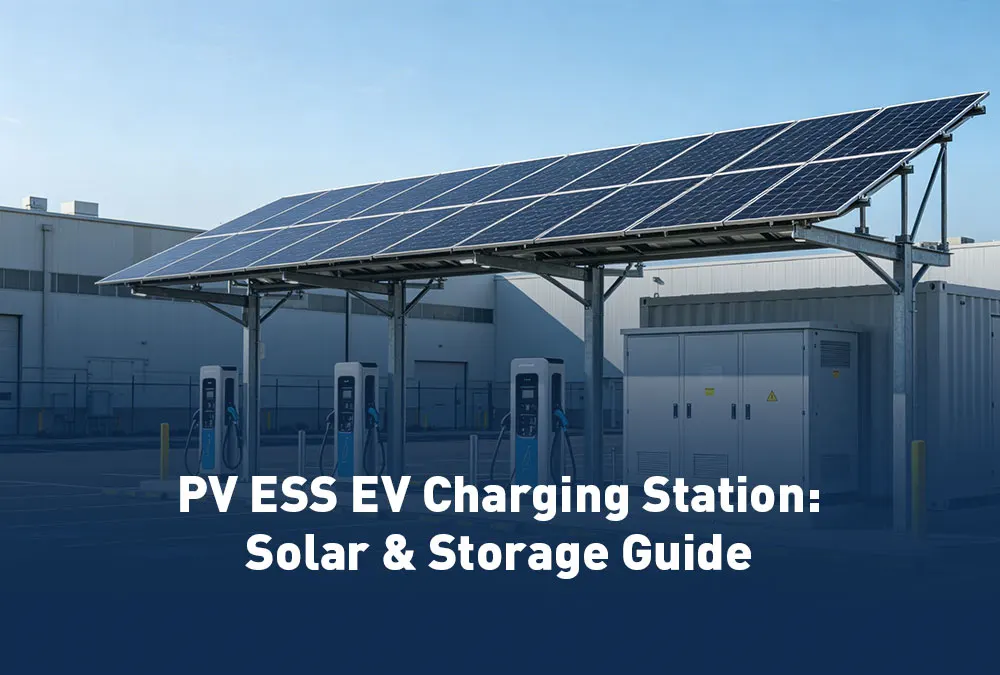
The global energy landscape in 2026 has reached a definitive turning point. As electric vehicle (EV) adoption accelerates, the primary challenge has shifted from vehicle availability to infrastructure readiness—specifically, the “Grid Wall.” For commercial operators and fleet managers, the PV ESS EV Charging Station has emerged as the most viable technical and economic solution to overcome grid limitations. By integrating Photovoltaics (PV) and Energy Storage Systems (ESS), these stations decouple the high power demand of ultra-fast charging from the steady-state limitations of the utility provider. This integrated energy solution not only lowers operational costs through energy arbitrage but also provides a resilient, clean power source that ensures business continuity even in areas with fragile grid connections.
What is a PV ESS EV Charging Station?
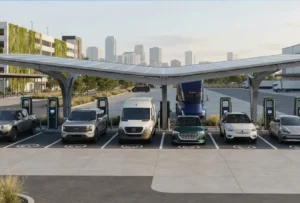
In the context of modern electrical engineering, a PV ESS EV Charging Station is not merely a collection of hardware; it is a synchronized microgrid designed to optimize power flow. It represents the convergence of three distinct technologies into a single, intelligent ecosystem.
Definition of Solar + Storage + EV Charging System
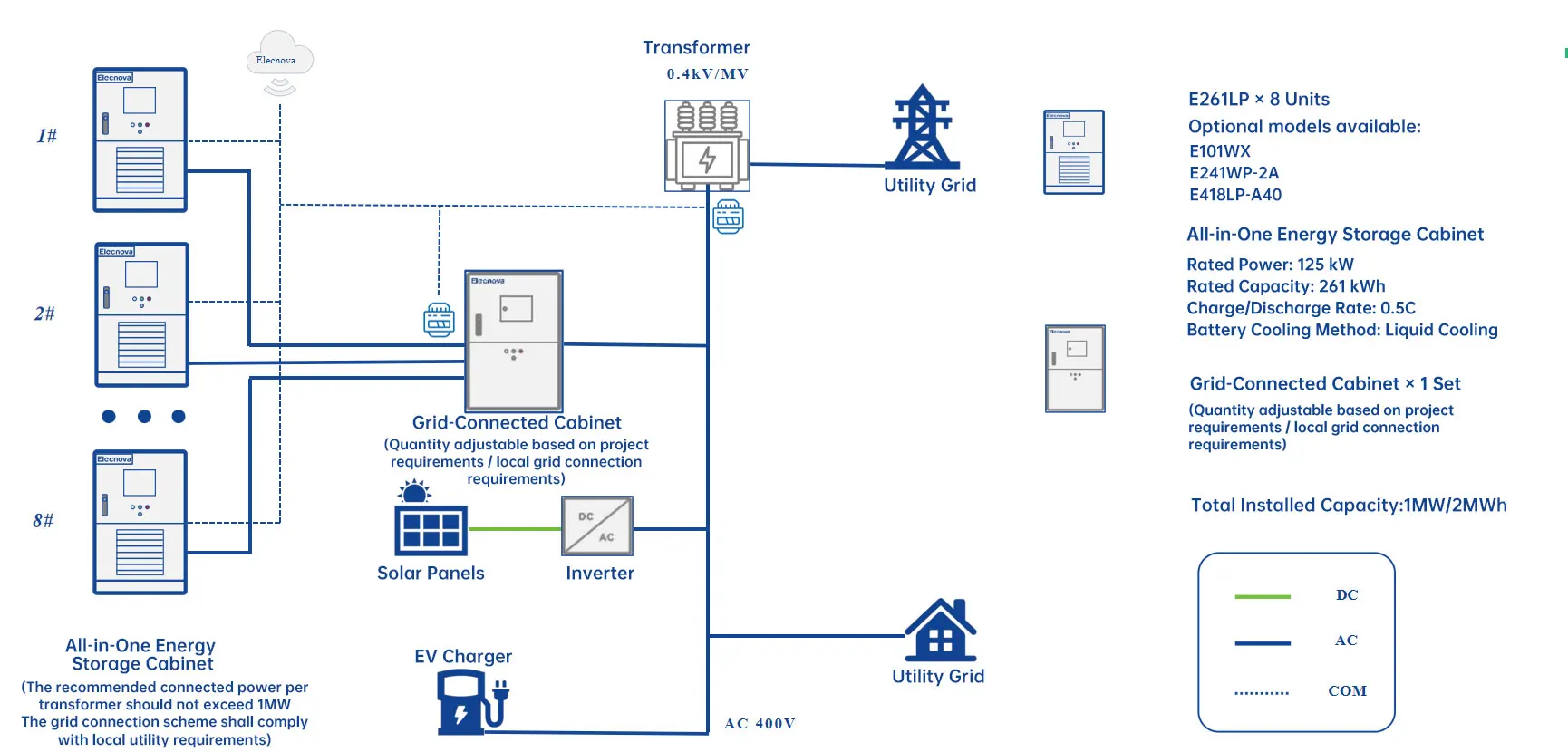
An integrated PV-ESS-EV system is a multifaceted infrastructure that captures solar energy, stores it in high-capacity battery units, and delivers it to EVs on demand. The system is designed to maximize the “self-consumption” of renewable energy while minimizing “peak draw” from the utility grid.
The core components include:
- PV System: Solar panels (Monocrystalline or Bifacial) that convert sunlight into DC electricity.
- Battery System (ESS): Typically high-cycle Lithium Iron Phosphate (LFP) units.
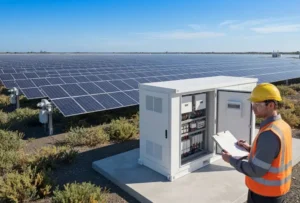
- PCS (Power Conversion System): A bi-directional inverter that manages the AC/DC conversion between the grid, the battery, and the chargers.
- BMS (Battery Management System): The safety layer monitoring cell voltage and temperature.
- EMS (Energy Management System): The “central brain” that optimizes energy dispatch based on real-time electricity prices and load demand.
- EV Chargers: High-power DC fast chargers or AC Level 2 units.
Background of PV-ESS-EV Integrated Solutions
According to recent research published in ScienceDirect (2025), the optimization of renewable energy EV infrastructure is critical for maintaining grid stability. As ultra-fast chargers (360kW+) become the norm, the local transformer capacity often falls short. This has driven the industry toward “Integrated Energy Solutions,” where the station acts as its own power plant. This shift is fueled by the falling cost of LFP batteries and the rising demand for carbon-neutral logistics and transportation hubs.
How PV ESS EV Charging Stations Work
Understanding the technical synergy of a PV ESS EV Charging Station requires looking at the energy flow during different operational phases.
Energy Flow: Solar → Battery → EV Charging
The operational logic follows a priority sequence determined by the EMS:
- Direct Charging: During peak sunlight hours, solar energy is sent directly to vehicles plugged into the chargers.
- Storage: Excess solar energy that isn’t needed immediately by the chargers is redirected to the battery storage system.
- Discharge: During the night or cloudy periods, the battery discharges to support the EV chargers, ensuring that high-power delivery is maintained without relying on expensive grid power.
Role of PCS, BMS, and EMS in System Operation
The integrated energy solution for EV charging relies on the seamless communication between these three controllers:
- PCS (The Muscle): Handles the bi-directional flow. It allows the system to support “Grid-to-Battery” and “Battery-to-Grid” (V2G) functions.
- BMS (The Guardian): Ensures that the battery cells remain within their “Safe Operating Area” (SOA). It monitors parameters to prevent thermal runaway.
- EMS (The Intellect): This is where the energy management system for EV charging shines. It uses predictive algorithms to forecast solar generation and vehicle traffic, ensuring the battery is always ready for the next peak period.
How Battery Storage Works with EV Charging
In a microgrid EV charging station, the battery acts as a high-speed buffer. When a high-power charger (e.g., 180kW) starts, the grid draw remains steady (e.g., at 50kW) while the battery supplies the remaining 130kW. This process, known as “Peak Shaving,” is essential for preventing voltage sags and keeping “demand charges” low on utility bills.
Why Combine Solar, Storage, and EV Charging?
The decision to invest in a solar + storage + EV charging system is often driven by three primary pain points that traditional “grid-only” stations cannot solve.
Problem 1 – High Electricity Costs
In many regions, “Time-of-Use” (TOU) pricing makes daytime or peak-hour electricity prohibitively expensive. Without storage, a charging station operator is at the mercy of the utility’s pricing tiers.
Problem 2 – Grid Limitations
Many industrial parks and highway rest stops are grid-constrained EV charging environments. Upgrading a transformer can cost hundreds of thousands of dollars and take over a year to implement. A BESS allows for immediate deployment.
Problem 3 – Low Renewable Energy Utilization
Standard solar installations often waste energy (curtailment) when there is no immediate load. Integrating storage ensures that 100% of the solar energy generated is either used or stored for later, dramatically improving the ROI of the PV panels.
Key Benefits of PV ESS EV Charging Stations
1. Reduce EV Charging Costs
The most immediate benefit is the reduction in “OPEX” (Operational Expenditure). By generating your own power and discharging it during peak rate periods, you achieve energy arbitrage.
Formula for Daily Savings:
Savings = (Peak Price – Off-Peak Price) x Battery Capacity (kWh) + (Solar Generation x Grid Price)
2. Reduce Demand Charges
Utility companies charge commercial customers a “Demand Fee” based on the highest 15-minute power spike. By using peak shaving for EV charging, you can reduce these fees by up to 40-60%.
3. Improve Reliability and Resilience
A hybrid EV charging station solution provides a backup power source. In the event of a grid blackout, the station can continue to charge vehicles in “Island Mode,” which is critical for emergency services and logistics fleets.
4. Increase Renewable Energy Utilization
By pairing solar powered EV charging station with battery storage, the “self-consumption” rate of solar energy often increases from 30% to over 90%.
5. Avoid Expensive Grid Upgrades
For many integrated PV ESS EV charging station manufacturers, the “killer app” is avoiding the transformer upgrade.
- Traditional Upgrade: $150,000 + 12 months wait.
- ESS Integration: $80,000 + 3 months installation.
Solar and EV Charger Integration Benefits
The integration of solar powered EV charging station components creates a scalable and sustainable business model.
Lower Operating Costs
As shown in the table below, the long-term cost benefits are undeniable when comparing a traditional grid-tied station versus a PV+ESS integrated station.
| Feature | Grid-Only Charging | PV + ESS Integrated Charging |
| Energy Cost | High (Market Rate) | Low (Self-Generated) |
| Demand Charges | High Spikes | Shaved/Reduced |
| Reliability | Grid-Dependent | Resilient (Island Mode) |
| Carbon Footprint | Varies by Grid Mix | Minimal/Green |
| ROI Period | 5–7 Years | 3–5 Years (with incentives) |
Cleaner Energy for EV Charging
Research in Nature (2024) highlights that for EVs to be truly “green,” the energy source must be decarbonized. A PV battery storage system for EV charging ensures that the “well-to-wheel” emissions of the vehicles are as close to zero as possible.
PV ESS EV Charging Station Solutions (System Design & Sizing)
When acting as a pv ess ev charging station solution provider, we focus on modular sizing to fit specific commercial needs.
Typical System Configuration Examples
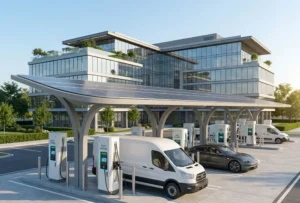
Small Commercial Station (Retail/Office)
Designed for employee charging and light customer use.
- PV Capacity: 100 kW
- ESS Capacity: 215 kWh
- Chargers: 4 × 60 kW DC units
- Supported Usage: Can support 4 vehicles simultaneously for 30–40 minute fast charges while minimizing grid draw during the afternoon peak.
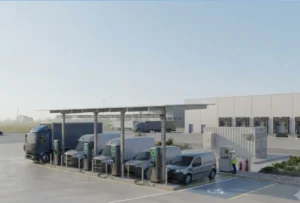
Industrial & Logistics Scene (Fleet Operations)
Designed for heavy-duty trucks and high-frequency delivery vans.
- PV Capacity: 250 kW
- ESS Capacity: 500 kWh
- Chargers: 6 × 120 kW DC units
- Supported Usage: High-power fleet turnaround; smart EV charging energy management ensures batteries are charged at night when trucks are out and discharged during the morning return rush.
Off-Grid / Remote Area (Tourist Sites/Highways)
Designed for locations where the grid is either non-existent or too weak to support charging.
- PV Capacity: 300 kW
- ESS Capacity: 1.2 MWh
- System Type: Off-grid PV ESS EV charging station system design
- Supported Usage: 24/7 independent operation with 100% renewable energy reliance.
On-grid vs Off-grid PV ESS EV Charging Systems
- On-grid: Focuses on cost saving and grid stability.
- Off-grid: Focuses on energy independence and accessibility.
- Microgrid: Operates on-grid but can “island” during emergencies.
AnengJi PV ESS EV Charging Solutions
As a leading integrated PV ESS EV charging station manufacturer, AnengJi provides a full suite of industrial-grade hardware and software.
Industrial and Commercial PV ESS EV Charging Solutions
Our products are specifically designed for harsh industrial environments, featuring liquid-cooled battery options that maintain performance in temperatures from -30°C to 55°C. This makes them ideal for commercial solar + storage EV charging station projects globally.
Customized System Design
We do not believe in “one size fits all.” Every distributed energy EV charging system we deploy is sized based on a detailed analysis of the local solar irradiance and the expected vehicle load profile.
Why AnengJi is the Ideal Partner for PV ESS EV Charging
Choosing a pv ess ev charging station solution provider requires looking at more than just the price per kWh.
Easy Integration with Existing Infrastructure
AnengJi systems are “Plug-and-Play.” Our modular ESS units can be integrated into existing parking lots with minimal civil work. They are compatible with 99% of global charging protocols (OCPP 1.6J / 2.0.1).
Factory Direct Supply (Competitive Pricing)
By working directly with an integrated PV ESS EV charging station manufacturer, you eliminate middleman markups. We provide high-efficiency battery storage for solar EV charging units directly from our 40,000sqm production base.
Global After-Sales and Certification
Safety and compliance are our top priorities. Our systems carry full international certifications:
- CE Certification: Full series compliance for the European market.
- UL9540A: Specifically for our E261LP and E20FT2170LP-2 units, ensuring the highest fire safety standards in North America.
- Global Support: We maintain spare parts warehouses in the Netherlands and Belgium to ensure 48-hour service response times.
FAQ – PV ESS EV Charging Station
What is a PV ESS EV charging station?
A PV ESS EV charging station integrates solar panels, battery storage, and EV chargers into a single system. It allows for clean, reliable charging by using solar energy during the day and stored battery power during peak times or at night.
How does battery storage support EV charging?
Battery storage acts as a high-power buffer. It stores excess solar energy and delivers it during high-demand periods, allowing for fast EV charging without causing a spike in grid demand or exceeding grid capacity limits.
Can solar power fully support EV charging stations?
Yes. With an off-grid pv ess EV charging station system design, a station can be 100% powered by solar energy. For most commercial sites, a “Grid-Tied” hybrid approach is used to balance cost and reliability.
What size battery is needed for EV charging stations?
Sizing depends on your charger power and daily turnover. Typically, commercial systems range from 215 kWh to 1 MWh. You can calculate your specific needs using our baseline sizing formula provided in the technical section above.
Conclusion: The Future of EV Charging is PV + ESS Integration
The transition to electric mobility is only sustainable if the energy infrastructure can support it without collapsing the grid or bankrupting the operator. PV ESS EV charging stations represent the future of this industry. By combining solar powered EV charging station with battery storage, businesses can significantly reduce electricity costs, eliminate grid constraints, and provide a truly green charging experience.
As an integrated PV ESS EV charging station manufacturer, AnengJi is committed to providing the hardware and the intelligence (EMS) required to make these projects successful. Whether you are looking for a solar battery storage for EV charging station cost estimate or a full commercial solar + storage EV charging station project design, the ROI is now clearer than ever.
Key Summary:
- Reduce Costs: Leverage solar and arbitrage.
- Avoid Limits: Skip the expensive grid upgrades.
- Scale Fast: Modular designs allow for growth.
- Sustainability: True zero-emission charging is finally a reality.
For a customized ROI analysis and system design, contact the AnengJi engineering team today to build your future-proof charging infrastructure.