Introduction
Searching for EV charging companies Paris France can produce a confusing shortlist. One company manufactures charging hardware. Another installs and maintains it. A third finances and operates public stations, while a map or charging-card provider may not supply equipment at all. For an EPC contractor, property owner or fleet project manager, those are different procurement routes—not interchangeable brands.
This guide compares ten companies that can be relevant to French commercial and public charging projects. It identifies what each company appears to provide, which project type it may suit and what still needs to be confirmed before requesting a quotation. The numbers improve readability; they are not a market-share, product-quality or sales ranking.
The short answer
Choose a hardware manufacturer if your French EPC and operating platform are already defined. Choose a turnkey provider if one contractor must coordinate equipment, installation, software and maintenance. Consider a charge point operator (CPO) when a commercial site wants a third party to finance or operate publicly accessible charging.
Which Type of EV Charging Company Does a Paris Project Need?
The first procurement decision is not the logo on the charger. It is the commercial and technical boundary your organisation wants to control. A buyer who already has an electrical designer, qualified installer and charging station management system (CSMS) can compare equipment suppliers. A property owner seeking one accountable contract needs a different shortlist.
| Supplier type | Suitable buyer situation | What the buyer must still own or contract |
|---|---|---|
| Hardware manufacturer | EPCs, integrators, distributors and experienced project owners | French design and installation, civil works, CSMS, payment, commissioning and service coverage |
| Turnkey provider | Companies wanting one lead contractor from survey through operation | Clear performance requirements, contract governance, data rights and acceptance |
| CPO or site-host partner | Retail, hotels and public destinations considering third-party investment and operation | Commercial terms, parking policy, brand experience, revenue model and exit conditions |
This distinction matters because a hardware quotation may end at the charger terminals. It may exclude upstream switchgear, protection, trenching, foundations, communications, payment acquiring, roaming, backend licences and field maintenance. Until every bidder prices the same boundary, the lowest quotation may simply contain the most exclusions.
How These EV Charging Companies in France Were Selected
Each company is assessed by its charging role, solution scope, project suitability and procurement implications. Different delivery models are included because the Paris market contains equipment suppliers, integrated service providers and public-network operators. For example, the City of Paris identifies Belib’ as the city’s public network operated by Total Marketing France.
No score is assigned for price, uptime, market share or after-sales performance because comparable, current evidence was not available for all ten companies. A buyer should replace promotional claims with model-specific documents, a normalised quotation and a tested service plan.
10 EV Charging Companies in France for Commercial and Public Projects
1. Schneider Electric — Building and Fleet Charging Hardware
Schneider Electric treats charging as part of a building-power system rather than as an isolated appliance. Its EVlink Pro AC range is aimed at commercial buildings, industrial facilities and electric fleets, where charging demand must be coordinated with the switchboard, the building load and the available connection capacity.
The useful distinction is not only the charger enclosure. Schneider also documents energy-management and fleet-integration layers around EVlink Pro AC. Its depot application material combines AC charging with EcoStruxure EV Charging Expert for load management and an API layer for fleet-system integration. Selected EVlink Pro AC references use MID-certified metering, while other references use different metering arrangements; the manufacturer’s MID guidance shows why buyers must check the full order code rather than assume one feature covers the range.
Suitable projects
Commercial buildings, workplaces and light-fleet sites that want charging coordinated with building electrical management.
Procurement focus
Confirm the exact charger reference, metering arrangement, payment option, CSMS, load-management licence and integrator responsibility. Specify the required functions first; do not assume that one range-level feature is present in every order code.
2. Legrand — AC Charging for Buildings and Parking Facilities
Legrand’s Green’up portfolio is relevant when EV charging is specified as part of a building or shared-parking electrical project. The current French professional catalogue includes reinforced sockets, single-phase and three-phase stations, access-control options and installation accessories. Legrand’s professional collective-parking guidance describes Green’up Premium options from 3.7 to 7.4 kW single-phase and 11 to 22 kW three-phase.
For shared parking, published options include RFID identification, MID metering and management through a local web interface or an OCPP 1.6J operator. Communication kits can add power sharing and remote monitoring. This modular structure allows a project to match access and billing functions to the parking policy, but it also means that the charger, communication kit and operator service must be specified as one supported system.
Suitable projects
Offices, collective residential parking, commercial buildings and long-dwell bays that require controlled access and integration with the building distribution system.
Procurement focus
Check whether the selected station, communication kit, meter and operator platform form one supported configuration. OCPP connectivity does not by itself provide public payment, roaming or driver support.
3. IES Synergy — DC Charging from Destination Sites to High-Power Hubs
IES Synergy specialises in power conversion and DC charging. Its current charging portfolio is organised into the S range at 24–36 kW, M range at 50–250 kW and H range at 100–500 kW, giving project teams several starting points between compact destination charging and higher-throughput public infrastructure.
That breadth allows a buyer to compare compact destination DC charging with higher-output public or corridor applications inside one manufacturer’s portfolio. IES also publishes project-management, training and after-sales or warranty services, plus functions such as Plug & Charge and vehicle-to-grid on relevant solutions. Those are product- and project-dependent capabilities, not a reason to assume every station includes every function.
Suitable projects
Dealerships, car parks, urban fast charging, fleets and higher-throughput hubs that need a dedicated DC product range.
Procurement focus
Request the voltage/current output envelope, connector and simultaneous-output matrix, vehicle communication, payment hardware, CSMS version, cooling maintenance and spare-parts plan. Charger nameplate power does not predict the power accepted throughout every vehicle session.
4. DBT — Modular AC and DC Charging with Service Support
DBT combines charging equipment with commissioning, maintenance and professional training. The Milestone portfolio covers AC and DC duties from 7 kW to 180 kW, allowing a project to consider long-dwell parking and faster-turnover bays within one product family.
The service layer is more relevant than a manufacturing-origin statement. When commissioning and maintenance are included in the procurement route, the project can assign clearer responsibility for configuration, fault diagnosis and restoration. The contract still needs to define where equipment supply ends and where electrical installation, backend, payment and on-site intervention begin.
Suitable projects
Private and public parking, retail sites and local infrastructure projects seeking both AC/DC equipment and a defined service route.
Procurement focus
Define the on-site response target, spare-parts availability, payment-terminal owner and CSMS workflows for the ordered model. “Maintenance available” is not an SLA until labour, travel, parts, service hours and restoration evidence are specified.
5. Kempower — Distributed DC Fast Charging for Fleets and Hubs
Kempower’s defining product approach is distributed DC charging. Central Power Units feed separate Satellite dispensers and dynamically allocate capacity between connected vehicles. The charging-solutions portfolio includes modular Power Units, compact Satellites, liquid-cooled and megawatt variants for heavy vehicles, standalone Station Chargers and ChargEye management software for depots and CPOs.
Separating power conversion from the user-facing dispenser can improve the layout of tight parking areas and allow several outlets to share installed capacity. It also creates shared dependencies: a cabinet, control layer or payment path may affect several charging points. The design must therefore evaluate both efficient power allocation and the operational effect of a common-component failure.
Suitable projects
Public hubs, fleet depots, bus or truck operations and sites that benefit from dynamic sharing across several DC outlets.
Procurement focus
Model simultaneous vehicle demand and redundancy instead of treating total cabinet power as guaranteed connector power. Confirm software subscriptions, payment acquiring, service coverage, spares and the output that remains when a shared component is unavailable.
6. Wallbox — Commercial AC Charging and Multi-Charger Management
Wallbox’s eM4 platform is a commercial AC option for fleets, retail and hospitality, workplaces and public or semi-public parking. Its role is to scale the number of managed charging ports at sites where vehicles normally remain parked for several hours.
Published configurations include single- and twin-socket versions up to 22 kW, Ethernet, Wi-Fi and 4G connectivity, an integrated MID meter and multi-charger load management. Wallbox also presents accessories for wall or pedestal mounting and a central payment arrangement that can serve several chargers. That makes the platform relevant when a site needs many AC ports without placing a payment terminal on every unit.
Suitable projects
Hotels, workplaces, residential portfolios and retail parking where vehicles remain for hours and access control must scale across many bays.
Procurement focus
Confirm the controller/extender architecture, OCPP and backend combination, payment provider, offline behaviour and supported charger count. A 22 kW station will only deliver what the vehicle’s onboard charger and shared site limit allow.
7. TotalEnergies — Turnkey Installation, Operation and Maintenance
TotalEnergies offers a service route rather than asking every buyer to assemble separate hardware, installation and operating contracts. Its French business-charging offer covers supply and installation on company sites, charger management, maintenance, user support and an energy contract adapted to mobility needs.
The published starting categories are standard 7 kW AC, accelerated 22 kW AC and fast DC at 50 kW or above. The offer also describes usage reports, a 24/7 user hotline, access control and tariff configuration for employees or customers. A Fleet card and public-network access can connect workplace charging with vehicles used away from the site. This combined route may reduce the number of interfaces a fleet manager must coordinate.
Suitable projects
Enterprises seeking one provider for site assessment, installation, supervision, maintenance and mobility services.
Procurement focus
Identify the installed charger model, recurring software and service charges, contract period, data export, tariff control, performance commitments and exit process. A turnkey offer simplifies responsibility only when each result has a named owner.
8. EDF Business Services / IZIVIA — Enterprise and Public Charging Delivery
EDF Business Services combines electric-mobility delivery, smart charging and electrical-engineering capabilities. Its IZIVIA professional routes distinguish between hosting public charging on accessible parking and installing stations for employees or fleets. This makes the offer relevant when the buyer needs site electrification and ongoing operation to be coordinated rather than procured as unrelated packages.
The professional charging options cover different ownership and access models. A multi-site employer may prioritise employee and fleet access, while a publicly accessible car park needs payment, user support and operator responsibilities. These routes should not be compared on charger price alone.
Suitable projects
Multi-site enterprises, fleet programmes, public car parks and local-authority projects requiring electrical and operational coordination.
Procurement focus
Confirm the contracting entity, service modules, hardware, backend, energy-management logic, maintenance SLA and data-migration terms. The proposal should show one responsibility matrix across electrical works and charging operations.
9. DRIVECO — Funded and Operated Destination Charging
DRIVECO represents the CPO and site-host route rather than a conventional hardware purchase. For a shopping centre, hotel or commercial property, this model can turn parking capacity into an operated public service without requiring the property team to run charging operations.
Its retail partnership model covers site feasibility, financing choices, installation and connection, operation, maintenance and customer service. Site eligibility depends on traffic, accessibility, available parking and commercial viability. This is a property partnership decision as much as an equipment decision.
Suitable projects
Retail, hospitality and real-estate owners that prefer an operated destination-charging service to direct equipment ownership.
Procurement focus
Compare lease duration, rent structure, tariff and brand control, equipment ownership, construction disruption, service levels and early-exit conditions. A no-upfront-cost structure exchanges capital expenditure for site rights and a long operating relationship.
10. AnengJi — International Wholesale AC and DC Equipment
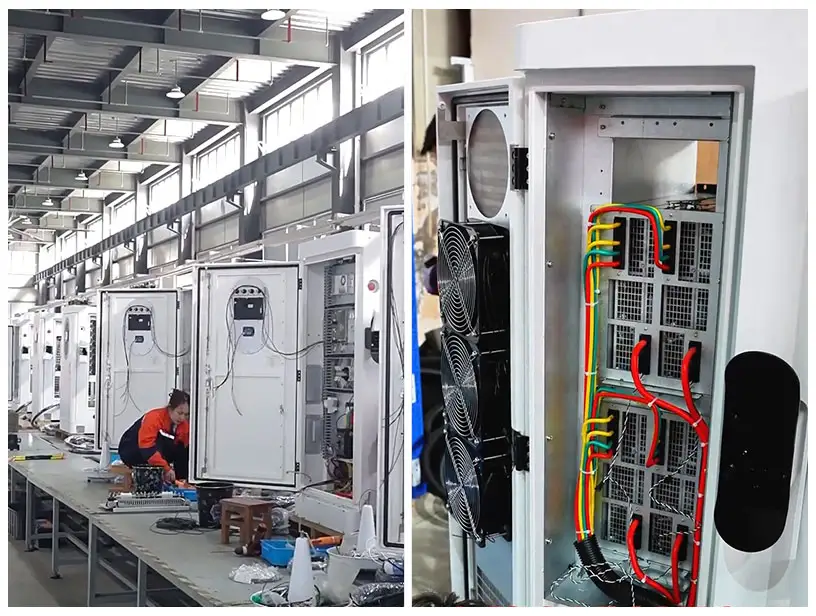
AnengJi represents the hardware-supply route for EPCs, distributors, system integrators and charging operators that want to retain control of the installer, CSMS and operating model. Its portfolio includes AC wallboxes, commercial DC fast chargers, portable units, flexible charging stacks and EVSE components, with OEM, ODM and SKD options for channel and project buyers.
For long-dwell projects, buyers can begin with the published commercial AC charger range. Public, fleet and higher-turnover projects can review its DC equipment options. The choice should be driven by parking time, required energy and available site power—not by selecting the highest listed kW.
For private-label and repeat orders, the useful manufacturing questions are practical: can the supplier freeze the approved configuration, trace key components, control firmware changes, repeat factory tests and support spare parts across later batches? A factory audit should examine those controls directly instead of relying on facility size or headline staffing figures.
Suitable projects
Wholesale programmes, EPC projects and system integrations that require configurable AC/DC hardware and a separately appointed French delivery chain.
Procurement focus
Request the exact order code, connector, firmware, EU declaration and certificate scope, OCPP implementation, factory-acceptance plan, spare-parts package, warranty boundary and local responsibility matrix.
Which Company Type Fits Each French EV Charging Project?
| Project | Likely starting route | Decision consequence |
|---|---|---|
| Office or workplace | Managed AC hardware plus French EPC, or a turnkey provider | Prioritise connector access, employee billing and load allocation over headline power |
| Hotel or retail destination | AC coverage with selective DC, or a CPO host model | Match equipment to dwell time and make visitor payment understandable without staff intervention |
| Factory or fleet depot | Hardware manufacturer plus electrical and control integrator | Model energy by departure deadline, not chargers per vehicle |
| Public rapid-charging site | DC manufacturer plus CPO, CSMS, payment and service stack | A charger is not operational until payment, roaming, remote recovery and field support work together |
| EPC or distributor portfolio | Wholesale equipment supplier with local project partners | BOM, firmware, certificates, RMA and change control matter across repeat orders |
How to Compare EV Charging Companies in Paris Beyond Brand Names
Normalise the site and quotation boundary
Send every bidder the same vehicle schedule, required energy, parking duration, electrical single-line information, measured building load, bay layout, cable route, communications survey and operating model. Require each quotation to state inclusions, exclusions, recurring fees and responsible party for the following:
- charger, connector, pedestal, protection and options;
- transformer or switchboard work, cabling, trenching, foundations and reinstatement;
- router, SIM/APN, firewall, CSMS, payment and roaming;
- commissioning, staff training, documentation and acceptance testing;
- preventive maintenance, remote response, on-site attendance, labour and spares.
This is where apparently cheap projects often change. A charger can arrive on time yet miss commissioning because the cellular signal is weak on the underground level, the Ethernet route was omitted or nobody owns the firewall configuration. Survey communications at the charger location—not at the site office.
Verify French design, installation and maintenance responsibility
France places defined qualification requirements on EV charging infrastructure work. The current consolidated French Decree No. 2017-26 on Légifrance requires qualified professionals for most covered installations and qualified maintenance, subject to stated exceptions. It also requires an electrical design study for a new charging installation in a car park with at least 50 spaces.
For the buyer, the practical question is: who signs the design, who installs and commissions the system, and who remains responsible after handover? An international manufacturer can supply suitable hardware, but it does not replace the French project roles.
Test payment and recovery as complete user journeys
Drivers do not experience hardware, payment and software as separate contracts. They experience one station that either starts or fails. A public charger may appear online while a card reader, QR page, RFID credential or settlement path prevents the session.
Article 5 of the EU Alternative Fuels Infrastructure Regulation establishes ad-hoc charging and price-transparency requirements for publicly accessible points, with provisions that depend on output and deployment date. The procurement test should therefore cover price display, payment initiation, receipt, interrupted sessions, pre-authorisation communication and support when the normal route fails.
Do not accept “OCPP supported” as an integration test
OCPP support does not prove that the selected model, firmware, network and CSMS can complete your required workflows. Test authorisation, meter values, tariffs where applicable, remote commands, load limits, offline behaviour, transaction recovery, alarms and firmware management. AnengJi’s guide to verifying OCPP workflows before rollout provides a deeper procurement checklist.
Turn “local support” into measurable obligations
Ask for support hours, remote-response time, on-site attendance, spare-part location, labour and travel exclusions, firmware-support period and the escalation route between installer, manufacturer, network provider and backend operator. A warranty can be contractually valid while the site remains unavailable for days because no party owns first diagnosis.
A useful acceptance metric
Do not test only whether the connector delivers power once. Record session-start success, authentication time, delivered energy, payment completion, alarm visibility and recovery after loss of network. Then repeat the highest-risk workflow on the production site with representative vehicles.
A Five-Step Shortlist for EV Charging Companies in Paris
- Choose the operating model. Decide whether you want to own equipment and operations, buy a turnkey service or host a third-party network.
- Define the charging task. Record vehicle type, arrival state, required energy, departure deadline, parking duration, visitor access and growth assumptions.
- Survey the complete site. Check available electrical capacity, building peak load, cable route, civil constraints, impact protection, accessibility and communications at each bay.
- Issue one comparison schedule. Make every bidder identify the exact model, firmware, scope, recurring costs, evidence, exclusions and acceptance test.
- Pilot before rollout. Test representative vehicles, the production CSMS, payment routes, load controls, network loss and fault escalation before approving multiple sites.
A commercial evaluation can begin with AnengJi’s charger comparison checklist, then be adapted to the French installer, regulatory and operating model of the project.
Frequently Asked Questions About EV Charging Companies in France
Are there EV charger manufacturers based in France?
Yes. This comparison includes French companies that state they design or assemble charging equipment in France, including IES Synergy and DBT. Schneider Electric and Legrand also provide charging products within broader electrical-equipment portfolios. Buyers should verify the production location and scope of the exact model rather than applying a company-level statement to every product.
Does a commercial project in Paris need a qualified IRVE installer?
French law requires appropriately qualified professionals for most covered EV charging installations, with specific exceptions. The project designer should confirm the current requirements for the site, power, access model and scope. Do not treat equipment conformity as a substitute for installation qualification.
Should a site choose a manufacturer, turnkey provider or CPO?
Choose a manufacturer when the project team can integrate and support the system. Choose a turnkey provider when one contractor must coordinate delivery. Consider a CPO when public operation, financing and user service are central. The correct answer depends on which risks the site wants to own.
Can an international charger supplier serve a French project?
Potentially, but the buyer must verify the selected model’s market documentation, interfaces and support plan, then appoint the required French design, installation and maintenance parties. Importer and placing-on-the-market responsibilities should also be assigned before ordering.
Who operates the Belib’ charging network in Paris?
The City of Paris states that the Belib’ public network is operated by Total Marketing France. This does not mean TotalEnergies is the only company available for private commercial projects; it illustrates why a search for EV charging companies in Paris returns network operators as well as equipment suppliers.
Build the Shortlist Around the Project Scope
The best EV charging companies Paris France shortlist is not the one with the most familiar names. It is the one that matches the site’s ownership model, vehicle duty, available power, public-access obligations and service capability. Start by defining what the charging system must achieve and who owns every interface. Then compare companies inside the correct category.
For buyers considering direct equipment procurement, AnengJi can discuss AC and DC options after receiving the project country, site layout, electrical boundary, vehicle schedule, connector requirements, operating platform and expected order scope.