Introduction
Navigating the transition to fleet electrification or workplace charging reveals a surprising technical detail. Many corporate buyers realize early on that a charger is not just a basic plug. It is a highly sophisticated network known as electric vehicle supply equipment. Understanding this setup is crucial for commercial real estate managers and logistics operators. Selecting the proper electric vehicle supply equipment affects your grid connection, infrastructure safety, and overall operational budget. When planning commercial installations, you face complex standards, grid constraints, and communication protocols. This guide breaks down the core hardware, standards, and practical system choices to help you build a robust and reliable network.
What Is Electric Vehicle Supply Equipment (EVSE)?
Many buyers ask if electric vehicle supply equipment is simply a technical term for an EV charger. In practice, the actual battery charger sits inside the vehicle itself for AC systems. The EVSE represents the entire external infrastructure. This equipment safely delivers electrical energy from the utility grid to the vehicle. It manages critical functions like safety checks, power flow, and system communication.
Definition of Electric Vehicle Supply Equipment
The term electric vehicle supply equipment refers to a complete assembly of specialized components. This system goes far beyond a simple cord and plug interface. It provides a safe and integrated power path by grouping several main elements:
- Charging Hardware: The physical dispensers, power modules, internal contactors, and robust cables.
- Electrical Protection: Integrated ground fault circuit interrupters (GFCI), overcurrent devices, and surge protection modules.
- Communication Interface: Controls signaling between the vehicle control units, backend cloud platforms, and local utility grids.
- Power Delivery Systems: Directs grid electricity into usable forms, managing either AC current or converted DC current.
- User Authentication: RFID scanners, mobile applications, credit card readers, and secure plug-and-charge systems.
- Energy Management: Active load balancing software that controls real-time current distribution across multiple active connectors.
What Does an EVSE Do?
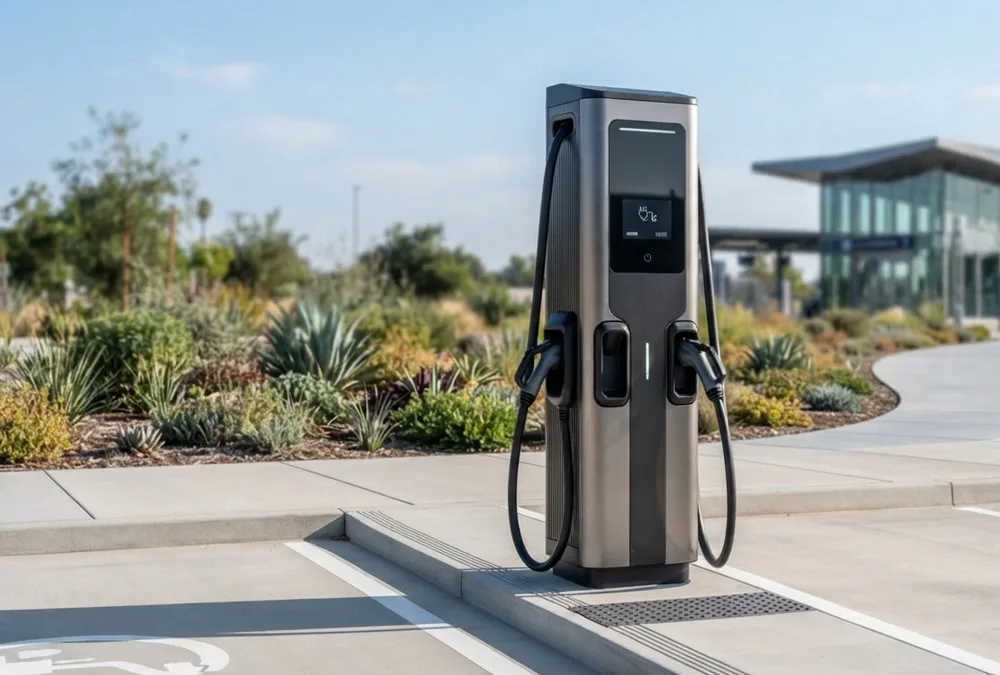
At its core, a standard EVSE charging station acts as an intelligent gatekeeper. The primary operational objectives of this system include:
- Safe Charging: It confirms that the physical plug is securely connected before delivering high voltage.
- Power Management: Controls the pilot signal to inform the car of the maximum permitted charging current.
- Communication with EV: Negotiates mutual charging parameters using standard control pilot circuits.
- Charging Authorization: Validates user credentials via backend cloud networks before starting any power transfer.
- Energy Monitoring: Measures consumption with utility-grade meters to enable accurate billing and dynamic demand responses.
Electric Vehicle Supply Equipment Components Explained
A high-quality commercial electric vehicle charger relies on several core internal assemblies. Each component must meet industrial durability and safety standards to ensure long-term performance in demanding conditions.
EVSE Enclosure (Cabinet)
The outer shell protects internal components from harsh outdoor conditions and physical damage. High-grade systems use heavy-duty steel or aluminum enclosures. These structures must carry strict industrial ratings, such as IP54 or IP55 for moisture protection, and IK10 for high-impact durability.
Internal Electronic Components
Behind the metal enclosure, a complex control system manages operations. Key components include industrial-grade Printed Circuit Boards (PCBs) and smart microcontrollers. Heavy-duty contactors and safety relays physically switch the main power on and off, while dedicated surge protection devices safeguard sensitive electronics.
Power Supply System
For AC charging stations, the main power system routes grid electricity directly to the vehicle’s onboard converter. In contrast, heavy-duty DC fast charging equipment houses large rectifier racks. These internal systems convert high-voltage AC grid power directly into stable DC current to charge the vehicle’s battery pack.
Charging Cable & Flexible Cable Assembly
The main cable must deliver high currents while remaining flexible in cold climates. Heavy-duty liquid-cooled cables are common for systems rated above 200 kW. These cables circulate coolant along the copper conductors to manage heat and prevent overheating.
Charging Connectors & Plugs
The charging connector must match the specific standards used in your target market. Choosing the right connector type ensures compatibility with your local vehicle fleet.
| Connector Type | Region | Charging Level | Typical Applications | User Benefit & Utility |
|---|---|---|---|---|
| Type 1 (SAE J1772) | North America | AC Level 1 & 2 | Workplaces & retail sites | Allows standard, widespread AC charging for most non-Tesla vehicles. |
| Type 2 (IEC 62196) | Europe / Global | AC Level 2 | Public & fleet parking | Supports three-phase AC power to charge vehicles much faster than single-phase. |
| CCS1 | North America | DC Fast Charging | Commercial fast charging hubs | Combines AC and DC charging on a single connector, simplifying hardware needs. |
| CCS2 | Europe / Global | DC Fast Charging | High-power public stations | The standard connector across Europe, offering wide compatibility and high power. |
| NACS (SAE J3400) | North America | AC & DC Charging | Public & private networks | Uses a lightweight, highly reliable plug for both AC and DC fast charging. |
| MCS (Megawatt) | Global | Ultra-Fast DC | Heavy-duty electric truck fleets | Delivers extreme power levels over 1 MW, reducing big rig charging times to minutes. |
Firmware & Charging Controller
The central processor runs proprietary logic to manage power distribution safely. It processes sensor data, detects ground faults, and updates system functions through secure Over-The-Air (OTA) updates.
Network Connectivity
Modern commercial infrastructure requires reliable, continuous network access. Systems use Ethernet, dual-band Wi-Fi, or cellular modems. These links connect back to central management platforms via the open OCPP standard, allowing for remote system monitoring.
Energy Management Integration
Advanced chargers integrate directly with local Energy Management Systems (EMS). This connection supports key features like dynamic load balancing, peak shaving, and solar energy capture. Combining EV charging with smart energy storage allows you to balance loads and avoid high utility demand charges.
How Does Electric Vehicle Supply Equipment Work?
The standard operation of an electric vehicle charger follows a strict, step-by-step process. Each step must complete successfully before power begins to flow.
The driver scans an RFID card, uses a mobile app, or plugs in the vehicle. The charging network validates this identity and checks billing accounts before unlocking the connector.
The station and vehicle establish a handshake using control pilot signals. They confirm a secure connection, verify cable ratings, and agree on maximum charging limits.
The internal controller runs insulation tests and ground fault checks. This ensures there are no short circuits or safety risks along the power path.
Once safe conditions are confirmed, the system closes the main contactor. Power flows safely to the vehicle, continuously monitored by temperature and electrical sensors.
When the battery is full or the user ends the session, the system ramps down current. The contactors open safely, enabling the driver to unplug without any electrical arcing.
Types of Electric Vehicle Supply Equipment
Choosing the right technology level requires matching charging speeds with your typical dwell times and site demands.
Level 1 EVSE
Level 1 systems use standard household wall outlets. They are slow, adding only about 3 to 5 miles of range per hour. This speed is generally insufficient for commercial or fleet needs.
Level 2 EVSE
Level 2 systems are the standard choice for workplaces, multi-family housing, and commercial parking. They operate on 208V or 240V AC power, delivering 7 kW to 22 kW. This adds 25 to 60 miles of range per hour, making them ideal for vehicles parked for several hours.
DC Fast Charging Equipment
For rapid turnarounds, DC fast electric vehicle supply equipment bypasses the vehicle’s onboard charger. These systems deliver direct current directly to the battery. Power levels typically range from 30 kW to 360 kW, with high-end highway hubs scaling up to 480 kW or 720 kW to charge vehicles in under 30 minutes.
| Feature | AC EVSE (Level 2) | DC Fast EVSE | Operational Impact & Buyer Advantage |
|---|---|---|---|
| Charging Speed | Slow to moderate (typically 4 to 8 hours) | Rapid (typically 15 to 45 minutes) | AC works best for long parking, while DC keeps high-mileage fleets moving. |
| Capital Cost | Low to moderate per charging port | High equipment and installation costs | Allows cost-effective scaling across large employee or commuter parking lots. |
| Grid Impact | Low, easily managed with standard connections | High, often requiring dedicated sub-stations | AC avoids major utility upgrades; DC requires careful site power planning. |
| Typical Output | 3.7 kW to 22 kW | 30 kW to 900+ kW | Ensures hardware matches vehicle capacity and avoids over-specifying equipment. |
EV Charging Standards, Ratings & Certifications
Commercial equipment must comply with global standards to ensure safety, reliability, and interoperability.
- Electrical Safety Certifications: Look for UL 2594 for AC units, UL 2202 for DC systems, CE marks for European markets, and TÜV Rheinland certifications.
- Open Communication Protocols: Standard OCPP 1.6J or OCPP 2.0.1 compliance prevents vendor lock-in, allowing you to change network software without replacing physical hardware.
- Enclosure Protection Ratings: Ensure outdoor stations carry IP54 or NEMA 4 ratings alongside an IK10 impact certification to prevent vandalism.
Where Are AC, DC, and EVSE Used?
Selecting the right equipment depends heavily on the installation site and user behavior. Matching charging speeds to dwell times ensures a reliable and cost-effective deployment.
| Application | Recommended Charger Type | Key Business Benefit |
|---|---|---|
| Office Buildings | Smart AC Level 2 (7kW – 22kW) | Encourages clean energy transit while supporting workplace sustainability goals. |
| Retail & Mall Lots | Mixed 30kW DC & 22kW AC | Attracts premium EV drivers and increases shopping time on-site. |
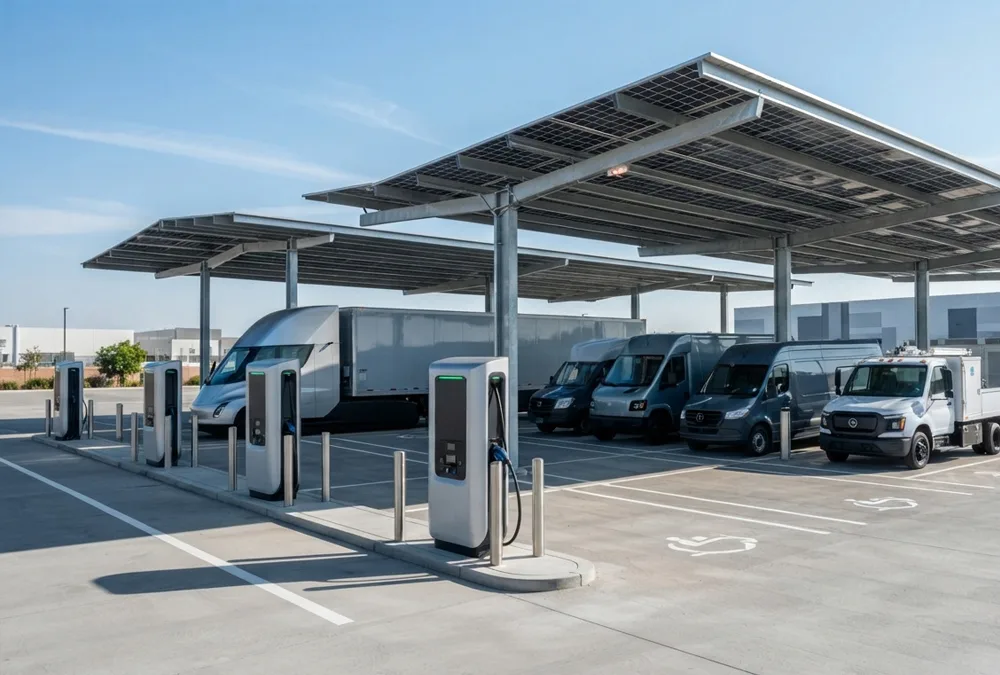
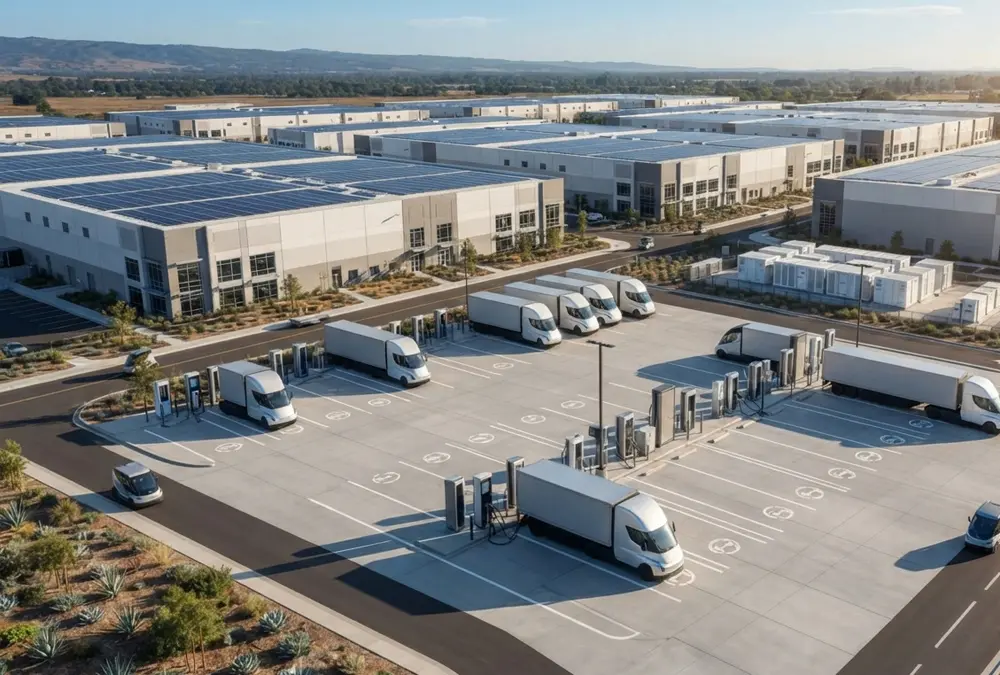
| Logistics Depots | High-Power 120kW – 360kW DC | Quickly recharges delivery vans and medium-duty trucks between shifts. |
| Highway Service Hubs | Ultra-Fast 360kW – 900kW DC | Provides fast, convenient charging to maximize station throughput on busy routes. |
Why EVSE Technology Continues to Evolve
The EV landscape is evolving rapidly, driven by grid limitations, fleet growth, and advanced energy technologies.
Growth of EV Adoption
According to EV market projections, commercial fleets are electrifying rapidly. This growth places massive power demands on local utility grids, requiring smarter energy management.
Smart Charging & V2G
Modern charging stations adjust power flow dynamically based on real-time grid capacity. Bidirectional Vehicle-to-Grid (V2G) technology allows vehicles to export power back to the grid during peak hours, creating new revenue opportunities for fleet operators.
Battery Energy Storage Integration
Integrating battery storage helps solve grid capacity issues. By pairing chargers with on-site batteries, operators can store energy when rates are low and use it to buffer power during heavy charging, avoiding expensive peak-demand utility charges.
Recommended Commercial & Industrial Energy Storage Products
To support high-power DC fast charging without overloading local grids, we recommend integrating specialized Battery Energy Storage Systems (BESS). These solutions reduce peak demand charges and support continuous fast charging:
- 100 kWh BESS (Cabinet Solution): Best for small businesses or retail parking lots with 1 to 2 DC fast chargers. Protects against utility demand spikes.
- 261 kWh / 418 kWh All-in-One Liquid Cooled BESS: Ideal for fleet depots and commercial properties. Offers high energy density, liquid thermal management, and reliable fire protection.
- 1 MWh+ Utility Containerized BESS: Built for large logistics hubs, heavy-duty truck stops, and high-volume charging networks. Integrates with solar setups to enable complete, off-grid microgrids.
How to Choose the Right Electric Vehicle Supply Equipment
To avoid costly layout mistakes, keep these practical factors in mind when selecting your equipment:
- Assess Available Grid Power: Check your local utility capacity before buying hardware to determine if you need on-site battery storage to handle peak loads.
- Verify Software Compatibility: Choose open, OCPP-compliant equipment. This keeps your hardware flexible, allowing you to change network software providers without replacing physical chargers.
- Plan for Scalability: Install extra conduits and larger electrical panels during the initial build. Adding extra wiring upfront is much more cost-effective than digging up concrete to expand your system later.
Why Choose AnengJI as Your EVSE Manufacturer and Solution Provider?
AnengJi specializes in high-performance electric vehicle charging and battery energy storage systems (BESS). We design and deliver complete, reliable charging infrastructure for businesses worldwide.
- Complete EV Charging Portfolio: Our product range includes smart AC chargers (7 kW to 22 kW) for employee parking, and high-power DC fast chargers (30 kW to 900 kW) for busy commercial hubs.
- Integrated Solar + Storage + Charging: We offer integrated energy systems that combine solar power, advanced battery storage, and smart EV chargers. Our solutions include high-quality power conversion systems (PCS) and energy management software (EMS) to optimize power flow and reduce operating costs.
- Global Quality & Certifications: Our hardware is built for reliability and safety, carrying UL, CE, and TÜV certifications. We offer flexible OEM/ODM manufacturing, a comprehensive 2-year warranty, and dedicated technical support to keep your operations running smoothly.
Frequently Asked Questions About Electric Vehicle Supply Equipment
What is electric vehicle supply equipment (EVSE)?
EVSE is the complete system that delivers grid electricity to an electric vehicle. It includes the enclosure, internal controllers, safety systems, cables, and communication protocols needed for safe charging.
Is EVSE the same as an EV charger?
Technically, no. In AC charging, the actual charger sits inside the vehicle. The EVSE is the smart safety infrastructure that delivers grid power to that onboard charger.
What components make up an EVSE?
A standard system includes a weather-rated enclosure, a central controller, contactors, safety monitors, communication modules, user interfaces (like RFID or touchscreens), and flexible cables.
How does EVSE communicate with electric vehicles?
The system uses standard control pilot signaling. This connection lets the station and vehicle verify safe conditions and agree on charging speeds before power flows.
What are the different EVSE charging levels?
Level 1 uses standard wall outlets (slow AC). Level 2 operates on 208V/240V AC power for workplace and public parking. DC Fast Charging bypasses the onboard charger to deliver direct, high-power DC charging.
What connectors are compatible with EVSE?
Compatibility depends on the region. Common standards include CCS1 and NACS in North America, CCS2 and Type 2 in Europe, and the Megawatt Charging System (MCS) for heavy-duty trucks.
What certifications should commercial EVSE have?
Commercial equipment should carry major safety and quality certifications, including UL (UL 2594 or UL 2202), CE, and TÜV, along with an IP54 or NEMA 4 outdoor protection rating.
Can EVSE integrate with solar panels and battery storage?
Yes. Pairing chargers with solar panels and battery storage allows you to store clean energy and lower peak utility costs during heavy charging periods.
What is OCPP in EV charging?
The Open Charge Point Protocol (OCPP) is an open-source standard. It lets charging stations communicate with different central management networks, preventing vendor lock-in.
How do I choose the right EVSE for my business?
Assess your vehicles’ daily range needs, calculate typical parking times, and check your available grid power. For fast turnarounds, choose DC fast chargers; for longer stays, AC Level 2 systems are highly cost-effective.
Ready to Build Your Charging Infrastructure?
Get a custom, integrated solution designed for your fleet or commercial property. Our team will help you coordinate your EVSE, solar, and battery storage needs.