Introduction
With Europe’s energy transition moving at breakneck speed, wild grid price volatility, and a massive surge in local generation, finding the right solar battery storage price has transformed from a niche tech query into a high-stakes corporate investment decision. Across the continent, industrial operators and commercial property owners are realizing that standard grid reliance is a financial liability. But when you actually go out and start collecting quotes from EPC contractors and system integrators, things get messy fast. You’ll quickly notice that two identical-looking containers carry completely mismatched price tags, hardware often represents barely half of the total invoice, and the projected timeline for amortization moves anywhere between 4 and 12 years depending on your local regulatory grid code. Figuring out exactly what drives the real-world solar battery storage price is the absolute baseline before cutting any capital expenditure check.
Solar Battery Storage Price Explained: What Does a Solar Battery Storage System Really Cost?
Featured Snippet:
The solar battery storage price reflects the complete, turnkey installed cost of a battery energy storage system, encompassing the raw battery modules, power conversion hardware, advanced energy management software, structural engineering, grid interconnection upgrades, and compliance testing. In the European market of 2026, the average total project cost typically scales between €300 and €800 per kWh for decentralized commercial installations, while utility-scale, multi-megawatt systems leveraging massive supply chains have dropped closer to €150 to €250 per kWh fully installed.
What Is Included in Solar Battery Storage Pricing?
If you think you’re just buying a massive stack of lithium cells, your budget is going to take a serious hit during execution. A functional, bankable utility or commercial installation requires a massive ecosystem of balanced hardware. The total bill of materials splits across several distinct, critical pillars:
- Battery Modules: The foundational electrochemical storage blocks, typically shipped as dense, pre-assembled racks containing integrated cell-level safety monitoring.
- Inverter and PCS Equipment: The Power Conversion System (PCS). This bi-directional hardware converts raw DC power from the cells into grid-compliant AC electricity and vice versa during charging cycles.
- EMS and Monitoring Systems: The digital brain. An intelligent Energy Management System (EMS) orchestrates dispatch strategies, tracks system health via the Battery Management System (BMS), and speaks directly to grid operators or local market platforms.
- Installation and Commissioning: Specialized heavy electrical labor, site preparation, civil works, protection relays adjustments, and formal utility witness testing needed to legally energize the assets.
Why Battery Cost Alone Does Not Reflect Total Project Cost
There’s a massive gap between factory-gate component costs and real-world project delivery. Looking only at cell pricing sheets ignores the heavy friction of deployment.
Hardware accounts for a predictable portion, but local site realities dictate the final budget. Soft costs—like complex structural engineering assessments, environmental permitting, and extended grid interconnection studies—frequently consume up to 30% or 40% of an industrial EPC budget. Furthermore, moving hazardous goods like multi-ton lithium setups across borders requires specialized, expensive logistics, transport insurance, and rigorous fire-safety compliance testing that never appears on a raw component price sheet.
Solar Battery Storage Cost per kWh: Why Do Quotes Vary So Much?
The single most frequent question landing on an engineer’s desk is simple: “What is the exact price per kilowatt-hour?” But treating this metric like a flat commodity price is a fast track to inaccurate financial modeling.
Average Solar Battery Storage Cost per kWh in Europe
To establish a realistic baseline for the European market, we must segment costs across scale. The recent BloombergNEF (BNEF) 2025/2026 Energy Storage Systems Cost Survey highlights a widening divide between raw equipment clearing costs and full Western turnkey execution. While pure containerized hardware shipments from top-tier global supply chains have fallen to record lows, the complete, grid-connected CAPEX across key European regions reflects localized engineering realities:
| Market Segment | Typical System Capacity | Average Installed Cost Range (€/kWh) | Primary Drivers |
|---|---|---|---|
| Residential | 5 kWh – 20 kWh | €500 – €900 | High retail distribution margins, structural panel upgrades, local electrical labor. |
| Commercial (C&I) | 100 kWh – 2 MWh | €300 – €600 | Complex EMS integration, dedicated fire suppression, custom site civil engineering. |
| Industrial / Utility-Scale | 2 MWh – 50 MWh+ | €150 – €300 | High-voltage step-up substations, grid interconnection studies, volume hardware procurement. |
Why One Supplier Quotes €350/kWh While Another Quotes €700/kWh
When quotes diverge wildly, it’s rarely because someone is trying to make an unfair profit. It almost always points to structural differences in hardware quality and project scope. A lower-priced bid often relies on standard consumer-grade cells with high degradation rates, while a premium quote leverages heavy-duty LiFePO4 Battery chemistry designed to withstand thousands of high-depth cycles without breaking a sweat.
Warranty terms also warp these numbers. A bargain system might only cover you for 5 years or 3,000 cycles at a weak capacity retention limit. On the other hand, an institutional-grade vendor provides a rock-solid 10-to-15-year performance guarantee, backed by an insurance-wrapped degradation curve. Beyond that, a cheap estimate might just cover delivery to your site entrance, leaving you exposed to unexpected local contractor costs, whereas the comprehensive bid represents a complete, hassle-free turnkey delivery.
Understanding Apples-to-Apples Pricing Comparisons
To avoid costly mistakes during procurement, you need to understand exactly what you are comparing. Make sure you are evaluating the true usable capacity rather than the nominal nameplate rating; draining a system down to zero percent can quickly ruin certain chemistries, meaning a system with a conservative depth of discharge (DoD) requires more raw cells to deliver the same actual performance.
You also need to look closely at the architecture type. A DC-coupled system links your storage directly to the solar arrays, which saves on conversion hardware but limits your flexibility if you want to expand later. An AC-coupled configuration operates independently on your internal microgrid, offering vastly superior scaling potential even though it requires its own dedicated power conversion system. Always verify whether a quote includes vital site-side civil engineering works, grid isolation switches, and mandatory safety features, or if it is just an empty equipment shell.
Solar Battery Storage Price Factors: What Determines the Cost of a Battery Storage System?
To accurately manage a battery energy storage system cost per MWh, you need to dissect the variables that dictate your overall upfront expenditure.
Battery Technology Selection
The specific chemistry you choose sets your baseline cost and dictates your operational limits. The stationary storage landscape has consolidated around specific technologies:
- LiFePO4 Batteries (Lithium Iron Phosphate): The dominant technology for modern commercial systems. LFP offers exceptional thermal stability, eliminates volatile cobalt from the supply chain, and delivers an outstanding cycle life, making the industrial solar battery storage cost highly predictable over long investment horizons.
- Lithium-Ion (NMC – Nickel Manganese Cobalt): Once the go-to standard due to its high energy density, NMC has largely shifted toward specific space-constrained applications. It carries higher material volatility and requires much more aggressive liquid cooling architectures, which drives up the total solar storage system cost.
- Flow Batteries: Utilizing liquid electrolyte tanks (such as vanadium), flow systems offer near-infinite degradation lifespans and excel at long-duration discharge (8+ hours). However, their massive physical footprint and high initial capital barrier keep them limited to specialized utility projects.
Battery Capacity and System Size
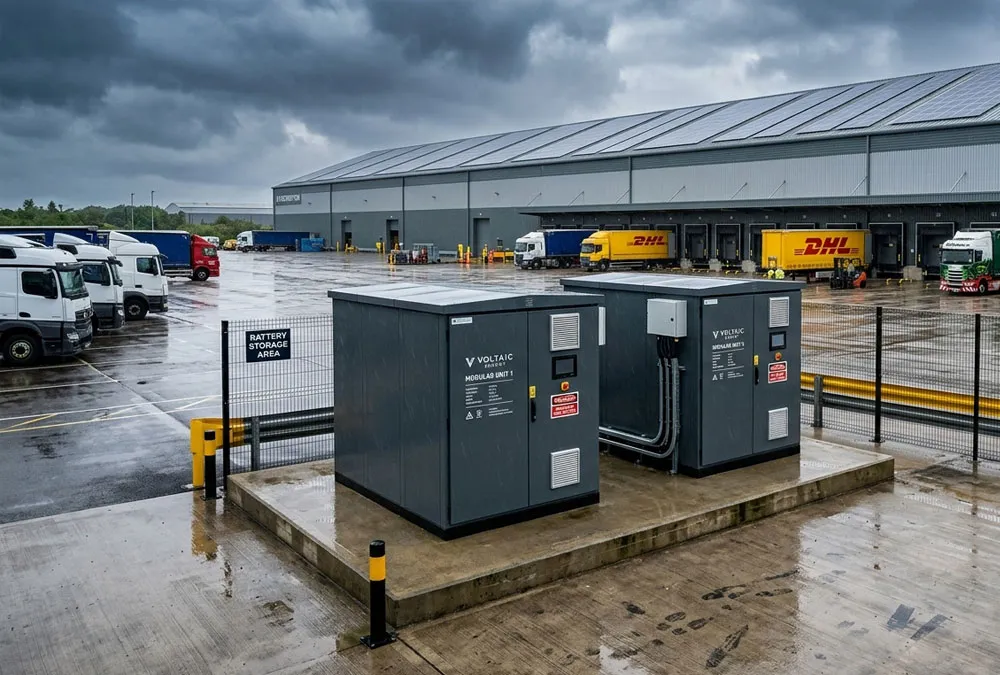
Scale behaves exactly like a classic commodity market: the larger the installation, the lower your unit cost. While a premium solar battery storage price for home use suffers from retail markups and single-phase electrical bottlenecks, commercial configurations enjoy massive volume discounts. When scaling up to a heavy containerized battery storage system price tier, the fixed expenses for items like master controllers, cooling units, and site access roads are distributed across hundreds of additional kilowatt-hours, drastically lowering the cost per unit of energy.
Power Rating and Discharge Requirements
Energy capacity (kWh) is only half the equation; you also have to design for power capacity (kW). If your application requires a high C-rate—meaning the ability to dump its entire stored energy reserve in 30 or 60 minutes to manage sudden, massive machine startup spikes—it demands heavy-duty busbars, premium power conversion electronics, and reinforced liquid thermal cooling loops. A system optimized for slow, steady discharge over four hours will always feature a much lower price tag per kilowatt than a high-power, fast-response configuration.
Battery Lifespan and Warranty Coverage
Cheap equipment is a long-term liability. A premium system built on robust Lithium Battery Storage architectures routinely guarantees 6,000 to 8,000 continuous cycles at 80% depth of discharge. If a vendor offers an uncharacteristically low price, check the capacity retention clauses in the fine print; standard utility financing models require an ironclad performance guarantee ensuring the system retains at least 70% of its initial capacity at the ten-year mark, or the asset becomes unbankable.
Energy Management System (EMS) Requirements
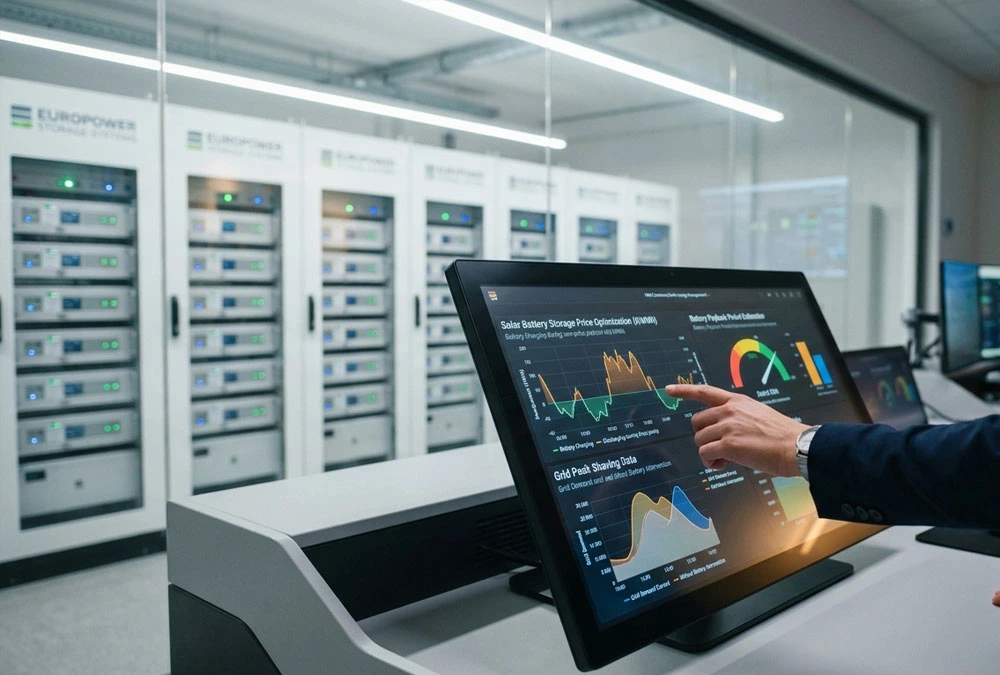
Basic operational software just tracks your current state of charge and monitors temperature levels. But if your goal is to extract real revenue from modern power grids, you need an advanced, enterprise-grade EMS platform. These modern operating systems use predictive algorithms to forecast your factory’s load profile, analyze real-time spot market pricing, and automatically optimize your battery dispatch strategy. This sophisticated software layer adds to your initial setup costs, but it radically compresses your ultimate amortization timeline.
Why Solar Battery Storage Installation Costs Are Much Higher Than the Battery Itself?
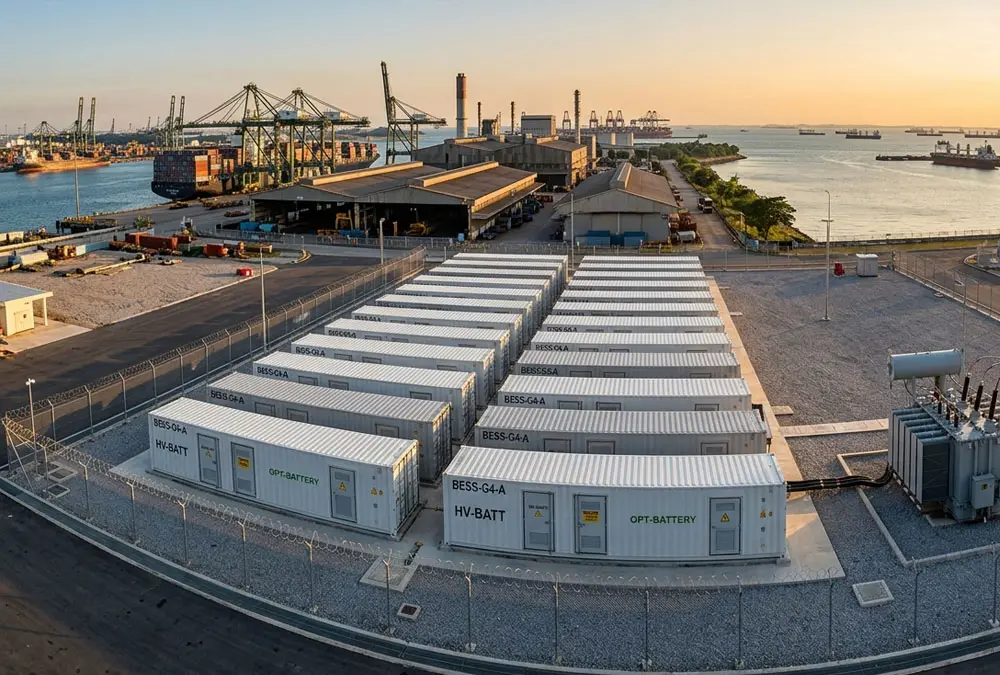
Many project managers suffer sticker shock when they see the labor and integration lines on an EPC quote. The reality is that dropping a multi-ton, high-voltage electrochemical system onto a commercial property requires serious civil and electrical engineering.
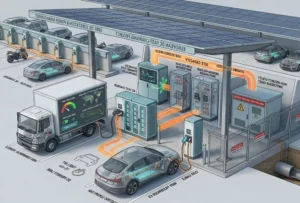
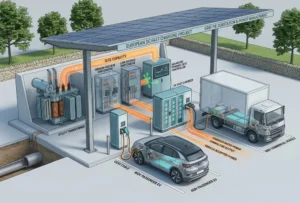
Electrical Upgrades and Grid Interconnection Costs
You can’t just wire a megawatt-scale battery system into a standard building panel. An industrial installation often demands a complete overhaul of your main switchgear, the addition of dedicated circuit breakers, and sometimes an entirely new medium-voltage step-up transformer step to interface safely with your local utility grid. Navigating the grid connection process involves complex, mandatory protection settings adjustments and anti-islanding schemes to prevent your system from feeding dangerous power back into dropped utility lines during a blackout.
Hardware Costs Beyond the Battery
The actual cell enclosure is surrounded by massive supporting infrastructure. Your Power Conversion System (PCS) handles the heavy lifting of power conditioning, while the master Battery Management System (BMS) constantly cross-checks cell voltages to prevent internal short circuits. On top of that, your outdoor enclosures require integrated HVAC or advanced liquid cooling loops to maintain the internal environment at an optimal 20–25°C. Without this precise temperature control, your cell degradation rate skyrockets, completely destroying your long-term return on investment.
Furthermore, local European safety regulations mandate multi-tiered fire suppression systems, often utilizing specialized gas or targeted clean-agent systems integrated directly with localized automated disconnect structures. This specialized safety infrastructure adds considerable cost to the base equipment pricing.
Permits, Engineering and Inspection Costs
Before any physical work begins on-site, you have to clear significant regulatory hurdles. Civil engineers must run detailed soil compaction tests and design reinforced structural concrete slabs capable of supporting heavy, weatherized outdoor enclosures. You also have to secure formal building permits, clear local environmental impact reviews, and pass rigorous safety inspections from municipal fire authorities. Navigating this complex web of local bureaucracy requires specialized consulting hours that directly inflate your upfront soft costs.
Installation Labor and Commissioning
This is not a job for standard residential contractors. Working with high-voltage DC systems requires highly specialized, certified industrial electricians who command premium hourly rates. Once all the physical hardware is securely mounted and wired, the system must undergo an intensive commissioning phase. This involves checking cell balancing, running charge-discharge calibration cycles, and executing simulated grid failures to ensure every automatic transfer switch behaves exactly as designed.
Benefits of Solar Battery Storage Beyond the Initial Price
Focusing exclusively on upfront expenditure misses the entire value proposition of modern energy storage. A properly engineered asset acts as a reliable profit center that actively protects your core business operations.
Lower Electricity Bills Through Energy Arbitrage
For commercial enterprises operating under dynamic, time-of-use (ToU) grid tariffs, energy price arbitrage offers substantial and immediate savings. Your system automatically charges from your solar array or draws from the grid during low-cost, off-peak night hours when prices are bottoming out. Then, when peak grid charges hit during the day, the battery seamlessly discharges to run your facilities, allowing you to completely bypass the most expensive electricity rates of the day.
Maximizing Solar Self-Consumption
Without on-site energy storage, a significant portion of your peak daytime solar generation often goes to waste, fed back into the grid for negligible feed-in credits or outright lost to utility-enforced curtailment. Integrating storage changes the dynamic entirely: you capture every single excess kilowatt-hour your panels produce during the noon peak and save it to run your evening or early morning shifts, driving your building’s solar self-consumption rate past 85%.
Backup Power and Energy Security
For modern manufacturing lines, data centers, or cold-storage facilities, even a momentary power outage can trigger catastrophic financial losses in ruined materials and idle labor. A properly configured system delivers instantaneous backup protection, shifting your critical loads to battery power within milliseconds of a grid failure. This seamless energy security keeps your automated assembly lines running smoothly, completely insulated from external grid instability.
Reducing Carbon Emissions and Supporting ESG Goals
Global supply chains and corporate financial partners now look closely at verified sustainability metrics. Storing your clean solar energy for evening operations allows you to displace fossil-heavy peak grid power, directly slashing your Scope 1 and Scope 2 carbon footprint. These measurable improvements are vital for meeting corporate environmental targets and securing premium green building certifications.
Solar Battery Storage Incentives and Government Subsidies in Europe
The upfront solar battery storage price for business operations drops drastically when you effectively leverage the dense web of European financial support mechanisms.
EU Renewable Energy Support Programs
The European Union continues to inject massive funding into energy independence via its comprehensive REPowerEU initiative. These structural frameworks are explicitly designed to remove grid bottlenecks by subsidizing regional energy storage deployment, opening up billions in cross-border grant allocations specifically targeted at industrial decarbonization projects.
National Battery Storage Incentives Across Europe
- Germany: The undisputed leader in storage volume. The KfW bank runs dedicated low-interest loan programs (Program 270) specifically coupled with direct capital grants for energy storage additions. Furthermore, regional states (Länder) frequently launch localized cash subsidies that cover up to 30% of total commercial project CAPEX.
- Italy: Historically driven by highly supportive tax credit schemes, the Italian market has transitioned toward long-term capacity market frameworks and large-scale industrial tax breaks under the “Piano Transizione 5.0,” offering substantial tax offsets for projects that hit specific energy savings targets.
- France: CRE tender frameworks provide structured premium payments for smart solar-plus-storage configurations. Additionally, industrial sites can bypass expensive grid optimization penalties by proving localized peak shaving capabilities via storage.
- Spain: Utilizing extensive funding from the European Recovery and Resilience Facility, Spain distributes direct capital subsidies covering up to 40-50% of the total installed cost for commercial and industrial energy storage installations.
- Netherlands: The EIA (Energie-investeringsaftrek) program allows Dutch businesses to deduct up to 45.5% of their total energy storage investment directly from their taxable corporate profits, significantly reducing their net upfront asset cost.
Tax Credits and Investment Grants
Beyond direct cash handouts, smart financial directors heavily utilize accelerated depreciation schedules. Writing off the asset value of an industrial battery installation across an accelerated 3-to-5-year window provides an immediate corporate tax shield, dramatically improving your early-stage cash flow dynamics.
Solar Battery Storage ROI: Savings, Returns and Payback Period
Every commercial energy project ultimately comes down to a clear financial question: “When does this investment turn cash-flow positive?” Calculating your true solar battery ROI requires evaluating several distinct operational revenue streams.
How to Calculate Solar Battery Storage ROI
The total financial return of an industrial system is built on a simple stacking model. You add together your direct tariff savings from solar self-consumption, your avoided peak demand charges via targeted peak shaving, and any direct cash revenues generated by participating in local grid frequency response markets (like FCR or aFRR). You then balance this gross annual financial yield against your initial installed cost and ongoing operational maintenance expenses to determine your true yield.
Typical Solar Battery Payback Period in Europe
Amortization timelines vary significantly depending on your specific operational scale and local utility price structures:
- Residential Projects: Typically look at an 8 to 12-year payback window, heavily reliant on local retail electricity rates and direct net-metering regulations.
- Commercial Projects: Regularly hit their financial tipping point within 5 to 7 years by using aggressive peak shaving strategies to lower their monthly demand charges.
- Industrial Projects (Large-Scale BESS): Can compress their investment payback period down to a highly lucrative 4 to 6 years by stacking multiple revenue streams, combining localized site peak shaving with active participation in high-yield spot market energy trading.
Factors Affecting Battery Storage ROI
Your ultimate payback speed depends heavily on your local operating environment. If your facility runs under high, volatile industrial electricity tariffs, your asset generates much greater value per discharged kilowatt-hour than a plant operating in a cheap, flat-rate market. Your payback timeline is also dictated by your cycling frequency; a system that runs multiple carefully managed charge-discharge cycles per day accelerates its financial returns, provided your engineering team utilizes high-end cells designed to handle that intensive workload without excessive degradation.
European Solar Battery Storage ROI Results and Real-World Examples
Let’s look past pure theory and examine how these numbers actually play out in real-world European commercial applications.
Residential Solar Battery ROI Case Study
Consider a standard residential property located in Munich, Germany, equipped with a 10 kWp solar array and a premium 10 kWh LFP battery system. The total installed solar plus battery storage installation cost came out to €7,500 after accounting for local state tax incentives. By shifting their daytime solar generation to cover high-cost evening hours, the family successfully cut their grid dependency by 70%, saving roughly €950 annually. This clean financial profile yields a straightforward, predictable payback period of just under 8 years.
Commercial Battery Storage ROI Example
An office complex in Milan, Italy, faced intense, volatile peak demand charges during hot summer cooling windows. They deployed a mid-sized 200 kWh commercial battery system alongside an existing rooftop solar installation, representing a total turnkey investment of €92,000. The system’s primary task was automated peak shaving—monitoring the building’s main breaker and discharging the moment consumption crossed a dangerous preset threshold. By flattening their peak demand spikes, the system saved the business over €16,500 annually in fixed utility capacity fees, delivering a clean 5.5-year amortization path.
Industrial BESS ROI Analysis
A heavy plastics manufacturing plant in Rotterdam, Netherlands, required serious power infrastructure to run its automated lines. They installed a rugged, high-density 2 MWh containerized battery system for a total project cost of €460,000. By integrating an intelligent, AI-driven EMS, the plant stacked its financial returns: they used peak shaving to manage their high-power machinery startups, utilized energy arbitrage to buy cheap off-peak power, and actively traded excess capacity on the Dutch frequency control market. This multi-layered approach generated a combined financial return of €98,000 per year, putting the heavy industrial asset on a clear path to full financial payback in just 4.7 years.
2026 European Solar Battery Storage Price Forecast
The global energy storage supply chain is evolving rapidly, making forward-looking pricing insights essential for planning multi-year project pipelines.
Battery Manufacturing Expansion and Price Trends
The market is currently experiencing unprecedented manufacturing scale. Massive gigafactory expansions across both Asia and Europe have created a structural supply surplus, triggering intense competition among top-tier cell producers. Raw material processing constraints for lithium carbonate and battery-grade iron phosphate have stabilized completely, enabling manufacturers to pass massive structural cost savings down to project integrators and EPC contractors.
Expected Solar Battery Storage Cost Reductions Through 2030
Long-term market modeling shows that the commodity clearing price for fixed energy storage is on a permanent downward trajectory. As production processes shift entirely toward standard ultra-high-density 314Ah (and larger) cells, the global renewable energy storage cost curve is projected to decline by a consistent 5% to 8% annually through 2030. This consistent price compression means that projects which seem marginally viable today will become undeniable financial slam-dunks within the next twenty-four to thirty-six months.
Emerging Technologies Influencing Future Pricing
- Sodium-Ion Batteries: Moving rapidly out of R&D lines and into early commercial stationary deployments. By completely replacing expensive lithium with abundant, cheap sodium, this technology promises to slash base cell manufacturing costs by up to 30%, making it an exceptionally disruptive option for simple daily load-shifting applications where physical energy density isn’t a constraint.
- Solid-State Batteries: Represent the holy grail of absolute safety and massive energy density. While their high manufacturing complexity keeps them priced out of the current commercial market, their long-term development path will eventually provide an ultra-premium option for high-security, indoor urban installations.
- Long-Duration Energy Storage (LDES): As grids integrate higher percentages of volatile wind power, the demand for extended storage is growing rapidly. Advanced iron-air and thermal storage systems are scaling up to deliver ultra-low-cost energy storage optimized for multi-day discharge windows, fundamentally redefining utility-scale grid balancing economics.
How to Choose the Best Solar Battery Storage System for Your Budget
Procuring a multi-kilowatt asset requires looking past simple, superficial pricing metrics. You need a structured, clinical approach to equipment evaluation.
Define Your Energy Goals Before Comparing Prices
If your primary goal is absolute energy independence and unbreakable backup security, you need a resilient, AC-coupled configuration with heavy-duty backup functionality and an oversized inverter capable of handling high motor startup currents. If your goal is simply minimizing demand charges and shaving off utility spikes, you can specify a tighter, highly responsive system designed for rapid cycling, which keeps your initial equipment costs much more manageable.
Compare More Than Just Cost per kWh
Evaluating bids solely on raw upfront cost per kilowatt-hour is a dangerous trap. A lower-priced system with a poor round-trip efficiency rating will waste a significant portion of your solar energy as heat during every single cycle, quietly bleeding money over its operational lifespan. Always run your financial models using full life-cycle cost analysis—calculating your total cost of energy delivered over the entire warranted lifetime of the asset—to see the true long-term value of your bids.
Questions to Ask Battery Storage Suppliers
When you sit down to interview potential integration partners, push past generic marketing lines and force concrete answers on clear engineering details:
- “Does your quoted project price include all local grid connection studies, utility witness testing, and fire authority compliance sign-offs, or are those billed separately as open-ended expenses?”
- “What is your certified capacity retention limit at the ten-year mark, and does your warranty cover intensive multi-cycle daily operation under dynamic market trading conditions?”
- “What specific safety disconnect features and fire suppression technologies are integrated directly into your outdoor battery enclosures?”
Why AnengJi Power Delivers Competitive Solar Battery Storage Pricing
Navigating the complex trade-offs of modern energy storage procurement demands an integration partner who combines global manufacturing scale with localized engineering execution.
Global Procurement and Localized Supply Chains
AnengJi Power operates at the absolute center of the modern energy infrastructure supply chain. By managing deep, long-term component procurement contracts and leveraging a massive 40,000-square-meter advanced manufacturing hub, the company bypasses the expensive middleman layers that routinely drive up typical European project quotes. This optimized supply chain delivers premium, institutional-grade hardware directly to your project site at an incredibly competitive price point.
Advanced BESS Engineering Expertise
The company’s dedicated engineering design centers specialize in solving complex, high-voltage integration challenges. AnengJi Power doesn’t just drop generic components onto your property; our engineering teams build optimized, highly efficient systems utilizing top-tier LiFePO4 Battery cells, integrated liquid cooling controls, and advanced multi-level safety protections designed from the ground up to clear the most demanding European grid regulations.
Customized Solar Plus Storage Solutions
Every commercial facility operates under a unique load profile. AnengJi Power customizes your system architecture precisely to match your specific plant operations—whether that means engineering an AC-coupled system to integrate with an old, existing factory solar array or building a high-power, rapid-discharge containerized system tailored for heavy machinery startup demands. This precise engineering optimization ensures you never pay for unnecessary, oversized hardware.
Transparent Pricing and ROI Analysis
AnengJi Power eliminates hidden financial surprises. Every project proposal provides a granular breakdown of costs, clearly separating equipment pricing from installation lines and permitting expenses. Our senior project consultants deliver comprehensive, localized financial modeling based on your actual corporate utility bills and regional subsidy structures, providing a bankable, transparent investment roadmap before any contracts are signed.
Full EPC and Turnkey Project Delivery
From initial soil compaction testing and grid interconnection negotiations right through to final utility commissioning and automated EMS market integration, AnengJi Power provides complete, hassle-free turnkey project delivery. This end-to-end operational control eliminates costly friction between separate equipment vendors and local electrical contractors, ensuring your asset delivers on budget, on time, and at peak performance.
Frequently Asked Questions About Solar Battery Storage Price
How much does solar battery storage cost per kWh?
In the European market, decentralized commercial installations typically range between €300 and €600 per usable kWh installed. Large-scale utility projects enjoy significant volume discounts, clearing closer to €150 to €300 per kWh, while smaller residential applications usually carry a premium price tag between €500 and €900 per kWh due to retail distribution margins.
Why are battery storage installation costs higher than battery prices?
Installing a commercial battery system requires significant supporting infrastructure, including high-voltage grid upgrades, specialized power conversion systems, automated fire suppression protection, and thick concrete foundations. Navigating the grid connection process and clearing local safety regulations requires significant expert engineering hours that directly increase your installation costs.
How long does a solar battery last?
A premium stationary system utilizing high-grade lithium iron phosphate chemistry routinely delivers 6,000 to 8,000 full operational cycles. When managed properly by an intelligent EMS, these systems provide a reliable operating lifespan of 12 to 15 years before dropping down to 70% of their original capacity.
What is the average payback period for solar battery storage?
Most commercial and industrial installations hit their full financial payback point within 4 to 7 years. Your exact timeline depends heavily on your local utility tariffs, your facility’s peak consumption profile, and how effectively you stack multiple revenue streams like peak shaving and grid frequency trading.
Are solar battery storage systems worth the investment?
For operations facing high time-of-use tariffs, expensive peak demand charges, or severe grid instability, modern storage assets are highly lucrative investments. They deliver substantial, measurable utility bill reductions, insulate your operations from power outages, and significantly accelerate your corporate sustainability goals.
Which battery technology offers the best value?
Lithium Iron Phosphate (LFP) technology currently represents the undisputed value standard for commercial stationary applications. LFP provides exceptional thermal safety, eliminates volatile materials from your supply chain, and delivers an outstanding cycle life that ensures highly predictable long-term project economics.
What incentives are available for battery storage projects in Europe?
European businesses can access a diverse mix of support mechanisms, including direct capital grants via the EU REPowerEU initiative, substantial corporate tax deductions through programs like the Dutch EIA, and favorable low-interest green loans from national development banks like Germany’s KfW.
Will solar battery prices continue to fall after 2026?
Yes, long-term market forecasting shows a steady downward trend. Driven by continuous manufacturing scale-up, raw material supply stabilization, and the introduction of cheaper alternative chemistries like sodium-ion, average system prices are projected to decline by 5% to 8% annually over the next few years.
Solar Battery Storage Price: Final Thoughts on Cost, Value and Long-Term Returns
Key Takeaways
- Solar Battery Storage Price Includes Much More Than the Battery: Your initial budget must account for critical supporting infrastructure, including power conversion systems, advanced safety features, and local grid upgrades.
- Cost per kWh Varies Based on Technology and Project Scope: Upfront unit costs are dictated by your overall system scale, your specific choice of chemistry, and the power requirements of your site.
- Incentives Can Significantly Improve ROI: Leveraging regional tax credits, accelerated depreciation schedules, and development grants drastically reduces your net upfront expenditure.
- Energy Savings Often Outweigh Initial Investment Costs: A properly integrated asset quickly transforms into a reliable profit center through effective peak shaving and automated energy arbitrage.
- Long-Term Value Depends on System Design and Operational Strategy: Maximizing your investment return requires a durable hardware architecture coupled with an intelligent EMS tailored precisely to your facility’s load profile.
What Is the Average Solar Battery Storage Price in Europe?
The average installed solar battery storage price across Europe scales between €300 and €800 per kWh for standard decentralized commercial installations. Small residential setups typically range from €5,000 to €15,000 fully configured, whereas large-scale industrial projects and multi-megawatt containerized utility systems scale from tens of thousands up to several million euros, depending heavily on your total capacity footprint, your localized grid interconnection requirements, and the specific subsidy programs available in your region.