
Introduction
Transitioning to commercial fleet electrification is no longer a distant vision—it is an immediate operational reality. However, as transport logistics companies deploy heavy-duty electric vehicles, fleet managers quickly realize that standard passenger EV charging setups simply fall short. Heavy-duty rigs require immense power, rapid turnaround, and robust infrastructure. Deploying a dedicated truck EV charging infrastructure is the single most critical factor in overcoming large battery capacities, long route demands, and tight delivery windows, effectively eliminating costly vehicle downtime and guaranteeing seamless fleet productivity.
What Is Truck EV Charging and Why Does It Matter for Electric Fleets?
Understanding Electric Truck Charging Systems
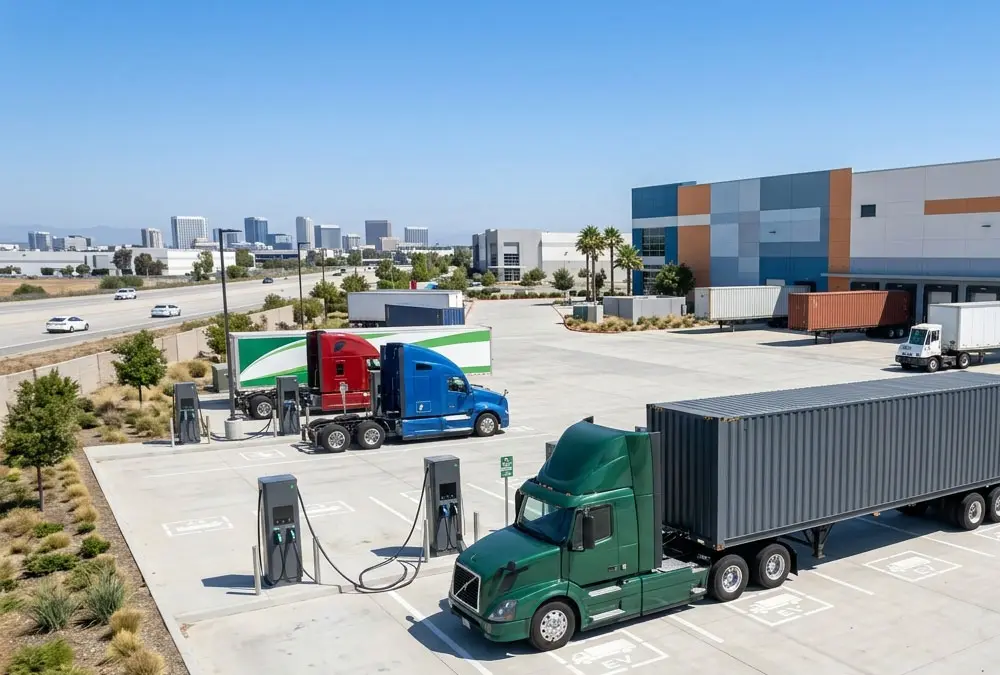
Truck EV charging refers to specialized, high-capacity charging infrastructure engineered specifically for heavy-duty electric trucks, commercial delivery fleets, and electric buses. Unlike residential or light-commercial chargers, these systems handle extreme power loads and prolonged charging cycles. They encompass range-extending AC depot chargers, ultra-fast DC charging stations, and next-generation Megawatt Charging Systems (MCS) designed to pump power into massive battery packs efficiently.
Why Electric Trucks Need Dedicated Charging Solutions
Class 8 commercial electric trucks carry battery packs ranging from 300 kWh to over 600 kWh—nearly six to ten times larger than typical passenger electric cars. Charging these behemoths using standard passenger charging stations leads to operational paralysis and unacceptable downtime.
| Vehicle Parameter | Passenger Electric Vehicle | Class 8 Electric Truck | Impact on User / Fleet Choice |
|---|---|---|---|
| Battery Capacity | 50 kWh – 100 kWh | 300 kWh – 600+ kWh | Higher Energy Demand: Requires heavy-duty industrial power hardware to fully charge overnight or during driver rest breaks. |
| Daily Mileage | 30 – 60 km | 300 – 800+ km | High Fleet Utilization: Demands ultra-reliable fast charging to keep vehicles running consecutive shifts without range anxiety. |
| Energy Consumption | ~0.15 – 0.20 kWh/km | ~1.2 – 2.0 kWh/km | Cost & Power Constraints: Requires intelligent load management and local energy storage to mitigate severe grid demand charges. |
| Charging Window | Flexible (8–12 hours overnight) | Strict (30-min break or 4-8 hr depot) | Operation-Critical Timing: Requires high-power DC fast chargers or Megawatt systems to maintain tight delivery schedules. |
The Growth of Electric Truck Charging Infrastructure
Driven by strict zero-emission mandates, corporate ESG commitments, and rapidly declining total cost of ownership (TCO), commercial truck electrification is surging across Europe, North America, and Asia-Pacific. According to the IEA Global EV Outlook 2026, global sales of heavy-duty electric trucks jumped significantly, placing unprecedented pressure on highway charging corridors and logistics hubs. Furthermore, regulatory frameworks such as the European Union’s AFIR Regulation 2023/1804 mandate high-power charging pools along major transport corridors, solidifying dedicated commercial truck charging as a mandatory asset for modern transport yards.
How Does Truck EV Charging Work?
AC Charging vs. DC Fast Charging for Electric Trucks
Selecting between AC and DC charging depends entirely on your operational duty cycle and dwelling time:
- AC Depot Charging (40kW – 80kW): Ideal for overnight charging where trucks remain parked for 6 to 10 hours. It minimizes equipment capital expenditure but requires longer plug-in durations.
- DC Fast Charger for Electric Trucks (120kW – 360kW+): Essential for multi-shift operations, mid-day top-ups, and fast turnaround depot operations, delivering substantial range in under two hours.
How DC Fast Charging Powers Electric Trucks
DC fast charging bypasses the vehicle’s onboard charger, feeding high-voltage direct current straight into the battery traction pack. High-power grid electricity enters the Power Conversion System (PCS), transforms through industrial rectifier modules, and delivers controlled DC output through heavy-duty liquid-cooled cables directly into the vehicle.
How Megawatt Charging System (MCS) Supports Future Electric Trucks
For long-haul transport, even standard 350 kW DC fast chargers can feel too slow. The standardized Charging Interface Initiative MCS standard supports up to 3.75 MW of power at 1,250 volts and 3,000 amps. This allows Class 8 trucks to replenish 20% to 80% state-of-charge within a mandated 30-minute driver rest break, revolutionizing cross-country freight logistics.
Benefits of Truck EV Charging Solutions for Commercial Fleets
Reduce Electric Truck Charging Downtime
Every minute a commercial rig sits idle at a charger translates directly into lost revenue. Installing an optimized depot charging network ensures vehicles are charged during planned loading, unloading, or mandatory driver break periods, preserving revenue-generating uptime.
Improve Fleet Operating Efficiency
Integrated software platforms schedule charging sessions based on route priorities, battery state-of-charge, and real-time electricity tariffs. You get total visibility into fleet readiness, preventing dispatch delays and maximizing route throughput.
Lower Long-Term Transportation Costs
Electricity is inherently more price-stable than diesel fuel. Combined with reduced maintenance requirements for electric drive trains, high-utilization charging infrastructure yields dramatically lower operational costs per mile over a vehicle’s multi-year lifecycle.
Support Sustainable Transportation Goals
Transitioning from diesel to zero-emission electric heavy vehicles dramatically cuts fleet carbon footprints, helping logistics providers secure long-term contracts with eco-conscious enterprise shippers and fulfill stringent ESG mandates.
Truck EV Charging Infrastructure Requirements and Planning
Power Capacity Requirements for Electric Truck Charging
I often talk with fleet managers who assume they can just buy ten 240kW chargers, plug them in, and call it a day. Then they hit a wall—literally—when local utility companies tell them the local grid capacity simply cannot support a multi-megawatt spike during peak afternoon hours. A fleet of 20 electric trucks charging simultaneously can easily demand 3 MW to 5 MW of peak electrical capacity. Calculating your fleet’s true total energy demand requires auditing daily mileage, arrival/departure schedules, vehicle energy efficiency, and peak power limits.
Electrical Infrastructure for Truck Charging Stations
A complete site electrification plan requires heavy industrial grade equipment:
- Dedicated high-voltage medium-voltage step-down transformers
- Switchgear and protective circuit distribution panels
- Substation connections and utility service upgrades
- Heavy-duty liquid-cooled cable management dispensers
Space and Layout Planning for Truck Charging Depots
Heavy-duty rigs require wide turning radiuses, drive-through bays, and generous staging areas. Charging dispensers must be placed intuitively so drivers can plug in effortlessly without unhooking trailers or blocking yard traffic.
Fleet Truck EV Charging Solutions for Different Applications
Electric Truck Depot Charging
Private freight hubs focus heavily on overnight, managed sequential charging. Centralized power cabinets route energy dynamically across multiple parking stalls as trucks return from daily delivery runs.
Highway and Public Truck Charging Stations
Located along critical transport corridors, highway hubs demand high-power DC charging stations (240kW to 600kW+) equipped with dual connectors and ultra-fast liquid-cooled cables to service transient fleet vehicles quickly.
Port and Industrial Electric Truck Charging
Ports, intermodal rail yards, and mining sites run intensive 24/7 schedules. Equipment in these harsh industrial environments requires IP65-rated rugged enclosures, heavy dust protection, and continuous high-output charging capacity.
Electric Bus and Commercial Vehicle Charging
Municipal transit agencies utilize automated overhead pantograph systems or heavy-duty plug-in chargers to maintain strict bus timetable schedules without disrupting passenger transit routes.
Smart Truck EV Charging Management System
Fleet Charging Management Platform
Hardware is only half the battle; intelligent software completes the equation. Modern cloud platforms monitor real-time charger health, track vehicle state-of-charge, and automate billing and energy consumption logs.
Dynamic Load Balancing for Electric Truck Charging
Dynamic load management algorithmically balances available site power across active chargers. If ten trucks plug in at once, the system caps total demand to stay under grid thresholds, distributing power evenly without tripping circuit breakers.
OCPP-Based Remote Charging Management
Adhering to Open Charge Point Protocol (OCPP 1.6J / 2.0.1) prevents vendor lock-in. It allows fleet operators to manage hardware seamlessly across third-party software backends and execute over-the-air firmware diagnostics remotely.
Battery Energy Storage Integration for Truck EV Charging
Why Truck Charging Stations Need Battery Storage
Simultaneous high-power fast charging creates immense power spikes that trigger exorbitant utility “demand charges.” In many regions, grid upgrades can take 12 to 24 months and cost hundreds of thousands of dollars. Integrating an industrial Battery Energy Storage System (BESS) bypasses these roadblocks effortlessly.
How BESS Reduces Truck Charging Infrastructure Costs
By pairing your fleet chargers with an industrial BESS, you can unlock key financial and operational benefits:
| Energy Storage Function | Technical Mechanism | Direct Commercial Benefit for Buyers |
|---|---|---|
| Peak Shaving | Discharges stored battery energy during sudden high-power truck charging spikes. | Eliminates Demand Charges: Caps grid draw below expensive penalty thresholds, saving up to 40% on monthly electric bills. |
| Load Shifting / Arbitrage | Charges the BESS overnight during low-cost off-peak hours; uses stored power during expensive peak hours. | Lower kWh Energy Costs: Minimizes cost per mile by utilizing cheaper electricity for daytime fleet top-ups. |
| Grid De-risking & Optimization | Acts as a power buffer between weak utility transformers and high-power DC chargers. | Avoids Grid Upgrade Delays: Allows immediate deployment of 360kW+ chargers even when utility local grid capacity is restricted. |
For mid-sized logistics yards, deploying an industrial liquid-cooled BESS—such as a 261kWh cabinet or a scalable 418kWh energy storage system—provides the ideal balance of compact footprint, high discharge rate, and seamless integration with high-power DC charging cabinets.
Solar + BESS + Truck EV Charging Solution
Combining rooftop Solar PV arrays with an outdoor containerized BESS (like a 1MWh energy storage solution) creates an autonomous microgrid. You capture free solar energy during the day, store it safely, and charge your electric trucks overnight with 100% clean, low-cost power.
Truck EV Charging Connector and Charging Standards
CCS2 Charging for Electric Trucks
Combined Charging System Type 2 (CCS2) remains the dominant standard in Europe and overseas markets, delivering up to 350 kW of continuous charging power via liquid-cooled cables.
NACS Charging for Commercial Vehicles
The North American Charging Standard (NACS) is rapidly gaining commercial traction across heavy-duty vehicle classes in North America, streamlining plug-and-charge interoperability.
Megawatt Charging System (MCS) Standard
Engineered specifically for Class 8 commercial vehicles, MCS features an ergonomic single-plug interface designed to safely handle ultra-high electrical currents without overheating.
How Much Does a Truck EV Charging Station Cost?
Equipment Cost Factors
Equipment costs depend on total power rating, number of active dispenser outlets, dynamic power-sharing modules, and liquid-cooling hardware integration.
Installation and Infrastructure Costs
Civil engineering works, trenching, high-voltage transformer installations, permitting fees, and grid connection charges typically represent 30% to 50% of total capital expenditure.
Operating and Maintenance Costs
Ongoing costs include network software licenses, preventive maintenance contracts, component replacements, and scheduled electrical safety inspections.
How to Reduce Truck Charging Infrastructure Investment
Operators can significantly minimize upfront capital and ongoing operational expenses by adopting modular power cabinets, deploying dynamic load balancing, and installing a modular 100kWh or 261kWh industrial BESS to bypass expensive utility substation upgrades.
How to Build a Truck EV Charging Station Step by Step
Step 1: Analyze Fleet Charging Requirements
Conduct a thorough site assessment evaluating daily vehicle mileage, shift patterns, site grid limits, and projected fleet growth over a 5 to 10-year horizon.
Step 2: Design Charging Infrastructure
Develop comprehensive electrical line diagrams, select optimal DC fast chargers or BESS capacity, and layout depot parking spaces to ensure efficient vehicle turning radiuses.
Step 3: Install Chargers and Energy Systems
Execute civil ground works, install step-down transformers, mount charging cabinets, configure EMS cloud software, and integrate safety switchgear.
Step 4: Operate and Optimize Charging Network
Commission equipment, train yard personnel on safe operation protocols, monitor daily charging analytics, and leverage dynamic load software to continually optimize energy costs.
Why Choose AnengJI for Truck EV Charging Solutions?
Complete Commercial EV Charging Product Portfolio
AnengJI delivers robust, industrial-grade charging hardware built for demanding environments. From high-efficiency AC depot chargers to modular 360kW+ DC fast charging systems, our hardware guarantees reliable performance and maximum vehicle uptime.
Integrated EV Charging and Energy Storage Solutions
We do not just sell standalone chargers—we engineer complete energy ecosystems. By combining high-power DC chargers with our proprietary liquid-cooled 261kWh and 418kWh Battery Energy Storage Systems, advanced PCS units, and smart EMS software, AnengJI empowers fleet operators to overcome grid capacity barriers effortlessly.
Customized Solutions for Global Truck Electrification Projects
Our experienced engineering team provides end-to-end support—from initial site power auditing and customized OEM equipment manufacturing to global technical consultation and project execution.
Frequently Asked Questions About Truck EV Charging
What is truck EV charging?
It is high-capacity charging infrastructure specifically engineered to power heavy-duty electric trucks, delivery fleets, and buses rapidly and safely.
Can standard DC fast chargers charge electric trucks?
Yes, provided the charger uses compatible standards like CCS2 or NACS. However, heavy-duty trucks require higher continuous power outputs (180kW to 360kW+) to ensure practical charging speeds.
How long does it take to charge an electric truck?
A standard 300kWh truck pack takes roughly 1 to 1.5 hours on a 240kW DC fast charger, or under 30 minutes using next-generation Megawatt Charging Systems (MCS).
What charger power is needed for electric trucks?
For overnight depot parking, 40kW–80kW AC chargers are sufficient. For rapid depot turnaround and highway corridors, 180kW–360kW+ DC fast chargers or MCS units are necessary.
Do electric truck charging stations need battery storage?
While not strictly mandatory, integrating a BESS (such as a 261kWh or 418kWh system) prevents massive grid demand penalties, buffers weak utility connections, and avoids costly substation upgrades.
What is the difference between CCS2 and MCS charging?
CCS2 delivers up to 350 kW, suitable for regional delivery trucks. MCS supports over 1 MW of power, designed specifically for Class 8 long-haul heavy trucks requiring rapid rest-break top-ups.
How much does an electric truck charging station cost?
Total project costs vary based on site grid upgrades, charger power levels, and energy storage capacity. Utilizing smart load software and battery storage significantly lowers overall deployment expenses.
Deploy Your Truck EV Charging Solution with AnengJI
Ready to electrify your commercial fleet without risking operational downtime or costly grid upgrades? Contact the engineering experts at AnengJI today. Share your fleet size, energy demand, and site location to receive a customized, turnkey charging and energy storage proposal tailored precisely to your operational goals.
Request Your Custom Fleet Charging Solution