Introduction
Choosing a viable EV Charging Business Model is often harder than picking hardware cabinets. I see investors buy expensive dispensers first. Then local grid limits hit them hard. You must align site selection, equipment choices, and monetization methods carefully. Otherwise, utility demand penalties will quickly eat your margins. Let us examine how real operators protect their capital while scaling fast charging hubs.
Buyer Insight: “Will low station utilization ruin my cash flow?”
That concern keeps many asset owners awake. Hardware alone rarely pays bills early on. Successful site hosts combine retail foot traffic, corporate fleet contracts, and smart power management. Adding local energy storage prevents demand fee shocks when traffic slows down.
What Is an EV Charging Business Model?
An EV charging revenue model defines how you generate income from electric vehicle supply equipment. It balances capital expenditure against long-term operational income streams.
Understanding the Commercial EV Charging Business Opportunity
Electric passenger cars and commercial delivery vans are filling highway lanes fast. Recent industry data shows public charging demand surging worldwide. According to global energy transition reports, public charging energy consumption is expanding at over 30% annually. That creates a massive commercial opening for site developers.
How Does an EV Charging Business Make Money?
Commercial operators do not rely solely on selling electrons. Smart site developers tap into multiple cash flows:
- Direct Charging Revenue: Charging drivers per kilowatt-hour consumed or per minute connected.
- Subscription Revenue: Offering local commuters or fleet vans discounted monthly charging passes.
- Advertising Revenue: Running digital media ads on high-resolution 15-inch charger touchscreens.
- Fleet Charging Contracts: Securing guaranteed overnight charging revenue from commercial delivery logistics fleets.
- Energy Management Services: Exporting stored battery power back to local grids during peak pricing events.
Key Factors That Determine EV Charging Business Profitability
Site location drives initial foot traffic. Charger utilization rates keep cash flowing. Electricity supply costs dictate your baseline operating costs. Choosing an adaptable operating model helps you navigate local utility policy shifts smoothly.
Commercial EV Charging Business Models: Different Ways to Generate Revenue
Selecting scalable commercial EV charging solutions depends on whether your core goal is direct electricity retail or indirect property value enhancement.
Direct DC Charging Revenue Model
This strategy focuses on fast high-power dispensing. Drivers pay directly using credit card terminals or mobile applications. Public highway hubs and commercial fleet depots favor this setup. Upfront capital outlay runs high. Yet, fast vehicle turnover generates consistent daily cash flow.
Indirect Revenue Model Through Business Partnerships
Retail malls, luxury hotels, and dining plazas often treat destination chargers as customer amenities. Offering reliable Level 2 charging keeps drivers on-site longer. That increases overall retail sales, boosting average store receipts significantly.
Location-Based EV Charging Business Model
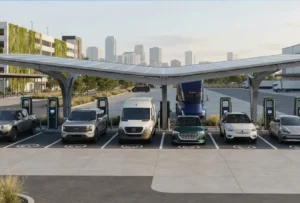
Highway plazas demand high power output due to short dwell times. Urban parking garages favor lower power units scattered across many stalls. Strategic partnerships with parking operators allow rapid market expansion without buying real estate.
Real Estate Integrated EV Charging Model
Commercial office parks and apartment buildings integrate charging directly into tenant leases. It raises real estate asset value, keeps commercial tenants longer, and fulfills strict corporate ESG sustainability mandates.
4 Strategies to Start an EV Charging Business Successfully
Executing a smooth EV charging infrastructure project demands clear planning. Skipping site feasibility checks leads to costly delays.
Strategy 1: Understand Your Market and Select the Right EV Charging Business Model
Analyze local electric vehicle adoption curves before purchasing hardware. Study traffic counts, local grid capacity, and driver habits near your planned site.
| Deployment Scenario | Recommended Model | Power Requirement | Direct Advantage for Buyer |
|---|---|---|---|
| Highway Plaza | DC Fast Charging Hub | 180kW – 360kW DC | High driver throughput yields fast fee recovery. |
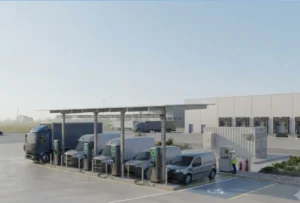
| Logistics Fleet Depot | Dedicated Fleet Charging | 120kW – 240kW DC | Guaranteed vehicle charging cycles lower operational risk. |
| Hotel & Hospitality | Destination Charging | 7kW – 22kW AC | Low equipment cost with long overnight guest dwell times. |
| Shopping Center | Hybrid Customer Retail | 60kW – 120kW DC | Keeps shoppers on-site 45+ minutes to boost retail spending. |
Strategy 2: Build a Reliable EV Charging Technology Stack
Hardware needs heavy-duty power modules housed in weather-rated enclosures. Open Charge Point Protocol (OCPP 1.6J/2.0.1) network software manages remote billing, access controls, and diagnostics. Simple mobile app interfaces let drivers reserve stalls and pay hassle-free.
Strategy 3: Develop a Strategic EV Charging Deployment Plan
A balanced charger mix prevents bottlenecks. Combining 22kW AC units for long stays with 120kW DC fast chargers keeps traffic moving. Always evaluate local transformer limits upfront. Adding dynamic load balancing or localized energy storage prevents grid overloads.
Strategy 4: Build Strong Partnerships and Improve Customer Experience
Coordinate early with local electric utilities. Work with experienced equipment manufacturers who provide reliable technical support. Ensuring easy credit card payments keeps drivers coming back.
EV Charging Business Model Types: Which Strategy Fits Your Investment Goal?
Aligning your capital budget with the right EV charging station investment structure keeps project risk manageable.
Cost Recovery Model
This approach sets usage fees to cover equipment depreciation, grid electricity, and annual field maintenance. It suits corporate workplaces and municipal sites seeking low risk over high profits.
Profit-Oriented EV Charging Business Model
Here, operators set aggressive retail margins on per-kWh rates while selling digital screen ad space. It requires busy locations like highway plazas, yielding higher returns when traffic stays steady.
Fully Subsidized EV Charging Model
Government clean-energy grants or utility infrastructure programs fund upfront installation costs. Municipalities use this model to build out public EV infrastructure with minimal local taxpayer outlay.
Loss-Leader EV Charging Model
Commercial venues offer free or heavily discounted charging. Losing money on electricity pays off by attracting high-value patrons who spend heavily at nearby retail stores or hotels.
EV Charging Business Costs: Understanding Your Total Investment
Estimating total EV charging station cost metrics requires looking far beyond charger cabinet price tags.
- Equipment Hardware Cost: Purchasing AC wallboxes ($1,000–$3,000) or high-power DC fast dispensers ($15,000–$80,000+).
- Civil & Electrical Upgrades: Trenching concrete, pulling heavy copper wire, and installing dedicated step-down transformers ($10,000–$60,000+).
- Software & Network Management: Annual cloud platform licensing, payment processing integrations, and cell data connections ($150–$300 / port).
- Maintenance & Operations: Spare cable replacements, emergency technician dispatches, and routine inspections ($800–$2,000 / year).
Choosing the Right EV Charger for Your Business Model
Selecting the right commercial EV charger hardware keeps initial installation costs reasonable while satisfying driver expectations.
AC Charging Solutions
Compact 7kW to 22kW Level 2 wallboxes work well for long stays. Office lots, residential apartments, and overnight hotel garages use them to build out affordable multi-stall charging lines.
DC Fast Charging Solutions
60kW to 240kW DC dispensers supply rapid energy directly to vehicle battery packs. They suit retail centers, highway hubs, and delivery fleets needing fast turnarounds under an hour.
High-Power Charging with Battery Energy Storage
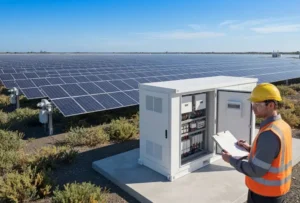
Pairing DC chargers with localized stationary battery storage creates a resilient microgrid. BESS units buffer power demand during fast charging sessions, protecting your building from utility demand fee spikes.
Technical Deep-Dive: Battery Chemistries & Grid Storage Alternatives
Lithium Iron Phosphate (LFP): Industrial battery chemistry known for strong thermal stability, non-combustible properties, and 6,000+ deep discharge cycles. Ideal for outdoor commercial BESS cabinets.
Alternative Options: Nickel Manganese Cobalt (NMC) offers higher energy density but carries greater thermal risks. Legacy Lead-Acid batteries degrade too quickly under daily fast-charging peak shaving needs.
How Battery Energy Storage Improves EV Charging Business Profitability
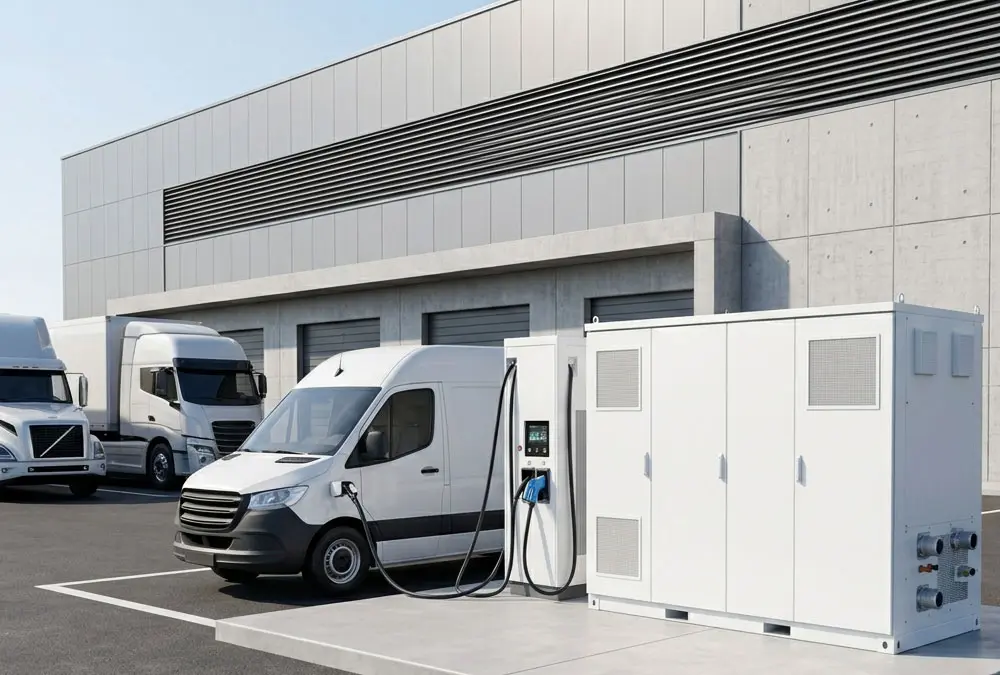
Smart EV charging energy management relies on stationary storage to protect operating margins from utility demand charges.
Reduce Peak Demand Charges
Commercial power bills charge steep penalties for brief usage spikes. BESS cabinets discharge instantly when multiple fast chargers ramp up, keeping your site’s utility grid draw smooth and predictable.
Optimize Electricity Cost
Store inexpensive off-peak power at night, then discharge it during daytime peak pricing windows. That arbitrage lowers your baseline energy expenses significantly.
Enable Renewable Energy Integration
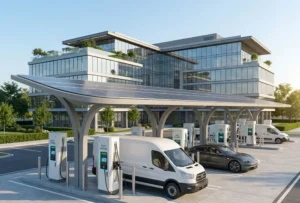
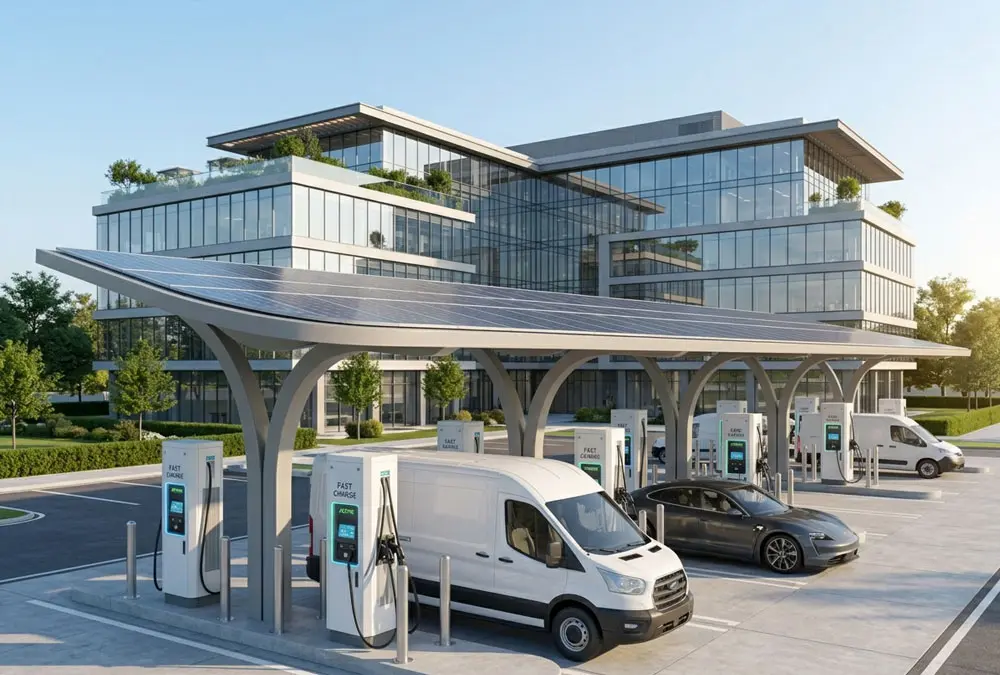
Clean energy generated from parking lot solar canopies feeds straight into storage cabinets. Drivers get true zero-emission charging without putting extra stress on local transformers.
Support High-Power Charging Without Grid Upgrade
Deploying localized battery systems lets you install high-output 180kW chargers on limited local transformers, saving tens of thousands in utility upgrade fees.
Matching storage capacity to your site profile is essential for project success:
| BESS Capacity | Cooling Tech | Primary Application | Direct Advantage for Buyer |
|---|---|---|---|
| 100kWh Cabinet | Air-Cooled LFP | Small Retail Sites (60kW DC) | Compact footprint eliminates basic demand spikes easily. |
| 261kWh Cabinet | Liquid-Cooled LFP | Fleet Depots & Hubs (120kW+ DC) | Liquid cooling ensures uniform thermal management under heavy cycles. |
| 418kWh Cabinet | Liquid-Cooled LFP | High-Traffic Retail & Logistics Hubs | Sustains back-to-back fast charging sessions without grid strain. |
| 1MWh Container | Liquid-Cooled LFP | Highway Supercharging Stations | Utility-grade storage supports high megawatt charging hubs easily. |
Why Choose AnengJI for Your EV Charging Business Project?
AnengJI provides complete end-to-end commercial charging infrastructure, handling equipment design, manufacturing, and microgrid integration.
Complete EV Charging Hardware Solutions
We manufacture durable 7kW–22kW AC wallboxes, 30kW–180kW DC fast chargers, and high-power 240kW–480kW liquid-cooled dispensers built for heavy commercial use.
Integrated Charging + Battery Storage Solutions
We deliver fully integrated Solar + BESS + EV Charging setups. Pairing our heavy-duty LFP storage cabinets with fast chargers lowers demand penalties and keeps operating margins healthy.
Factory Direct Manufacturing and OEM Support
Ordering directly from our manufacturing facilities removes middleman markups. We provide custom branding, flexible enclosure options, and factory-backed warranties.
Professional Project Support
Our team helps site owners throughout every project phase—from early load studies and electrical design to installation support and long-term service maintenance.
Frequently Asked Questions About EV Charging Business Models
How profitable is an EV charging business?
Profitability depends on station utilization rates, electricity costs, and location. Sites with 15–20% daily utilization using smart energy storage generally achieve capital payback within 3 to 5 years.
What is the best EV charging business model?
There is no single best model. Highway hubs do well with direct DC pay-per-use charging. Retail sites succeed by offering destination charging to drive store foot traffic and overall customer sales.
How much does it cost to start an EV charging station?
A basic Level 2 commercial setup costs $6,000 to $14,000 per stall installed. A dual-port 120kW DC fast charging station ranges from $60,000 to $130,000+, depending on local electrical grid work.
How do EV charging companies make money?
Operators profit through direct kWh selling margins, monthly membership fees, touchscreen screen advertising, fleet charging contracts, and grid demand-response payouts.
Is EV charging a good investment?
Yes. Rapid EV adoption guarantees expanding customer demand. Choosing high-traffic locations and managing power costs properly turns commercial chargers into valuable long-term revenue assets.
Can battery storage improve EV charging profitability?
Absolutely. Stationary battery systems peak-shave rapid power draws, preventing expensive utility demand penalties that can otherwise make up 30% to 50% of monthly power bills.
Start Your EV Charging Business with a Complete Turnkey Solution
AnengJI helps businesses design, deploy and scale profitable EV charging infrastructure with reliable hardware, smart energy management and customized project solutions.
✓ Site planning
✓ Charger selection
✓ Cost estimation
✓ ROI calculation
✓ PV+BESS integration