Introduction
Your logo is on the charger, the first batch has reached customers—and then the expensive questions begin. Why will the charger connect only to the supplier’s backend? Why does the certificate identify a different model? Why did a later firmware build change payment or authorization behaviour? Why can nobody confirm whether the mould, source code or signing keys can be released? These are not unusual “after-sales” details. They are the consequences of choosing an OEM or ODM model without defining what the buyer actually controls.
The operational stakes are measurable. A peer-reviewed study of real charging data from 54 DC fast chargers at 36 California corridor sites found generally successful outcomes of only 83% and 77% across two networks after one or more attempts, with at least 3% of users experiencing unexpected interruptions. The study also found that communication was the leading persistent error category. An OEM vs ODM EV charger decision must therefore go beyond price and appearance: it determines who can prevent, diagnose and correct the failures customers eventually experience.
This guide gives distributors, private-label brands and CPO hardware teams a practical answer. It shows the clearest advantages of each sourcing model, connects recurring buyer concerns to specific solutions, and provides a decision route from first market test to deeper product ownership.
The short answer
- Private label / light OEM wins on launch speed and lower engineering exposure. Use it to test a market when an existing platform already meets the customer requirement.
- Platform ODM wins on controlled differentiation. Use it when a verified tender, customer or operating need cannot be solved with supported options.
- Buyer-designed OEM wins on long-term product and supply-chain control. Use it only when your company owns a buildable design and can maintain engineering, compliance and field support.
- The safest choice is not the deepest one. Select the lowest-depth model that meets the requirement and preserves the ownership, evidence and exit rights you need.
OEM vs ODM EV Charger Advantages at a Glance
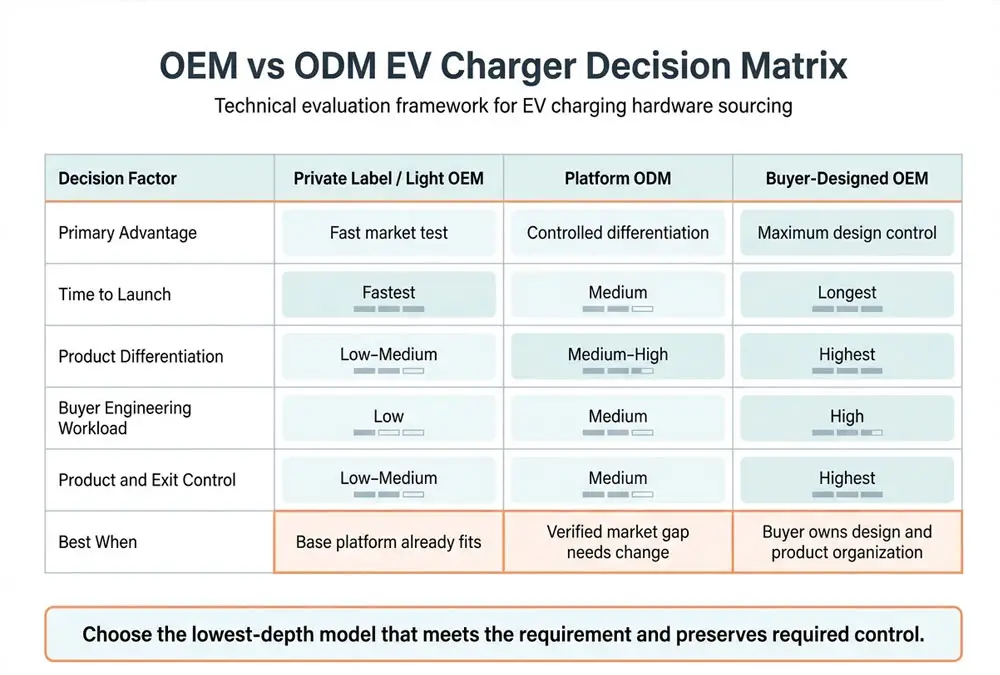
Suppliers do not use OEM and ODM consistently. One may call a branded catalogue charger OEM; another may use OEM only when the buyer supplies the complete design. The comparison below therefore uses observable sourcing models. It shows what each route does better—not which acronym is universally correct.
Translate every quotation into the base product, design authority, requested changes, engineering deliverables, evidence, asset ownership, acceptance tests and lifecycle support. If those fields are missing, the price is not yet comparable.
| Decision factor | Private label / light OEM | Platform ODM / co-development | Buyer-designed OEM | Buyer conclusion |
|---|---|---|---|---|
| Primary advantage | Fastest launch with the lowest product-development burden | Differentiation without rebuilding every subsystem | Highest design, roadmap and multi-supplier control | Choose the advantage that solves a documented business constraint |
| Starting point | Existing production platform and supported options | Existing architecture adapted to an agreed brief | Buyer-controlled design and build package | The starting point determines how much engineering and evidence must be created |
| Buyer workload | Brand approval, market fit and supplier verification | Requirements, reviews, impact decisions and acceptance | Continuous design authority, quality, compliance and lifecycle engineering | Do not choose a model that exceeds the team’s ability to maintain it |
| Main commercial risk | Low differentiation and supplier/platform dependence | NRE, schedule, validation and uncontrolled variants | High fixed investment, incomplete industrialization and ongoing engineering cost | Compare total programme cost and exit cost, not unit price alone |
| Best choice when | Demand is unproven and the base platform already fits | A validated requirement needs controlled product change | The buyer has stable volume, defensible IP and a capable product organization | A deeper model is justified only by evidence, not prestige |
A programme may combine these routes. A brand can retain a factory power platform, commission a new serviceable enclosure and require its own backend workflow. The contract should describe each boundary rather than forcing the entire product into one acronym.
What Buyers and Operators Are Actually Worried About
To move beyond supplier brochures, six public technical discussions about charger integration, firmware, backend access, interoperability testing and after-sales support were reviewed on 22 November 2026. Each discussion was counted once for every clearly present theme. This is a small purposive sample—not a representative survey—but it shows how technical buyers describe the problems in their own operating context.
| Observed decision concern | Discussions containing the theme | What goes wrong after purchase | OEM/ODM solution |
|---|---|---|---|
| Software and interoperability were not proven on the delivered configuration | 6 of 6 | The charger connects only partially, optional functions behave differently or support depends on one firmware branch | Test the exact controller, firmware, security route and required workflows before pilot approval |
| Acceptance and regression testing were needed | 4 of 6 | A working sample or successful protocol response is mistaken for production acceptance | Create repeatable UAT/FAT cases and define which hardware or firmware changes trigger retesting |
| Logs, administrator access or migration control were missing | 3 of 6 | The operator cannot diagnose a fault, change endpoint safely or move to another backend | Contract endpoint, credential, log, export, update and transition rights as separate deliverables |
| Engineering support and continuity were unclear | 2 of 6 | Warranty discussions replace root-cause support; firmware and spare-part questions remain unresolved | Separate warranty, diagnostics, escalation, parts, software-support period and end-of-life obligations |
Larger research points in the same direction. A 2026 peer-reviewed analysis of 120,052 user reviews from 118 public charging stations in Wuhan found that reliability, charging speed, access, price and amenities dominated user evaluations; negative reliability, payment and access failures carried a disproportionate penalty. This does not tell a European brand whether to choose OEM or ODM. It does tell the brand where differentiation creates customer value: reliable workflows, usable access, clear pricing and service recovery usually matter more than a cosmetic redesign. See the Transportation Research Part D study.
Why the sourcing choice affects the customer experience
A separate field test of 655 public DC fast-charging ports in California’s San Francisco Bay Area found 73.3% functional at the time of evaluation. The recorded outcomes included 7.6% payment-system failures, 6.1% charge-initiation failures and 3.2% of ports where the cable could not reach the vehicle inlet.
The peer-reviewed field study covers one US region and public DC charging; it is not an EV charger industry failure rate. Its purchasing lesson is broader: payment integration, charger/vehicle initiation, physical cable layout and service restoration need acceptance criteria and named owners. Changing the logo does not solve them.
Choose the Sourcing Model by Business Stage
A new distributor should buy learning before it buys tooling
A first product range has uncertain demand, support load and channel feedback. The common fear is becoming trapped with a generic product; the more immediate risk is spending on tooling before the team knows which features customers will pay for. A production-proven private-label platform lets the distributor test the market while investing in local installation knowledge, spares, training and sales.
Solution: define the trigger for deeper ODM before the first order: repeated lost tenders, a mandatory local interface, a measurable service problem or a feature with durable revenue value. “Competitors have a different cabinet” is not a sufficient trigger.
A growing charging brand needs controlled differentiation
Once demand is stable, platform ODM can improve product fit without rebuilding the complete charger. The pain point is rarely “we need more customization.” It is usually specific: technicians cannot replace a module quickly, one payment flow fails, the current enclosure blocks a tender, or the CSMS cannot recover sessions after a network interruption. Solution: connect every requested change to one failure, customer requirement or operating KPI, then keep everything else on the proven baseline. This prevents every connector, modem, display and firmware branch from becoming another unsupported SKU.
A CPO should value operational control more than cosmetic exclusivity
Charge point operators often gain more from endpoint access, logs, offline rules, remote diagnostics and migration rights than from a unique enclosure. Their recurring complaint is that “compatible” hardware can connect but still fail a remote command, payment record, offline authorization or recovery workflow. Solution: make the exact controller, firmware, network security and intended CSMS part of sample acceptance; require read-back or physical verification for important commands; and contract the right to change endpoints and export data.
A buyer-designed OEM programme requires a real product organization
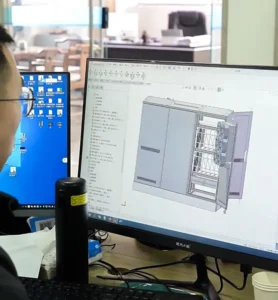
Full design control can create defensible value, but it also creates continuing work. The failure pattern is familiar: a buyer funds a “custom product” yet the supplier still controls the build files, alternatives, firmware release and factory test. Solution: name the buyer’s design authority, approve a buildable manufacturing package, define change approval and retain the evidence required to maintain the product. Without that organization, paying for a custom design creates an unmanaged dependency rather than control.
Use the CONTROL Test Before Approving OEM or ODM
CONTROL turns a broad sourcing label into seven approval gates. A project should use the lowest-depth model that passes all seven.
| Gate | Decision question | Evidence needed | What failure looks like |
|---|---|---|---|
| C — Customer need | Which customer, tender or operating need cannot be met by a proven platform? | Approved requirement and gap list | Custom work without measurable buyer value |
| O — Ownership | Who owns and can access each design, tool, file, credential and dataset? | Asset-by-asset ownership schedule | Buyer owns the logo but cannot build, update or migrate the product |
| N — Needed capability | Can the buyer specify, review and maintain the chosen engineering depth? | Named product, engineering, compliance and support owners | Design decisions default to whoever is available at the factory |
| T — Testing | What must be analysed, tested or reassessed after each change? | Change-impact and validation plan | A visually approved sample lacks usable market evidence |
| R — Repeatability | Can a later batch reproduce the approved product? | Golden baseline, BOM/firmware identity and change notice | The exterior is unchanged, but controller or behaviour drifts |
| O — Operations | Who diagnoses faults, supplies parts and maintains software? | SLA, logs, escalation, spares and support period | Warranty exists but nobody owns restoration |
| L — Lifecycle exit | Can the buyer support or transfer the product if the relationship ends? | Release, transfer, data export and transition terms | A functioning fleet becomes stranded by cloud or supplier dependence |
Consider a European distributor planning an 11/22 kW AC range. If an existing platform meets the electrical requirement and the real differentiators are branding, language and tested CSMS integration, a private-label or light platform route may pass CONTROL. A new controller board adds risk without improving the customer outcome. Deeper engineering should wait until the market produces a requirement the base platform cannot meet.
Who Owns the Product After the Contract Is Signed?
“The buyer owns the product” is too vague to enforce. Product architecture, drawings, tooling, fixtures, technical documentation, firmware, signing credentials, backend access and field data may have different owners. Put each asset on a separate line.
| Asset | Contract fields | Common false assumption |
|---|---|---|
| Base architecture and drawings | Legal owner, use rights, modification rights, access and derivative work | Paying NRE transfers the complete design |
| Enclosure tooling and fixtures | Identity, location, custody, maintenance, exclusivity, inspection, release and transfer | “Buyer-owned mould” means the buyer can immediately move production |
| Technical file and evidence | Holder, exact covered product, access, market use and update responsibility | A certificate logo proves every branded variant is covered |
| Firmware assets | Source, build environment, dependencies, binary, signing, update, rollback and escrow | A custom interface means the buyer owns the firmware |
| Endpoints, credentials and data | Administrator rights, rotation, recovery, export, retention and termination handover | OCPP automatically removes operational lock-in |
| Spares and diagnostics | Part baseline, tools, manuals, stock, support period and end-of-life notice | A warranty period guarantees fast restoration |
An industry detail buyers often miss: owning a mould is not the same as controlling it. The tool may be stored at the supplier, require factory-specific fixtures or depend on undocumented process settings. The agreement should cover location, maintenance, use by third parties, release conditions, transfer cost and the accompanying fixtures and process data.
Firmware ownership is also several separate rights. Source code, build environment, third-party libraries, compiled binaries, signing keys, administrator credentials, update/rollback authority and diagnostic logs should not be compressed into one “firmware included” row. A branded screen proves none of those rights.
How OEM and ODM Change Compliance Work
For Europe, the commercial label does not decide the legal role. The European Commission’s 2022 Blue Guide explains that a company that has a product manufactured and places it on the EU market under its own name or trademark may be treated as the manufacturer. It also states that subcontracting production does not remove the manufacturer’s overall responsibility, and substantial modifications can require reassessment.
For the buyer, this means a factory certificate folder is not the end of due diligence. Check whether the documents cover the exact product identity and changed construction, whether the brand can access the necessary technical information, and who updates the file after component, enclosure or software changes. The applicable EU legislation still depends on the product and intended use; the Blue Guide is horizontal guidance, not a charger-specific approval certificate.
A quantified Southeast Asian example
Singapore’s LTA Guidelines for the Supply of EV Chargers, dated 17 March 2025, state that chargers must be approved before supply or installation under the local framework. The guidance lists an application fee of S$1,700, accepts fixed Mode 4 DC chargers up to 500 kW under the stated TR25 versions, and identifies rated voltage, rated power, charging mode, connector type and single-versus-multiple connectors as differences that can require separate type approval.
Those figures are Singapore-specific; they are not a Southeast Asia-wide rule. They show why a product change that looks simple in a sales meeting can create a separate approval task, budget and schedule in the destination market.
In the United States, “UL certified” is also too broad as a procurement field. UL Solutions’ EV charging infrastructure overview distinguishes ANSI/UL 2202 for DC charging equipment, ANSI/UL 2594 for EV supply equipment and ANSI/UL 2251 for plugs, receptacles and couplers. Request the exact model and certification record relevant to the equipment—not a logo sheet or a claim applied to an entire product family.
Software and OCPP Can Decide Between OEM and ODM
A charger can be electrically sound and still fail the business model. If the operator cannot change the OCPP endpoint, retrieve useful logs, maintain offline authorization or migrate to another CSMS, the apparent hardware saving may create years of operating dependence.
The Open Charge Alliance certification programme uses approved independent laboratories to test conformance and currently identifies certification routes for OCPP 1.6, OCPP 2.0.1 and white-label products. That is valuable evidence. It does not prove that the exact charger, firmware, network route, payment system and selected CSMS complete every required workflow.
For every important software function, test four layers:
- Requested state: what the CSMS or operator asked the charger to do.
- Protocol response: accepted, rejected, unsupported, scheduled or timed out.
- Verified charger state: read-back value, connector status, measured output or local alarm.
- Business outcome: correct access, energy delivery, billing record, load limit or recovery action.
A configuration command returning “Accepted” does not necessarily prove that the value was applied, survived a reboot or created the intended operating result. This is why the firmware and CSMS acceptance plan must be agreed before mass production. For a full integration schedule, use AnengJi’s OCPP procurement and testing guide.
Compare Total Programme Cost, Not Only Unit Price
OEM and ODM quotations often become misleading when one bidder includes engineering and another treats it as a future change order. Use the same cost boundary for every offer:
Total programme cost = units + engineering/NRE + tooling and fixtures + samples/pilot + testing and compliance + integration + inspection + freight/import + spares + software and lifecycle support
Keep three cost categories separate. One-time cost includes engineering, tooling, verification and initial integration. Per-unit cost includes hardware, licensed options, packaging and production test. Lifecycle cost includes cloud or software fees, field service, spares, security updates, recertification after changes and supplier migration.
There is no neutral public database that provides one reliable EV charger OEM or ODM price, MOQ or breakeven volume. Supplier-published figures vary because platforms, power levels, change depth and SKU counting differ. AnengJi’s separate EV charger MOQ, cost and lead-time guide explains how to normalize those commercial inputs without turning a supplier example into an industry average.
Start From the Closest Product Platform
The fastest route to a controlled product is usually to identify the closest existing platform, then document only the gaps. That reduces the number of interfaces and tests changed at once.
| Published starting platform | Published electrical reference | Likely sourcing route | Confirm before RFQ approval |
|---|---|---|---|
| 7–22 kW AC Charger | 7 kW at 230 V / 32 A; 11 kW at 400 V / 16 A; 22 kW at 400 V / 32 A | Private label or controlled platform configuration for a first wallbox range | Exact connector, network, access, option combination, evidence and destination supply |
| 60–160 kW DC Charger | 60/80/120/160 kW options; product page lists 380 VAC ±15% input and 0–200 A output current | Project configuration or platform ODM when connector, payment, display and backend workflows differ | Exact order code, voltage/current curve, connector allocation, firmware, payment flow and model-specific documents |
These published figures are shortlisting references, not a commitment that every connector, payment, software and certification option can be combined. The RFQ should identify one base order code and one change matrix. If you need to decide what can be changed after choosing the sourcing route, continue with the EV charger ODM customization guide.
How to Audit an EV Charger ODM Factory
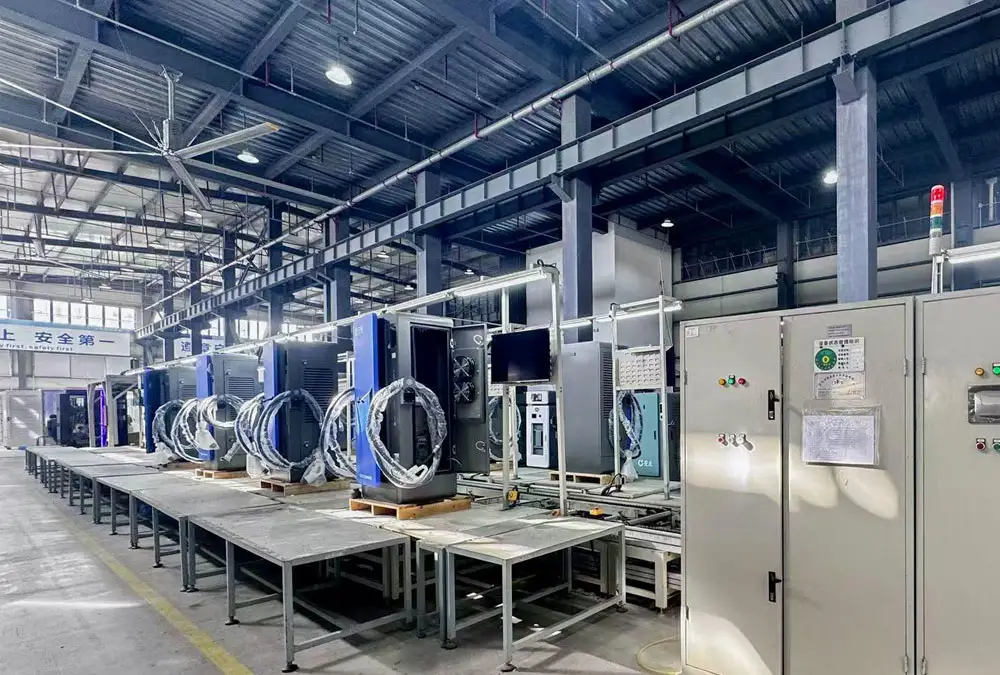
A factory tour can show machinery and production activity. It does not prove that your exact product will be controlled. Ask the prospective EV charger ODM manufacturer to walk one model through its records.
- Product identity: order code, drawings, controller and PCB revision, approved BOM and firmware/configuration identity.
- Change process: who reviews a component, enclosure or firmware change; which evidence is repeated; how the buyer approves it.
- Production controls: work instructions, torque/test limits, traceability, nonconformance handling and final acceptance records.
- Software controls: release identity, security credentials, endpoint provisioning, regression test and rollback method.
- Support controls: diagnostic data, first responder, engineering escalation, parts approval and restoration verification.
- Exit controls: tooling release, files, credentials, data export, transition assistance and end-of-life notice.
One product’s complete record is more useful than a presentation containing many certification logos. It reveals whether sales, engineering, quality and service share the same product definition.
Move From Private Label to ODM Through Stage Gates
- Validate the market. Use a proven platform, required branding and destination configuration to learn what customers actually buy and support teams actually encounter.
- Validate operations. Test production-representative hardware with the intended CSMS, payment route, network, user workflow and recovery cases.
- Approve controlled differentiation. Change only the items linked to verified customer, tender, installation or service needs.
- Expand ownership deliberately. Acquire tooling, firmware or design control only when the business value and internal capability justify the responsibility.
- Prepare continuity. Maintain a reproducible production baseline, critical spares, data/credential access and an agreed supplier-transition path.
This approach avoids two extremes: remaining permanently dependent on a closed supplier platform, or funding a ground-up product before demand and internal capability are ready.
What to Send Before Requesting an OEM or ODM Quote
A useful sourcing brief should let the factory identify the nearest platform, the genuine engineering gap and the information still missing. Include:
- destination country, intended sales route and responsible economic operator;
- customer use case and the specific gap the current product cannot meet;
- AC/DC power, electrical envelope, connector count and base product preference;
- brand, enclosure, display, language, access, payment, communications and software requirements;
- OCPP/CSMS functions, network security, offline behaviour, data and administrator-access requirements;
- required evidence, sample tests, FAT and pilot acceptance criteria;
- ownership expectations for design files, tooling, firmware assets, credentials and data;
- forecast by model/SKU, pilot quantity and desired launch window;
- warranty, remote diagnostics, spares, software support and end-of-life requirements.
Need to compare a private-label, platform ODM or buyer-designed route?
Send the destination market, use case, power/connector requirement, software workflow, expected quantity and ownership priorities. AnengJi can review the nearest available platform and identify which items require configuration, engineering or additional evidence.
OEM vs ODM EV Charger FAQ
What is the difference between OEM and ODM EV chargers?
The terminology varies by supplier. Instead of relying on the acronym, compare the starting design, design authority, changes, deliverables, ownership, evidence and support. Private label usually retains the existing platform; platform ODM introduces controlled product changes; buyer-designed OEM or contract manufacturing starts from a buyer-controlled build package.
Is OEM or ODM better for a new EV charger brand?
For many new brands, the better starting point is the lowest-depth proven platform that meets the market requirement. It allows demand, support and integration assumptions to be tested before deeper engineering. ODM becomes appropriate when a verified market gap cannot be solved through supported options.
Can we start with private label and move to ODM later?
Yes, but treat the move as a controlled change programme. Confirm the original platform’s ownership and evidence, define the new requirement, assess affected interfaces, build a production-representative sample and approve a new baseline. It is not an automatic upgrade.
Who owns the design, mould and firmware in an ODM project?
Ownership is contractual and should be split by asset. Paying development or tooling charges does not automatically transfer the base design, production fixtures, source code, signing keys or release rights. List the owner, permitted use, access, maintenance, release and termination treatment for each item.
Does rebranding change compliance responsibility in Europe?
It can affect the brand’s legal role. The European Commission’s Blue Guide explains that a company placing a product on the market under its own name or trademark may be treated as the manufacturer under relevant EU product rules. Confirm the exact product, applicable legislation, economic operators and documentation with qualified compliance support.
Does OCPP certification guarantee compatibility with every backend?
No. Certification is useful independent conformance evidence for its defined product, software and scope. The project must still test the exact charger, firmware, security route, CSMS and required normal, offline, fault and recovery workflows.
What should an EV charger OEM or ODM RFQ include?
Include the market and use case, base product, required changes, software and payment workflows, evidence, ownership, acceptance, forecast, service and exit requirements. Ask the supplier to mark every item as standard, configurable, engineering-required, evidence-impacting or unresolved.
The Best Model Is the One Your Business Can Control
The right OEM vs ODM EV charger decision is rarely “more customization is better.” A proven private-label platform can be the professional choice for a new distributor. Platform ODM can create useful differentiation for a growing brand or CPO. Full buyer-designed OEM manufacturing can be valuable when the buyer has defensible IP and the organization needed to maintain it.
The selection becomes defensible when every quotation answers the same questions: what starts unchanged, what changes, who decides, what proves acceptance, who owns each asset, how repeat orders stay consistent, how the fleet is supported and what happens when the relationship ends. That is a stronger procurement foundation than any acronym.