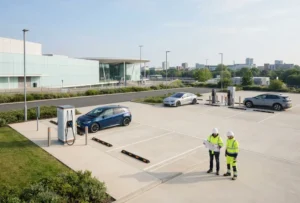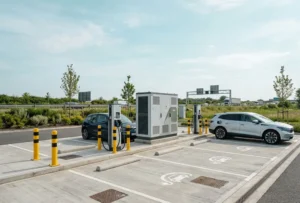
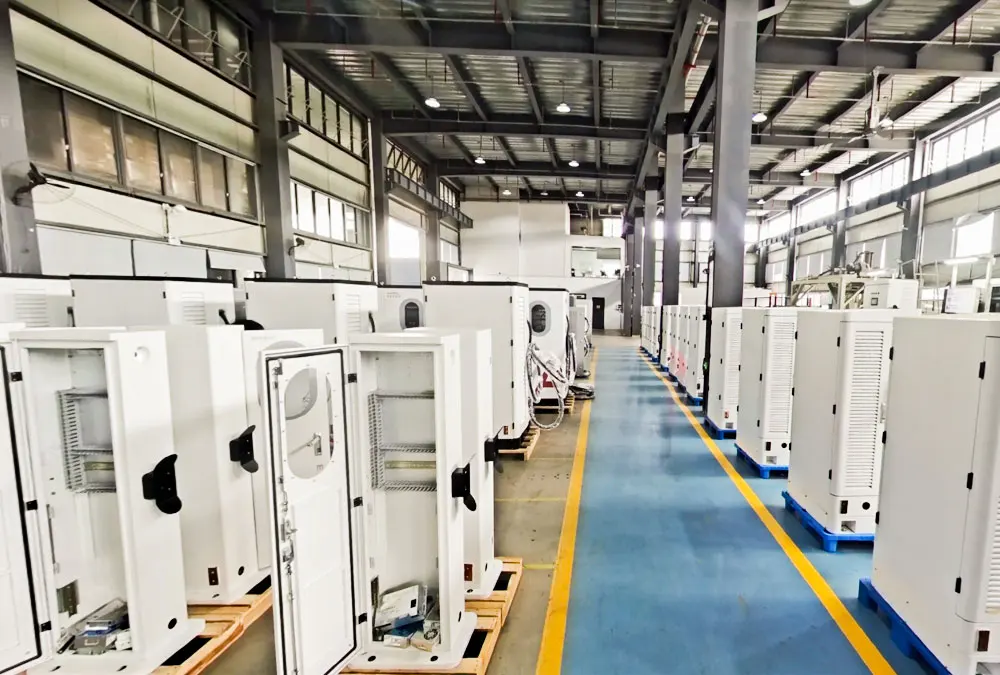
Introduction
A custom logo can be approved in days; a new controller board can change electrical safety, electromagnetic compatibility, firmware, production testing and the evidence needed for market entry. Yet both requests are often placed under the same line item: EV charger ODM. That ambiguity is how buyers approve an attractive sample, then discover that it cannot connect reliably to their backend, cannot be reproduced with the same components, or is not covered by the documents supplied for the original platform.
This guide is for product managers and technical procurement teams at charging brands, distributors and charge point operators. It explains what can be changed from PCB to enclosure to firmware, which interfaces each change affects, what evidence should close the change, and what must be frozen before pilot production. The objective is not maximum customization. It is the smallest controlled change set that creates useful differentiation without importing avoidable certification, integration and lifecycle risk.
The short answer
Branding, language, labels and default settings are usually the lightest changes. Connectors, readers, modems and displays require interface verification. A new enclosure can alter cooling, sealing and service access. PCB, protection logic and firmware changes require the deepest engineering and evidence review. The quotation should therefore classify every request by affected interfaces, verification method, owner and release condition—not simply mark it “customizable.”
Why Customize an EV Charger Instead of Buying a Standard Model?
Customization is valuable when it removes a real market-entry, operating or product-positioning constraint. It is not valuable merely because more features are available. A standard charger remains the better choice when it already meets the target market, backend, payment and service requirements.
- Fit the destination market. Connector, language, radio, payment, labels and documentation can be aligned with the intended country and operating model. The benefit is fewer unresolved gaps after the product arrives—not an automatic claim of market compliance.
- Create differentiation customers can use. A branded enclosure may improve recognition, but UI, authorization, diagnostics and service workflows can create more durable product value than appearance alone.
- Prove integration before rollout. Testing the exact firmware, CSMS, payment path and recovery behavior during development reduces the risk of discovering incompatibility across a live fleet.
- Control repeat-order consistency. A frozen BOM, firmware build, configuration and golden sample give the buyer a reference for later production batches and component changes.
- Preserve future operating choices. Defined administrator rights, endpoints, logs, signing responsibility and migration conditions reduce dependence on one cloud platform or undocumented supplier process.
These benefits are conditional. A new enclosure, PCB or firmware branch can increase engineering work, tooling, validation and lifecycle support. The correct question is therefore not “How much can we customize?” but “Which changes create buyer value that justifies their full lifecycle responsibility?”
Define the EV Charger ODM Depth Before Choosing Features
The first buyer decision is whether a market requirement needs private label, configured OEM, platform-level ODM or a substantially new product. Choosing the deepest option by default adds engineering work without necessarily creating more customer value.
| Customization depth | Typical changes | Main engineering consequence | Release evidence |
|---|---|---|---|
| Private label | Logo, label, manual, packaging | Artwork, language and traceability control | Approved artwork and document revision |
| Configured OEM | Power option, connector, cable, modem, reader, language | Compatibility and certificate-scope check | Order code, approved option matrix and functional test |
| Platform ODM | New enclosure, UI, payment workflow, backend behavior | Mechanical, thermal, EMC/RF and software regression work | Change-impact review, prototype results and golden sample |
| New product development | Controller PCB, protection architecture, power stage or new operating concept | System-level design, validation and compliance programme | Complete design baseline, test programme and market evidence |
A useful RFQ therefore starts with a change matrix: requested change → reused baseline → affected interfaces → required evidence → owner → acceptance result. AnengJi’s commercial charger buying checklist can help normalize the base hardware, software, documents and service inputs before an ODM scope is added.
Which ODM Scope Fits Each EV Charging Buyer?
Different buyers use customization to solve different problems. A private-label brand may need a controlled product family; a CPO may care more about backend behavior than cabinet shape. The table below keeps the primary audience—brand owners, distributors and CPO technical teams—at the centre while showing where adjacent buyers share the same development path.
| Buyer type | Business outcome | Customization worth prioritizing | Acceptance evidence |
|---|---|---|---|
| Distributor or private-label brand | Build a recognizable, repeatable product line without uncontrolled redesign | Branding, enclosure options, UI, language, packaging, connector and product-family rules | Golden sample, approved BOM, firmware identity, packaging revision and change notice |
| Charge point operator | Operate chargers through its selected backend and revenue workflow | OCPP behavior, payment, logs, remote diagnostics, offline rules, OTA and admin rights | End-to-end CSMS, payment, fault-recovery and migration tests |
| EPC or system integrator | Meet a tender and integrate the charger with defined site interfaces | Connector, communications, metering interface, mounting, cable entry and project documentation | Interface drawings, evidence scope, FAT/SAT plan and responsibility schedule |
| Fleet or depot operator | Deliver required energy within vehicle schedules and site power limits | Access control, power allocation, load-management interface, offline operation and diagnostics | Multi-vehicle load test, fallback behavior, session records and outage recovery |
| Local assembly partner | Localize assembly while retaining product consistency and traceability | SKD/CKD boundary, harnesses, labels, work instructions, fixtures and test software | Approved process, operator training, test limits, traceability and nonconformance control |
Hotels, shopping centres, factories and property owners usually need a charger configured for their site, users and operating model—not a ground-up PCB development programme. Their requirements should normally pass through the EPC, operator or charger brand that owns product integration and acceptance.
What Can Be Customized in the PCB and Electrical Hardware?
Board-level customization may include controller I/O, metering interfaces, display and reader connections, communication ports, sensor inputs, diagnostic access or production-test points. A deeper project may also change protection monitoring or the control relationship between the charger controller and power modules. These are not visual options. They change how the product senses faults, communicates, records energy and passes end-of-line tests.
Separate a supported option from a board redesign
Before requesting a new PCB, ask whether the closest platform already exposes the required interface. Reusing an approved board and changing a harness or firmware configuration may be lower risk than moving connectors, substituting a controller or creating a new layout. For each electrical change, request:
- a schematic or interface-control update showing voltage, current, signal and connector definitions;
- a critical-component list with approved alternates and substitution rules;
- fault behavior and diagnostic coverage for the changed circuit;
- production-test access, limits and recorded results;
- a compliance-delta decision identifying which previous evidence remains applicable.
An industry detail that is easy to miss: changing a cellular modem is rarely just a BOM substitution. It can alter the antenna location, RF performance, enclosure clearances, modem drivers, SIM/APN provisioning, remote diagnostics and destination-market radio evidence. The approved modem, antenna, cable and firmware driver should be treated as one controlled configuration.
For a brand owner, this discipline protects repeat orders from silent component drift. For an integrator, it creates a stable electrical and communication interface that can be designed into more than one project.
EV Charger Enclosure Customization Is More Than Colour and Logo
A new cabinet may create the strongest visual differentiation, but it also manages heat, water and dust paths, cable loads, impact exposure and technician access. Adding a larger screen or payment terminal can remove structural material, interrupt a gasket line, redirect airflow or make a field-replaceable component difficult to reach.
The mechanical design review should close five questions before tooling:
- Thermal path: where does heat leave at maximum rated operation and the declared ambient condition?
- Environmental sealing: how are doors, screens, readers, vents and cable exits sealed and drained?
- Serviceability: which modules can be replaced without removing unrelated assemblies?
- Installation: are lifting, anchoring, clearances, cable bend radius and protective-bollard zones documented?
- Evidence: which thermal, ingress, impact, corrosion or EMC checks must be repeated for the changed geometry?
Approve drawings and renderings for appearance, but approve the physical sample against measurable requirements. Colour match, door alignment and logo position matter; temperature rise, sealing interfaces and access to terminals determine whether the design remains supportable.
The commercial benefit is a charger that looks distinctive without transferring hidden cooling, maintenance or field-repair problems to the buyer’s service network.
Firmware, OCPP and Backend Customization Need Defined Ownership
Firmware customization can cover the user interface, language, authorization, charging limits, load-management behavior, diagnostics, offline rules, payment events and OCPP integration. The common procurement failure is accepting “OCPP supported” without defining the tested version, implemented functions, security method, endpoint provisioning and required operating workflows.
Three verified numbers that change the specification
- 4 approaches: the Open Charge Alliance’s Customizing OCPP Implementations guidance describes four ways to exchange information not covered by the standard protocol. The buyer should know which approach is used and how a standard CSMS behaves when the extension is absent.
- 3 protocol generations: OCA’s current test tool supports OCPP 1.6, 2.0.1 and 2.1. Version names are not interchangeable and should be tied to an exact firmware build.
- 2,000+ test cases: OCA states that OCTT Professional provides more than 2,000 test cases across those versions. That scale explains why a successful WebSocket connection is not an adequate integration acceptance test. See the official OCA FAQ and OCTT description.
For customized behavior, test each workflow as a four-stage chain: requested state → charger response → observed or read-back state → commercial outcome. A configuration command marked “Accepted” does not necessarily prove that the requested value was applied, persisted after reboot or produced the intended result in the CSMS.
The software schedule should also state:
- who owns administrator credentials, OCPP endpoints, certificates and signing keys;
- whether the buyer receives source code, binaries, APIs, configuration access or escrow rights;
- how releases, rollback, logs and security updates are handled;
- what the charger does when the network or backend is unavailable;
- how the fleet can migrate to another CSMS without replacing functioning hardware.
OCPP certification is valuable evidence, but it is not a substitute for the buyer’s workflow test. The Open Charge Alliance certification programme verifies conformance through approved independent laboratories for defined implementations. Your acceptance plan must still cover the selected CSMS, network route, tariffs, devices and exception behavior.
For a CPO, the value is operational independence: the customized charger completes the required workflows today, while documented credentials, logs and migration rights preserve options for the next backend contract.
Payment Customization Must Work From Card Tap to Settlement
A card reader mounted in the door is not a completed payment solution. The full path includes terminal power and network, acquiring, authorization, tariff delivery, charger/CSMS transaction identity, receipts, offline rules, refunds or reversals and settlement reconciliation. If different suppliers own the charger, terminal and backend, the responsibility boundary must be explicit.
For publicly accessible charging in the EU, payment and display design must reflect the project’s AFIR scope. Regulation (EU) 2023/1804 uses 50 kW as an important boundary for ad hoc price presentation: at 50 kW or more, the ad hoc price is based on electricity delivered per kWh and the station must display the price per kWh plus any occupancy fee before the session; below 50 kW, all applicable price components must be made clearly available. These rules apply to in-scope publicly accessible points, not automatically to every private workplace or fleet charger.
A payment FAT should therefore include successful authorization, rejected card, lost connectivity, duplicate message, cancelled session, tariff update, receipt, reconciliation and recovery after reboot. The terminal is only one element of that test. For a more detailed operating overview, see the guide to charger payment-terminal configurations.
This protects the operator from a particularly expensive failure: hardware that accepts a card at the cabinet but cannot produce a correct, traceable and reconcilable transaction.
Which ODM Changes Need Retesting or New Documentation?
There is no responsible universal answer such as “a colour change never needs review” or “a certified module makes the complete charger certified.” The destination market, original assessment, exact change and affected safety functions determine the evidence path.
For Europe, the European Commission’s Blue Guide on EU product rules explains that important hardware or software changes can make a product a new product when performance, purpose, hazard or risk changes. The assessment is case-specific. The practical procurement lesson is simple: do not assume that the original platform’s declaration and test reports automatically cover a changed enclosure, radio, control board or safety-related firmware.
For North America, the standards map also changes by equipment type. UL Solutions’ EV charging infrastructure overview identifies ANSI/UL 2594 for AC EVSE and ANSI/UL 2202 for DC charging equipment, alongside standards for personnel protection, couplers and programmable controls. A buyer should ask the compliance owner or test laboratory which change remains inside the evaluated construction and which requires additional assessment.
| Changed item | Evidence question | Do not release production until |
|---|---|---|
| Enclosure opening, vent or fan | Does it affect temperature rise, ingress, impact or EMC? | Mechanical review and required test results are approved |
| Modem, antenna or wireless module | Are the approved module conditions, RF exposure, EMC and destination rules still met? | Radio configuration and applicable market evidence are closed |
| Controller PCB or safety-related firmware | Have protection behavior, diagnostics and regression scope changed? | Design verification, regression and document updates are accepted |
| Connector, cable or terminal | Are rating, temperature sensing, mechanical loads and mating compatibility covered? | The exact component and installation method are approved |
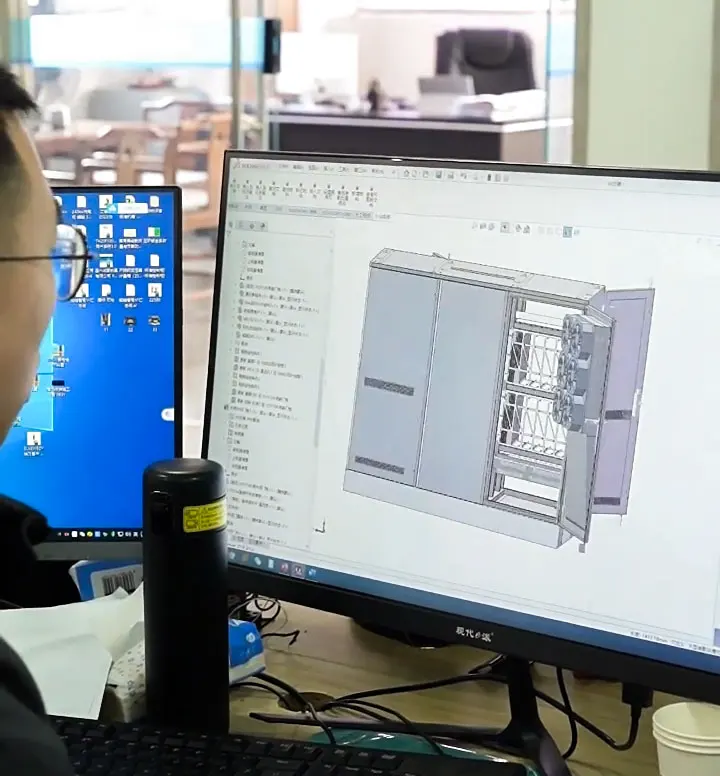
From Requirements to Golden Sample: An Eight-Step ODM Process
A factory tour shows capability; a controlled development record shows whether your exact product can be reproduced. Use the following sequence regardless of the supplier’s internal machine brands or line layout:
- Define the market and operating use. Record country, public/private use, power, connector, payment, network, climate and service assumptions.
- Select the closest platform. Publish a gap list instead of describing the whole product as new.
- Freeze system requirements. Include electrical, mechanical, software, documentation and ownership requirements.
- Complete design reviews. Close interfaces and the compliance delta before tooling or production release.
- Build engineering samples. Record every deviation; do not allow informal sample fixes to disappear from the production record.
- Run scoped verification. Include applicable safety, thermal, EMC/RF, OCPP, payment, usability and recovery tests.
- Approve the golden sample. Freeze hardware, firmware, configuration, labels, manuals, packaging and test limits.
- Release pilot and controlled production. Use traceability, FAT records and a product change notification process.
The golden sample is not just the physical unit
The reproducible baseline should include PCB revision, BOM and approved alternates, firmware version or hash, configuration file, UI build, modem and antenna, payment build, label/manual revisions, packaging and test limits. Without this identity, a visually identical repeat order can behave differently in the field.
For distributors and local assembly partners, the golden sample is therefore a commercial control as well as an engineering artifact. It gives incoming inspection, production acceptance and supplier-change discussions one agreed reference.
How Customization Depth Affects MOQ, Cost and Lead Time
Brand artwork mainly creates setup and document-control work. Configured options add component availability and compatibility checks. New enclosures introduce industrial design, tooling, samples and environmental or EMC review. PCB and firmware changes add engineering, regression, production-test updates and potentially new market evidence. A change requested after the baseline is frozen can reopen several of those activities.
That is why a universal “ODM adds seven days” promise is not credible across all change depths. If your primary decision is minimum order, non-recurring engineering cost or delivery timing, use the dedicated guide to EV charger MOQ, cost and lead-time planning. Keep those commercial variables separate from the technical acceptance scope described here.
Warranty, Spares and Firmware Support After Launch
A two-year warranty does not by itself define who diagnoses a failed payment path, who reviews charger logs, which parts are field-replaceable or how quickly approved parts leave the factory. Convert warranty language into a responsibility matrix covering first response, evidence collection, remote diagnosis, firmware escalation, part approval, shipping, field work and closure verification.
AnengJi’s current website states a two-year warranty and technical response within 48 hours. Treat these as general published service statements and confirm the exact product, region, exclusions and remedy in the quotation. A 48-hour technical response must not be misread as a guaranteed 48-hour spare-parts dispatch or delivery time.
Also define security-update responsibility, vulnerability reporting, firmware support period and end-of-life notice. A branded charger may remain electrically serviceable for years, but restricted admin access or an abandoned cloud dependency can still force premature replacement.
The benefit is not simply a longer warranty statement. It is a charger programme that the buyer can diagnose, repair, update and transition without rebuilding the operating model after every fault.
Choose the Closest AnengJi Platform Before Customizing
The lower-risk route is to begin with the nearest published AC or DC platform and then document only the gaps. The examples below show where the initial feasibility discussion can start; they are not a promise that every listed customization applies to every order code or destination market.
| Published platform | Useful starting point | Confirm before selection |
|---|---|---|
| 7–22 kW AC Charger | Private-label wallbox, language, connector and brand configuration | Destination voltage, connector, network, authentication and exact evidence set |
| 60–160 kW DC Charger | Public, destination or fleet DC platform with screen, networking and payment discussions | Output curve, simultaneous-output rules, connector configuration, CSMS and payment workflow |
| 160–320 kW DC Charger | Higher-power multi-connector projects requiring deeper system integration | Vehicle voltage/current envelope, power sharing, cable cooling, site capacity and model-specific compliance |
For each candidate platform, request the base model/order code, change-impact matrix, certificate and test-report scope, approved BOM, firmware/configuration identity, sample results, document pack, warranty responsibility and product change notification procedure. This converts a product link into a verifiable development baseline.
EV Charger ODM RFQ Checklist
A useful ODM enquiry should contain enough information for engineering to identify the closest platform and the real change depth:
- Market and use: destination country, private/public use, site type, environmental conditions and rollout plan.
- Electrical baseline: AC or DC, power, input, output voltage/current envelope, connector count and cable requirements.
- Mechanical scope: logo, colour, dimensions, mounting, screen, payment opening and service access.
- Software scope: language, UI, OCPP version/functions, CSMS, logs, OTA, local fallback and ownership.
- Commercial workflows: RFID, app, QR, card, tariff, receipt, roaming and settlement responsibilities.
- Acceptance: required standards/evidence, sample tests, FAT, golden sample and pilot criteria.
- Lifecycle: forecast, spare parts, diagnosis, firmware support, PCN and end-of-life notice.
Send this pack before asking for a final quotation. The feasibility response should identify what is standard, what is configurable, what requires development, what requires new evidence and which assumptions remain open.
EV Charger ODM FAQ
What is the difference between OEM, ODM and private-label EV chargers?
Private label usually changes brand-facing assets on an existing product. Configured OEM selects supported options from an existing platform. ODM introduces product-level mechanical, electrical or software changes. The labels vary by supplier, so the change matrix and ownership terms are more reliable than the acronym.
Can the EV charger PCB be customized?
It may be technically feasible, but the buyer should first check whether an existing interface or board option meets the requirement. A PCB change needs schematic control, BOM management, verification, production-test updates and a compliance-delta review.
Does changing the enclosure affect certification?
It can. Openings, ventilation, materials, dimensions and component positions may affect thermal, ingress, impact, EMC or service-related evidence. The exact impact must be reviewed against the original evaluated construction and destination-market requirements.
Can a customized charger connect to our own OCPP backend?
Yes, when the charger and CSMS share a compatible, correctly provisioned implementation. Test the exact charger model, firmware, OCPP version, security method and required workflows—including offline and recovery cases—before approving rollout.
Who should own the firmware, signing keys, tooling and design files?
Ownership is contractual, not automatic. The agreement should list each asset, legal owner, permitted use, access rights, maintenance responsibility, release conditions and what happens if the commercial relationship ends.
What information is needed before requesting an ODM quotation?
Provide the destination market, base product, electrical and connector configuration, mechanical changes, firmware/CSMS/payment workflows, evidence requirements, quantity forecast, acceptance tests, ownership expectations and target launch window. This allows the manufacturer to separate configuration from genuine development.
The Best ODM Result Is a Controlled Product, Not the Longest Feature List
A strong EV charger ODM project leaves fewer assumptions at production release. The buyer knows exactly which model is being changed, which interfaces are affected, which evidence remains valid, how the sample becomes the production baseline and who can operate the charger throughout its service life.
Start with the closest proven platform. Customize only what creates market or operating value. Then freeze the complete product identity—not just its appearance. That discipline is what turns a custom sample into a repeatable, supportable charging product.