Introduction
The global transition toward decentralized renewable energy is accelerating at a rapid pace. According to BloombergNEF (BNEF) Energy Outlook 2026, global corporate investments in clean energy systems reached a record $730 billion in 2025, driven heavily by commercial and industrial (C&I) sectors seeking insulation from volatile utility tariffs. For enterprises looking to deploy large-scale solar assets without the operational friction of managing fragmented contractors, adopting Turnkey Solar Solutions has emerged as the definitive benchmark for capital optimization. An integrated delivery framework allows businesses to pass all design, regulatory, procurement, and execution liabilities onto a single specialist partner, maximizing immediate capital efficiency and stabilizing long-term energy yields.
What Are Turnkey Solar Solutions?
Featured Snippet Answer:
Turnkey Solar Solutions refer to an all-inclusive, end-to-end project delivery model where a single Solar EPC Contractor manages every stage of a solar project from initial site assessment and engineering to procurement, construction, and final grid connection. The project is delivered to the asset owner in a fully operational state, ready to generate power at the turn of a key. This comprehensive model eliminates project interface risks, guarantees fixed budgeting, and secures long-term asset performance.
Definition of Turnkey Solar Solutions
In a standard fragmented deployment, a project owner must independently coordinate civil engineers, electrical installers, equipment vendors, and regulatory expeditors. Turnkey Solar Solutions fundamentally replace this high-risk approach by consolidating the entire project life cycle under one comprehensive Engineering, Procurement, and Construction (EPC) contract, transforming a complex infrastructure deployment into a streamlined, bankable financial asset.
What Is Included in a Turnkey Solar Project?
A true turnkey delivery framework ensures no hidden capital gaps exist between development and operation. The scope of a comprehensive turnkey solar system includes:
- Site assessment: Detailed 3D LiDAR shading analysis, geotechnical ground boring, structural integrity testing of existing roofs, and localized grid capacity evaluations.
- Engineering design: Generation of full electrical schematics, civil structural calculations, optimal string layouts, and dynamic simulation modeling of the Levelized Cost of Energy (LCOE).
- Equipment procurement: Sourcing and logistics management of tier-1 solar modules, smart inverters, mounting tracking structures, medium-voltage transformers, and safety balance of system (BOS) components.
- Construction: Site preparation, structural anchoring, mechanical assembly of racking, DC/AC cabling, and high-voltage substation assembly.
- Grid connection: Managing technical compliance with local utility companies, executing protection relay coordination, and final energization approvals.
- Commissioning: Executing performance ratio (PR) verification tests, thermal imaging scans, and formal safety handovers.
- O&M support: Deployment of 24/7 remote performance monitoring systems, scheduled preventive maintenance routines, and comprehensive equipment warranty management.
Who Benefits from Turnkey Solar Solutions?
- Commercial buildings: Retail centers, corporate office parks, and hospitality hubs looking to reduce daytime operational costs and achieve ESG milestones.
- Industrial facilities: Energy-intensive manufacturing operations, cold-storage warehouses, and processing plants aiming to flatten peak demand charges.
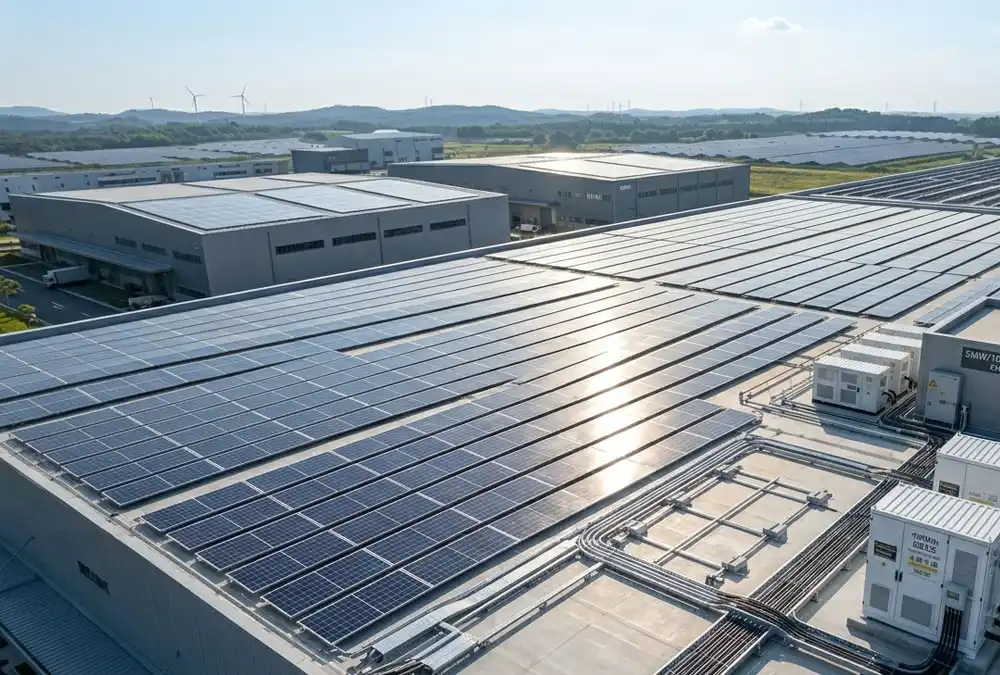
- Warehouses: Large-scale logistics assets with expansive roof spaces ideal for maximizing power density and generating auxiliary revenue.
- Utility-scale projects: Institutional funds and IPPs (Independent Power Producers) requiring highly predictable, non-recourse project financing frameworks.
- Solar plus storage projects: Entities combining solar PV with electrochemical storage to secure firm, non-intermittent power around the clock.
Why Businesses Choose Turnkey Solar Solutions Instead of Managing Multiple Contractors
Splitting contracts among separate equipment suppliers, civil contractors, and electrical installers may appear cheaper on a preliminary spreadsheet, but it frequently introduces severe operational blind spots during execution.
Single Point of Responsibility
When a technical issue or delays occur during construction, multi-contractor frameworks often result in finger-pointing; the electrical installer blames the structural manufacturer, while the hardware vendor blames the field engineering team. A turnkey solar project places total contractual accountability on a single partner. If a sub-system underperforms, the turnkey provider is solely responsible for remediation.
Faster Project Execution
Because engineering, procurement, and construction phases are integrated within a single organization, task dependencies can overlap efficiently. Procurement of long-lead items like medium-voltage transformers occurs in parallel with final structural civil permitting, shaving weeks or months off the final commercial operation date (COD).
Better Budget Control
Fragmented projects are highly vulnerable to change-order inflation. Turnkey contracts lock in a fixed price for the entire scope of work, shifting the financial risk of material supply fluctuations and labor cost variances away from the asset owner.
Reduced Project Risks
A professional Solar EPC Contractor absorbs key execution risks, including mechanical damage during transit, onsite labor accidents, structural damage during roof attachments, and financial penalties caused by utility grid approval delays.
Simplified Warranty and Service Management
If an inverter fails three years into operation, a turnkey contract ensures you have a single contact to process the claim and handle field replacement, avoiding complex multi-party warranty claims.
Turnkey Solar Solutions Cost Breakdown
How Much Do Turnkey Solar Solutions Cost?
Market data from early 2026 shows that Solar EPC Pricing has achieved favorable stability due to global manufacturing expansions. Capital requirements scale down significantly as total project capacity expands:
- Commercial Solar Projects (100 kW – 1 MW): Typically range from $0.95 to $1.25 per watt, depending on roof structural access and building safety overhead.
- Industrial Solar Projects (1 MW – 10 MW): Typically average $0.75 to $0.92 per watt, benefiting from optimized electrical tie-ins and larger regular roof geometries.
- Utility-Scale Solar Projects (10 MW+): Typically range from $0.58 to $0.72 per watt, optimizing high-volume purchasing and automated ground-piling construction.
Major Cost Components
Understanding the internal allocations within a typical Solar Power Plant Installation budget allows asset managers to make informed procurement decisions:
| Cost Category | Percentage Share (%) | Primary Drivers |
|---|---|---|
| Solar Modules | 34% – 38% | N-type TOPCon vs. HJT cell technology, global freight rates. |
| Inverters & Power Electronics | 9% – 12% | String inverters vs. central inverter stations, rapid shutdown compliance. |
| Mounting Structures / Racking | 10% – 13% | Fixed-tilt racking vs. single-axis smart tracking systems. |
| Engineering & Permitting Services | 5% – 7% | Structural certifications, grid interconnection studies, environmental approvals. |
| Construction & Civil Installation | 15% – 19% | Onsite labor rates, site preparation, crane/heavy equipment logistics. |
| Grid Interconnection Infrastructure | 8% – 11% | Distance to nearest substation, MV switchgear, utility transformer upgrades. |
| Project Management & Contingency | 4% – 6% | Site safety management, compliance auditing, inflation reserve padding. |
Factors Affecting Turnkey Solar Pricing
Every industrial site presents distinct environmental and electrical challenges. Final project pricing is determined by system capacity (economies of scale reduce per-watt procurement costs), physical location (local snow and wind loads dictate structural steel weight thresholds), component tiering (premium modules offer lower degradation rates but require higher upfront CAPEX), and specific utility grid-code demands (such as requirements for harmonic filters or static VAR compensators).
Turnkey Solar ROI and Payback Period
How Is Solar Project ROI Calculated?
To accurately model a Renewable Energy Investment, financial analysts assess initial capital outlays against lifetime net savings using Net Present Value (NPV) and Internal Rate of Return (IRR) metrics. The fundamental payback tracking is modeled as:
$$\text{Simple Payback Period (Years)} = \frac{\text{Total Initial CAPEX} – \text{Upfront Government Incentives}}{\text{Annual Electricity Savings} + \text{Auxiliary Grid Revenues} – \text{Annual OPEX}}$$
Where annual savings equal the total kilowatt-hours generated multiplied by your blended retail utility tariff rate, factoring in a typical solar module annual degradation rate of 0.4% to 0.55%.
Average Payback Period by Project Type
- Commercial Rooftop Solar: 5.5 to 7.5 years. High retail electricity rates in urban centers create excellent self-consumption arbitrage margins.
- Industrial Solar Systems: 4.5 to 6.5 years. Factories running heavy daytime shifts can consume 100% of generation directly, avoiding expensive peak grid network fees.
- Utility-Scale Solar Farms: 7.5 to 10 years. These projects clear lower wholesale power purchase agreement (PPA) rates but benefit from long-term institutional volume stability.
Key Factors Affecting ROI
The primary driver of solar profitability is the localized cost of grid power; high baseline utility costs accelerate capital recovery. This is paired with the site’s specific self-consumption rate—power used directly on-site is significantly more valuable than excess energy sold back to the grid at low wholesale export rates. Local solar irradiance profiles and available regional subsidies further calibrate the final financial yield.
Turnkey Solar Plus Storage Solutions for Maximum Energy Savings
What Is Solar Plus Storage?
As solar penetration increases, regional power grids are facing significant capacity constraints. A standalone solar system cannot generate power during night hours and is vulnerable to utility curtailment during peak generation periods. Incorporating Solar Plus Storage Systems solves this limitation by pairing solar arrays with intelligent electrochemical battery storage infrastructure, turning a fluctuating generation resource into a dispatchable energy asset.
Why Add Battery Energy Storage Systems (BESS)?
- Peak Shaving: Automatically discharges stored battery energy during peak operational windows to flatten severe factory consumption spikes.
- Demand Charge Reduction: Lowers the fixed monthly capacity reservation penalties levied by utility companies on large industrial grid connections.
- Backup Power: Provides immediate, millisecond-level UPS backup to keep critical industrial assembly lines and data networks online during grid outages.
- Energy Arbitrage: Automatically charges from cheap mid-day solar power or off-peak night grids, discharging during the most expensive peak-tariff windows.
Key Components of Solar Plus Storage Systems
Understanding the technical terminology helps decision-makers choose the right system configuration:
- Battery Packs (Electrochemical Cells): Lithium Iron Phosphate (LFP) is the current industrial standard, offering excellent thermal stability and long cycle life. Alternative systems like Redox Flow Batteries offer ultra-long multi-hour durations but require large liquid tanks, while Flywheel systems provide high power bursts but minimal energy capacity, making LFP the most well-rounded option for C&I applications.
- Battery Management System (BMS): The micro-processor layer that continuously monitors cell voltages, temperatures, and state-of-charge (SoC), ensuring cell balancing and preventing overcharging or thermal runaways.
- Power Conversion System (PCS): A specialized bi-directional inverter system that manages the four-quadrant conversion of DC power from the battery cells into AC power for the industrial facility or utility grid.
- Energy Management System (EMS): The software brain that runs predictive algorithms, analyzing weather patterns and factory load behaviors to calculate the most profitable battery charge and discharge schedules.
Industrial Storage Product Spotlight: 241kWh Liquid-Cooled C&I BESS
For industrial facilities seeking maximum efficiency within a turnkey solar system framework, AnengJi Power recommends the 241kWh All-in-One Liquid-Cooled C&I Battery Energy Storage System. This highly integrated unit sets a new benchmark for safety and energy density in industrial microgrids.
- Advanced Liquid Cooling Technology: Unlike legacy air-cooled cabinets that suffer from uneven cell degradation, the utilizes an advanced closed-loop liquid cooling system. This keeps the internal temperature differential between all cells within a strict ≤2°C range, extending total operating life by up to 20% and maximizing round-trip efficiency (RTE).
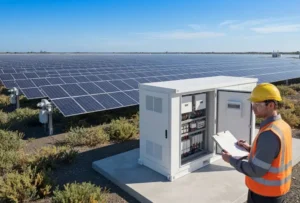
- Pre-Engineered All-in-One Enclosure: The cabinet comes fully integrated from the factory with premium LFP cells, a 100kW bi-directional PCS, an intelligent EMS controller, and a certified multi-stage fire suppression system, significantly reducing onsite installation labor and commissioning timelines.
Common Solar Project Risks and How Turnkey Solar Solutions Reduce Them
Large infrastructure deployments face a variety of real-world risks that can quickly disrupt project economics if not managed under a single contract framework.
Project Execution and Operational Risks
- Construction Delays: Weather challenges, unmapped underground rock formations, or labor shortages can delay completion, leading to missed PPA generation windows.
- Equipment Delivery Risks: Global supply chain bottlenecks or shipping delays for key sub-components can stall field installation crews.
- Budget Overruns: Unexpected engineering modifications or unmapped utility grid upgrade demands can create capital shortfalls.
- Grid Connection Challenges: Failure to clear rigorous utility harmonic injection audits can block final operational approval.
- System Underperformance: Poor string balancing or sub-optimal inverter configurations can result in generation yields falling short of financial models.
- Warranty Disputes: Component manufacturers may blame installation labor for hardware failures, delaying necessary repair work.
How Turnkey Project Delivery Minimizes Risk
By placing all development, procurement, and execution phases under a single contract, Solar Project Management is completely unified. The turnkey provider provides a single entity accountable for project milestones, locks in a guaranteed fixed price, and provides enforceable system performance wraps that protect your capital investment from day one.
Turnkey Solar Project Phases Explained Step by Step
A professional introducing solar solutions deployment follows a structured, multi-phase execution methodology to ensure high quality and full regulatory compliance.
The standard lifecycle of an industrial or utility project moves through seven major milestones:
- Phase 1 – Site Assessment and Feasibility Study: Technical crews evaluate the physical asset, perform structural loading tests on roofs, analyze historic electricity bills, and file initial grid capacity inquiries with the regional utility.
- Phase 2 – Engineering Design: Development of detailed civil structural designs, electrical Single Line Diagrams (SLD), protection settings, and 3D shading simulations to lock in maximum generation capacity.
- Phase 3 – Procurement and Manufacturing: Factory orders are placed for tier-1 modules and matching power electronics, coordinating just-in-time delivery to the project site to optimize logistics overhead.
- Phase 4 – Construction and Installation: Execution of all site civil works, pile driving or roof racking assembly, module installation, DC string wiring, inverter mounting, and medium-voltage substation construction.
- Phase 5 – Testing and Commissioning: Rigorous insulation testing, open-circuit voltage checks, string performance ratio verification, grid synchronization simulation, and safety relay calibrations.
- Phase 6 – Project Handover: Final client inspection, formal utility energization approval, transferring full system control over to the asset owner, and delivering final built documentation.
- Phase 7 – Ongoing Operations and Maintenance: Activating continuous cloud-based data monitoring, conducting regular thermal drone imaging, and executing planned preventive maintenance to protect long-term asset health.
How Long Does a Turnkey Solar Project Take?
Featured Snippet Answer:
The timeline for a turnkey solar project varies by size and type: Commercial projects (100kW – 1MW) take 3 to 5 months; Industrial projects (1MW – 10MW) require 5 to 9 months; Utility-scale projects (10MW+) span 9 to 18+ months. While physical onsite construction takes only a fraction of this time, regional permitting, grid approval, and environmental reviews represent the longest phases of the project lifecycle.
Typical Delivery Timelines by Capacity
- Commercial Rooftop (e.g., 500 kW): Total timeline spans 12 to 18 weeks. Onsite civil construction typically requires only 3 to 4 weeks, with the remainder dedicated to pre-construction engineering and final utility grid approvals.
- Industrial Facility (e.g., 3 MW): Total timeline spans 6 to 9 months. Engineering and structural manufacturing require 12 weeks, followed by 8 to 12 weeks of active onsite installation and testing.
- Utility Scale Solar Farm (e.g., 50 MW): Total timeline spans 12 to 18+ months, highly extended by detailed environmental impact assessments, complex civil grading, substation construction, and transmission-level grid testing.
Factors That Affect Project Delivery Time
Project schedules are primarily driven by local administrative timelines, including municipal building permitting turnarounds, component production lead times, structural site topographies, and the specific review timelines of regional utility companies during grid connection testing.
Required Documents for Turnkey Solar Projects
To successfully navigate European or international regulatory standards, an extensive library of technical and legal documentation must be carefully compiled throughout the project lifecycle:
Pre-Construction Documents
- Site Survey Reports: Certified structural roof loading calculations and detailed soil geotechnical analysis reports.
- Engineering Drawings: Final electrical Single Line Diagrams (SLD), 3D layout blueprints, and cable routing schematics.
- Energy Yield Analysis: Verified generation simulations run on independent software platforms using long-term weather data sets.
- Financial Models: Detailed cash flow projections outlining clear CAPEX, expected OPEX, and projected LCOE performance.
Permits and Regulatory Documents
- Building Permits: Municipal zoning clearances and structural safety approvals.
- Environmental Approvals: Ecological impact reviews and land-use compliance certificates.
- Utility Agreements: Formally executed Grid Interconnection Agreements specifying precise injection capacity limits.
Commissioning and Handover Documents
- Testing Reports: Factory Acceptance Testing (FAT) records, onsite insulation test results, and final performance ratio (PR) logs.
- Warranty Certificates: Enforceable long-term performance warranties for modules (typically 25-30 years) and inverters (10-15年).
- O&M Manuals: Detailed technical operating procedures, component datasheets, and emergency system safety shutdown steps.
Government Incentives for Turnkey Solar Solutions
Regional clean energy policies provide diverse financial mechanisms that significantly reduce upfront investment risk and accelerate project paybacks.
Core Incentive Frameworks
- Investment Subsidies: Direct financial grants that offset a fixed percentage of the initial Solar EPC Services contract price.
- Tax Incentives: Provisions like accelerated asset depreciation schedules or investment tax credits that reduce corporate tax liabilities.
- Net Metering Programs: Billing mechanisms that credit commercial users for excess solar energy exported back into the grid during low-load windows.
- Feed-in Tariffs (FiT): Guaranteed long-term fixed rates paid by the state for every megawatt-hour of clean energy injected into the distribution network.
- Renewable Energy Auctions: Competitive state-backed tenders that secure stable, long-term electricity pricing contracts for large utility-scale developers.
By combining upfront tax credits with optimized self-consumption energy strategies, businesses can frequently reduce their initial capital recovery timeline by 20% to 35%, significantly improving the project’s overall internal rate of return.
Real-World Applications of Turnkey Solar Solutions
Commercial Buildings
Large retail shopping malls, multi-story office parks, and corporate hospitality hubs utilize turnkey rooftop systems to lower high daytime air-conditioning electricity costs, locking in predictable operating overhead and enhancing corporate asset valuations.
Industrial Manufacturing Facilities
Heavy manufacturing plants, chemical processing centers, and large industrial zones use turnkey installations to hedge against volatile grid electricity prices. Integrating onsite generation protects continuous production lines from power quality fluctuations and reduces expensive peak network demand fees.
Logistics and Warehousing Centers
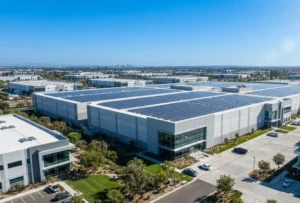
With expansive flat roofs and lower internal energy demand, large logistics hubs are ideal for maximizing solar power density. These installations turn passive roof spaces into active revenue-generating assets by exporting clean energy under regional grid incentive programs.
Solar Plus Storage Projects
Remote industrial assets, heavy mining sites, and grid-isolated facilities combine solar arrays with liquid-cooled BESS installations to create self-sustaining microgrids, cutting reliance on expensive diesel generation and securing stable, independent power around the clock.
EV Charging Infrastructure Projects
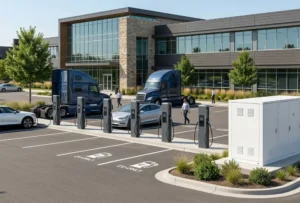
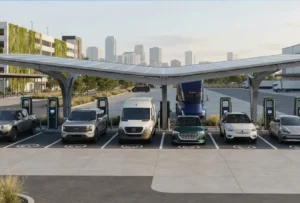
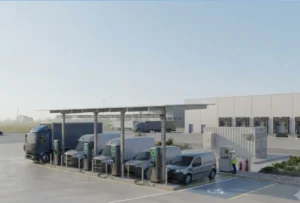
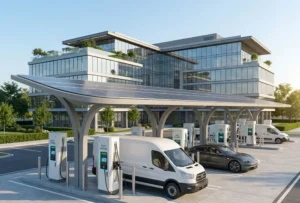
As corporate transport fleets transition to electric vehicles, large-scale facilities require significant power capacity. Integrating solar generation with stationary BESS and EV fast-charging stations creates optimized, self-contained charging hubs that protect localized factory electrical networks from severe peak charging spikes.
Warranty and Maintenance of Turnkey Solar Solutions
A solar power asset requires structured technical maintenance to safeguard its 25+ year operational lifespan and ensure peak generation efficiency.
Comprehensive Protection Frameworks
Standard component warranties include a 25-to-30-year linear performance warranty on solar modules, ensuring output remains above 80% to 85% of nominal rating, paired with a 10-to-15-year warranty on advanced power electronics. Turnkey contracts consolidate these individual coverages with comprehensive system performance ratio guarantees, ensuring the unified asset meets its modeled energy targets.
This is supported by structured preventive maintenance programs, including automated cloud-based performance tracking, regular mechanical torque audits on racking structures, string-level electrical testing, and planned module cleaning schedules to eliminate performance drops from dust or soil buildup.
How To Choose the Right Roof or Land for a Turnkey Solar Project
Best Roof Types for Solar Installation
- Metal Roofs: Standing seam configurations provide an ideal substrate, allowing racking structures to clamp directly to the metal seams without requiring roof penetrations, eliminating any risk of future leaks.
- Concrete Roofs: Provide excellent structural load capacity, allowing the deployment of ballasted, non-penetrating racking arrays that utilize heavy concrete blocks to secure the solar system via gravity.
- Flat Roofs: Common on large logistics warehouses. They allow for optimal south or east-west oriented tilting configurations, maximizing panel density and structural stability.
Land Selection Criteria
For large ground-mounted utility systems, developers look for high local solar irradiance profiles, flat or gently sloping topographies to minimize expensive civil grading works, stable soil conditions that avoid heavy rock drilling or soft marsh piling risks, and close proximity to utility distribution networks to minimize connection line costs.
How to Choose the Right Turnkey Solar Solutions Provider
Selecting the optimal engineering partner is the most critical decision in determining a project’s long-term profitability. Investors should carefully evaluate:
- Verified EPC Experience: Evaluate the provider’s historical execution track record, specifically looking for projects of similar scale and technical complexity.
- Financial Stability: Ensure the partner maintains a strong balance sheet and healthy credit metrics, giving you confidence they can back long-term performance guarantees through changing economic cycles.
- Project References: Request direct case studies and review independent performance data from currently operating assets under their management.
- Technical Certifications: Confirm the contractor holds full regional licensing, localized high-voltage certifications, and verified safety management credentials.
- Solar Plus Storage Expertise: Verify the engineering team has deep experience managing complex bi-directional power systems, battery safety controls, and intelligent EMS programming.
- O&M Infrastructure: Confirm they have an active, in-house technical support team capable of providing rapid onsite service and reliable warranty fulfillment.
Why Businesses Partner with AnengJi for Turnkey Solar Solutions
AnengJi Power delivers premium, end-to-end clean energy engineering tailored for demanding commercial, industrial, and utility scale developers worldwide.
End-to-Step Solar EPC Expertise
By managing the complete project lifecycle internally—from initial structural feasibility mapping and advanced electrical design to final grid energization—AnengJi Power eliminates project interface risks, shortens project schedules, and guarantees a seamless path to commercial operation.
Integrated Solar Plus Storage Solutions
AnengJi Power excels at combining high-yield solar PV systems with premium energy storage assets. By pairing solar arrays with advanced storage solutions like our 215kWh Liquid-Cooled BESS, we provide fully integrated, future-proof microgrids that maximize energy savings, handle intelligent peak shaving, and support high-capacity EV charging infrastructure.
Global Procurement Advantages
Through our long-standing industrial positioning and strategic direct-factory manufacturing relationships, AnengJi Power eliminates intermediate supplier markups. This ensures project developers receive tier-1 equipment quality at highly competitive prices, optimizing initial project CAPEX.
Transparent Pricing Structure
AnengJi Power operates on an open-book, transparent cost model. Every tender proposal provides clear, itemized visibility across all engineering, civil, mechanical, and electrical components, eliminating hidden fees and ensuring predictable budgeting from day one.
Compliance with International Standards
Every system engineered by AnengJi Power aligns with strict international quality and safety benchmarks. All components carry verified CE markings and clear compliance certifications with global electrical standards (such as IEC 61215 and IEC 62109), satisfying the rigorous technical due diligence requirements of leading financial institutions.
Frequently Asked Questions About Turnkey Solar Solutions
What are turnkey solar solutions?
They represent a comprehensive project delivery model where a single specialized contractor assumes full responsibility for the engineering, procurement, construction, permitting, and grid interconnection of a solar asset, handing over a fully operational system to the owner.
How much does a turnkey solar project cost?
Costs generally range from $0.95 to $1.25 per watt for commercial systems, $0.75 to $0.92 per watt for industrial installations, and $0.58 to $0.72 per watt for utility-scale developments, driven primarily by system scale and localized site requirements.
What is the average payback period for solar projects?
Commercial and industrial installations typically achieve capital recovery within 4.5 to 7.5 years, depending on local retail utility tariffs, solar irradiance levels, and available government tax incentives.
Can battery storage be included in turnkey solar systems?
Yes. Fully integrated turnkey solutions regularly incorporate containerized liquid-cooled BESS assets, bi-directional power conversion systems, and smart EMS software alongside the solar array to unlock advanced capabilities like peak shaving and backup power.
How long does a turnkey solar installation take?
Standard commercial rooftop installations are completed in 3 to 5 months, larger industrial deployments take 5 to 9 months, and utility-scale projects typically require 9 to 18+ months to clear extensive permitting and grid interconnection phases.
What documents are required for a solar project?
Key documentation includes structural roof loading reports, geotechnical soil tests, finalized electrical single line diagrams, municipal building permits, executed utility grid connection agreements, and final commissioning compliance records.
Are government incentives available for solar installations?
Yes, most regional markets provide supportive policies, including direct capital grants, accelerated asset depreciation schedules, investment tax credits, net metering frameworks, or fixed feed-in tariffs to improve project economics.
How do I choose the best turnkey solar provider?
Focus on evaluating their historical execution track record, balance sheet strength, verified engineering certifications, experience with battery storage integration, and the responsiveness of their in-house operation and maintenance infrastructure.
Conclusion: Achieving Long-Term Energy Savings with Turnkey Solar Solutions
Key Takeaways for Investors and Businesses
Deploying energy infrastructure via integrated Turnkey Solar Solutions provides corporate buyers and energy investors with a reliable, de-risked path to clean energy adoption. Entrusting project execution to a single qualified partner minimizes management complexity, locks in fixed budgeting, speeds up deployment, and delivers a high-performing financial asset backed by comprehensive performance wraps.
Future-Proofing Energy Investments with Solar Plus Storage
As international energy grids face rising capacity pressures and electricity tariffs become increasingly volatile, building independent generation assets is no longer just an environmental goal—it is a core strategy for operational resilience. Combining high-efficiency solar PV with liquid-cooled BESS storage and smart EMS management allows businesses to secure long-term energy independence, optimize operational savings, and build a scalable foundation for future infrastructure upgrades like fleet EV fast charging, ensuring sustainable profitability for decades to come.