Introduction
Deploying efficient Destination EV Charging Solutions requires deep electrical power infrastructure planning.
Most commercial property owners jump into buying chargers without auditing local transformer spare capacity.
That fatal mistake triggers massive unbudgeted utility grid upgrade fees during late project installation stages.
Tailored Destination EV Charging Solutions solve capacity limits while preventing expensive electrical panel rewiring.
Smart commercial operators select Destination EV Charging Solutions to capture long-stay premium driver spending.
Integrating robust Destination EV Charging Solutions converts idle parking stalls into recurring monthly profit centers.
The answer is infrastructure. Trenching asphalt, pulling heavy copper feeders, and adding subpanels rapidly inflates civil costs. Laying extra underground conduit during initial installation saves up to 60% on future site expansion.
What Is Destination EV Charging?
Destination charging refills electric vehicle batteries while drivers park to perform planned daily activities.
Drivers do not sit in their cars waiting for the battery to fill up.
Instead, charging happens passively while drivers work, shop, dine, or sleep overnight.
Definition of Destination EV Charging
A destination charger serves parking stalls where driver dwell time spans two to eight hours.
These systems integrate physical charging pedestals, backend management software, payment terminals, and dynamic load controllers.
Typical commercial destination deployment locations include:
- Hotels & Luxury Resorts: Serving overnight guests with six-to-eight-hour charging windows.
- Shopping Malls & Retail Centers: Capturing two-to-three-hour shopper visits with steady energy top-ups.
- Commercial Office Parks: Powering employee vehicle fleets throughout full eight-hour daytime shifts.
- Hospitals & Medical Hubs: Providing convenient long-stay parking power for staff and long-term visitors.
How Is Destination Charging Different from Other EV Charging Types?
Destination hardware balances charging speed, equipment cost, and utility grid impact differently than fast highway hubs.
| Charging Type | Primary Location | Power Output | Main Purpose | Buyer Competitive Advantage & Advantage Impact |
|---|---|---|---|---|
| Home Charging | Private Garages | 3.7kW – 11kW AC | Personal overnight charging | Lowest hardware cost; gives exclusive private home garage access. |
| Destination Charging | Hotels, Malls, Offices | 7kW – 22kW AC / 30kW DC | Charging during stay | Increases customer dwell time; generates secondary retail store sales. |
| DC Fast Charging | Highway Corridors | 60kW – 360kW+ DC | Rapid en-route refueling | Maximizes stall turnover rates; requires huge utility transformer capacity. |
How Do Destination EV Charging Solutions Work?
Modern commercial setups combine physical power hardware, secure cloud protocols, and local energy management systems.
Step 1: EV Driver Arrives at the Destination
The driver parks their vehicle and connects the charging plug into the inlet socket.
Authentication occurs via RFID card tapping, smartphone QR scanning, or direct contactless credit card processing.
Step 2: EV Charger Communicates with the Vehicle
The charging station executes an automated digital security handshake with the car’s Battery Management System.
Data exchanges occur over standard CAN bus wires or ISO 15118 digital communication channels.
The vehicle dictates precise allowable charging currents based on real-time cell temperature and battery state.
Step 3: Smart Energy Management Controls Charging
Cloud management software dynamically throttles amperage to stay within local facility electrical safety thresholds.
Tech Term Explained: What Is Dynamic Load Balancing (DLB)?
Dynamic Load Balancing (DLB) measures total facility power consumption in real time. When kitchen appliances or HVAC systems spike building load, DLB instantly lowers charger output. This prevents main circuit breaker trips and completely eliminates $50,000 utility transformer upgrades.
Step 4: Charging Completes During the Customer Stay
Vehicles recharge safely while owners conduct business, enjoy meals, or attend overnight hotel stays.
Automated notifications alert drivers when charging finishes, encouraging prompt parking space clearance.
Benefits of Installing Destination EV Charging Solutions for Businesses
Adding commercial charging infrastructure turns passive parking lots into strategic customer acquisition tools.
Increase Customer Dwell Time
Drivers deliberately choose commercial venues that offer verified charging hardware over competitors without plugs.
Research in Nature Communications (2025) proves installing commercial chargers increases neighboring store sales by 4.2%.
Longer vehicle dwell times directly convert into higher average restaurant receipts and retail checkout totals.
Generate Additional Revenue Opportunities
Property hosts set flexible markup pricing tariffs using open OCPP cloud management software platforms.
Commercial hosts charge per kilowatt-hour consumed, per total parked hour, or through monthly employee subscriptions.
Attract and Retain EV Customers
Data from the U.S. Alternative Fuels Data Center (DOE AFDC 2026) shows public charging ports grew 24%.
Premium EV drivers prioritize hotels, malls, and golf courses featuring reliable commercial charging infrastructure.
Improve ESG and Sustainability Performance
Deploying workplace and destination EV charging stations helps commercial enterprises meet strict corporate Scope 3 targets.
Visible charging infrastructure enhances public brand image while earning essential points for LEED green building certification.
Optimize Energy Usage with Smart Charging
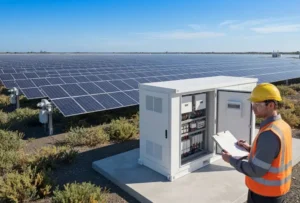
Integrating destination EV charging solutions with local solar PV arrays drastically reduces operating costs.
Smart energy management systems automatically shift charging loads to off-peak hours when utility prices drop.
Common Destination EV Charging Locations and Applications
Specific commercial property types demand tailored charging speeds, mounting styles, and access management rules.
EV Charging Solutions for Hotels and Resorts
Overnight hotel guests view charging access as an essential premium amenity rather than a novelty.
Installing 7kW to 22kW dual-port AC chargers allows guest batteries to reach 100% capacity overnight.
Hotels can offer free charging to loyalty members while monetizing overnight parking sessions for non-guests.
EV Charging Solutions for Retail Stores and Shopping Centers
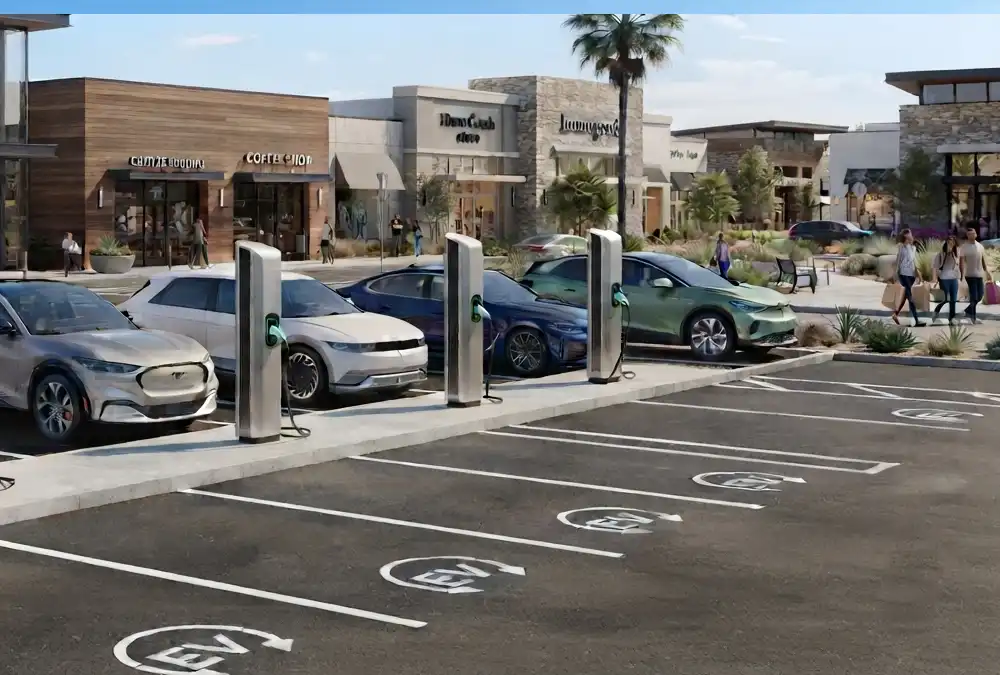
Shopping centers require a strategic blend of 22kW AC units and 30kW compact DC wallboxes.
Two-hour shopping visits match perfectly with higher-power destination chargers that deliver 60 miles of range.
Attracting affluent EV drivers boosts overall store foot traffic and raises average shopping basket size.
EV Charging for Workplaces and Commercial Buildings
A New Jersey DEP workplace charging study shows employees are 6 times more likely to adopt EVs.
Employers install 7kW workplace Level 2 chargers to support employee sustainability and talent retention goals.
Central software schedules charging sessions evenly across shift hours without overloading office main breakers.
EV Charging Solutions for Airports and Transportation Hubs
Airport multi-day long-term parking garages benefit from installing high-density 3.7kW to 7kW AC chargers.
Since cars park for several days, lower power levels protect grid infrastructure while keeping equipment costs low.
How Long Does It Take to Charge an EV at a Destination Charging Station?
Charging time varies based on charger output rating, car onboard converter capacity, and battery size.
| Charger Power Rating | Added Range Per Hour | Full Charge Time | Recommended Site | Operational Value & Driver Experience |
|---|---|---|---|---|
| 3.7kW AC Charger | 12 – 15 Miles | 8 – 12 Hours | Airport long-term parking | Lowest equipment cost; safe for multi-day idle vehicle parking. |
| 7kW AC Charger | 25 – 30 Miles | 6 – 8 Hours | Hotels & workplace offices | Balances speed and cost; fills battery overnight or during workday. |
| 11kW AC Charger | 40 – 45 Miles | 4 – 5 Hours | Commercial garages & resorts | Matches average corporate parking stay without causing grid spikes. |
| 22kW AC Charger | 60 – 80 Miles | 2 – 3 Hours | Shopping malls & restaurants | Delivers maximum AC charging speed for medium shopper parking stays. |
| 30kW Compact DC Charger | 100 – 120 Miles | 1 – 1.5 Hours | Supermarkets & diners | Fast vehicle turnover; avoids expensive high-voltage grid upgrades. |
Destination EV Charging Solutions: A Strategic Guide for Commercial Properties
Commercial building operators must analyze parking volume, utility electrical capacity, and expected financial returns.
Start by converting 5% to 10% of total parking spaces into EV-ready stalls. Always install underground PVC conduit sized for 20% future capacity. Digging up asphalt pavement twice increases civil labor expenses by 40% to 60%.
Challenges of Implementing Destination EV Charging Infrastructure
Engineering teams must address grid limits, civil construction costs, and long-term software management requirements.
Electrical Capacity and Grid Limitations
Older commercial buildings frequently lack available transformer capacity needed to power multiple fast chargers simultaneously.
Utility transformer upgrades cost $15,000 to $50,000+ and take several months to permit.
Site hosts avoid transformer upgrades by deploying dynamic load management or local energy storage.
Installation and Construction Costs
Long trenching runs across concrete parking lots represent a major portion of total project expenditure.
Placing chargers near main electrical switchboards minimizes conduit distance and lowers civil engineering labor.
How Much Do Destination EV Charging Solutions Cost?
Commercial deployment budgets cover hardware purchasing, site trenching labor, panel upgrades, and software subscription fees.
Commercial Level 2 dual-port charger hardware averages $1,500 to $4,500 per unit.
Civil installation expenses range from $2,500 to $6,000 per charger based on trenching requirements.
According to U.S. Joint Office data (2026), demand charges represent 23% to 85% of fast charger operating costs.
Are Destination EV Charging Stations Free?
Commercial operators select between three primary business monetization models to match property goals.
Free Amenity Charging Model
Property hosts cover electricity costs entirely to attract wealthy shoppers and hotel guests to their site.
While direct charging fees are zero, retail store sales and guest room bookings increase significantly.
Paid Pay-per-Use Charging Model
Drivers pay for exact energy consumed via credit card terminals or mobile app wallets.
This fee structure covers electricity bills, recovers initial capital expenses, and generates steady profits.
Hybrid Loyalty Charging Model
Properties offer two hours of free charging for validated retail customers before initiating paid rates.
This hybrid approach attracts shoppers while preventing drivers from occupying charging stalls all day long.
Destination Charging vs Public Fast Charging vs Home Charging
Understanding functional differences helps property decision-makers allocate capital efficiently across charging options.
| Comparison Factor | Home Charging | Destination Charging | Public DC Fast Charging |
|---|---|---|---|
| Driver Dwell Time | 8 – 12 Hours (Overnight) | 2 – 8 Hours (Activity Stay) | 15 – 30 Minutes (Transit) |
| Hardware CAPEX | Lowest ($500 – $1,200) | Moderate ($1,500 – $6,000) | Highest ($38,000 – $150,000+) |
| Utility Grid Impact | Minimal (Single-Phase) | Manageable via Software DLB | Extreme (Triggers Demand Charges) |
| Commercial Value | Personal Use Only | Drives Retail Foot Traffic | Pure Electricity Reseller Margins |
Integrating Industrial Battery Energy Storage (BESS) for Commercial Properties
Pairing commercial chargers with industrial Battery Energy Storage Systems (BESS) unlocks massive operational cost reductions.
Tech Term Explained: What Is Battery Chemistry (LFP vs Na-Ion)?
Lithium Iron Phosphate (LFP): The dominant commercial storage standard, featuring high thermal safety and 6,000+ cycle lifespans.
Sodium-Ion (Na-Ion) Alternative: An emerging low-cost technology designed for extreme cold climates, offering excellent performance down to -20°C without expensive thermal heating.
BESS units store cheap nighttime electricity or local solar power to supply daytime EV charging spikes.
The table below breaks down industrial BESS products tailored for commercial destination charging hubs:
| BESS Capacity | Battery Tech | Target Application | Buyer Operational Benefit & ROI Impact |
|---|---|---|---|
| 100kWh BESS | Liquid-Cooled LFP | Hotels & Small Retail Stores | Eliminates 15-minute utility demand penalties during evening guest charging surges. |
| 261kWh BESS | Modular High-Safety LFP | Shopping Malls & Office Parks | Stores daytime solar PV generation to power afternoon employee charging sessions. |
| 418kWh BESS | Containerized Smart LFP | Commercial Fleet Depots | Buffers grid connection, enabling fast DC charging on low-capacity panel feeds. |
| 1MWh BESS | Utility-Scale LFP Storage | Resort Hubs & Transit Plazas | Unlocks full energy independence, off-grid fast charging, and power grid arbitrage revenue. |
Why Choose AnengJI Destination EV Charging Solutions?
Partnering with a specialized direct manufacturer ensures high equipment uptime, safety compliance, and competitive factory pricing.
Complete AC and DC Charging Portfolio
We manufacture 7kW, 11kW, and 22kW AC destination chargers alongside 30kW to 360kW DC fast chargers.
All hardware features weather-resistant IP65 enclosures built to withstand harsh industrial operating conditions.
Smart Charging Management Platform
Our chargers support full OCPP 1.6J and OCPP 2.0.1 compliance for seamless software platform compatibility.
Property hosts manage user access, process credit card payments, and adjust dynamic power loads remotely.
Integrated Solar + Battery Storage + EV Charging Solutions
We supply complete microgrids integrating rooftop solar panels, liquid-cooled BESS cabinets, and smart chargers.
Our turnkey energy solutions avoid transformer upgrade costs, lower utility electricity bills, and maximize ROI.
Frequently Asked Questions About Destination EV Charging Solutions
What is destination EV charging?
Destination EV charging provides vehicle charging at places where drivers park for extended periods like hotels and offices.
Who needs destination charging stations?
Hotels, shopping centers, office parks, hospitals, and entertainment venues benefit greatly from installing commercial chargers.
How long does destination EV charging take?
Recharging takes 2 to 8 hours depending on whether 7kW, 11kW, or 22kW AC hardware is used.
Are destination EV chargers profitable?
Yes. Commercial hosts generate direct charging revenue while increasing retail store foot traffic and customer spending.
How much does a destination charging station cost?
Commercial Level 2 hardware costs $1,500 to $4,500, with installation adding $2,500 to $6,000 per stall.
Should hotels install EV chargers?
Yes. EV drivers specifically filter hotel booking platforms to select properties offering verified charging amenities.
Can destination charging use solar energy?
Yes. Connecting solar PV arrays with local battery storage allows commercial hosts to deliver clean solar energy.
Can battery storage reduce charging costs?
Yes. BESS storage discharges during peak hours, capping demand charges and avoiding expensive transformer upgrades.
Get Your Customized Destination EV Charging Solution
Upgrading your commercial property with smart destination EV charging solutions attracts high-value customers and builds recurring revenue.
Our engineering team designs custom hardware, software, and battery storage architectures tailored to your electrical capacity.