Introduction EV Charging Stations Cost
When calculating total EV Charging Stations Cost, many fleet managers hit unexpected budget spikes early on.
Equipment price tags only tell half of the financial story.
The final EV charging stations cost depends heavily on local grid feeder capacity and trenching distances.
Skipping early site feasibility checks often causes massive budget shocks later.
Getting your EV charging stations cost estimates right early on protects your project yields.
Clear visibility into hardware and installation keeps total EV charging stations cost strictly under control.
Understanding every tier of your EV charging stations cost shortens your payback timeline significantly.
Buyer’s Reality Check: Why do quotes for the same 120kW charger vary by $40,000 between contractors? Hardware is rarely the reason. Utility transformer upgrades and 150-foot trenching through concrete drive up those massive price gaps.
EV Charging Stations Cost Overview: How Much Does an EV Charging Station Cost?
Answering how much an EV charger costs requires splitting expenses into CAPEX and OPEX.
Total EV charging infrastructure cost ranges from $6,500 for Level 2 up to $150,000+ for fast DC chargers.
Average Cost of an EV Charging Station
Hardware pricing scales directly with power output levels and charging speeds:
- Level 2 Commercial charger(7kW – 22kW AC): $1,500 to $3,500 per port. Ideal for long dwell times.
- Fast DC Chargers (30kW – 60kW DC): $12,000 to $28,000 per unit. Fits retail locations well.
- High-Power DC Chargers (120kW – 360kW+ DC): $40,000 to $90,000+ per unit. Essential for heavy fleet turnarounds.
EV Charging Station Cost Breakdown
The table below breaks down baseline investments and highlights direct selection advantages for your team:
| Cost Category | Price Range (USD) | Description | Buyer Benefit & Value |
|---|---|---|---|
| Charging Hardware | $1,500 – $90,000 | Physical chargers, cabinets, cables | Modular units allow future power upgrades without replacing full cabinets. |
| Electrical Upgrades | $5,000 – $60,000+ | Transformers, switchboards, panels | Right-sized switchgear prevents double construction costs during site expansion. |
| Civil Works | $3,000 – $35,000 | Trenching, concrete pads, painting | Directional boring reduces asphalt repair expenses by up to 40%. |
| Permits & Engineering | $2,500 – $15,000 | Stamped drawings, grid studies | Professional engineering speeds up utility interconnection approval times. |
| Software Setup | $300 – $1,200 / port/yr | OCPP platform, billing apps | Open-standard OCPP platforms prevent vendor lock-in and lower operational risk. |
Why EV Charging Station Cost Varies Significantly
According to 2025 energy infrastructure deployment reports, local grid feeder headroom creates the largest price variances.
Connecting a 360kW fast charger to weak grid feeders forces expensive transformer upgrades.
That single upgrade can add $40,000 to $100,000 in utility make-ready costs.
Commercial EV Charging Station Cost: Hardware vs Turnkey Installation
Buying direct hardware seems cheap on paper.
However, enterprise commercial EV charger projects require full turnkey execution to succeed.
Level 2 Commercial EV Charger Cost
Level 2 charger installation cost remains relatively low for workplaces and hotels.
- Hardware Investment: $1,500 – $3,500 per port.
- Installation Cost: $2,000 – $6,000 per stall.
- Business Benefit: Low grid impact enables smooth overnight charging for dozens of vehicles simultaneously.
DC Fast Charging Station Cost
High-power commercial EV charger deployments require significant upstream power capacity:
- 30kW – 60kW Units: Total installed cost ranges from $35,000 to $65,000.
- 120kW – 180kW Units: Total installed cost ranges from $80,000 to $140,000.
- 240kW – 360kW+ Hubs: Total turnkey setups often cross $200,000 to $350,000.
Hardware Cost vs Turnkey EV Charging Solution
| Solution Type | Includes | Risk Level | Selection Benefit for Buyer |
|---|---|---|---|
| Hardware Only | Charger cabinet & cables | High | Lower initial invoice; ideal for experienced internal electrical contractors. |
| Semi-Turnkey | Hardware + Technical Support | Medium | Balances internal construction management with specialized engineering support. |
| Turnkey Solution | Design, Build, Commissioning | Very Low | Single point of accountability guarantees grid compliance and on-time launch. |
Buyer’s Reality Check: Can I save money buying non-certified chargers? Never risk it. Commercial sites require strict UL and CE listings. Non-certified gear stalls grid interconnection and voids property insurance.
EV Charging Station Installation Cost: Why Installation Is Expensive
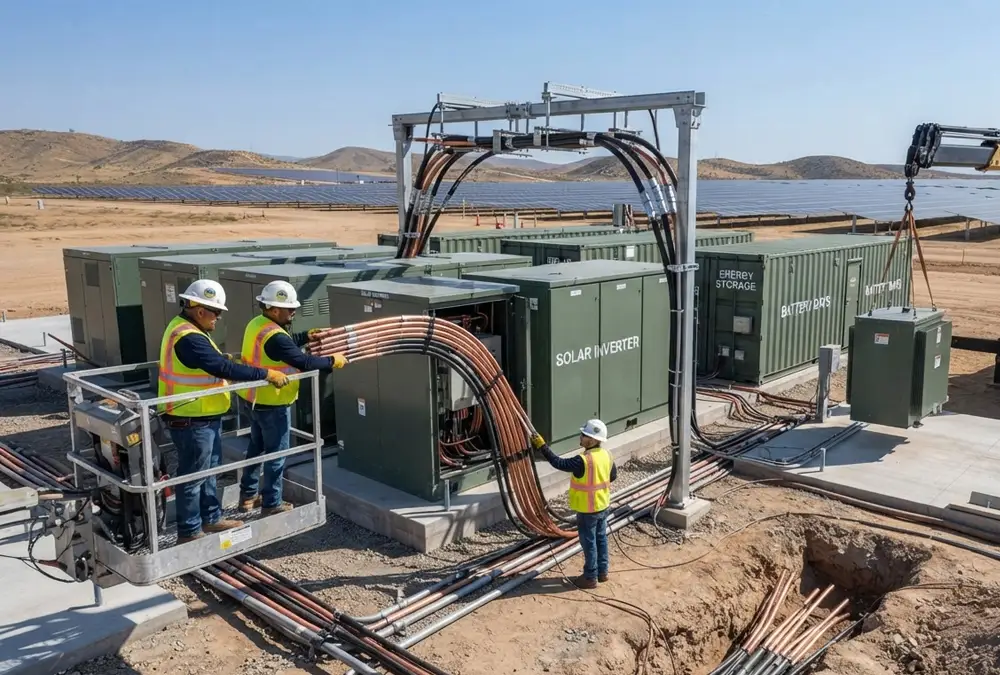
Many buyers focus on charger price tags.
They forget that EV charger installation cost often exceeds equipment costs.
Electrical Upgrade and Power Infrastructure Cost
High-power DC hardware demands massive electrical current.
Installing four 180kW chargers requires nearly 1MW of power capacity.
- Step-Down Transformers: $15,000 – $45,000.
- 800A Main Switchgear Panels: $10,000 – $25,000.
- Heavy Copper Cables: $45 – $90 per linear foot.
Civil Construction and Site Preparation Cost
Trenching through concrete pavement averages $50 to $120 per foot.
Heavy concrete pads for liquid-cooled cabinets run $3,000 to $7,000 each.
EV Charging Station Cost Estimate: Equipment and Installation Breakdown
Planning budgets requires matching charger speeds to vehicle parking times.
Commercial EV Charging Station Cost Estimation Table
| Application | Power Output | Equipment Cost | Installation Cost | Buyer Operational Benefit |
|---|---|---|---|---|
| Workplace | 7-22kW AC | $1,500 – $3,500 | $2,000 – $4,500 | Attracts premium tenants without needing major power grid upgrades. |
| Retail Hub | 30-60kW DC | $14,000 – $25,000 | $15,000 – $30,000 | Increases customer dwell time to 45 minutes, driving higher store sales. |
| Logistics Fleet | 120-240kW DC | $45,000 – $75,000 | $30,000 – $60,000 | Maximizes daily fleet uptime for fast last-mile delivery turnarounds. |
| Highway Hub | 180-360kW+ DC | $65,000 – $110,000 | $50,000 – $120,000+ | Provides 100 miles of range in 15 minutes, boosting turnover revenue. |
EV Charging Station Electricity Cost and Energy Management
Operating chargers without energy management causes severe financial losses.
Top 2026 industry energy reports show demand charges account for up to 80% of monthly utility bills.
How Demand Charges Increase EV Charging Costs
Utilities bill commercial sites based on their single highest 15-minute power spike.
If two electric trucks plug in simultaneously, your facility draws massive peak power.
That single spike generates thousands of dollars in monthly demand charges.
Using BESS to Reduce EV Charging Electricity Costs
Integrating a Commercial Battery Energy Storage System (BESS) caps grid demand spikes.
The battery discharges during peak charging sessions to supply power locally.
AnengJi offers specialized industrial BESS storage cabinets built for commercial charging hubs:
- 100kWh & 261kWh Cabinet BESS: Compact liquid-cooled energy storage units. Buyer Benefit: Eliminates utility transformer upgrades and reduces facility demand fees.
- 418kWh & 1MWh Container BESS: Heavy-duty modular energy containers. Buyer Benefit: Supports ultra-fast charging in weak grid zones while dramatically lowering kWh costs.
| BESS Capacity | Target Application | Core Feature | Direct Benefit to Buyer |
|---|---|---|---|
| 100kWh BESS | Small Fleet / Retail | Compact Footprint | Fits tight parking spaces; avoids basic local panel upgrades. |
| 261kWh BESS | Commercial Depots | Liquid Cooling Tech | Delivers longer sustained power; solves medium-scale peak demand charges. |
| 418kWh BESS | Transit Hubs | Modular Expansion | Handles multiple fast chargers; prevents high peak power penalties. |
| 1MWh BESS | Highway Charging Hubs | High Power Output | Enables megawatt charging in remote areas with poor grid infrastructure. |
Hidden EV Charging Station Costs You Should Not Ignore
Project budgets often fail due to unexpected hidden expenses.
Buyer’s Reality Check: Why do projects face six-month delays? Utility interconnection queues are the main bottleneck. Submitting paperwork early avoids costly idle site fees.
- ADA Compliance Costs: Upgrading accessible parking stalls adds $5,000 to $15,000 per site.
- Utility Studies: Utilities charge up to $10,000 just to evaluate local grid capacity.
- EV Charging Maintenance Cost: Budget $1,000 per fast charger yearly for filter and cable servicing.
Mobile EV Charging Solutions: A Flexible Alternative
Fixed infrastructure is not always practical for every commercial property.
Mobile EV charging solutions offer a flexible alternative for fast deployment.
Advantages of Mobile EV Chargers
- Zero Civil Trenching: Completely avoids asphalt cutting and concrete pad construction costs.
- Instant Deployment: Skips multi-month utility grid study wait times.
- Flexible Asset: Relocate charging power easily across fleet yards or temporary events.
How to Reduce EV Charging Stations Cost
Smart design choices help protect your capital budget:
- Dynamic Load Balancing: Dynamic load balancing software shares power dynamically across stalls, avoiding expensive panel upgrades.
- Solar + BESS Microgrids: Generate clean energy on site to cut demand charges.
- Direct Procurement: Buying direct from manufacturers eliminates broker markups.
Government Incentives and Tax Credits
Government funding reduces net EV charging station construction cost significantly.
Federal tax credits and state grants often cover 30% to 70% of project costs.
These incentives shorten payback periods by several years.
EV Charging Station ROI: How to Calculate Your Payback Period
Calculating ROI requires comparing installation expenses against charging revenues and operational savings.
For a 4-port 120kW commercial hub, net payback typically occurs within 1.8 to 2.5 years under average utilization.
Plan Your EV Charging Station Project With AnengJi
AnengJi provides factory-direct chargers, BESS storage, and end-to-end engineering support.
- Direct Factory Pricing: High-efficiency AC and DC chargers without middleman markups.
- Integrated Storage: Modular 100kWh to 1MWh BESS for complete peak shaving.
- Turnkey Support: Full assistance from site power analysis to commissioning.
Frequently Asked Questions About EV Charging Stations Cost
How much does an EV charging station cost?
Commercial Level 2 chargers cost $3,500 to $8,000 installed. Fast DC stations range from $35,000 to $150,000+ depending on power capacity.
How much does it cost to install a commercial EV charger?
Installation costs range from $2,000 for simple Level 2 units up to $60,000+ for high-power DC fast chargers requiring grid upgrades.
Why is installation more expensive than charger hardware?
Heavy trenching, long wiring runs, switchgear upgrades, and utility transformers frequently exceed physical equipment costs.
Can battery storage reduce EV charging costs?
Yes. BESS storage caps peak power draw, preventing expensive utility demand charges during fast charging sessions.