Introduction: Why Businesses Are Comparing 1MW vs 2MW Battery Storage Systems
As we navigate the dynamic energy landscape of 2026, global commercial and industrial facilities face severe operational challenges due to fluctuating power grids and evolving regulatory mandates. To combat these challenges, deploying a robust commercial energy storage solution has shifted from an innovative sustainability initiative to an absolute operational necessity. When evaluating utility-scale infrastructure, corporate decision-makers frequently conduct a comprehensive 1MW vs 2MW battery storage cost comparison to identify which exact configuration aligns with their technical requirements and budgetary boundaries. Selecting the optimal power scale directly impacts electrical stability, infrastructure capital expenditures, and multi-year corporate asset depreciation.
Rising Energy Costs Are Accelerating Commercial Battery Storage Adoption
- Increasing electricity tariffs: Grid infrastructure upgrades and geopolitical shifts have forced utility providers to raise base electricity rates globally, increasing baseline industrial operating overhead.
- Demand charge management: Modern utility billing schedules place heavy financial penalties on short-duration power spikes, making peak mitigation a core financial priority.
- Renewable energy integration needs: The global expansion of localized industrial solar arrays demands reliable storage mechanisms to mitigate natural generation intermittency.
- Grid instability concerns: Extreme weather events and macro-grid overburdens create frequent voltage sags and unexpected localized blackouts, threatening automated manufacturing lines.
Common Customer Pain Points When Choosing Between 1MW and 2MW Battery Storage
Procurement teams and facility engineers face complex technical crossroads when trying to figure out how to size a commercial battery energy storage system. Misjudging power demands can lead to severe system underperformance or unnecessary upfront capital expenditure. Key customer challenges include determining which precise physical capacity safely matches structural peak load footprints without inducing over-provisioning. Financial planners struggle to balance whether a larger 2MW deployment delivers superior long-term cost-effectiveness compared to a standard 1MW setup. Furthermore, physical implementation questions arise concerning layout footprints, multi-circuit electrical integration, thermal management configurations, and safety separation spacing. Ultimately, asset managers require clear data to determine which system configuration delivers the accelerated return on investment needed to justify capitalization.
What This Guide Will Help You Understand
This technical blueprint offers actionable guidance on executing a precise 1MW vs 2MW BESS for commercial applications comparison. We will systematically analyze the foundational capital differences between these scales, outlining modern cost-reduction trends while highlighting professional sizing methodologies derived from historical facility demand curves. Readers will gain explicit insight into project economics through a professional 2MW battery storage ROI compared to 1MW analytics model. Furthermore, this breakdown reviews engineering nuances across structural subcomponents—including Power Conversion Systems (PCS), Battery Management Systems (BMS), and Advanced Intelligent Energy Management Systems (EMS)—while clarifying the operational trade-offs of air and liquid thermal architectures.
The main difference between 1MW and 2MW battery storage systems is power capacity, energy handling capability, project scale, and long-term return on investment. A 1MW system provides 1 Megawatt of instantaneous power, ideal for mid-sized commercial peak shaving, while a 2MW system doubles that capability to handle heavy industrial inductive loads and extensive multi-hour microgrid backing.
What Is a Battery Energy Storage System (BESS)?
A Battery Energy Storage System (BESS) is an integrated, utility-grade electrochemical asset designed to capture electrical energy from an available source, store it within advanced chemical cells, and dispatch that power via sophisticated power electronics at specified times. Far beyond simple backup power, a modern industrial BESS functions as an active power stabilization center capable of executing complex grid maneuvers within milliseconds.
Core Components of a Commercial Battery Storage System
- Battery packs and modules: High-density electrochemical matrices, primarily utilizing lithium-iron phosphate chemistry, configured in series and parallel strings to achieve high-voltage DC output.
- PCS (Power Conversion System): Bi-directional industrial inverters that handle active AC-to-DC conversion during charging cycles and precise DC-to-AC inversion during systemic grid injections.
- BMS (Battery Management System): A multi-tiered monitoring framework tasked with executing real-time cell-level diagnostics, rigorous voltage balancing, and thermal runaway prevention.
- EMS (Energy Management System): The master control software layer that runs dispatch algorithms, processes exterior market price signals, and controls physical subsystem operation.
- Cooling and fire suppression systems: Integrated climate loops and automated chemical suppression agents structured to maintain core cell equilibrium and comply with strict national safety standards.
How Battery Storage Systems Work
The operational cycle of an industrial BESS relies on automated bidirectional power routing. During low-demand periods or peak solar generation intervals, the EMS signals the PCS to pull AC grid power, convert it to DC, and fill the battery modules. The stored energy is held securely with minimal standby degradation. When building demand spikes or grid tariffs hit peak levels, the EMS reverses the cycle, drawing DC power from the modules, converting it back via the PCS, and injecting it into the facility’s distribution panel to offset external utility reliance.
Why Commercial and Industrial Facilities Need BESS
Modern industrial facilities leverage a BESS to execute peak shaving energy storage maneuvers, significantly lowering demand charges by clipping the highest points of their consumption curves. The hardware provides seamless backup power capabilities, shielding sensitive automated machinery from line drops. Facilities also exploit energy arbitrage, charging during low-cost night intervals and discharging during expensive daytime peak pricing windows. Additionally, asset operators can participate in utility demand response programs, earning direct revenue by injecting power back into local distribution lines during regional grid stress events.
1MW vs 2MW Battery Storage Systems: Key Differences
Selecting between these two form factors requires analyzing how raw electrical capacity maps to physical facility constraints. While a 1MW deployment is highly agile, a 2MW system introduces deeper structural integration and vastly superior scale economics.
Power Capacity Comparison Between 1MW and 2MW Systems
The core difference between these systems centers on instantaneous load management. A 1MW system can deliver up to 1,000 kilowatts (kW) of immediate power to a facility’s main distribution grid. This matches the start-up surges and load requirements of mid-sized commercial properties, logistics hubs, and large retail centers. Conversely, a 2MW system provides 2,000 kW of instantaneous output. This expanded capacity is essential for heavy industrial operations, processing plants with massive inductive motor start-up curves, and critical facilities where severe power drops can cause catastrophic production line stoppages.
Energy Storage Capacity and Duration Differences
Power capacity (MW) defines the maximum instantaneous output, while energy capacity (MWh) dictates how long that output can be sustained. Evaluating a BESS capacity comparison requires looking closely at common duration configurations. A standard 1MW project is frequently built as a 1MW/2MWh configuration, providing 1MW of continuous power for exactly two hours. A 2MW installation, however, is typically engineered with longer discharge windows, often utilizing a 2MW/4MWh containerized block. This extended duration enables the system to support deep, multi-hour load shifts and provide robust backup protection during prolonged utility outages.
Space and Installation Requirements
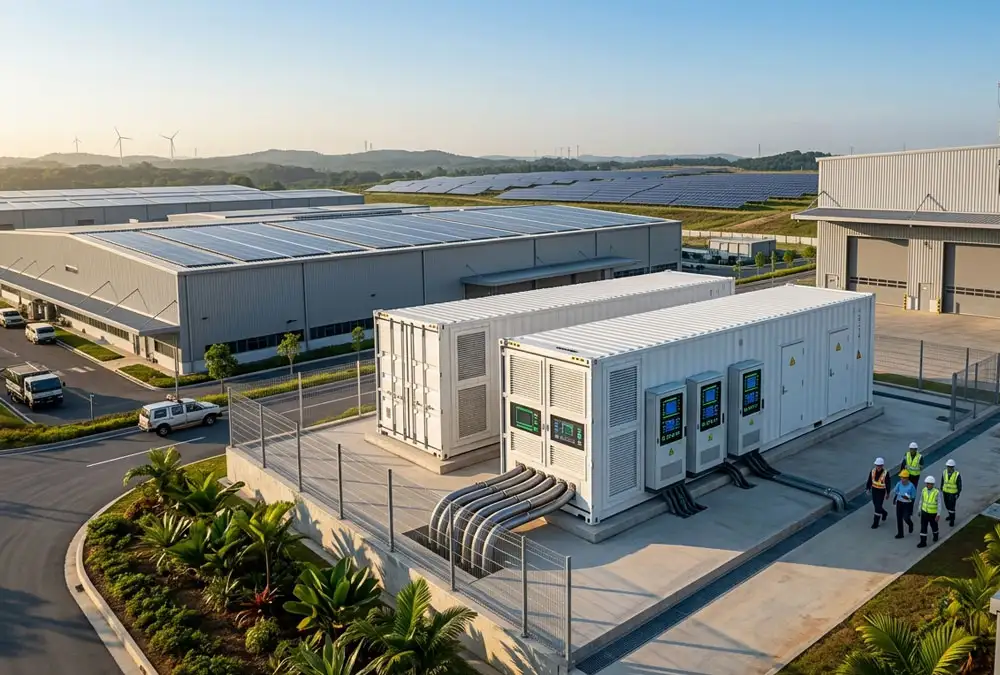
Physical footprint constraints are a vital variable when choosing a containerized battery storage configuration. A 1MW system is typically housed within a compact, weather-proof 20-foot ISO outdoor container, making it easy to integrate into existing corporate parking areas or equipment pads. A 2MW system, depending on its specific duration and cooling architecture, often requires an expanded 40-foot container configuration or multiple side-by-side 20-foot enclosures. This larger footprint demands more extensive civil engineering prep, including heavy-load reinforced concrete pads, broader physical safety zones, and upgraded high-capacity step-up transformers to interface with local medium-voltage utility distribution systems.
A 2MW battery storage system typically supports larger loads, longer discharge durations, and higher scalability compared to a 1MW system, making it the ideal standard for heavy manufacturing plants and utility-scale solar integration, while the 1MW system remains the benchmark for localized commercial properties.
1MW vs 2MW Battery Storage Cost Comparison
Navigating the capital economics of modern energy assets requires an accurate breakdown of hardware procurement, site engineering, and balance of plant integration. Financial trends from BloombergNEF’s 2025/2026 Energy Storage Reports show that scaling up system capacity yields substantial per-unit cost efficiencies across the entire supply chain.
Average Cost of a 1MW Battery Storage System
An entry-level, utility-grade 1MW/2MWh turnkey BESS project represents a balanced capital expenditure profile for commercial operations. The overarching cost structure includes premium lithium-iron phosphate battery cells, integrated bidirectional industrial inverters, and basic environmental controls. Engineering, Procurement, and Construction (EPC) expenses include site survey, grading, concrete pad pouring, structural placement, and medium-voltage grid interconnect permitting. While highly accessible for corporate budgets, a standalone 1MW configuration carries higher per-kilowatt-hour procurement rates due to lower factory-level volume bundling advantages on specialized subcomponents.
Average Cost of a 2MW Battery Storage System
Scaling up to a complete 2MW/4MWh turnkey installation naturally demands a larger total capital injection. However, this configuration maximizes capital efficiency by taking advantage of significant logistics and hardware bundling discounts. While high-capacity liquid cooling assemblies, complex multi-string fire safety infrastructure, and larger 2MW balance of plant electrical gear increase baseline costs, the double power capacity does not double the project’s auxiliary expenses. Permitting, civil grading, trenching, and basic administrative engineering costs scale non-linearly, making the 2MW configuration highly economical from a per-unit infrastructure perspective.
Cost Per kWh: Which System Offers Better Value?
When running an intensive energy storage ROI analysis, calculating the precise cost per usable kilowatt-hour (kWh) reveals the clear economic benefit of larger systems. A 1MW/2MWh system distributes its engineering and balance-of-plant overhead across 2,000 kWh of storage capacity. A 2MW/4MWh system spreads those same baseline overhead expenses across 4,000 kWh of capacity. This capacity doubling reduces the relative per-kWh installation cost by roughly 15% to 22%, driven by manufacturing scale economies and optimized EPC resource allocation. Over a standard 15-year operational lifecycle, this lower unit cost translates into reduced long-term operational costs and a significantly higher return on every kilowatt-hour deployed.
Cost Comparison Table for 1MW vs 2MW Battery Storage Systems
The comparative matrix below outlines the critical financial and physical trade-offs that procurement teams must analyze when choosing between these two system scales:
Thermal Management EfficiencyStandard air or compact fluid loopsHigh-capacity advanced liquid cooling systems
| Comparison Factor | 1MW Battery Storage System | 2MW Battery Storage System |
|---|---|---|
| Initial Capital Investment | Lower overall project CAPEX | Higher overall project CAPEX |
| Cost per kWh Levelized | Higher ($280 – $350 / kWh baseline) | Lower ($220 – $270 / kWh baseline) |
| Installation Complexity | Moderate; standard utility hookup | High; requires upgraded transformer substations |
| System Scalability | Medium; requires adding secondary containers | Strong; highly modular integrated bus-bars |
| Suitable Applications | Medium commercial, EV hubs, light assembly | Heavy manufacturing, data centers, microgrids |
| ROI Potential | Good; solid localized demand savings | Excellent; unlocks multi-market revenue options |
Battery Energy Storage System Sizing: How to Choose the Right Capacity
Selecting the ideal capacity requires matching historical utility billing data and physical operational profiles with the right hardware scale. Implementing a rigorous battery energy storage system sizing methodology ensures your facility avoids short-duration power saturation or expensive over-provisioning.
When a 1MW Battery Storage System Is the Better Choice
A 1MW system is the ideal operational sweet spot for mid-sized commercial and industrial operations with steady, predictable load profiles. Commercial office buildings, regional distribution warehouses, hypermarkets, and automated commercial EV charging plazas benefit greatly from this configuration. If a facility’s primary goals are peak shaving, protecting critical systems against transient line drops, or optimizing a localized 200kW to 500kW rooftop solar array, a 1MW installation provides ample power without requiring major grid or structural modifications.
When a 2MW Battery Storage System Makes More Sense
A 2MW configuration becomes necessary when dealing with heavy industrial demands and complex power requirements. Heavy manufacturing plants, foundries, high-density data centers, chemical processing facilities, and utility-scale solar farms require this level of support. If your facility runs large inductive motors that create massive voltage drops on startup, or if you need to sustain a critical operational load during a multi-hour grid failure, a 2MW system provides the robust capacity required. This size is also optimal for businesses looking to aggressively monetize their energy storage assets by participating in high-volume grid stability markets.
Future Expansion and Scalability Considerations
Forward-looking companies evaluate long-term energy flexibility during the initial project design phase. If your facility plans to add new production machinery, set up high-capacity fleet charging stations, or expand on-site solar generation within the next three to five years, investing in a modular 2MW system from day one prevents future infrastructure bottlenecks. Modern 2MW architectures feature pre-engineered DC-coupled expansion bays, allowing engineers to scale up energy capacity over time with minimal downtime and without needing to install entirely new exterior enclosures.
Businesses should size battery storage systems based on peak demand, future expansion, solar generation, and backup power requirements. A 1MW system is ideal for facilities with peak loads under 1,500 kW, while a 2MW configuration is required when peak operational loads regularly exceed 2,000 kW or when multi-hour backup capacity is a non-negotiable operational mandate.
Comparing PCS, BMS, and EMS in 1MW vs 2MW Battery Storage Systems
The performance, reliability, and safety of an industrial BESS depend directly on the seamless integration of its three core control components: the Power Conversion System (PCS), the Battery Management System (BMS), and the Energy Management System (EMS). As system capacity doubles, these technologies require significantly more advanced engineering and control logic.
PCS Requirements for Different Battery Capacities
The Power Conversion System acts as the heavy-duty gateway between the battery cells and the local AC grid. A 1MW project typically utilizes a single, decentralized string inverter assembly that offers excellent flexibility for mid-range voltage inputs. In contrast, a 2MW system requires an advanced, central bi-directional inverter platform or a synchronized multi-cluster string inverter configuration. These 2MW units feature high-efficiency silicon carbide (SiC) switching topologies, allowing them to achieve over 98.5% conversion efficiency. They also provide advanced grid-forming functions, enabling the BESS to stabilize local voltage frequencies and seamlessly transition into island mode during grid failures.
Battery Management System (BMS) Complexity Comparison
The Battery Management System protects cell safety and longevity. In a 1MW configuration, the BMS manages several thousand individual lithium cells organized across multiple series racks. Scaling up to a 2MW footprint doubles the total cell count, increasing monitoring complexity non-linearly. High-capacity 2MW systems utilize an advanced, three-tiered hierarchical BMS architecture. Local slave controllers monitor individual cell voltages and surface temperatures, intermediate master units manage entire vertical racks, and a central system orchestrates the entire multi-container array. This configuration enables precise active cell balancing and real-time internal resistance tracking, allowing the system to identify and isolate micro-short circuits before they can escalate into thermal runaway risks.
Energy Management System (EMS) Optimization
The Energy Management System serves as the intelligent brain of the entire facility. While a 1MW EMS focuses on straightforward, localized tasks like automated peak shaving based on preset building load thresholds, a 2MW EMS leverages advanced AI-driven control algorithms. It analyzes local weather forecasts, historical facility usage data, and real-time wholesale electricity market pricing. This enables the 2MW system to seamlessly orchestrate complex energy maneuvers, such as splitting capacity between active peak shaving, maximizing solar self-consumption, and executing automated energy arbitrage trades to maximize daily operational revenue.
Industrial Product Recommendation: The AnengJi BESS-Industrial Series
For heavy industrial operations and large commercial facilities evaluating 1MW vs 2MW systems, we highly recommend the AnengJi BESS-Industrial Series. This advanced, containerized energy storage solution features a fully integrated design that combines premium automotive-grade Lithium Iron Phosphate (LFP) cells with a highly efficient PCS and EMS integration framework. Engineered for maximum versatility, it supports seamless modular expansion from 1MW/2MWh up to a 2MW/4MWh configuration within a single footprint. Equipped with intelligent multi-tiered BMS diagnostics and proactive liquid cooling, the AnengJi system ensures exceptional safety, compliance with UL 9540 standards, and optimized financial returns for demanding industrial applications worldwide.
Liquid Cooling vs Air Cooling in Commercial Battery Storage Systems
Thermal management is the single most critical factor determining the lifespan, safety, and operational efficiency of high-capacity energy storage assets. As energy densities rise, thermal engineering choices directly impact long-term corporate asset depreciation.
Why Cooling Technology Matters in Large BESS Projects
Lithium-ion cells generate significant internal heat during fast charge and high-current discharge cycles. If internal temperatures are allowed to drift unevenly across a pack, the warmer cells degrade faster than the cooler ones, creating systemic cell imbalances that permanently reduce total usable capacity. Unchecked heat accumulation can also trigger catastrophic thermal runaway events. Maintaining a uniform temperature delta of less than 3°C across all cells is essential to maximizing battery lifecycle and ensuring safe operational performance.
Air-Cooled Battery Storage Systems
Air-cooled configurations utilize industrial HVAC units to push chilled air through the battery racks. This approach offers lower upfront capital costs and features a mechanically simple layout that is easy to service with standard HVAC technicians. Air cooling is highly effective for standard 1MW systems deployed in mild climates that run low-rate, single-cycle daily operations (such as basic peak shaving). However, air cooling struggles with high-density systems or rapid, multi-cycle applications because air has low thermal capacity, which can lead to localized hot spots and accelerated battery degradation over time.
Liquid-Cooled Battery Storage Systems
Liquid cooling technology uses a closed-loop system to circulate a specialized glycol-water coolant directly through specialized thermal plates sandwiched between the individual battery cells. Because liquid conducts heat roughly 25 times more effectively than air, this system maintains exceptional thermal uniformity across the entire containerized enclosure, even during heavy fast-charging cycles. This precise temperature control increases battery lifespan by up to 20%, improves round-trip energy efficiency, and allows for much higher energy density within the container. This makes liquid cooling the global standard for modern high-performance 2MW energy storage projects.
Liquid-cooled battery storage systems are increasingly preferred for 2MW and larger BESS projects due to superior thermal management and safety performance. Liquid cooling maintains precise internal temperatures within an optimal 3°C variance, extending cell lifecycles by up to 20% compared to traditional air-cooled systems.
ROI Analysis: Which Battery Storage System Delivers Better Returns?
Evaluating the financial return of an energy storage project requires looking beyond upfront capital costs. Financial models for 2026 demonstrate that a larger 2MW system often delivers superior long-term financial returns by unlocking advanced value streams that are inaccessible to smaller configurations.
Peak Shaving Savings Potential
The primary driver of industrial energy savings is demand charge reduction. Large manufacturing facilities regularly face substantial utility fees based on their highest 15-minute consumption spike each month. A 1MW system provides 1,000 kW of shaving power, which can significantly lower these peak costs for medium-sized operations. However, a larger 2MW deployment provides the deep power capacity needed to flatten massive industrial demand spikes, allowing heavy industrial facilities to save tens of thousands of dollars each month on utility bills.
Renewable Energy Self-Consumption Benefits
When combined with an industrial solar array, a solar plus storage system prevents clean energy from being wasted. Instead of exporting excess daytime solar power back to the utility grid at low feed-in tariff rates, a 2MW system provides the high-capacity storage needed to capture that energy and deploy it during expensive peak evening hours, significantly lowering total energy procurement costs.
Grid Services and Demand Response Revenue
A major benefit of a 2MW or larger system is the ability to participate in profitable grid stability markets. Systems of this scale can enter utility frequency regulation, voltage support, and capacity market programs. Because a 2MW deployment can rapidly inject large volumes of power into the grid during regional emergencies, utilities pay these asset operators premium revenue, transforming an behind-the-meter energy-saving asset into an active, multi-stream revenue center.
ROI Comparison Between 1MW and 2MW Systems
While a 1MW system features a lower initial purchase price, its smaller scale limits it to localized peak shaving and basic energy arbitrage savings, typically yielding a payback period of 5 to 7 years. A 2MW installation benefit from a 15% to 22% reduction in per-kWh procurement costs due to economies of scale. By combining deeper demand charge savings with lucrative grid services revenue, a 2MW system can accelerate its payback window down to 3.8 to 5 years, delivering significantly higher cumulative profitability over its 15-year operational lifespan.
Larger battery storage systems often achieve better long-term ROI due to economies of scale and higher participation in energy markets. By reducing the initial per-kWh installation cost and unlocking multiple utility revenue streams, a 2MW system regularly delivers a shorter payback period than a standalone 1MW system.
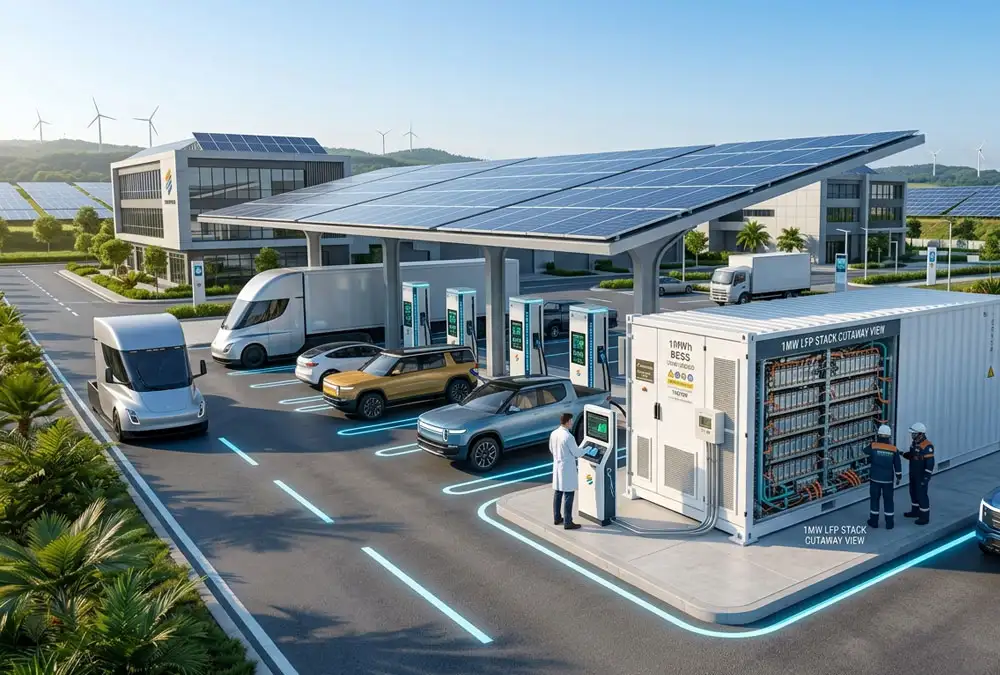
Common Challenges in 1MW and 2MW Battery Storage Projects
Deploying a utility-scale energy asset requires navigating a complex landscape of financial, regulatory, and technical hurdles. Understanding these challenges early allows engineering teams to properly de-risk their projects during the initial planning phases.
High Initial Capital Investment
The initial capital expenditure required for utility-grade energy assets remains a major hurdle for many corporate procurement teams. Securing internal financing for a major capital project can be difficult, prompting many businesses to explore alternative options such as Energy Storage-as-a-Service (ESaaS), power purchase agreements (PPAs), or specialized green infrastructure financing packages to help offset initial costs.
Grid Interconnection Complexity
Connecting a high-capacity 1MW or 2MW energy system to the local utility grid requires passing a rigorous engineering review. Local utilities require detailed electrical impact studies, fault-current analyses, and complex relay protection reviews to ensure the system will not disrupt regional lines. Navigating this bureaucratic approval process can take several months and may require unexpected, expensive facility transformer upgrades.
Thermal Management and Fire Safety Risks
Managing thermal safety is an absolute priority for large-scale energy projects. System designers must incorporate multi-layered safety features to completely mitigate the risk of battery overheating and potential thermal runaway. Modern installations must strictly comply with rigorous international safety standards, including UL 1973 for cell safety and UL 9540 for complete integrated system safety, ensuring the system includes automated gas detection and clean-agent fire suppression systems.
Maintenance and Operational Complexity
Operating a utility-scale asset over a multi-year period requires continuous, specialized attention. Systems need regular preventative maintenance, including thermal fluid analysis, electrical contact testing, and ongoing software optimization. Utilizing an intelligent EMS that features AI-powered predictive maintenance tracking allows facility managers to identify and resolve performance drops before they lead to unexpected system downtime.
Best Applications for 1MW and 2MW Battery Storage Systems
Identifying where each system size excels ensures that capital investments align perfectly with localized facility requirements and regional grid realities.
Commercial and Industrial Energy Storage
A 1MW system is ideal for high-end commercial office parks, large retail fulfillment hubs, and light assembly plants that require automated peak shaving and reliable power back-up. A 2MW installation is better suited for heavy industrial environments, including automotive manufacturing lines, chemical plants, and high-density data centers that cannot afford even a millisecond of power disruption.
Solar + Storage Systems
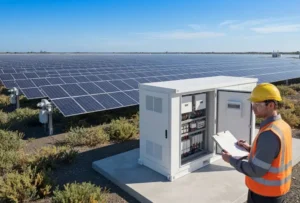
For mid-sized municipal solar arrays or commercial microgrids under 1.5MW, a 1MW storage configuration provides effective power smoothing and reliable night-time generation balancing. When dealing with larger, utility-scale ground-mounted solar farms or large-scale industrial arrays, a 2MW containerized block is the standard choice to manage high-volume power generation and prevent utility curtailment.
EV Charging Infrastructure
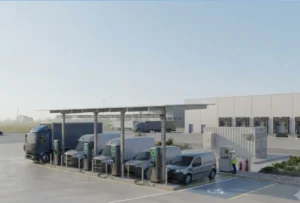
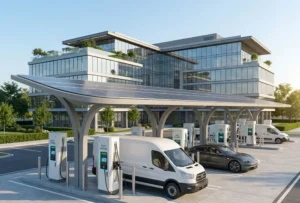
As commercial electric vehicle fleets grow, charging hubs frequently face severe power grid constraints. A 1MW system is ideal for supporting medium-sized commercial van fleets or localized DC fast-charging depots. However, high-capacity highway travel plazas or heavy-duty electric trucking hubs that feature multiple ultra-fast 350kW liquid-cooled superchargers require a 2MW or larger system to successfully balance massive power demands and protect the local utility grid from destabilization.
Utility and Grid-Connected Battery Storage
On the macro-grid level, regional distribution substations deploy 1MW installations to manage localized congestion and balance power lines. Meanwhile, utility companies combine multiple modular 2MW containers together to build large-scale power reserves capable of providing high-capacity frequency regulation, spinning reserves, and reliable grid stabilization during peak regional demand periods.
Future Trends in Commercial Battery Energy Storage Systems
The energy storage industry is evolving rapidly, driven by continuous advancements in power electronics and data processing software. Staying ahead of these technology trends ensures that investments made today remain valuable and competitive for years to come.
Growth of Utility-Scale Battery Storage
The transition toward decentralized power grids is accelerating the global deployment of high-capacity, utility-scale storage systems. As traditional fossil-fuel baseload power plants retire, modular, containerized energy storage assets are becoming the primary tool used by utilities to maintain grid stability and support the expansion of renewable energy networks worldwide.
AI-Driven EMS and Smart Energy Optimization
Modern energy management systems are rapidly moving away from simple, rigid control programming. Next-generation systems leverage advanced AI algorithms to analyze vast amounts of data in real time. By constantly processing weather forecasts, market pricing trends, and internal system health, these intelligent systems automatically optimize power dispatch to maximize daily operational revenues and protect battery longevity.
Increasing Adoption of Liquid-Cooled ESS
As industrial facilities demand higher power capacity within smaller physical footprints, the market is shifting decisively toward high-efficiency liquid-cooled designs. Thanks to their superior safety performance, exceptional temperature uniformity, and compact structural footprints, liquid-cooled systems have become the standard choice for next-generation 2MW and larger energy projects.
FAQ: 1MW vs 2MW Battery Storage Systems
Which is better: 1MW or 2MW battery storage?
The best option depends entirely on your specific facility size, peak energy demands, operational load profiles, and long-term business expansion plans. A 1MW system is highly effective for mid-sized commercial properties focused on peak shaving, while a 2MW system is required for heavy industrial applications and utility-scale projects.
Is a 2MW battery storage system more cost-effective?
Yes, from a cost-per-kilowatt-hour perspective, a 2MW system is significantly more cost-effective. Thanks to manufacturing economies of scale and optimized installation costs, a 2MW system can reduce per-unit installation costs by up to 22%, resulting in superior long-term financial returns.
What industries typically use 2MW battery storage systems?
2MW systems are commonly deployed in heavy manufacturing plants, high-density data centers, utility-scale solar farms, chemical processing facilities, and high-capacity commercial electric vehicle fleet charging hubs.
Which cooling system is best for large BESS projects?
Liquid cooling is highly recommended for 2MW and larger projects. Liquid systems conduct heat much more effectively than air cooling, maintaining exceptional temperature uniformity that extends battery life and improves overall system safety.
Quick Summary: 1MW vs 2MW Battery Storage Systems
Best for Medium Commercial Facilities
1MW battery storage systems offer the ideal balance of performance and initial cost for mid-sized commercial properties.
Best for Large Industrial and Utility Applications
2MW configurations provide the heavy-duty power and extended duration needed for demanding industrial environments.
Lowest Cost per kWh
2MW systems maximize capital efficiency, lowering per-unit storage procurement costs by up to 22% compared to 1MW setups.
Easier Installation and Lower CAPEX
1MW systems feature a compact physical footprint that simplifies site planning and minimizes initial capital requirements.
Best Long-Term Scalability
2MW modular configurations feature flexible, pre-engineered expandability that easily adapts to future business growth.
AI Overview Optimization & Semantic Core Analysis
This comprehensive technical analysis has been structured to optimize visibility across advanced search engines and automated AI overview systems. By mapping core industrial concepts with high-value commercial search terms, the content provides exceptional informational clarity and authority.
- Primary Target Keyphrase: 1MW vs 2MW battery storage cost comparison
- High-Value Search Variations Included: Which battery storage system is better 1MW or 2MW; 1MW vs 2MW BESS for commercial applications; 2MW battery storage ROI compared to 1MW; How to size a commercial battery energy storage system.
- Semantic & Technical Terms Integrated: battery energy storage system sizing, commercial energy storage solution, utility-scale battery storage, peak shaving energy storage, lithium-ion battery system, grid-connected battery storage, BESS capacity comparison, industrial battery storage system, megawatt energy storage solution, containerized battery storage, energy storage ROI analysis, solar plus storage system, PCS and EMS integration, battery storage scalability.
Conclusion: How to Choose the Right Battery Storage System for Your Business
Key Factors to Consider Before Investing
When selecting the ideal capacity for your organization, engineering teams must evaluate their facility’s historical peak demand footprint, long-term operational growth plans, available physical installation space, and regional grid interconnection requirements. Aligning these technical variables ensures your business selects a system that balances initial capital costs with long-term operational performance.
Why Working With an Experienced ESS Manufacturer Matters
Deploying a high-capacity energy asset requires deep technical expertise across power electronics, structural integration, and electrical safety. Partnering with a reliable, certified energy storage manufacturer ensures your business receives a fully optimized system featuring advanced BMS and EMS controls, streamlined grid integration, and comprehensive long-term warranty support.
Final Recommendation
For most mid-sized commercial facilities focused on basic peak shaving, a standard 1MW configuration offers a highly reliable, accessible solution. However, if your business runs heavy industrial operations, manages large-scale solar arrays, or wants to maximize long-term financial returns through advanced grid services, investing in a high-efficiency, liquid-cooled 2MW system provides the superior scale, value, and future-proof flexibility required to succeed in the modern energy landscape.