Wholesale EV charging stations sourcing isn’t just about chasing the lowest unit price from a factory. If you dive in headfirst without checking hardware protocols or real-world grid limits, you’ll end up stuck with containers of useless metal bricks. A rock-solid procurement strategy means balancing actual product fit, market certifications, quality control, realistic MOQs, landed costs, and after-sales backup. Honestly, I’ve seen too many CPOs ruin their margins simply because they ignored local electrical codes or skipped thermal stress testing during initial sample checks.
Wholesale EV Charging at a Glance
Before jumping into lengthy factory negotiations, use this quick strategic matrix to organize your sourcing priorities and prevent costly oversight.
| Buying Question | What to Check | Direct Buyer Advantage (Why This Matters) |
|---|---|---|
| What should I buy? | AC vs. DC / Power output / Connector types | Prevents over-specifying hardware, saving up to 35% on unnecessary equipment capital. |
| Who should I buy from? | Direct Manufacturer vs. Trading Broker | Direct factory access cuts middleman markups and grants custom firmware modifications. |
| What quantity? | MOQ thresholds vs. Real regional demand | Avoids tying up working capital in unsold inventory while locking in bulk volume pricing. |
| How do I reduce risk? | Sample validation → Pilot site → Bulk production | Eliminates systemic hardware failures before deploying large-scale commercial fleets. |
Who Should Wholesale EV Charging Stations?
Sourcing hardware direct from Chinese production lines makes financial sense only if your business model demands scalable hardware distribution or large-scale asset deployment. Let’s look at who actually benefits from bulk procurement.
EV Charger Distributors and Regional Importers
If you operate as a regional equipment wholesaler, purchasing wholesale ev charging stations lets you capture significant distributor margins. You need factory-backed warranties, customizable enclosures for local branding, and full compliance documentation to sell smoothly into contractor networks.
Charging Network Operators and CPOs
Charge Point Operators (CPOs) deploying hundreds of public or semi-public sockets need reliable hardware that natively talks to their CSMS backend. Procuring directly from production lines ensures consistent internal componentry, uniform OCPP implementation, and lower overall hardware capital expenditure.
EPC Contractors and Commercial Developers
Engineering, Procurement, and Construction (EPC) firms handling turnkey infrastructure projects need reliable factory partners to meet strict tender specs. Getting direct factory quotes helps EPCs present winning project bids without sacrificing installation profits.
EV Charger Brands and OEM Buyers
If you are building your own brand of chargers, partnering with an established EV charging station manufacturer gives you access to advanced power electronics without taking on multi-million dollar R&D overheads. You focus on sales and local support while the factory handles manufacturing.
Which EV Charging Stations Should You Wholesale?
Picking the right hardware isn’t about buying the highest wattage available; it’s about matching charger specs to where they will actually be installed. According to the IEA Global EV Outlook Report, public fast charging infrastructure grew by over 40% globally, yet AC charging still dominates overnight fleet depots and workplace car parks. Matching hardware type to application avoids stranded assets.
AC EV Chargers for Residential and Light Commercial Markets
AC wallboxes ranging from 7kW single-phase to 22kW three-phase remain the volume driver for residential complexes, hotels, and long-stay parking. They are cheap to manufacture, easy to install on standard grid connections, and offer high profit margins when sold in bulk to residential developers.
DC Fast Chargers for Commercial Projects
For highway service stops, retail plazas, and commercial fleets, DC fast chargers from 60kW to 180kW are the industry standard. Buying a commercial solar battery storage system alongside DC fast chargers helps site hosts avoid high utility demand charges during peak charging hours.
High-Power DC Chargers for Charging Hubs and Fleets
Ultra-fast chargers delivering 240kW to 480kW require liquid-cooled cables and advanced power-sharing matrix architectures. These units are built specifically for heavy-duty logistics fleets and transit hubs where turnaround time directly affects daily operational revenue.
Modular Charging Systems
Modular power cabinets separate the AC/DC power conversion stack from the user-facing dispenser. This lets CPOs start with 120kW of power modules and expand to 360kW later as EV battery architecture evolves, without tearing up ground trenching or replacing the main dispensers.
EV Charging + EMS or BESS for Grid-Constrained Projects
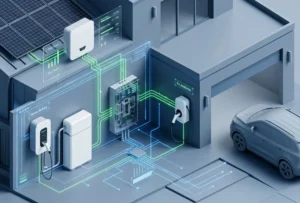
When the local grid transformer can’t support a 300kW DC fast charger, pairing charging hardware with a Battery Energy Storage System (BESS) and Energy Management System (EMS) solves the grid constraint. Industry data from BloombergNEF’s Energy Storage Outlook shows that combining energy storage with fast chargers can cut grid upgrade wait times by up to 18 months.
Recommended Industrial BESS Integration Solutions
For commercial charging projects facing transformer capacity limits, consider these integrated battery cabinets:
- 100kWh / 261kWh Outdoor BESS Cabinets: Compact LFP chemistry enclosures designed for commercial peak-shaving and boosting local charger capacity without costly utility upgrades.
- 418kWh / 1MWh Modular Containerized BESS: High-density liquid-cooled battery systems built for heavy fleet depots, microgrids, and multi-dispenser supercharging hubs.
How to Choose the Right EV Charger for Your Target Market
Grid standards and socket preferences vary significantly across global regions. Importing standard European chargers into North America without modification will halt your project immediately at customs or local electrical inspections.
| Target Market | Connector & Grid Standard | Mandatory Certifications | User Advantage (Market Alignment) |
|---|---|---|---|
| Europe (EU) | Type 2 (AC) / CCS2 (DC) | CE, IEC 61851, IEC 62196, RED Directive | Ensures 100% grid compliance across all EU member states without local retrofitting costs. |
| North America | Type 1 J1772 (AC) / CCS1 or NACS (DC) | UL 2594, UL 2202, FCC Part 15, Energy Star | Unlocks government infrastructure subsidies and passes municipal fire safety audits easily. |
| Southeast Asia | Type 2 (AC) / CCS2 (DC) | CB Scheme, CE + Regional standard approvals | Fast-tracks local utility grid connections and reduces regional import clearance delays. |
Why Wholesale EV Charging Stations Directly From China?
China controls over 70% of the world’s EV charging equipment supply chain. Buying direct from an EV charger factory in China gives you a clear pricing edge and unmatched flexibility, but you must know how to navigate technical specs and shipping logistics.
- Factory-Direct Margin Control: Cutting out regional distributors lowers your hardware purchase costs by 20% to 40%, giving you healthy room for local markup or more competitive project tenders.
- Extensive OEM/ODM Capabilities: Chinese factories can quickly customize metal enclosures, screen interfaces, cable lengths, and firmware features to match your brand requirements.
- Supply Chain Density: Key components like power modules, contactors, control boards, and liquid-cooled cables are sourced locally in industrial hubs like Shenzhen and Ningbo, cutting lead times significantly.
How to Find a Reliable EV Charger Wholesale Supplier in China
Not every supplier listing hardware on B2B directories actually operates a manufacturing line. Many are simply trading firms taking a margin on outsourced production. Knowing who you’re actually dealing with protects your capital.
| Supplier Type | Main Operational Role | Buyer Consideration & Direct Benefit |
|---|---|---|
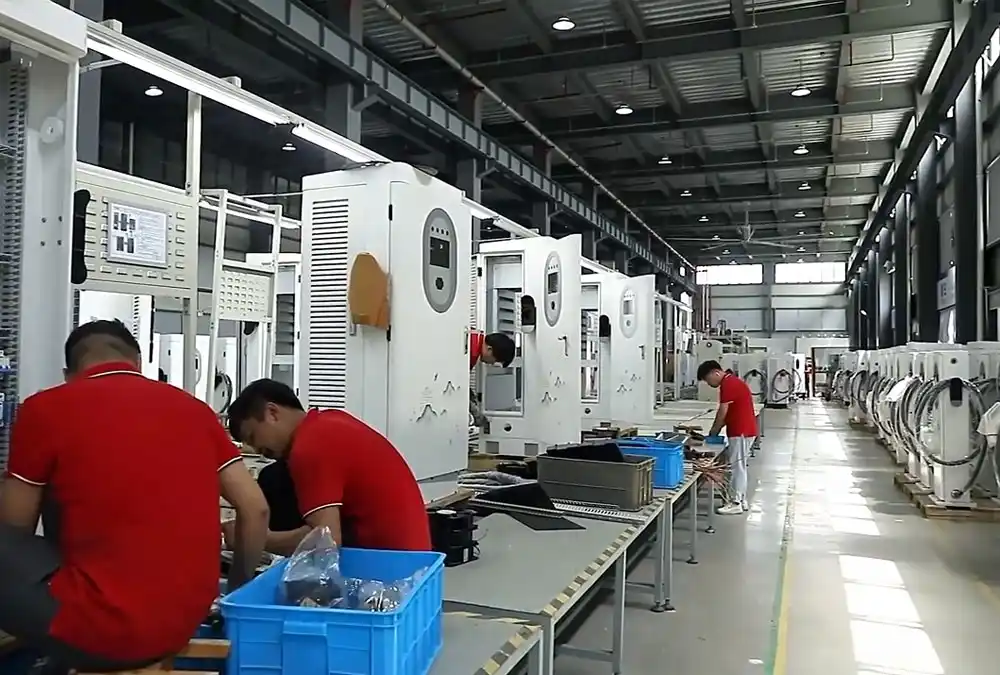
| Original Manufacturer | Owns SMT lines, metal fabrication, and assembly lines | Direct engineering support, lower prices, and faster custom firmware updates. |
| Trading Broker | Sources hardware across multiple unlinked factories | Higher unit costs, limited technical support, and risk of inconsistent component batches. |
| System Integrator | Combines chargers, solar, and battery energy storage | Delivers complete microgrid solutions, ideal for complex commercial projects. |
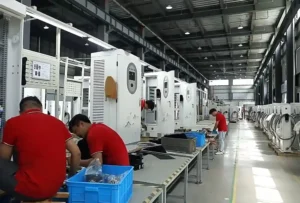
To confirm you’re working with a genuine factory, request their ISO 9001 audit report, ask for a live video walk-through of their SMT circuit board line, and verify that their test lab has burn-in aging racks.
What Certifications Should You Check Before Buying EV Chargers Wholesale?
A supplier telling you “our chargers have CE” isn’t enough. CE is a self-declaration framework backed by specific lab reports. You must demand the exact test reports issued under relevant EN and IEC standards for the specific model you’re purchasing. According to compliance testing protocols from TÜV Rheinland, over 15% of imported power electronics fail local grid inspections due to missing Electromagnetic Compatibility (EMC) test documentation.
- IEC 61851-1: Core conductive charging safety standard covering electrical insulation, earthing protection, and control signaling protocols.
- IEC 62196: Dimensional and safety compliance standard for physical plugs, sockets, and vehicle inlets.
- EMC Compliance (EN 61000 Series): Verifies that the charger won’t inject harmful electrical noise into the local grid or interfere with nearby electronics.
- OCPP 1.6J / 2.0.1 Certification: Validates open charge point protocol communication between charger hardware and your chosen central management software (CSMS).
Wholesale Price vs. Landed Cost: What Really Matters?
Judging a wholesale ev charging stations deal based purely on the factory FOB quote is a classic rookie mistake. Your true landed cost determines your real profit margins.
Landed Cost Calculation Formula:
Landed Cost = Factory Unit Price + OEM Customization + Freight & Insurance + Customs Duties + Local Port Clearance + After-Sales Warranty Reserve
Always budget a 3% to 5% warranty reserve for spare parts like replacement cables, main control boards, and screen modules to handle local field service quickly.
What Is a Reasonable MOQ for Wholesale EV Chargers?
Minimum Order Quantities (MOQs) vary widely depending on whether you’re purchasing standard off-the-shelf hardware or fully customized OEM products.
- Standard AC Chargers: Factory MOQs typically range from 10 to 50 units for standard white-label stock.
- Custom OEM Branding (Logo/Color): Expect MOQs of 100 to 200 units for custom logo prints and custom enclosure colors.
- DC Fast Chargers (60kW–240kW): Due to higher hardware value, MOQs are much lower—usually 2 to 5 units for standard models.
- Full ODM Development: Creating custom sheet metal enclosures or specialized motherboard layouts requires upfront NRE tooling costs and MOQs of 500+ units.
Sample → Pilot → Bulk Order: A Lower-Risk Procurement Process
Never place a full bulk order with a new factory without testing first. Following a disciplined, staged procurement path protects your working capital.
Sample Evaluation (1-2 Units)
Test electrical safety, physical build quality, cable flexibility, and basic OCPP handshake compatibility with your platform in a controlled bench setting.
Pilot Field Trial (5-10 Units)
Install chargers across live commercial sites. Monitor real-world thermal performance, multi-vehicle charging compatibility, RFID authorization, and continuous CSMS network connectivity over 60 days.
Bulk Production & Rollout
Lock in volume pricing, finalize formal warranty agreements, set up spare parts packages, and issue container-level production purchase orders.
How to Test EV Charger Quality Before a Bulk Order
A major complaint across installer communities on Reddit (like r/evcharging) is receiving imported chargers that randomly drop offline, fail under high ambient heat, or lock up during firmware updates. Proper pre-shipment testing prevents these headaches.
- Full Power Burn-In Testing: Ensure the factory runs your DC chargers at 100% rated capacity for at least 4 hours to verify internal power module cooling.
- Thermal Camera Inspections: Inspect busbars, contactors, and terminal blocks under full electrical load to spot localized overheating.
- OCPP Stress Testing: Simulate internet dropouts and sudden power cuts to confirm the charger automatically reconnects to the CSMS and resumes session logging without freezing up.
- Third-Party Pre-Shipment Inspection (PSI): Hire an independent agency (like SGS or Bureau Veritas) to inspect random production samples before final container loading.
How to Negotiate EV Charger Wholesale Orders From China
Successful negotiations aren’t just about hammering the factory on unit price. Pushing prices too low often forces factories to swap out quality components—like replacing premium internal contactors with cheap alternatives. Focus instead on structural terms:
- Tiered Volume Pricing: Secure written pricing tiers upfront (e.g., 50, 200, 500 units) so your costs drop automatically as your sales scale.
- Balanced Payment Terms: Standard terms for bulk orders are 30% deposit upon PO issuance and 70% balance payment upon presentation of the Bill of Lading (B/L) after pre-shipment inspection approval.
- Warranty & Spare Parts Allocation: Negotiate 1% to 2% complimentary spare parts (control boards, touchscreens, replacement cables) included directly inside your shipping container for quick local maintenance.
- Incoterms Clarification: Always specify precise Incoterms. FOB (Free on Board) or DDP (Delivered Duty Paid) are standard for commercial shipments depending on whether you manage freight directly.
How to Compare China EV Charger Wholesale Suppliers
Use this objective evaluation score-card when reviewing prospective factory quotes:
| Evaluation Dimension | Key Sourcing Checkpoints | Score Impact on Buyer Project |
|---|---|---|
| Product Architecture | AC/DC range, modularity, liquid cooling options | High: Prevents hardware obsolescence over a 5-year project lifecycle. |
| Compliance Integrity | Third-party lab test reports (CE, UL, CB, TÜV) | Critical: Avoids customs impoundment and grid connection rejections. |
| Software Flexibility | Proven OCPP 1.6J/2.0.1 integration across multiple CSMS backends | High: Ensures seamless billing, fleet authorization, and user management. |
| Factory Capacity | Monthly output volume, SMT automation, burn-in aging racks | Medium: Guarantees delivery schedules during peak construction seasons. |
EV Charger Wholesale Buyer Checklist
Use this practical checklist before confirming your purchase order details:
- ☐ Have you confirmed exact target market connector types (CCS1, CCS2, NACS, Type 2)?
- ☐ Is the required power output (kW) matched to grid capacity at destination sites?
- ☐ Did the factory provide valid, verifiable lab test reports for CE or UL compliance?
- ☐ Has the charger passed OCPP 1.6J/2.0.1 handshake testing on your specific CSMS?
- ☐ Are warranty replacement procedures and spare parts allocations explicitly stated in the contract?
- ☐ Is your calculated landed cost (including freight, duties, and local delivery) fully budgeted?
AnengJi Wholesale EV Charging Solutions
As a dedicated manufacturer specializing in clean energy infrastructure, AnengJi delivers fully certified commercial charging stations and battery energy storage systems tailored for global B2B buyers.
AC Commercial Wallboxes
7kW to 22kW smart AC chargers equipped with RFID, credit card payment terminal options, and OCPP 1.6J support. Ideal for workplace and multi-family residential distribution.
DC Fast Charging Stations
60kW to 240kW dual-gun DC fast chargers engineered for high-turnaround commercial sites, logistics fleets, and public CPO networks.
Solar + EV + BESS Integration
Complete microgrid architectures combining high-power DC charging dispensers with 100kWh–1MWh commercial energy storage systems to bypass local grid constraints.
Frequently Asked Questions About Wholesale EV Charging Stations
Where can I buy wholesale ev charging stations directly?
You can source directly from established original manufacturers in China like AnengJi. Direct sourcing provides full custom OEM branding options, lower unit costs, and direct factory technical support.
What is the typical MOQ for ordering wholesale EV chargers?
Standard off-the-shelf AC wallboxes usually have an MOQ of 10 to 50 units. DC fast chargers have much lower MOQs, often starting from 1 to 5 units due to their larger equipment scale.
What certifications are mandatory for importing EV chargers into Europe?
European imports require CE marking backed by EN/IEC 61851 safety standards, IEC 62196 connector compliance, RED directive approvals for wireless connectivity, and full EMC test reports.
Can Chinese EV charger manufacturers customize software and enclosure branding?
Yes, most direct manufacturers provide OEM/ODM services including custom sheet metal housing colors, laser-etched brand logos, customized cable lengths, screen UI branding, and firmware pre-configuration.