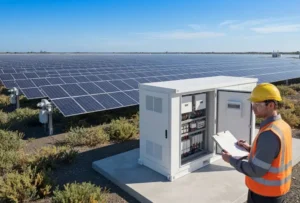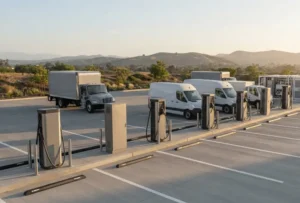
Introduction: The Next Era of Grid Modernization
Modern electrical networks are undergoing a structural shift driven by the rapid addition of intermittent power sources and the ongoing electrification of global transport. For power generation developers, transmission system operators (TSOs), and infrastructure investors, implementing reliable Utility Scale Battery Storage assets has become a necessary strategic move to maintain grid stability and maximize financial returns. As grid operators phase out traditional fossil-fuel thermal plants, the loss of rotational inertia causes severe power quality issues, such as fast frequency drops and localized voltage drops. A front-of-the-meter, high-capacity utility asset provides the milliseconds-level response required to balance power supply and demand. This comprehensive guide delivers a detailed engineering and economic evaluation of grid-connected infrastructure, asset building, project life-cycle expenses, and methods to maximize investment returns.
Utility scale battery storage refers to large-scale battery energy storage systems (BESS) connected directly to the power grid. These systems store electricity and discharge it when needed to improve grid reliability, integrate renewable energy, provide frequency regulation, reduce peak demand, and support energy market participation. Typical projects range from 10MW to hundreds of MW in capacity.
Understanding Utility-Scale Battery Energy Storage Systems
Deploying major infrastructure projects requires a clear understanding of how front-of-the-meter assets differ from smaller, localized commercial and industrial configurations.
What Is a Utility-Scale Battery Storage System?
A utility-scale configuration is a high-voltage, centralized energy facility that links directly to transmission or distribution substations. These multimegawatt systems use synchronized power electronics networks to act as reliable, controllable assets for regional grid management.
How Utility Scale Battery Storage Works
The system operates by shifting energy across different time periods. During low-demand periods or high renewable production, the facility pulls alternating current (AC) from the grid, converts it through multi-megawatt bi-directional inverters, and stores it as direct current (DC) in high-density battery cells. When power demand peaks or grid frequency changes, the process reverses instantly, pumping power back into the network within milliseconds.
Difference Between Utility Scale and Commercial Energy Storage
While commercial and industrial (C&I) installations focus behind-the-meter on single-facility peak shaving, utility configurations work front-of-the-meter. They feature much higher voltage connections (often above 34.5 kV up to hundreds of kV) and operate under the direct oversight of regional transmission organizations (RTOs).
Why Utilities Are Investing in Battery Storage
Power companies invest in stationary storage to defer expensive substation upgrades, lower overall grid operating costs, manage steep daily demand fluctuations (the “duck curve”), and secure reliable backup capacity without adding carbon-emitting gas peaker plants.
Global Growth of Utility-Scale Battery Energy Storage
Driven by strict net-zero targets and falling battery production costs, large-scale storage capacity is growing rapidly worldwide. Industry benchmarks indicate that major global regions are expanding their energy storage pipelines at an exponential rate to secure long-term grid stability.
Utility Scale Battery Storage Applications for Modern Power Grids
Large-scale systems are highly versatile assets that provide grid operators with multiple operational and financial benefits across different market conditions.
Renewable Energy Integration
The intermittent nature of wind and solar power presents a major challenge for traditional grid infrastructures. High-capacity storage smooths out sudden drops in green generation, turning unpredictable renewable energy into a stable, dispatchable power source for the grid.
Solar and Wind Energy Storage
During peak solar production at midday or high wind speeds overnight, generation often exceeds local demand, forcing operators to shut down production. Grid Scale Battery Storage for Renewable Energy solves this issue by capturing excess clean energy and saving it for peak demand periods, maximizing wind and solar asset utilization.
Frequency Regulation Services
Modern electrical grids must maintain a precise frequency (50 Hz or 60 Hz). Sudden changes in load can destabilize this balance. Utilizing a dedicated Utility Scale BESS for Frequency Regulation allows operators to ingest or inject precise power within milliseconds, stabilizing grid deviations far faster than traditional mechanical generators.
Peak Load Management
Instead of firing up expensive, carbon-heavy peaker plants during peak demand hours, utilities can dispatch their large-scale storage assets. This lowers wholesale electricity pricing spikes and reduces stress on high-voltage distribution lines.
Capacity Market Participation
In many regions, storage owners can participate in formal capacity markets. They receive steady payments simply for guaranteeing that their multi-megawatt systems stand ready to discharge power during severe grid emergencies.
Transmission and Distribution Deferral
Building new high-voltage transmission lines to support growing communities is costly and often delayed by long permitting processes. Placing a strategic utility-scale battery asset at a constrained substation allows utilities to meet peak localized loads, pushing out the need for expensive physical grid expansion by several years.
Black Start and Grid Resilience
During severe regional blackouts, grid operators require a self-powered generation source to restart the electrical network. Modern utility-scale systems feature advanced grid-forming inverters that provide black-start capabilities, re-establishing local grid voltage without relying on external power feeds.
Utility-Scale Battery Storage Systems Architecture and Key Components
A multi-megawatt battery facility requires multiple synchronized sub-systems to ensure safe, continuous operation under harsh outdoor conditions.
LFP chemistry has become the preferred standard for utility-scale energy storage solutions due to its excellent thermal stability and long operational life. These systems run safely across a wide temperature range and typically endure more than 6,000 to 8,000 complete charging cycles before capacity declines to 80%, delivering reliable, long-term asset performance.
NMC technology provides high volumetric energy density, packing significant megawatt capacity into a very compact footprint. While ideal for urban locations with limited land availability, NMC chemistry requires intensive, multi-layered liquid cooling and advanced fire protection architectures due to its lower thermal runaway threshold.
As a rising alternative to lithium-based chemistries, sodium-ion systems utilize highly abundant, low-cost raw materials. They perform exceptionally well across extreme temperatures and offer high safety profiles. Although they require a larger physical site footprint due to their lower energy density, their low production costs make them an increasingly attractive choice for large-scale grid storage installations.
Flow batteries store chemical energy in large external liquid electrolyte tanks. This separation of power and energy allows developers to expand system runtime simply by scaling up the electrolyte fluid volume. Flow systems experience virtually zero capacity degradation over decades of continuous operation, making them highly suited for long-duration grid support, though they require ongoing mechanical maintenance for pumps and plumbing networks.
Battery Management System (BMS)
The BMS is the primary safety controller for the system. It monitors cell-level parameters—including voltage, current, and internal module temperatures—in real time to prevent overcharging, cell degradation, and localized thermal events.
Power Conversion System (PCS)
The PCS consists of heavy-duty, bi-directional inverters that manage the conversion of power between the battery racks (DC) and the electrical grid (AC). Modern utility-grade PCS modules use advanced smart functionalities to actively manage local power quality.
Energy Management System (EMS)
The EMS serves as the primary software brain for the entire facility. It runs advanced automation algorithms to track real-time market electricity prices, predict local weather conditions, manage internal cooling loops, and execute optimal dispatch strategies to maximize project revenues.
Medium Voltage Transformers
To feed power back into regional utility grids, the low-voltage AC output from the PCS inverters must be stepped up. High-efficiency medium-voltage transformers step up voltages to standard distribution levels (such as 13.8kV, 34.5kV, or higher) for seamless grid connection.
SCADA and Grid Communication Systems
Supervisory Control and Data Acquisition (SCADA) platforms integrate the asset into regional transmission operations. They use standardized utility communication protocols (like DNP3 or IEC 61850) to allow grid operators to securely send remote dispatch commands.
Fire Suppression and Safety Systems
Industrial storage enclosures feature multi-tiered safety systems. They incorporate early off-gas detection sensors, automated clean-agent fire suppression systems, and structural explosion venting panels to maintain site safety and ensure full compliance with international fire regulations.
Utility Scale Battery Storage Projects: Real-World Applications and Case Studies
Reviewing successful global projects demonstrates how utility-scale battery storage solutions provide reliable grid support across different energy markets.
A prominent solar-plus-storage initiative deployed a 250MW/1,000MWh battery system directly alongside an expansive desert photovoltaic farm. Prior to adding storage, the project faced regular output curtailment during midday production peaks. By storing excess solar generation and discharging it during high-priced evening hours, the developer eliminated curtailment losses and secured profitable long-term power purchase agreements (PPAs).
In another deployment, a regional grid operator faced severe voltage fluctuations due to the rapid shutdown of nearby coal-fired plants. They installed a 100MW/200MWh high-output battery storage asset specifically to deliver rapid frequency response. Operating under direct SCADA control, this facility responds to frequency drops within 150 milliseconds, stabilizing the local transmission network and preventing regional dropouts without requiring fossil-fuel backup generation.
Utility Scale Battery Storage Cost Per kWh Explained
Understanding the full breakdown of project costs is essential for performing accurate investment evaluations and financial planning.
What Determines Utility Scale Battery Storage Cost?
Total project costs depend heavily on the system’s duration requirements. A 4-hour system requires significantly more battery cell modules, racking, and thermal management infrastructure than a short-duration 1-hour system, increasing overall equipment expenses.
Capital Expenditure Breakdown for Grid Storage
The following table outlines the typical allocation of capital expenses across a standard large-scale front-of-the-meter battery project:
| Project Cost Component | Percentage of Total Capital Expenditure (CAPEX) | Core Sub-elements Included |
|---|---|---|
| Battery Enclosure System | 45% – 60% | Cells, modules, internal racking, liquid cooling, BMS |
| Power Conversion System (PCS) | 10% – 15% | Bi-directional inverters, switchgear, phase controls |
| EMS, SCADA & Automation | 3% – 8% | Dispatch software, remote metering, telemetry panels |
| EPC, Civil Works & Installation | 15% – 25% | Foundation pads, safety walls, cable trenching, labor |
| Grid Interconnection & Substation | 5% – 15% | Step-up transformers, isolators, utility line extensions |
Operations and Maintenance Expenses
Ongoing operational expenses include routine HVAC cooling maintenance, safety inspections, land leases, and software licensing. Additionally, projects must budget for cell augmentation funds to replace degraded battery modules over time, ensuring the system maintains its rated energy capacity throughout its multi-year operational lifespan.
Utility Scale Battery Storage Price Trends and Market Outlook
Tracking shifts in global pricing allows developers to optimize the timing of their procurement strategies and project starts.
Current Prices and Forecasts Through 2030
Increased global production capacity has significantly lowered utility scale battery storage price metrics over the past decade. Industry projections for 2026 show that fully installed system costs for standard 4-hour configurations have dropped toward historic lows per kilowatt-hour, with further gradual declines anticipated through 2030 as raw material supply chains stabilize.
Regional Cost Differences
Project pricing varies significantly by geographic region. Areas with established domestic battery manufacturing pipelines benefit from lower transport costs and reduced import duties. Conversely, remote regions or markets with complex local environmental permitting and strict labor regulations face higher overall project development costs.
Utility Scale Battery Storage Revenue Streams and ROI Analysis
Modern grid-connected battery facilities generate revenue by stacking multiple independent operational and market services.
Stacked Revenue Model Analysis
To maximize financial performance, project developers look beyond single-use operations. They implement stacked revenue models, combining daily market participation with long-term utility service contracts to secure steady returns.
| Revenue Stream Opportunity | Market Priority / Potential Value | Primary Financial Mechanism |
|---|---|---|
| Energy Arbitrage | High Priority | Buying low-cost off-peak power; selling during peak pricing windows |
| Frequency Regulation | High Priority | Ancillary market clearing for rapid grid balancing services |
| Capacity Market Payments | Medium Priority | Fixed monthly availability availability credits from grid operators |
| Renewable Firming Contracts | Medium Priority | PPA capacity add-ons with local wind or solar developers |
| Transmission Support | Strategic Value | Localized voltage control contracts with transmission operators |
Calculating Utility Scale Battery Storage Project ROI
Financial returns depend heavily on the local regulatory landscape and wholesale market volatility. In areas with high peak-to-off-peak electricity price spreads or active ancillary service markets, a well-managed utility asset can achieve an attractive payback window within 5 to 8 years, delivering stable, long-term returns for infrastructure funds.
Industrial Product Spotlight: AnengJi GridMaster 5MW/10MWh Utility BESS
For project developers and EPC contractors looking to optimize their Utility Scale Battery Energy Storage Solutions, the AnengJi GridMaster 5MW/10MWh offers an industry-leading, high-performance platform. This fully containerized liquid-cooled system features an advanced multi-tier BMS paired with a high-efficiency bidirectional PCS inverter network. Engineered for direct front-of-the-meter integration, the GridMaster limits internal cell temperature variances to under 2°C, significantly reducing degradation and extending asset lifespan. Fully certified to international safety standards, including UL 9540, UL 9540A, and IEC 62933, the GridMaster provides a reliable, bankable solution for fast frequency response, wind-solar coupling, and long-duration grid stabilization initiatives globally.
Utility Scale Battery Storage Contractor Selection Guide
Choosing the right engineering and construction partner is critical to avoiding expensive project delays and ensuring long-term asset performance.
Why EPC Expertise Matters for Grid Interconnection
Connecting a high-voltage, multi-megawatt battery facility to a regional transmission grid requires highly specialized electrical engineering expertise. An experienced utility scale battery storage contractor manages the entire grid interconnection process, ensuring full compliance with complex utility safety codes and preventing costly project delays.
Key Qualifications to Evaluate
- Proven High-Voltage Integration Experience: A solid track record of successfully engineering and commissioning substations operating above 34.5 kV.
- Regulatory Safety Certifications: Full working alignment with critical regional safety standards, including NFPA 855 and IEEE 1547.
- Long-Term O&M Service Capabilities: The ability to provide dedicated, multi-year performance guarantees and rapid on-site maintenance support.
Utility Scale Battery Storage Companies: How to Evaluate Suppliers
Securing project financing requires sourcing core equipment from trusted, financially stable hardware and software providers.
Bankability and Technical Assessment Criteria
When reviewing utility scale battery storage companies, tier-1 financial bankability is a primary requirement for securing project insurance and low-interest infrastructure loans. Developers must closely evaluate a manufacturer’s historical global deployment track record, factory production capacities, and the comprehensive long-term degradation warranties covering their battery cell modules.
Utility Scale Battery Storage Sizing and Project Design
Designing a large-scale storage facility requires careful balancing of inverter power capacities against total storage duration metrics.
Capacity Planning Methodology and System Durations
System design must match the target revenue streams of the project. Short-duration systems (such as 1-hour or 2-hour setups) are highly optimized for fast frequency regulation markets. Conversely, long-duration systems (4-hour to 8-hour configurations) are required for effective wind-solar energy shifting and capacity market participation.
| System Configuration Scale | Target Grid Application | Primary Asset Function |
|---|---|---|
| 50MW / 100MWh (2-Hour) | Frequency Regulation Hub | Providing fast ancillary response and sub-second grid balancing |
| 100MW / 400MWh (4-Hour) | Renewable Energy Coupling | Shifting daytime solar or overnight wind production to peak hours |
| 200MW / 800MWh (4-Hour+) | Substation Upgrade Deferral | Providing localized grid capacity support to defer physical upgrades |
| 500MW+ (Multi-Hour) | Regional Energy Balancing | Replacing traditional fossil-fuel peaker plants across regional networks |
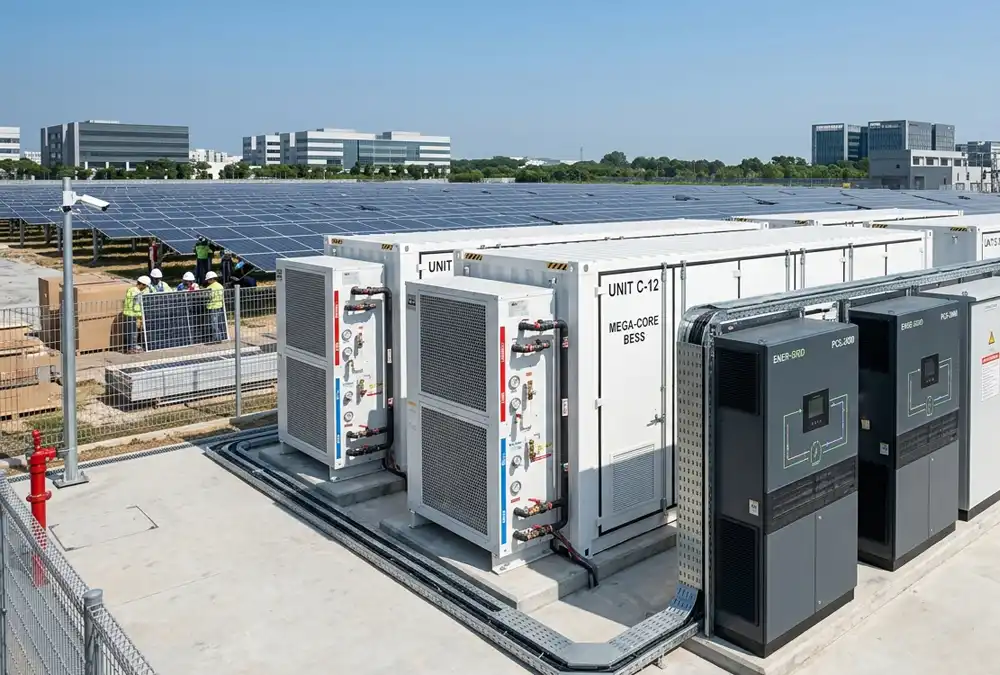
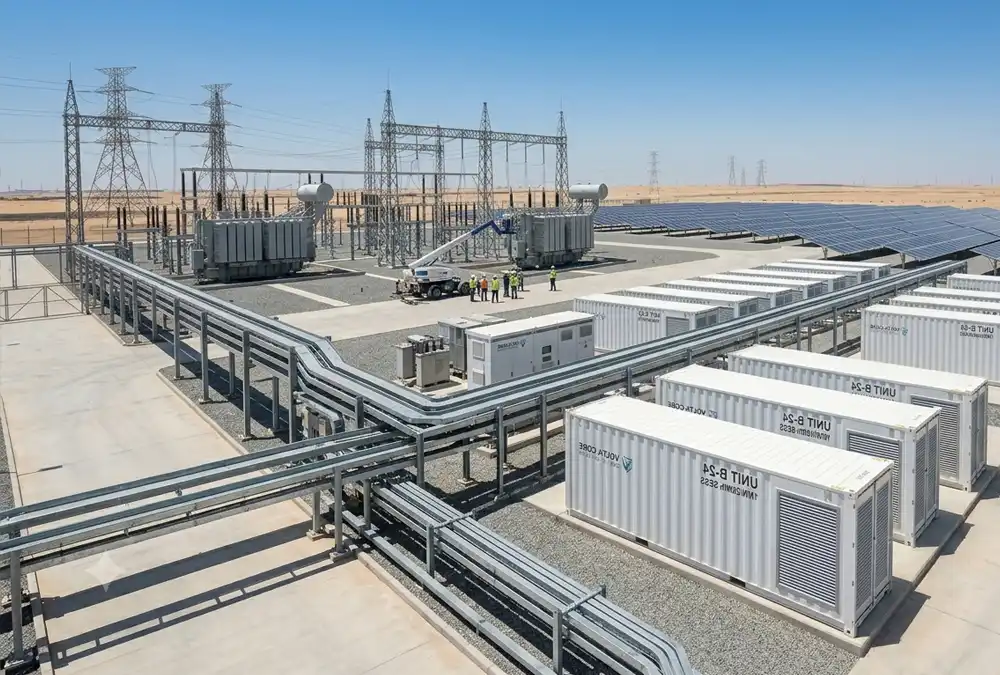
Grid Scale Energy Storage and Renewable Energy Integration
Centralized storage facilities are critical to expanding the use of clean energy sources across modern power grids.
Curtailment Reduction Strategies
When wind and solar production exceeds real-time grid demand, operators are forced to dump excess clean power. Integrating centralized storage allows facilities to capture and save this clean energy, minimizing curtailment losses and accelerating progress toward net-zero carbon targets.
Utility Scale Battery Storage Safety Standards and Compliance
Ensuring compliance with rigorous international safety and fire protection standards is essential for project permitting and risk mitigation.
Large-scale projects must successfully meet comprehensive product-level safety requirements, including UL 9540 certification, which covers the interaction of the internal batteries, bi-directional inverters, and environmental control systems. Furthermore, developers must secure detailed UL 9540A thermal runaway testing reports to document fire safety characteristics under extreme stress conditions. Systems must also comply with IEC 62933 guidelines for grid-connected installations, and align with NFPA 855 installation standards to ensure safe spacing and reliable fire suppression access across the facility layout.
Challenges Facing Utility-Scale Battery Energy Storage Projects
Developing large-scale energy projects involves navigating several technical, financial, and regulatory hurdles.
- High Upfront Capital Requirements: Securing the initial funding needed to procure multi-megawatt battery cell matrices and specialized power electronics.
- Grid Interconnection Delays: Navigating complex utility study queues and long approval timelines to secure physical grid connections.
- Battery Capacity Degradation: Managing the natural loss of cell capacity over time due to high throughput and extreme weather exposure.
- Shifting Regulatory Policies: Managing project risk against changing regional energy market rules and utility tariff structures.
Future Trends in Utility Scale Battery Storage Systems
The utility energy storage sector is entering a new phase of growth, driven by rapid advancements in digital controls and alternative battery chemistries.
Future grid infrastructures will rely heavily on Long-Duration Energy Storage (LDES) systems to supply continuous power across extended multiday weather disruptions. Additionally, the widespread deployment of smart, grid-forming inverters will allow battery facilities to actively simulate traditional rotational inertia, stabilizing local grid voltage without relying on fossil-fuel thermal plants. These hardware advancements, combined with AI-driven EMS optimization platforms and expanding Virtual Power Plant (VPP) networks, will enable utility assets to autonomously balance changing grid loads and operate with maximum efficiency.
Frequently Asked Questions About Utility Scale Battery Storage
What Is Utility Scale Battery Storage?
Utility scale battery storage refers to large-scale, front-of-the-meter energy storage installations connected directly to transmission or distribution power grids, typically ranging from 10MW to hundreds of MW in capacity.
How Much Does Utility Scale Battery Storage Cost Per kWh?
Total installed costs depend on system duration. Fully installed costs for standard 4-hour configurations have dropped toward historic lows per kilowatt-hour, driven by falling battery cell costs and manufacturing efficiencies.
How Long Do Utility Scale Batteries Last?
Premium systems utilizing high-quality Lithium Iron Phosphate (LFP) chemistry paired with advanced liquid cooling systems deliver an operational lifespan of 12 to 15 years, sustaining 6,000 to 8,000 complete cycles.
What Is the Typical ROI for Utility Scale BESS Projects?
Depending on local market volatility and the ability to participate in stacked revenue models, most large-scale grid storage projects achieve a full return on investment within a 5 to 8-year payback window.
Which Battery Technology Is Best for Utility Applications?
Lithium Iron Phosphate (LFP) is currently the industry standard due to its excellent safety profile and long cycle life. However, Sodium-Ion and Flow batteries are rising as strong alternatives for specific long-duration or budget-conscious installations.
How Large Can Utility Scale Battery Storage Systems Be?
These systems are highly modular and can scale from 10MW installations up to massive, multi-gigawatt-hour (GWh) regional complexes that cover several acres of land.
What Are the Main Revenue Streams for Utility Storage Projects?
Projects generate returns by stacking multiple services, including wholesale energy arbitrage, fast frequency regulation markets, capacity availability payments, and renewable firming support contracts.
Conclusion: Why Utility Scale Battery Storage Is Transforming the Future of the Power Grid
Deploying centralized energy storage assets is a vital requirement for building a modern, reliable, and decarbonized power network. While navigating initial capital requirements and complex grid interconnection queues presents clear development challenges, the financial benefits of stacked revenue models and the operational advantages of virtual grid upgrades deliver long-term value for investors. By selecting proven, tier-1 equipment suppliers and partnering with experienced high-voltage EPC contractors, developers can successfully deploy robust utility assets that protect grid stability, maximize renewable energy use, and secure strong infrastructure returns for decades to come.