
Introduction
As the global energy transition accelerates into 2026, businesses are no longer just looking at sustainability as a “nice-to-have” but as a critical component of financial resilience. For many small-to-medium enterprises and industrial facilities, the 100kWh capacity has become the “sweet spot” for balancing investment with performance. However, determining the 100kWh commercial battery system cost 2026 requires more than just looking at a price tag; it involves understanding the total cost of ownership, technical integration, and the evolving regulatory landscape of the power industry. In 2026, while battery cell prices have reached a mature stability, the value proposition of a Battery Energy Storage System (BESS) is increasingly defined by its software intelligence and grid-interaction capabilities.
What Is a 100kWh Commercial Battery System and What Is Its Typical Cost?
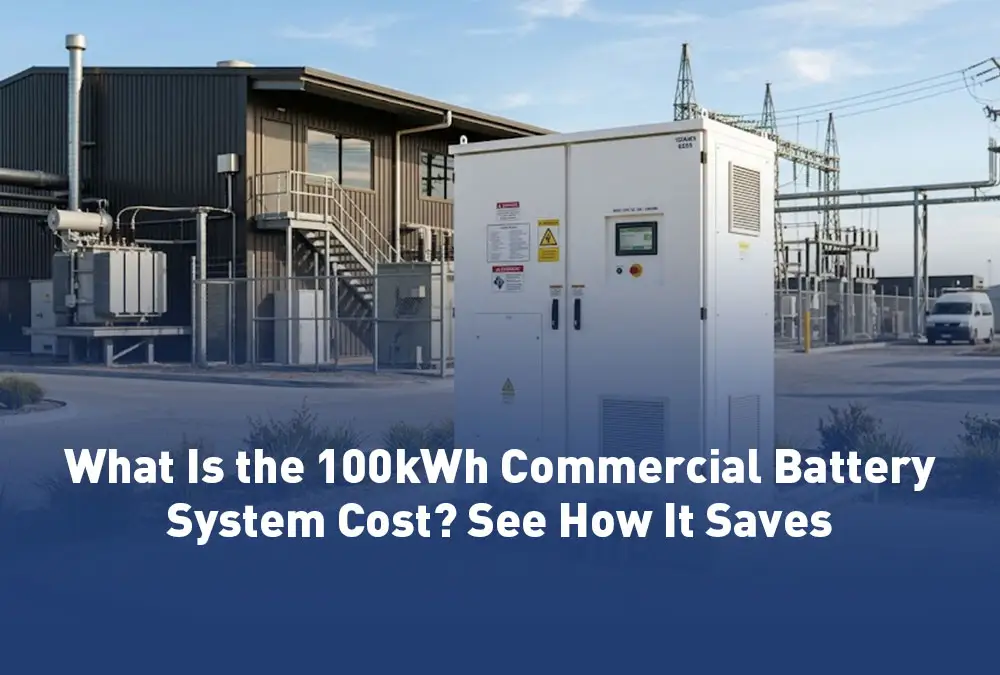
A 100kWh commercial battery system is a medium-scale energy storage solution designed to provide peak shaving, load shifting, and backup power for businesses. To put this in perspective, 100kWh can power a typical medium-sized office building for several hours during a peak period or support high-demand machinery in a small factory.
Definition of 100kWh Commercial Battery System
In technical terms, a 100kWh BESS cost breakdown and ROI analysis typically focuses on a system that includes lithium-ion battery modules (usually LFP), a bidirectional Power Conversion System (PCS), and an Energy Management System (EMS). In 2026, these systems are often “all-in-one” cabinets, designed for outdoor installation with integrated liquid cooling.
Typical Use Cases
- Commercial Buildings: Reducing peak demand charges during HVAC operation.
- Industrial Facilities: Supporting high-torque motor starts to prevent voltage sags.
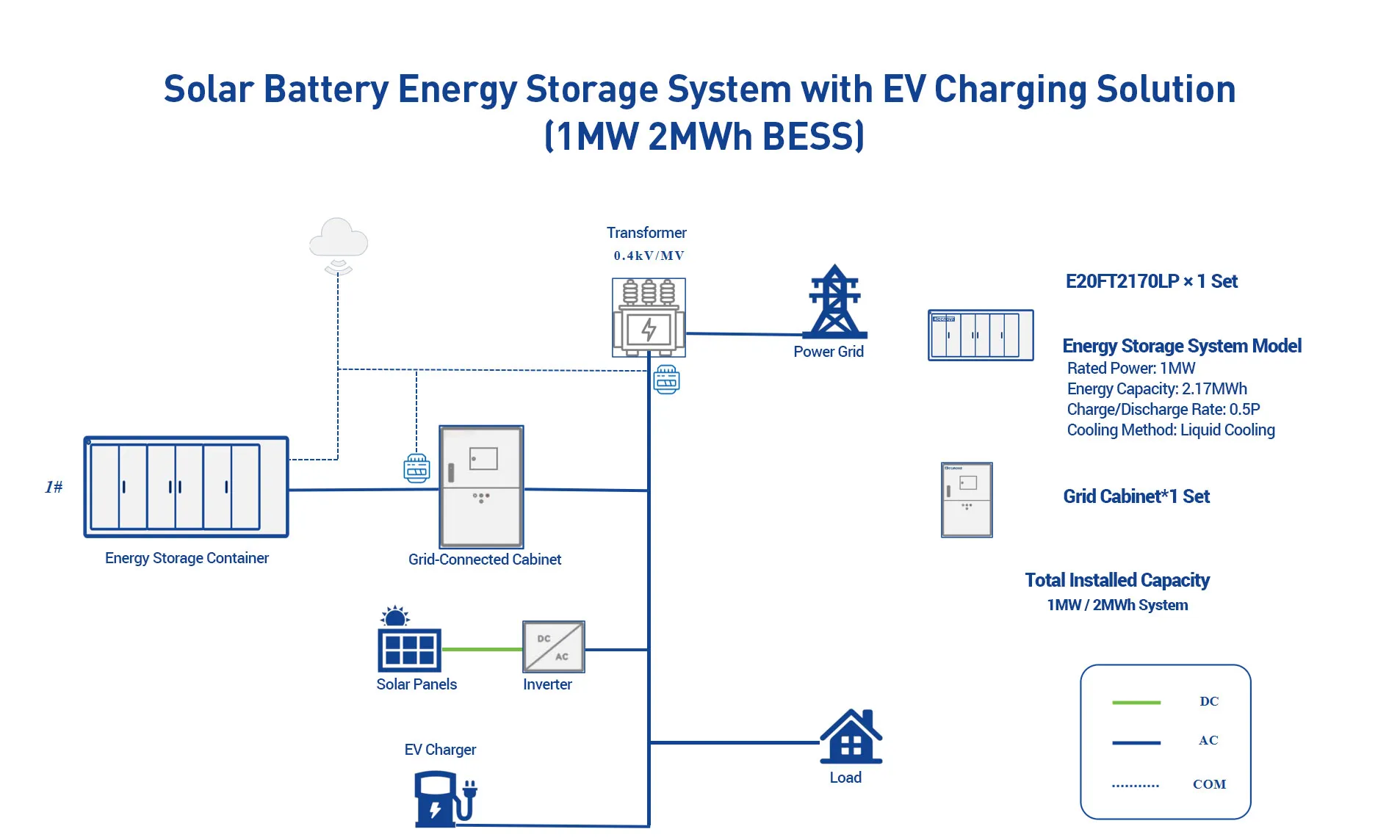
- EV Charging Stations: Buffering the grid against the high-power spikes of DC fast chargers.
- Solar + Storage: Maximizing self-consumption of on-site generated renewable energy.
Overview of Pricing Range
While prices vary based on brand and specific engineering requirements, the price of 100kWh battery energy storage system for business in 2026 has become much more competitive. On average, you can expect a turnkey solution to fall within a specific bracket.
Featured Snippet:
A 100kWh commercial battery system typically costs between $30,000 and $80,000 in 2026, depending on system configuration, battery technology, and installation requirements. This range includes hardware, software integration, and standard EPC (Engineering, Procurement, and Construction) costs.
100kWh Commercial Battery System Cost Breakdown in 2026
When asking how much does a 100kWh battery storage system cost installed, it is essential to look under the hood. The “cost” is not just the cells; it is the entire ecosystem required to safely and efficiently move power.
1. Battery Cost (50–70% of total)
The battery cells and modules remain the primary cost driver. In 2026, Lithium Iron Phosphate (LFP) is the industry standard due to its 10-year+ lifespan and thermal stability.
Battery Chemistry Interpretation: LFP batteries do not contain cobalt, making them more ethically sourced and less prone to “thermal runaway” (fire) compared to the NMC batteries used in older portable electronics.
2. PCS (Power Conversion System) Cost
The PCS is the bidirectional inverter that converts DC power from the battery into AC power for your building. In 2026, high-efficiency PCS units (98%+) are required to minimize energy waste during the conversion process.
3. BMS & EMS Cost
- BMS (Battery Management System): The “internal” protector that monitors the voltage and temperature of every cell.
- EMS (Energy Management System): The “external” brain that communicates with the utility grid and your building’s meters to decide when to charge and discharge.
4. Installation and EPC Cost
This includes site preparation, concrete pads, fire suppression system permits, and the electrical labor required to tie the system into your main switchgear.
Snippet:
The battery accounts for the largest portion of the total system cost, followed by the PCS and professional installation. Software and EMS integration typically represent 5-10% of the total investment but provide 100% of the long-term value.
Cost per kWh of a 100kWh Commercial Battery Storage System
The industry often uses “Cost per kWh” as a benchmark. However, for commercial systems, this can be misleading if not clearly defined.
Typical Cost per kWh ($300–$800)
In 2026, the 100kWh battery storage price per kWh reflects a “system-level” cost. While a raw battery cell might cost $80/kWh, a fully integrated, containerized commercial system with fire suppression, HVAC, and smart software ranges from $300 to $800 per kWh.
Variation by Region and Supplier
Installation costs are significantly higher in regions with complex permitting (like the EU or North America) compared to Southeast Asia. Furthermore, Tier-1 suppliers with global certifications often command a 15-20% premium over smaller, uncertified manufacturers.
| Component | Estimated Cost (2026) | Percentage |
| LFP Battery Modules | $22,000 – $35,000 | 55% |
| PCS & Switchgear | $8,000 – $15,000 | 18% |
| BMS/EMS Software | $4,000 – $7,000 | 9% |
| Installation & Permits | $6,000 – $15,000 | 18% |
| Total Turnkey | $40,000 – $72,000 | 100% |
Key Factors Affecting 100kWh Commercial Battery System Pricing
Understanding the variables allows you to optimize your 100kWh commercial battery system cost 2026 strategy.
Battery Chemistry (LFP vs. Sodium-Ion)
By 2026, Sodium-Ion has entered the market as a cheaper alternative for stationary storage. However, for 100kWh systems where space is often limited, LFP remains the preferred choice due to its higher energy density and proven track record.
Discharge Rate and Power Design (C-rate)
A “100kWh battery” can be designed to discharge all its energy in 1 hour (100kW/100kWh) or 2 hours (50kW/100kWh).
C-Rate Interpretation: A 1C system (1-hour discharge) requires more robust inverters and cooling, which increases the price compared to a 0.5C system (2-hour discharge).
Certification and Compliance
Safety standards like UL 9540 and IEC 62933 are non-negotiable in 2026. A system that lacks these certifications might be $10,000 cheaper but will be impossible to insure and illegal to connect to most grids.
Installation Environment
Outdoor-rated (IP55/IP65) cabinets are standard, but if your site requires specialized “explosion-proof” venting or liquid cooling for high-ambient temperatures, expect the battery storage installation cost to rise.
Featured Snippet:
The main factors affecting battery storage cost include battery chemistry, the power design (C-rate), global safety certifications, and specific site installation conditions.
Why 100kWh Commercial Battery System Prices Are Stabilizing in 2026
According to recent 2025/2026 industry reports from BloombergNEF and SIA Partners, the dramatic price drops of the early 2020s have plateaued.
- Lithium Cost Maturity: The raw material supply chain has caught up with demand, leading to stable cell pricing.
- Supply Chain Stabilization: Localized manufacturing in the EU and North America has reduced international shipping costs.
- Standardization: Manufacturers have moved away from “custom” builds toward standardized, mass-produced 100kWh cabinets.
How Long Does It Take to Pay Back a 100kWh Commercial Battery System?
The true value is found in the energy storage ROI calculation. In 2026, a 100kWh system is a financial tool that earns its keep through three primary mechanisms.
1. Peak Shaving (Demand Charge Reduction)
Many commercial electricity bills charge a “Demand Fee” based on the highest 15-minute spike of the month.
Formula:
Monthly Savings = (Capped Peak kW - Original Peak kW) * Utility Demand Rate ($/kW)
2. Time-of-Use (TOU) Optimization
Charging the battery when electricity is $0.05/kWh (night) and discharging it when it is $0.25/kWh (afternoon).
Formula:
Daily Arbitrage Savings = 100kWh * (Peak Rate - Off-Peak Rate) * Efficiency %
3. Payback Period Calculation
Typically, the battery system payback period for a 100kWh system in 2026 is between 3 and 6 years.
Formula:
Payback Period (Years) = Total Investment / Annual Energy Savings
Featured Snippet:
A 100kWh commercial battery system typically achieves payback within 3 to 6 years through a combination of peak shaving, time-of-use optimization, and reduced demand charges.
Applications of 100kWh Commercial Battery Systems in Real Projects
To visualize the 100kWh commercial battery system for solar and grid applications, consider these three scenarios common in 2026:
- Scenario A: The Small Factory. A facility uses the battery to handle the startup current of heavy CNC machinery, preventing the “demand spike” that would otherwise double their monthly utility bill.
- Scenario B: The EV Hub. A retail center with four 50kW DC chargers uses a 100kWh system to “smooth” the load, allowing them to install chargers without upgrading their utility transformer.
- Scenario C: Solar Optimization. A business with 150kW of rooftop solar stores the excess midday sun to power the facility’s cooling load from 6:00 PM to 9:00 PM.
Is a 100kWh Commercial Battery System Worth the Investment?
When performing a 100kWh BESS cost breakdown and ROI analysis, you must compare the “With-Storage” vs. “Without-Storage” financial outlook over 10 years.
- Without Storage: You are 100% exposed to utility rate hikes and peak demand penalties.
- With Storage: You “cap” your energy expenses. Even if the utility raises rates by 10% next year, your stored energy (especially if paired with solar) remains at a fixed cost.
For businesses in high-tariff regions (like California, Germany, or Australia), the investment is almost always a “yes” due to the high delta between peak and off-peak pricing.
Why Choosing an Experienced Commercial Battery Storage Manufacturer Matters
The 100kWh commercial battery system cost 2026 is only one side of the coin. Reliability determines whether that system actually saves you money or becomes a maintenance liability.
- System Reliability: Inferior BMS software can lead to cell imbalance, reducing your usable capacity from 100kWh to 70kWh in just three years.
- Integration: A manufacturer must ensure the PCS, BMS, and EMS speak the same protocol (usually SunSpec or Modbus TCP) for seamless grid interaction.
- After-Sales Support: Batteries are 10-15 year assets. You need a partner who will be there for firmware updates in 2030.
AnengJI: Building Long-Term Value in Commercial Battery Storage
At AnengJI, we specialize in the engineering and supply of high-performance industrial battery storage systems. We understand that for our global clients, uptime is everything.
- EU Localization: We maintain two strategic spare parts warehouses in the European Union, ensuring that critical components are never more than a flight away.
- 24-Hour Response: Our localized professional after-sales service teams are trained to respond within 24 hours, minimizing any potential downtime for your energy assets.
- Integrated Solutions: Our 100kWh cabinets are pre-configured with Tier-1 LFP cells and advanced liquid cooling, optimized for the fastest possible ROI in the 2026 market.
FAQs About 100kWh Commercial Battery System Cost
How much does a 100kWh battery system cost?
In 2026, a fully integrated system typically costs between $30,000 and $80,000 (installed), depending on technical specifications and regional labor rates.
What affects the price the most?
The choice of battery chemistry, the power rating of the inverter (PCS), and the complexity of the grid-connection permits are the most significant factors.
Is it a good investment?
Yes. For businesses with high demand charges or those operating in volatile energy markets, the 3-6 year payback period makes it a high-yield financial asset.
100kWh Commercial Battery System Cost: Key Takeaways
- Average Cost: $30,000–$80,000 for a turnkey system.
- Cost per kWh: Expect $300–$800/kWh at the system level.
- Payback Period: 3–6 years on average.
- Best Use Case: Commercial and industrial energy optimization, particularly peak shaving.
- Key Value: Lower electricity costs, improved power quality, and long-term energy price stability.
How to Choose the Right 100kWh Commercial Battery System for Your Business
Navigating the price of 100kWh battery energy storage system for business requires a structured approach.
- Evaluate Your Energy Usage: Review 12 months of utility “interval data” to see your actual peak power needs.
- Define ROI Expectations: Are you looking for the fastest payback (Peak Shaving) or maximum resilience (Backup/UPS)?
- Choose the Right Configuration: Decide between a 0.5C (2-hour) or 1C (1-hour) system based on your load profile.
- Work with a Trusted Supplier: Look for a partner like AnengJI who offers localized support, global certifications, and a proven track record in high-demand industrial environments.
Ready to secure your energy future? Contact the AnengJI engineering team today for a customized 100kWh BESS cost breakdown and ROI analysis tailored to your facility’s specific energy profile.