Introduction Large Scale Solar
Planning a large scale solar facility requires moving past basic equipment vendor catalogues. Real field success hinges on seamless grid integration, strict thermal controls, and smart asset design. A modern large scale solar setup must balance high DC power harvest with AC grid stability. If you build without fully evaluating local transformer capacity, soft soil mechanics, or site inverter harmonics, you face severe curtailment penalties. We design utility-scale infrastructure that transforms volatile sunshine into dependable baseload energy.
Featured Snippet: What Is Large Scale Solar?
Large Scale Solar refers to large photovoltaic (PV) power systems designed to generate electricity at utility or industrial scale. These projects typically range from several megawatts (MW) to gigawatts (GW) and include solar panels, inverters, mounting structures, transformers, grid connection systems, and energy management solutions. Large scale solar projects provide clean electricity, reduce carbon emissions, and support renewable energy integration.
What Is a Large Scale Solar System and How Does It Work?
Understanding Large Scale Solar Energy Systems
Utility engineers do not treat ground-mounted solar like residential rooftop panels. Large scale solar systems are high-voltage utility power plants. They operate at 1000V to 1500V DC bus architecture to minimize cable resistance losses across vast land footprints.
| Category Type | System Size Range | Interconnection Voltage | Primary Operational Buyer Value |
|---|---|---|---|
| Commercial Solar | 100 kW to 1 MW | 400V – 10kV Low/Medium Voltage | Cuts facility peak demand charges; offsets operational factory power expenses directly on-site. |
| Large Scale Solar | 1 MW to 10 MW | 10kV – 35kV Medium Voltage Distribution | Provides stable off-grid power or steady energy sales revenue via localized corporate PPAs. |
| Utility Scale Solar Farm | 10 MW to 1 GW+ | 110kV – 500kV High Voltage Transmission | Generates bulk low-cost wholesale electricity; anchors regional grid stability through utility contracts. |
Engineering Selection Insight:
Scaling up from 100kW rooftop setups to a multi-megawatt large scale solar energy storage system for commercial projects lowers civil installation overhead. It cuts balance-of-plant costs per watt significantly over long project lifespans.
Main Components of a Large Scale Solar System
Building a durable system requires selected components that withstand high environmental stress:
- Solar PV Modules: High-efficiency bifacial N-type TOPCon panels that harvest direct sunlight and rear-reflected ground light.
- Solar Inverters: Heavy-duty central inverters or decentralized high-power string inverters converting DC electricity into clean AC power.
- Mounting and Tracking Systems: Single-axis solar trackers that follow the sun’s path daily to maximize hourly energy output.
- Transformers and Grid Connection Equipment: Step-up transformers that boost inverter AC voltages to distribution line levels safely.
- Monitoring and Energy Management Systems: High-speed SCADA telemetry tracking every string current, weather station, and circuit breaker.
How Large Scale Solar Power Generation Works
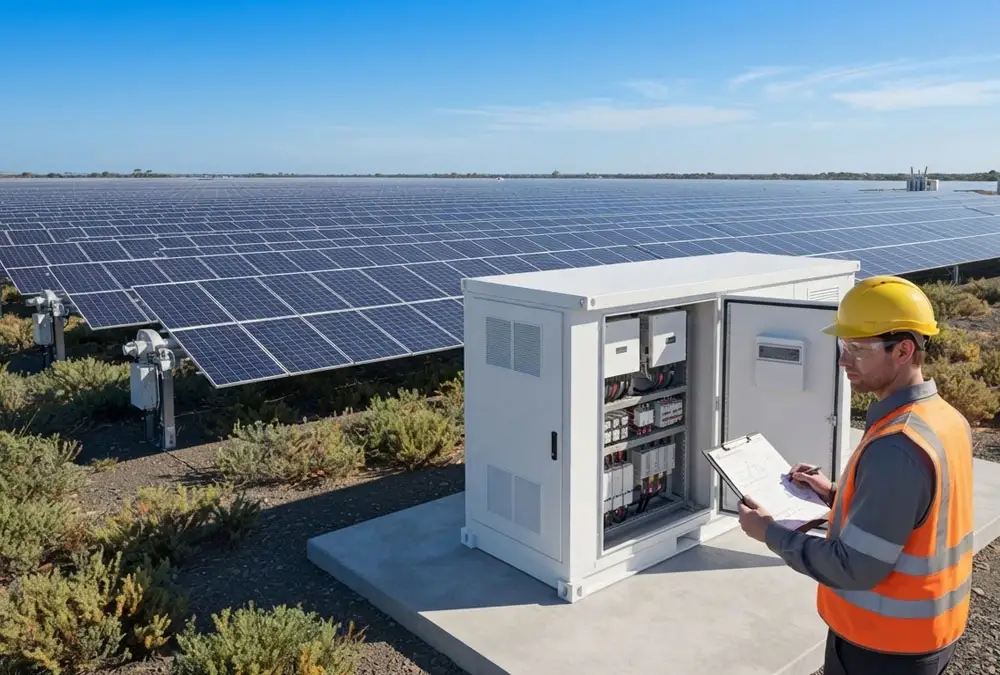
Sunlight hits bifacial solar PV panels on site. Photons knock electrons free inside silicon cells, generating direct current (DC) power. The array feeds DC electricity through underground combiner boxes directly into smart central inverters. These inverters turn DC into low-voltage AC power. A pad-mounted step-up transformer converts low-voltage AC to medium or high voltage. Electricity flows into the substation, passing through utility meters to power local industries.
How Large Scale Solar Technology Works in Modern Energy Systems
Solar Energy Conversion Process
In big solar installations, tiny efficiency losses compound quickly into major financial leaks. High-efficiency modules convert light with over 22% efficiency. Using bifacial modules on reflective gravel pads adds up to 15% extra energy yield daily.
Grid Integration of Large Scale Solar Projects
Feeding intermittent solar into local power networks causes voltage spikes and frequency variations. Grid operators mandate strict power quality rules before approving interconnection. Modern central inverters supply reactive power support and low-voltage ride-through (LVRT) features. These controls prevent site tripping during transient grid disturbances.
Large Scale Solar with Battery Energy Storage System (BESS)
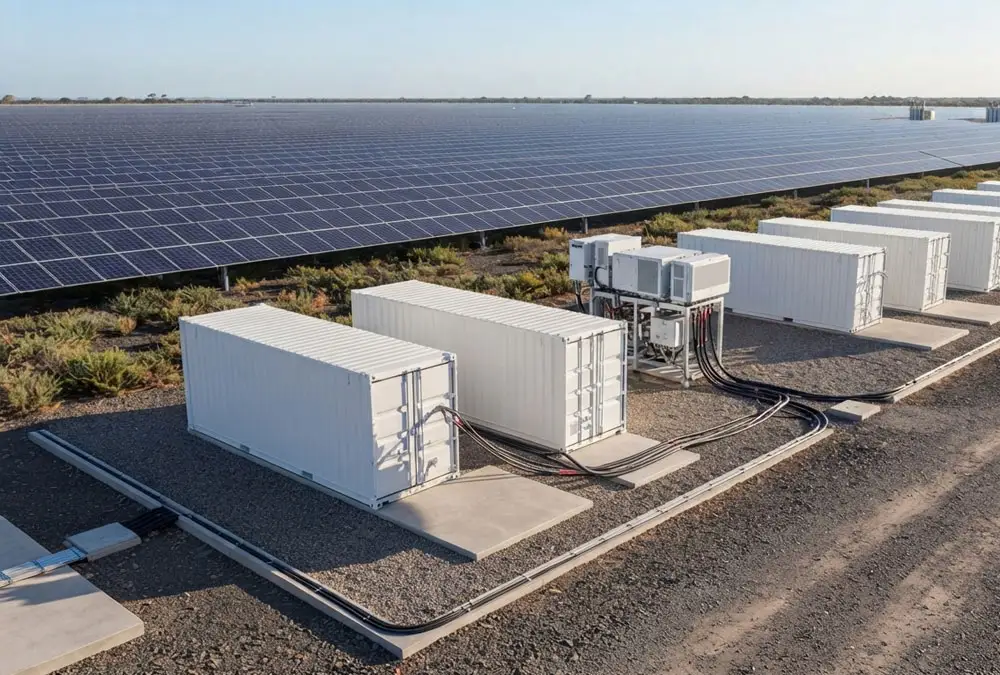
Solar arrays generate power during midday hours when spot prices often drop. Pairing a large scale solar farm with battery storage solves this curtailment trap completely. Excess daytime solar energy charges heavy-duty lithium iron phosphate (LFP) battery containers. The battery system discharges this power during peak evening demand hours when electricity rates climb highest.
Benefits of Large Scale Solar Systems for Businesses and Energy Networks
Environmental Benefits of Large Scale Solar Energy
Replacing fossil-fuel generation with large utility solar infrastructure permanently slashes carbon emissions. A 50MW solar project offsets over 60,000 tons of CO2 annually. It helps energy-intensive manufacturers meet ESG compliance targets without slowing factory production.
Cost Effectiveness and Long-Term Energy Savings
According to the Lazard Levelized Cost of Energy Analysis 2025/2026 Report, utility solar maintains the lowest levelized cost of energy (LCOE) among all generation sources.
| Energy Generation Technology | Long-Term Fuel Cost Trend | 20-Year Price Volatility Risk | Financial Benefit to Asset Owners |
|---|---|---|---|
| Coal Thermal Power | Rising due to fuel transport fees | High carbon taxation risk | Exposes plants to fluctuating fuel bills and strict environmental compliance fines. |
| Natural Gas Peaker Plants | Unpredictable commodity pricing | Extreme market price spikes | Leaves commercial operational expenses vulnerable to global fuel supply shocks. |
| Large Scale Solar Systems | Zero fuel input expense | Zero fuel price volatility | Locks in predictable, low-cost electricity pricing for over 25 years. |
Financial Value Insight:
Evaluating a project’s large scale solar system cost per kwh shows that zero fuel costs offset initial capital expenditure. It delivers stable cash flows for clean energy asset investors.
Energy Security and Grid Independence
Industrial plants cannot afford line drops or voltage sags. Installing a dedicated commercial solar energy system paired with microgrid controllers shields heavy machinery from grid outages. It keeps automated production lines running smoothly without costly downtime.
Job Creation and Economic Development
Constructing a major solar farm stimulates local economies. It creates high-paying technical jobs across civil engineering, electrical wiring, environmental monitoring, and long-term site maintenance.
Challenges of Large Scale Solar Projects and How to Overcome Them
Large Scale Solar Requires Significant Land and Space
Finding large parcels of flat land near transmission infrastructure remains challenging. Developers overcome spatial limits using single-axis trackers to maximize energy density per acre. Installing floating PV systems on industrial reservoirs offers another smart path that preserves valuable land.
Solar Intermittency and Energy Storage Challenges
Sunlight fades during evening hours and overcast weather. Integrating large scale solar battery storage solutions solves this operational gap directly. Heavy-duty BESS hardware stores excess generation instantly, delivering steady power whenever grid demands surge.
High Initial Investment Cost
Developing utility-scale solar infrastructure requires major capital outlay across PV panels, step-up transformers, site civil works, and grid interconnections. Developers manage initial expenses through long-term Power Purchase Agreements (PPAs), green bonds, and competitive project financing structures.
Environmental Impact on Ecosystems and Wildlife
Clearing large land tracts disrupts local ecosystems if handled poorly. Experienced EPC teams run comprehensive environmental impact reviews first. They design elevated mounting structures that preserve natural drainage channels and allow local vegetation to thrive underneath.
Types of Large Scale Solar Systems and Renewable Energy Projects
Large Scale Solar Farms (Utility Scale Solar Power Plants)
These ground-mounted giant facilities output tens to hundreds of megawatts. They feed power directly into high-voltage transmission networks, acting as the primary clean energy backbones for regional utility grids.
Concentrated Solar Power (CSP) Systems
CSP facilities use vast mirror arrays to focus sunlight onto a central receiver tower. The extreme heat drives thermal turbines to generate electricity, offering built-in thermal storage capabilities.
Floating Large Scale Solar Farms
Floating solar arrays sit on pontoons anchored across lakes, industrial ponds, or hydro reservoirs. The natural cooling effect from water beneath the panels boosts PV conversion efficiency by up to 10%.
Large Scale Solar + Battery Storage Projects
Hybrid solar-plus-storage represents the true future of modern energy projects. Combining solar generation directly with a solar battery energy storage system (BESS) transforms intermittent PV into dispatchable, grid-grade power.
How Technology Innovation Helps Large Scale Solar Reach Its Full Potential
Advanced Solar PV Technology Improvements
P-type PERC panels are fading out as N-type TOPCon and Heterojunction (HJT) technologies dominate new builds. These newer cell architectures reduce annual power degradation below 0.4%, extending reliable plant output beyond 30 years.
Battery Energy Storage Technology Development
Storage technology has evolved far past simple lead-acid racks. Modern utility-scale installations rely on high-density LFP chemistry packed into liquid-cooled container enclosures.
Understanding Energy Storage Battery Technologies:
- Lithium Iron Phosphate (LFP): Exceptional thermal stability and over 6,000 deep charge cycles. The industry standard for stationary BESS assets.
- Nickel Manganese Cobalt (NMC): High energy density in smaller footprints, but requires intense active cooling to manage thermal runaway risks safely.
- Flow Batteries (Vanadium): Alternative long-duration energy storage technology using liquid electrolyte tanks. Ideal for 8+ hour discharge windows, though requiring larger land areas.
AI and Smart Energy Management Systems
Modern EMS software uses machine learning algorithms to evaluate weather forecasts and historic spot market tariffs. It automatically decides when to charge on-site batteries or export solar power to maximize daily arbitrage revenue.
Digital Monitoring and Remote Operation
Plant managers monitor distant installations through centralized cloud SCADA platforms. Drone-mounted thermal cameras scan panel arrays autonomously, detecting cracked cells or faulty string fuses long before they cause electrical fires.
Industrial Energy Storage Solutions for Solar Integration
Pairing the right containerized storage capacity with your solar layout protects downstream machinery and stabilizes grid interconnections:
| BESS Cabinet / Container Size | Thermal Management | Matching Solar Project Scale | User Advantage & Selection Value |
|---|---|---|---|
| 100 kWh Industrial Cabinet | Smart Air Cooling | 100 kW – 250 kW Commercial Rooftops | Compact footprint; easily fits tight factory yards to eliminate peak demand surcharges. |
| 261 kWh / 418 kWh Cabinet | Precision Liquid Cooling | 500 kW – 2 MW Industrial Solar Installations | Holds cell temperature variances under 3°C; extends battery lifecycle during double-cycling. |
| 1 MWh – 4 MWh BESS Container | Heavy-Duty Liquid Chiller | 5 MW+ Utility Scale Solar Farms | Delivers maximum power density; offers full grid frequency regulation and ramp-rate control. |
System Sizing Recommendation:
Upgrading to a 261kWh or 418kWh liquid-cooled storage cabinet allows industrial solar plants to handle heavy motor startup surges easily, protecting delicate production machinery from brownouts.
Government Policies and Incentives Supporting Large Scale Solar Development
Renewable Energy Subsidies and Financial Incentives
Tax incentives, cash grants, and accelerated depreciation policies accelerate solar deployment worldwide. These programs lower upfront capital costs, helping developers reach project payback years earlier.
Power Purchase Agreements (PPAs) for Solar Projects
Corporate PPAs allow industrial businesses to lock in fixed solar electricity prices for 15 to 20 years with zero upfront capital outlay. Developers build, own, and operate the solar asset while off-takers enjoy discounted green power.
Carbon Reduction Policies Driving Solar Adoption
National net-zero mandates and strict carbon taxes force utilities to replace aging coal facilities with clean generation. Large-scale solar installations offer the fastest deployment timelines to hit these targets.
How We Support Large Scale Solar Projects with Integrated Energy Solutions
Large Scale Solar Project Planning and Engineering Support
Our team evaluates your site’s solar radiation data, topography, and local grid capacity. We engineer optimized DC array layouts, select suitable inverters, and design sub-station interconnections to maximize energy yield.
Solar + Battery Energy Storage Integration Solutions
We integrate solar arrays directly with high-efficiency BESS hardware. Matching bi-directional PCS inverters and custom EMS software ensures seamless communication across all system layers.
EPC Support for Large Scale Solar Projects
As an experienced large scale solar EPC contractor, we manage your project lifecycle from civil grading to final grid commissioning. We source Tier-1 equipment and ensure strict compliance with local safety codes.
Customized Renewable Energy Solutions for Different Applications
Whether you are developing a 50MW ground-mounted solar farm, a floating PV project, or a factory microgrid, we build tailored renewable energy systems matched to your local climate and load demands.
Why Choose Us for Large Scale Solar Solutions?
Professional Large Scale Solar Engineering Experience
Our team brings decades of combined field experience across high-voltage power networks and utility solar installations, delivering bankable engineering designs that perform reliably for decades.
Complete Solar and Energy Storage Supply Chain
We maintain direct supply partnerships for Tier-1 PV modules, solar trackers, central inverters, and LFP storage containers, keeping your procurement schedules on track.
Reliable Quality and International Standards
Our equipment holds full international certifications, including IEC 62109, IEC 62619, UL 1741, and UL 9540, ensuring smooth grid interconnections and project insurability.
Long-Term Technical Support and Service
We provide full lifecycle support across commissioning, preventative maintenance, remote SCADA diagnostics, and local spare parts inventory to maximize long-term plant uptime.
Frequently Asked Questions About Large Scale Solar
What Is Considered Large Scale Solar?
Large scale solar typically refers to ground-mounted photovoltaic installations generating 1 megawatt (MW) or more, supplying power to utility networks or large industrial facilities.
How Much Power Can a Large Scale Solar System Generate?
A 10MW large scale solar farm generates roughly 15,000 to 20,000 megawatt-hours (MWh) of clean electricity annually, depending on local solar irradiance levels and panel orientation.
How Much Does a Large Scale Solar Project Cost?
Utility-scale solar installation costs generally range from $0.70 to $1.10 per watt DC. Final costs depend on site civil works, tracker selection, and distance to grid interconnections.
What Is the Difference Between Large Scale Solar and Utility Scale Solar?
The terms are often used interchangeably. However, utility scale solar specifically describes large projects (10MW+) that sell power directly to electrical grids via wholesale energy markets.
Why Do Large Scale Solar Projects Need Battery Storage?
Battery storage holds excess midday solar generation and discharges it during peak evening hours, preventing solar curtailment while keeping local power grids stable.
How Long Do Large Scale Solar Systems Last?
Quality large scale solar facilities operate for 25 to 30 years or more, with PV modules maintaining over 80% of their original rated output capacity at year 25.
What Are the Main Challenges of Large Scale Solar?
Primary development hurdles include acquiring large land parcels, navigating long utility grid interconnection queues, managing intermittency, and securing upfront project capital.
Conclusion: Building the Future with Large Scale Solar Energy Systems
Large Scale Solar Enables Clean and Reliable Energy
Developing large scale solar projects provides the fastest path to decarbonizing power networks while delivering predictable, low-cost electricity for decades.
Solar + Storage Creates More Flexible Renewable Power
Combining solar generation with modern BESS containers transforms intermittent sunshine into dependable power. This hybrid setup allows plants to supply clean power whenever grids need it most.
Partner with Us for Next-Generation Solar Energy Projects
Work with an experienced engineering partner to build your next renewable energy asset. Contact our team today to review your project site details, build custom system designs, and receive a complete turnkey proposal.
Ready to Develop Your Turnkey Large Scale Solar Project?