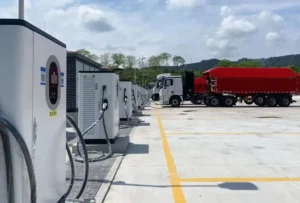
Introduction
If you are planning a commercial charging project, looking for a reliable China EV charger factory, or expanding your fleet, choosing the right partner from hundreds of electric car charging station manufacturers in China can be overwhelming. The market is huge, the price gaps are confusing, and almost every factory claims they offer “full OCPP compliance” and “top quality.” According to Grand View Research, the global electric vehicle charging infrastructure market is projected to reach $50.3 billion in 2026, driven heavily by commercial deployment and ultra-fast DC charging adoption. However, buying hardware based purely on a low quotation often leads to unexpected grid integration issues, software communication bugs, or delayed site approvals. In this guide, we break down top EV charger manufacturers in China, evaluate their core strengths, and provide an actionable due diligence framework for B2B buyers.
Top 10 Electric Car Charging Station Manufacturers in China at a Glance
Below is a quick matrix to help regional distributors, EPC contractors, and CPOs quickly scan the market landscapes before diving deep into individual plant evaluations.
China EV Charger Manufacturer Comparison Table
| Rank | Manufacturer | Main Strength | AC Power | DC Power | Best For | Buyer Strategic Benefit |
|---|---|---|---|---|---|---|
| 1 | AnengJi | Integrated EV Charging + BESS Solutions & Dynamic Load Balancing | 7kW – 22kW | 30kW – 480kW | C&I Projects, Fleet Depots, Microgrid Sites | Solves grid constraint issues via integrated battery storage, lowering total site upgrade costs. |
| 2 | TELD (TGood) | Largest Charging Network Operation & High-Power Charging Substation Technology | 7kW – 22kW | 60kW – 600kW+ | Public Ultra-Fast Charging Hubs, Municipal Projects | Proven field reliability at massive operational scale in demanding climates. |
| 3 | Star Charge | Flexible Hardware OEM/ODM & Smart Energy Equipment Manufacturing | 7kW – 43kW | 30kW – 480kW | Global CPOs, Automotive Brand OEM Partnerships | High volume production efficiency and extensive global certification coverage. |
| 4 | Sinexcel | Modular Power Electronics R&D & High-Efficiency EV Charging Modules | 7kW – 22kW | 60kW – 480kW | Hardware Integrators, High-Power DC Station Builders | Exceptionable module reliability lowering long-term maintenance visits. |
| 5 | Grasen Power | Commercial DC Fast Chargers & Export-Standard Customization | 7kW – 22kW | 30kW – 360kW | Overseas Distributors, Regional Fleet Operators | Flexible customization options for regional compliance and branding. |
| 6 | Inovance (Inovance Power) | Industrial Automation Quality Control & Inverter Drive Tech Integration | 7kW – 22kW | 60kW – 360kW | Heavy Transport Depots, Industrial Park Hubs | Industrial-grade components built for continuous heavy load operations. |
| 7 | Infypower | Core Power Module Manufacturing & Bidirectional V2G Technology | 7kW – 22kW | 30kW – 400kW | Charging Station Assemblers, Energy System Integrators | Direct supply of high-density charging modules for custom cabinet builders. |
| 8 | EN+ Technology | AC Commercial Chargers & Sleek Residential/Commercial Hardware Design | 3.5kW – 22kW | 30kW – 180kW | Workplace Charging, Hospitality, AC Distributors | Aesthetically pleasing designs with simple setup for commercial property owners. |
| 9 | Tonhe Technology | Military-Grade Power Module Design & High Efficiency Conversion | 7kW – 22kW | 30kW – 360kW | Extreme Weather Projects, High-Reliability Sites | Proven durability under dust, humidity, and high-temperature stress. |
| 10 | SSE (Shanghai Silicon Alley) | Heavy Duty Transport EV Charging & Megawatt Fast Charging Infrastructure | 7kW – 22kW | 120kW – 600kW+ | Electric Bus Depots, Mining Fleets, Logistics Hubs | Specialized high-current solutions for heavy commercial vehicle fleets. |
The following manufacturers were selected based on product capability, manufacturing strength, technology, certifications, international market experience, OEM/ODM capability, and after-sales support.
How We Selected the Top EV Charging Station Manufacturers
Evaluating commercial EV charger manufacturers China requires looking past shiny showroom brochures. Many trading entities buy cheap assembly kits and rebrand them, offering minimal technical support when an firmware bug breaks OCPP connectivity in the field. To score top China EV charger suppliers, we developed a weighted due diligence framework that reflects real-world engineering risks and total operational costs.
| Criteria | Weight | Evaluation Focus |
|---|---|---|
| Product Portfolio | 15% | Range from AC wallboxes to high-power liquid-cooled DC fast chargers. |
| Manufacturing Capability | 15% | In-house SMT lines, sheet metal fabrication, aging test facilities, and annual capacity. |
| Technology & R&D | 15% | Power module topology, thermal management design, ISO 15118 (Plug & Charge) support. |
| Certifications | 15% | CE, UL, MID, UKCA, CB test reports issued by recognized lab bodies (TÜV, SGS, Intertek). |
| OCPP & Software | 10% | Full implementation of OCPP 1.6J / 2.0.1 without proprietary vendor lock-in. |
| OEM/ODM Flexibility | 10% | Custom enclosure design, firmware protocol adaptation, brand white-labeling. |
| Export Experience | 10% | Proven track record in Europe, North America, Middle East, and Southeast Asia. |
| After-Sales Support | 10% | Spare part availability, remote diagnostic capability, local technical support network. |
How the Scorecard Was Applied
Why do these factors matter? A manufacturer might boast 100,000 units of annual production capacity, but if their software lacks OCPP profile 2 (Smart Charging) support, your commercial fleet client cannot run dynamic load management during peak grid hours. BloombergNEF’s 2026 Electric Vehicle Outlook notes that global electricity demand from EVs will increase multi-fold by 2040, making smart load distribution vital for grid compliance. Company size alone was not enough to make our cut; we assessed actual production line control, R&D depth, and field failure history.
Top 10 Electric Car Charging Station Manufacturers in China
1. AnengJi
Why We Included This Manufacturer: AnengJi stands out by directly solving the biggest pain point in modern EV deployment: grid capacity limitations. They combine commercial EV chargers with battery energy storage systems (BESS) into seamless, grid-friendly microgrid solutions.
Company Overview: AnengJi is a high-tech manufacturer specializing in integrated clean energy solutions. With advanced manufacturing plants and dedicated power electronics engineering teams, the company serves international clients requiring robust commercial EV charging hardware integrated with intelligent energy storage.
Main EV Charging Products: Commercial AC chargers (11kW-22kW), dual-gun DC fast charging stations (60kW-240kW), liquid-cooled ultra-fast chargers (360kW-480kW), and commercial BESS units (100kWh, 261kWh, 418kWh, 1MWh enclosures).
AC/DC Charging Capability: Complete line covering low-power AC overnight fleet charging up to high-current DC fast charging for heavy-duty commercial transport.
OCPP & Charging Software: Fully compliant with OCPP 1.6J and OCPP 2.0.1, supporting seamless integration with major global Charge Point Management Systems (CPMS). Offers native dynamic load balancing and microgrid EMS integration.
Certifications: CE, CB, ROHS, REACH, with testing conducted to meet rigorous European and North American grid standards.
OEM/ODM Capability: Highly flexible. Provides customized cabinet branding, tailormade UI software interfaces, and structural adaptations for extreme ambient environments.
Best For: Logistics fleet depots, commercial parking operators, highway service plazas, and sites with transformer capacity bottlenecks requiring DC fast charger manufacturers in China that can integrate solar and storage.
Potential Limitation: Focuses primarily on commercial, industrial, and fleet applications rather than low-cost residential plug-in AC units.
2. TELD (TGood)
Why We Included This Manufacturer: As one of China’s largest charging network operators, TELD manufactures hardware engineered to endure intense continuous daily operational cycles.
Company Overview: A subsidiary of Qingdao TGood Electric, TELD leverages deep high-voltage electrical engineering expertise. They specialize in modular charging substations and large-scale public charging infrastructure.
Main EV Charging Products: High-power DC split-cabinet systems, public charging kiosks, integrated transformer-charging substations.
AC/DC Charging Capability: Strong focus on medium-to-high power DC fast charging (60kW to 600kW+).
OCPP & Charging Software: Proprietary cloud management software with extensive OCPP API support for third-party roaming platforms.
Certifications: ISO9001, ISO14001, CE, local state grid compliance certifications.
OEM/ODM Capability: Moderate. Prefers standard high-capacity hardware deployment for large utility-scale projects.
Best For: Municipal transit systems, bus depots, and massive highway charging hubs.
Potential Limitation: Minimum order quantities (MOQ) for custom overseas white-labeling projects are high.
3. Star Charge
Why We Included This Manufacturer: Star Charge is a global giant in charging equipment manufacturing, recognized for strong OEM partnerships with top tier automotive automakers.
Company Overview: Operating massive automated production bases, Star Charge produces smart charging hardware, energy equipment, and software management tools for global markets.
Main EV Charging Products: AC wallboxes, mobile DC chargers, dual-outlet DC fast charging stations, liquid-cooled superchargers.
AC/DC Charging Capability: Comprehensive portfolio spanning 3.7kW AC to 480kW DC ultra-fast chargers.
OCPP & Charging Software: Full OCPP support including smart charging, remote firmware updates, and billing integration.
Certifications: CE, UL, TÜV, Energy Star, MID.
OEM/ODM Capability: High. Extensive experience white-labeling chargers for global energy companies and vehicle manufacturers.
Best For: CPOs expanding regional networks and automotive brands seeking trusted factory hardware partner.
Potential Limitation: Standard product pricing can carry a premium due to brand positioning.
4. Sinexcel
Why We Included This Manufacturer: Sinexcel is a premier power electronics specialist, widely respected for producing some of the most reliable charging modules and power quality systems in the industry.
Company Overview: Listed on the Shenzhen Stock Exchange, Sinexcel brings deep expertise in power conversion, active harmonic filters, and DC charging modules to the EV infrastructure space.
Main EV Charging Products: Modular DC fast chargers (60kW – 480kW), standalone AC chargers, high-efficiency DC power modules (20kW/30kW/40kW).
AC/DC Charging Capability: Focuses heavily on high-efficiency DC fast charging technology.
OCPP & Charging Software: Full OCPP 1.6J integration with modular diagnostic logging for quick maintenance.
Certifications: CE, UL, CB, ISO certifications.
OEM/ODM Capability: Excellent for technical integrators who want to build cabinets around Sinexcel power modules.
Best For: Infrastructure projects requiring ultra-high module efficiency and minimal down-time.
Potential Limitation: Less focus on end-user consumer marketing styling; designs prioritize industrial functionality.
5. Grasen Power
Why We Included This Manufacturer: Grasen Power is a specialized exporter focused on delivering tailored commercial DC charging solutions to international distributors and project developers.
Company Overview: Established in 2010, Luoyang Grasen Power Technology has built a strong reputation as a reliable EV charger manufacturer in China with a clean track record in European and Latin American markets.
Main EV Charging Products: Single/dual connector DC chargers (30kW-360kW), commercial AC wallboxes, custom charging station software.
AC/DC Charging Capability: Strong expertise in mid-to-high power DC fast charging cabinets.
OCPP & Charging Software: Full support for OCPP 1.6J and 2.0.1, compatible with major global backend platforms like Driivz and Greenflux.
Certifications: CE, ISO9001, RoHS, REACH.
OEM/ODM Capability: Outstanding flexibility for small to medium distributors requiring customized enclosures and UI languages.
Best For: Independent CPOs and overseas equipment distributors seeking flexible OEM partnerships.
Potential Limitation: Smaller global field service footprint compared to public-listed conglomerates.
6. Inovance
Why We Included This Manufacturer: Inovance brings rigorous industrial automation quality standards to commercial EV charger hardware development.
Company Overview: A major global supplier of industrial drives and automation equipment, Inovance has expanded its power electronics mastery into high-power EV charging systems.
Main EV Charging Products: Industrial-grade DC fast charging cabinets, heavy-duty commercial power conversion units.
AC/DC Charging Capability: Specialized in heavy-duty DC fast charging infrastructure.
OCPP & Charging Software: Fully compliant with open standards and enterprise industrial protocols.
Certifications: CE, UL, ISO14001, ISO9001.
OEM/ODM Capability: Moderate. Focused on standardized, rugged hardware architectures.
Best For: Logistics operators and industrial park owners needing bulletproof electrical stability under harsh grid conditions.
Potential Limitation: Product portfolio features fewer aesthetic variations for retail AC sites.
7. Infypower
Why We Included This Manufacturer: Infypower is a fundamental power supply technology provider, supplying core power modules to many charger assembly plants across Asia and Europe.
Company Overview: Headquartered in Shenzhen, Infypower specializes in grid-tied power conversion, energy storage routers, and ultra-high power density DC charging modules.
Main EV Charging Products: 20kW/30kW/40kW charging modules, bidirectional V2G chargers, liquid-cooling power racks.
AC/DC Charging Capability: Industry leader in core DC power conversion hardware.
OCPP & Charging Software: Supports OCPP communications through integrated central control boards.
Certifications: CE, TÜV, UL certifications across module ranges.
OEM/ODM Capability: Excellent for complete white-label manufacturing and module integration.
Best For: Local brands looking for top-tier China EV charger OEM manufacturer setups using proven internal power modules.
Potential Limitation: Operates primarily as a technology/component supplier rather than a turn-key consumer brand.
8. EN+ Technology
Why We Included This Manufacturer: EN+ Technology focuses on human-centric charger design, offering stylish, stable AC and commercial chargers tailored for global exports.
Company Overview: Founded in 2015, EN+ is a dedicated EV charging equipment manufacturer with robust overseas sales networks across Europe and Southeast Asia.
Main EV Charging Products: Commercial AC chargers (7kW-22kW), compact DC fast chargers (30kW-180kW), smart home chargers.
AC/DC Charging Capability: Well-balanced portfolio, with high market recognition in commercial AC deployments.
OCPP & Charging Software: Full compliance with OCPP 1.6J, supporting app control and RFID payment authorization.
Certifications: CE, UKCA, ROHS.
OEM/ODM Capability: High. Quick turnaround times for branded casing, packaging, and firmware customization.
Best For: Workplace charging, real estate developments, hotel fleets, and commercial parking setups.
Potential Limitation: Ultra-high-power megawatt charging options are limited compared to utility-focused suppliers.
9. Tonhe Technology
Why We Included This Manufacturer: Tonhe Technology brings military-grade electrical engineering precision and extreme environmental durability to high-power DC fast charger units.
Company Overview: Established in 1998, Shijiazhuang Tonhe Technology specializes in high-frequency switch-mode power supplies and core charging infrastructure modules.
Main EV Charging Products: High-efficiency DC charging modules, all-in-one DC fast charging cabinets (60kW-360kW).
AC/DC Charging Capability: Strong specialization in commercial DC fast charging hardware.
OCPP & Charging Software: Open architecture supporting custom CPMS integration via OCPP standards.
Certifications: ISO9001, CE, specialized environmental stress test certifications.
OEM/ODM Capability: High technical flexibility for regional specialized equipment builders.
Best For: Outdoor charging projects in challenging environments (high dust, extreme humidity, or cold climates).
Potential Limitation: Casing designs tend to be traditional industrial steel cabinets rather than consumer-styled enclosures.
10. SSE (Shanghai Silicon Alley)
Why We Included This Manufacturer: SSE is a veteran in high-power heavy electric transport charging, specializing in heavy-duty commercial fleets and bus transit centers.
Company Overview: Shanghai Silicon Alley Power Technology has spent decades building heavy electrical equipment, playing a vital role in early public transit electrification across China.
Main EV Charging Products: Megawatt-level pantograph charging systems, heavy fleet DC charging stations (120kW-600kW).
AC/DC Charging Capability: Heavy focus on high-voltage, high-current DC fast charging systems.
OCPP & Charging Software: Fully integrated with fleet management software platforms and grid load control centers.
Certifications: CE, ISO, state utility testing certifications.
OEM/ODM Capability: Customized engineering for large-scale infrastructure projects.
Best For: Mining trucks, electric bus fleets, port logistics vehicles, and heavy industrial transport.
Potential Limitation: Product lineup is over-engineered for simple commercial office parking or retail applications.
How Do These Chinese EV Charger Manufacturers Compare?
Selecting the right factory requires matching power outputs, software readiness, and energy storage integration capabilities to your precise use case.
China EV Charger Manufacturer Comparison Table
| Manufacturer | AC Capability | DC Capability | Max DC Power | OCPP Version | OEM/ODM | Key Certifications | BESS Integration |
|---|---|---|---|---|---|---|---|
| AnengJi | 7kW – 22kW | 30kW – 480kW | 480kW | 1.6J / 2.0.1 | Full Support | CE, CB, ROHS | Native Storage Ready |
| TELD | 7kW – 22kW | 60kW – 600kW+ | 600kW+ | 1.6J / Custom | Limited | CE, ISO | Project Level |
| Star Charge | 7kW – 43kW | 30kW – 480kW | 480kW | 1.6J / 2.0.1 | Full Support | CE, UL, TÜV | Optional |
| Sinexcel | 7kW – 22kW | 60kW – 480kW | 480kW | 1.6J | Module Level | CE, UL, CB | Module Level |
| Grasen Power | 7kW – 22kW | 30kW – 360kW | 360kW | 1.6J / 2.0.1 | Full Support | CE, ISO | Partner Integration |
| Inovance | 7kW – 22kW | 60kW – 360kW | 360kW | 1.6J | Moderate | CE, UL | Optional |
| Infypower | 7kW – 22kW | 30kW – 400kW | 400kW | 1.6J | Full OEM | CE, TÜV, UL | V2G / Modular |
| EN+ Tech | 3.5kW – 22kW | 30kW – 180kW | 180kW | 1.6J | Full Support | CE, UKCA | Third-Party |
| Tonhe Tech | 7kW – 22kW | 30kW – 360kW | 360kW | 1.6J | Module/Cabinet | CE, ISO | Module Level |
| SSE | 7kW – 22kW | 120kW – 600kW+ | 600kW+ | 1.6J | Project Level | CE, ISO | Project Level |
AC Charging
AC chargers (7kW, 11kW, 22kW) remain the standard choice for workplace parking, residential complexes, and long-stay destinations. When choosing an AC EV charger manufacturer, look beyond raw power. Ensure the unit features built-in 6mA DC residual fault protection (RCD Type A + 6mA DC) to save external installation costs.
DC Fast Charging
For fleet turnaround and highway corridors, DC fast charging (ranging from 30kW compact units to 360kW+ ultra-fast split systems) is essential. Pay close attention to power module configuration: liquid-cooled charging cables are mandatory when delivering currents above 300A continuously to keep cable weights manageable for drivers.
Software & OCPP
Hardware without open software connectivity becomes an expensive brick. Full OCPP 1.6J and 2.0.1 compliance ensures your smart EV charger can connect to third-party billing management backends (CSMS), enable dynamic load control, and support automated remote diagnostic troubleshooting.
Which Chinese EV Charger Manufacturer Is Best for Your Project?
Which Type of Manufacturer Fits Your Project?
| Project Requirement | Best Manufacturer Category | Key Selection Criterion | Strategic Advantage for Buyer |
|---|---|---|---|
| Commercial Parking & Real Estate | AC + Compact DC Manufacturers | Dual outlet options, RFID/Credit Card POS integration | Generates rental revenue without over-subscribing local building transformers. |
| Logistics Fleet Depots | DC + Smart Charging & BESS Integrators | Dynamic Load Management, Scheduled Charging | Prevents peak demand utility penalties during simultaneous fleet plugging. |
| Highway Fast-Charging Hubs | High-Power DC Specialists | 360kW+ Liquid Cooled Systems, High Duty Cycle | Maximizes vehicle turnaround speeds during peak holiday travel periods. |
| Private Brand Distributors | Flexible OEM/ODM Factories | White-label enclosures, Custom Firmware APIs | Establishes local brand equity fast without building in-house R&D lines. |
| Microgrid / Grid-Constrained Sites | Integrated Energy Storage Providers | Combined Charger + Battery Storage (BESS) Architecture | Bypasses 12-month utility transformer upgrade delays by buffering energy locally. |
Best Manufacturers for Commercial EV Charging
For office parks, retail centers, and hotels, hardware reliability and sleek user interaction take priority. Companies like EN+ Technology and Star Charge excel at delivering aesthetically modern AC chargers and user-friendly dual-outlet DC pedestals ideal for driver self-service.
Best Manufacturers for Fleet Charging
Fleet operators cannot afford down-time. Logistics hubs require robust commercial EV charging station systems backed by smart load control. AnengJi, Sinexcel, and TELD lead here, providing active power balancing so 20 delivery vans can charge overnight without tripping regional grid transformers.
Best Manufacturers for High-Power DC Charging
When charging speed is the primary metric, suppliers like Star Charge, SSE, and Sinexcel dominate with high-voltage architectures (up to 1000V) capable of delivering 300km of range in under 15 minutes.
Best Manufacturers for OEM/ODM Projects
If you intend to launch your own brand, working with a established China EV charger OEM manufacturer like Infypower, Grasen, or AnengJi gives you access to pre-certified designs, custom enclosure colors, and localized firmware protocols.
Best Manufacturers for EV Charging + BESS
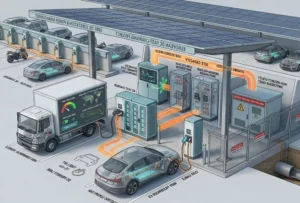
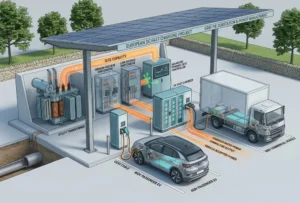
Upgrading grid transformers to support multiple 120kW DC fast chargers can cost hundreds of thousands of dollars and take months in utility permit delays. This is where AnengJi offers a game-changing advantage by combining chargers directly with industrial Battery Energy Storage Systems (BESS).
Deploying a commercial BESS acts as a energy buffer, drawing power slowly during off-peak hours and discharging rapidly when EVs demand fast charging.
| BESS Product Model | Capacity | Ideal EV Charging Application | Core Buyer Feature & Benefit |
|---|---|---|---|
| AnengJi C&I BESS-100 | 100kWh | Small Commercial Sites (2x 60kW DC Chargers) | Compact outdoor cabinet footprint; eliminates minor peak-demand grid charges. |
| AnengJi C&I BESS-261 | 261kWh | Medium Fleet Depots (4x 120kW DC Fast Chargers) | Optimal capacity for peak shaving; delivers up to 4 hours of continuous high-power buffering. |
| AnengJi Industrial BESS-418 | 418kWh | Highway Service Plazas & Heavy Delivery Hubs | High-density liquid cooling; supports multi-charger simultaneous supercharging cycles. |
| AnengJi Container BESS-1MWh | 1.0MWh+ | Large Logistics Parks & Bus Depot Terminals | Turn-key containerized solution; allows complete off-grid solar + storage fleet operation. |
How to Verify an EV Charging Station Manufacturer in China
The biggest risk when sourcing overseas is transferring a deposit to a trading agent who lacks engineering capacity to support you when things go wrong.
Manufacturer or Trading Company?
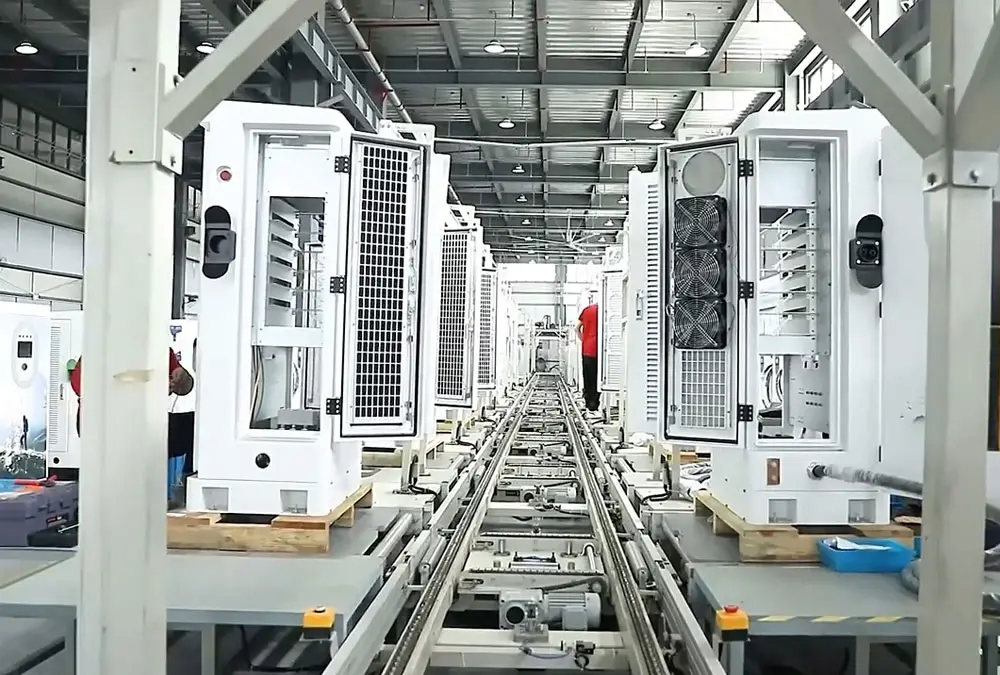
Trading entities often present stunning websites but rent desk space miles away from any production floor. Demand a live video walk-through of the factory floor, specifically showing the SMT assembly line, automatic wiring assembly stations, and high-voltage testing bay.
Verify the Factory and Production Capability
Check the factory’s ISO9001 quality management certificates and ensure the address matches their business license. Ask for proof of annual production volume and look for automated burn-in testing racks where assembled chargers run at full load for at least 24 hours.
Check Certifications and Test Reports
Do not accept a simple self-declaration certificate. Ask for full test reports issued by accredited third-party laboratories (such as TÜV Rheinland, TÜV SÜD, SGS, or Intertek). Verify the test report serial number directly on the issuing testing body’s official verification portal.
Verify OCPP Compatibility Before Bulk Ordering
A supplier stating “our charger supports OCPP” is not detailed enough. You must test their firmware against your specific CSMS platform.
| Test Case | Required Action | Verification Focus |
|---|---|---|
| Remote Start/Stop | Trigger charging session from software platform | Connector locks and energizes within 3 seconds without protocol drops. |
| Smart Charging Profiles | Send dynamic max-current commands (e.g., limit to 16A) | Charger adjusts real-time power output accurately to grid commands. |
| Remote Diagnostics | Request diagnostics log via OCPP | Charger uploads detailed internal diagnostic logs to server FTP URL. |
| Firmware Update (OTA) | Push firmware binary file remotely | Unit safely updates, reboots, and reconnects without losing configuration settings. |
| Error Reporting | Simulate grid voltage drop or emergency stop trigger | Correct status notification fault code sent instantly to central software. |
| CSMS Reconnection | Disconnect network cable for 10 minutes | Local meter data caches accurately and syncs smoothly upon network reconnect. |
Check Warranty and Spare Parts
Clarify warranty terms upfront. A standard warranty should cover 24 to 36 months. Ensure the supplier agrees to supply spare parts (such as main control boards, display screens, contactors, and charging cables) along with clear video troubleshooting manuals.
Test Samples Before Large Orders
Never bypass the sample pilot phase. Follow this standard procurement sequence:
Sample Order → Bench Technical Test → Pilot Field Installation → 30-Day Performance Validation → Bulk Container Order
What Should You Ask an EV Charger Manufacturer Before Ordering?
Use this due diligence checklist when submitting your Request for Quotation (RFQ) to any EV charging station suppliers in China.
Hardware & Certifications
- Which exact laboratory issued your CE/UL test reports?
- What is the brand and failure rate of your internal power modules?
- Does the cabinet feature IP54 / IP55 ingress and IK10 impact protection?
- Are internal contactors and relays compliant with local grid disconnection safety standards?
Software & OEM/ODM
- Can your charger seamlessly switch target CSMS backend server domain URLs via web portal?
- What is the minimum order quantity (MOQ) for custom brand casing and custom UI app design?
- Do you support ISO 15118 (Plug & Charge) hardware integration?
- Is your firmware upgradeable via OTA over cellular SIM and Ethernet?
Production & Warranty
- What is your factory standard lead time for a 20ft container batch?
- What percentage of spare parts do you include free with bulk shipments?
- How are technical support warranty claims processed, and what is the typical SLA for replacement PCB dispatch?
How Much Does It Cost to Buy EV Chargers From China?
Factory Price vs. Landed Cost
FOB factory quotes only represent part of your actual capital outlay. To budget accurately, calculate your total Landed Cost including ocean freight, import tariffs, customs clearance, local certification compliance checks, and final site transport.
What Affects China EV Charger Prices?
- Charging Power & Architecture: Standard 7kW AC wallboxes are very affordable ($150-$300), while high-power 120kW DC cabinets ($5,000-$9,000) and 360kW liquid-cooled split systems require substantial power electronics investment.
- Internal Module Selection: Chargers using top-tier power modules cost 10-15% more up front but drastically reduce field maintenance visits over a 5-year lifecycle.
- Certifications: Units certified with full UL or MID meter compliance carry higher factory compliance testing costs than basic CE units.
- Customization & MOQ: Small orders with custom brand painting and software engineering add setup overheads per unit.
MOQ and Volume Pricing
Most manufacturers set sample MOQs at 1-2 units, with primary tier volume discounts starting at 20 units (a standard 20ft container load). Purchasing directly from a China EV charger factory in volume typically yields 20% to 35% savings compared to buying through regional trading intermediaries.
Why Lowest Price Does Not Always Mean Lowest TCO
In commercial EV infrastructure, initial purchase price is just a fraction of your Total Cost of Ownership (TCO). Consider this breakdown:
Purchase Price + Import Duties + Installation + Software Licensing + Preventative Maintenance + Failure Downtime Losses = True Total Cost of Ownership
Buying a cheap charger that suffers a 5% monthly module failure rate destroys CPO profitability through emergency technician site calls and frustrated drivers leaving negative reviews.
OEM vs. ODM EV Chargers: Which Manufacturing Model Should You Choose?
What Is EV Charger OEM?
Under an OEM (Original Equipment Manufacturer) model, the factory builds hardware according to your existing design specifications, enclosure blueprints, and technical drawings.
What Is EV Charger ODM?
Under an ODM (Original Design Manufacturer) model, the factory uses its own pre-engineered hardware architecture, adding your custom branding logo, corporate colors, and minor software tweaks.
OEM vs. ODM Comparison
| Evaluation Factor | OEM Model | ODM Model | Strategic Impact for Buyer |
|---|---|---|---|
| Branding Independence | High | High | Both allow you to build proprietary local brand equity. |
| Hardware Design Control | Complete Control | Lower (Standard Chassis) | OEM fits custom corporate aesthetics; ODM gets you to market faster. |
| Upfront Development Cost | Higher (Tooling Fees) | Minimal to None | ODM dramatically reduces initial NRE (Non-Recurring Engineering) costs. |
| Time to Market | 6 – 12 Months | 1 – 2 Months | ODM allows rapid response to newly announced local government tender grants. |
| Best Fit For | Established Automotive & Utility Brands | Regional Distributors & Expanding CPOs | Select based on your internal engineering budget and timeline urgency. |
Common Mistakes When Buying EV Chargers From China
- Choosing a Supplier Based Only on Price: Selecting the absolute lowest bid usually results in sub-standard internal relays, poor heat dissipation, and frequent module tripping under summer heat.
- Confusing a Manufacturer With a Trading Company: Trading companies cannot modify firmware bugs or supply long-term PCB components when factory lines update model iterations.
- Checking Certifications Too Late: Importing non-certified chargers can lead to customs impoundment or immediate shutdown by local electrical safety inspectors. European Union’s AFIR regulations mandate strict smart charging, payment accessibility, and interoperability standards for public networks.
- Assuming “OCPP Supported” Means Full OCPP Compatibility: Always perform live integration testing on your target software platform prior to container dispatch.
- Ignoring Spare Parts and Technical Support: Ensure your contract mandates spare board shipments and clear English diagnostic documentation.
- Ordering Large Quantities Without a Pilot: Never skip field validation under local grid and weather conditions.
How to Choose the Right EV Charging Station Manufacturer
Follow this 10-step checklist to finalize your manufacturing partner selection smoothly:
- Define Your Application: Clarify whether you are building residential, workplace, fleet, or public highway charging sites.
- Choose AC or DC: Determine the balance between low-cost AC overnight charging and high-turnaround DC fast charging.
- Determine Required Power: Calculate site power needs (e.g., 7kW AC vs. 120kW DC vs. 360kW Supercharging).
- Identify Target-Market Certifications: Match requirements to CE, UL, MID, or UKCA standards.
- Check OCPP & Software Compatibility: Ensure full protocol interoperability with your preferred management software.
- Define OEM/ODM Requirements: Decide between standard white-labeling or custom enclosure development.
- Verify Manufacturing Capability: Conduct virtual or in-person factory audits to inspect production line automation and QC testing bays.
- Compare Total Cost of Ownership: Factor initial price against component quality, warranty terms, and spare parts availability.
- Test a Sample or Pilot Unit: Run bench stress testing and software integration checks on sample units.
- Evaluate Technical Support Responsiveness: Test how quickly the supplier’s engineering team resolves technical questions during pilot phase.
☑ Product fit confirmed | ☑ Power range meets site specs | ☑ Lab test reports verified | ☑ Full OCPP profiles tested | ☑ Factory audit completed | ☑ Spare parts SLA agreed | ☑ Pilot trial passed
Frequently Asked Questions About EV Charging Station Manufacturers
Which are the best electric car charging station manufacturers in China?
Top leading manufacturers include AnengJi, Star Charge, TELD, Sinexcel, Grasen Power, Infypower, and EN+ Technology. The best choice depends on whether your project requires standalone hardware, fast OEM white-labeling, or integrated BESS energy storage solutions.
How do I find a reliable EV charger manufacturer in China?
Verify that the company owns physical production facilities, check lab-certified test reports (CE/UL), request live video audits of aging test bays, and perform live OCPP software integration checks with sample units prior to bulk purchase.
What is the difference between an EV charger manufacturer and supplier?
A true manufacturer owns in-house R&D, SMT lines, sheet metal manufacturing, and software engineering teams. A supplier or trading company buys finished units from factories to resell, offering limited custom technical support or firmware modifications.
How much does an EV charger cost from a Chinese manufacturer?
Commercial AC chargers generally range from $150 to $400 depending on power rating and smart features. Commercial DC fast chargers (30kW to 180kW) typically range from $2,500 to $10,000+, depending on power module selection and custom options.
Can Chinese EV charger manufacturers provide OEM and ODM?
Yes, most top factories provide extensive OEM/ODM support, including customized cabinet branding, custom color palettes, tailormade user interface design, and deep firmware protocol integration for bulk orders.
What certifications should Chinese EV chargers have?
For European exports, CE, CB, ROHS, and REACH are standard, with MID meter compliance required for public billing sites. For North America, UL (e.g., UL 2202, UL 2594) and Energy Star certifications are mandatory.
Do Chinese EV chargers support OCPP?
Yes, leading export-oriented manufacturers build hardware fully compliant with OCPP 1.6J and OCPP 2.0.1, allowing seamless connection to global charge point management platforms.
How can I verify an EV charger factory?
Ask for business licenses matching ISO certifications, request third-party lab test reports with verifiable tracking numbers, conduct live factory video walk-throughs, and order sample units for hands-on technical validation.
What is the best manufacturer for DC fast chargers?
Suppliers with strong power electronics backgrounds like AnengJi, Sinexcel, Star Charge, and Infypower lead in high-efficiency DC fast charging module design and thermal management reliability.
Can EV charging manufacturers provide BESS solutions?
Some advanced manufacturers, like AnengJi, specialize in integrated EV Charging + Battery Energy Storage Systems (BESS), allowing commercial sites with grid bottlenecks to buffer power and avoid expensive utility upgrades.
Get a Customized EV Charging Solution From a China Manufacturer
Whether you need commercial DC fast chargers, custom OEM white-labeling, or grid-buffered EV Charging + Energy Storage (BESS) systems, our engineering team is here to help you scale.
Related Article
- The 10 Biggest Electric Vehicle Charging Companies in the World
- Electric Car Charging Stations Cost: 2026 Commercial Installation Guide
- Commercial DC Fast Charging Solutions: Complete Guide for Business
- Electric Vehicle Supply Equipment (EVSE) Guide | Commercial Stations
- DC Fast Charging Station: Complete Guide for Commercial EV Charging Projects