Introduction
Level 3 commercial EV chargers are DC fast charging systems designed for high-demand locations such as public charging hubs, highways, commercial parking facilities, fleets, retail centers, and transportation depots. Unlike Level 1 and Level 2 charging, Level 3 chargers deliver DC power directly to the vehicle battery, significantly reducing charging time.
But which commercial ev charger is right for your project?
Buying high-power DC charging hardware is not like picking standard office supplies. You must balance grid connection limits, peak demand charges, site turnover rate, and long-term expansion. If you make the wrong hardware choice today, you will end up paying triple for emergency transformer upgrades tomorrow. Below is an engineering breakdown of the top Level 3 commercial EV charging equipment available in Europe for 2026, complete with deployment parameters, protocols, and grid integration strategies.
Why Level 3 Commercial EV Chargers Are Ideal for Business
Deploying a high-power commercial ev charger infrastructure is no longer just an amenity. It has become a core operational strategy for modern businesses.
Level 3 chargers convert AC grid power into DC power directly inside the charger cabinet. By bypassing the onboard AC charger of the car, high voltage flows straight into the battery pack.
Faster EV Charging for High-Turnover Locations
Charging speed dictates how many vehicles your site serves every hour. Selecting the right power tier directly dictates your site earning potential:
- 60kW – 120kW: Works best for retail parks or fleet hubs with 30 to 45 minute dwell times.
- 150kW – 180kW: The optimal baseline for public commercial sites offering a quick 20-minute top-up.
- 240kW – 360kW+: Engineered for highway fast corridors and heavy fleets requiring 10 to 15 minute turnarounds.
Higher Power Output → Reduced Charging Time → Higher Vehicle Turnover → Maximum Revenue Density.
Reduce Vehicle Downtime for Commercial Fleets
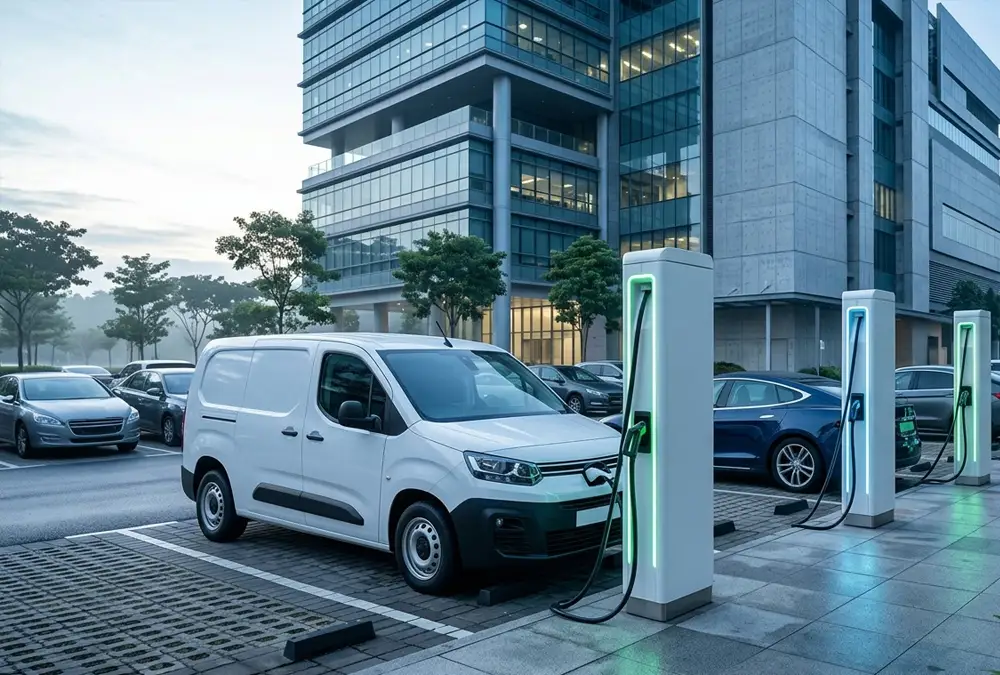
For logistics fleets, delivery vans, taxi operators, and electric buses, charging time is directly tied to vehicle utilization. If a commercial delivery van stays plugged into a commercial level 2 ev charger for four hours during a shift, that vehicle is losing money. Installing a commercial DC fast charging station Europe system slashes downtime to minutes during driver shift changes.
Support High-Traffic Commercial Charging Sites
High-traffic commercial destinations like highway service plazas, shopping centers, hotels, and public parking decks need reliable fast charging infrastructure. High-capacity stations eliminate queue bottlenecks during peak travel hours, ensuring smooth driver experiences.
Generate Revenue From Commercial EV Charging
Operating a Level 3 EV charging station for commercial use unlocks immediate monetization channels:
- Pay-per-use & Dynamic Pricing: Charge higher electricity rates during peak demand hours.
- Subscription Plans: Secure recurring monthly revenue from local commercial fleets.
- Retail Footfall Upsell: Drivers spend 20 minutes in your store while their car charges.
Enable Future EV Charging Infrastructure Expansion
Never build a site only for today’s EV numbers. According to the BloombergNEF Electric Vehicle Outlook 2026, installed ultra-fast charging connectors across Europe grew by nearly 50% year-over-year. Choosing modular DC power cabinets allows you to add extra charging dispensers later without ripping up civil foundations.
Top 10 Level 3 Commercial EV Chargers in Europe (2026)
The table below compares top European commercial EV charger suppliers and global leaders based on product power, certifications, dynamic capabilities, and buyer benefits.
| Manufacturer | Region | Typical Power Output | Connectors | Best For | Buyer Benefit & Operational Advantage |
|---|---|---|---|---|---|
| ABB E-mobility | Europe | 90kW – 360kW+ | CCS2 / CHAdeMO | Highway & Fleet | Proven 99%+ network uptime reduces unplanned maintenance site visits. |
| Kempower | Europe | 50kW – 400kW | CCS2 / NACS | Dynamic Hubs | Dynamic power sharing prevents grid overloads without manual cable throttling. |
| Alpitronic | Europe | 50kW – 400kW | CCS2 | Public Fast Charging | Compact footprint maximizes usable revenue-generating parking spaces. |
| Tritium | Global | 50kW – 350kW | CCS2 | Harsh Environments | Sealed liquid cooling blocks dust ingress and extends hardware life outdoors. |
| EVBox | Europe | 50kW – 320kW | CCS2 | Commercial Real Estate | Modular power design allows gradual capacity upgrades as demand grows. |
| Siemens | Europe | 150kW – 300kW | CCS2 | Depots & Enterprise | Direct integration into existing industrial SCADA and building energy platforms. |
| AnengJI | Global | 120kW – 480kW+ | CCS2 / NACS / GB/T | B2B, OEM & Storage | Direct factory supply and integrated BESS cut overall initial project CAPEX. |
| Compleo | Europe | 50kW – 200kW | CCS2 | Commercial Parking | Built-in Eichrecht compliance guarantees legally seamless European billing. |
| Circontrol | Europe | 50kW – 150kW | CCS2 | Retail & Fleet | Cost-effective dual dispenser design lowers entry hardware costs. |
| Delta Electronics | Global | 50kW – 200kW | CCS2 / CHAdeMO | Industrial Sites | 96%+ power conversion efficiency saves significant electrical losses over time. |
1. ABB E-mobility
ABB E-mobility is a Switzerland-based global giant producing high-power charging systems for highway service plazas, fleet hubs, and public energy networks. Their flagship portfolio includes the Terra 360 (360kW ultra-fast charger), Terra HP series (175kW to 350kW), and Terra DC Wallbox (24kW to 50kW), all backed by liquid-cooled power architectures and advanced remote cloud diagnostics. Meeting CE, IEC 61851-23, IEC 62196, and TÜV safety benchmarks, ABB delivers high hardware reliability and an extensive European service network. Their dynamic load allocation and robust cabinet protection make them an ideal partner for large-scale CPOs seeking high network uptime and long-term operating efficiency.
2. Kempower
Headquartered in Finland, Kempower specializes in modular, dynamic DC fast-charging solutions designed for extreme outdoor durability. Featuring high-capacity C-Station power cabinets (up to 400kW) paired with slimline S-Series charging satellites, Kempower utilizes a dynamic 25kW power-sharing matrix that distributes power dynamically across multiple connected EVs. Certified to CE, IEC, IP54, and IK10 standards, their slim footprint reduces site civil complexity while optimizing grid consumption. This modular versatility makes Kempower a premier choice for retail parking hubs, commercial depots, and transit operators requiring scalable multi-charger infrastructure under strict site power limits.
3. Alpitronic
Based in Italy, Alpitronic dominates European public fast charging with its hypercharger series, featuring advanced Silicon Carbide (SiC) power electronics that achieve conversion efficiencies above 97.5%. Their core product lineup spans the compact HYC50 (50kW), HYC150/300 (150kW–300kW), and the high-output HYC400 (400kW). Fully compliant with CE, IEC, and German Eichrecht metrology standards, Alpitronic combines low operational noise with a space-saving cabinet design. Commercial parking operators, shopping plazas, and highway corridor developers favor Alpitronic for its exceptional energy efficiency, high reliability, and certified billing transparency across European markets.
4. Tritium
Tritium is a global EV charging manufacturer recognized for pioneering liquid-cooled outdoor DC fast chargers. Featuring fully sealed IP65 enclosures, Tritium isolates critical electronics from dust, debris, and coastal salt air without relying on air filters. Their product line includes the RKT50 (50kW), PKM150 (150kW), and high-power PKM350 (350kW), certified to CE, IEC 61851, and IP65 standards. By removing internal air filtration requirements, Tritium significantly reduces routine maintenance overhead in harsh environments. Site developers frequently choose Tritium for coastal commercial hubs, industrial logistics yards, and heavy-use retail centers exposed to severe outdoor weather conditions.
5. EVBox
EVBox is an established Dutch manufacturer delivering full-stack commercial charging hardware, flexible software platforms, and modular power cabinets. Their flagship DC lineup consists of the Troniq 50 (50kW standalone unit) and Troniq High Power series (160kW to 320kW expandable system), engineered with field-upgradeable power modules and native ISO 15118 Plug & Charge capability. Fully certified under CE, IEC 61851, and ISO standards, EVBox blends sleek design with seamless management software integration. This scalable hardware platform enables real estate developers, workplace parking garages, and hospitality venues to expand charging capacity cost-effectively as EV traffic rises over time.
6. Siemens
German industrial engineering leader Siemens manufactures heavy-duty EV charging systems tailored for enterprise fleets, transit hubs, and commercial facilities. Their primary offerings include the Sicharge D (DC fast charger up to 300kW) and Sicharge UC (depot charging systems up to 600kW), designed for direct connectivity with industrial SCADA systems and building energy management platforms (BMS). Certified under CE, IEC, EN 61851, ISO 15118, and UL standards, Siemens delivers industrial-grade structural durability and advanced load management. Enterprise operators and electric bus depots rely on Siemens for complete, unified electrical infrastructure from medium-voltage grid connections to vehicle chargers.
7. AnengJI
AnengJI is a global B2B manufacturer specializing in high-power commercial EV fast chargers and integrated Battery Energy Storage Systems (BESS). Serving distributors, EPC contractors, and CPOs, AnengJI provides factory-direct hardware including 120kW–180kW dual-gun chargers, 240kW–360kW modular stations, and 480kW+ heavy-duty split cabinets. Built on open OCPP 1.6J/2.0.1 protocols with Dynamic Load Balancing (DLB), AnengJI chargers seamlessly pair with microgrids and BESS to prevent grid overloads. Certified under CE, IEC, and TÜV standards, AnengJI delivers flexible OEM/ODM branding customization, lower initial CAPEX, and full energy management integration for high-throughput commercial sites.
8. Compleo
Compleo is a German charging equipment specialist delivering reliable hardware for commercial parking operators, utilities, and corporate fleets. Their core portfolio includes the Cito series (24kW to 50kW compact DC chargers) and eCONIC High Power stations (150kW to 200kW), featuring modular internal power architecture and built-in German Eichrecht legal metrology compliance. Certified to CE, IEC, and official Eichrecht standards, Compleo guarantees legally compliant energy metering and automated public billing. Commercial parking garages, municipal facilities, and European retail destinations select Compleo for transparent billing integration and reliable long-term hardware operations.
9. Circontrol
Headquartered in Spain, Circontrol brings extensive expertise in parking management, power balancing systems, and public EV charging hardware. Their commercial DC range centers on the Raption 50 (50kW fast charger) and Raption 150 Compact (150kW station), utilizing Master-Slave power balancing across multiple charging bays. Built to CE, IEC 61851, and IK10 impact protection standards, Circontrol combines cost-effective dual-dispenser designs with steady performance in high-temperature environments. Supermarket car parks, vehicle rental fleets, and commercial real estate hubs choose Circontrol for straightforward installation, low hardware capital expenditure, and reliable day-to-day operation.
10. Delta Electronics
Delta Electronics is a global leader in power electronics and industrial energy management, producing highly efficient DC fast charging systems. Their commercial product lineup features the City Charger 50kW and Ultra Fast Charger 200kW cabinets, engineered with internal power conversion modules achieving peak efficiency levels around 96%. Holding CE, IEC, UL, and IP55 outdoor protection ratings, Delta leverages a resilient global supply chain to support long-term operations. Logistics hubs, industrial parks, and motorway service areas choose Delta Electronics for high energy conversion efficiency, rugged industrial build quality, and reduced lifecycle electricity losses.
How to Choose the Right Level 3 Commercial EV Charger Manufacturer
Selecting a manufacturer requires evaluating core commercial parameters rather than simply comparing hardware price tags.
Evaluate DC Charging Power
Match charger output to driver dwell times. Installing a 360kW charger at an office where employees stay for eight hours wastes money. Conversely, putting a 30kW charger at a highway plaza causes driver frustration. Choose the power level that balances turnover needs with project ROI.
Check EV Connector Compatibility
In Europe, CCS2 EV charger hardware is mandatory. However, if you serve international sites or multi-standard fleets, ensure your vendor supplies dual CCS2, NACS, or CHAdeMO options on request.
Check OCPP Compatibility
Avoid hardware locked to proprietary software. Verify full compliance with OCPP 1.6J or OCPP 2.0.1. Open protocols let you change management platforms without replacing hardware.
Verify Safety and European Certifications
Always request exact product test certificates. Ensure equipment meets IEC 61851-23 and holds valid CE marks from independent labs like TÜV.
Evaluate Warranty and Technical Support
Compare total cost of ownership. Check warranty coverage periods, spare parts availability, and technician response times when hardware issues occur.
Consider OEM and ODM Capabilities
If you are an EPC contractor or growing charge point operator, working with an OEM manufacturer like AnengJI allows custom cabinet colors, logos, and screen configurations to build your own brand equity.
What Level 3 Commercial EV Charger Power Do You Need?
| Application | Recommended Power Range | Main Priority |
|---|---|---|
| Hotels | 30kW – 120kW | Moderate dwell time; guest convenience. |
| Retail Centers | 60kW – 180kW | Customer shopping turnover; store traffic. |
| Office Buildings | 30kW – 120kW | Workplace employee and guest charging. |
| Public Parking | 60kW – 180kW | Flexible public turnaround; revenue creation. |
| Fleet Depots | 120kW – 360kW+ | Rapid fleet shift turnaround; zero vehicle downtime. |
| Highway Hubs | 180kW – 480kW+ | Maximum vehicle throughput; ultra-fast top-ups. |
Best Level 3 Commercial EV Chargers for Different Applications
Highway Charging Stations
Highway plazas require ultra-fast units rated at 180kW to 360kW+. Drivers expect to gain 200 kilometers of driving range in under 15 minutes. Liquid-cooled cables and integrated credit card payment systems are essential here.
Shopping Centers and Retail
Retail visitors stay for 45 to 75 minutes. Deploying dual 120kW to 180kW chargers hits the ideal balance between installation costs and customer charging speeds.
Hotels
Hotels often benefit from mixing Level 2 AC chargers for overnight guests alongside one or two 60kW to 120kW DC fast chargers for express daytime visitors.
Fleet Depots
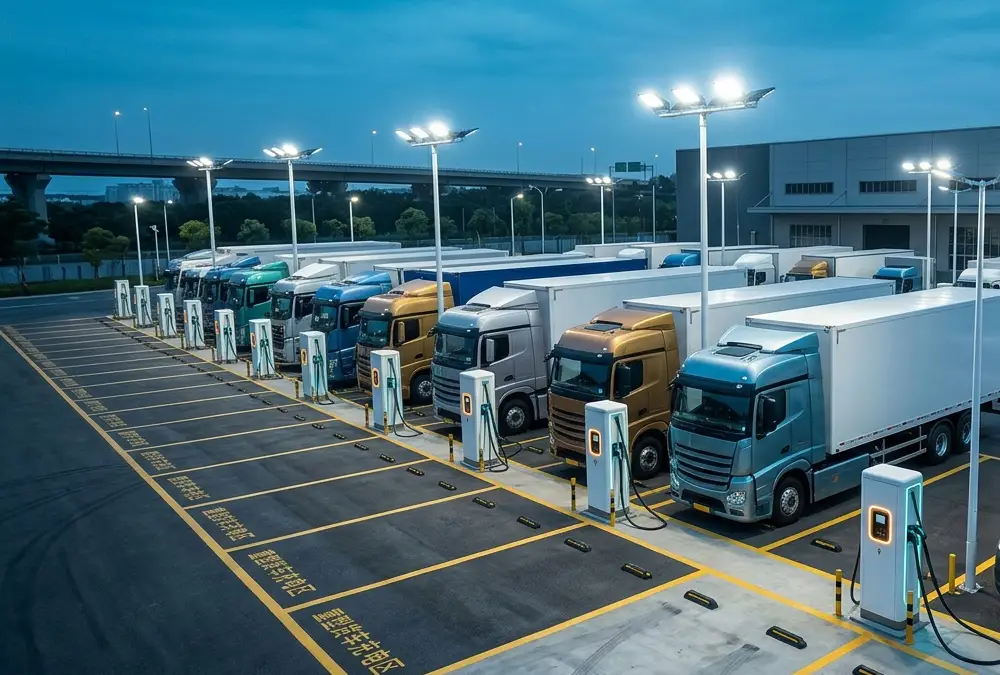
Commercial logistics fleets need high-capacity 120kW to 240kW chargers integrated with centralized load scheduling to ensure vans are ready for early morning shifts.
Commercial Parking Facilities
Urban parking structures require compact wall-mount or slim pedestal chargers. Units rated from 60kW to 150kW maximize space utilization while delivering fast service.
What Does a Level 3 Commercial EV Charger Cost to Install?
Understanding project expenditure breakdown prevents unexpected budget issues:
- Charger Hardware Cost: Standalone 50kW units start around €12,000, while 180kW to 360kW systems range from €30,000 to €90,000+.
- Electrical Installation Cost: Cabling, sub-panels, surge protection, and labor run between €8,000 and €25,000 per site.
- Transformer & Switchgear: Adding a step-down transformer can add €20,000 to €50,000 if utility capacity is insufficient.
- Civil & Construction Work: Concrete foundations, bay painting, and trenching average €5,000 to €15,000.
- Software & Maintenance: Cloud networking and annual maintenance contracts equal roughly 3% to 5% of hardware CAPEX annually.
Integrating Commercial Energy Storage Systems (BESS) with EV Charging
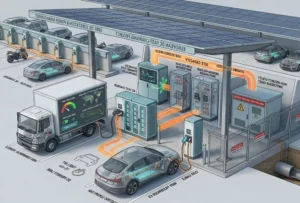
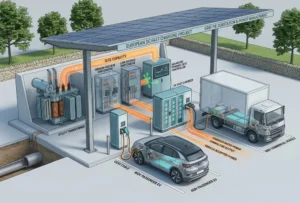
When local utilities refuse to grant grid upgrades—or demand high fees—on-site Battery Energy Storage Systems (BESS) provide an effective solution. The battery charges slowly from the grid during low-demand hours, then discharges quickly to support high-power DC fast charging when cars plug in.
| BESS Product Option | Battery Chemistry | Rated Capacity | Core Selling Point | Buyer Benefit & Value |
|---|---|---|---|---|
| AnengJI Industrial 100kWh BESS | LiFePO4 (LFP) | 100 kWh / 50 kW | Compact liquid-cooled cabinet. | Supports 60kW–120kW chargers on weak local grid connections without line upgrades. |
| AnengJI Commercial 261kWh BESS | LiFePO4 (LFP) | 261 kWh / 125 kW | Integrated Smart EMS; peak shaving. | Powers dual 180kW chargers and lowers monthly utility peak demand charges. |
| AnengJI Enterprise 418kWh BESS | LiFePO4 (LFP) | 418 kWh / 200 kW | High energy density; parallel modular expansion. | Allows high-throughput logistics depots to charge multiple vehicles simultaneously. |
| AnengJI Utility-Grade 1MWh BESS | LiFePO4 (LFP) | 1,000 kWh / 500 kW | Full containerized HVAC & fire protection. | Powers highway charging hubs paired with large commercial solar PV arrays. |
Battery Technology & Alternatives Explained
LiFePO4 (Lithium Iron Phosphate): According to the IEA Global EV Outlook 2026, LFP batteries accounted for over 55% of all EV battery deployment globally, driven by superior safety, non-thermal runaway characteristics, and cost-effectiveness per kWh.
Alternative Chemistries: While Sodium-Ion batteries offer lower costs for cold climates and Flow Batteries suit ultra-long duration storage, LiFePO4 remains the safest, most reliable choice for EV fast charging peak-shaving applications.
What Should You Check Before Installing a Level 3 Commercial EV Charger?
- Available Grid Capacity: Request an official capacity audit from your local grid operator.
- Transformer Rating: Verify your on-site transformer can handle concurrent building and charger peak loads.
- Parking Layout & Cables: Ensure charging cables comfortably reach vehicle ports regardless of parking direction.
- Internet & Cellular Signal: Ensure strong 4G/5G or Ethernet connections for real-time payment processing.
- Local Permits: Check municipal zoning regulations and fire safety clearances before breaking ground.
The Future of Level 3 Commercial EV Charging
According to data published in the BloombergNEF Long-Term EV Infrastructure Report, cumulative global investment in EV charging infrastructure is projected to reach $635 billion between 2025 and 2040, with power demand from electric vehicles set to expand seven-fold over the same period. Key technological evolutions driving this market include:
- Megawatt Charging Systems (MCS): High-power charging delivering up to 3.75MW for heavy commercial trucks.
- ISO 15118 Plug & Charge: Automated billing authorization directly between the car and charger without RFID cards.
- Solar + BESS + Charging Microgrids: Turning parking lots into self-sustaining, money-making clean energy hubs.
Frequently Asked Questions About Level 3 Commercial EV Chargers
What is a Level 3 commercial EV charger?
A Level 3 commercial EV charger is a high-power DC system supplying direct current directly to a vehicle’s battery. It bypasses the slower AC onboard charger to replenish batteries in 15 to 40 minutes.
How fast is a Level 3 commercial EV charger?
A 50kW DC charger adds around 150km of range in 30 minutes. A 240kW to 360kW charger can deliver 200km to 300km of driving range in just 10 to 15 minutes.
How much does a Level 3 commercial EV charger cost?
Hardware ranges from €12,000 for compact 30kW chargers to over €95,000 for ultra-fast 360kW systems. Complete installation costs average €25,000 to €150,000+ depending on grid conditions.
What is the best Level 3 charger for a business?
The right charger depends on site dwell time. For retail and commercial parking spaces, dual 120kW to 180kW chargers with dynamic load balancing offer the best return on investment.
Are Level 3 chargers suitable for hotels?
Hotels work best with a mix: Level 2 AC chargers for overnight guests, paired with one or two 60kW to 120kW DC fast chargers for express daytime visitors.
Can Level 3 chargers use CCS2?
Yes. CCS2 is the official DC fast charging standard connector across Europe.
Do commercial Level 3 chargers support OCPP?
Reputable commercial chargers support OCPP 1.6J or OCPP 2.0.1, enabling seamless integration with third-party billing and management platforms.
How much power does a commercial DC fast charger need?
A 150kW dual charger requires a continuous 3-phase AC input supply of approximately 160kVA to 180kVA.
Can BESS reduce the cost of Level 3 charging?
Yes. BESS buffers power locally by charging during off-peak hours and discharging during fast-charging events. This avoids expensive grid transformer upgrades.
Choose the Right Level 3 Commercial EV Charging Solution for Your Project
Building a successful commercial charging site requires balancing hardware selection, civil works, grid limits, and energy storage integration. AnengJI provides turnkey commercial DC fast charging systems and integrated BESS hardware tailored to your exact project parameters.
Tell Us About Your Charging Project
Ready to calculate equipment sizing, request factory-direct B2B pricing, or design an integrated Solar + Storage + Charging setup? Connect with our technical team today.