Introduction
The energy landscape in 2026 is vastly different than it was just five years ago. Utility rates have soared due to grid infrastructure upgrades, and extreme weather events continue to test the resilience of aging power grids globally. For homeowners possessing high energy demands, luxury villas, or those seeking true energy independence in off-grid scenarios, standard 10kWh to 20kWh battery systems are no longer sufficient. Enter the 100kWh home battery storage system—a solution that translates utility-scale capacity into residential resilience. This article provides a deep engineering analysis into the costs, technical realities, and Return on Investment (ROI) of deploying such a massive energy reservoir at home.
What Is a 100kWh Battery Storage System for Home Use?
From an engineering standpoint, a 100kWh system is a significant electrical asset. While standard residential batteries manage daily time-of-use cycling, a 100kWh system is designed for whole house battery backup and long-duration autonomy.
Definition of a 100kWh Residential Battery System
A 100kWh residential energy storage system is a high-capacity chemical energy reservoir, typically utilizing Lithium Iron Phosphate (LFP) technology, configured to store 100 kilowatt-hours of nominal electricity. It requires industrial-grade Power Conversion Systems (PCS)—inverters—to interface with the home’s electrical panel and, optionally, solar PV arrays.
Typical Use Cases (Villa, Farm, Off-Grid Home)
These systems are not intended for the average 3-bedroom suburban home. They are ideal for:
- Off-grid living: To answer the common question, is 100kWh battery enough for a house off grid, the answer is generally yes, even for large luxury homes with HVAC and electric vehicle charging, when paired with sufficient solar.
- Large Estates and Villas: Properties with peak loads exceeding 20kW and high daily consumption.
- Working Farms: Running irrigation pumps, processing equipment, and residential loads simultaneously.
Comparison with Standard Home Battery Sizes
Most standard residential setups utilize 10kWh (e.g., Tesla Powerwall, LG Chem). A 100kWh system provides ten times the energy capacity, shifting the function from mere peak shaving to true grid independence.
Featured Snippet:
A 100kWh home battery storage system is a large-capacity energy storage solution designed for high-energy households, luxury villas, working farms, off-grid living, or comprehensive emergency backup power applications.
How Does a 100kWh Home Battery Storage System Work?
The operation of these large-scale systems requires sophisticated engineering integration. It is not simply a bigger battery; it is a smarter, more robust system.
Charging (Grid or Solar)
The system draws AC power from the grid or DC power from solar arrays. In luxury setups utilizing a large home battery storage system 100kWh with solar, complex DC-coupled inverters maximize efficiency by charging the battery directly from the PV panels without unnecessary AC conversions.
Energy Storage in Battery Cells
The energy is stored chemically within thousands of individual Li-ion cells, organized into modules, racks, and high-voltage strings. Managing these strings requires precision engineering to ensure even aging.
Discharging to Household Loads
When the grid fails or electricity prices peak, the system discharges. The stored DC energy is converted to clean AC power. Given the capacity, these systems must handle high surge currents from starting large motors (like well pumps or 5-ton A/C units).
Role of EMS in Smart Energy Management
The Energy Management System (EMS) is the brain. It monitors weather forecasts, grid pricing, and historical consumption patterns to optimize when to store energy and when to use it, maximizing savings and guaranteeing backup capability.
How Much Energy Can a 100kWh Battery Actually Provide?
It is vital to distinguish between nominal capacity and usable energy. In battery engineering, we never use 100% of the nominal capacity if we want the system to last.
Usable Capacity (The DoD Factor)
For Lithium-ion home battery systems in 2026, the recommended Depth of Discharge (DoD) is typically 90%. Therefore:
100kWh (Nominal) * 0.90 (DoD) = 90kWh (Usable Energy)
Furthermore, inverter conversion losses (round-trip efficiency is roughly 85–90%) mean the actual electricity delivered to your appliances is slightly less.
Daily Household Energy Consumption Comparison
The average US household uses approximately 30kWh per day. A 90kWh usable capacity could theoretically support an average home for three days without any solar input. However, homes requiring a 100kWh system usually consume 60–100kWh per day.
Backup Duration Calculation
To calculate backup duration, you must define your “critical loads.“
Backup Hours = (Usable Capacity in kWh) / (Average Critical Load in kW)
If a villa pulls a steady 5kW load (lights, refrigeration, basic server, some heating):
90kWh / 5kW = 18 hours of backup.
If you manage loads aggressively, drawing only 2kW, you get 45 hours. This demonstrates why proper how to design a 100kWh home battery system consulting is required.
Featured Snippet:
A 100kWh battery can typically provide 80–90kWh of usable energy due to Depth of Discharge (DoD) restrictions. This is sufficient to power a large, high-consumption home for 1–3 days, or indefinitely when properly paired with a solar array.
How Long Does It Take to Charge a 100kWh Home Battery?
Charging speed is governed by the power rating of the charger/inverter, not just the battery size.
Charging via Grid (AC Charging Speed)
If you are grid-connected and utilizing time-of-use arbitrage, you want to charge fast during cheap window. A standard robust residential connection might allow for 10kW to 20kW charging.
Time = Capacity / Charging Power100kWh / 10kW = 10 hours.100kWh / 20kW = 5 hours.
Charging via Solar System
Solar charging is variable. In off-grid scenarios, the solar array must be large enough to power the house and recharge the battery simultaneously during daylight hours.
Impact of Inverter/PCS Power Rating
A massive battery bank paired with a weak inverter is a common design failure. A 100kWh battery needs a PCS capable of at least 20kW continuous output and 30kW peak output to truly utilize its capacity for whole house battery backup.
What Size Solar System Is Needed for a 100kWh Battery Storage System?
Pairing a massive battery with a small solar array is an expensive mistake. To keep a 100kWh battery operational, especially off-grid, a significant PV array is required.
Typical Solar Capacity Required
As a rule of thumb for resilient systems in moderate climates, you need enough solar to fully recharge the usable capacity within 4-5 “peak sun hours” while simultaneously covering the daytime house load.
A typical villa might have a 5kW daytime baseline load. To charge 90kWh usable energy in 5 hours, you need 18kW of surplus generation.
Required Solar Power = (Daytime House Load) + (Usable Battery Capacity / Peak Sun Hours)Required Solar Power = 5kW + (90kWh / 5h) = 23kW DC Solar Array.
Matching Solar Generation with Battery Capacity
Systems usually range from 15kW to 30kW+ of solar capacity. In winter months or areas with lower solar irradiance, arrays toward the 30kW+ end are necessary to guarantee energy independence system status.
Seasonal Considerations
A system designed to be sufficient in summer might fail in winter due to shorter days and lower sun angles. Off-grid designs require “winter-worst-case” analysis.
Featured Snippet:
A 100kWh battery system typically requires a 15kW–30kW solar system to maintain regular charging and ensure energy autonomy, depending on geographical location, local weather patterns, and daily household energy usage.
How Many Homes Can a 100kWh Battery Power?
While designed for one large home, in microgrid scenarios, the math changes.
Single Large Home vs. Multiple Small Homes
Based on the average usage of 30kWh/day, a 100kWh battery (90kWh usable) could theoretically support three average-sized homes for one full day, assuming they don’t use high-draw appliances simultaneously.
Load Profile Impact
The challenge isn’t just total energy (kWh); it’s instantaneous power (kW). If all three homes start electric ovens at the same time, the central inverter will trip on overload. This is critical when considering energy storage for villas development.
Safety and System Design Considerations for 100kWh Home Battery Storage
As an engineer, safety is my primary concern. Storing 100kWh of electrochemical energy requires rigorous safety protocols.
Battery Chemistry (LFP Safety Advantages)
In 2026, Lithium Iron Phosphate (LiFePO4 or LFP) is the absolute standard for residential stationary storage. While slightly less energy-dense than traditional NMC (Nickel Manganese Cobalt) cells, LFP has a much higher thermal runaway temperature, making it inherently safer for home installation.
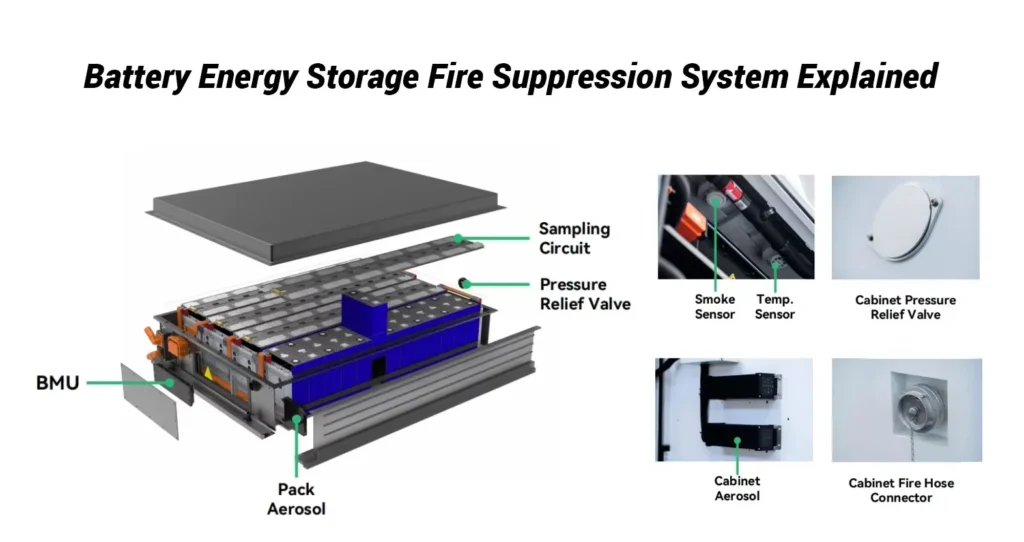
Thermal Management and Cooling
Active cooling (fan or liquid) is almost mandatory for 100kWh systems. Large battery masses generate significant heat during high-power charging or discharging. Maintaining cell temperatures between 20°C and 30°C is critical for both safety and lifespan.
BMS Protection Mechanisms
The Battery Management System (BMS) in a large system must be redundant. It constantly monitors individual cell voltages and temperatures, balancing cells and automatically disconnecting the system if parameters exceed safe limits.
Installation Environment (Indoor/Outdoor)
These are large, heavy industrial cabinets. Outdoor installations require NEMA 3R or IP65 rated enclosures with integrated climate control to protect against rain, dust, and temperature extremes.
Usage Considerations and Warranty for 100kWh Battery Systems
Charging/Discharging Best Practices
To maximize lifespan, avoid keeping the battery at 100% State of Charge (SoC) for extended periods, and rarely discharge it below 10%. Smart EMS software automates this “shallow cycling” when grid power is available.
Battery Lifespan (10–15 Years)
With LFP technology in 2026, you can expect 6,000 to 10,000 cycles before the battery degrades to 80% of its original capacity. In typical residential use, this translates to a 10–15 year lifespan.
Warranty Terms and Cycles
Review the warranty closely. It should cover both defect period (typically 10 years) and guaranteed energy throughput (total MWh delivered). A standard warranty for a 100kWh system might guarantee 60MWh of total energy throughput over 10 years.
How Much Does a 100kWh Battery Storage System for Home Cost?
This is the central question for high-end homeowners. A 100kWh residential energy storage system price and ROI analysis shows a significant upfront CAPEX.
Typical Price Range
In 2026, turnkey pricing for a fully installed, high-quality 100kWh system ranges from $30,000 to $100,000+.
Cost Breakdown
| Component | Estimated Cost (Turnkey) | Notes |
| Battery Cells & Enclosure | $20,000 – $45,000 | The bulk of raw material cost. |
| Inverter/PCS | $5,000 – $15,000 | Required power rating drives this cost. |
| EMS & BOS | $2,000 – $5,000 | Balance of System (wiring, switchgear). |
| Installation & EPC | $3,000 – $15,000 | Complexity of site, solar integration, permitting. |
| Total Turnkey Cost | $30,000 – $80,000 | Excludes solar PV panels. |
Note: 2026 estimated pricing assumes mature LFP supply chains.
Cost per kWh
On a raw equipment basis, you are looking at $250–$500 per kWh. The total installed cost is what matters, however, as large systems require significant specialized labor.
Featured Snippet:
A 100kWh home battery storage system typically costs between $30,000 and $100,000, installed, in 2026. This wide range depends heavily on the battery chemistry (LFP being premium), the power output capability of the paired inverters, the complexity of installation, and regional labor rates.
Benefits of Installing a 100kWh Home Battery Storage System
The primary driver for this scale of investment is not purely financial savings; it is utility value and independence.
Energy Independence
True freedom from utility providers. When paired with sufficient solar, you are immune to utility rate hikes and policy changes like the death of net metering.
Backup Power Security
Absolute resilience. For critical medical equipment, expensive wine cellars, sophisticated home security, or simply maintaining a luxury lifestyle during a week-long outage, 100kWh provides unmatched peace of mind.
Reduced Electricity Bills
Through aggressive time-of-use (TOU) arbitrage (charging cheap at night, discharging during daytime peaks), the system can virtually eliminate consumption charges, even for high-use homes.
100kWh Battery Storage vs. Smaller Home Battery Systems
| Feature | Standard (10–20kWh) | Large (30–50kWh) | 100kWh System |
| Primary Goal | Peak Shaving / TOU Savings | Partial Backup / TOU | Full Independence / Long Backup |
| Home Size | Standard (3-bed) | Large Suburban | Villa / Off-grid Estate |
| Solar Pairing | 5–10kW Solar | 10–15kW Solar | 15–30kW+ Solar |
| Backup Capability | Critical Loads (lights/fridge) | Most Loads (partial A/C) | Whole house battery backup (inc. heavy loads) |
| Typical Cost | $8,000 – $18,000 | $20,000 – $40,000 | $30,000 – $100,000+ |
Is a 100kWh Battery Storage System Right for Your Home?
This is a decision requiring strict analysis. It is easy to oversize a system, wasting significant capital.
When 100kWh Makes Sense
- You are living or building true off grid energy storage solutions.
- Your home consumes >75kWh per day.
- You have critical high-power loads (irrigation pumps, multiple EV chargers, large electric heating).
- Grid reliability in your area is extremely poor, and downtime is financially or personally unacceptable.
When It May Be Oversized
If you are grid-connected, consume <40kWh/day, and simply want to save on TOU bills, a 100kWh system is economically unviable. The CAPEX will never be recovered within the battery’s lifespan. A 15–30kWh system would offer a far better 100kWh residential energy storage system price and ROI ratio for your needs.
Featured Snippet:
A 100kWh battery system is ideal for very large estates, luxury villas, working farms, true off-grid living, or homeowners in areas with extremely unreliable grid infrastructure seeking maximum energy independence and whole-home resilience.
Can a 100kWh Battery Storage System Be Used for Commercial Applications?
Yes. In fact, a 100kWh system architecture is often closer to commercial design than standard residential.
Small Commercial Use Cases
Small offices, retail stores, or workshops can use these systems for peak demand charge reduction (peak shaving), which often makes up a large portion of commercial electricity bills.
EV Charging Stations
A 100kWh home battery storage system can act as a buffer for EV fast chargers at a commercial site, drawing power slowly from the grid and discharging it rapidly into vehicles, avoiding expensive grid infrastructure upgrades.
Industrial Recommendation
For pure industrial or larger C&I (Commercial & Industrial) applications requiring higher voltage and megawatts of scale, residential cabinets are inefficient. We recommend purpose-built industrial products, such as the AnengJi Power-Grid C&I series, designed for 480V/1000V operation and industrial EMS integration.
AnengJi Home Energy Solutions: Smart and Scalable Battery Storage
At AnengJI, we don’t just sell batteries; we engineer energy resilience. Our approach to a 100kWh residential energy storage system installation focuses on long-term lifecycle value and safety.
Customized Residential Energy Storage Solutions
Every high-energy home is different. We analyze your 12-month interval data to design a system that precisely matches your consumption profile.
Integrated System Design
Our engineering teams ensure that the lithium cells, the robust PCS (Power Conversion System), the safety-critical BMS, and the smart EMS work in perfect harmony. We minimize third-party integration risks.
Reliability and Support
An AnengJi system is designed for a 15-year operational life, backed by comprehensive warranties and localized technical support. Contact our engineering team today for a detailed system design and ROI simulation for your estate.
FAQs About 100kWh Home Battery Storage Systems
Is 100kWh too much for a house? For the average home, yes. It is oversized. But for luxury estates, farms, or off-grid homes with high instantaneous power demands, it is the appropriate size.
How much does a 100kWh battery system cost? The installed cost in 2026 typically ranges between $30,000 and $100,000, depending heavily on inverter power rating and installation complexity.
Can a 100kWh battery run a whole house off-grid? Yes, 100kWh home battery storage system designs are specifically meant to run a whole house off-grid, provided they are paired with a sufficiently large solar array (usually 20kW+).
100kWh Battery Storage for Home: Key Takeaways
- What is it? A massive residential energy reservoir for high-load or off-grid autonomy.
- Usable Energy: Expect roughly 80–90kWh of actual delivered electricity.
- Cost: $30,000–$100,000+ installed, governed by quality and power output (kW).
- Best Use Case: Estate homes, villas, farms, and comprehensive off-grid energy storage solutions.
- Main Value: Unmatched backup security, grid independence, and immunity to utility rate volatility.
How to Choose the Right 100kWh Home Battery Storage System
If you are considering this level of investment, do not buy a “box” off the shelf.
- Assess Your Energy Consumption: Analyze detailed 12-month energy interval data (your utility can provide this Green Button data). Identify peak power draws (kW) and total daily energy (kWh).
- Match with Solar System: Ensure you have the roof or ground space for the 15kW–30kW solar array needed to support a 100kWh BESS.
- Evaluate ROI and Backup Needs: Define your primary goal. Is it pure financial ROI (rare at this size) or ultimate resilience and luxury convenience (the common driver)?
- Choose a Reliable Supplier: Partners like AnengJi prioritize engineering integration, utilizing high-voltage LFP safety, robust active cooling, and intelligent EMS software to ensure your asset delivers value for decades. Contact our application engineers for a detailed feasibility study.