Introduction
Evaluating the true benefits of utility scale battery storage isn’t about chasing green hype or repeating surface-level sustainability slogans. For utility developers, Independent Power Producers (IPPs), and large industrial facility operators, it comes down to surviving brutal electrical grid economics and physical stress. When sudden severe weather events knock out regional substations, or solar generation plummets at 5:00 PM just as industrial air conditioning and manufacturing loads peak, grid operators face catastrophic imbalance. Utility asset owners face real, daily friction: crippling transmission congestion fees, severe renewable curtailment penalties, unpredictable Duck Curve dynamics, and volatile wholesale spot prices. Deploying large-scale energy storage changes that financial and operational equation completely. It functions as a high-speed, megawatt-grade shock absorber—converting unpredictable, weather-dependent generation into bankable, dispatchable assets that secure long-term power purchase agreements (PPAs) and maximize revenue stacks.
Featured Snippet: Primary Benefits of Utility Scale Battery Storage
The primary benefits of utility scale battery storage systems (BESS) include sub-100-millisecond grid frequency regulation, complete elimination of renewable energy curtailment, dual-direction revenue capture via wholesale energy arbitrage, transmission congestion relief, and crucial black-start backup capability during regional grid failures. By capturing surplus midday generation and dispatching it during peak demand intervals, utility-scale storage stabilizes grid frequency, protects assets from negative pricing, and lowers the levelized cost of storage (LCOS) for energy developers globally.
What Are the Key Benefits of Utility Scale Battery Storage Systems?
Utility Scale Battery Storage Provides Instant, Bankable Backup During Grid Collapse
Unexpected transmission line trips and rolling blackouts inflict massive financial losses on energy-intensive sectors. A 50-millisecond voltage sag can shut down semiconductor fabrication lines, halt automated automotive assembly plants, and cause catastrophic thermal shocks in chemical processing reactors.
A modern, utility-scale containerized Battery Energy Storage System (BESS) provides seamless micro-grid islanding and black-start capabilities. Utilizing advanced grid-forming inverters rather than passive grid-following systems, the storage architecture acts as a virtual synchronous generator. When primary high-voltage transmission lines trip, the BESS automatically injects reactive and active power within milliseconds, maintaining local voltage frequency and protecting critical industrial loads until main grid connections are safely restored.
Quantifying the Massive Economic Impact of Grid Instability
Grid instability is no longer an occasional inconvenience; it is a balance-sheet crisis for power networks worldwide.
According to data published in the IEA Electricity 2026 Analysis and Forecast Report, global weather-induced transmission disruptions and grid congestion costs surged by over 34% across major industrial markets. In regions like CAISO (California) and ERCOT (Texas), transmission line congestion costs alone exceed billions annually. Integrating high-density grid scale energy storage directly mitigates these financial risks. By absorbing local generation overloads at the substation level, storage removes physical line bottlenecks, allowing utilities to avoid multi-million-dollar transmission upgrades while protecting industrial end-users from sudden load-shedding events.
How Does Utility Scale Battery Storage Improve Grid Resilience?
Mastering the “Duck Curve” and Balancing Real-Time Load Variations
As solar penetration increases, regional grids suffer from the infamous “Duck Curve”—where massive midday solar generation drops electricity spot prices to zero (or negative), followed by an aggressive, steep load ramp in the early evening when solar output collapses just as domestic and commercial energy consumption spikes.
Utility scale battery energy storage system (BESS) installations flatten this curve entirely. During the midday peak generation window, when solar farms face forced curtailment or negative feed-in tariffs, high-capacity storage banks absorb surplus clean energy. When the evening peak hits and wholesale prices surge, the EMS triggers rapid discharge. This converts non-dispatchable variable generation into high-margin, peak-coincident power output, maximizing the project’s internal rate of return (IRR).
Sub-Second Frequency Regulation (synthetic Inertia) vs. Legacy Peakers
Power grids must maintain a precise nominal frequency standard (50Hz or 60Hz). When heavy industrial machinery starts up or a thermal plant trips offline, system frequency dips rapidly. If frequency drops past strict threshold limits, automated relays trigger cascading rolling blackouts.
Technical Comparison: Fast Frequency Response (FFR)
Legacy natural gas peaker plants take anywhere from 10 to 15 minutes to start up, synchronize, and ramp up to full thermal capacity—consuming expensive fuel and emitting heavy carbon volumes during warm-up. In stark contrast, modern liquid-cooled LFP battery storage systems with grid-forming Power Conversion Systems (PCS) detect frequency excursions and respond in under 100 milliseconds. They deliver instant sub-second synthetic inertia, arresting frequency sags before automated drop-outs are ever triggered.
Strengthening Sovereign Energy Security and Reducing Fossil Fuel Exposure
Relying on volatile imported natural gas or coal to supply peak power leaves regional utilities vulnerable to geopolitical supply disruptions and extreme fuel spot price spikes. Decoupling peak power generation from fossil fuel supply chains through utility scale BESS assets establishes decentralized, domestically controlled energy reserves. This resilience buffers national economies from international commodity volatility.
How Does Utility Scale Battery Storage Maximize Revenue and Lower Costs?
Unlocking Wholesale Energy Arbitrage Revenue Stacks
In modern deregulated wholesale electricity markets, spot rates fluctuate wildly within 15-minute settlement intervals. When clean generation is abundant, locational marginal prices (LMP) bottom out; during severe demand spikes, spot prices can hit regional market caps (e.g., $5,000+/MWh in ERCOT during winter or summer extremes).
By utilizing automated, AI-driven Energy Management System (EMS) trading algorithms, energy operators execute real-time energy arbitrage. The system dynamically tracks day-ahead and real-time market pricing, charging the battery modules when power is priced at rock-bottom levels and discharging full containerized capacity during peak pricing windows. This multi-stream approach—combining arbitrage, frequency control, and capacity reserves—accelerates project CAPEX amortization.
Slashing Commercial & Industrial Peak Demand Surcharges
For large industrial users, commercial utility bills are split into two major categories: volumetric energy consumption (kWh) and peak demand charges (kW). Peak demand charges are calculated based on the single highest 15-minute power draw recorded during the entire billing cycle, often accounting for up to 30% to 50% of the entire monthly electric bill.
| Energy Strategy Option | Peak Shaving Capability | Arbitrage Profit Potential | Response Time | User Financial & Operational Benefit |
|---|---|---|---|---|
| Unbuffered Grid Connection | None | Zero Margin Opportunity | Passive Exposure | Leaves facilities completely exposed to exorbitant peak demand tariffs, grid sags, and volatile power pricing. |
| Gas Turbine Peakers | High (Delayed) | Moderate (Fuel Cost Bound) | 10 to 15 Minutes | Delivers high bulk power output, but suffers from high operational carbon taxes, fuel price volatility, and high maintenance costs. |
| Utility Scale BESS (LFP) | Complete Automated Control | Maximum Daily Yield | Under 100 Milliseconds | Eliminates peak demand surcharges through automated peak shaving while capturing premium daily arbitrage yields without site emissions. |
Demand Charge Mitigation Math:
By installing dedicated liquid-cooled energy storage cabinets alongside heavy industrial operations or megawatt-scale EV fast-charging hubs, the EMS monitors real-time site load. When total power draw approaches the facility’s baseline threshold, the battery instantly discharges to supply the excess load locally. This process—known as peak shaving—keeps peak meter draw flat, saving commercial facility operators tens of thousands of dollars each month in demand penalty fees.
Regulatory Incentives Accelerating Project Return on Investment (ROI)
Regulatory frameworks worldwide actively enhance storage project bankability. Mechanisms such as the U.S. Inflation Reduction Act (IRA) standalone Energy Storage Investment Tax Credit (ITC)—which offers 30% to 50%+ in capital tax credits—along with European Net-Zero Industry Act initiatives, directly lower initial CAPEX outlay. According to global finance benchmarks, these policy tailwinds have shortened payback periods for standalone BESS projects from 8–10 years down to 3.5–5 years in high-volatility markets.
How Does Utility Scale Battery Storage Drive Renewable Integration?
Eliminating the Vulnerability of Intermittent Generation
The primary technical criticism of clean energy has always been intermittency: the sun doesn’t always shine, and the wind doesn’t always blow when power demand is highest.
Deploying utility scale battery storage solutions alongside solar and wind farms bridges this availability gap entirely. Storage transforms intermittent clean electron generation into predictable, firm capacity, giving grid operators the confidence to retire aging base-load fossil fuel units without compromising system reliability.
Solving the Multi-Million Dollar Renewable Curtailment Problem
In regions with rapid solar or wind expansion, generation capacity often outstrips local transmission line capacity during peak production hours. Grid operators are forced to issue mandatory curtailment orders, commanding renewable plant operators to curtail generation. In 2024 and 2025 alone, CAISO curtailed over 2.5 Terawatt-hours (TWh) of clean solar and wind energy—representing hundreds of millions of dollars in lost power revenue.
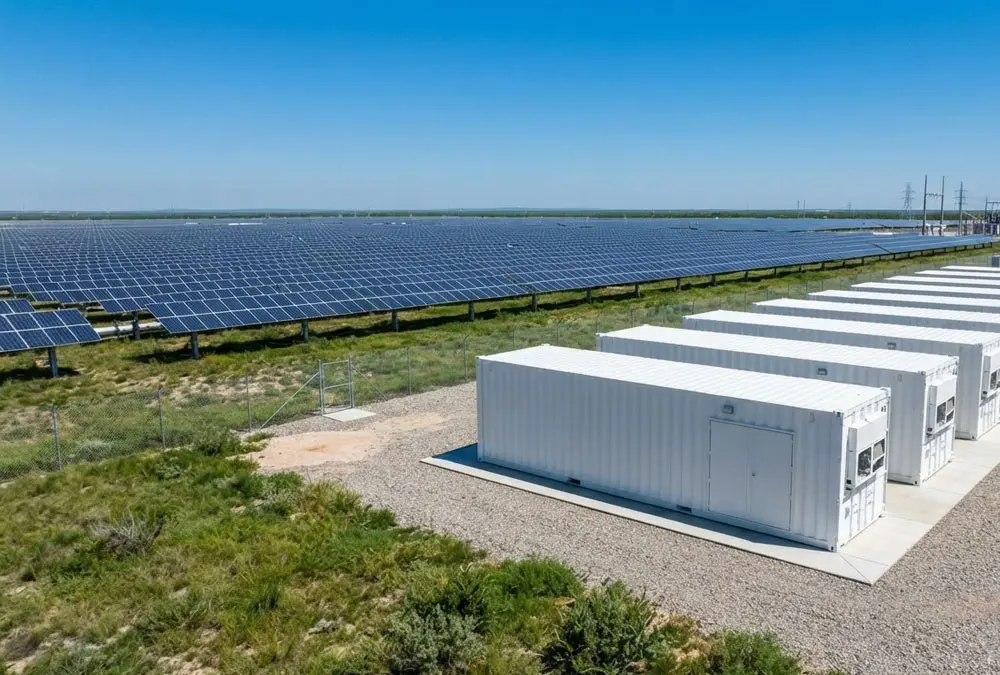
Co-locating a containerized battery storage system allows renewable plant owners to capture 100% of that otherwise wasted generation. Instead of curtailing output, clean power flows into local high-density battery racks. Once grid transmission congestion clears later in the day, the stored energy is exported to the grid at full market value.
Unlocking Higher-Value Firm Power Purchase Agreements (PPAs)
As-generated or pay-as-produced PPAs expose solar and wind developers to heavy market discount factors (cannibalization effect). By pairing solar arrays with megawatt-scale battery storage, developers can sign “Firm Block” or “Shape on Demand” PPAs. Delivering guaranteed dispatchable power during peak commercial hours allows IPPs to command premium contract pricing per megawatt-hour, significantly boosting asset value for institutional investors.
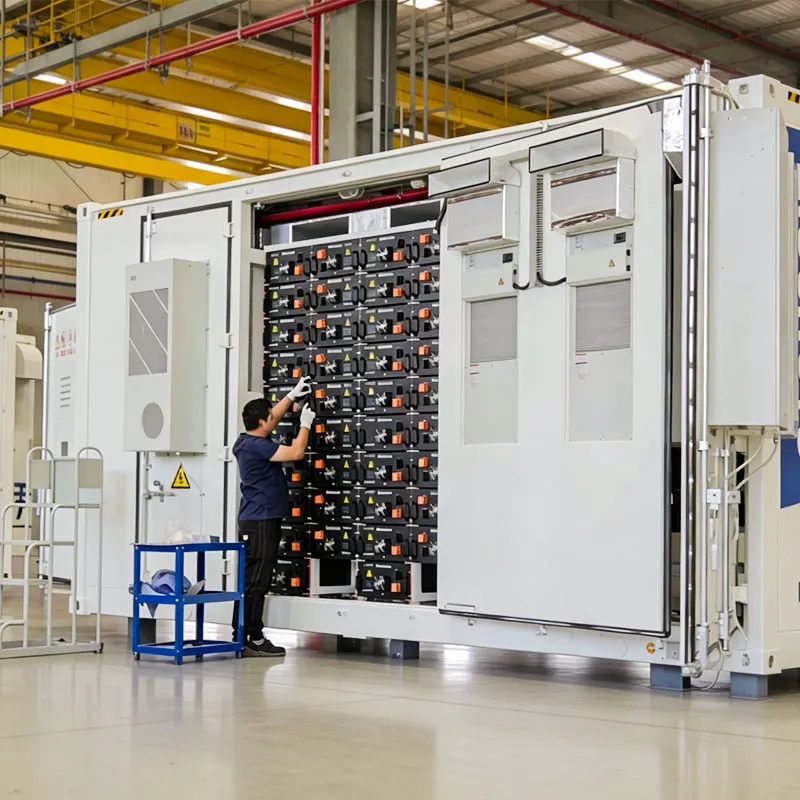
Selecting Industrial & Utility Storage Hardware: Technical Matrix
Selecting the proper energy storage hardware configuration requires matching cell chemistry, thermal architecture, and container capacity against specific project discharge profiles and site environmental conditions:
| Hardware Unit Scale | Thermal Control System | Recommended Deployment Application | Developer ROI & Operational Benefit |
|---|---|---|---|
| 100 kWh Industrial Cabinet | Forced Air Cooling Architecture | Small Commercial Buildings & Fleet Depots | Compact physical footprint; low initial investment for local facility peak shaving and emergency power backup. |
| 261 kWh Outdoor Cabinet | Precision Liquid Cooling Loop | Medium Industrial Plants & High-Power EV Hubs | High energy density per square meter; handles continuous 1C charge/discharge cycles without thermal degradation. |
| 418 kWh High-Density BESS | Advanced Micro-Channel Liquid Chiller | Large Factories, Microgrids & Commercial Solar | Maintains cell-to-cell temperature delta below 2°C; extends system lifespan past 6,000 to 8,000 deep cycles. |
| 1 MWh – 5 MWh Containerized BESS | Heavy-Duty Liquid Cooling System | Utility Substations & Centralized Solar/Wind Farms | Modular block architecture; delivers massive bulk energy storage, grid stability, and deep wholesale market arbitrage capability. |
Thermal Management Efficiency Gains:
Upgrading system specs from traditional air-cooled enclosures to high-density liquid-cooled containerized BESS designs slashes auxiliary parasitic HVAC power consumption by up to 30% to 45%. Liquid cooling distributes heat uniformly across every internal LFP cell block, preventing localized hot spots and maintaining total Round-Trip Efficiency (RTE) above 88% to 92% over years of intense daily cycling.
What Economic and Environmental Benefits Do Local Communities Experience?
Spurring High-Skilled Engineering Jobs and Economic Activity
Utility-scale energy storage development drives regional workforce expansion. Engineering, Procurement, and Construction (EPC) phases create specialized local jobs across civil site preparation, high-voltage electrical engineering, concrete pad construction, grid interconnection testing, and long-term asset management.
Attracting Industrial Investment Through Power Quality Assurance
Modern manufacturing facilities, automated logistics centers, and AI data processing hubs will not locate in regions plagued by frequent voltage sags or unreliable power grids. By installing utility-scale battery storage at regional substations, local governments guarantee high power quality, attracting high-tech industrial employers to the community.
Displacing Toxic Peaker Plant Emissions in Urban Centers
Legacy oil and gas peaker plants are disproportionately located near urban population centers and run during hot summer afternoons when air quality is already compromised. These plants emit high levels of Nitrogen Oxides (NOx), Sulfur Dioxide (SO2), and particulate matter (PM2.5). Replacing fossil peakers with clean, zero-emission BESS assets cleans local air, reduces smog formation, and delivers measurable public health improvements to surrounding populations.
How Does a Utility Scale Battery Energy Storage System (BESS) Work?
High-Safety Lithium Iron Phosphate (LFP) Battery Chemistry
Modern utility-scale installations have standardized on Lithium Iron Phosphate (LFP – LiFePO4) cell chemistry over traditional Nickel Manganese Cobalt (NMC) chemistries. LFP cells offer superior chemical stability, significantly higher thermal runaway resistance, non-toxic raw material sourcing, and exceptional cycle life (often exceeding 6,000 to 10,000 100% Depth-of-Discharge cycles), ensuring a multi-decade operational lifespan.
Bi-Directional Power Conversion System (PCS) Engineering
The Power Conversion System (PCS) serves as the high-voltage intelligent gateway between the DC battery modules and the AC utility grid.
During charge cycles, the bi-directional PCS rectifies high-voltage AC grid power into precise DC voltage to charge the battery cells safely. During discharge, the PCS transforms stored DC energy back into tightly synchronized, low-distortion 3-phase AC power. Advanced grid-forming PCS units can operate independently during blackouts, establishing local grid voltage and frequency reference points without needing a live external grid signal.
Multi-Layer BMS and AI-Driven Energy Management Systems (EMS)
Safety and profitability are governed by a multi-tiered software control architecture:
- Cell-Level Battery Management System (BMS): Continuously monitors voltage, state-of-charge (SoC), state-of-health (SoH), and temperatures across every cell block, executing real-time balancing and isolating anomalies before issues escalate.
- System Energy Management System (EMS): Operates as the master brain, interfacing with utility SCADA networks, weather forecasting APIs, and day-ahead electricity markets to execute optimized charging, discharging, peak shaving, and ancillary service routines automatically.
Why Utility Scale Storage Is the Backbone of Future Energy Grids
Facilitating the orderly Retirement of Aging Base-Load Assets
As thermal coal plants and legacy nuclear facilities reach end-of-life status, power grids face a loss of traditional baseload capacity and rotational inertia. Utility-scale battery storage provides the synthetic inertia, short-circuit capacity, and fast ramp rates necessary to decommission aging fossil-fuel infrastructure without risking regional grid collapse.
Building Decentralized, Software-Defined Virtual Power Plants (VPPs)
By networking dozens of distributed commercial and utility-scale battery systems together through cloud-native EMS orchestration, utilities create Virtual Power Plants (VPPs). These aggregated assets can instantly inject hundreds of megawatts into the grid during emergency load events, acting with greater agility and precision than any single centralized power plant.
Utility Scale BESS Applications Across Key Commercial Sectors
Solar Farm Co-Location (DC-Coupled or AC-Coupled BESS)
Pairing utility solar arrays with containerized storage eliminates clipped energy loss (capturing power generated above the solar inverter’s AC limit), eliminates grid curtailment penalties, and allows solar developers to capitalize on high evening power rates.
Wind Energy Smoothing and Firming
Wind generation often peaks during nighttime hours when regional power demand drops to daily minimums. Large-scale battery storage captures overnight wind production and releases it during the high-demand morning and afternoon industrial shifts, maximizing overall project revenue.
Substation Deferral and Congestion Relief
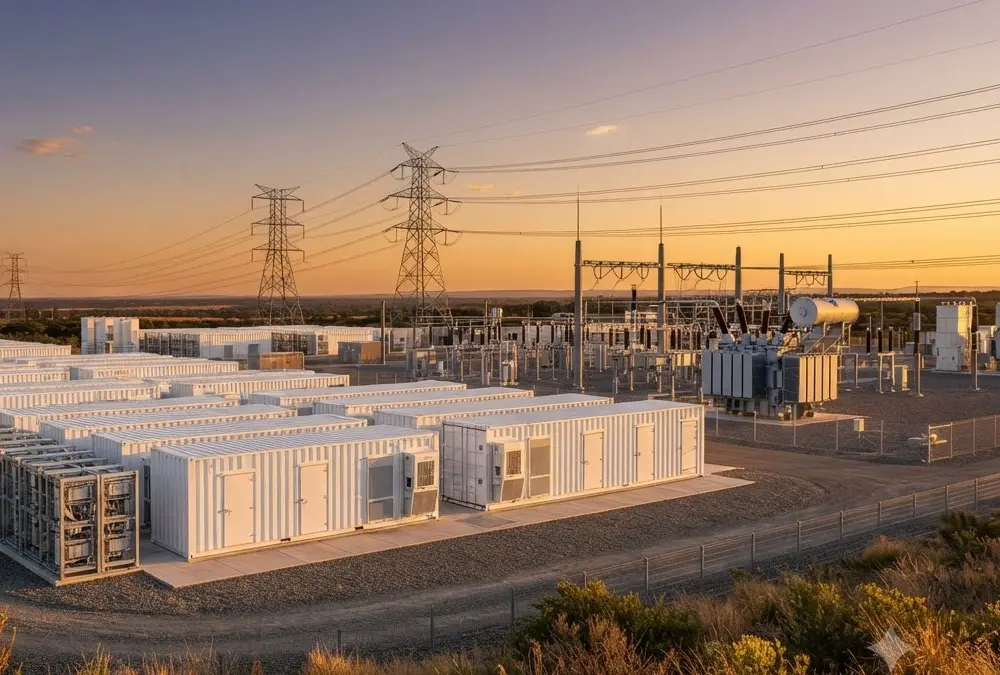
When regional power demand outgrows substation transformer limits, utilities traditionally spend tens of millions of dollars on disruptive civil upgrades. Installing a modular, utility-scale BESS at the substation provides local peak support, deferring expensive capital upgrades for years while upgrading local reliability instantly.
How to Select the Right Utility Scale Battery Storage Solution?
Address System Thermal Safety and NFPA Fire Protections
A primary concern for project developers and insurers is: “How do we completely eliminate thermal runaway risks in high-density storage sites?”
Developers must demand systems engineered with strict multi-layer defense mechanisms: tier-1 inherently stable LFP cells, active micro-channel liquid cooling systems, cell-to-cell thermal insulation barriers, integrated gas-detection sensors (CO and H2 early warning), automated aerosol or clean-agent fire suppression, deflagration venting panels, and full compliance with NFPA 855, UL 9540, and UL 9540A unit-level thermal runaway test standards.
Safety Engineering Metrics:
Advanced liquid-cooled BESS containers incorporate isolated electrical distribution channels, explosion-proof ventilation, and IP65/NEMA 4X weather-sealed enclosures. Maintaining internal cell temperature variations within a tight <2°C window under full load prevents localized thermal stress, completely eliminating the primary catalyst for thermal runaway.
Prioritize Modular Scalability and Turnkey Interconnection
Select containerized BESS designs that feature modular plug-and-play architecture. Modular designs allow project managers to deploy capacity in phased blocks (e.g., expanding from 2 MWh to 10 MWh+) as site load requirements or market opportunities grow, minimizing upfront capital commitment while maintaining flexible field expansion.
Partner With a Fully Certified BESS Original Equipment Manufacturer (OEM)
To secure non-recourse project financing from institutional lenders, ensure your BESS equipment partner provides comprehensive bankability reports, backed by full UL certifications, robust 10-to-15-year performance warranties, guaranteed Round-Trip Efficiency (RTE) thresholds, and proven grid interconnection experience across global energy markets.
Frequently Asked Questions About Benefits of Utility Scale Battery Storage
What are the primary financial benefits of utility scale battery storage?
The primary financial benefits include capturing high-margin wholesale energy arbitrage yields, avoiding peak demand tariffs, eliminating renewable energy curtailment losses, receiving capacity market payments, and securing capital tax subsidies like the standalone BESS Investment Tax Credit (ITC).
How fast does a utility-scale battery system respond to grid frequency sags?
Equipped with high-speed grid-forming bi-directional inverters, modern utility-scale BESS solutions respond to frequency excursions in under 100 milliseconds, providing instant sub-second synthetic inertia to stabilize local power grids.
How does battery storage lower electric bills for large industrial users?
Industrial storage systems execute automated peak shaving. By discharging stored energy during peak manufacturing load windows, the system caps total peak power draw from the utility grid, eliminating heavy monthly peak demand penalty surcharges.
Why is liquid cooling superior to air cooling in utility scale BESS containers?
Liquid cooling provides significantly higher thermal conductivity than forced air cooling. It maintains uniform internal cell temperatures (<2°C variance across the enclosure), lowers auxiliary HVAC energy consumption by up to 45%, prevents localized thermal runaway risks, and extends total system cycle life by several years.
What is the typical operational lifespan of a utility scale LFP battery storage system?
A high-quality Tier-1 LFP battery storage system operating under precision liquid thermal management delivers an operational service life of 15 to 20 years (or 6,000 to 10,000+ deep charge/discharge cycles), depending on daily duty cycle parameters and maintenance protocols.
What safety certifications must a utility scale BESS hold for bankability?
A bankable utility-scale BESS must hold full certification under UL 1973 (battery packs), UL 1741 SB/SA (inverters), UL 9540 (system safety standard), and have successfully passed UL 9540A destructive fire testing, alongside full compliance with local NFPA 855 installation standards.
What is the difference between commercial/industrial (C&I) storage and utility scale storage?
Commercial & Industrial (C&I) storage systems typically range from 100 kWh to 2 MWh and are installed behind-the-meter (BTM) to manage facility load and provide emergency backup. Utility scale storage systems range from multi-megawatt-hour (MWh) to gigawatt-hour (GWh) capacities, installed front-of-the-meter (FTM) at transmission/distribution nodes to provide bulk power and grid support services.
Partner With a Leading Utility Scale Battery Storage Solutions Provider
Build an Unshakable, High-Yield Energy Storage Asset With Advanced Liquid-Cooled BESS Engineering
Eliminate costly renewable energy curtailment, slash high peak demand charges, and secure bankable revenue streams with our turnkey, liquid-cooled utility-scale BESS enclosures built to international UL and NFPA safety standards.
Related Article
What Is Large Scale Solar and How Does It Drive Power Projects?
Choose a BESS Manufacturer: Why After-Sales Support Matters
Solar Farm Battery Storage: Optimize ROI & Grid Stability
20ft BESS Container Guide: Maximize Commercial & Utility ROI