Introduction
Finding a truly capable BESS Manufacturer is getting harder in today’s crowded energy market. Many buyers mistake a simple battery pack assembler for a complete energy storage partner. In reality, a qualified BESS Manufacturer must deliver a fully integrated system. This means combining the battery system, PCS, BMS, EMS, thermal management, and active fire protection into a single, scalable asset. We don’t just sell components; we engineer safe, long-lifecycle storage systems backed by global support.
Why Choosing the Right BESS Manufacturer Matters for Long-Term Energy Storage Projects
A BESS Manufacturer Provides More Than Battery Products
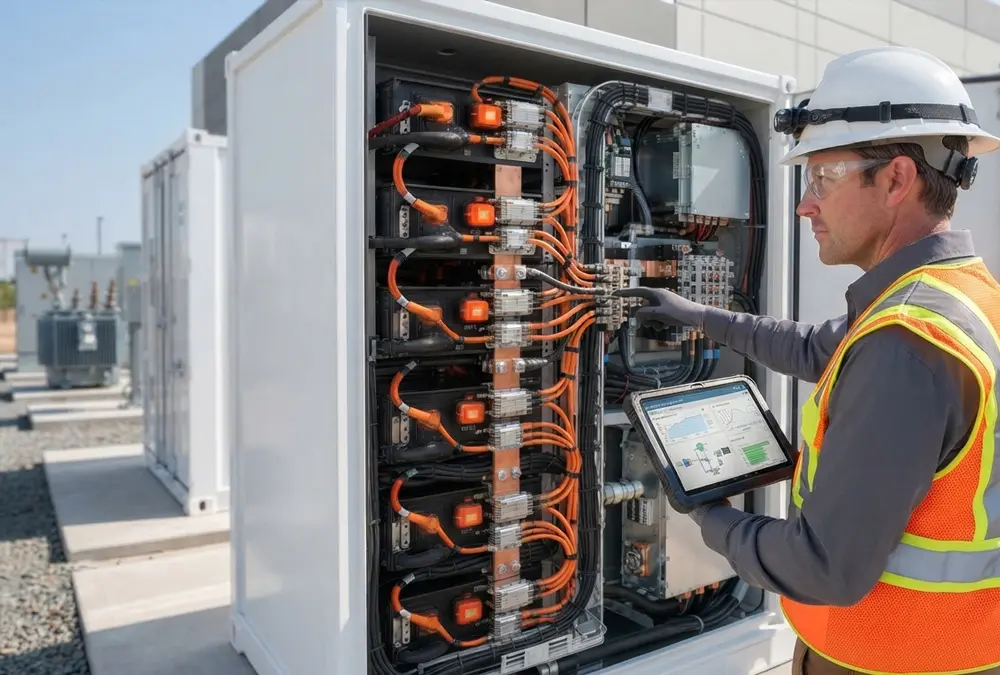
Let’s clear up a common misconception. A real battery energy storage system manufacturer is not just a battery supplier. Anyone can buy cells, put them in a box, and call it a storage system. That is a recipe for project failure. A professional manufacturer handles battery module production, deep PACK integration, and containerized BESS design. They must also manage PCS integration and write the core EMS control code. If your vendor cannot support the physical engineering on-site, you are buying a logistics headache, not an energy asset.
The Hidden Risks of Choosing the Wrong BESS Manufacturer
What happens when you chase the absolute lowest purchase price? You usually end up with rapid capacity fade. Poorly matched cells degrade fast. Bad thermal design leads to local hot spots, which kills system efficiency. Soon, your maintenance costs skyrocket, and the manufacturer is nowhere to be found. A cheap system often means zero local after-sales response. In our experience, saving 10% on upfront CAPEX can easily double your operational costs over a ten-year period.
What Manufacturing Capabilities Should a BESS Manufacturer Have?
Battery Cell Selection and Supply Chain Control
As an experienced energy storage system integrator, we know that everything starts with the cell. You must ask your manufacturer where they get their cells. Are they Tier-1? Can they prove cell traceability? A top-tier manufacturer runs rigorous incoming inspections. They test every batch for capacity, internal resistance, and voltage consistency. If a vendor cannot show you their cell evaluation reports, walk away. Supply chain stability is the only way to guarantee your project stays on schedule.
Advanced Lithium Iron Phosphate Battery Manufacturing Capability
We rely heavily on lithium iron phosphate battery storage technology, and for good reason. LFP cells offer unmatched thermal stability compared to NMC chemistry. They do not catch fire easily, they last longer, and they degrade slowly. This makes them the absolute standard for commercial and industrial bess setups and massive utility scale battery storage solutions. Our manufacturing line uses automated laser welding and automated vision inspection to ensure every module joint is flawless.
Complete Battery Energy Storage System Integration
A reliable system requires perfect coordination between multiple complex layers:
The Core Integration Flow:
Battery Cells & PACK ➔ BMS (Battery Management) ➔ PCS (Power Conversion) ➔ EMS (Energy Management Software) ➔ Containerized Enclosure
If these parts don’t talk to each other seamlessly, your system will trip constantly. Our role as an energy storage solution provider is to make sure the hardware and software speak the same language from day one.
How Does a BESS Manufacturer Ensure Product Quality and Reliability?
Quality Control Throughout the Manufacturing Process
Quality isn’t checked at the end; it is built into every step. We monitor cell grading, module sorting, and PACK insulation tests in real-time. Every weld must pass ultrasonic testing. If a single cell shows a slight temperature deviation during load testing, the entire module is rejected. This strict gatekeeping prevents field failures later.
Factory Testing Before Delivery
We never ship untested gear. Every containerized system undergoes full-factory integration testing (FAT) before it leaves our yard. We run full-capacity discharge cycles, verify communication protocols with the PCS, and simulate grid fault conditions. When the equipment arrives at your job site, it is ready to plug in. This drastically cuts down on expensive field commissioning delays.
Can Customers Visit the BESS Manufacturing Facility?
Absolutely, and you should. We highly encourage factory audits. A real bess supplier will gladly show you their automated production lines, testing chambers, and finished product yards. If a vendor makes excuses about why you cannot visit their workshop, they are likely outsourcing their assembly.
How Safe Is the Battery Energy Storage System From Your BESS Manufacturer?
Multi-Level Battery Safety Protection Design
Safety is not a single feature; it is a multi-layered defense strategy.
- Cell Level: We track voltage and temperature anomalies down to individual cells.
- Module/Rack Level: Smart circuit breakers isolate faults before they spread.
- Container Level: Gas detection coupled with automated clean-agent fire suppression.
Thermal Management and Fire Protection System
Heat is the ultimate enemy of lithium batteries. To combat this, we use active liquid cooling systems. Liquid cooling keeps temperature differences between cells under 3°C, which prevents localized thermal runaways. We also install early-warning off-gas detectors. These sensors catch venting gases minutes before any smoke or fire occurs, giving the control system time to shut down safely.
International Certifications for BESS Manufacturing
Never buy uncertified energy assets. Our systems carry full international certifications, including UL 9540, UL 9540A, IEC 62619, and CE. These are not just badges; they are mandatory requirements for grid connection and securing project insurance in Europe and North America.
Why After-Sales Support Is Critical When Choosing a BESS Manufacturer
A BESS Project Requires Long-Term Technical Support
An energy storage project is a 10 to 15-year commitment. The transaction doesn’t end when the containers are dropped on-site. You need a reliable bess manufacturer with after sales support to handle software updates, capacity calibration, and preventive maintenance. If your manufacturer lacks a dedicated service team, your multi-million dollar asset could sit idle for weeks over a simple sensor failure.
Does Your BESS Manufacturer Provide Local Technical Support?
This is where many overseas brands fail. They have great sales teams but zero local boots on the ground. We solve this by building regional partner networks and keeping critical spare parts in local warehouses. Our remote diagnostics team can log into your EMS within hours to troubleshoot software glitches, saving you expensive dispatch fees.
How Quickly Can the Manufacturer Respond to System Issues?
We guarantee a 24-hour response time for critical system alerts. Our cloud-based EMS constantly monitors system health and flags potential anomalies before they cause a shutdown. If on-site intervention is needed, our field service partners are dispatched immediately.
What Warranty and Lifecycle Support Does a BESS Manufacturer Provide?
Battery Warranty and Performance Guarantee
A standard battery warranty should guarantee both years and throughput. We offer robust performance guarantees that specify exactly how much capacity remains after 5,000 or 8,000 cycles under specified operating guidelines. We stand behind our cell chemistry because we control the manufacturing quality.
PCS, BMS and EMS Warranty Coverage
Make sure you understand who covers the rest of the system. We provide single-point warranty responsibility. If the PCS or the liquid chiller fails, you call us. You do not have to chase third-party component suppliers who will just point fingers at each other.
Maintenance and System Optimization Services
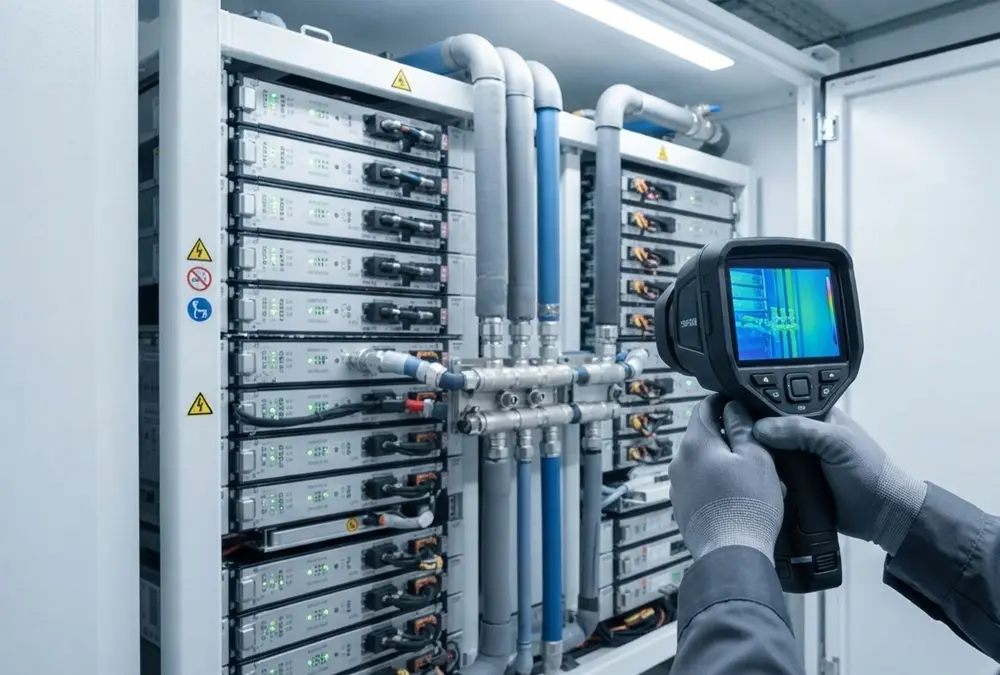
We offer structured service level agreements (SLAs). These include annual physical inspections, thermal imaging checks, and regular software optimizations. Keeping your system firmware updated ensures you are always running at peak round-trip efficiency.
How Does a BESS Manufacturer Support Different Energy Storage Applications?
Commercial and Industrial BESS Applications
For factories and commercial buildings, energy storage is about lowering operational costs. Our systems are programmed for peak shaving and load shifting. By discharging during peak pricing windows, you can slash your demand charges significantly.
Solar Plus Storage Solutions
Integrating a solar battery storage system manufacturer solution allows you to store excess daytime solar energy and use it at night. This maximizes your self-consumption rate and protects your business from sudden grid blackouts.
Utility-Scale Battery Energy Storage Projects
For grid-scale projects, we build heavy-duty, containerized systems designed for frequency regulation and renewable capacity firming. These projects require robust grid-forming inverters and high-voltage integration capabilities to keep the network stable.
How to Evaluate the Total Cost of Ownership From a BESS Manufacturer
Why Lowest BESS Price Does Not Mean Lowest Project Cost
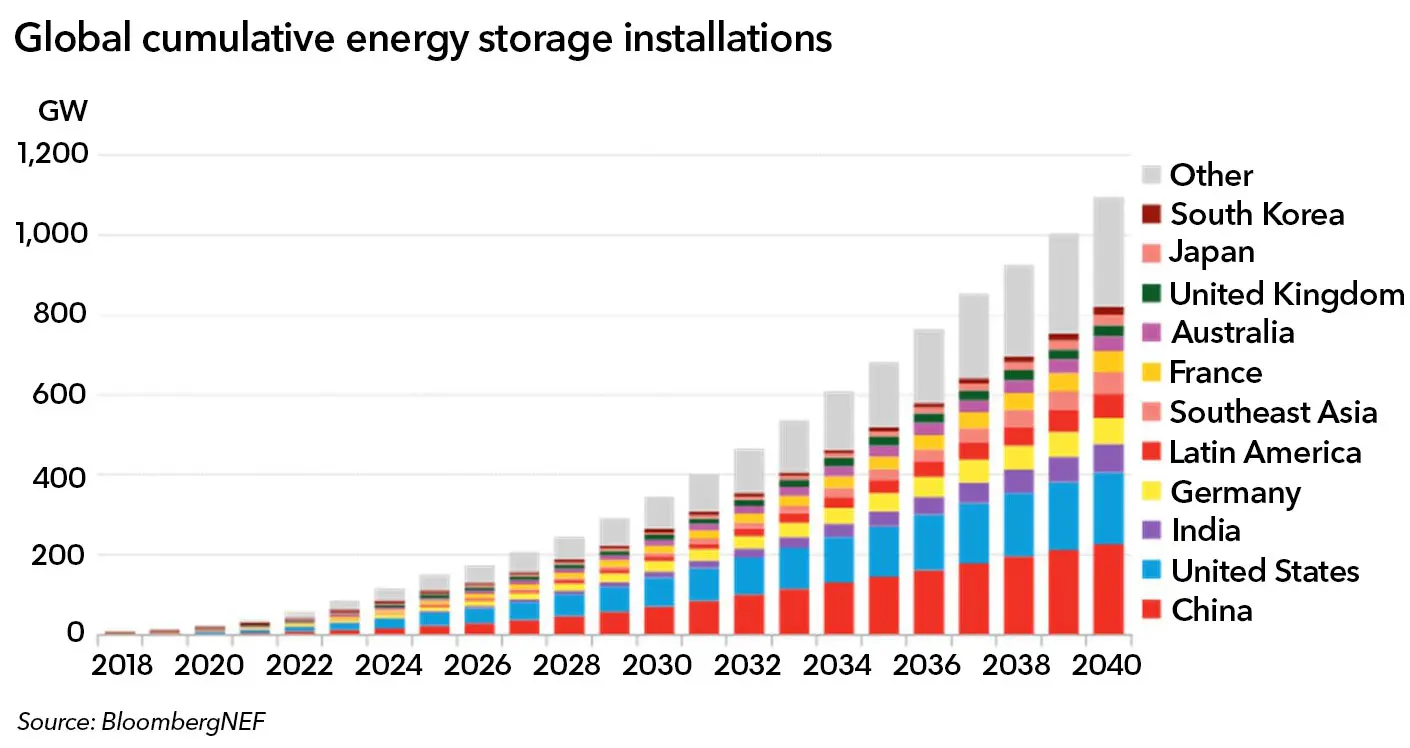
Do not fall into the cheap CAPEX trap. According to the BloombergNEF 2025/2026 Energy Storage Outlook, initial hardware purchase price accounts for less than 65% of the lifetime cost of a BESS project. Poor efficiency, high auxiliary power consumption (from bad HVAC design), and early cell degradation will quickly eat away your projected returns.
Calculate Lifetime Value Instead of Initial Investment
When evaluating bids, look at the levelized cost of storage (LCOS). A slightly more expensive system with a higher round-trip efficiency (RTE) and longer cycle life will yield a much higher ROI over 15 years.
Product Comparison Matrix & Value Delivery
To help you select the right fit for your facility, here is how our standard industrial and commercial product line compares across key operating metrics:
| Product Model / Capacity | Cooling Technology | Target Application | Key Business Benefit |
|---|---|---|---|
| 100 kWh Cabinet | Smart Air Cooling | Small factories, EV charging stations | Low upfront investment, fits tight spaces, easy plug-and-play installation. |
| 261 kWh / 418 kWh Cabinet | Advanced Liquid Cooling | Medium C&I facilities, peak shaving | Delivers longer daily discharge times and handles double-cycling without overheating. |
| 1 MWh – 4 MWh Container | High-Efficiency Liquid Cooling | Large industrial parks, microgrids, utility scale | Maximizes power density, lowers land-use costs, and provides full grid-support functions. |
Why the 261kWh/418kWh Liquid Cooled systems are our bestsellers:
By shifting from air cooling to liquid cooling, cell temperature variance is cut by 50%. For a typical factory running 2 cycles per day, this translates to up to 2 years of extended battery life and 3% higher round-trip efficiency over the life of the system.
Why Choose Us as Your BESS Manufacturer?
Complete BESS Manufacturing and Integration Capability
We own the engineering process from end to end. By controlling battery PACK assembly, structural design, and EMS programming in-house, we eliminate the compatibility issues that plague piecemeal systems. This unified design approach means faster commissioning and more predictable performance.
Advanced LFP Battery Technology With Proven Reliability
Our systems utilize premium LFP chemistry optimized for thermal resilience and cyclic durability. Backed by rigorous quality testing, our configurations have successfully supported commercial and industrial grids worldwide, proving their stability in high-demand environments.
Customized Energy Storage Solutions for Global Projects
We don’t believe in one-size-fits-all hardware. Our engineers analyze your specific load profiles, local utility tariffs, and spatial constraints to build a optimized configuration. Whether you need a 100 kWh indoor cabinet or a multi-megawatt outdoor container, we build to your exact operational requirements.
Frequently Asked Questions About Choosing a BESS Manufacturer
What should I look for when choosing a BESS manufacturer?
Prioritize three pillars: vertical integration capabilities (do they write their own EMS/BMS?), safety certifications (such as UL 9540), and their local technical support infrastructure.
What is the difference between a BESS manufacturer and a BESS supplier?
A manufacturer designs, builds, and warrants the integrated system hardware and software. A supplier is often a reseller or broker who cannot provide direct firmware customizations or long-term engineering support.
How long does a BESS system last?
A high-quality LFP-based system typically lasts between 10 to 15 years, depending on daily cycling frequency, operating temperatures, and depth of discharge.
What battery technology is best for energy storage systems?
Lithium Iron Phosphate (LFP) is currently the industry standard due to its superior safety profile, longer cycle life, and thermal stability compared to cobalt-based lithium chemistries.
Does a BESS manufacturer provide installation support?
Yes, a reputable manufacturer provides detailed civil drawings, wiring schematics, remote commissioning support, and on-site engineering supervision during the critical startup phase.
Contact Our BESS Manufacturer for a Customized Energy Storage Solution
Build Your Next Energy Storage Project With a Reliable BESS Manufacturer