What Are the Benefits of Solar Battery Storage?
Solar battery storage allows homeowners and businesses to store excess solar energy for later use, reducing electricity bills, increasing energy independence, providing backup power during outages, improving renewable energy utilization, and maximizing long-term return on investment (ROI). It also supports peak shaving, load shifting, and grid stability for commercial and industrial applications.
Let’s be honest. If you already have solar panels installed, you are only halfway there. Why keep selling your clean, hard-earned electricity back to the grid for pennies, only to buy it back at triple the price a few hours later? It makes no sense. The real financial magic happens when you pair your array with a high-capacity system. Exploring the benefits of solar battery storage is no longer just an environmental passion project; it is a brutal necessity for survival in an era of skyrocketing demand charges and grid instability. Look at the data: according to BloombergNEF’s 2025 Global Energy Storage Outlook, global energy storage installations reached a record 54GW/122GWh in 2024, and that number is projected to grow by over 20% annually through 2030. Commercial battery storage benefits are driving this boom as businesses fight volatile utility rates. The question isn’t whether you should go solar anymore. The real question you need to look at right now is: Why haven’t you added a battery storage system yet?
Understanding Solar Battery Storage Systems and How They Work
Before we look at the financial returns, let’s look under the hood. A solar power storage setup isn’t just a big pile of batteries wired together. It is an intelligent network of power electronics designed to balance supply and demand in real time.
What Is Solar Battery Storage?
At its core, solar energy storage captures the surplus electricity generated by your photovoltaic (PV) panels during peak sunlight hours. Instead of letting that power bleed back into the local grid, the energy is held in chemical storage until your consumption outpaces your direct solar generation—like during night shifts or cloudy afternoons.
Key Components of a Battery Energy Storage System (BESS)
If you are investing in an industrial battery storage unit, you need to understand the five core pillars that dictate its performance:
- Battery Pack: The muscle. This is where the actual energy lives. Modern systems rely on lithium iron phosphate (LiFePO4 battery) cells because they don’t catch fire easily and last for thousands of cycles.
- Power Conversion System (PCS): The translator. It bi-directionally changes DC power from the panels/battery into AC power for your building, and vice versa.
- Battery Management System (BMS): The bodyguard. It monitors voltage, temperature, and state of charge (SoC) for every cell to prevent overheating and premature degradation.
- Energy Management System (EMS): The brain. This software decides exactly when to charge, when to store, and when to discharge based on real-time electricity tariff tracking.
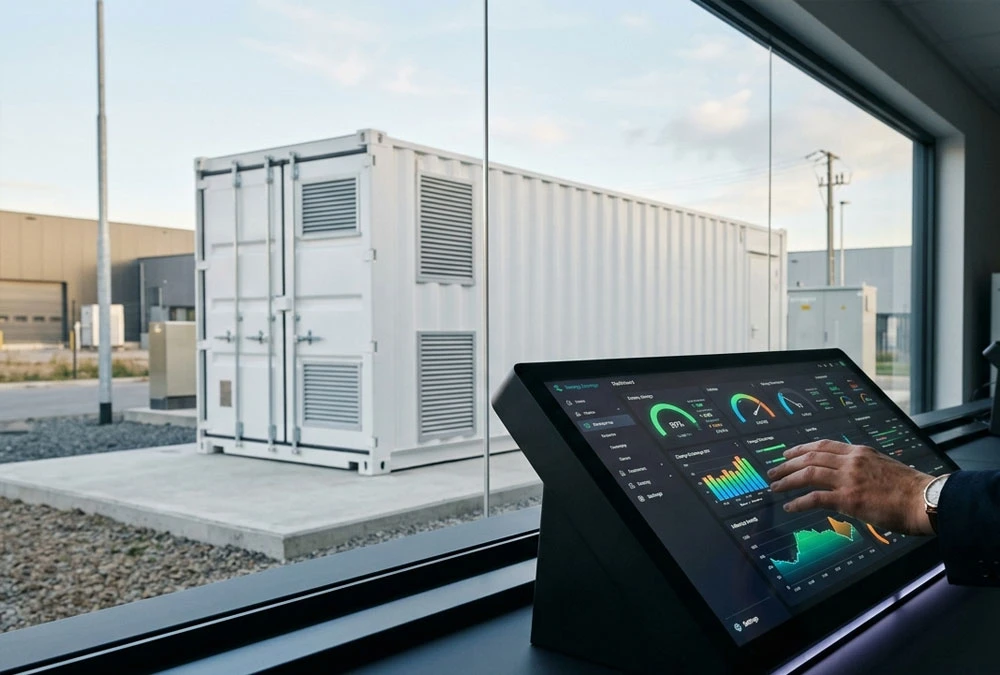
- Monitoring Platform: The dashboard. Gives your operations team a clear view of system health and historical savings data.
How Solar Battery Storage Works
The exact layout depends entirely on your grid relationship. Here is how the three main structural designs handle your power flow:
- Grid-Tied Solar Battery Storage: Your system stays connected to the local utility. The battery optimizes your bills by avoiding peak rates, but it can still pull from the grid if you run through your stored reserves during a long stretch of bad weather.
- Off-Grid Battery Storage: Pure independence. There is no utility safety net here. The home battery storage or industrial setup must be sized perfectly to carry the entire load through consecutive dark days.
- Hybrid Solar Battery Storage: The best of both worlds. It operates inline with the grid for cost optimization but includes automatic physical isolation switches to act as a standalone backup power system during a complete blackout.
Top Benefits of Solar Battery Storage for Homes and Businesses
Why are buyers worldwide making this move? Let’s break down the advantages of solar battery storage systems from a pure, bottom-line perspective.
Lower Electricity Bills Through Self-Consumption
The primary driver for solar plus battery storage benefits is simple: minimizing utility interaction. Without storage, you waste over half of your daylight production because nobody is home, or your factory line isn’t running at maximum speed at noon. Storing that power means you rely on your own zero-cost energy during expensive evening operational hours.
Energy Independence
Relying on old utility infrastructure leaves your operations vulnerable. Embracing a battery backup system isolates your home or business from unpredictable geopolitical energy crises and sudden utility rate hikes that can destroy quarterly budgets without warning.
Reliable Backup Power During Outages
When the grid drops, standard grid-tied solar systems shut down instantly to protect line workers. A dedicated solar backup battery creates an instant microgrid, keeping your critical lines, refrigeration, and security systems online without a single flicker.
Peak Shaving and Load Shifting
For commercial installations, this is where the real solar battery storage savings live. Utilities charge massive premiums for the highest amount of power you draw in a single 15-minute window. Peak shaving uses the battery to supply power during those sudden surges, flattening your demand profile completely.
Time-of-Use Energy Optimization
If your utility uses Time-of-Use (ToU) tariffs, power costs ten times more during late afternoon peak hours. Smart energy storage charges up when rates are lowest (or free from solar) and discharges when rates hit their peak, saving you money without changing your operational habits.
Maximize Solar Energy Utilization
In many regions, grid operators force solar farms and large commercial roofs to curtail (turn off) production during grid saturation. Adding renewable energy storage means you never have to waste a single clean kilowatt-hour again.
Lower Carbon Footprint
True sustainability requires 24/7 green power. Storing afternoon solar and running it through the night ensures your facility is powered by clean energy around the clock, directly boosting your ESG corporate ratings.
Increase Property and Business Value
Real estate assets with built-in, low-carbon microgrids command much higher valuations. You are turning an operational utility expense into an owned, income-generating capital asset that future buyers will gladly pay a premium for.
Benefits of BESS for Commercial & Industrial Applications
For B2B buyers, the decision to install a large-scale commercial battery storage unit isn’t about feeling good about the environment—it’s a critical operational calculation. Let’s look at how large-scale systems protect industrial bottom lines.
Reducing Peak Demand Charges
In heavy manufacturing, demand charges can make up over 50% of your total monthly electricity bill. A 261kWh or 418kWh BESS monitors your factory floor. When heavy machinery starts up, the battery kicks in instantly to absorb that sudden load spike, keeping your utility demand profile flat and saving thousands of dollars a month.
Supporting Continuous Factory Operations
A two-minute voltage drop can ruin an entire batch of precision components, costing hours of cleaning and thousands in lost materials. Industrial battery storage acts as a massive uninterruptible power supply, bridging the gap between grid failure and generator startup smoothly.
Improving Power Quality
Raw grid power is full of imperfections like voltage sags, spikes, and harmonic distortions that degrade sensitive electronic machinery over time. Modern PCS systems actively clean the power coming into your building, extending the life of your equipment.
Supporting EV Charging Infrastructure
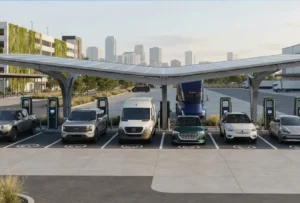
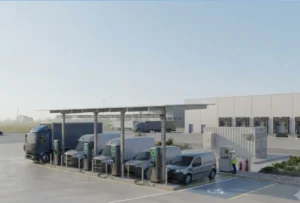
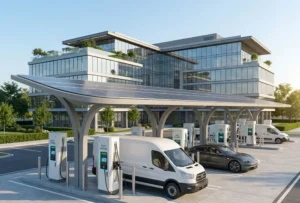
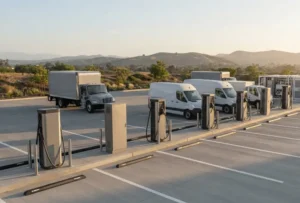
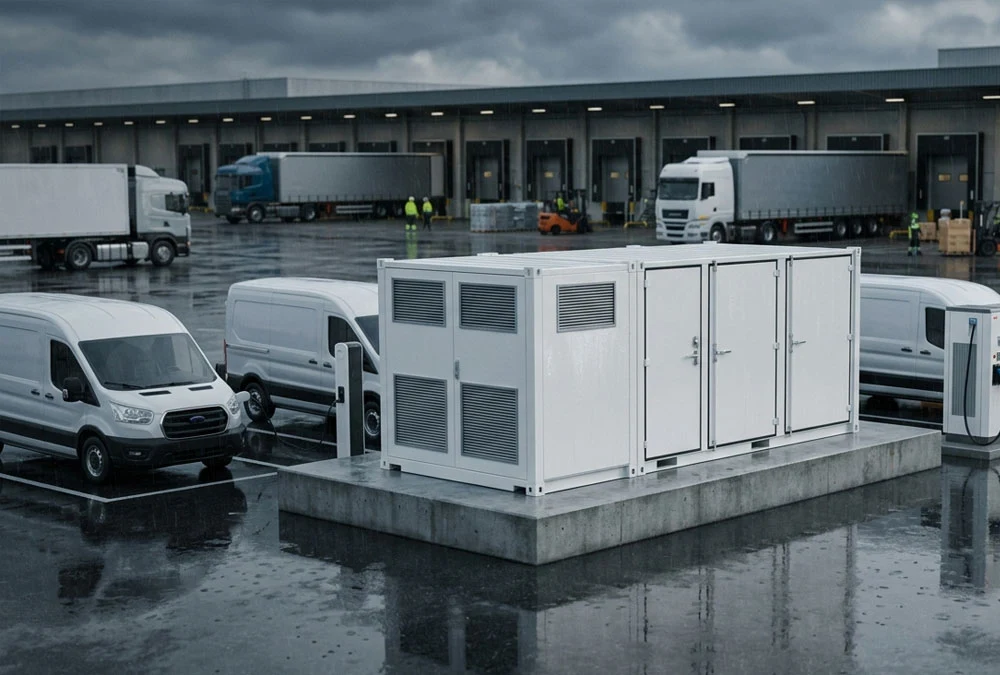
Thinking about adding a fleet of DC fast chargers to your logistics center? The grid infrastructure might not handle it without a costly substation upgrade. Combining your chargers with a BESS allows you to deploy high-power charging setups using your existing utility connection by drawing power directly from the storage buffer.
Participating in Demand Response Programs
During extreme weather, grid operators will pay you premium rates to cut your consumption. With an integrated smart energy storage system, you can drop your grid draw to zero on demand, making a profit by selling your stored energy back to the grid while your factory keeps running at full speed.
Microgrid Integration
A BESS allows you to combine solar, wind, existing diesel generators, and the grid into a single cohesive network. The Energy Management System (EMS) balances these assets automatically, choosing the cheapest and cleanest source of power every second of the day.
Solar Battery Storage Benefits Across Different Industries
How does this work in real-world scenarios? Every sector experiences the benefits of solar battery storage through a slightly different operational lens:
- Manufacturing Plants: Minimizes heavy machine demand spikes and protects automated assembly lines from expensive downtime caused by momentary voltage drops.
- Commercial Buildings: Maximize LEED certification scores, lower baseline daytime HVAC cooling costs, and provide safe backup power for elevators and emergency lighting.
- Data Centers: Offers a zero-emission alternative to traditional diesel UPS systems, lowering cooling power demands through smart thermal scheduling.
- Hotels and Resorts: Guarantees guest comfort during seasonal grid strains while maintaining quiet backup operations without noisy, smelly diesel generators.
- Hospitals: Adds an extra layer of power security for life-critical medical equipment, supporting backup power systems alongside mandated backup generators.
- Agricultural Facilities: Powers irrigation pumps during high-tariff evening hours and secures climate control systems for livestock and indoor farming setups.
- Utility-Scale Solar Farms: Transforms unpredictable solar power into a reliable asset, allowing operators to capture high evening power prices.
Economic Benefits of Solar Battery Storage
Let’s talk numbers. Is solar battery storage worth it? To answer that, you need to understand the structural financial return on investment (solar battery storage ROI).
Your actual savings depend heavily on your location, utility tariff structures, and specific load profile. Here is a realistic look at typical payback periods across different sectors globally, based on the 2026 Lazard Levelized Cost of Storage (LCOS) analysis:
| Sector | Typical System Sizing | Primary Revenue Drivers | Average Payback Period | User Value / Advantage |
|---|---|---|---|---|
| Residential | 10kWh – 30kWh | ToU Arbitrage & Self-Consumption | 6 – 9 Years | Lower monthly bills and gives your family protection during unexpected blackouts. |
| Commercial | 100kWh – 261kWh | Peak Shaving & ToU Optimization | 4 – 6 Years | Cuts demand charges while letting you run afternoon operations without paying peak grid premiums. |
| Industrial | 418kWh – 1MWh+ | Demand Charge Reduction & FFR | 3 – 5 Years | Protects automation lines from voltage drops and avoids expensive infrastructure upgrades. |
Buyer Benefit Note: Moving from a 100kWh system to a 261kWh or 418kWh platform does more than just give you more backup time. It opens up your business to massive economic benefits. Higher capacity allows you to run deep peak shaving strategies across multiple shifts and gives you enough capacity to participate in profitable utility-scale demand response programs.
Environmental Benefits of Renewable Energy Storage
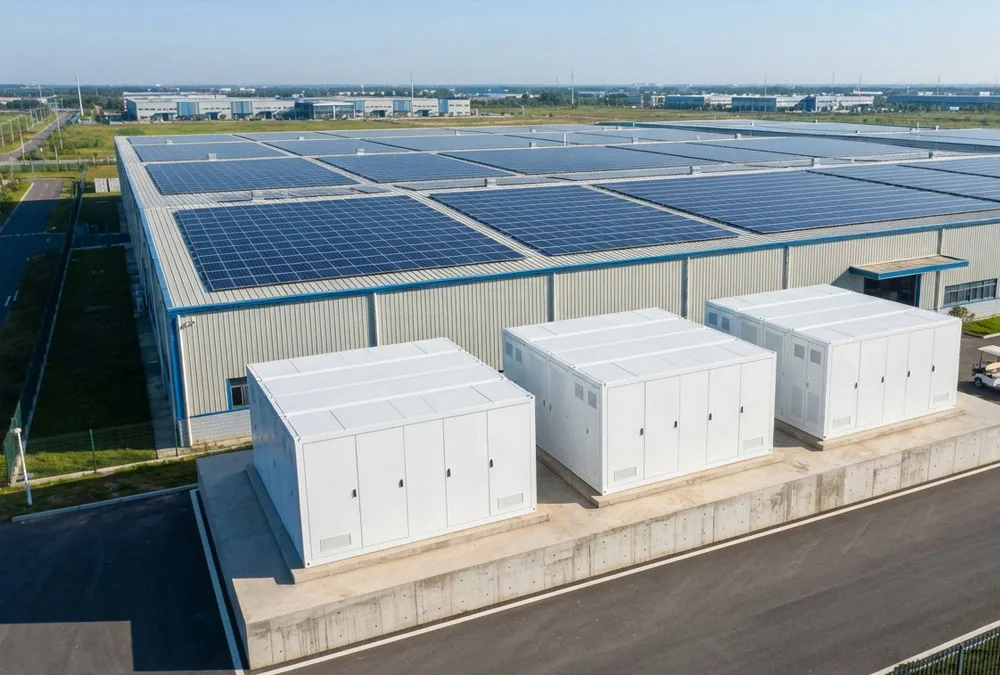
Beyond the financial return, BESS provides the missing link for your company’s ESG targets. Solar panels alone cannot deliver net-zero operations if you still draw coal or gas-fired grid power at night. Renewable energy storage bridges this gap, allowing your company to operate on clean power 24 hours a day, lowering greenhouse gas emissions and stabilizing the local energy ecosystem.
What Factors Affect the Value of Solar Battery Storage?
Not all battery systems deliver the same economic return. Several core technical variables will dictate your ultimate solar battery storage savings:
- Battery Capacity: Measured in kilowatt-hours (kWh). This defines how much energy your system can hold. Buying too little capacity limits your peak shaving, while buying too much hurts your initial ROI.
Battery Chemistry Explained:
- LiFePO4 (Lithium Iron Phosphate): The modern industrial gold standard. They offer incredible thermal stability (no thermal runaway risks), non-toxic materials, and exceptional cycle life (typically over 6,000 cycles at 80% Depth of Discharge).
- Traditional Lithium-Ion (NMC): Higher energy density but carries higher thermal risks and degrades faster under heavy daily cycling.
- Electricity Tariffs: If your local utility charges flat rates across the day and doesn’t impose peak demand fees, your battery savings will come entirely from backup value rather than active bill reduction.
- Smart Controls (BMS & EMS): A basic battery simply charges and discharges based on simple voltage limits. A premium system with integrated EMS continuously tracks utility prices and weather forecasts, adjusting its behavior automatically to save you the most money possible.
Is Solar Battery Storage Worth the Investment?
If you are facing high time-of-use rates, significant peak demand charges, or frequent power disruptions, the answer is a clear, definitive yes. While the upfront investment for commercial solar battery storage can seem intimidating, modern financing options like Power Purchase Agreements (PPAs) and energy storage leasing allow businesses to install these systems with zero down payment, using their monthly utility savings to cover the equipment costs.
How to Choose the Right Solar Battery Storage System
When reviewing bids for your project, look beyond the cheapest price per kilowatt-hour. Make sure your engineering team checks these critical factors:
- Cycle Life: Look for cells rated for at least 6,000 cycles before dropping to 80% of original capacity.
- Safety Certifications: Ensure the complete system holds valid UL9540A fire safety test certifications.
- Scalability: Choose modular enclosures that let you add more battery capacity easily as your facility expands.
- Supplier Engineering Support: Make sure your vendor can handle everything from initial grid connection layout to long-term software support.
Why Choose AnengJi Power for Solar Battery Storage Solutions
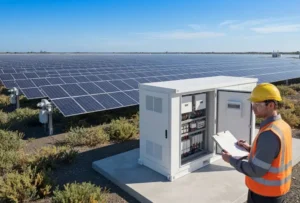
At AnengJi Power, we engineer turnkey industrial energy storage systems designed to deliver long-term safety, reliability, and maximum financial returns. Our advanced LiFePO4 battery platforms feature fully integrated designs that bundle the battery packs, bi-directional PCS, intelligent BMS, and cloud-connected EMS into single, easy-to-install weatherproof enclosures.
Whether you need to optimize a commercial building or secure a heavy industrial plant, we offer precisely engineered configurations built for your scale:
- 100kWh BESS: Perfect for small-to-medium enterprises, commercial properties, and agricultural facilities looking to cut demand charges.
- 261kWh / 418kWh Modular Systems: Optimized for heavy manufacturing plants, high-volume EV charging stations, and mid-sized microgrids requiring robust peak shaving capability.
- 1MWh+ Utility-Scale Enclosures: Engineered for large factories, data centers, and grid-scale solar farms looking for maximum revenue generation.
Frequently Asked Questions About Solar Battery Storage Benefits
Is solar battery storage worth it?
Yes. If you operate in an area with high electricity rates, expensive demand charges, or unreliable grid power, a battery system delivers excellent returns by lowering bills and protecting you from costly operational downtime.
How much money can battery storage save?
Savings depend heavily on your facility’s load profile. Large commercial installations often see their monthly utility bills drop by 30% to 70% by eliminating peak demand charges and shifting their energy usage patterns.
Can battery storage work without solar panels?
Yes. This is called a standalone battery storage system. It charges directly from the grid during cheap off-peak hours and discharges during peak price windows to lower your bills, even without any on-site solar setup.
How long do solar batteries last?
Modern industrial LiFePO4 systems generally last between 10 and 15 years, or around 6,000 full charge-discharge cycles, before their storage capacity naturally drops to 80% of its original rating.
Which battery type is best for solar storage?
Lithium Iron Phosphate (LiFePO4) is the clear winner for stationary storage applications. They are significantly safer, tolerate high temperatures well, and last much longer than traditional NMC lithium-ion or older lead-acid options.
Can battery storage power an entire building?
Yes, provided the system is sized correctly. A custom-engineered BESS can easily support an entire home, office building, or manufacturing center during an extended grid outage.
Is battery storage suitable for factories?
It is highly recommended. Factories benefit immensely from commercial setups because they can shave down large peak demand charges caused by heavy machinery while protecting sensitive automated lines from sudden voltage drops.
Does battery storage increase solar ROI?
Absolutely. By allowing you to use your clean energy on-site instead of exporting it back to the utility for minimal credit, a battery keeps your energy value high and accelerates the overall payback period of your entire solar investment.
Conclusion: Unlock the Full Benefits of Solar Battery Storage
Adding a smart battery storage system turns your solar array from a simple daylight helper into a reliable, 24/7 power asset. For business owners, deploying a high-quality BESS is one of the most effective ways to lower operational costs, protect yourself from unpredictable utility pricing, and meet your corporate ESG goals. Don’t let your clean midday energy go to waste. Partner with an experienced manufacturer that provides fully integrated BMS, PCS, and EMS systems to ensure your energy independence stays safe, reliable, and highly profitable for decades to decades.