Introduction
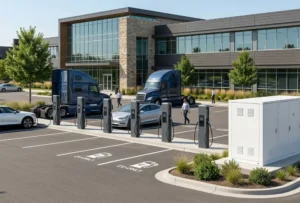
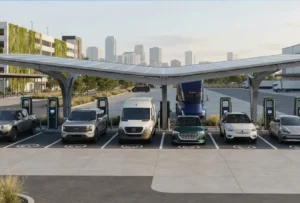
The benefits of commercial ev charging stations extend far beyond merely providing power to electric cars. Commercial property owners face shifting driver expectations and pressing net-zero targets. Installing EV chargers turns parking spaces into active revenue generators. It boosts brand equity and attracts high-spending customers.
Installing charging hardware is a strategic capital asset investment. Modern electric vehicle infrastructure attracts premium demographics. It increases customer dwell time and creates new income streams. Early adopters gain a distinct competitive edge in local real estate.
Many business owners worry about upfront capital expenditure and grid limits. High utility demand charges can intimidate commercial site managers. However, integrated battery storage and smart energy management resolve these barriers. They drastically reduce installation and operating costs.
Why Are Commercial EV Charging Stations Important for Businesses?
Businesses can no longer treat commercial charging infrastructure as an optional perk. Electric vehicle adoption is accelerating globally. Providing reliable charging is becoming a core baseline service for commercial real estate.
Supporting the Rapid Growth of Electric Vehicle Adoption
Global EV sales reached record highs in recent years. The International Energy Agency (IEA) 2026 reports over 55% of new light-duty vehicles in key markets are electrified. EV driver numbers are expanding rapidly. Driver demand for accessible charging infrastructure outpaces public installation speeds.
Properties without charging stations risk losing customers to competitors. Forward-thinking companies build electric vehicle infrastructure early. Early installation secures power capacity from local utilities before local grid congestion limits availability.
Engineering Reality: Most commercial sites have spare capacity for 2 to 4 Level 2 chargers. Beyond that, concurrent charging spikes main breaker limits. A full site audit prevents sudden grid shutdown risks.
Building a Sustainable Transportation Ecosystem
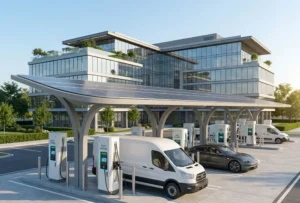
Commercial charging stations accelerate the shift toward clean transportation. Integrating solar PV power with charging units reduces environmental impact. Businesses achieve corporate net-zero targets faster. They signal clear environmental stewardship to investors, tenants, and local communities.
Meeting Customer and Employee Charging Expectations
Modern consumers expect charging availability at everyday destinations. Hotel guests expect overnight Level 2 charging. Retail shoppers prefer fast top-ups while browsing store aisles. Employees value workplace charging as a top-tier employment benefit.
Delivering reliable charging services improves overall customer experience. It strengthens consumer loyalty and boosts employee retention across commercial operations.
Key Benefits of Commercial EV Charging Stations for Businesses
Investing in destination charging offers multi-layered financial and operational advantages. Understanding these commercial EV charging solutions benefits helps business owners build a clear, data-driven business case.
Reduce Carbon Emissions and Support Clean Energy Goals
Commercial EV chargers directly cut Scope 3 greenhouse gas emissions. Connecting chargers to clean energy sources reduces grid reliance during peak demand hours.
Integrating solar EV charging with on-site renewable energy maximizes environmental performance. Property owners can store daytime solar energy in commercial batteries. They can dispatch this green energy when EV drivers plug in during evening peaks.
Improve Customer Experience and Increase Business Attraction
Adding EV charging stations for business owners serves as a powerful marketing beacon. EV drivers rely on navigation apps like Google Maps and PlugShare to plan trips.
Listing your property on digital charger maps drives organic foot traffic. It positions hotels, shopping centers, and restaurants as preferred destinations for high-income drivers.
Increase Customer Dwell Time and On-Site Spending
EV drivers stay longer at locations where they can charge their cars. A 2024 study published in Nature Communications analyzed over 4,000 charging sites. The study proved that installing a public EV charger increases spending at nearby businesses by up to 1.4% annually.
Drivers spend money while waiting for their vehicles to charge. They buy coffee, dine at restaurants, or purchase retail products. This dwell time translates into measurable, recurring revenue growth.
Create New Revenue Opportunities
Property owners can monetize EV charging through multiple channels:
- Direct Charging Fees: Charge drivers per kWh, per hour, or via session fees.
- Subscription Models: Offer discounted rates for loyal members or workplace employees.
- Idle Fees: Charge vehicles staying parked after reaching full battery capacity.
- Media & Advertising: Utilize digital display screens on charging hardware for ad revenue.
These strategies optimize your overall EV charging business model and accelerate project paybacks.
Support EV Adoption by Improving Charging Accessibility
Range anxiety remains a prominent driver concern. Broad commercial charging access removes travel hesitation. Convenient charging networks encourage faster EV adoption in your local community.
How Commercial EV Charging Stations Help Different Industries
Different commercial sectors experience unique advantages of commercial EV chargers based on parking behavior and site usage patterns.
Benefits of EV Charging Stations for Hotels and Resorts
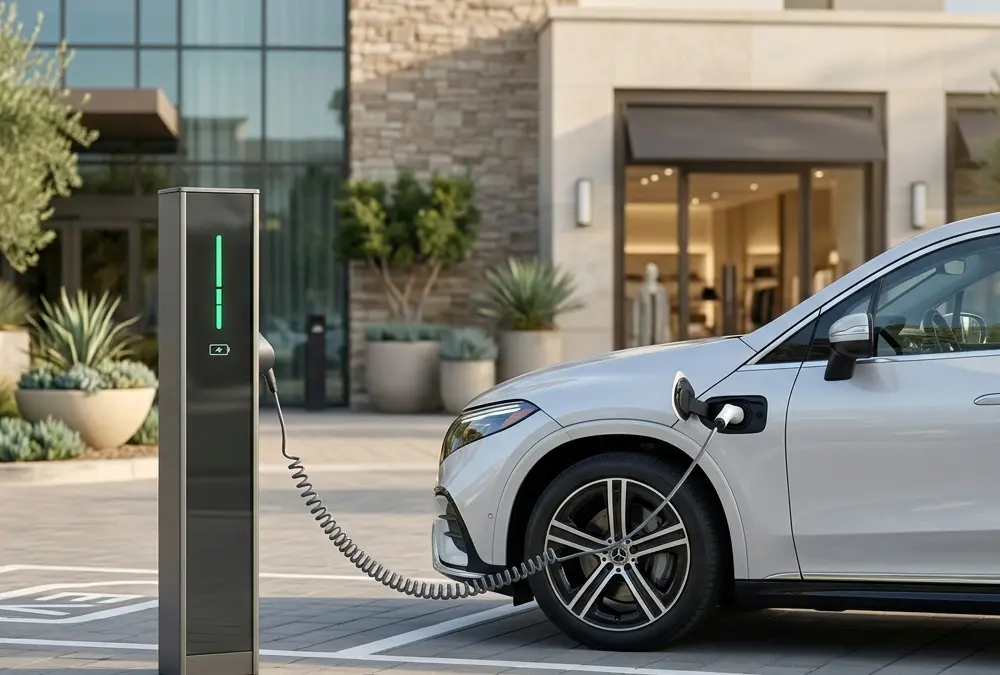
EV travelers prioritize accommodations offering reliable charging. Hotels equipped with Level 2 commercial chargers command higher room rates. They enjoy higher occupancy during off-peak travel seasons.
Guests charge overnight and wake up fully energized. This hassle-free convenience earns five-star reviews and repeat bookings.
Benefits for Shopping Centers and Retail Businesses
Retail property managers face tough competition from e-commerce. Charging infrastructure converts passive parking lots into active destination hubs.
Shoppers spend an average of 30 to 60 minutes charging. This extended stay boosts basket sizes at grocery stores, malls, and retail plazas.
Benefits for Workplaces and Office Buildings
Workplace EV charging helps corporations achieve environmental ESG goals. It serves as a valuable hiring incentive for tech-savvy talent.
Employers can offer free or subsidized daytime charging. This boosts employee satisfaction and encourages full return-to-office participation.
Benefits for Fleet and Logistics Companies
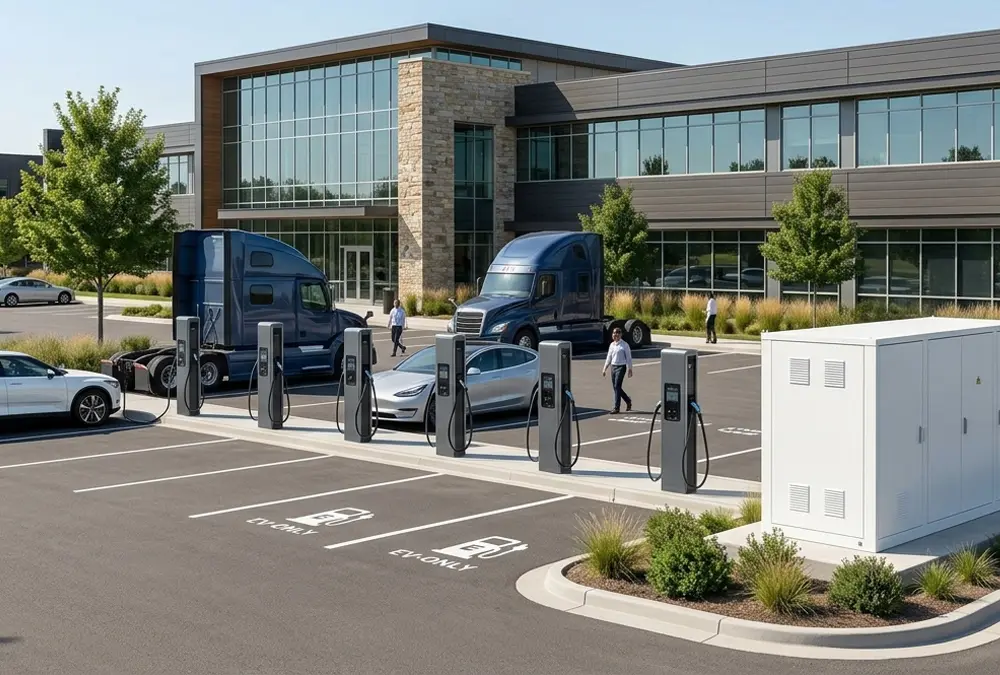
Commercial fleets are transitioning to electric vans and heavy trucks. Fleet charging solutions reduce lifetime fuel costs by over 40% compared to diesel.
Centralized depot charging maximizes fleet uptime. Smart charging software schedules power delivery during off-peak utility rate windows.
Benefits for Parking Operators
Parking garages use EV chargers to increase hourly parking rates. Converting standard stalls into EV-ready spots increases overall asset evaluation. It ensures steady passive income from daily commuters.
Challenges of Installing Commercial EV Charging Stations
While the benefits of commercial ev charging stations are substantial, site owners face real implementation hurdles. Planning ahead prevents budget overruns and operational headaches.
High Initial Installation Costs
Upfront hardware, civil trenching, and electrical transformer upgrades require substantial capital.
Maintenance and Operating Costs
Charger downtime frustrates drivers and damages business reputation. Cable damage and network communication failures require regular upkeep.
Grid Capacity and Power Infrastructure Limitations
Adding multiple high-power DC fast charging station units can overwhelm existing transformer limits. Grid interconnection upgrades are often slow and expensive.
Charging Accessibility and Site Planning Challenges
Poorly placed chargers risk vehicular collisions, restricted accessibility, and inefficient traffic flow.
Commercial EV Charging Station Costs and ROI Considerations
Calculating commercial EV charging station ROI benefits requires evaluating initial capital expenditure against long-term operational savings and revenue generation.
What Factors Affect Commercial EV Charging Costs?
- Hardware Equipment: AC Level 2 chargers vs. high-power DC fast chargers.
- Civil & Electrical Work: Trenching, conduit runs, panel upgrades, and concrete pads.
- Network Software Fees: Annual SaaS subscriptions for billing, monitoring, and load balancing.
How Commercial EV Charging Stations Generate Business Value
Return on investment comes from direct and indirect income streams:
- Direct charging usage revenue.
- Incremental in-store customer spending.
- Higher commercial property rental rates and asset appreciation.
- Federal, state, and utility grants offsetting installation costs.
How Smart Energy Management Reduces Operating Costs
Utility companies impose heavy demand charges on peak power draws. According to U.S. Joint Office data (2026), demand charges can represent 23% to 85% of total operating electricity costs for commercial charging hubs.
Smart energy management system (EMS) software monitors real-time building loads. It automatically throttles charger output when facility demand spikes, preventing costly utility penalties.
AC vs. DC Commercial EV Charging Stations: Choosing the Right Solution
Selecting the correct charger type depends on average vehicle dwell time and site power capacity.
| Charger Type | Power Output | Average Charge Time | Ideal Business Use Case | Value & Advantage to Business Owner |
|---|---|---|---|---|
| Level 2 Commercial AC Charger | 7kW – 22kW | 4 – 8 Hours | Hotels, workplaces, long-term parking garages | Lowest hardware cost. Easy installation with minimal panel upgrades. Keeps guests parked longer. |
| DC Fast Charger (Medium Power) | 30kW – 90kW | 1 – 2 Hours | Retail centers, supermarkets, dining plazas | Balances fast vehicle turnaround with manageable grid connection limits. Drives steady retail turnover. |
| Ultra-Fast DC Charger | 120kW – 480kW+ | 15 – 30 Minutes | Highway service hubs, commercial fleets, logistics depots | Maximizes stall turnover. Serves high vehicle volumes daily, generating high revenue per charger. |
How to Overcome Commercial EV Charging Implementation Challenges
Smart technical planning keeps project costs down and operational efficiency high.
Use Smart Charging Management
An advanced smart EV charging system coordinates power allocation across multiple chargers automatically. It distributes available capacity safely without overloading the building’s main electrical service breaker.
Technical Answer: Dynamic Load Balancing (DLB) throttles amperage instantly across all units. It prioritizes vehicles based on dwell time, preventing blown main breakers.
Integrate Battery Energy Storage Systems (BESS)
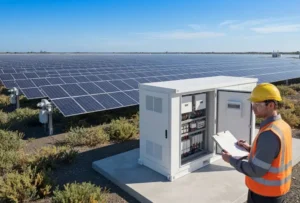
Pairing chargers with a commercial battery energy storage system (BESS) eliminates expensive grid upgrade fees. BESS acts as a power buffer. It charges from the grid during cheap off-peak hours and discharges to EVs during peak charging surges.
Recommended Industrial Storage Solutions:
- 100kWh BESS Enclosure: Ideal for smaller commercial sites using Level 2 or moderate DC fast chargers. It provides reliable peak shaving and prevents demand charge penalties.
- 261kWh Liquid-Cooled BESS: Optimized for commercial plazas and retail centers. Features high energy density, superior thermal safety, and supports multi-charger DC fast top-ups.
- 418kWh Commercial BESS: Built for high-traffic hotels and suburban fleet hubs needing long backup power and continuous heavy fast-charging output.
- 1MWh Containerized BESS: Designed for industrial parks, heavy fleet depots, and highway supercharging centers. Delivers maximum peak-shaving capacity and microgrid resiliency.
| BESS Model | Target Application | Core Technical Features | Direct Value & Benefit to Buyer |
|---|---|---|---|
| 100kWh Outdoor BESS | Small offices, boutiques, light commercial sites | Air-cooled, compact footprint, plug-and-play installation | Prevents grid demand spikes at minimal upfront cost. Fits into tight parking spaces easily. |
| 261kWh Liquid-Cooled BESS | Retail centers, commercial hotels, medium fleets | Liquid cooling, high safety LFP cells, long cycle life | Maintains uniform cell temperature, doubling battery life. Buffers fast chargers without utility grid upgrades. |
| 418kWh Heavy Commercial BESS | Large shopping malls, logistics hubs, industrial sites | Integrated EMS, modular rack design, advanced fire protection | Supports concurrent DC fast charging sessions. Provides emergency facility backup power during utility blackouts. |
| 1MWh Utility-Scale Container | Highway fast-charging hubs, electric truck depots | Containerized architecture, high-efficiency PCS, remote monitoring | Powers heavy ultra-fast charging fleets. Unlocks power grid arbitrage revenue by selling electricity back during peak rate hours. |
Clarifying Battery Technology & Storage Alternatives
Commercial BESS systems utilize Lithium Iron Phosphate (LFP) chemistry. LFP offers superior thermal stability, high fire safety, and 6,000+ cycle lifespans compared to traditional NMC batteries. Sodium-Ion (Na-Ion) alternatives are emerging for cold environments, operating down to -20°C without heating.
Without BESS, businesses face massive utility transformer upgrade fees—a costly bottleneck taking 12 to 18 months in permitting delays. BESS provides instant local power capacity right on site.
Combine Solar Energy with EV Charging
Integrating solar PV generation creates a self-sustaining clean energy ecosystem. Solar panels generate daytime electricity, BESS stores excess power, and chargers dispense clean fuel to EVs. This combination dramatically reduces net operating overhead.
Why Businesses Should Invest in Commercial EV Charging Stations Now
Delaying charger installation carries real long-term business risks.
EV Infrastructure Is Becoming a Competitive Advantage
Early adopters establish their locations as primary charging hubs in local navigation databases. Once customers build a habit of charging at your site, they rarely switch to competitors.
Early Investment Creates Long-Term Business Value
The benefits of commercial ev charging stations compound over time. Capital costs decrease as battery prices fall. Meanwhile, utility grants and government tax incentives offset up to 80% of installation expenses in many jurisdictions.
Why Choose AnengJi Commercial EV Charging Solutions?
AnengJi provides end-to-end commercial charging and energy storage hardware built for demanding commercial environments.
Complete Commercial EV Charging Product Portfolio
We manufacture reliable Level 2 AC chargers (7kW to 22kW) and high-power DC fast chargers (30kW to 900kW). Our equipment is fully certified and built for heavy daily usage.
Customized Charging Solutions for Different Business Scenarios
Our engineering team designs tailored energy architectures for hotels, retail plazas, workplaces, and commercial fleets. We match charger power to your actual site capacity and traffic profile.
Smart Charging and Energy Integration
AnengJi chargers operate on open OCPP standards. They seamlessly integrate with our smart EMS, solar controllers, and liquid-cooled BESS units for automated peak shaving and energy balancing.
Factory Direct Manufacturing and Global Support
As a direct OEM/ODM manufacturer, AnengJi offers competitive factory pricing, stringent quality control, and global technical support throughout your project lifecycle.
Frequently Asked Questions About Commercial EV Charging Stations
What are the benefits of commercial EV charging stations?
Commercial EV chargers attract high-spending customers, increase dwell time, create new charging fee revenues, improve ESG compliance, and enhance commercial property value.
Are commercial EV charging stations profitable?
Yes. Through direct charging fees, increased store sales, ad revenue, and demand charge mitigation via BESS, most commercial site owners achieve full ROI within 2 to 4 years.
How much does a commercial EV charging station cost?
Costs vary widely. Level 2 AC chargers range from $1,000 to $3,000 per unit before installation. DC fast chargers range from $12,000 to over $80,000 depending on kilowatt output.
Do EV charging stations increase business revenue?
Yes. Beyond charging fees, research shows EV chargers increase foot traffic and drive up to a 1.4% increase in nearby customer spending.
Should hotels install EV chargers?
Absolutely. Overnight charging is a deciding factor for EV drivers choosing hotel accommodations. Offering Level 2 charging drives higher occupancy rates and premium room bookings.
What type of EV charger is best for businesses?
Hotels and workplaces benefit most from Level 2 AC chargers. Retail centers, restaurants, and fleet depots require DC fast chargers for faster turnaround times.
Can solar energy power commercial EV charging stations?
Yes. Pairing solar PV arrays with an energy management system and battery storage creates a clean, low-cost solar-powered charging network.
Can battery storage reduce EV charging costs?
Yes. Battery storage systems discharge saved energy during peak rate hours. This process, called peak shaving, avoids costly utility demand charges.
Get a Customized Commercial EV Charging Solution
Ready to upgrade your commercial facility with future-proof charging infrastructure? Contact the AnengJi engineering team today to receive a free site analysis, custom energy layout, and detailed ROI projection.