Introduction
The global energy landscape in 2026 is defined by two converging pressures: the volatile cost of electricity and the mandatory shift toward carbon neutrality. For commercial and industrial sectors, the advantages of battery energy storage system (BESS) installations have transitioned from a luxury “green” initiative to a fundamental pillar of operational resilience. As power grids struggle to integrate a surge of intermittent renewables, businesses that deploy intelligent storage solutions gain a decisive competitive edge. By decoupling the timing of energy generation from energy consumption, organizations can insulate themselves from fluctuating market prices and aging infrastructure, turning power management into a proactive financial strategy.
What Are the Advantages of Battery Energy Storage Systems (BESS)?
Definition of BESS
A Battery Energy Storage System (BESS) is an integrated technical solution that captures energy from various sources—such as the utility grid or on-site renewable arrays—and stores it in electrochemical batteries for later discharge. Unlike traditional backup systems, a modern BESS is a bi-directional asset capable of interacting with the grid in real-time, performing complex tasks beyond simple power delivery.
Core Components: Battery, PCS, BMS, and EMS
To understand the advantages of battery energy storage system technology, we must look at the hardware and software synergy:
- Battery Modules: Usually Lithium Iron Phosphate (LFP) or Nickel Manganese Cobalt (NMC), where the chemical energy is stored.
- Power Conversion System (PCS): The “bi-directional inverter” that converts DC power from the batteries to AC power for the building (and vice versa).
- Battery Management System (BMS): The low-level safety layer that monitors cell voltage, temperature, and State of Health (SoH).
- Energy Management System (EMS): The “brain” of the system that makes high-level decisions on when to charge or discharge based on electricity prices and load demand.
Role in Modern Energy Systems
In today’s decentralized grid, BESS serves as the ultimate stabilizer. It compensates for the “duck curve” in solar generation and provides the high-current discharge required for modern ultra-fast EV charging stations without straining local transformers.
Featured Snippet:
Battery energy storage systems (BESS) provide key advantages such as energy cost savings, peak shaving, backup power, and improved integration of renewable energy through intelligent control systems like EMS.
How Battery Energy Storage Systems Reduce Energy Costs (Peak Shaving & Load Shifting)
One of the most immediate commercial battery storage advantages is the drastic reduction in monthly utility bills through two primary mechanisms: Peak Shaving and Load Shifting.
Peak Shaving Explained
Most industrial utilities charge a “Demand Charge” based on the highest 15-minute window of usage in a month. Even if your average usage is low, a single spike (e.g., starting heavy machinery) can account for 30% to 50% of your bill. BESS detects these spikes and injects stored power to “shave” the peak, ensuring your recorded grid demand stays below a set threshold.
Time-of-Use (ToU) Optimization (Load Shifting)
Electricity prices fluctuate throughout the day. Battery storage cost savings are maximized by charging the system when rates are lowest (usually at night) and discharging the battery to run the facility during high-rate periods (usually late afternoon).
Demand Charge Reduction
By combining these strategies, an optimized industrial energy storage solution can reduce total energy costs by 20% to 40%. In regions with high demand tariffs, the savings alone can justify the capital expenditure within a few years.
Featured Snippet:
BESS reduces electricity costs by storing energy during off-peak hours and discharging during peak demand, lowering both energy bills and demand charges.
Battery Energy Storage System Advantages for Backup Power and Grid Reliability
While cost savings provide the ROI, grid stability and backup power provide the security that modern data-driven businesses require.
Instant Backup vs. Diesel Generators
A traditional diesel generator can take 10 to 30 seconds to reach full output, necessitating an additional Uninterruptible Power Supply (UPS) for sensitive electronics. A BESS with a high-speed PCS can switch to “island mode” in milliseconds, providing seamless backup power solutions for businesses without the noise, emissions, or fuel maintenance of combustion engines.
Power Quality Improvement
BESS helps mitigate voltage sags, swells, and frequency flickers. For precision manufacturing and semiconductor facilities, even a 100ms voltage drop can cause millions in lost production. The BESS acts as a continuous power filter, ensuring a stable sine wave.
Grid Outage Protection
As extreme weather events increase in 2025 and 2026, the benefits of energy storage systems for resilience cannot be overstated. A BESS paired with solar can keep critical operations running indefinitely during long-term grid failures.
| Feature | BESS (Battery Storage) | Diesel Generator |
| Response Time | Milliseconds (<20ms) | 10–30 Seconds |
| Maintenance | Minimal (Digital monitoring) | High (Fuel, filters, testing) |
| Environmental | Zero local emissions | High CO2 and NO2 |
| Revenue | Can generate income | Cost center only |
Advantages of Battery Energy Storage Systems for Solar and Renewable Energy Integration
The primary reason why use battery energy storage system with solar power is the “Mismatch Problem.” Solar generates most power at noon, but industrial demand often peaks in the early morning or evening.
Increase Solar Self-Consumption
Without a BESS, excess solar energy is often sold back to the grid at low feed-in tariffs. By storing that energy on-site, businesses can increase their “self-consumption” rate from 30% to over 80%, maximizing the utility of their solar investment.
Reduce Curtailment
In many 2026 grid environments, utilities “curtail” (force shut down) solar arrays when the grid is oversupplied. A BESS allows you to capture that “free” energy instead of losing it.
Stabilize Renewable Output
Renewable energy integration is difficult because clouds or shifting winds cause rapid fluctuations. A BESS smooths these ramps, providing a “firm” power output that the grid can handle more easily.
Featured Snippet:
BESS enhances renewable energy systems by storing excess solar or wind energy and releasing it when needed, improving efficiency and reducing waste.
Battery Energy Storage System Advantages for EV Charging Stations
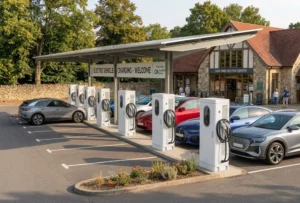
As a specialist in charging infrastructure, I see the battery energy storage system advantages for EV charging stations as the most significant growth area in 2026.
Avoid Expensive Grid Upgrades
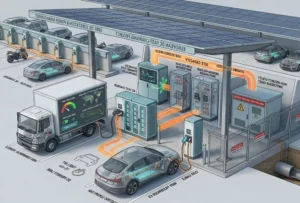
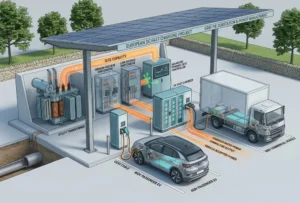
Installing four 350kW ultra-fast chargers requires a 1.4MW connection. Many local grids cannot support this without a multi-million dollar transformer upgrade that can take 2 years to permit. A BESS acts as a “buffer,” charging slowly from a 200kW connection and discharging at 1.4MW during charging sessions.
Reduce Peak Demand Costs
Fast charging events are high-intensity and intermittent. Using smart energy management systems to discharge batteries during charging prevents massive demand charge spikes that would otherwise make the charging station unprofitable.
Enable Fast Charging in Limited Grid Capacity
This “Power Booster” configuration allows gas stations and highway rest areas to offer high-speed charging even in rural areas where the grid is weak.
Advantages of BESS for Commercial and Industrial Energy Management
The benefits of BESS for industrial energy management vary by sector, but the underlying value remains the same: control.
- Factories: Optimize heavy machinery start-up sequences and protect against line-noise-induced motor failure.
- Commercial Buildings: Lower LEED certification costs and reduce the “Carbon Footprint” by shifting load to off-peak (cleaner) energy.
- Data Centers: Replace lead-acid UPS systems with LFP-based BESS that provides both backup and grid-services revenue.
Battery Energy Storage System vs. Traditional Energy Solutions
Comparing BESS vs. traditional energy solutions highlights the shift from “Passive” to “Active” infrastructure.
BESS vs. Diesel Generators
Diesel generators are insurance policies you hope never to use. BESS is a financial tool you use every day. While the initial CAPEX of BESS is higher, the economic benefits of battery energy storage system ROI are driven by daily energy arbitrage, whereas generators are purely a sunk cost.
BESS vs. Grid Expansion
Expanding grid capacity is slow and rigid. A BESS is modular and flexible. If a factory expands, you can simply add more battery racks. If the business moves, the BESS (in its containerized form) can be relocated.
Economic Benefits of Battery Energy Storage Systems: ROI and Payback
Is it worth the investment? The energy storage system ROI is calculated by looking at the “Value Stack.”
Revenue Streams
- Bill Savings: Demand charge reduction and ToU arbitrage.
- Grid Services: In many 2025/2026 markets, utilities pay BESS owners for “Frequency Regulation” (helping the grid stay at 60Hz).
- Incentives: Federal tax credits (like the ITC in the US) can cover 30% to 50% of the system cost.
Typical Payback Period
With current LFP battery prices dropping below $130/kWh at the pack level, the typical payback period for a commercial system is now 3 to 6 years.
Simple Payback Calculation (Plain Text):
Payback Period (Years) = Total System Cost / (Annual Energy Savings + Annual Incentives + Maintenance Savings)
LCOS (Levelized Cost of Storage)
The Levelized Cost of Storage (LCOS) is a 20-year view of the cost per kWh discharged.
LCOS Formula (Plain Text):
LCOS = (Investment Cost + O&M Cost) / (Total Energy Discharged over Life)
The Role of EMS in Maximizing Battery Energy Storage System Advantages
A BESS without a smart energy management system (EMS) is just a box of chemicals. The EMS is what creates the “Advantages.”
AI-Driven Optimization
Modern EMS platforms use machine learning to predict your facility’s load for the next 24 hours based on weather forecasts and production schedules. It decides, down to the second, whether to save the battery for a predicted peak at 4:00 PM or use it for arbitrage at 10:00 AM.
Real-Time Monitoring
Cloud-based EMS allows facility managers to monitor battery health (SoH), temperature, and fire suppression systems from a smartphone, ensuring industrial energy storage solutions remain safe and operational.Limitations of Battery Energy Storage Systems You Should Know
To maintain E-E-A-T (Expertise, Authoritativeness, and Trustworthiness), we must address the challenges of BESS:
- Initial Investment: Despite price drops, the upfront cost for a 1MWh system is still significant.
- Battery Degradation: Lithium cells lose capacity over time. A typical system retains 70-80% capacity after 10 years (approx. 6,000 cycles).
- Safety: While LFP (Lithium Iron Phosphate) is much safer than older chemistries, fire suppression and thermal management remain critical engineering requirements.
When Are Battery Energy Storage Systems the Best Choice?
Ideal Use Cases
- Facilities with Demand Charges > $15/kW.
- Sites with existing or planned solar > 100kW.
- Businesses requiring high power quality or 99.99% uptime.
- EV charging hubs with limited transformer capacity.
Recommended Product for Industrial Use:
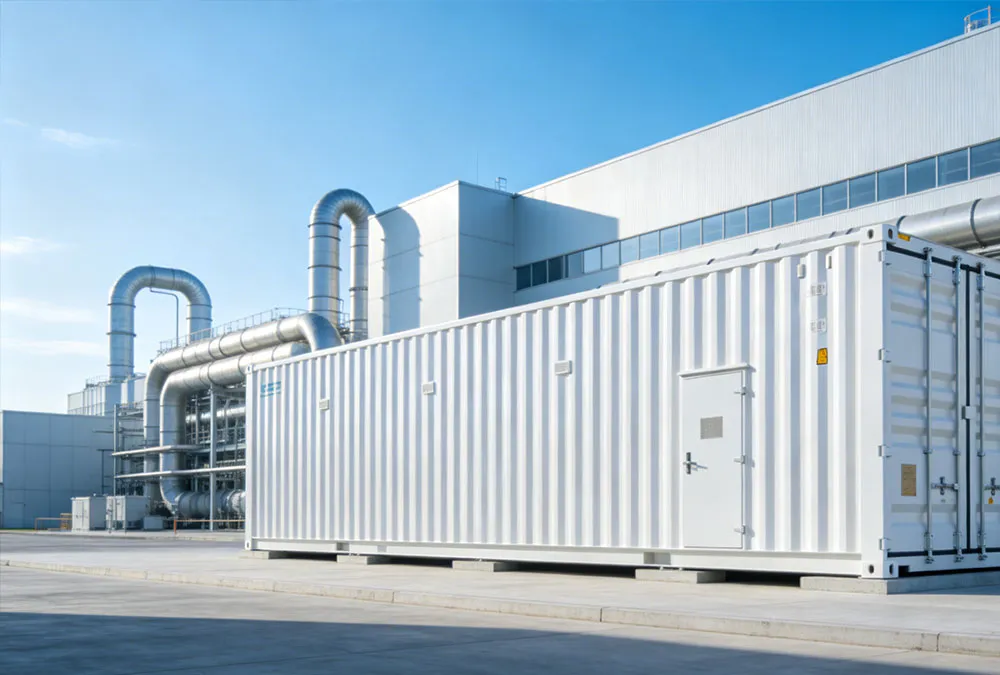
For large-scale industrial sites, I recommend the AnengJi Power-Core 500kW/1.2MWh Liquid-Cooled Container. It utilizes high-density LFP cells and an integrated liquid-cooling system to ensure maximum cycle life even in high-ambient-temperature environments. This system is specifically designed for advantages of battery energy storage system for commercial use, featuring a plug-and-play EMS that integrates seamlessly with existing building management systems.
FAQs About Battery Energy Storage System Advantages
What are the main advantages of BESS?
The core benefits of energy storage systems include cost reduction via peak shaving, reliable backup power, maximized solar utilization, and grid stability services.
Is BESS worth the investment in 2026?
Yes. With the maturation of LFP technology and the increase in volatile electricity pricing, the energy storage system ROI has reached a point where most commercial installations pay for themselves in under 5 years.
How much can BESS save on electricity bills?
Depending on your utility’s tariff structure, a well-managed BESS can reduce total electricity costs by 20% to 40%.
Key Advantages of Battery Energy Storage Systems (Summary)
- Biggest Advantage: Massive cost savings through demand charge management.
- Why Use It? To gain energy independence and protect against grid outages.
- Better Than Generators? Yes, because it generates revenue 365 days a year, not just during an outage.
- Future Proof? Absolutely. As we move toward 2030, BESS is the only way to balance the “Green Grid.”
How to Choose the Right Battery Energy Storage System for Your Business
- Define Your Application: Are you focused on peak shaving, backup, or EV charging?
- Evaluate Components: Look for Tier-1 LFP cells and an EMS with high-granularity AI forecasting.
- Analyze ROI: Request a “simulation” based on your actual 15-minute interval utility data.
- Work with Experienced Suppliers: Ensure your partner understands the local grid codes and fire safety regulations.
Ready to optimize your energy strategy? Contact our engineering team today for a custom load-profile analysis and discover the specific economic benefits of battery energy storage system technology for your facility.