Introduction
Choosing the right contractual framework can completely make or break your renewable energy infrastructure investment. Many asset managers treat epc vs turnkey contracting as identical concepts, but mixing them up creates severe operational blind spots. Selecting an inappropriate project delivery model directly impacts your upfront capital, engineering freedom, and financial liability. If your company lacks an in-house engineering team, choosing the wrong path leaves you vulnerable to massive construction delays. Understanding these structural differences ensures you protect your project margins right from the start.
EPC vs Turnkey Explained: What Is the Difference?
EPC (Engineering, Procurement and Construction) is a project delivery model where a contractor handles the detailed engineering design, equipment procurement, and construction. Turnkey projects expand this scope even further, delivering a completely finished facility that is fully tested, permitted, and ready to operate immediately.
Simply put: EPC focuses closely on the building phase, while Turnkey focuses heavily on the final operational result. In many modern industrial energy installations, a turnkey setup builds upon standard EPC services by adding complete commercial readiness from day one.
What Is an EPC Contract? Understanding Engineering, Procurement and Construction
Defining the Core Pillars of EPC Agreements
An EPC contract creates a single, comprehensive contractual framework for the three primary phases of your utility asset development:
- Engineering: Feasibility studies, precise electrical engineering, civil structural planning, and complex system integration design.
- Procurement: Sourcing tier-one solar panels, central inverters, physical battery systems, and automated control hardware.
- Construction: Onsite civil works, electrical structural installation, high-voltage interconnection setup, and final system testing.
Solar EPC Contract: Efficient but Less Flexible
An epc contract vs turnkey contract debate often highlights the structural stiffness of traditional engineering frameworks. A solar epc contractor operates under a strict, predetermined scope of work. This provides high budget certainty but means any later design changes will quickly trigger expensive change orders.
EPC Projects: Minimal Owner Involvement
This model simplifies asset development by routing all vendor management through a single point of contact. Your project developers avoid the headaches of managing separate equipment suppliers and civil contractors, allowing them to focus entirely on project financing.
EPC 2.0—The Evolution Toward Turnkey Project Delivery
Modern developers increasingly demand more comprehensive operational accountability from their contractors. This shift has pushed traditional providers to expand their standard services into full turnkey energy solutions. These updated frameworks bundle long-term performance guarantees directly with the initial construction agreements.
What Is a Turnkey Project? Understanding Turnkey Solar Solutions
What Does Turnkey Mean in Solar Projects?
The core concept of a turnkey project definition centers on immediate operational readiness. The engineering provider handles everything from initial grid studies to final environmental permits. Once the asset is handed over, your operations team simply turns the key to begin generating clean electricity and revenue.
Key Characteristics of Turnkey Projects
A comprehensive turnkey project delivery method relies heavily on standardized, pre-engineered design blocks. This structural approach simplifies procurement and keeps overall costs highly predictable. It uses integrated project management to accelerate deployment and establish clear, single-point accountability for the system’s final operational performance.
Why Turnkey Solar Solutions Are Growing in Popularity
Companies choose turnkey solar solutions to eliminate the technical complexities of integrating multi-vendor systems. Handing full engineering control to an experienced contractor speeds up project delivery. It removes the stress of technical troubleshooting, allowing you to focus on your core business.
Turnkey Project Advantages: Cost and Time Efficiency
Why Turnkey Projects Often Reduce Total Project Costs
A turnkey project delivery model lowers total project expenses by eliminating unnecessary layers of middle management. The contractor uses established supply chain relationships to source structural components at scale, passing those procurement savings directly down to the asset owner.
How Turnkey Projects Accelerate Project Timelines
Combining the design and construction phases within a single firm eliminates long, drawn-out bidding delays. Engineering teams can order long-lead electrical items like transformers while civil crews are still grading the site, significantly shortening the timeline to commercial operation.
Design-Bid-Build vs Turnkey: Two Opposite Project Delivery Models
What Is Design-Bid-Build (DBB)?
Design-Bid-Build separates project delivery into distinct, independent phases. The project owner hires a third-party consultant to create a complete engineering blueprint. Once that design is finalized, the owner opens a separate competitive bidding process to select a construction contractor.
Why Design-Bid-Build Is the Opposite of Turnkey
These two approaches represent opposite strategies for handling energy infrastructure risk allocation and construction management:
| Comparison Factor | Design-Bid-Build (DBB) | Turnkey Project Delivery |
|---|---|---|
| Design Responsibility | Owner retains full design liability | Contractor assumes complete liability |
| Procurement Management | Owner splits hardware packages | Contractor manages single-source supply |
| Construction Contracts | Separate independent construction awards | Single consolidated contract structure |
| Risk Allocation | Owner absorbs design gaps and errors | Contractor covers performance issues |
| Project Complexity | High (Requires heavy internal coordination) | Low (Contractor handles all logistics) |
When Design-Bid-Build May Still Be Appropriate
Public sector energy projects often require Design-Bid-Build frameworks to comply with strict municipal procurement laws. This model also suits unique facilities that need highly customized designs, where keeping full engineering control is more important than fast deployment.
EPC vs Turnkey: Main Differences in Project Delivery Models
Responsibility Allocation
In standard EPC arrangements, the developer remains responsible for securing land rights and managing grid interconnection approvals. A full turnkey delivery model shifts these early development risks to the contractor, requiring them to deliver a fully permitted, grid-connected asset.
Project Risk Allocation
The choice between epc vs turnkey project delivery method comes down to your company’s risk tolerance. Turnkey contracts shift construction and performance risks to the contractor. If the system fails to hit its guaranteed power output, the contractor faces direct financial penalties.
Cost Structure Comparison
Traditional EPC pricing structures often use milestoned progress payments alongside floating allowances for specialized site work. Turnkey pricing typically relies on a firm, fixed price contract model that bundles all engineering and permitting costs into a single lump sum.
Owner Involvement Requirements
EPC developers frequently participate in regular engineering reviews and equipment selection approvals. Turnkey projects require very little owner involvement. Your project management team simply monitors high-level milestones, leaving the daily technical details to the contractor.
Operational Readiness at Handover
An EPC contract concludes when the physical installation passes its basic mechanical completion tests. A turnkey project stays under the contractor’s control until the asset receives its official utility operating permits and is fully ready to generate revenue.
EPC vs Turnkey Comparison Table
Side-by-Side EPC vs Turnkey Comparison
This reference matrix highlights the key operational differences between these two primary energy asset delivery models:
| Factor | EPC Contracting Model | Turnkey Contracting Model |
|---|---|---|
| Contractual Scope | Engineering + Sourcing + Construction | Complete Ready-to-Operate Solution |
| Owner Involvement | Medium (Requires engineering review) | Low (Focuses on output results) |
| Design Flexibility | Higher (Allows for owner input) | Lower (Uses standardized designs) |
| Risk to Owner | Moderate (Retains permitting risk) | Low (Contractor assumes development risk) |
| Time Efficiency | High (Structured delivery) | Very High (Accelerated paths) |
| Cost Predictability | Good (Subject to change orders) | Excellent (Guaranteed fixed budget) |
| Operational Readiness | Partial (Requires owner activation) | Full (Ready to generate immediate power) |
| Performance Guarantees | Limited to individual components | Strong system-wide performance warranties |
Can My EPC Contractor Provide Turnkey Solutions?
When EPC Contractors Also Offer Turnkey Services
Many advanced solar epc companies have evolved into comprehensive turnkey solar solutions providers. They bundle grid interconnection studies, civil permitting, and long-term operations and maintenance (O&M) services into a single, cohesive project development package.
Questions to Ask Before Selecting a Contractor
Before signing a contract for your upcoming renewable energy projects, ask your provider these four critical qualifying questions:
- Do they offer system-wide performance guarantees backed by clear financial penalties?
- Are long-term O&M services and proactive monitoring included in the base proposal?
- Will their team manage the entire local utility grid connection process?
- Does the contract cover all final system commissioning and environmental compliance permits?
Best Applications for EPC Projects
Large Utility-Scale Solar Projects
Multi-megawatt utility-scale solar epc vs turnkey evaluations often favor traditional EPC frameworks. Large developers typically have their own engineering teams and want to select specific inverter suppliers to optimize their long-term clean energy portfolios.
Complex Industrial Facilities
When adding clean energy assets to complex manufacturing plants, a traditional EPC framework provides the design flexibility needed to integrate with existing infrastructure. It allows engineers to adapt layouts without triggering expensive contract penalties.
Projects Requiring Greater Owner Control
If your company has specific internal technical standards or uses specialized procurement lists, the EPC model fits perfectly. It gives your engineering team full control over every component selection, ensuring the final build matches your exact specifications.
Government Infrastructure Projects
Government infrastructure projects usually require high transparency and strict oversight at every stage. The detailed milestones of an EPC model make it easier to satisfy municipal compliance audits and public reporting requirements.
Advantages of Choosing EPC
The EPC model provides excellent design flexibility and allows you to source hardware directly from preferred vendors. This transparency makes it simple to modify the project scope during early engineering phases without incurring massive penalty fees.
Potential Drawbacks of EPC
This model requires significant internal project management resources to coordinate the various project phases. Any gaps between the initial designs and final construction can lead to unexpected cost increases and scheduling delays.
Best Applications for Turnkey Solar Solutions
Commercial and Industrial Solar Projects
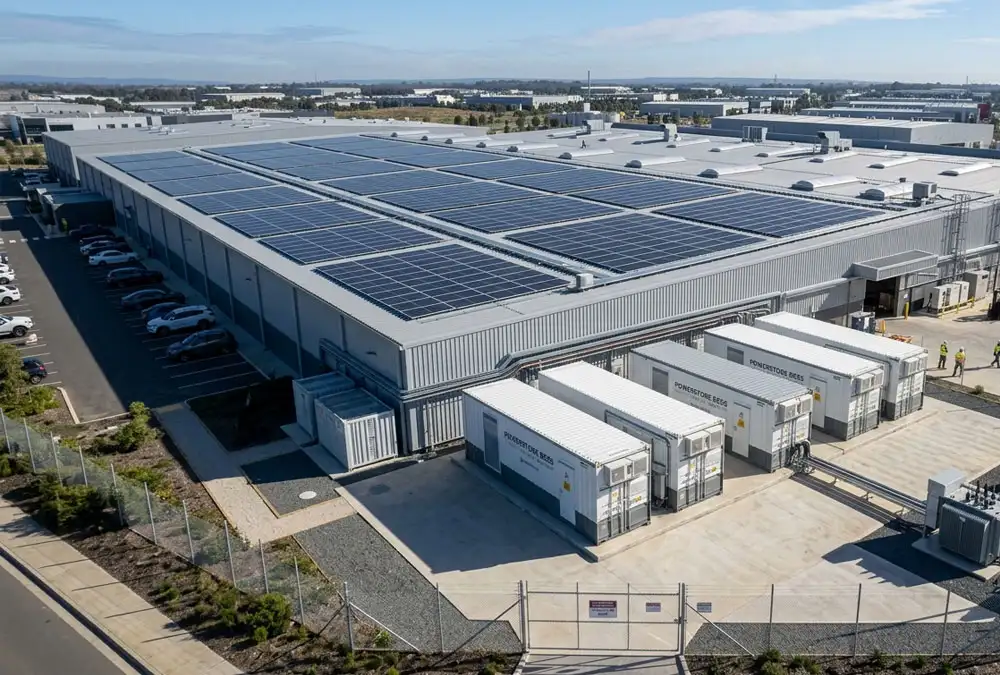
Factory owners and commercial real estate developers rarely maintain in-house energy engineering teams. Choosing solar battery storage systems for commercial buildings through a turnkey contract ensures they receive a fully functional asset without distracting from core operations.
Battery Energy Storage Systems (BESS)
Battery integration requires deep technical expertise in power electronics and safety controls. For large-scale projects, utilizing a specialized battery storage epc vs turnkey projects framework ensures the complex systems function perfectly together under a single performance warranty.
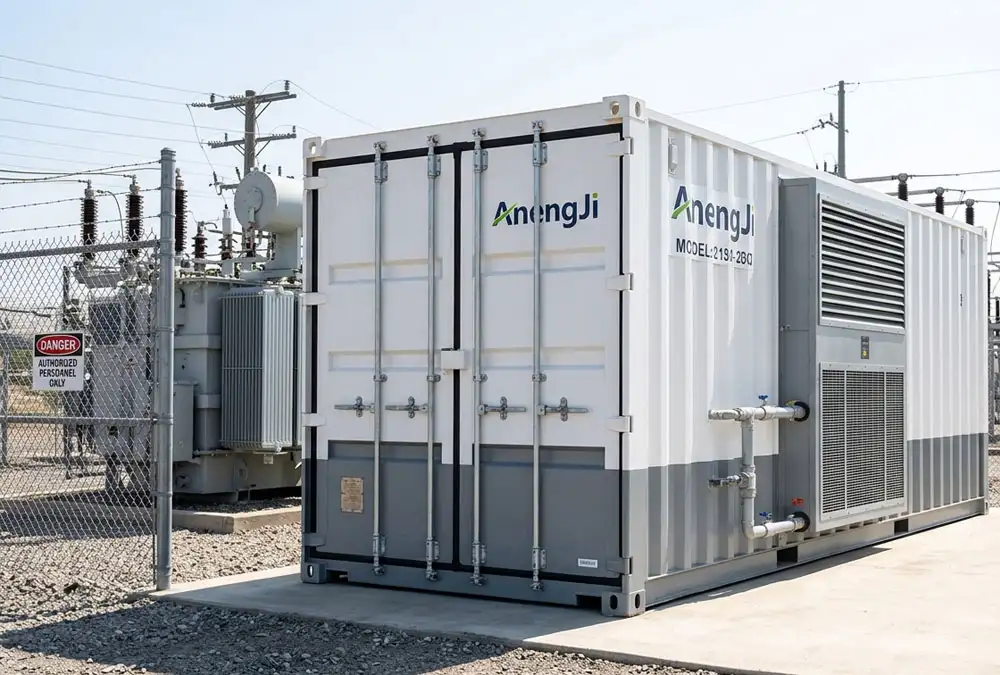
Industrial Storage Product Spotlight: For heavy-duty industrial applications, we recommend deploying the AnengJi liquid-cooled commercial BESS series. This rugged system integrates tier-one LFP technology, an automated bi-directional PCS, and a smart EMS into an IP55-rated outdoor enclosure. This pre-engineered setup simplifies site installation and ensures reliable peak shaving and backup power performance.
Deconstructing Battery Chemistries and Alternative Systems
To help you choose the right energy storage technology, it is important to understand the primary battery chemistries and alternative systems available on the market today:
- Lithium Iron Phosphate (LiFePO4 / LFP): The leading standard for commercial energy storage. LFP technology offers exceptional thermal stability and long cycle lives, resisting overheating even under heavy daily use.
- Nickel Manganese Cobalt (NMC): A high-density lithium chemistry that packs more power into less space but requires active cooling systems to maintain safety.
- Lead-Acid (AGM/Flooded): An older, low-cost battery type with a short lifespan and heavy maintenance needs. It is rarely used in modern industrial installations.
- Flow Batteries (Alternative System): A non-degrading storage technology that uses external liquid electrolyte tanks. They are bulky but ideal for long-duration utility grid stabilization.
- Hydrogen Fuel Cells (Alternative System): A clean storage alternative that converts hydrogen gas into electricity. They offer long-term energy storage but have lower round-trip efficiency than battery systems.
EV Charging Infrastructure
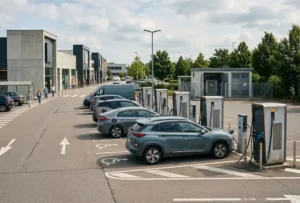
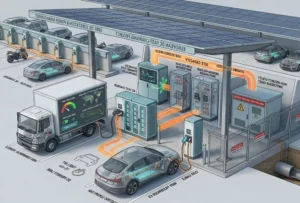
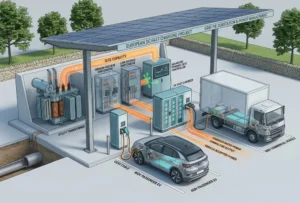
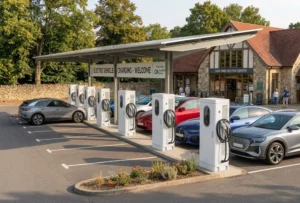
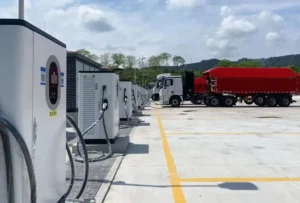
Deploying high-power DC fast-charging plazas requires complex grid upgrades and specialized safety permitting. A turnkey project delivery model ensures all civil installation, electrical protection, and network configurations are managed smoothly by an experienced team.
Distributed Energy Projects
Small-scale community solar arrays and regional microgrids benefit significantly from turnkey delivery. Standardizing these designs lowers overall development costs and helps speed up local utility connection approvals.
Advantages of Turnkey Projects
Turnkey contracts accelerate your project timelines and lower development risk by creating a single point of accountability. They provide fixed, highly predictable budgets that simplify financing and speed up your overall return on investment.
Potential Drawbacks of Turnkey Projects
This model offers less flexibility for making custom design changes once the contract is signed. Your project success depends heavily on the technical expertise and financial stability of your chosen contractor.
Which Model Saves More Money: EPC or Turnkey?
Short-Term Cost Comparison
At first glance, a turnkey contract quote can look higher than a standard EPC bid because the contractor includes the costs of managing permitting and grid connection risks. However, this fixed pricing protects you from unexpected field expenses later on.
Long-Term Cost of Ownership
Turnkey systems often deliver lower total ownership costs over time because they include comprehensive system-wide performance warranties. These robust guarantees protect your business from expensive equipment adjustments during the critical early years of operation.
When EPC May Be More Cost-Effective
If your company maintains an experienced internal engineering team that can manage local utility approvals and civil permitting, an EPC contract can save you money. It allows you to handle those development phases yourself and avoid contractor risk premiums.
When Turnkey Delivers Better Financial Value
For most commercial enterprises, a turnkey contract delivers better overall financial value. It prevents expensive project delays, avoids change-order disputes, and ensures your system begins generating electricity and saving money as quickly as possible.
Which Model Saves More Time: EPC or Turnkey?
Typical EPC Project Timelines
Traditional EPC schedules often face delays during the handoffs between separate design reviews, hardware procurement loops, and final site construction phases, especially if any design issues pop up in the field.
Typical Turnkey Project Timelines
Turnkey projects move quickly because the engineering and construction teams work concurrently within a single firm. Fast-tracking procurement and using pre-approved design templates allow these systems to hit milestones much faster.
Factors Affecting Project Duration
The time required to reach commercial operation depends heavily on local permitting speeds, equipment production lead times, and utility grid interconnection schedules. A turnkey contractor handles these complex steps smoothly to avoid costly project delays.
Why Turnkey Projects Often Reach Commercial Operation Faster
Turnkey solar plus storage turnkey solutions eliminate the typical communication gaps that occur between separate engineering firms and construction crews. The unified workflow speeds up final commissioning, allowing your facility to connect to the grid and start cutting costs sooner.
How to Choose Between EPC and Turnkey for Solar and Energy Storage Projects
Evaluate Your Internal Project Management Capabilities
Be honest about your team’s actual engineering experience. If your staff does not routinely manage utility-scale high-voltage projects, choosing a turnkey contractor is the safest move. It protects your capital from costly rookie mistakes.
Assess Project Complexity
Simple rooftop solar installations and standard outdoor battery enclosures are a great fit for turnkey delivery. If your project requires complex structural modifications to an old factory, an EPC approach provides the design flexibility needed for a safe integration.
Determine Your Risk Tolerance
If your investment team requires strict cost predictability and guaranteed output metrics to secure project financing, choose a turnkey framework. It shifts the technical risks away from your balance sheet and onto the contractor.
Consider Financing Requirements
Commercial lenders prefer financing projects with a single point of technical accountability. Turnkey contracts with built-in performance warranties offer the clear security that banks look for, making it easier to lock in favorable loan terms.
Define Your Desired Level of Control
If your team wants to choose specific electrical component brands, an EPC framework provides that freedom. If you care more about getting a fully functional, high-performance system on time, let a turnkey specialist handle the technical details.
Frequently Asked Questions About EPC vs Turnkey
Is EPC the same as Turnkey?
No. EPC covers the core engineering, procurement, and construction phases, while Turnkey provides a more complete service that handles all permitting, grid connection, and testing to deliver a fully operational system.
Which is better, EPC or Turnkey?
It depends on your project goals. EPC works well for large utility projects that need custom design flexibility, while Turnkey is ideal for commercial businesses looking for fast deployment and low risk.
Why are Turnkey projects considered lower risk?
Turnkey contracts shift the responsibility for design errors, permitting delays, and performance shortfalls to the contractor, protecting the owner from unexpected expenses.
Can an EPC contractor provide Turnkey services?
Yes, many experienced solar EPC companies offer full turnkey services by bundling early site development, permitting, and long-term O&M services into their base contracts.
Which model is cheaper?
EPC may have a lower initial contract price, but Turnkey often saves more money overall by eliminating change orders, reducing project delays, and lowering internal management costs.
Which model is faster?
Turnkey is typically faster because it uses a unified, parallel workflow for design and construction, which eliminates bidding delays and speeds up final grid connection.
What is the best option for solar and BESS projects?
For most commercial and industrial businesses, a turnkey project delivery model is the best choice because it simplifies the complex process of integrating solar panels with battery storage systems.
Conclusion: EPC vs Turnkey—Choosing the Right Strategy for Project Success
Key Takeaways
Choosing the right project delivery model depends on balancing your need for design control against your timeline and risk tolerance:
- Choose EPC When: You want complete control over component selection, have a skilled internal engineering team, and are building a complex utility project.
- Choose Turnkey When: You want a fixed budget with minimal risk, need the system running quickly, and want a single warranty covering the entire system’s performance.
As commercial solar, battery storage, and EV charging projects continue to expand globally, utilizing a comprehensive turnkey model is becoming the preferred strategy for businesses looking for predictable, hassle-free clean energy upgrades.
For more information about AnengJi Power solar, battery storage and EV charging solutions, visit: anengjienergy.com. Let our team design a reliable, high-performance energy system tailored to your business needs.