Introduction
Relying on old utility grids destroys factory profit margins. Volatile energy rates make traditional budgeting impossible. Smart operations managers are fighting back by installing industrial solar battery storage systems right now. Waiting around for utilities to fix capacity issues leaves your production lines completely vulnerable. Recent energy transition analyses show onsite storage stops demand charge inflation immediately. This advanced infrastructure delivers deep energy independence while slashing your operational power costs from day one.
Industrial Solar Battery Storage Explained: What Is an Industrial Solar Battery Storage System?
Industrial Solar Battery Storage is a system that combines solar photovoltaic (PV) generation with battery energy storage to store excess solar energy and use it when needed. It helps industrial facilities reduce electricity costs, improve energy reliability, maximize solar self-consumption, and increase energy independence.
What Is Industrial Solar Battery Storage?
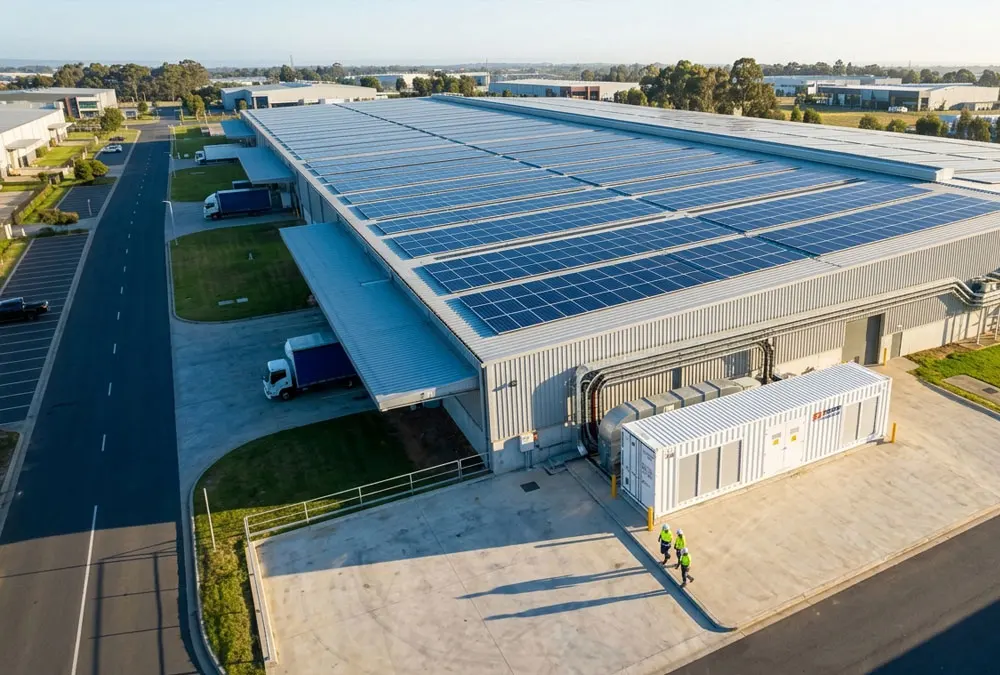
This setup pairs industrial solar and battery storage solutions to create a private microgrid for your plant. Standard solar installations waste power when generation beats local consumption. Adding a high-capacity battery system captures that clean energy instead of letting it slip away. Typical industrial solar bess solutions handle heavy loads, scaling anywhere from 500 kWh to several megawatt-hours.
How Industrial Solar Battery Storage Works
The system runs smoothly through four highly automated, real-time operating steps:
- Solar Generation: Onsite roof or ground arrays convert sunlight into clean DC electricity.
- Excess Storage: Bidirectional inverters push extra daytime solar power directly into heavy-duty battery banks.
- Smart Discharge: The system discharges stored power instantly when heavy machinery cycles on or utility rates climb.
- Intelligent Dispatch: The software monitors factory load patterns 24/7 to pick the cheapest source of power.
Industrial Solar Battery Storage vs Traditional Solar Systems
Traditional solar systems shut down completely during grid blackouts to protect utility repair crews. They cannot lower your evening electricity bills either. Upgrading to commercial and industrial solar battery storage fixes those core vulnerabilities. Storage keeps your plant running smoothly during outages and lets you use cheap solar power all night long.
Why Industrial Solar Battery Storage Is Important for Energy Cost Reduction
Reducing Peak Demand Charges Through Peak Shaving
Utilities penalize factories with heavy surcharges based on their single highest 15-minute consumption spike each month. These demand fees often make up half of your entire utility bill. Deploying industrial solar battery storage flattens those sharp demand spikes automatically. The batteries inject power the moment your machinery starts up, keeping your metered grid draw safely below expensive thresholds.
Load Shifting and Time-of-Use Electricity Optimization
Time-of-Use tariff structures charge massive premiums during afternoon and evening peak hours. Storing clean solar energy generated during the quiet morning hours lets your factory bypass those premium rates entirely. Shifting your load to stored power protects your plant from peak pricing and maximizes daily energy arbitrage savings.
Improving Solar Self-Consumption Rates
Without storage, factories often export excess solar energy back to the grid for low net-metering credits. This wasteful solar curtailment hurts your project economics. Storing that power onsite increases your industrial solar self-consumption rate significantly. Using your own green energy avoids expensive retail grid power and speeds up your project payback.
Benefits of Industrial Solar Battery Storage for Manufacturing Facilities
Lower Electricity Costs
Operating an industrial solar plus storage system drops your monthly utility costs across multiple fronts. Combining automated peak shaving with strategic time-of-use load shifting slashes both active consumption fees and fixed demand surcharges, keeping your operational overhead highly predictable.
Enhanced Energy Independence
Relying less on national grid operators gives your business total control over its energy supply. Onsite storage keeps your production schedules safe from rolling blackouts and regional capacity failures, building true long-term energy security for your manufacturing assets.
Backup Power and Business Continuity
A sudden five-minute power drop can stall automated assembly lines, ruin product batches, and cost thousands to clean up. Fast-acting energy storage switches over in milliseconds to protect critical plant loads. This continuous backup power prevents costly manufacturing restarts and protects delicate industrial machinery.
Sustainability and ESG Advantages
Deploying a comprehensive industrial renewable energy solutions setup helps your company hit strict corporate sustainability goals. Replacing fossil-fuel grid power with stored solar energy directly lowers your Scope 1 and Scope 2 emissions, strengthening your official ESG reporting for corporate clients.
Industrial Solar Plus Storage Applications Across Different Industries
Manufacturing Facilities
Heavy automotive plants, chemical processors, and electronics manufacturing sites run continuous automated equipment with intense power needs. Installing an industrial solar battery storage for factories setup protects these sensitive processes from voltage drops. It lowers extreme energy consumption costs without forcing you to alter your daily production shifts.
Industrial Parks and Logistics Centers
Massive logistics hubs and cold storage facilities use vast roof spaces that are perfect for industrial solar battery storage installations. These sites use storage to run massive, energy-hungry refrigeration units all night long, turning empty roof space into a major cost-cutting asset.
Data Centers and Critical Infrastructure
Data facilities require flawless power reliability around the clock. Integrating a containerized BESS with existing UPS systems adds a resilient layer of grid protection. This smart configuration handles prolonged outages easily, cutting down on dirty, high-maintenance diesel generator testing.
Commercial and Industrial Microgrids
Remote industrial operations use microgrids to gain complete energy independence. Combining large solar arrays, smart battery banks, and bidirectional power conversion systems allows isolated factories to run smoothly without needing expensive, long-distance utility grid extensions.
Industrial Solar Battery Storage System Components
Solar Photovoltaic System
The system starts with high-efficiency tier-one solar panels mounted to roof or ground structures. These arrays capture raw sunlight and route the direct current down through protected DC collection systems toward the main central inverters.
Battery Energy Storage System (BESS)
The raw electricity is held inside a heavy-duty industrial battery energy storage system. Individual cell units are wired together into compact battery packs, which are secured into steel battery racks to deliver high-capacity energy storage for your facility.
Battery Management System (BMS)
The BMS functions as the primary safety controller for the battery banks. It tracks cell voltages, monitoring temperatures constantly to prevent overheating. If it spots an unbalance, it adjusts cell charging speeds immediately to extend the overall battery lifespan.
Power Conversion System (PCS)
The PCS consists of heavy-duty bidirectional inverters that sit between the batteries and your factory floor. It changes solar DC power into standard AC power for your machinery, or reverses the flow to charge the batteries from the grid when rates drop.
Energy Management System (EMS)
The EMS serves as the main software brain for your entire factory energy management strategy. It uses advanced algorithms to predict plant loads and solar output, directing power flows automatically to maximize your daily financial savings.
Industrial Solar Battery Storage Technologies and Battery Types
Lithium-Ion Battery Storage Systems
Lithium systems dominate modern industrial infrastructure deployments. They pack massive amounts of energy into compact footprints and maintain high round-trip efficiency. This rapid discharge capability makes them the top choice for heavy industrial facilities that need instant power.
Lithium Iron Phosphate (LiFePO4) Batteries
LiFePO4, or LFP chemistry, is the preferred technology for industrial solar battery storage applications. LFP batteries offer superior thermal stability, eliminating the risk of dangerous thermal runaway. They safely handle daily deep discharging for over 6,000 to 8,000 cycles, making them a highly cost-effective long-term investment.
Flow Batteries for Industrial Energy Storage
Flow batteries store energy in large external liquid electrolyte tanks. They experience almost zero capacity loss over decades of use, making them an excellent alternative for multi-hour utility grid stabilization, though they require a large physical footprint for installation.
Emerging Energy Storage Technologies
New options like sodium-ion and solid-state batteries are developing quickly. Sodium-ion technology uses abundant, low-cost raw materials and performs beautifully in freezing temperatures, providing a promising alternative for plants located in harsh northern climates.
Industrial Solar Battery Storage Safety and Reliability
Battery Thermal Management Systems
Maintaining a stable temperature across thousands of battery cells is critical for system safety. While basic air cooling works for small setups, high-density industrial systems use advanced liquid cooling. Running coolant channels directly between battery packs transfers heat much more efficiently, extending cell lifecycles and preventing dangerous hot spots.
Fire Prevention and Safety Standards
Industrial installations must include robust safety systems that comply with strict NFPA 855 fire protection standards. Top-tier setups combine early off-gas detection with automated clean-agent fire suppression, catching cell faults early to isolate the issue long before it spreads.
| Safety Component | Primary Technical Function | Compliance Standard |
|---|---|---|
| Gas Detection Systems | Sniffs out chemical off-gassing before temperatures spike | UL 9540A Test Standard |
| Liquid Cooling Units | Maintains safe, even temperatures across all battery racks | CE / IEC Safety Compliant |
| Fire Suppression | Floods enclosures with clean gas to suppress faults instantly | NFPA 2001 / NFPA 855 |
International Safety Certifications
Never buy equipment that lacks full system-level UL 9540 and cell-level UL 1973 safety certifications. These independent engineering test standards prove the entire storage setup can safely handle high-voltage operations near busy manufacturing floors.
Industrial Solar Battery Storage Cost Analysis
What Determines Industrial Solar Battery Storage Costs?
Your total industrial solar plus storage system cost depends on your plant’s peak load sizing and desired backup runtime. The hardware mix, structural site integration complexity, and required utility grid upgrade fees all shape the upfront capital investment.
Typical Industrial Solar Battery Storage Cost Breakdown
Budgeting for a full industrial renewable energy solutions project requires balancing several primary expense categories:
| Project Phase Expense | Percentage of Total Budget | Key Cost Elements Included |
|---|---|---|
| Core Hardware Sourcing | 60% – 65% | Solar panels, LFP battery racks, PCS inverters, EMS software |
| Solar Storage EPC Services | 20% – 25% | Civil engineering, site preparation, electrical wiring, installation |
| Grid Interconnection & Permitting | 10% – 15% | Utility approval studies, safety permits, net-metering setup |
Factors Affecting Long-Term Ownership Costs
Your ongoing operating expenses are determined by system efficiency losses and basic preventive maintenance schedules. Choosing durable, high-efficiency equipment reduces your long-term O&M costs and keeps your operational returns high over time.
Industrial Solar Battery Storage ROI and Payback Period
How to Calculate Solar Battery Storage ROI
Calculating your industrial solar energy storage system ROI requires tracking your annual demand charge drops, time-of-use arbitrage savings, and any local grid service earnings against your net capital investment:
Financial Payback Formula:
$$\text{Payback Period (Years)} = \frac{\text{Total EPC Capital Cost} – \text{Tax Incentives}}{\text{Annual Utility Bill Savings} + \text{Demand Charge Reductions}}$$
Typical Payback Period for Industrial Solar Battery Storage
According to 2025 and 2026 industrial energy transition market reports, typical project payback timelines vary by facility type:
- Manufacturing Facilities: 3.5 to 5 years (Driven by heavy, daily peak shaving cost reductions).
- Industrial Parks: 4 to 6 years (Optimized by sharing power across multiple facility loads).
- Logistics Centers: 5 to 7 years (Accelerated by high solar self-consumption rates).
Industrial Solar Battery Storage vs Alternative Energy Solutions
Standard diesel generators offer reliable backup power but generate high emissions, require expensive fuel deliveries, and sit idle most of the year. Standalone solar arrays help cut daytime power costs but leave your factory vulnerable to cloudy weather and evening peak utility rates. An industrial solar battery storage system operates 24/7, providing clean backup power while continuously cutting your demand charges to deliver maximum financial value.
How to Choose the Right Industrial Solar Battery Storage System
Engineering teams carefully analyze your factory’s 15-minute interval load profiles for a full year to determine the right system size. Over-sizing your battery capacity adds unnecessary upfront costs, while under-sizing limits your peak shaving savings. Working with an experienced industrial solar battery storage supplier ensures you select a perfectly balanced setup that matches your specific factory load curves.
Industrial Solar Battery Storage Trends and Future Market Growth
The industrial power optimization market is changing rapidly. The latest 2026 industry updates show a major trend toward integrating cloud-based AI software directly into energy management systems. These smart platforms analyze real-time weather forecasts and shifting grid tariffs to automatically optimize battery dispatch schedules, maximizing your financial returns without requiring daily management from your staff.
Why Choose AnengJi Power for Industrial Solar Battery Storage Projects
AnengJi Power designs and delivers rugged, high-performance energy solutions engineered to handle heavy industrial workloads. Our integrated product architecture combines long-life LFP battery packs, heavy-duty bidirectional power conversion systems, and advanced EMS software into high-yield energy assets.
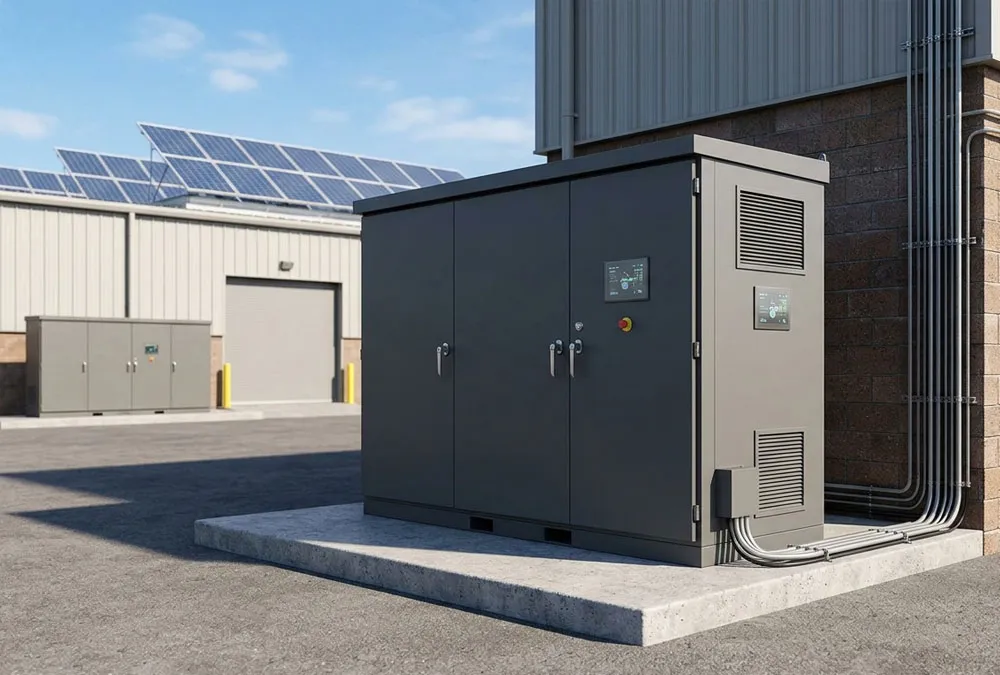
Whether you need compact all-in-one battery cabinets to manage sudden demand charges or massive containerized BESS setups for a sprawling manufacturing complex, our engineering teams tailor each layout to fit your site. From initial load profile analysis through complete EPC delivery and ongoing O&M support, AnengJi Power provides the technical expertise needed to cut your energy costs and secure your operational power supply.
Frequently Asked Questions About Industrial Solar Battery Storage
What is industrial solar battery storage?
It is an integrated energy system that pairs solar panels with high-capacity batteries to store excess clean energy, allowing factories to lower electricity costs and maintain backup power.
How much does an industrial solar battery storage system cost?
Total costs depend heavily on your specific load profile, required battery capacity, and local grid connection fees. Suppliers provide customized engineering quotes based on your factory’s annual power footprint.
What is the typical lifespan of an industrial battery storage system?
Premium LFP battery systems are built to last between 10 to 15 years, easily delivering 6,000 to 8,000 full operational charge cycles before their capacity drops to 80% of its original rating.
Can industrial solar battery storage provide backup power during outages?
Yes, the system uses high-speed bidirectional inverters to switch over in milliseconds during grid failures, keeping your critical production lines running safely.
Can solar battery storage reduce demand charges?
Yes, by discharging stored energy automatically during your factory’s highest consumption spikes, the system lowers your peak demand profile to cut expensive utility charges.
How does a battery storage system integrate with existing factory infrastructure?
The system connects directly to your facility’s main distribution switchboard through a dedicated breaker, using smart EMS sensors to monitor power flows in real time.
Conclusion
Deploying an industrial solar battery storage system shifts your company’s energy strategy from an uncontrollable monthly expense into a smart corporate asset. Implementing onsite solar plus storage helps your business control its long-term power costs, secures your production lines against grid instability, and speeds up your progress toward corporate sustainability goals.
For more information on cutting your facility’s power costs with a reliable solar storage system, visit anengjipower.com. Let our engineering team design a high-performance energy solution tailored to your operational needs.