Introduction
Let’s be completely honest. Relying strictly on the grid for your corporate facility or manufacturing plant has become a massive financial gamble. Every month, utility rates fluctuate wildly, corporate procurement teams scream about ESG compliance, and the threat of peak demand spikes eats directly into your net margins. Investing in commercial and industrial solar isn’t some futuristic environmental statement anymore. It’s a pure, hard-nosed capital management tool. In this definitive guide, we’ll cut through the marketing fluff and break down what it actually takes to build a bulletproof solar asset that delivers predictable cash flow for the next 25 years. We want to show you the actual engineering reality of commercial and industrial solar architecture, real cost structures, and how blending solar with battery storage shifts power back to your ledger.
What Is a Commercial and Industrial Solar System?
In the energy sector, we call this asset class “C&I solar.” It acts as a dedicated, grid-tied or hybrid decentralized power plant built right where the electricity is consumed. Unlike residential rooftop layouts or massive desert utility farms, these systems are highly tailored, complex engineering deployments meant to handle heavy, continuous multi-phase industrial loads.
Definition of Commercial and Industrial Solar (C&I Solar)
If you have been asking what is c&i solar, here is the simplest answer. It is a customized behind-the-meter solar installation designed specifically for businesses, factories, office parks, and logistics centers. It bridges the gap between small-scale micro-solar and massive utility-scale fields, typically ranging from 100 kW up to several megawatts in size.
How Commercial and Industrial Solar Systems Work
The system works by turning your facility into an active generator. When sunlight hits the roof or ground array, photons free electrons to create raw Direct Current (DC) electricity. This power moves instantly through heavy-gauge cabling to inverters, transforming into clean Alternating Current (AC) that matches your local utility grid frequency perfectly.
- Solar Panels: These are the physical collectors capturing solar irradiance.
- Solar Inverters: The digital brain converting DC power into standard three-phase AC electricity.
- Monitoring Systems: Cloud software that tracks real-time generation and string performance.
- Energy Management Systems (EMS): High-level automation controlling how power flows across the facility.
- Battery Energy Storage Systems (BESS): Localized containers saving excess daytime energy for later use.
Key Components of a Commercial and Industrial Solar System
An enterprise-grade asset requires tier-1 components to survive decades of weather exposure and harsh industrial environments. You can’t cut corners here; every part must be rated for continuous, heavy-duty operational cycles.
- PV Modules: High-efficiency, n-type TOPCon or HJT double-glass panels engineered to maximize watts per square meter.
- Mounting Structures: Wind-tunnel tested aluminum ballasted roof mounts, or heavy galvanized steel ground piles.
- Inverters: Multi-MPPT string inverters or centralized smart inverter stations with active cooling systems.
- EMS Platforms: Smart software running dynamic load-shaping and predictive weather analytics algorithms.
- Energy Storage Systems: High-density, liquid-cooled lithium iron phosphate (LFP) battery enclosures.
Why Commercial and Industrial Solar Is Becoming Essential for Modern Businesses
The old strategy of simply paying whatever the local power company demands is financially dangerous. Volatile global fuel markets mean your operational expenses are exposed to unpredictable, overnight spikes that ruin fiscal forecasting.
Rising Electricity Costs and Energy Challenges
Grid infrastructure is aging fast, and utilities pass those multi-billion-dollar upgrade bills directly down to the consumer. For high-demand facilities, these sudden tariff increases can wipe out seasonal profit margins before your management team can even react.
Corporate Sustainability and ESG Requirements
Global supply chains now demand absolute transparency. If your manufacturing plant cannot provide audited proof of carbon reduction, top-tier global buyers will simply drop your contract to meet their strict Scope 1 and Scope 2 emission targets.
The Growing Need for Energy Independence
Relying on a single centralized power grid makes your operation completely vulnerable. A single substation failure or extreme weather event can shut down your production lines for days, resulting in massive supply chain penalties.
Long-Term Protection Against Utility Price Increases
Deploying an on-site commercial and industrial solar array locks in a fixed, known cost for your electricity. It acts as a multi-decade financial hedge, letting you accurately forecast operational budgets without worrying about utility rate hikes.
Commercial Solar Systems: Benefits for Businesses and Commercial Facilities
Deploying specialized
Commercial Solar Systems
across commercial real estate changes a property from a cost drain into an active revenue driver. It optimizes flat roof space that otherwise sits completely unutilized.
Reducing Monthly Electricity Bills
Every kilowatt-hour generated on your roof is a kilowatt-hour you do not buy from the utility company. This creates an immediate drop in operational expenses from the very first day of system commissioning.
Lower Operational Costs: Dropping your fixed utility overhead frees up valuable working capital that can be immediately reinvested into expanding your core business.
Predictable Energy Expenses: Knowing your exact power cost for the next 20 to 25 years makes long-term corporate budgeting incredibly precise.
Commercial Solar Financing Opportunities
You do not need to drain your corporate cash reserves to transition to clean energy. Modern financial markets offer multiple structured paths to get these systems built with zero upfront capital expenditure.
- Solar Loans: Structured corporate debt financing that preserves cash while retaining asset ownership.
- Power Purchase Agreements (PPA): A third-party developer builds, owns, and maintains the asset; you simply buy the generated power at a heavily discounted rate.
- Leasing Options: Fixed monthly operating leases that keep the equipment off-balance-sheet depending on accounting structures.
Tax Incentives and Government Subsidies
Global regulatory bodies heavily reward commercial energy transitions. Programs like the Investment Tax Credit (ITC) in the United States, along with regional grants, let businesses instantly offset a massive chunk of the project cost.
- Tax Credits: Direct dollar-for-dollar deductions against your corporate federal or state tax liability.
- Accelerated Depreciation: Mechanisms like MACRS allow businesses to write off the asset value quickly, maximizing near-term cash flow.
- Renewable Energy Incentives: Localized performance payments or tradeable green certificates that add direct revenue.
Supporting Green Building Certifications
An on-site solar asset provides the necessary credits to achieve high-level LEED rankings or local green building certifications. This directly boosts the premium lease value of commercial real estate assets.
Fast Return on Investment for Commercial Solar Projects
Thanks to dropping module prices and soaring utility rates, the financial payback period has shrunk drastically. A well-engineered commercial solar installation often hits full payback far faster than traditional real estate expansions.
- Typical Payback Period: Most well-designed C&I projects achieve full capital payback within 3 to 5 years, depending on local solar irradiance and utility tariffs.
- Long-Term Financial Benefits: After reaching the payback point, the system produces essentially free electricity for the remaining 20+ years of its operating life.
Commercial Solar for Energy Independence
By producing power directly on your corporate premises, you drastically reduce your day-to-day reliance on external energy grids. This provides an indispensable buffer against localized blackouts or rolling brownouts.
Environmental Benefits of Renewable Energy Adoption
Transitioning to on-site solar slashes your facility’s environmental footprint. It provides verifiable, clean energy metrics that look excellent on annual corporate sustainability disclosures and investor relations reports.
Industrial Solar Systems: Benefits for Manufacturing and Industrial Operations
Heavy manufacturing demands a completely different scale of power management. Implementing rugged
Industrial Solar Systems
directly answers the high-amperage, continuous energy needs of heavy machinery and processing plants.
Achieving Energy Self-Sufficiency
Manufacturing facilities often have massive unshaded roof expanses over production lines. Utilizing this footprint for
Industrial Solar Power
lets a factory run completely self-contained loops during peak daytime production shifts.
Lowering Industrial Operating Expenses
For high-volume manufacturing, electricity is often the second or third highest variable operational cost. Introducing
Industrial Solar EPC
engineering standards directly scales down this massive overhead, instantly boosting your gross product margins.
Supporting Business Expansion
Many local distribution grids are capacity-constrained. If you want to add a new production line but the utility cannot supply the extra power, an on-site solar and storage plant can unlock that missing capacity without waiting years for grid upgrades.
Ensuring Continuous Production Operations
A single voltage drop or micro-outage can corrupt a whole batch of precision-manufactured goods, costing hundreds of thousands of dollars in ruined raw materials and wasted labor.
- Reduced Risk of Power Interruptions: Advanced inverters catch grid anomalies instantly, stabilizing internal voltages.
- Solar Plus Storage Integration: Combining arrays with heavy industrial batteries creates an unshakeable energy shield.
- Backup Energy Capabilities: The system transitions into an isolated island during extended blackouts, keeping critical lines moving.
Industrial Solar and Long-Term Competitiveness
In a tight global market, keeping your production energy costs perfectly stable gives you an incredible edge. While your competitors suffer from unpredictable energy market swings, your manufacturing costs remain locked in stone.
Commercial and Industrial Solar Installations: Project Types and Applications
Every commercial facility has unique spatial constraints. Successful project execution depends heavily on selecting the correct installation topography for your specific site footprint.
Commercial Rooftop Solar Installations
This is the most common approach for facilities with large, flat roof spaces. Modern roof-mount techniques use non-penetrating ballasted racking structures to secure the system without creating potential leak points.
- Office Buildings: Excellent for offseting daytime air conditioning loads.
- Shopping Centers: High daytime usage profile matches solar generation perfectly.
- Hotels: Offset continuous water heating and cooling infrastructure costs.
- Educational Facilities: Turn empty campus roofs into visible symbols of modern technology.
Industrial Solar Installations
Industrial applications often require heavy-duty structural engineering to handle high wind-loads, vibration, or specific chemical exposures present around manufacturing zones.
- Manufacturing Plants: High-density arrays designed to feed intense, continuous electrical loads.
- Industrial Parks: Shared microgrid setups that distribute clean energy across multiple localized businesses.
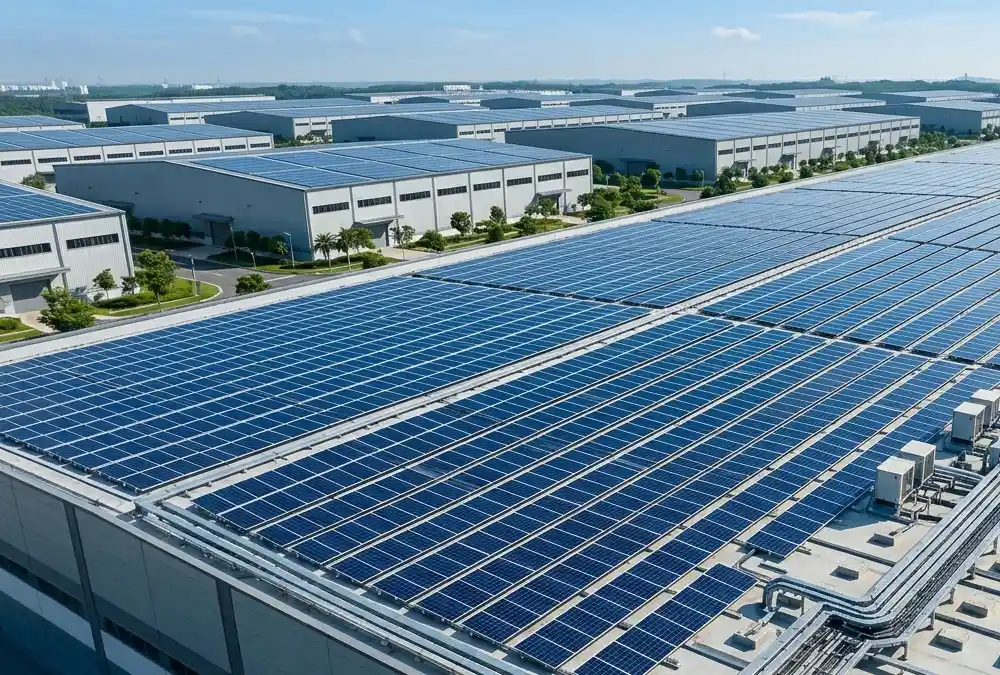
- Warehouses: Massive roof footprints that allow for huge generation potential relative to low internal building loads.
- Logistics Centers: Perfect setups for capturing massive solar energy to charge modern electric delivery fleets.
Ground-Mounted Solar Systems
If roof space is limited or obstructed by heavy HVAC equipment, utilizing nearby open land for a ground-mounted array is a highly efficient alternative. These setups allow for perfect angle optimization and much easier maintenance access.
Commercial and Industrial Solar Combined with Other Energy Solutions
Standalone solar is fantastic, but the real magic happens when you treat solar as just one piece of an integrated, smart microgrid. True energy mastery requires blending generation with intelligent storage and load management.
Solar Plus Battery Energy Storage Systems (BESS)
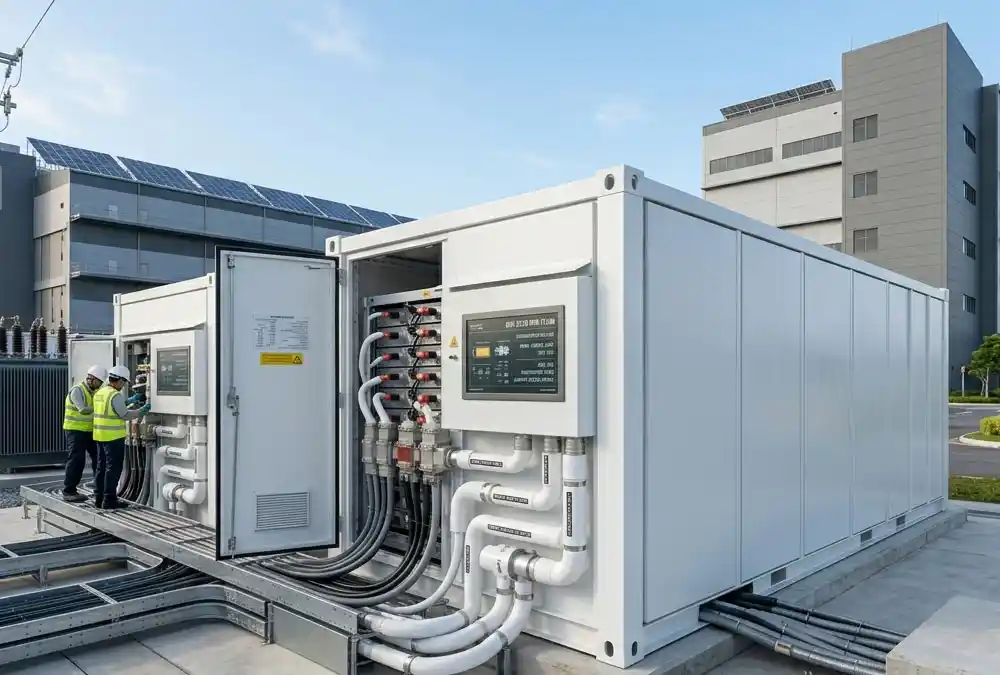
Solar only generates when the sun shines, but factories run around the clock. Integrating a robust Battery Energy Storage System (BESS) allows you to store cheap daytime solar power and deploy it strategically whenever grid prices skyrocket.
To maximize this ROI, we highly recommend deploying specialized, utility-grade equipment like the AnengJi Liquid-Cooled BESS Cabinets (215kWh / 100kW). These all-in-one industrial units integrate advanced LFP cells, smart fire suppression, and liquid thermal management into a single, compact outdoor enclosure. Let’s break down exactly how this integration changes your financial returns:
| Energy Management Strategy | Technical Mechanism | Direct Financial Impact |
|---|---|---|
| Peak Shaving | BESS discharges rapidly during highest facility consumption peaks. | Slashes expensive utility demand charges instantly. |
| Demand Charge Reduction | Keeps total metered grid draw below strict pre-set utility limits. | Lowers the fixed portion of your monthly commercial electric bill. |
| Backup Power | Seamlessly transitions facility to island mode during grid blackouts. | Prevents expensive manufacturing downtime and material spoilage. |
Commercial Solar and EV Charging Infrastructure
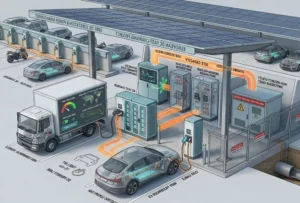
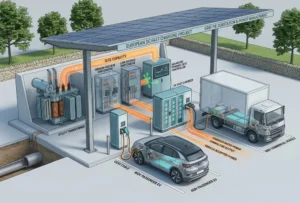
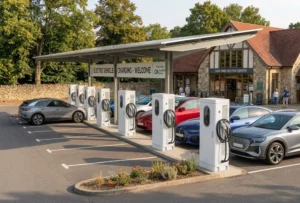
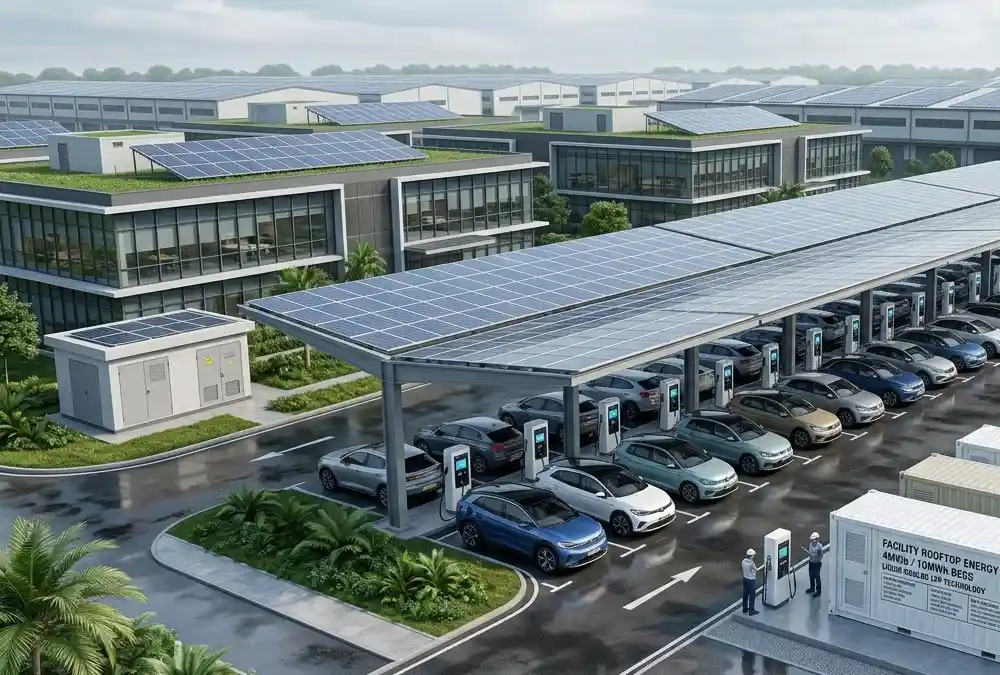
As corporate fleets shift to electric, your site’s power demand will surge. Setting up a dedicated Commercial EV Charging Infrastructure backed by solar prevents these chargers from overloading your main facility electrical panels.
Microgrid Solutions for Commercial and Industrial Facilities
By connecting your solar array, BESS, and backup generators together, you create a localized microgrid. This setup allows your facility to completely sever ties with the utility grid during emergencies, ensuring absolute operational survival.
Integrated Energy Management Systems (EMS)
An advanced Energy Management System (EMS) acts as the central conductor. It constantly analyzes live weather data, building loads, and spot-market electricity prices to decide exactly when to use solar, when to store it, and when to sell it back to the grid.
How Much Does a Commercial and Industrial Solar Installation Cost?
Let’s address the big question: the numbers. According to comprehensive data from the International Renewable Energy Agency (IRENA) and updated 2026 market benchmarks, commercial project costs have stabilized significantly, making upfront capital forecasting highly reliable.
Average Commercial Solar Installation Costs
For standard mid-sized commercial properties (such as office spaces or retail hubs ranging from 100kW to 500kW), average turnkey installation costs generally sit between $1.20 to $1.65 per watt DC. This comprehensive figure includes all structural engineering, tier-1 inverters, and utility interconnection fees.
Average Industrial Solar Project Costs
When you scale up to massive multi-megawatt industrial installations, economies of scale kick in heavily. Large-scale industrial deployments frequently see total turnkey pricing drop to $0.95 to $1.25 per watt DC, though adding complex industrial-grade storage will alter this baseline.
Factors Affecting Commercial and Industrial Solar Pricing
No two facilities are identical. Final engineering quotes depend on several site-specific physical and regulatory variables that must be evaluated during early feasibility studies.
- System Size: Larger overall projects command significantly better bulk component purchasing discounts.
- Equipment Selection: Choosing ultra-high efficiency premium modules or advanced liquid-cooled inverters increases upfront costs but boosts total lifetime yield.
- Installation Complexity: High, steeply pitched roofs or old structures requiring structural reinforcement increase labor costs.
- Local Labor Costs: Regional labor rates and strict local structural engineering permitting codes vary widely.
- Grid Connection Requirements: Outdated local substations may require expensive utility-mandated transformer upgrades before allowing interconnection.
Commercial and Industrial Solar ROI Analysis
When analyzing a commercial and industrial solar installation, you must look at the Internal Rate of Return (IRR). A well-engineered system typically yields a double-digit corporate IRR, outperforming most standard conservative capital investments.
Commercial and Industrial Solar Maintenance Requirements
Solar systems have zero moving parts, but they are absolutely not maintenance-free. Neglecting your array will lead to gradual dirt accumulation and minor component degradation that quietly drains your annual power generation.
Routine Solar Panel Maintenance
Dust, industrial soot, and bird droppings create localized shading that drops string voltage. Scheduling professional automated or manual cleanings twice a year keeps your modules operating at peak photon conversion efficiency.
Inverter Inspection and Servicing
Inverters handle massive thermal stress day in and day out. Regular preventive maintenance involves checking internal cooling fans, cleaning air filters, torque-testing electrical connections, and running thermal imaging to spot hot spots.
Battery Storage Maintenance
Modern LFP battery systems require regular diagnostic checks. Technicians monitor cell voltage balancing, inspect liquid coolant loops for leaks, and verify that the battery management system communicates perfectly with the main EMS.
Remote Monitoring and Performance Optimization
By using smart cloud-based SCADA software, operators can spot performance anomalies instantly. If a single string of panels underperforms due to a blown fuse, the system triggers an alert so a technician can fix it before it hurts your monthly bill.
Preventive Maintenance Best Practices
Do not wait for something to break. Implementing a rigid, scheduled preventive maintenance contract ensures your solar asset consistently hits its modeled performance targets for its entire 25-year warranty lifecycle.
Why Commercial and Industrial Solar Projects Matter for Future Energy Strategies
The energy landscape is changing faster than ever. Decentralizing your power supply is no longer just a clever operational hack; it is a fundamental pillar of future-proofing any modern industrial enterprise.
Reducing Dependence on Fossil Fuels
Generating your own clean energy removes your business from the traditional carbon-heavy power loop. This direct reduction in grid reliance actively shields your brand from incoming carbon taxes and tightening emission laws.
Improving Corporate Energy Resilience
A resilient business is a successful business. By combining clean generation with local battery storage, you ensure your corporate operations can withstand unpredictable energy market shocks or grid stability failures.
Meeting Sustainability and Carbon Reduction Targets
Deploying an on-site solar asset gives your public relations and compliance teams verifiable data. It provides transparent, traceable carbon reduction metrics that can be proudly displayed in your annual sustainability reports.
Preparing for Future Energy Market Changes
As smart grids evolve, businesses with on-site generation and storage will be able to participate in virtual power plants (VPPs). This means you can eventually sell stored energy back to the utility during grid crises, transforming a cost center into a new revenue stream.
Customized Commercial and Industrial Solar Solutions Based on Business Needs
There is no such thing as a one-size-fits-all energy solution. A truly optimized asset must be engineered around your facility’s unique daily consumption profile and structural layout.
Energy Consumption Assessment
We begin by downloading 12 to 24 months of your facility’s granular, 15-minute interval utility data. This lets us map out your exact load profile and design an array that perfectly targets your most expensive energy consumption windows.
Site Evaluation and Feasibility Analysis
Our structural engineers inspect your roof integrity, shading obstructions, and internal electrical switchgear capacity. This step ensures the building can safely support the physical weight and electrical output of the array.
Customized System Design
Using advanced 3D modeling software, we design an optimized layout that maximizes solar yield while ensuring safe maintenance access pathways that comply fully with local fire codes.
Solar Plus Storage Configuration
We balance the solar generation size with a matched battery capacity. This step ensures that any excess daytime energy is fully captured rather than wasted, maximizing your peak shaving capabilities.
Scalable Energy Solutions for Future Expansion
A good design leaves room to grow. We build your electrical balance of plant with future expansions in mind, ensuring you can easily add more panels or extra battery storage as your business scales up operations.
Commercial and Industrial Solar Success Stories Across Industries
Let’s look at how diverse sectors are actively deploying these energy assets to solve real-world operational bottlenecks and protect their bottom lines.
Manufacturing Facilities
A heavy plastics factory facing massive demand charges deployed a 1.5MW rooftop array paired with a 500kWh liquid-cooled storage system. The result? They knocked down their peak utility demand charges by over 35%, saving hundreds of thousands annually.
Warehousing and Logistics Centers
A major cold-storage logistics hub covered their massive flat roof with high-efficiency modules. Since their highest cooling load perfectly matches peak daytime sunlight, they now self-generate over 60% of their daily energy needs.
Retail and Commercial Buildings
A prominent suburban shopping mall integrated a solar carport canopy across their parking lot. This setup provides shaded parking for customers while generating clean power that runs the mall’s massive central air conditioning units.
Agricultural Operations
A large-scale commercial dairy farm integrated a ground-mounted solar system to run their high-energy automated milking systems, significantly lowering their variable production cost per liter.
Industrial Parks
A modern eco-industrial park set up a shared microgrid combining roof solar and centralized battery storage, allowing tenant companies to buy discounted, reliable green power directly from the park operator.
How to Choose the Right Commercial and Industrial Solar EPC Partner
Building a multi-megawatt commercial energy asset is a complex task. The success of your investment depends entirely on the technical capability of the
Solar EPC Contractor
you hire to manage the execution.
Evaluate EPC Experience
Look for a partner who specializes strictly in commercial and industrial scale projects. Managing the heavy engineering, safety requirements, and utility grid interconnections of a factory is vastly different from installing residential rooftop solar panels.
Review Previous Commercial and Industrial Projects
Ask for a verified portfolio of completed, operating assets that are similar in scale to your own facility. Contact their past clients to verify if the actual energy production matches what the contractor originally modeled in their sales proposals.
Assess Solar Plus Storage Expertise
Designing a reliable battery storage system requires deep electrical engineering expertise. Ensure your chosen partner truly understands complex EMS programming, battery thermal management, and local utility protection settings.
Verify Certifications and Compliance Standards
Make sure the contractor holds all necessary local electrical licenses, structural engineering certifications, and high-level liability insurance policies required to work safely on an active industrial site.
Consider Long-Term Maintenance Support
An energy asset lasts for a quarter of a century. You need an EPC partner who provides comprehensive, ongoing Operations and Maintenance (O&M) contracts backed by clear performance guarantees to protect your investment over time.
Frequently Asked Questions About Commercial and Industrial Solar
What is a commercial and industrial solar system?
It is an enterprise-grade, on-site solar power plant designed specifically to feed the heavy three-phase electrical loads of businesses, factories, warehouses, and large commercial properties.
How much does a commercial solar installation cost?
Turnkey commercial projects generally cost between $1.20 to $1.65 per watt DC for mid-sized systems, while large industrial projects scale down to $0.95 to $1.25 per watt DC.
What is the average payback period for industrial solar projects?
Most commercial and industrial installations achieve full capital payback within 3 to 5 years, depending heavily on local solar irradiance and your current utility electricity tariffs.
Can battery storage improve solar ROI?
Yes, absolutely. By storing excess daytime solar power and deploying it during peak utility pricing windows, a battery system dramatically cuts expensive peak demand charges, fast-tracking your overall project ROI.
What maintenance is required for commercial solar systems?
Requirements include professional panel cleaning twice a year, regular inverter cooling system checks, torque-testing electrical connections, and continuous remote software monitoring.
Are financing options available for commercial solar projects?
Yes. Businesses can utilize specialized corporate solar loans, low-rate operating leases, or zero-upfront Power Purchase Agreements (PPAs) to fund projects without using their own cash reserves.
How do solar systems help businesses achieve energy independence?
By generating and storing electricity directly on-site, a business significantly drops its reliance on the central utility grid, gaining protection against rate volatility and rolling blackouts.
Conclusion: Unlocking Long-Term Energy Savings with Commercial and Industrial Solar
At the end of the day, managing your enterprise’s energy strategy comes down to a simple choice: you can keep paying an escalating, unpredictable monthly tax to your local utility company, or you can build your own clean generation asset and lock in stable operational costs for decades to come. Transitioning to modern commercial solar is a highly reliable way to protect your business against inflation, meet strict corporate ESG goals, and instantly improve your bottom-line profitability.
Key Takeaways for Businesses
- Lower electricity costs: Instantly slash your variable monthly operational overhead by generating power on-site.
- Faster ROI: Achieve full asset payback in just 3 to 5 years, followed by over two decades of virtually free electricity.
- Improved energy security: Paired with battery storage, your facility gains a reliable shield against grid failures and blackouts.
- Sustainability compliance: Easily meet strict global supply chain carbon mandates and corporate ESG standards.
- Scalable future growth: Build a modular energy infrastructure that easily expands as your business operations scale up.
Future-Proofing Commercial and Industrial Facilities with Solar and Energy Storage
As grid infrastructure faces increasing strain and global carbon rules continue to tighten, running a business on standalone grid power will only become more expensive and risky. Implementing an integrated energy solution that combines commercial and industrial solar with smart battery storage, automated EMS platforms, and modern EV charging setups is the ultimate strategy to secure a competitive, highly profitable, and resilient corporate future.