Introduction
Let’s strip away the corporate marketing buzzwords for a second and look at raw operational reality: operating a factory, massive logistics warehouse, or commercial facility on pure grid power has become an absolute financial liability. With global energy infrastructure facing unprecedented strain, mid-day grid pricing structures fluctuating wildly, and demand charges eating directly into your net margins, relying on traditional utility models is a dangerous game. Implementing on-site C&I Solar arrays is no longer a superficial public relations stunt; it is an aggressive, front-line capital management strategy that high-amperage businesses are using to permanently lock down fixed operational costs. In this comprehensive engineering guide, we will break down the precise mechanics of commercial and industrial solar setups, unmask the true cost architectures, and demonstrate how blending localized generation with intelligent energy storage transforms an uncontrollable monthly expense into a highly predictable, yielding corporate asset.
What Is C&I Solar? Understanding Commercial and Industrial Solar Systems
To grasp how behind-the-meter corporate power assets alter a business’s balance sheet, we have to look past the generic sales pitches. In our engineering circles, we treat these systems as highly customized, medium-voltage decentralized power stations that exist for a single purpose: matching the heavy, multi-phase load profile of an active commercial or industrial facility.
Definition of C&I Solar
If you are exploring your options and asking what is c&i or what does c&i stand for, it represents “Commercial and Industrial.” Therefore, a what is c&i solar inquiry boils down to behind-the-meter solar PV infrastructure deployed explicitly for businesses, office complexes, schools, and heavy manufacturing sites. Unlike tiny residential systems or massive, desert-based utility fields, these deployments bridge the gap, ranging from 100 kW to dozens of megawatts.
When looking at c and i solar configurations, the architecture is entirely focused on self-consumption. The power generated does not travel down miles of transmission lines; instead, it enters your facility’s main distribution panels instantly, offsetting high-tier utility energy rates in real time.
- Residential vs. C&I: Residential systems use single-phase or simple split-phase inverters under 20 kW. C&I installations require heavy, three-phase commercial inverters capable of handling massive motor startup currents and complex building grid dynamics.
- Structural Scale: Residential roofs are straightforward. C&I projects require rigorous structural wind-tunnel testing, customized ballasted engineering, and extensive local utility interconnection agreements.
How Commercial and Industrial Solar Systems Work
The operational sequence of a modern corporate solar asset relies on a seamless chain of power electronics. When sunlight strikes the solar arrays, the semiconductor layers generate raw Direct Current (DC) electricity, which must be immediately conditioned for industrial use.
- Solar Panels: High-density photovoltaic modules capture solar irradiance, converting photons into raw DC electricity.
- Solar Inverters: These act as the primary power electronics gateway, translating raw DC into clean, grid-synchronized three-phase Alternating Current (AC).
- Monitoring Systems: Cloud-connected SCADA platforms track string-level data, instantly highlighting any dust build-up or hardware faults.
- Energy Management Systems (EMS): The true digital brain of the site, running advanced algorithms to balance solar generation with building consumption.
- Battery Energy Storage Systems (BESS): Heavy-duty local battery banks that store unconsumed daytime electrons instead of dumping them back into the grid for pennies.
Common Types of C&I Solar Installations
No two commercial properties share identical spatial profiles. Choosing the right structural approach determines your raw generation capacity and ultimate asset yield.
- Commercial Rooftop Solar: Utilizing existing, unshaded membrane or metal roofs via non-penetrating ballasted mounting structures.
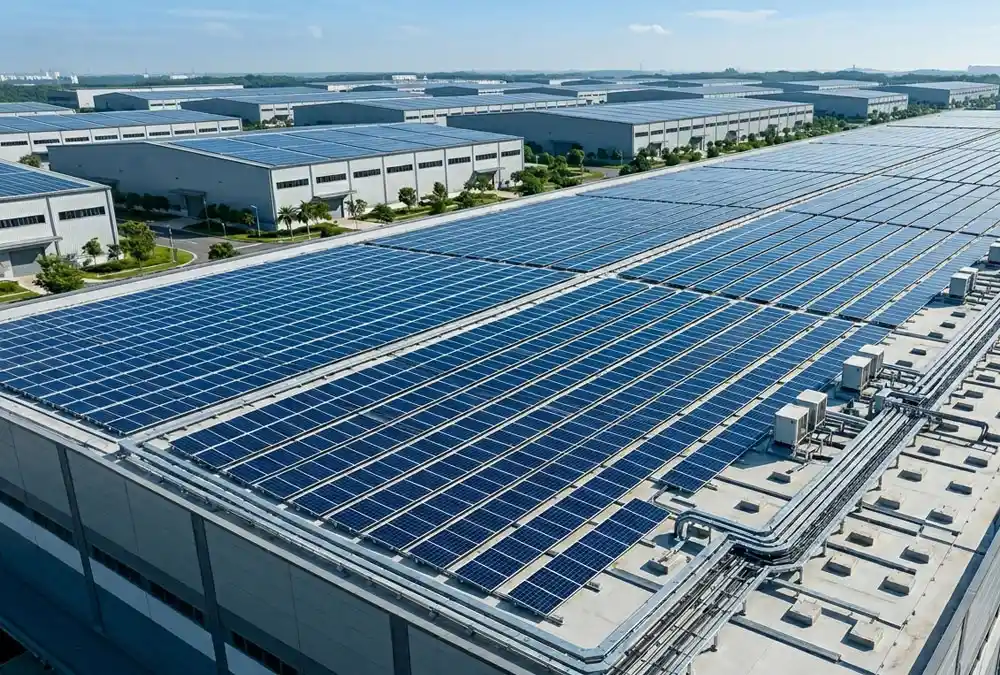
- Industrial Rooftop Solar: Engineered specifically for large-span factory roofs, often factoring in heavy industrial dust or localized vibration profiles.
- Ground-Mounted Solar Systems: Erected on vacant perimeter land using driven steel piles, allowing for perfect tilt angles and effortless cleaning access.
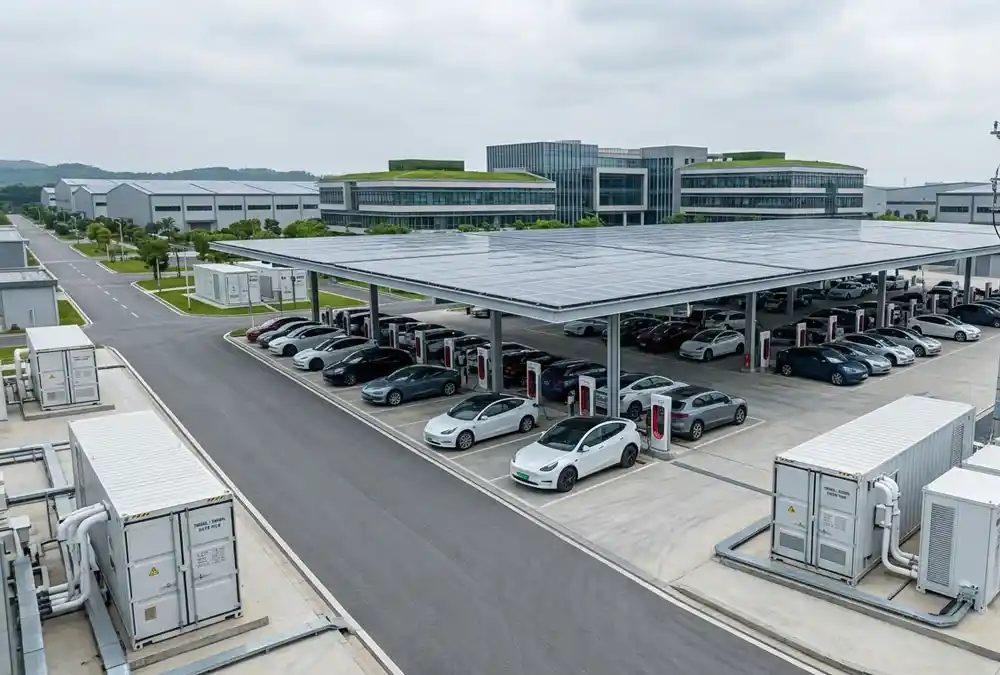
- Solar Carports: Transforming massive employee and customer parking areas into highly visible, power-generating shade structures.
Why C&I Solar Is Becoming a Strategic Energy Solution for Businesses
Accepting whatever pricing structure your local utility company decides to issue is no longer a viable business model. Volatile fuel markets mean your underlying c&i energy costs are exposed to unpredictable, overnight spikes that destroy fiscal forecasting models.
Rising Electricity Prices and Energy Cost Challenges
Aging distribution grids mean utilities are passing multi-billion-dollar maintenance bills down to enterprise consumers. For high-demand facilities, these escalating retail energy rates act as an aggressive tax on your gross profit margins.
Corporate ESG and Sustainability Requirements
Modern global supply chains have turned brutal regarding compliance. If your factory cannot provide audited proof of aggressive carbon reduction, top-tier international buyers will simply pivot away from your contracts to protect their own corporate emission goals.
The Need for Energy Independence
Relying completely on a single centralized grid infrastructure leaves your facility entirely vulnerable to regional blackouts, grid instability, and unexpected brownouts that can stall manufacturing lines for hours.
Government Support for Renewable Energy Adoption
To accelerate grid updates, governments worldwide have unleashed historic financial backstops. Programs like the Investment Tax Credit (ITC) allow corporate buyers to instantly strip away a massive portion of their total capital deployment costs.
C&I Solar Benefits: Why Businesses Are Investing in Commercial and Industrial Solar
Deploying dedicated Commercial Solar Systems completely redefines the role of your corporate facilities. Your roof spaces stop being an expensive, dead maintenance area and instantly transform into highly productive, cash-generating power plants.
Cost Savings Through C&I Solar Systems
The primary mechanism of return is direct bill displacement. By generating power right where it is consumed, you avoid the retail utility transmission markups that inflate standard commercial bills.
Lower Monthly Electricity Bills: Dropping your facility’s baseline consumption from the grid results in an immediate, compounding reduction in your monthly operational overhead.
Reduced Peak Demand Charges: Advanced energy storage integration allows your facility to actively suppress random load spikes, keeping your utility-metered demand peaks perfectly flat.
Long-Term Energy Cost Stability: Securing a known, ultra-low cost per kilowatt-hour for the next 25 years gives your procurement team unmatched budgeting predictability.
Financial Benefits of Commercial and Industrial Solar
When evaluated as an independent corporate asset, the raw numbers of a commercial and industrial solar project easily outperform traditional conservative corporate investments.
- Attractive ROI: Most modern systems yield double-digit internal rates of return (IRR), significantly outperforming standard real estate or equipment upgrades.
- Fast Payback Periods: Thanks to dropping module costs, capital payback times have compressed dramatically across industrial markets.
- Increased Asset Value: Adding a modern energy generation plant directly enhances the net operating income (NOI) and overall appraisal valuation of commercial real estate.
- Improved Business Competitiveness: Lowering your fixed manufacturing overhead allows you to price products more aggressively than energy-dependent competitors.
Tax Credits and Renewable Energy Incentives
The financial return profile of a modern commercial solar project is highly front-loaded due to strategic regulatory write-offs.
- Government Subsidies: Direct cash-back grants or local performance-based clean energy credits that reward every megawatt-hour produced.
- Tax Reduction Programs: Accelerated depreciation mechanisms like MACRS allow your business to write off virtually the entire asset cost in year one, drastically boosting near-term cash flow.
- Green Financing Opportunities: Access to specialized low-interest enterprise loans and specialized clean energy bonds designed to preserve working capital.
Making Use of Unused Commercial and Industrial Space
Enterprise facilities are packed with dead real estate space that costs money to maintain without generating any functional yield.
- Rooftops: Flat, expansive factory and warehouse roofs represent perfect unshaded solar real estate.
- Parking Areas: Installing solar carports creates structural shade for vehicles while packing extra megawatts of capacity onto the property footprint.
- Idle Land: Converting unbuildable perimeter zones or expansion land into a dedicated ground-mounted array.
Environmental Benefits of C&I Solar
On-site generation provides real, traceable emission metrics. Instead of buying unverified carbon offsets, your facility directly eliminates Scope 1 and Scope 2 emissions at the source.
Demonstrating Commitment to Sustainable Development
An active solar array offers visible, undeniable proof of modern corporate responsibility. This tangible asset significantly enhances your green brand positioning among eco-conscious B2B clients and institutional investors.
Industrial Solar Systems: Supporting Manufacturing Growth and Energy Independence
Heavy manufacturing demands an entirely different level of electrical engineering expertise. Standard solutions will not survive the high-vibration, high-amperage continuous draw of heavy processing lines. Deploying robust Industrial Solar Systems is specifically tailored to meet these rugged, high-load enterprise challenges.
Achieving Energy Self-Sufficiency
By maximizing every square meter of your factory roof, Industrial Solar Power enables processing plants to operate completely self-contained loops during peak daytime manufacturing shifts, neutralizing external grid dependence.
Reducing Operational Overhead Costs
For large-scale processing, electricity represents a massive variable cost. Implementing professional Solar EPC Contractor standards to deploy high-output arrays scales down this massive expense, immediately strengthening your gross margins.
Supporting Business Expansion Plans
Many local utility networks are severely capacity-constrained. If you need to install a new high-speed assembly line but the local utility cannot supply the extra power, on-site solar and storage can bridge that energy gap without waiting years for utility upgrades.
Ensuring Continuous Production and Operational Stability
A single unexpected voltage drop or sub-second utility power interruption can corrupt a precision batch of manufactured components, causing devastating financial hits in ruined materials and idle labor.
- Reducing Downtime Risks: Smart multi-megawatt string inverters actively monitor grid harmonics, isolating internal electronics from external line noise.
- Improving Energy Reliability: Combining massive solar generation arrays with heavy industrial battery systems creates an unshakeable, localized power shield.
Combining Industrial Solar with Battery Storage
To extract the absolute highest return from your asset, localized generation must be paired with automated storage capabilities. This is where C&I solar solutions truly shift financial control back to your facility.
To achieve this operational resilience, we strongly advise industrial operators to avoid cheap, unintegrated battery components and instead deploy a comprehensive, commercial-grade system like the AnengJi Liquid-Cooled C&I BESS Cabinet (215kWh / 100kW). This rugged, outdoor-rated, all-in-one enclosure integrates premium LFP chemistry, a liquid thermal management loop, and a smart Energy Management System into a highly compact footprint. Here is exactly how this industrial-grade combination handles severe energy challenges:
| Industrial Energy Challenge | BESS Operational Mechanism | Direct Financial & Operational Impact |
|---|---|---|
| Severe Peak Demand Spikes | Peak Shaving: The EMS detects a machinery power spike and instantly discharges the BESS, preventing the grid meter from registering a new peak. | Slashes your utility demand charge penalties, which often make up 30-50% of an industrial power bill. |
| Sudden Utility Power Failures | Backup Power: Advanced hybrid inverters isolate from the grid within milliseconds, forming an independent power island for critical production loops. | Eliminates costly factory downtime, protects sensitive precision machinery, and prevents raw product spoilage. |
| Volatile Time-of-Use (TOU) Rates | Energy Arbitrage: The system stores cheap daytime solar electrons or low-cost off-peak grid power, then discharges during the most expensive evening utility windows. | Forces your facility to buy power only when it is cheapest, creating deep, predictable monthly utility savings. |
Challenges Facing the Commercial and Industrial Solar Market
We believe in absolute engineering transparency. Building a high-performing enterprise energy asset involves navigating real-world structural, regulatory, and financial hurdles that require expert project development insight.
High Initial Investment Costs
While solar offers spectacular long-term operational savings, the initial upfront capital requirement for a multi-megawatt commercial array remains a significant hurdle for corporate boards balancing immediate cash flow needs.
Site Limitations and Structural Constraints
Older industrial roofs may lack the structural load-bearing capacity to handle heavy solar panel sets, or massive rooftop HVAC ventilation units can cast significant shadows that limit your effective generation footprint.
Grid Connection and Regulatory Challenges
Local utility companies can be notoriously slow. Navigating the mountain of interconnection paperwork, grid impact studies, and local zoning permits can delay project deployment schedules by months if handled poorly.
Financing and Cash Flow Considerations
Structuring the asset investment requires careful tax planning. Companies must ensure they have sufficient tax liabilities to fully monetize accelerated depreciation benefits, or opt for third-party owned structures.
Intermittency of Solar Power Generation
Clouds pass over, weather changes, and the sun completely sets by evening. Standalone solar cannot provide continuous power to a factory operating 24 hours a day without external backup.
How Solar Plus Storage Addresses These Challenges
Integrating a dedicated Battery Energy Storage System (BESS) completely eliminates the vulnerabilities of variable solar generation, converting erratic green power into a dispatchable energy resource.
- BESS Integration: Smooths out sudden drops in solar output, ensuring steady voltage delivery to heavy plant electronics.
- EMS Optimization: Intelligently shifts loads automatically, ensuring your cheapest power source is always prioritized.
- Intelligent Energy Dispatch: Coordinates with your existing backup diesel generators, creating a highly optimized microgrid.
Can C&I Solar Be Combined with Other Energy Solutions?
Standalone solar arrays are an excellent start, but true cost control happens when you treat solar as the core foundational layer of a fully diversified, intelligent on-site microgrid infrastructure.
C&I Solar Plus Battery Energy Storage Systems (BESS)
Pairing C&I solar with battery storage is the ultimate combination for heavy energy consumers. By keeping your solar power local, you escape the utility framework completely during the most expensive hours of the day.
Benefits of Solar + Storage: It completely transforms a variable power source into an on-demand, highly reliable asset that can be deployed exactly when your facility requires it most.
Improving Energy Resilience: Provides a continuous, seamless power backup stream that keeps critical automation lines running smoothly through major grid failures.
C&I Solar and EV Charging Infrastructure
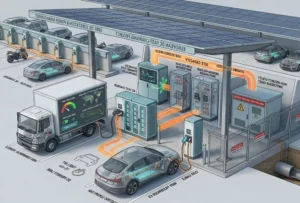
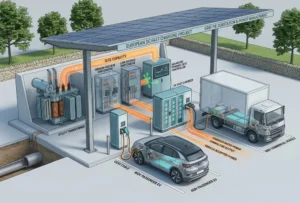
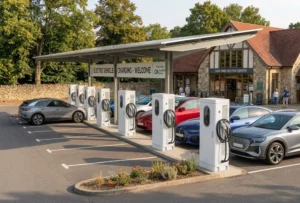
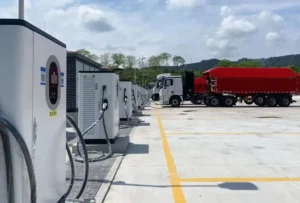
As enterprise logistics operations pivot toward electric delivery fleets, your localized grid demand will explode. Deploying a comprehensive C&I solar EV charging infrastructure ensures that charging dozens of high-voltage trucks simultaneously will not trigger massive grid demand fees or crash your main facility switchgear.
C&I Solar Microgrid Solutions
For remote extraction sites, agricultural processing hubs, or highly sensitive pharmaceutical campuses, deploying C&I solar microgrid solutions provides absolute energy independence. These setups combine solar, batteries, and backup generators into a self-healing energy network.
Energy Management Systems (EMS) for C&I Solar
An advanced Energy Management System (EMS) acts as the central conductor of your facility’s energy network. It constantly monitors live weather updates, internal machinery loads, and real-time spot market utility tariffs to automate your power flow for maximum financial return.
How Much Does a C&I Solar Installation Cost?
Let’s address the exact financial metrics. According to comprehensive industry data analyzed by the International Renewable Energy Agency (IRENA) and actual market implementations tracked in 2026, turnkey project pricing has stabilized significantly, enabling highly accurate upfront forecasting.
Average Commercial Solar Installation Costs
For mid-sized corporate properties (such as office blocks, retail centers, or institutional buildings requiring systems from 100 kW to 500 kW), typical turnkey installation costs generally fall between $1.20 to $1.65 per watt DC. This price covers all engineering, high-efficiency three-phase inverters, and standard permitting costs.
Average Industrial Solar Installation Costs
When moving up to large-scale multi-megawatt factory footprints, massive economies of scale take effect. Large-scale industrial solar and energy storage projects frequently see raw solar component and installation pricing drop down to $0.95 to $1.25 per watt DC, making heavy industrial arrays highly cost-efficient.
Factors Affecting C&I Solar Project Costs
No two industrial sites share an identical electrical or structural blueprint. Final C&I solar system cost and ROI estimations depend heavily on several local engineering and environmental variables.
- System Size: Larger multi-megawatt deployments allow for superior volume discounts on bulk component purchasing.
- Equipment Quality: Opting for premium, high-efficiency n-type TOPCon modules increases initial costs but delivers vastly superior lifetime energy harvest.
- Site Conditions: Complex metal roof profiling or heavily obstructed terrains increase structural engineering labor and racking costs.
- Installation Complexity: High-altitude crane requirements or long conduit runs to reach distant main distribution panels will inflate labor costs.
- Grid Connection Requirements: Older local utility substations may require expensive, mandated transformer upgrades before granting interconnection approval.
Solar Plus Storage Project Cost Considerations
When calculating a comprehensive C&I solar plus BESS solutions deployment, you must look past the raw battery cells and account for the full integrated balance of system components.
- Battery System Costs: High-density LFP liquid-cooled enclosures represent a significant capital component but carry extensive cycle-life warranties.
- EMS and PCS Integration Costs: Investing in heavy-duty Power Conversion Systems (PCS) and advanced bi-directional inverters is essential to enable instant backup response.
How Long Does It Take for a C&I Solar System to Pay for Itself?
Every commercial energy investment must be judged by its speed of capital return. A properly engineered C&I installation is a highly efficient financial asset that rapidly self-amortizes through direct utility bill elimination.
Typical Payback Period for Commercial Solar Projects
For standard commercial buildings operating under normal retail utility tariffs, a well-balanced system typically reaches full financial payback within 4 to 6 years, turning into a source of pure operational profit for the remainder of its 25-year design life.
Typical Payback Period for Industrial Solar Projects
For heavy manufacturing operations—especially a high-demand C&I solar installation for manufacturing facilities that pairs high daytime consumption with aggressive peak demand shaving—the payback period often drops to 3 to 5 years when paired with local tax write-offs.
Factors Influencing Solar ROI
Your ultimate financial trajectory is dictated by a specific combination of localized operational and regulatory variables.
- Electricity Tariffs: The higher your current utility company’s retail power rates are, the faster your on-site solar asset will pay for itself.
- Incentives and Subsidies: Leveraging immediate tax credits and regional clean energy grants pulls forward your break-even point significantly.
- Self-Consumption Rate: Maximizing the percentage of solar power consumed directly on-site, rather than exporting it, yields the highest financial return.
- Battery Storage Integration: While adding a BESS increases your initial capital investment, its ability to systematically eliminate massive peak demand charges can supercharge your long-term ROI.
How C&I Solar Improves Long-Term Business Profitability
Once your solar asset clears its initial payback window, your facility is essentially operating on free daytime electricity. This massive drop in fixed operational expenses flows directly down to your bottom line, boosting net profitability year after year.
C&I Solar Maintenance Requirements and Lifecycle Management
Photovoltaic arrays contain no moving parts, but assuming they are completely maintenance-free is a critical operational mistake. Neglecting basic asset management will lead to gradual performance drops that quietly drain your annual energy yields.
Routine Solar Panel Cleaning
Industrial locations are prone to rapid accumulation of dust, soot, and chemical residue. Scheduling specialized drone or manual panel cleanings at least twice a year keeps your modules operating at peak photon absorption capacity.
Inverter Inspection and Replacement
Inverters handle intense thermal and electrical stress every day. Preventative maintenance requires annual thermal imaging to catch hot spots, torque-testing heavy electrical connections, and cleaning internal cooling fan filters.
Battery Storage Maintenance
Industrial battery assets demand regular technical diagnostic oversight. Operators must continuously monitor cell voltage balancing, test automated fire suppression linkages, and inspect liquid cooling fluid levels to guarantee absolute safety.
Monitoring System Management
By using cloud-based SCADA software, operators track real-time generation metrics. If a single string of panels drops in efficiency due to a blown fuse, the system flags the issue instantly so a technician can resolve it before it hurts your weekly savings.
Preventive Maintenance Best Practices
Do not wait for a critical component failure to take action. Signing a comprehensive Operations and Maintenance (O&M) contract with an experienced provider ensures your enterprise asset consistently meets its modeled generation targets over its entire lifecycle.
Current Market Size of the C&I Solar Industry
The transition toward decentralized commercial generation is accelerating globally. According to the BloombergNEF (BNEF) H1 2026 Energy Storage Outlook, corporate energy procurement has moved far past early adoption and entered a phase of massive global deployment.
Global Commercial Solar Market Overview
Global distributed solar and battery capacity additions set historic records over the past 24 months. As grid connection queues for massive utility farms drag on for years, localized behind-the-meter corporate generation has become the fastest path to adding clean energy capacity globally.
Industrial Solar Deployment Trends
Heavy industry is leading the charge in asset adoption. Manufacturing companies are increasingly moving away from standalone solar arrays, with over 40% of new industrial installations incorporating heavy energy storage capabilities to combat extreme peak demand tariffs.
Regional Market Opportunities
Different economic regions present highly unique market drivers for enterprise solar deployment.
- Europe: Driven by aggressive carbon pricing penalties, strict ESG regulations, and a critical need to decouple industrial operations from volatile imported natural gas markets.
- North America: Accelerated by massive funding streams from federal tax incentives, alongside soaring peak demand charges across key regional industrial zones.
- Middle East: Driven by ambitious industrial diversification initiatives and a massive abundance of high-irradiance desert real estate perfect for large ground-mounted arrays.
- Southeast Asia: Expanding rapidly as fast-growing manufacturing hubs integrate solar to bypass overextended local utility distribution grids.
The Growth Potential of the C&I Solar Market
The structural transformation of global energy networks is entirely unstoppable. According to comprehensive findings in the International Energy Agency (IEA) Global Energy Review 2026, the world has firmly entered the “Age of Electricity,” with solar PV leading all generation technologies in absolute capacity additions.
Growth Driven by Rising Energy Costs
As conventional grid operations become increasingly expensive to maintain, the economic gap between costly retail utility power and low-cost on-site solar generation will continue to widen, making C&I deployment a financial necessity.
Increasing Adoption of Solar Plus Storage
The stationary energy storage market is experiencing an incredible transformation. Driven by dropping battery component costs, corporate buyers are increasingly choosing integrated solar and storage designs to unlock full, round-the-clock power management.
Expansion of Corporate Sustainability Programs
Scope 1 and Scope 2 emission enforcement is moving from voluntary public relations goals into strict, mandatory regulatory compliance, forcing industrial operations to rapidly expand their clean energy infrastructure.
Digital Energy Management and Smart Grids
The integration of advanced machine learning algorithms into localized EMS platforms allows modern facilities to actively participate in automated virtual power plants, turning an on-site energy asset into a proactive revenue generator.
Future Opportunities for C&I Solar and BESS Integration
As grid networks become increasingly dynamic, facilities backed by integrated solar and storage assets will be perfectly positioned to capitalize on real-time grid stabilization incentives, transforming how businesses interact with utilities.
Customized C&I Solar Solutions Based on Business Needs
There is no such thing as a generic, off-the-shelf energy solution for an enterprise facility. A highly profitable solar asset must be custom-engineered around your specific daily operational load curves and unique structural footprint.
Manufacturing Facilities
Designed to handle high-amperage continuous heavy machinery cycles. These systems prioritize heavy commercial and industrial solar EPC contractor standards, combining massive roof arrays with heavy liquid-cooled battery banks to aggressively eliminate demand spikes.
Warehouses and Logistics Centers
These facilities feature massive flat roof spaces relative to very low internal energy usage. They represent perfect setups for capturing huge amounts of solar energy to feed localized delivery vehicle fleets or export power back to the grid.
Commercial Buildings
Focused entirely on matching intense daytime heating, ventilation, and air conditioning loads, these configurations align solar generation curves perfectly with peak building occupancy hours to drive deep monthly utility savings.
Industrial Parks
Utilizing highly advanced shared microgrid architectures, these setups allow a centralized energy asset to distribute clean, lower-cost power seamlessly across multiple localized tenant operations.
Retail and Hospitality Facilities
Combining highly visible solar carport structures with customer-facing EV charging hubs, these systems directly boost corporate brand value while running intense, daytime cooling systems.
How Customized Solar and Storage Solutions Maximize ROI
By tailoring the exact ratio of solar generation to battery storage capacity around your specific utility tariff structure, engineers ensure that every single dollar of invested capital goes toward targeting your most expensive billing points, delivering the absolute fastest project payback.
Frequently Asked Questions About C&I Solar
What is C&I Solar?
It represents Commercial and Industrial solar—behind-the-meter photovoltaic installations custom-engineered specifically to power the heavy electrical loads of businesses, factories, warehouses, and enterprise operations.
How much does a commercial solar installation cost?
Turnkey commercial deployments generally cost between $1.20 to $1.65 per watt DC for mid-sized corporate projects, while large industrial projects achieve bulk discounts, dropping to $0.95 to $1.25 per watt DC.
What is the average payback period for industrial solar projects?
Most optimized installations hit full financial capital payback within 3 to 5 years, depending on local solar irradiance, corporate tax structures, and your local utility tariff pricing.
Can battery storage improve C&I Solar ROI?
Yes, absolutely. A battery system actively stores excess daytime solar energy and discharges it during high-rate utility windows, enabling aggressive peak shaving that slashes expensive demand charge penalties.
What maintenance does a C&I Solar system require?
The system requires professional panel cleaning twice a year, regular electrical string testing, annual inverter cooling loop checks, and continuous, cloud-based remote software monitoring.
Is C&I Solar suitable for manufacturing facilities?
Yes, it is highly ideal. High-demand factories use on-site solar combined with battery storage to protect sensitive production lines from grid voltage drops and significantly lower variable operational overhead.
Can C&I Solar reduce dependence on the grid?
Yes. Integrating generation with heavy battery storage allows a facility to build a resilient, grid-tied hybrid microgrid that can run critical operations independently during grid failures.
Conclusion: Why C&I Solar Is the Future of Business Energy
At the end of the day, managing your enterprise’s energy strategy comes down to a fundamental choice: you can continue to pay an escalating, uncontrollable monthly tax to your local utility company, or you can build an independent on-site power asset and lock in stable operational costs for decades to come. Transitioning to an integrated energy strategy is a highly reliable path to protect your corporation against inflation, secure absolute energy resilience, and drive deep, long-term profitability directly back into your core operations.
Key Takeaways
- Lower electricity costs: Instantly slash your monthly operational bills by generating clean power right on your facility premises.
- Faster ROI: Clear full asset capital payback within 3 to 5 years, unlocking decades of highly predictable, free daytime electricity.
- Greater energy independence: Protect your manufacturing lines from external grid blackouts and brownouts by deploying local battery storage.
- Improved sustainability performance: Swap out unverified carbon offsets for traceable Scope 1 and Scope 2 emission reductions that satisfy strict global supply chain targets.
- Long-term operational resilience: Secure fixed, predictable energy infrastructure costs that shield your business from volatile global fuel market shocks.
Future-Proofing Businesses with C&I Solar and Energy Storage
As grid infrastructure face increasing structural strain and global carbon enforcement rules continue to tighten, running a high-demand business on standalone grid power will only become more expensive and operationally risky. Implementing an integrated energy solution that combines C&I Solar with smart battery storage and automated EMS platforms is the ultimate strategy to secure a competitive, highly profitable, and resilient corporate future.