Introduction
In 2026, the global shift toward decentralized power has turned energy storage batteries into the backbone of industrial resilience. As electricity markets become more volatile and EV charging demands spike, the distinction between a “battery supplier” and a “solution provider” has become the primary factor in project ROI. This guide evaluates the world’s leading BESS (Battery Energy Storage System) manufacturers based on their 2026 product portfolios, manufacturing scale, and sector-specific expertise.
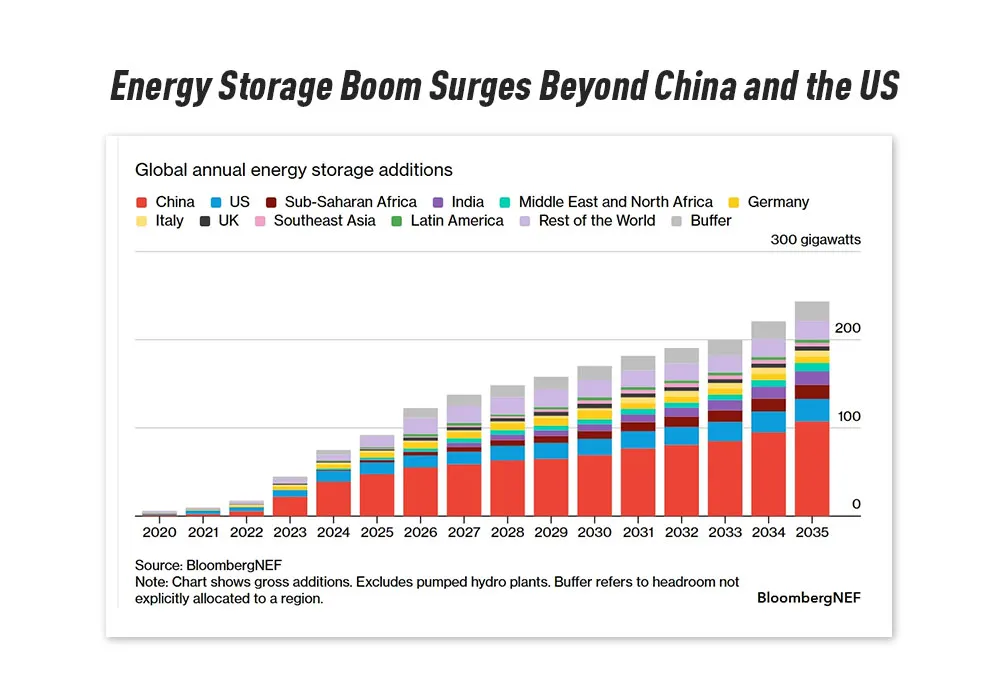
2026 Global BESS Market Landscape: Data & Trends
The velocity of the energy storage market has surged as LFP cell costs have stabilized at record lows. In 2026, the global BESS market is valued at $188.5 Billion, with a cumulative installed capacity exceeding 500 GWh.
| BESS Sector | 2026 Capacity Share | Primary Driver | Target ROI |
| Utility-Scale | 65% | Solar/Wind Firming | 6.5 – 8 Years |
| C&I Storage | 25% | Peak Shaving / Backup | 3.8 – 5.5 Years |
| EV-Charging Sync | 10% | Grid Buffer / Fast Charge | 3.5 – 5 Years |
2026 Technical Standards Checklist
For any project to be bankable and insurable in 2026, systems must meet:
- Safety: UL 9540A (System-level fire test) & NFPA 855 (2026 Revision).
- Efficiency: Round-trip efficiency (RTE) > 90% for liquid-cooled systems.
- Management: AI-driven EMS for real-time market participation.
The Top 10 Battery Energy Storage Leaders (2026 Profiles)
1. CATL (Contemporary Amperex Technology Co., Ltd.)
Role: The Global High-Density Manufacturing Powerhouse
CATL remains the undisputed volume leader. In 2026, their focus has shifted from mere “cells” to “integrated platforms.”
- Flagship Solution: The TENER 6.25MWh Liquid-Cooled Container. This 20ft unit is the 2026 industry benchmark for density, offering “Zero Capacity Degradation” for the first 5 years of operation.
- Technical Edge: Using biomimetic SEI technology, CATL has extended the cycle life of their LFP cells to 15,000 cycles.
- Primary Application: Mass-scale renewable energy integration (Solar + Storage) and national grid frequency regulation.
2. Tesla Energy
Role: The Software-Defined Energy Titan
Tesla has transformed the Megapack into a global financial asset. In 2026, Tesla is less of a battery maker and more of a “Virtual Power Plant” (VPP) architect.
- Flagship Solution: The Megapack 3 (AC-Block). It is a fully integrated system with bi-directional inverters (PCS) and thermal management pre-installed at the factory.
- Technical Edge: The Autobidder AI platform. It manages over 60GWh of storage globally, automatically buying and selling energy to maximize owner profit.
- Primary Application: Private developers and utilities focused on energy arbitrage and 24/7 carbon-free energy matching.
3. BYD (Build Your Dreams)
Role: The Safety-First Vertical Integration Leader
BYD controls its entire supply chain, from lithium mining to the final BESS enclosure, allowing for unmatched cost stability in 2026.
- Flagship Solution: The MC Cube-T, featuring “Cell-to-System” (CTS) technology. By removing modules, they have increased space utilization by 33%.
- Technical Edge: The Blade Battery chemistry. Its unique structure makes it virtually immune to thermal runaway, passing the industry’s most rigorous nail-penetration tests.
- Primary Application: High-safety industrial parks and urban C&I projects where fire codes are the strictest.
4. Fluence Energy
Role: The Pure-Play System Integrator & Grid Expert
A joint venture between Siemens and AES, Fluence specializes in the engineering complexity of connecting large batteries to aging grids.
- Flagship Solution: Gridstack Pro 5000. This series is engineered specifically for long-duration storage (LDES), supporting 4-hour to 8-hour discharge windows.
- Technical Edge: Mosaic AI Software. It provides a “Digital Twin” for every asset, allowing operators to simulate grid stress before it happens.
- Primary Application: Mission-critical utility infrastructure and government-led energy security projects.
5. Sungrow
Role: The Integrated Power Electronics Pioneer
Sungrow has leveraged its #1 position in solar inverters to create the most efficient “AC-DC coupled” systems in the 2026 market.
- Flagship Solution: PowerTitan 2.0. This liquid-cooled BESS integrates the PCS and battery into a single cabinet, reducing the site footprint by 35%.
- Technical Edge: Decentralized PCS design. If one inverter unit fails, the rest of the 5MWh container continues to operate, ensuring 99% system availability.
- Primary Application: Solar + Storage hybrid plants and large-scale industrial peak shaving.
6. LG Energy Solution
Role: The Global Tier-1 Modular Solutions Provider
LG has successfully pivoted to LFP for its stationary line, focusing on localized manufacturing in the US and Europe to meet 2026 trade requirements.
- Flagship Solution: The Enblock L Series. These modular cabinets are designed for scalability, allowing businesses to grow their storage from 100kWh to 2MWh by adding units.
- Technical Edge: High-consistency cell manufacturing. LG’s 2026 cells offer the highest energy density in the LFP category.
- Primary Application: Commercial office buildings, retail centers, and IRA-compliant North American projects.
7. Samsung SDI
Role: The Critical Infrastructure & Longevity Specialist
Samsung SDI targets the premium “Zero-Down-Time” niche, providing batteries for environments where failure is not an option.
- Flagship Solution: SBB (Samsung Battery Box) 2.0. A high-safety enclosure optimized for the high-power pulse requirements of modern data centers.
- Technical Edge: PRiMX Technology. These cells are engineered for ultra-low internal resistance, minimizing heat generation during heavy discharge.
- Primary Application: AI Data Centers, Semiconductor Fabs, and high-tech manufacturing facilities.
8. AnengJi Power (Anengji New Energy)
Role: The Integrated Solution Provider for C&I and EV Charging
AnengJi Power has established itself as a leading supplier and solution architect for the synergy between transportation and energy. They bridge the gap between “powering a building” and “powering a fleet.”
- Flagship Solutions:
- EV-Sync Series: Integrated EV charging piles (180kW-480kW) paired with 1MWh-2.5MWh BESS units.
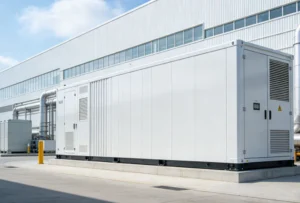
- Liquid-Cooled C&I Cabinets: Compact 215kWh “All-in-One” units for factory peak shaving.
- Technical Edge: Specialized Energy Management Systems (EMS) that prioritize EV charging loads while simultaneously managing demand charges (Peak Shaving) for the facility.
- Primary Application: Logistics fleet hubs, commercial charging plazas, and factories with limited grid capacity. AnengJi provides the hardware (supplier) and the engineering (solution provider) to bypass expensive grid upgrades.
9. Wärtsilä
Role: The Energy-as-a-Service & Microgrid Architect
Wärtsilä is the leader in managing “Hybrid Power.” They excel in environments where multiple energy sources must be balanced in real-time.
- Flagship Solution: The Quantum High-Energy Storage system, managed by the GEMS platform.
- Technical Edge: GEMS Digital Energy Platform. It is the most advanced controller for Virtual Power Plants (VPPs), managing over 20GWh of assets globally.
- Primary Application: Remote islands, mining operations, and microgrids requiring 100% renewable stability.
10. ABB
Role: The Industrial Automation & Grid-Tech Giant
ABB focuses on the “Heavy Industry” segment, integrating BESS into the broader factory automation and green hydrogen ecosystems.
- Flagship Solution: eStorage Max. A ruggedized BESS designed to withstand the harsh electromagnetic environments of steel mills and chemical plants.
- Technical Edge: Deep integration with ABB Ability™ SCADA systems, allowing for “behind-the-meter” optimization that includes machine-level load data.
- Primary Application: Heavy industrial sectors and green hydrogen production facilities.
Future Outlook of Energy Storage Batteries Industry
Rise of Long-Duration Energy Storage (LDES)
As we approach 2030, the market is shifting from “Power” (2-hour duration) to “Energy” (8-hour+ duration). This will drive the evolution of LFP density and the commercialization of iron-flow batteries for seasonal grid balancing.
AI-Based Energy Management Systems
The next generation of energy storage batteries will be self-optimizing. AI will handle real-time “Arbitrage,” buying energy during negative-price windows and selling during peaks with zero human intervention, further shortening the energy storage ROI.
How to Choose the Right Energy Storage Battery Supplier
1. Battery Technology Selection (LFP vs. NMC)
For 90% of C&I and utility projects, LFP (Lithium Iron Phosphate) is the correct choice due to its fire safety and lower cost per cycle.
2. System Integration Capability (BMS + PCS + EMS)
Ensure your supplier offers a “Closed-Loop” system. When the BMS, PCS, and EMS are designed by the same manufacturer (like AnengJi Power), system reliability increases significantly.
3. Safety and Certification (UL / IEC)
Check for UL 9540A (system-level fire test) rather than just UL 1973 (cell/module level). This is the only way to ensure your commercial energy storage systems are insurable in high-density areas.
Applications of Energy Storage Batteries in C&I and Grid
Manufacturing and Industrial Facilities
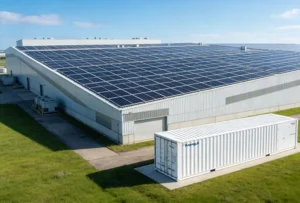
Industrial plants use energy storage batteries to manage “Demand Charges.” By capping their peak draw from the grid, they can save hundreds of thousands of dollars in annual utility fees.
Renewable Energy + Storage
Solar and wind farms use BESS for “Capacity Firming.” This allows them to guarantee a specific power output to the grid, avoiding penalties and securing higher-value Power Purchase Agreements (PPAs).
EV Charging Stations
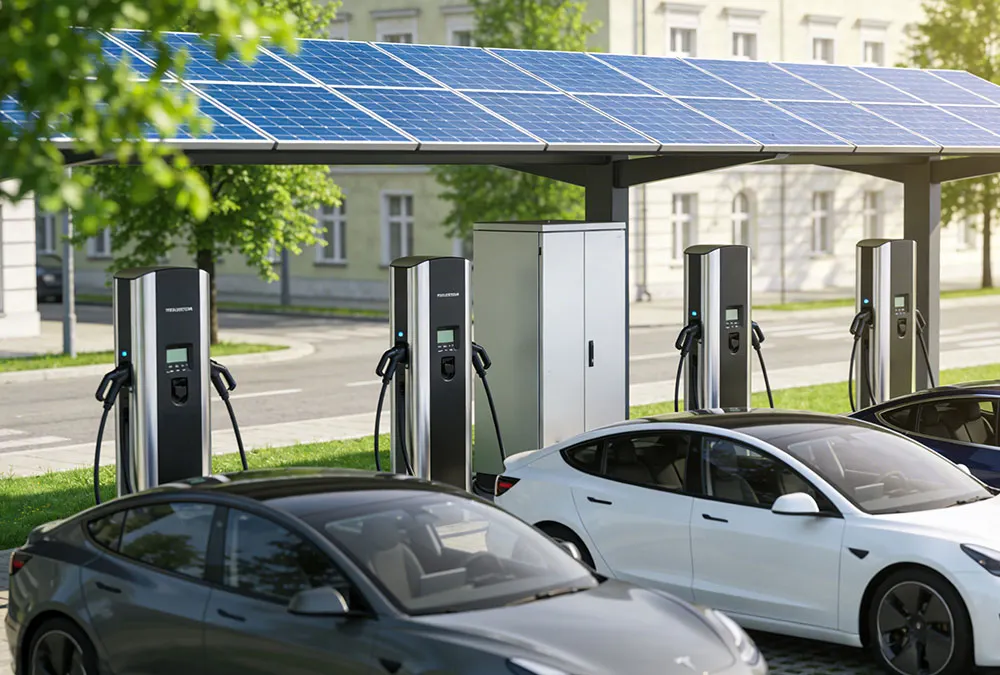
Integrated energy storage batteries allow charging operators to deploy 480kW chargers on sites with only 100kW of available grid power. The battery “buffers” the high-power demand, charging slowly during idle times.
FAQ: Essential BESS Procurement Guide (2026)
Which company is best for Commercial & Industrial (C&I) storage?
For C&I projects, AnengJi Power and Sungrow are top choices due to their “All-in-One” modular cabinets (215kWh – 1MWh) which offer rapid deployment and integrated thermal management.
How do I choose between a battery supplier and a solution provider?
A supplier (like CATL) provides the high-quality cells/containers. A solution provider (like AnengJi Power or Fluence) provides the engineering, software, and integration (e.g., syncing storage with EV chargers) needed to make the system profitable.
What is the typical ROI for a 1MWh BESS in 2026?
Most 1MWh systems in industrial settings achieve an ROI within 4 to 5.5 years. This is driven by saving $100k+ annually in demand charges and participating in grid frequency response programs.
Why is liquid cooling mandatory in 2026?
Liquid cooling ensures cell temperature uniformity within ±2°C. This prevents the “hot-spot” degradation common in air-cooled systems, extending the BESS lifespan by up to 5 years.
Conclusion: Partnering for a Resilient Future
In 2026, selecting an energy storage partner is a long-term strategic commitment. Whether you require the massive scale of CATL, the software intelligence of Tesla, or the specialized EV-charging integration of AnengJi Power, the key is to align the manufacturer’s technical strength with your project’s specific ROI goals.
Ready to move from research to deployment?
- [Request a Comparative BESS Technical Proposal] – Get a side-by-side analysis of these Top 10 providers.
- [Download the 2026 Industrial Peak-Shaving ROI Report] – See how BESS can slash your demand charges.
- [Consult with a Solution Architect] – Design your integrated EV charging and storage roadmap today.
Your transition to a high-ROI, resilient energy future starts here.