Utility grid operators and industrial asset managers face strict performance, security, and yield parameters. Modern lithium battery energy storage infrastructure resolves intermittency, stabilizes line frequency, and mitigates expensive demand charges across demanding site operations.
Addressing Strategic Asset Pain Points
- Thermal stability eliminating catastrophic cell runaway risks in dense facilities
- 6,000+ deep discharge cycles maintaining 80% State of Health over 15 years
- Substantial Levelized Cost of Storage (LCOS) reduction compared to ternary alternatives
- Seamless black-start and millisecond grid-forming response capabilities
What Is a Lithium Battery Energy Storage System for BESS Projects?
Understanding Lithium Battery Energy Storage Technology
An industrial lithium battery energy storage system is an engineered, multi-layered energy architecture. It captures excess electricity, manages voltage vectors, and dispatches stored energy under high system stress.
Batteries store DC power chemically inside cathode structures. Intelligent conversion hardware translates that potential back into balanced AC electricity for utility lines.
Hardware hierarchy progresses systematically:
- Prismatic LFP battery cells engineered for deep discharge tolerance
- Rack-mounted battery modules containing structural busbars and sensing taps
- Enclosed battery racks integrated with localized fire safety systems
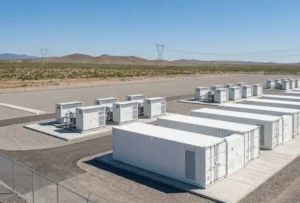
- Outdoor-rated containerized BESS enclosures with HVAC thermal management
Primary commercial applications span:
- Utility-scale renewable energy smoothing and curtailment mitigation
- Commercial and industrial peak demand charge suppression
- Microgrid energy resilience and seamless emergency backup power
- Grid frequency regulation and synthetic inertia support services
How Lithium Battery Energy Storage Systems Work
System balance relies on bidirectional current processing across distinct control layers.
Charging Sequence: Onsite solar arrays or grid substations supply AC energy. The Power Conversion System (PCS) rectifies AC to clean DC electricity. Cell chemistry accepts charges cleanly up to programmed limits.
Discharging Sequence: Onsite demand triggers instant power discharge. DC electricity passes from racks through the PCS inverter stage. Clean AC current feeds local plant equipment or utility distribution lines.
Four foundational subsystems must communicate seamlessly across industrial protocols:
Why LiFePO4 Battery Is Preferred for Lithium Battery Energy Storage Systems
Addressing Buyer Hesitation: “Will thermal safety risks delay municipal zoning and insurance approvals?”
Iron phosphate crystal bonds remain structurally stable up to 270°C without releasing free oxygen. This inherent safety simplifies site permitting and lowers facility fire insurance premiums significantly.
LiFePO4 Provides Superior Safety for Large-Scale BESS Applications
Safety remains the primary criteria during industrial site evaluation.
Strong covalent chemical bonds protect Lithium Iron Phosphate crystals from thermal degradation. Oxygen remains tightly bound inside the molecular lattice even under extreme electrical stress.
According to BloombergNEF’s 2026 Energy Storage Market Outlook, LiFePO4 secured over 90% of global utility stationary deployments due to this safety performance.
This structural reliability protects mission-critical installations:
- Front-of-the-meter utility sub-stations
- High-density urban commercial facilities
- Industrial manufacturing plants with sensitive load profiles
System design integrates comprehensive safety safeguards:
- Sub-millisecond cell voltage and thermal sensing
- Direct-to-plate liquid cooling circuits preventing thermal propagation
- Integrated aerosol and clean-agent fire suppression systems
LiFePO4 Offers Longer Cycle Life for Long-Term Energy Storage Projects
Project developers focus closely on asset operating lifespans.
Repeated cycling causes gradual capacity decay in inferior chemistries. Solid LFP chemistry resists mechanical lattice strain during daily ion migration.
Industrial LiFePO4 cells deliver over 6,000 to 8,000 full charge-discharge cycles at 80% Depth of Discharge.
That translates to 15 years of uninterrupted daily energy cycling. Capital expenditure requirements for cell replacements disappear completely during project payback windows.
LiFePO4 Delivers Better Cost Performance Over the Battery Lifecycle
Evaluating storage investments purely on upfront initial cost creates inaccurate financial forecasts.
BloombergNEF’s 2025 Global Battery Price Survey confirmed stationary LFP pack prices dropped below $70 per kWh.
Lower degradation combined with minimal maintenance requirements drives down the real Levelized Cost of Storage (LCOS).
Lifecycle Financial Path:
Competitive Upfront CapEx → Zero Mid-Life Cell Swaps → 92% Round-Trip Efficiency → Lowest Long-Term LCOS
Key Components of Lithium Battery Energy Storage Systems
Lithium Battery Pack: The Core Energy Storage Unit
The battery pack forms the fundamental electrochemical storage core.
Precision prismatic cells connect using copper busbars inside structural enclosures. Internal wiring routes temperature data directly to internal monitoring chips.
Critical technical specifications include:
- Nominal storage capacity rated in kWh or MWh
- DC working voltage range matching inverter input limits
- Maximum continuous and peak discharge C-rates
- Thermal operating envelope under high load demands
Battery Management System (BMS): Protecting Lithium Battery Performance
The BMS operates as the safety barrier and health controller.
It scans cell metrics continuously, executing active balancing algorithms to prevent localized cell overcharging.
Core BMS responsibilities include:
- Cell-level voltage monitoring and passive or active balancing
- Thermal sensing across module hotspots
- Real-time State of Charge (SOC) estimation
- Accurate State of Health (SOH) tracking over thousands of cycles
- Automated contactor isolation during electrical fault conditions
Power Conversion System (PCS): Managing Energy Conversion
The PCS manages bidirectional energy conversion between battery racks and facility grid lines.
Modern industrial inverters support grid-forming control modes.
Wood Mackenzie’s 2026 Grid Edge Trends Analysis emphasizes grid-forming PCS hardware as essential for microgrids operating without weak local utility voltage support.
They generate stable voltage reference waves, supporting local grid stability automatically during peak outages.
Energy Management System (EMS): Optimizing Battery Energy Usage
The EMS provides top-level software intelligence across entire site installations.
It evaluates utility electricity pricing schedules, solar generation curves, and facility building power draws.
It automates peak shaving schedules, dispatches back-up circuits during outages, and optimizes financial yields automatically.
Recommended Industrial LiFePO4 Energy Storage Solutions
Select optimized, liquid-cooled industrial storage enclosures matching your plant capacity profile:
1. 100kWh All-in-One Outdoor Cabinet
Core Selling Point: Compact footprint integrated with built-in 50kW PCS. Designed for small commercial facilities and EV charger capacity expansion.
2. 261kWh Commercial Storage System
Core Selling Point: Precision liquid cooling optimized for factory peak shaving. Supports modular parallel expansion up to 2MWh arrays.
3. 418kWh Heavy Industrial Cabinet
Core Selling Point: Engineered for high continuous discharge power demands in heavy manufacturing facilities. Features IP55 weather protection.
4. 1MWh Modular Containerized Solution
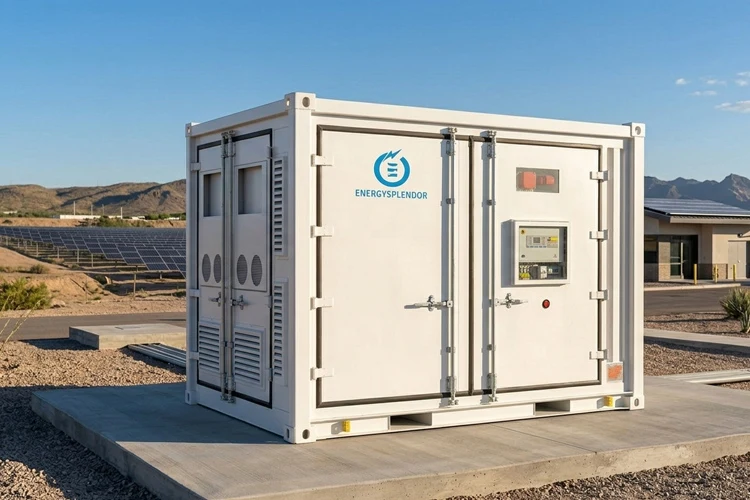
Core Selling Point: Turnkey 20ft container system for utility-scale solar installations. Features HVAC climate management and automated fire suppression.
Advantages of Lithium Battery Energy Storage Systems for BESS Projects
High Energy Density Enables Compact Energy Storage Design
Commercial footprint constraints often limit storage project placement options.
Industrial battery storage system solutions maximize volumetric density.
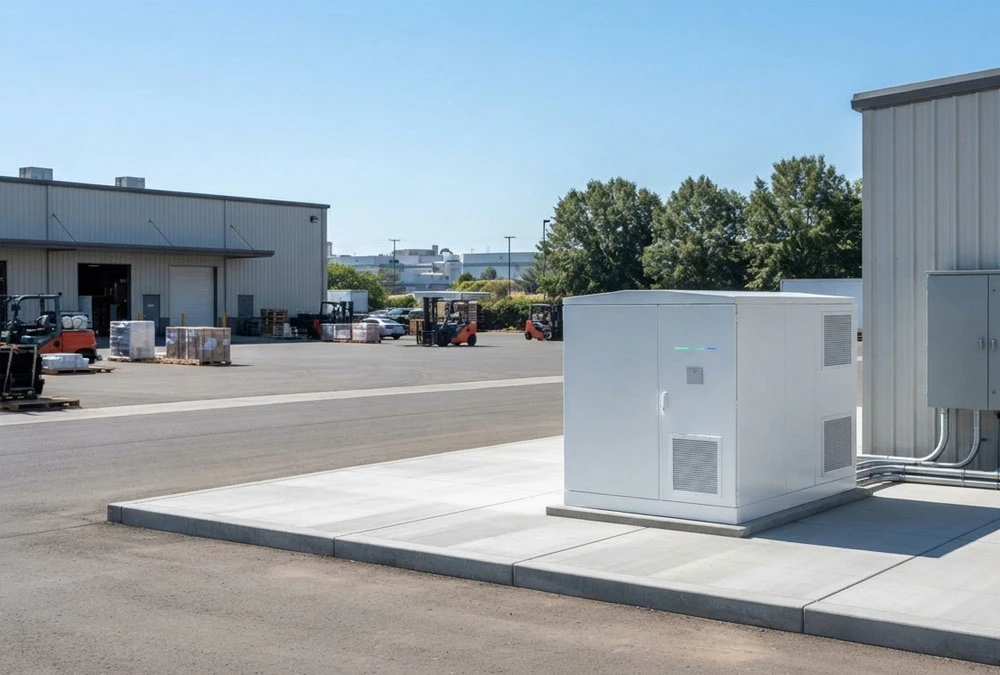
Engineers install high capacity within compact outdoor footprints. Systems fit smoothly along facility walls or beside electrical transformers.
High Round-Trip Efficiency Improves Energy Utilization
Internal impedance losses consume energy and lower site financial yields.
Advanced LiFePO4 chemistry yields exceptional round-trip efficiency (RTE) reaching 92% to 95%.
More charging power gets returned during discharge cycles, minimizing energy waste across long-term asset operations.
Fast Charging Capability Supports Flexible Energy Management
Dynamic utility pricing requires fast charging capabilities during narrow off-peak rate windows.
LFP chemistry accepts high charge rates smoothly without thermal distress.
Facilities fill total storage reserves rapidly during brief low-cost electricity pricing periods.
Low Maintenance Requirements Reduce Operating Costs
Solid cabinet engineering eliminates routine fluid checks or cell topping operations.
Remote telemetry relays operational metrics continuously to maintenance dashboards. Field technicians perform simple scheduled air-filter servicing occasionally.
Lithium Battery Energy Storage Applications in BESS Projects
Solar Plus LiFePO4 Battery Energy Storage Systems
Solar PV output peaks around mid-day, while manufacturing plant energy consumption often ramps up during afternoon or evening operating shifts.
LiFePO4 battery storage captures mid-day solar electricity generation efficiently.
Instead of curtailing surplus solar production back to the grid for low feed-in tariffs, facilities store clean power. They discharge energy later during high utility tariff windows, boosting overall solar ROI.
Commercial and Industrial Lithium Battery Energy Storage
Industrial facilities pay steep demand charges based on short monthly electrical consumption spikes.
Addressing Buyer Hesitation: “How quickly does peak shaving respond to sudden factory machinery startup spikes?”
PCS inverters discharge stored battery power within milliseconds of detecting load spikes. The grid meter never senses sudden industrial motor startup surges, capping demand charges effectively.
An industrial LiFePO4 battery storage system discharges stored power instantly when heavy machinery starts up.
This automated peak shaving strategy limits plant utility peak demand spikes, generating consistent monthly utility cost savings.
Utility Scale Lithium Battery Energy Storage Systems
Modern regional electricity grids require ultra-fast frequency regulation assets.
Large utility containerized BESS installations respond instantly to sudden distribution grid frequency drops.
They balance regional transmission networks, stabilize rural feeder lines, and allow higher penetration of intermittent wind and solar resources.
LiFePO4 vs Other Battery Technologies for Energy Storage
Technology Terminology Decoded:
LiFePO4 (Lithium Iron Phosphate): An advanced lithium cathode chemistry featuring high structural thermal safety, non-toxic raw materials, and exceptionally long lifespan.
NMC (Nickel Manganese Cobalt): High volumetric energy density lithium chemistry used heavily in electric vehicles, but exhibiting lower thermal stability thresholds in stationary environments.
Lead-Acid: Legacy chemical storage technology featuring low initial purchase costs, but offset by heavy weight, short cycle life, and continuous electrolyte maintenance requirements.
LiFePO4 vs Lead Acid Battery for Energy Storage
Comparing legacy lead-acid chemistry with modern lithium iron phosphate highlights massive long-term financial differences:
| Parameter | LiFePO4 Battery System | Lead Acid Battery System | Buyer Financial & Operational Advantage |
|---|---|---|---|
| Cycle Life (@80% DoD) | 6,000 to 8,000 cycles | 500 to 1,000 cycles | Eliminates 4 to 5 costly system battery replacements across a 15-year lifecycle. |
| Usable Depth of Discharge | 90% – 95% DoD | 50% DoD limit | Unlocks 40% more usable energy capacity from the exact same rated battery size. |
| Round-Trip Efficiency | 92% – 95% RTE | 70% – 78% RTE | Saves substantial electricity purchase costs lost as waste heat during daily cycling. |
| Maintenance Requirements | Zero fluid checks / sealed | Frequent acid checks | Cuts onsite technician site labor and maintenance expenditure completely. |
LiFePO4 vs NMC Battery for BESS Applications
NMC offers higher volumetric energy density suited for electric vehicles.
Stationary utility and commercial installations prioritize thermal stability, cell longevity, and raw material availability over minimal physical weight.
| Feature Parameter | LiFePO4 Chemistry | NMC Chemistry | Buyer Financial & Operational Advantage |
|---|---|---|---|
| Thermal Runaway Temp | ~270°C (High Stability) | ~210°C (Moderate Risk) | Accelerates local fire authority clearances and lowers insurance premiums. |
| Raw Material Supply | Iron & Phosphate (Abundant) | Nickel & Cobalt (Volatile) | Protects project budgets from volatile international metal supply chain spikes. |
| Stationary BESS Market Share | Dominant Choice (~90%) | Declining Share (<10%) | Aligns with global engineering standards and tier-1 bankability guidelines. |
How to Choose the Right Lithium Battery Energy Storage System for Your BESS Project?
Evaluate Battery Chemistry and Safety Performance
Thoroughly inspect third-party safety certification reports before finalizing equipment procurement contracts.
Verify that your targeted manufacturer holds valid UL 9540, UL 9540A thermal runaway test reports, and IEC 62619 safety certificates.
Check Cycle Life and Warranty Conditions
Examine performance guarantee language carefully within supplier warranty documentation.
A robust commercial warranty must explicitly guarantee at least 6,000 operational cycles or 10 years of service at 70% remaining capacity retention under specified thermal limits.
Consider System Scalability and Future Expansion
Commercial site power consumption frequently expands due to plant modifications or electric vehicle fleet addition.
Select modular cabinet architectures that allow seamless addition of extra outdoor battery units without requiring total replacement of existing PCS inverters.
Select an Experienced LiFePO4 BESS Manufacturer
Partner with a recognized commercial lithium battery energy storage system supplier.
Evaluate their past engineering deployments, custom system integration capabilities, rapid spare-parts availability, and dedicated local field support teams.
Why LiFePO4 Is the Future of Lithium Battery Energy Storage Systems
Supporting Renewable Energy Growth Worldwide
Utility solar PV and wind generation capacity accelerates rapidly across international electricity markets.
Intermittent renewable power assets require dependable, large-scale electrochemical storage solutions to balance grid fluctuations.
Enabling More Reliable and Flexible Power Systems
Battery energy storage transforms variable solar output into fully dispatchable base load power.
It stabilizes line voltages, delivers fast dynamic frequency response, and prevents industrial outages across regional energy networks.
Creating Long-Term Value for Energy Projects
Advancing manufacturing efficiencies lower battery equipment production costs continuously.
Superior round-trip efficiency combined with extended cycle lifespans generates stable, long-term returns on investment for facility asset owners.
Frequently Asked Questions About Lithium Battery Energy Storage Systems
Why is LiFePO4 preferred for BESS projects?
LiFePO4 offers superior chemical thermal stability, a extended 6,000+ cycle life, and low lifecycle costs. It eliminates catastrophic thermal runaway risks common in cobalt-based chemistries.
How long does a LiFePO4 battery energy storage system last?
Under standard daily charge-discharge cycling conditions, high-quality LiFePO4 systems operate reliably for 12 to 15 years before remaining capacity decays to 80%.
Are lithium battery energy storage systems safe?
Yes. Engineered with integrated BMS controls, liquid thermal cooling, and UL 9540A certification, industrial LFP systems deliver exceptional operational safety.
What components are included in a BESS system?
A full BESS includes chemical battery packs, a Battery Management System (BMS), a Power Conversion System (PCS inverter), and an Energy Management System (EMS).
Can LiFePO4 batteries be used with solar energy systems?
Yes. LiFePO4 batteries store mid-day solar electricity generation effectively, discharging clean power during high-cost peak evening grid hours.
What is the difference between lithium battery storage and BESS?
Lithium battery storage refers specifically to chemical storage cells, while a complete BESS encompasses full inversion, thermal HVAC control, and energy scheduling logic.
How do I choose a lithium battery energy storage supplier?
Choose suppliers demonstrating extensive industrial deployment experience, valid UL/IEC safety testing certifications, modular system engineering, and accessible warranty support.
Build a Safer and More Reliable BESS Project With Advanced LiFePO4 Battery Technology
Partner with an experienced industrial LiFePO4 battery storage manufacturer to design, engineer, and deploy your targeted BESS installation.
Submit Your Technical Project Specifications For a Custom Engineering Proposal:
- Targeted energy capacity (100kWh, 261kWh, 418kWh, 1MWh+)
- Application scenario (Solar + Storage, Peak Shaving, Microgrid)
- Onsite grid connection specs and local utility compliance standards
- Project deployment location and target commissioning date