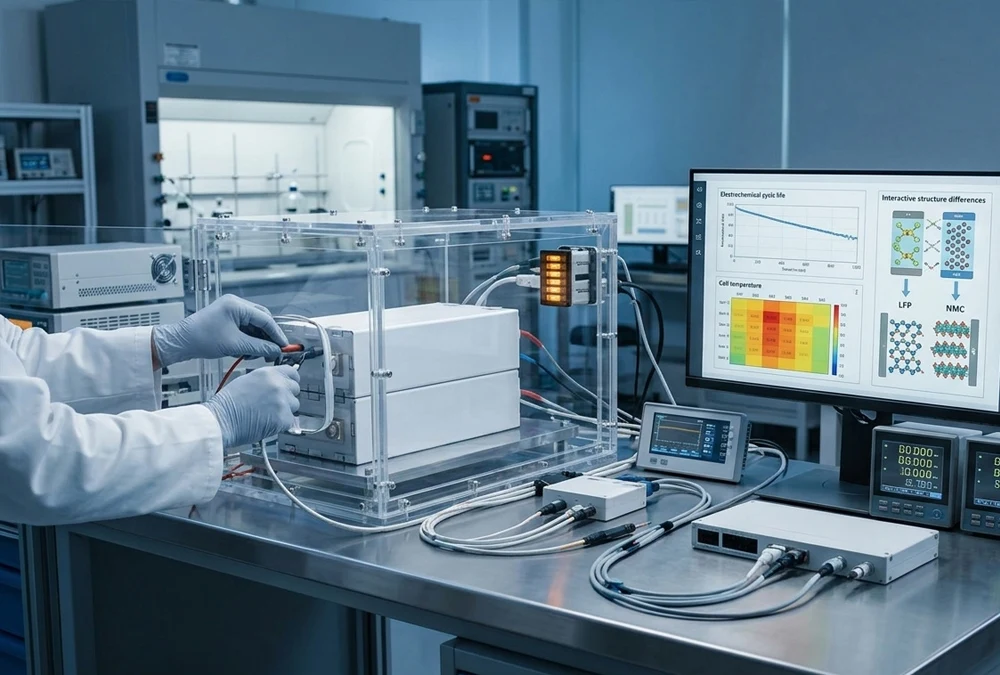
Battery Chemistries for Energy Storage Systems: Choosing the Right Battery Technology for BESS Projects
Evaluating various Battery Chemistries determines whether your commercial energy project succeeds or fails.
Cell choices impact safety, operating efficiency, actual lifespan, and total investment costs.
Modern power grids require continuous daily charge and discharge cycles.
Selecting the proper battery chemistries for energy storage systems protects your capital.
It prevents premature capacity loss and eliminates thermal safety risks on site.
6000+ Cycle Lifespan
Optimized LCOS Return
What Are Battery Chemistries and Why Do They Matter in Energy Storage Systems?
Understanding Energy Storage Battery Technology
Battery Chemistries define the exact active compounds inside every storage cell.
Cathode and anode chemical compositions govern how lithium ions move during operation.
These internal reactions dictate cell voltage, heat generation, and power limits.
In stationary storage, physical components scale upward in a clear sequence:
Cell-level chemical traits directly control system-level financial returns.
A single cell defect can compromise an entire megawatt installation.
Battery Performance Characteristics Impacting BESS
Chemical design alters every major performance metric in stationary energy storage batteries:
- Energy Density: Volumetric density determines total system container footprint on site.
- Cycle Life: Cycle capability dictates how many years cells store energy reliably.
- Thermal Stability: Chemical stability prevents hazardous thermal runaway during extreme summer heat.
- Round-Trip Efficiency: Higher conversion efficiency minimizes lost energy during daily charge cycles.
- Lifecycle Cost: Slower cell degradation rates lower operational maintenance costs over 15 years.
Buyer Misconception: “Can I just pick the lowest upfront cost per kilowatt-hour?”
Buying cheap cells based only on initial CAPEX is a costly mistake. Low-grade cells degrade fast under heavy daily usage. They require expensive cell augmentation within five years. Calculate Levelized Cost of Storage (LCOS) to evaluate real 15-year financial returns.
Types of Battery Technology Used in Energy Storage Systems
Comparing various types of battery chemistry reveals clear performance differences.
Each technology serves distinct discharge durations and site operational goals.
Lithium Ion Battery Energy Storage
Modern lithium ion battery technology powers most commercial storage deployments worldwide today.
It offers fast grid response times alongside high round-trip efficiency.
Two primary lithium formulations compete across industrial markets:
1. Lithium Iron Phosphate (LiFePO4)
A lithium iron phosphate battery LiFePO4 uses stable iron phosphate cathode structures.
It handles 6,000 to 8,000 deep discharge cycles with minimal capacity loss.
Strong chemical bonds eliminate oxygen release under severe overheating conditions.
2. Nickel Manganese Cobalt (NMC)
NMC battery chemistry offers higher energy density in smaller physical spaces.
However, nickel-based cells show lower thermal runaway breakdown temperatures.
They degrade rapidly when subjected to daily 100% depth-of-discharge cycles.
Lead Acid Energy Storage
Lead-acid is a traditional storage technology with low initial purchase prices.
Global supply chains and recycling systems are fully mature.
However, short cycle life severely restricts lead-acid for daily solar storage.
Deep discharges degrade lead plates within 500 to 1,000 charge cycles.
Large installations require massive room space due to low energy density.
Flow Battery Energy Storage
A long duration energy storage battery based on flow technology uses liquid electrolyte tanks.
Storage capacity scales independently by simply increasing liquid tank sizes.
Technical Breakdown: How Vanadium Flow Batteries Work
Vanadium redox flow systems pump active chemical liquids through a central cell stack. Liquid storage eliminates thermal runaway risks completely. These systems suit multi-hour grid storage exceeding 8 to 12 hours of continuous discharge.
Flow systems require active mechanical pumps, sensors, and plumbing maintenance.
Their round-trip efficiency remains lower, usually between 70% and 75%.
Nickel-Based Battery Technologies
Nickel-cadmium and nickel-metal hydride batteries handle extreme cold ambient temperatures well.
High raw material manufacturing costs limit their use in large stationary projects.
Future Energy Storage Technology: Hydrogen and Solid-State
Hydrogen fuel systems allow seasonal energy shifting across several months.
High round-trip energy losses currently limit commercial economic viability.
Solid-state designs replace flammable liquid electrolytes with solid ceramic layers.
High manufacturing costs delay large-scale commercial deployments for several years.
Battery Technology Comparison for Energy Storage Systems
Comparing key technical parameters highlights critical trade-offs across storage options.
Evaluating energy density and cycle life helps clarify long-term procurement decisions.
| Battery Chemistry | Energy Density | Thermal Safety | Cycle Life (80% DOD) | Round-Trip Efficiency | Direct Benefit to Buyers & Developers |
|---|---|---|---|---|---|
| LiFePO4 (LFP) | 160 – 185 Wh/kg | High (>270°C Breakdown) | 6,000 – 8,000+ Cycles | 92% – 95% | Lowest 15-year LCOS. Eliminates fire risks and delivers dependable daily power shifting returns. |
| NMC Lithium | 220 – 260 Wh/kg | Moderate (~210°C Breakdown) | 2,500 – 4,000 Cycles | 88% – 92% | Saves physical space in tight urban installations. Requires expensive fire suppression upgrades. |
| Lead Acid | 30 – 50 Wh/kg | Moderate (Gassing Risk) | 500 – 1,200 Cycles | 70% – 78% | Offers low upfront cost for basic emergency backup systems that cycle infrequently. |
| Vanadium Flow | 20 – 40 Wh/kg | Extremely High (Non-flammable) | 15,000+ Cycles | 70% – 75% | Provides zero chemical capacity loss across 20 years for long duration microgrid backup. |
Battery Storage Technology Selection: Advantages and Tradeoffs
Key Advantages of Advanced Lithium Battery Chemistry
Modern lithium storage solutions transformed global energy markets over recent years.
High efficiency reduces lost electricity during daily solar charging.
Compact enclosure sizes lower transport and site installation costs.
Fast power response helps stabilize local grid frequency fluctuations within milliseconds.
Industry Challenges: Thermal Runaway and Battery Degradation
Managing battery degradation and safety is critical for site operators.
High ambient temperatures speed up internal chemical side-reactions.
This leads to solid electrolyte interphase (SEI) growth and permanent capacity loss.
Technical Mechanism: What Causes Thermal Runaway in Lithium Cells?
Thermal runaway starts when internal cell heat exceeds cooling capabilities. Excessive heat breaks down internal separator layers. Cathode material decomposes and releases oxygen into flammable electrolyte solvent. This creates a self-sustaining combustion process if not controlled by proper liquid cooling.
Raw material supply fluctuations affect battery manufacturing budgets.
Choosing stable chemical materials helps ensure predictable long-term equipment pricing.
Why LiFePO4 Battery Chemistry Is Preferred for Modern BESS Projects
Global energy storage installations reached a record 112 GW / 307 GWh, with projections reaching 158 GW in 2026. According to BNEF data, LFP accounts for approximately 90% of all new stationary energy storage deployments. BNEF forecasts that combined NMC and NCA market shares in stationary storage will drop to under 1% within the coming years due to LFP cost advantages.
Superior Battery Thermal Stability and Chemical Safety
Why is LFP the best battery chemistry for BESS installations today?
Strong phosphorus-oxygen covalent bonds create a stable crystal lattice.
This structure withstands high temperatures without releasing oxygen gas.
It makes LFP ideal for commercial battery storage systems near occupied buildings.
Lower Total Cost of Ownership Across 15-Year Operations
Conducting a battery lifecycle cost analysis reveals real economic value.
LFP delivers double the usable cycle life of traditional nickel-based cells.
Fewer replacement cycles mean much lower long-term project operational expenses.
Recommended Industrial & Commercial Storage Solutions
Matching storage capacity to site transformer capacity simplifies engineering.
Here are key factory-tested commercial storage enclosures built with LFP chemistry:
| Product Capacity | Cooling System | Target Commercial Application | Direct Benefit to Buyers & Site Managers |
|---|---|---|---|
| 100 kWh BESS Cabinet | Smart Air / Liquid Cooling | Small factories, EV fast chargers | Fits compact spaces. Easy installation on standard outdoor concrete pads without costly civil work. |
| 261 kWh Outdoor Cabinet | Precision Liquid Cooling | Commercial peak shaving, Solar shifting | High energy density. Precision liquid cooling reduces auxiliary cooling electricity costs by up to 30%. |
| 418 kWh Modular System | Precision Liquid Cooling | Industrial microgrids, Large C&I sites | Modular expansion. Connect multiple cabinets in parallel as factory energy demands grow. |
| 1 MWh Storage Container | Liquid Cooled ISO Container | Utility scale battery technology, Grid support | Turnkey megawatt power. Pre-tested factory assembly cuts site installation time and labor by 50%. |
Buyer Question: “Should I select an air-cooled or liquid-cooled system?”
Liquid cooling is superior for commercial systems rated 200 kWh and above. Liquid cooling maintains cell temperature variance below 2.5°C across the cabinet. Air cooling creates thermal hotspots that accelerate cell degradation in hot climates.
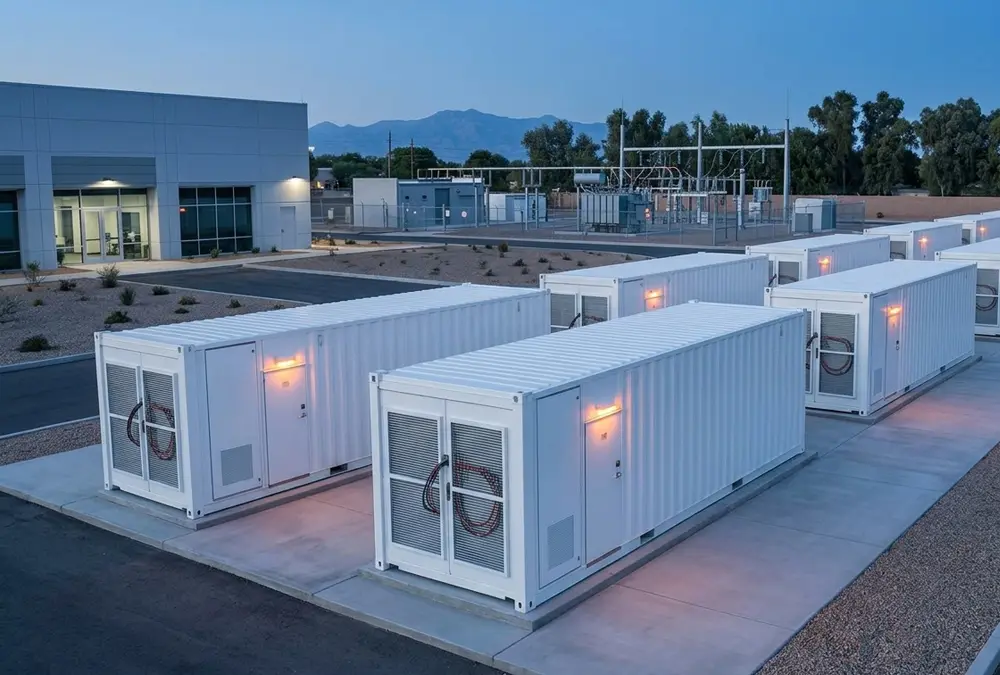
Improving Lithium Battery Safety Management System Architecture
Ensuring safety requires multi-layered protection architectures beyond cell chemistry alone.
Combining smart hardware monitoring with physical protection prevents isolated electrical failures.
Multi-Level Safety Protection Layers
- Cell Level: Built-in safety vents release internal gas pressure before casing damage occurs.
- Pack Level: Multi-tier BMS monitors individual cell voltages, temperatures, and current flow.
- System Level: Automatic fire suppression deploys targeted gas agents upon sensing off-gas signals.
Immersion Cooling Battery Energy Storage System Innovation
An immersion cooling battery energy storage system submerges cells directly in dielectric fluid.
Non-conductive cooling liquid absorbs heat directly from cell surfaces.
This removes heat ten times faster than forced air systems.
It eliminates thermal propagation risks completely between neighboring cells.
Battery Safety Standards and Testing Certifications
Verify international safety certifications before finalizing equipment procurement contracts:
- UL 9540A: Evaluates fire propagation behavior during severe thermal runaway testing.
- NFPA 855: Establishes safety clearance distances and fire suppression rules for storage sites.
- IEC 62619: Validates safety requirements for industrial lithium battery applications.
How to Choose the Right Battery Chemistry for Your Energy Storage Project?
Selecting proper storage equipment requires aligning site requirements with battery performance.
Follow these evaluation steps to make an informed engineering decision:
1. Define Site Operational Goals
Determine whether your primary goal is peak shaving, backup power, or solar self-consumption.
Choosing which battery chemistry is best for solar storage depends on daily cycle frequency.
LFP is ideal for daily charge and discharge operations.
2. Calculate Total Lifetime TCO
Compare total cost of ownership rather than initial cell procurement costs alone.
Factor in HVAC auxiliary electricity consumption, warranty coverage terms, and expected capacity loss.
3. Select an Experienced BESS Supplier
Work with established equipment suppliers who offer bankable warranty guarantees.
Ensure local technical teams are available to provide rapid site maintenance support.
Future Trends in Battery Chemistries for Energy Storage
Development across global Battery Chemistries continues at a rapid pace.
Adding manganese to LFP (LMFP) increases cell voltage from 3.2V to 3.8V.
This boosts energy density without sacrificing underlying chemical safety.
Sodium-ion technology is gaining traction for cold climate installations.
Sodium avoids lithium raw material supply bottlenecks by utilizing abundant salt resources.
Get Expert Advice on Battery Chemistry Selection for Your BESS Project
Every project site presents distinct electrical loads, weather conditions, and financial targets. Talk directly with our application engineering team today for a customized technical configuration.
Frequently Asked Questions (FAQ)
What is the best battery chemistry for energy storage systems?
Lithium Iron Phosphate (LiFePO4 / LFP) is the premier choice for stationary storage projects. It delivers high thermal safety, 6,000+ deep cycles, and excellent 15-year lifecycle returns.
Why is LiFePO4 preferred for BESS projects over NMC?
LFP offers far superior thermal stability and does not release oxygen during overheating. It lasts twice as long as NMC under daily 100% depth-of-discharge cycling conditions.
What is the safest battery chemistry for energy storage?
Vanadium flow batteries are non-flammable due to liquid electrolytes. Among lithium technologies, LiFePO4 represents the safest commercially available choice on the market.
How long do lithium battery energy storage systems last?
High-grade commercial LFP battery systems last between 12 to 15 years under daily cycling before reaching end-of-life capacity limits.
What factors affect battery degradation in BESS installations?
Battery degradation is primarily caused by high operating temperatures, rapid charge/discharge rates, extreme states of charge, and total cumulative cycle counts.