Introduction
The global transition toward a carbon-neutral grid has fundamentally changed how we view power infrastructure. As we move into 2026, the limitations of short-duration lithium-ion batteries are becoming increasingly apparent for grid-scale stabilization. To achieve true energy independence, the industry is shifting its focus toward Liquid Air Energy Storage Explained—a revolutionary technology that offers the scale of pumped hydro without the geographical constraints. As an engineer who has spent decades navigating the evolution of power conversion systems and EV charging infrastructure, I have seen firsthand how the integration of long-duration energy storage (LDES) is no longer a luxury but a mechanical necessity for modern electrical grids.
What is Liquid Air Energy Storage (LAES)?
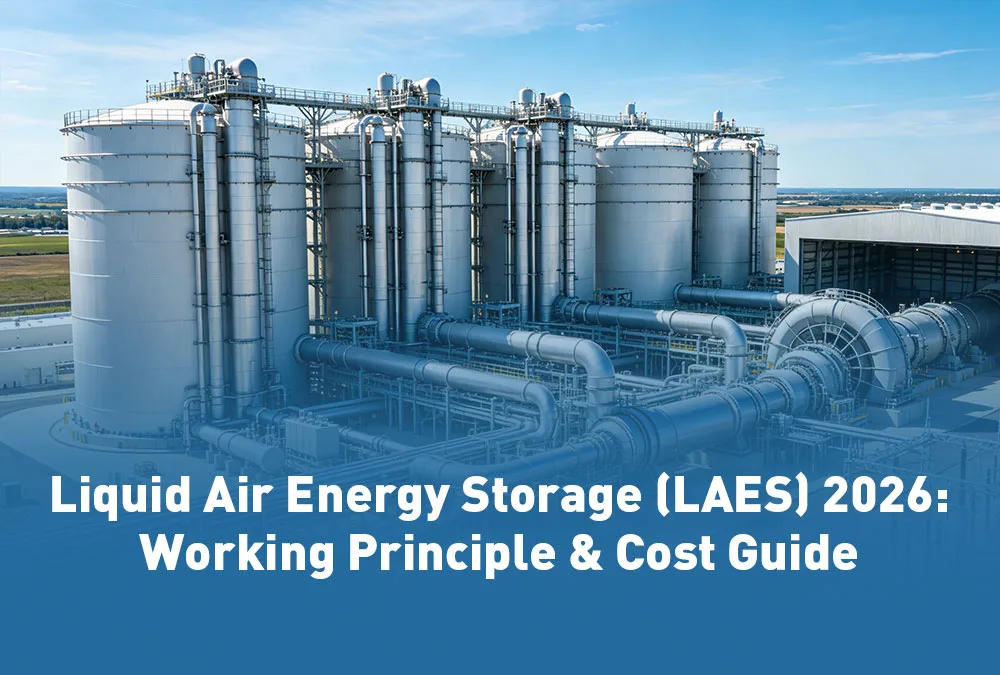
To understand the future of the grid, one must understand that energy is not just about capacity; it is about duration. Liquid Air Energy Storage Explained is a process that involves cooling ambient air to cryogenic temperatures to turn it into a liquid, which can then be stored and later expanded to drive a turbine.
Definition of Liquid Air Energy Storage
Liquid Air Energy Storage (LAES), also known as cryogenic energy storage, is a long-duration energy storage (LDES) technology that uses electricity to cool, compress, and liquefy air. This liquid air is stored in low-pressure insulated tanks. When power is needed, the liquid is pumped to high pressure, heated, and expanded through a turbine to generate electricity. Unlike traditional batteries that rely on chemical reactions, LAES relies on thermodynamics.
Why LAES is a Key Long-Duration Energy Storage Technology
As renewable energy integration accelerates, the grid faces the “intermittency challenge.” While lithium batteries are excellent for high-power, short-duration tasks (1-4 hours), they become prohibitively expensive for 10-100 hour applications. This is where long duration energy storage (LDES) solutions like LAES become critical.
- Alternative to Pumped Hydro: LAES provides the same large-scale storage benefits as pumped hydro but can be built anywhere—no mountains or massive water reservoirs required.
- Grid Scale Support: It supports grid-scale energy storage technologies by providing inertia and frequency response, which are often lost when retiring fossil fuel plants.
How Liquid Air Energy Storage Works
Understanding how liquid air energy storage works step by step requires a look at the four primary stages of the cryogenic cycle. This is a “power-to-liquid-to-power” process.
Step-by-Step Process
- Air Compression: Ambient air is drawn from the atmosphere and compressed using electricity (ideally from surplus solar or wind). The compression process generates heat, which is captured and stored in a thermal storage unit for later use.
- Liquefaction (-196°C): The compressed air is then cooled using a series of heat exchangers and a “cold box.” Once it reaches -196°C (-320°F), the air turns into a liquid. This is the cryogenic energy storage phase.
- Storage: The liquid air is stored in large, insulated, low-pressure tanks. Because liquid air is 700 times more dense than gaseous air, a massive amount of energy can be stored in a relatively small footprint.
- Expansion and Power Generation: When the grid demands power, the liquid air is pumped to high pressure and exposed to the stored heat from Step 1. The air rapidly expands, turning back into a gas and driving a high-pressure turbine to generate electricity.
Energy Conversion Cycle and Efficiency
The efficiency of LAES is often criticized when viewed in a vacuum, but in a 2026 industrial context, we utilize waste heat recovery. By integrating LAES with industrial processes that produce waste heat, the “Round Trip Efficiency” (RTE) can be boosted from 50% to over 70%.
Efficiency Calculation Formula:
Round Trip Efficiency (RTE) = (Electrical Energy Output / Electrical Energy Input) x 100
Key Features of Liquid Air Energy Storage Systems
As we analyze liquid air energy storage cost and efficiency analysis, several engineering advantages stand out that make it superior for specific utility-scale storage innovations.
Long Duration Storage (Hours to Days)
LAES is specifically designed for durations of 8 to 100+ hours. While a battery’s cost scales linearly with its energy capacity (more MWh = more expensive chemical cells), LAES scales by simply adding larger insulated tanks, which are significantly cheaper than lithium-ion cells.
Large-Scale Deployment Capability
Individual LAES plants can range from 50MW to over 200MW. This makes them ideal large scale energy storage systems for balancing entire regional grids or supporting massive industrial complexes.
No Geographical Constraints
Unlike Compressed Air Energy Storage (CAES) which requires salt caverns, or Pumped Hydro which requires elevation, LAES only requires a flat piece of land and access to the grid.
Low Carbon and Sustainable
LAES uses no rare earth minerals or toxic chemicals. The primary medium is air. The system components (pumps, turbines, tanks) have a lifespan of 30-40 years, far exceeding the 10-15 year lifespan of current chemical batteries.
Liquid Air Energy Storage vs Battery Energy Storage
For project developers, a liquid air energy storage vs battery storage comparison is essential to determine the best technology for a specific use case.
LAES vs Lithium Battery Storage
| Comparison Metric | Liquid Air Energy Storage (LAES) | Lithium-Ion BESS |
| Typical Duration | 8 – 100+ Hours (LDES) | 0.5 – 4 Hours |
| Response Time | Minutes (Sync Condenser Mode) | Milliseconds |
| Cycle Life | 30+ Years (Mechanical) | 10–15 Years (Chemical) |
| Energy Density | High (Liquid form) | Very High (Solid state/Liquid) |
| Safety Risk | Low (Non-flammable) | Moderate (Thermal Runaway) |
| 2026 LCOS ($/MWh) | $100 – $150 | $150 – $250 (Long term) |
When to Use LAES vs BESS
- Use BESS for: Frequency regulation, fast-acting EV charging stations, and daily “peak shaving” (under 4 hours).
- Use LAES for: Renewable energy integration where 12+ hours of backup is needed, grid-scale storage innovations, and seasonal energy shifting.
What is Liquid Cooling Energy Storage? (Battery Liquid Cooling Systems Explained)
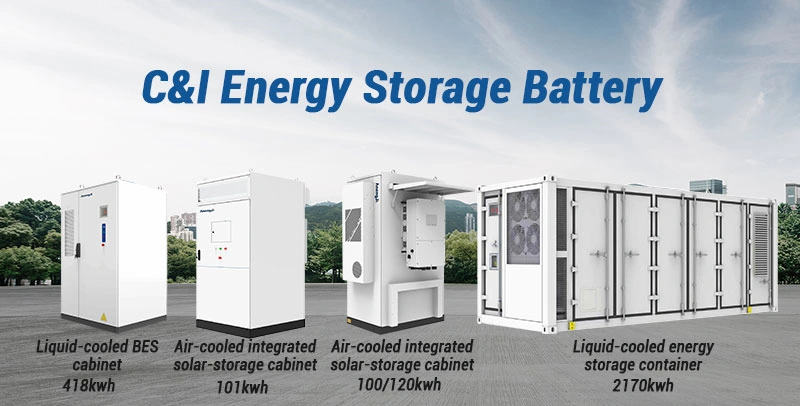
While LAES handles the “Macro” grid, Liquid Cooling Energy Storage has become the gold standard for “Micro” and C&I (Commercial & Industrial) applications in 2026. This technology is a subset of the renewable energy storage solutions market, specifically designed to make lithium-ion and sodium-ion batteries safer and more efficient.
Definition of Liquid-Cooled Energy Storage Systems
A liquid-cooled BESS uses a dedicated thermal management system where a coolant (usually a glycol-water mixture) is circulated through plates or pipes in direct contact with battery cells. This is vastly superior to older air-cooled systems that struggled with hotspots.
Why Liquid Cooling is Important in Battery Storage
As an engineer, I prioritize battery cooling technology because of “Thermal Stability.” When cells are packed tightly to reach high energy density, heat is the enemy. Liquid cooling ensures a temperature deviation of less than 3°C between cells, which is critical for preventing thermal runaway and extending the system’s life.
Advantages of Liquid Cooling Energy Storage Systems
When evaluating long duration storage solutions for a factory or data center, liquid-cooled lithium systems offer distinct advantages over traditional air-cooled setups.
Better Thermal Management
Liquid has a much higher heat capacity than air. In high-power applications—such as a 480kW supercharging station—liquid cooling can dissipate heat 3x faster than forced-air systems.
Higher Energy Density
Because the cooling is more efficient, cells can be packed closer together. This allows for a large scale storage solution that fits in a standard 20ft container while offering 5MWh+ of capacity.
Improved Safety and Lifespan
By maintaining an optimal operating temperature (usually 25°C), the energy storage efficiency is maximized, and the degradation of the electrolyte is slowed. This ensures the system maintains its State of Health (SoH) for a longer period.
Applications of Liquid Cooling Energy Storage Systems
Commercial and Industrial Energy Storage
For 2026 industrial facilities, liquid-cooled BESS is the standard for “behind-the-meter” storage. It allows factories to avoid high demand charges during peak afternoon hours.
EV Charging Stations
As we deploy more Ultra-Fast Chargers, the local grid often cannot handle the 350kW+ spikes. Liquid-cooled batteries act as a “buffer,” charging slowly from the grid and discharging rapidly into the vehicle.
Utility-Scale Battery Storage
Even at the grid level, lithium batteries are being deployed with liquid cooling to provide auxiliary services such as voltage support and sub-second frequency response.
Applications of Liquid Air Energy Storage (LAES Use Cases)
Looking back at liquid air energy storage projects and applications, the scope of LAES is strictly “Front-of-the-Meter.”
Grid-Scale Energy Storage
LAES plants are currently being integrated into decommissioned thermal power plants. By reusing the existing grid connection and steam turbines (with modifications), LAES provides a “just transition” for the energy workforce.
Renewable Energy Integration
Offshore wind farms in the North Sea and massive solar arrays in the Australian outback are using LAES technology benefits to turn “intermittent” power into “baseload” power.
Industrial Energy Backup
Large-scale cryogenic plants (like steel mills or LNG terminals) can use LAES to store surplus energy. In some cases, the liquid air is also used as a source of nitrogen or oxygen, providing a dual-revenue stream.
Future of Liquid Air Energy Storage and Liquid Cooling Technologies
The energy storage future trends for 2026-2030 indicate a “hybridization” of the market. We are seeing a move toward “Hybrid Energy Parks” where:
- Lithium BESS (Liquid Cooled) handles the first 2 hours of grid fluctuations.
- LAES (Cryogenic) handles the subsequent 10 to 48 hours of energy shifting.
Growth of Long Duration Energy Storage (LDES)
According to the LDES Council 2026 Report, the world needs 1.5 to 2.5 TW of long-duration storage by 2040. LAES is positioned to capture a significant share of this market due to its modularity and reliance on proven mechanical components.
Challenges of Liquid Air Energy Storage Systems
Despite the promise, liquid air energy storage cost and efficiency analysis reveals three primary hurdles:
- Efficiency Limitations: Without waste heat or cold recovery, the RTE is lower than chemical batteries.
- High Initial Investment: The CAPEX for a 50MW LAES plant is high because of the need for specialized turbomachinery and cryogenic tanks.
- Technology Maturity: While the components are mature, the integrated LAES cycle is still in the “Early Commercial” phase compared to the “Mature” lithium market.
How to Choose the Right Energy Storage Technology (LAES vs BESS vs Liquid Cooling)
As a technical consultant, I advise stakeholders to choose based on the “Duration-to-Power” ratio.
Short Duration vs Long Duration Needs
If you need to balance a solar farm for 2 hours, a liquid-cooled battery system is your best bet. If you need to survive a 3-day weather event with zero wind, you need liquid air storage explained in a utility-scale format.
Recommended Product for Industrial Users:
For C&I users looking for high-reliability and safety, I recommend the AnengJi Hyper-Core 241 Liquid-Cooled BESS. It is an all-in-one 241kWh cabinet that utilizes the latest in battery cooling technology to provide a 15-year service life with minimal maintenance.
FAQ – Liquid Air Energy Storage
What is liquid air energy storage?
Liquid air energy storage (LAES) stores energy by liquefying air at -196°C. It is released by heating the liquid, which expands rapidly to turn a turbine and generate electricity.
How does LAES compare to battery storage?
LAES is best for long duration energy storage (8+ hours) and has a 30-year lifespan. Batteries (BESS) are superior for fast response and short-duration (1-4 hours) peak shaving.
What is liquid cooling in energy storage?
Liquid cooling is a method of using a circulated coolant to manage battery temperatures. It is more efficient than air cooling and is the industry standard for 2026 high-performance systems.
Is liquid air energy storage efficient?
Stand-alone efficiency is 50-60%. However, when integrated with industrial waste heat or cold energy from LNG terminals, efficiency can exceed 70-75%.
Conclusion: The Role of LAES and Liquid Cooling in the Future of Energy Storage
The “holy grail” of the energy transition is not a single technology, but a diversified portfolio. Liquid Air Energy Storage Explained provides the heavy-lifting required for grid-scale, multi-day storage, while liquid cooling energy storage ensures that our batteries are safe, dense, and durable for local applications.
By understanding the LAES working principle and the thermal advantages of liquid management, engineers and investors can build a grid that is not only green but also resilient. In 2026, the choice is clear: use the right tool for the right duration. The “Cryogenic Revolution” and the “Liquid Cooling Standard” are the two pillars upon which our energy future is built.