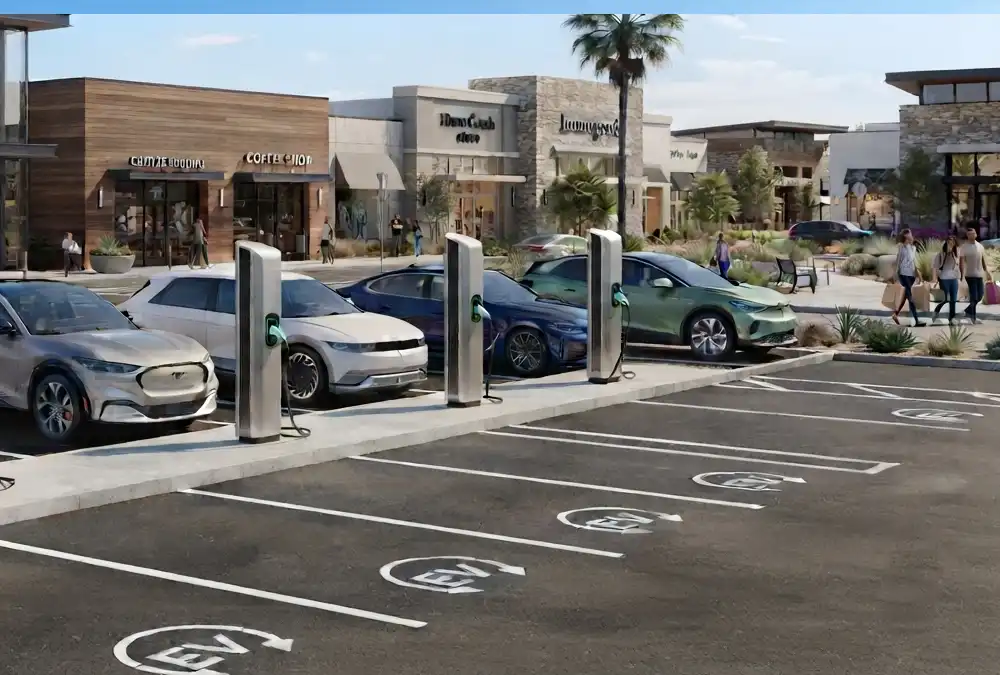
The global EV charging market is much larger than a simple list of charger manufacturers. The biggest electric vehicle charging companies include charging network operators, EV charger manufacturers, software providers and integrated energy companies. Because these businesses measure scale differently, there is no single universally accepted ranking of the “biggest” EV charging companies.
For this comparison, I look at charging network scale, installed charging infrastructure, geographic reach, DC fast-charging presence, commercial and fleet activity, technology portfolio and overall EV charging market presence. That distinction matters. A company with 700,000 public charging points is not directly comparable with a manufacturer that has deployed 70,000 DC chargers across more than 100 countries.
Quick Answer: What Are the 10 Biggest EV Charging Companies?
There is no defensible way to rank every company using one port-count number. China, North America and Europe also report charging infrastructure differently. So the list below is designed as a global market-presence comparison, not a claim that rank #1 has more physical chargers than every company below it.
Top 10 EV Charging Companies at a Glance
| Rank | Company | Business Model | Main Markets | Network / Infrastructure Signal | DC Fast Charging | Commercial / Fleet |
|---|---|---|---|---|---|---|
| 1 | TELD | Network operator + manufacturer | China / global expansion | 899,000 public chargers in China’s 2025 operator ranking | Strong | Strong |
| 2 | Star Charge | Network + hardware + energy | China / 70+ countries | 700,000+ public EV charging points | Yes | Strong |
| 3 | ChargePoint | Network software + hardware | North America / Europe | ~375,000 directly managed ports + roaming access | Yes | Very strong |
| 4 | Tesla Supercharger | Automaker + charging network | Global | 8,182 stations / 77,682 connectors at end-2025 | Core strength | Growing |
| 5 | Shell Recharge | Energy company + charging network | 39 markets | 80,000+ public charge points | Strong | Strong |
| 6 | bp pulse | Energy company + CPO | Europe / U.S. / global | ~35,700 charge points reported in 2024 | Strong | Very strong |
| 7 | Electrify America | Public charging network | United States | 5,600+ chargers by end-2025 | Core strength | Strong |
| 8 | EVgo | Public fast-charging operator | United States | 5,100 operational stalls at end-2025 | Core strength | Strong |
| 9 | IONITY | European HPC network | Europe | 6,437 HPC charging points / 887 locations | Core strength | Strong |
| 10 | ABB E-mobility | EV charging manufacturer + solutions | Global | 74,740 DC chargers deployed / 10,500+ sites | Core strength | Very strong |
Scale figures use different definitions and reporting dates. They should not be treated as directly comparable units. Company-reported figures are identified where available; China operator data is based on EVCIPA/FEV reporting.
What Does “Biggest” Mean for EV Charging Companies?
Network Size Is Only One Measure of Scale
A charging port is not the same thing as charging capacity. Nor does a large roaming network mean a company owns those chargers. The U.S. Department of Energy makes this distinction explicitly: a charging network, network service provider and station operator can be different entities.
For example, 500,000 AC ports can represent a huge footprint. But 50,000 high-power DC chargers may deliver far more energy each day. That matters for highway corridors, fleet depots and commercial charging hubs.
Charging Network Operators vs. EV Charger Manufacturers
| Business Type | Main Business | Typical Customer |
|---|---|---|
| Charging Network Operator | Operates charging assets and services | Drivers, fleets, site owners |
| EV Charger Manufacturer | Produces EVSE hardware | CPOs, EPCs, fleets, distributors |
| Software Provider | CSMS, billing and monitoring | CPOs and fleet operators |
| Integrated Provider | Hardware + software + services | Commercial and infrastructure projects |
How We Selected the 10 Biggest EV Charging Companies
Our Primary Ranking Factors
| Ranking Factor | Why It Matters |
|---|---|
| Charging Network Scale | Shows deployed network presence |
| Installed Infrastructure | Measures physical charging footprint |
| Geographic Reach | Shows international market presence |
| DC Fast-Charging Presence | Indicates high-power charging capability |
| Commercial & Fleet Charging | Measures B2B relevance |
| Technology Portfolio | Shows AC, DC and smart-charging capability |
| Overall Market Presence | Captures broader industry influence |
The ranking is an editorial comparison rather than an official industry ranking. Where company figures use different definitions, I have kept those definitions visible instead of forcing false precision.
The 10 Biggest EV Charging Companies in the World
1. TELD
TELD is one of the dominant third-party charging operators in China and also develops charging equipment and charging technology. FEV Consulting’s 2025 China automotive report, using EVCIPA data, placed TELD first among China’s public charging operators with about 899,000 public chargers and an 18.9% share.
Why we included it: Its scale changes the global picture. Any list focused only on North America and Europe misses a major part of the charging market.
Main strengths: Large charging network, DC charging, fleet applications, charging operations and energy integration.
Best fit: Large-scale public charging, commercial fleets and China-focused infrastructure.
Potential consideration: International buyers should evaluate local certification, service coverage and software compatibility separately.
2. Star Charge
Star Charge combines EV charging hardware, charging networks, energy storage, microgrids and energy management. Its current company information reports 700,000+ public EV charging points across 70+ countries and regions.
Why we included it: It is not simply a network operator. Its hardware and energy portfolio gives it relevance in commercial and integrated energy projects.
Main strengths: EV charging hardware, public networks, energy storage and smart energy management.
Best fit: Commercial charging, integrated energy projects and large charging deployments.
Potential consideration: Buyers should compare local support and project-specific certification before choosing a global supplier.
3. ChargePoint
ChargePoint has a different scale story. In February 2026, the company reported access to approximately 375,000 public and private ports it directly manages, plus more than 900,000 roaming ports. It also reported more than one million monthly EV drivers using ChargePoint.
Why we included it: Its importance comes from networked charging, software and commercial deployments rather than simply owning every physical charger.
Main strengths: AC charging, CSMS, workplace charging, commercial charging and network interoperability.
Best fit: Commercial parking, workplaces, mixed-use properties and networked charging.
Potential consideration: A ChargePoint-connected site does not necessarily mean ChargePoint owns the physical charging asset.
4. Tesla Supercharger
Tesla’s Supercharger network is one of the world’s most recognizable DC fast-charging systems. Tesla reported 8,182 Supercharger stations and 77,682 connectors at the end of 2025. By Q2 2026, those figures had reached 8,704 stations and 82,357 connectors.
Why we included it: Tesla combines vehicles, charging hardware, software and energy assets in one ecosystem. It also increasingly supports non-Tesla vehicles through NACS/J3400 access.
Main strengths: DC fast charging, highway coverage, software integration and high-power charging.
Best fit: Highway charging, destination charging and high-utilization DC networks.
Potential consideration: Access and connector compatibility vary by market and vehicle.
5. Shell Recharge
Shell brings a different kind of scale. Its current EV charging information reports more than 80,000 public charge points globally across around 39 markets. The network includes forecourts, streets, mobility hubs and destination locations.
Why we included it: Shell combines charging infrastructure with a huge mobility-site footprint and fleet services.
Main strengths: Public charging, forecourt charging, fleet charging, destination charging and energy integration.
Best fit: Retail sites, mobility hubs, commercial fleets and public charging.
Potential consideration: Network experience can vary considerably between markets and site operators.
6. bp pulse
bp pulse is bp’s dedicated EV charging business. bp reported around 35,700 EV charge points globally in the first half of 2024, while its U.S. strategy has focused heavily on Gigahubs and high-power charging. The company has also targeted commercial fleet and heavy-duty applications.
Why we included it: bp pulse has the site footprint and capital structure of a major energy company, not just a standalone charging startup.
Main strengths: Ultra-fast charging, fleet infrastructure, Gigahubs and energy-site integration.
Best fit: Commercial fleets, highway hubs and high-power public charging.
Potential consideration: Project availability and deployment strategy differ by country.
7. Electrify America
Electrify America is one of the major U.S. public DC fast-charging networks. Its 2025 recap reported more than 5,600 chargers in North America and over 20 million charging sessions during 2025. Energy delivered exceeded 750 GWh for the year.
Why we included it: Its role in U.S. highway and public DC fast charging is significant, particularly for non-Tesla vehicles.
Main strengths: High-power DC, highway charging and large public charging hubs.
Best fit: Public DC fast charging and long-distance travel.
Potential consideration: It is primarily a charging network, so an EPC buyer looking for OEM hardware may need a different supplier.
8. EVgo
EVgo focuses heavily on public DC fast charging in the United States. It ended 2025 with 5,100 operational charging stalls, up 25% year over year. The company also reported more than 500 new stalls added in Q4 alone.
Why we included it: EVgo has a clear high-power charging identity and an expanding commercial strategy.
Main strengths: DC fast charging, urban hubs, retail partnerships and fleet charging.
Best fit: Public fast charging, commercial sites and fleet-oriented charging hubs.
Potential consideration: Its geographic footprint is still much more concentrated than truly global operators.
9. IONITY
IONITY is one of Europe’s most important high-power charging networks. Its current network page reports 6,437 HPC charging points across 887 locations in 24 European markets.
Why we included it: IONITY is smaller by raw port count than some operators, but its network is strongly focused on high-power motorway charging.
Main strengths: HPC infrastructure, motorway locations and European cross-border coverage.
Best fit: Highway DC fast charging and long-distance European travel.
Potential consideration: Its geographic focus is primarily Europe.
10. ABB E-mobility
ABB E-mobility represents the manufacturer side of the market. Its current company data reports 74,740 DC chargers deployed, more than 10,500 sites electrified and operations across more than 109 countries.
Why we included it: ABB shows why the biggest EV charging companies should not be defined only by consumer-facing networks. Its engineering role reaches CPOs, fleets, transit systems and large infrastructure projects.
Main strengths: DC fast charging, modular systems, fleet charging and heavy-duty charging.
Best fit: Fleet depots, transit, commercial infrastructure and high-duty-cycle applications.
Potential consideration: A manufacturer deployment figure is not equivalent to a directly operated public charging network.
How Do the 10 Biggest EV Charging Companies Compare?
EV Charging Company Comparison Table
| Company | Network | Hardware | Software | Fleet | Commercial | DC Fast |
|---|---|---|---|---|---|---|
| TELD | Strong | Yes | Yes | Strong | Strong | Strong |
| Star Charge | Strong | Yes | Yes | Strong | Strong | Yes |
| ChargePoint | Strong | Yes | Strong | Strong | Strong | Yes |
| Tesla | Strong | Yes | Strong | Growing | Growing | Core |
| Shell Recharge | Strong | Integrated | Yes | Strong | Strong | Strong |
| bp pulse | Strong | Integrated | Yes | Very strong | Very strong | Strong |
| Electrify America | Strong | Network-focused | Yes | Yes | Strong | Core |
| EVgo | Strong | Network-focused | Yes | Strong | Strong | Core |
| IONITY | Strong | Integrated | Yes | Strong | Strong | Core |
| ABB E-mobility | Partner-led | Core | Strong | Very strong | Very strong | Core |
Public Charging Network vs. Commercial Charging
Public charging is built around accessibility, uptime, payment and geographic coverage. Commercial charging is more about site power, load management, operating schedules and asset utilization. For a fleet depot, the question is not simply “How many chargers can I install?” It is “Can the electrical system support the charging schedule without creating an expensive peak?”
AC Charging vs. DC Fast Charging Capability
AC charging is generally suited to workplaces, hotels, apartments, offices and long dwell times. DC fast charging places the power conversion equipment outside the vehicle and can deliver much higher charging power. High-power DC becomes particularly important for highway sites, taxis, logistics fleets and buses.
IEA data shows why this distinction matters. In 2025, the global stock of public charging points exceeded 7 million. Nearly 1.8 million public points were added during the year. The growth rate was above 33%.
Hardware, Software and Charging Network Integration
The charging stack now includes EV charging hardware, OCPP communication, CSMS platforms, payment systems, remote diagnostics, smart charging and energy management. A good commercial project should treat these as one operating system rather than unrelated boxes.
What Is the Difference Between an EV Charging Company and an EV Charger Manufacturer?
An EV charging company may operate charging networks, develop charging software, manufacture hardware, or combine several services. An EV charger manufacturer primarily designs and produces EVSE equipment.
| Capability | Charging Company | Charger Manufacturer | Buyer Benefit |
|---|---|---|---|
| Operate network | Often | Usually no | Useful for public-network projects |
| Manufacture chargers | Sometimes | Yes | More control over hardware |
| OEM/ODM | Varies | Often stronger | Useful for distributors and private labels |
| CSMS | Often | Often | Remote monitoring and fleet control |
| Fleet solutions | Yes | Yes | Better depot integration |
Which Type of EV Charging Company Fits Your Project?
For Public EV Charging Networks
Prioritize network management, uptime, DC fast charging, payment, roaming and multi-site deployment. Here, the network operator’s operational capability can matter more than the charger enclosure.
For Commercial Parking
AC charging can cover long parking periods. DC chargers make sense where turnover is higher. Load management becomes important when the building has limited electrical capacity.
For EV Fleet Depots
Fleet charging needs scheduling, multiple chargers, load balancing and depot power management. The charger should work with the fleet’s operating software rather than become another isolated system.
For Highway and High-Power Charging
Look at high-power DC, modular power architecture, transformer capacity, thermal management and service response. A 350 kW charger is only useful if the site can reliably supply that power.
For Distributors and EPC Contractors
OEM/ODM capability becomes more important. Check MOQ, certification, enclosure customization, connector options, firmware control, spare parts and factory capacity.
How to Choose the Right EV Charging Company for Your Business
1. Match the Charging Hardware to Your Application
Define AC or DC first. Then specify power rating, connector, number of ports and required charging time. Do not start with the charger model number. Start with the site load and vehicle duty cycle.
2. Check OCPP and Charging Software Compatibility
Verify the OCPP version, CSMS integration, smart charging, load management, remote monitoring and diagnostics. This becomes critical when dozens or hundreds of chargers operate as one fleet.
3. Verify Certifications for Your Target Market
Certification requirements depend on the destination market and project. Europe, North America, Asia-Pacific and other regions can have different grid, safety and communication requirements. Do not accept “CE certified” as a universal answer.
4. Evaluate Manufacturing and OEM/ODM Capability
If you are a distributor or EPC contractor, ask about the factory, production capacity, MOQ, custom enclosure, branding, connector options and software customization. Ask for evidence, not a sales slide.
5. Check Commercial and Fleet Deployment Experience
Ask whether the supplier has delivered fleet depots, commercial parking, highway charging or multi-site projects. A factory can make a charger. That does not automatically mean it can support a 200-unit fleet deployment.
6. Compare Total Cost of Ownership
| Cost Item | What to Compare | Buyer Benefit |
|---|---|---|
| Hardware | Purchase price and configuration | Avoids overpaying for unused features |
| Installation | Civil, cable and electrical work | Reveals the real project cost |
| Software | CSMS, licenses and transaction fees | Prevents hidden recurring costs |
| Maintenance | Service and spare parts | Protects long-term uptime |
| Downtime | Repair response and replacement time | Protects charging revenue |
The lowest charger price is not necessarily the lowest total cost of ownership.
7. Evaluate After-Sales and Technical Support
Check warranty, spare parts, remote support, commissioning, firmware updates and response time. For a fleet depot, one failed charger during a peak operating window can be more expensive than a modest difference in purchase price.
Not Sure Which Charger Configuration You Need?
Send your fleet size, charging schedule and available site power. A preliminary charging configuration can reveal whether you need more chargers, higher power, managed charging or additional site energy capacity.
Why the Biggest EV Charging Company May Not Be the Best Supplier for Your Project
Network Scale Does Not Equal Manufacturing Capability
A CPO can operate thousands of chargers without manufacturing a single charger. If you need OEM/ODM equipment, look for a real manufacturing and engineering capability.
Global Reach Does Not Guarantee Local Support
A company can sell in dozens of countries and still have limited local service coverage. For commercial projects, spare parts and technical response deserve the same attention as the product datasheet.
More Charging Ports Does Not Mean Better DC Hardware
Port count says little about power density, thermal performance, efficiency, uptime or grid compatibility. Compare the actual electrical architecture.
| Your Priority | What to Evaluate | Why It Helps |
|---|---|---|
| Public network | Network + software | Improves operational coverage |
| Fleet depot | DC + load management | Controls peak demand |
| Distributor | OEM/ODM + MOQ | Improves product flexibility |
| EPC | Engineering + certification | Reduces project risk |
| Commercial site | AC/DC + TCO | Balances investment and utilization |
EV Charging + Solar + BESS: The Next Step for Commercial Charging
Why EV Charging Can Increase Site Power Demand
A few AC chargers may fit comfortably inside an existing commercial load. A depot with twenty 150 kW DC chargers is different. The theoretical connected load can quickly become several megawatts. The actual design then depends on simultaneous charging, vehicle schedules, transformer capacity and utility limits.
That is where managed charging becomes useful. The U.S. Department of Energy notes that managed EV charging can reduce the need for electrical equipment upgrades, improve the use of local generation and reduce grid-energy costs.
How BESS Can Support High-Power EV Charging
A battery energy storage system can charge during lower-demand periods and discharge when EV charging demand rises. It can also support peak shaving and reduce the need to size every part of the site around short-duration charging peaks.
For a smaller commercial site, a 100 kWh BESS can be considered where the main objective is modest peak support or energy shifting. A 261 kWh system provides a larger energy buffer and can support more demanding charging schedules. A 418 kWh liquid-cooled system becomes more interesting where sustained power and thermal management matter. For large depots or charging hubs, a 1 MWh-class BESS can provide a much larger buffer between the charging load and the grid connection.
| BESS Size | Typical Role | Potential Buyer Benefit |
|---|---|---|
| 100 kWh | Small commercial charging support | Lower entry size for peak support |
| 261 kWh | C&I charging and load shifting | Longer energy duration and more operating flexibility |
| 418 kWh | Higher-demand commercial charging | More energy buffer for sustained charging demand |
| 1 MWh | Large fleet or charging hub | Greater peak-shaving capacity and charging resilience |
The choice should never be made from battery capacity alone. PCS power, transformer capacity, tariff structure, EV charging profile and required backup duration all matter.
Solar + EV Charging + BESS
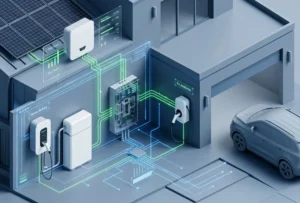
Solar can supply daytime charging energy. BESS can absorb excess solar and discharge during charging peaks. The charging system then becomes part of a broader site energy strategy rather than a standalone electrical load.
DOE research also recognizes bidirectional EV charging as another possible energy resource. V2B and V2G can complement solar PV, stationary storage and other distributed energy resources, although implementation depends on compatible vehicles, EVSE, utility rules and interconnection requirements.
Common Mistakes When Choosing an EV Charging Supplier
Choosing Based on Charger Price Alone
A cheaper charger may require more installation work, have higher maintenance costs or offer weaker software integration.
Comparing Network Size Instead of Product Capability
Network size is useful for understanding market presence. It does not prove that a specific DC charger fits your site.
Ignoring OCPP and Software Integration
Software lock-in can become painful when a fleet grows. Confirm interoperability before deployment.
Not Checking Market-Specific Certifications
Certification is market-specific. Verify the exact product model and target-country requirements.
Assuming Every Supplier Has OEM/ODM Capability
Ask about factory ownership, production records, customization limits and MOQ. “We support OEM” can mean very different things.
Ignoring Spare Parts and After-Sales Support
A charger that cannot be repaired quickly becomes an operational liability.
Scaling Before Testing a Pilot Deployment
For large projects, a pilot can expose connector, communication, grid, thermal and software issues before the full rollout.
Frequently Asked Questions About the Biggest EV Charging Companies
What is the biggest EV charging company in the world?
There is no single answer because companies report network scale differently. TELD and Star Charge have enormous public charging footprints in China, while ChargePoint, Tesla and Shell have significant international market presence.
Which company has the largest EV charging network?
The answer depends on whether you mean owned ports, managed ports, public chargers, roaming access or operated stations. These metrics should not be mixed.
Which EV charging companies manufacture their own chargers?
Several do. Star Charge, Tesla, ABB E-mobility, ChargePoint and TELD have hardware capabilities. Other major charging operators rely more heavily on third-party equipment.
Which EV charging companies offer OEM or ODM services?
OEM/ODM is more common among charger manufacturers than pure CPOs. Buyers should confirm private-label capability, MOQ, firmware control and certification ownership before signing a contract.
Which EV charging companies are suitable for fleet charging?
Look for providers with DC fast charging, load management, fleet scheduling, depot integration and remote diagnostics. Network size alone is not enough.
What is the difference between a CPO and an EV charger manufacturer?
A CPO operates charging stations. A manufacturer produces charging equipment. Some companies do both, while others focus on software or energy services. The DOE uses similar distinctions in its charging-network terminology.
Can businesses buy EV chargers directly from manufacturers?
Yes. Businesses, EPC contractors and distributors can purchase directly from manufacturers. The right route depends on project size, technical requirements, service needs and whether OEM/ODM is required.
What should I look for when choosing an EV charger supplier?
Check charging power, connector, OCPP, certifications, manufacturing capacity, deployment experience, warranty, spare parts and total cost of ownership.
Are the biggest EV charging companies always the best choice for businesses?
No. Reddit discussions show a similar real-world concern: drivers often care more about charger availability, working stalls, app experience and site density than a company’s headline network size. These user reports are anecdotal, but they highlight why uptime and serviceability should be evaluated alongside scale.
Conclusion: Scale Is Not the Same as Project Fit
The biggest electric vehicle charging companies are not interchangeable. Some dominate public charging networks. Others manufacture EVSE hardware. Some focus on DC fast charging, while others are stronger in AC charging, software, fleet infrastructure or integrated energy systems.
The broader market is moving toward higher charging power and deeper energy integration. IEA estimates that public charging capacity for light-duty EVs needs to grow almost ninefold by 2030 under its stated-policies scenario.
That means the right supplier should be selected around the project, not the headline ranking.
Your requirement → the supplier type to consider
Public charging → Network provider
Fleet charging → Commercial charging supplier
DC fast chargers → EV charger manufacturer
OEM/ODM → Direct manufacturer
EV charging + solar + BESS → Integrated energy solution
Looking for an EV Charger Manufacturer for Your Project?
Share your required power, quantity, connector type and target market. The right AC or DC charging configuration should start with your site and vehicle requirements.
Evidence note: Market-scale figures in this article were checked against company disclosures, SEC filings, U.S. Department of Energy / AFDC data, IEA publications and industry research. Company figures can change during the year, and different organizations use different definitions for “charging point,” “port,” “station,” “managed port” and “roaming access.”
Key evidence used: IEA Global EV Outlook 2026; IEA Global EV Outlook 2025; U.S. DOE Alternative Fuels Data Center; U.S. DOE FEMP; Tesla 2025 SEC filing; ChargePoint 2026 network data; Shell global charging information; bp disclosures; EVgo 2025 results; Electrify America 2025 recap; IONITY network data; ABB E-mobility current deployment data; FEV Consulting/EVCIPA China charging data.
Related Article
- Top 10 Electric Car Charging Station Manufacturers in China
- Electric Car Charging Stations Cost: 2026 Commercial Installation Guide
- High Power EV Charging: A Complete Guide to High-Power EV Charging Infrastructure
- Benefits of Commercial EV Charging Stations: ROI & Energy Strategy
- Commercial DC Fast Charging Solutions: Complete Guide for Business