Introduction
Evaluating the trade-offs of behind the meter vs front of the meter energy deployments is one of the most consequential decisions for commercial and industrial asset owners today. As global energy pricing shifts and extreme weather places unprecedented stress on distribution grids, localized power storage has transitioned from an optional sustainability asset to a core risk-mitigation tool. By understanding the structural boundaries that define energy systems, businesses can optimize their usage profile, prevent unplanned operational downtime, and insulate themselves from volatile tariff shifts.
What Is Behind the Meter vs Front of the Meter in Energy Storage?
To evaluate localized energy assets vs utility-scale installations, we must look closely at the utility meter—the legal, physical, and financial dividing line of electricity delivery.
Grid-Side Power (FTM) ---> Utility Meter ---> Facility-Side Power (BTM)
what is behind the meter(BTM)
A behind-the-meter (BTM) energy storage system is installed on the customer’s side of the electric meter. This physical placement means that the energy drawn, stored, and discharged is directly controlled by the facility, offsetting the energy that would otherwise be registered by the utility’s billing infrastructure.
what is behind the meter Front-of-the-Meter (FTM)
A front-of-the-meter (FTM) energy storage system resides on the grid side of the meter. These utility-scale installations deliver power directly into regional transmission or distribution networks. They are used to stabilize utility networks, optimize bulk power generation, and provide ancillary services.
Where Each System Sits in the Power Network
BTM solutions operate locally at points of consumption—such as manufacturing plants, corporate real estate, or EV fleet charging centers. FTM systems operate at the grid level, co-located with substations or large-scale generation facilities to balance regional load variations.
Featured Snippet:
Behind-the-meter (BTM) systems are installed on the customer side of the electricity meter, while front-of-the-meter (FTM) systems operate on the utility side to support grid-scale energy management.
Behind the Meter vs Front of the Meter: Key Differences Explained
To dissect behind the meter vs front of the meter parameters further, we must consider the legal and financial boundaries.
| Operational Dimension | Behind-the-Meter (BTM) | Front-of-the-Meter (FTM) |
| Physical Location | Customer side of the utility meter | Grid side of the meter |
| Asset Type | Distributed energy resources (DER) | Utility-scale energy storage |
| Primary Economic Focus | Operational cost reduction & resilience | Bulk energy generation & grid services |
| System Scale Range | Modular (30 kW to 10 MW) | Large infrastructure (10 MW to 500+ MW) |
| Interconnection Process | Simpler local electrical approvals | Complex utility-scale wholesale approvals |
Deployment Location
BTM assets sit inside a business’s property line, connected to the internal main switchboard. This location allows facilities to use stored power immediately. In contrast, FTM distributed energy resources feed into high-voltage lines, and their output is completely controlled by utility dispatch or wholesale energy traders.
Ownership and Investment
While commercial enterprises, real estate developers, or EaaS (Energy-as-a-Service) partners own BTM systems, FTM systems are typically owned by electric utilities, national grid operators, or institutional power developers.
Revenue Model
The financial returns for BTM installations come from avoiding grid power costs—specifically by lowering peak demand charges, optimizing time-of-use (ToU) arbitrage, and using localized power during high-rate periods. FTM systems earn revenue directly by participating in dynamic wholesale power markets, such as offering frequency regulation to the grid operator.
System Scale
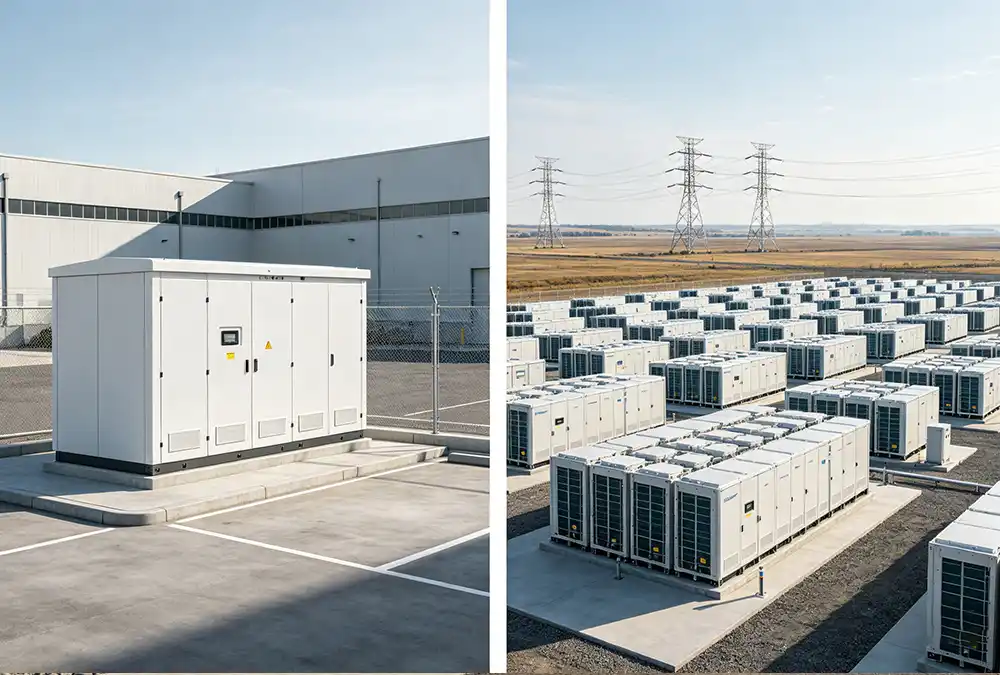
BTM projects use modular architectures tailored to specific facility profiles, ranging from compact cabinet systems up to larger, multi-megawatt configurations. FTM projects are centralized industrial installations that span several acres and use large battery racks to support regional grid stability.
Featured Snippet:
The key difference between BTM and FTM lies in ownership, application, and revenue model—BTM focuses on reducing user costs, while FTM focuses on grid services and market revenue.
Behind the Meter vs Front of the Meter Cost and Revenue Models
A thorough behind the meter vs front of the meter evaluation requires diving into their divergent underlying cost structures.
Behind-the-Meter Cost Savings Model
For the typical commercial site, utility costs are split between consumption charges (total kWh used) and peak demand charges (highest kW draw over a short 15-minute window). BTM battery installations capture high value by altering both parts of this billing equation.
Total BTM Financial Value = Demand Charge Reductions + ToU Savings + Interruption Prevention Value
Peak Shaving
BTM inverters actively monitor when high-power machinery starts up and discharges stored energy instantly to offset this peak load. This localized power management keeps the utility meter from registering a sudden spike, lowering overall demand charges.
Peak Demand Shaved (kW) = Max Baseline Load in kW - Battery Output Power in kW
Time-of-Use (ToU) Optimization
The local energy management system (EMS) automates charging cycles during inexpensive off-peak periods (such as overnight) and discharges power during the day when utility prices peak.
Front-of-the-Meter Revenue Model (Market Model)
FTM projects monetize their capacity by participating directly in utility markets. They provide grid energy storage solutions through structured power purchase agreements (PPAs) or dynamic wholesale market bidding.
Frequency Regulation
When power consumption exceeds current generation, the grid frequency drops below its standard operating limit. To prevent cascading blackouts, FTM systems use grid-scale battery storage to supply high power instantly, stabilizing the local frequency.
Capacity Markets
Utilities pay FTM developers to maintain operational standby capacity. This ensures the grid can call upon these large localized reserves to maintain system-wide stability during severe heatwaves or winter storms.
Examples of Behind the Meter and Front of the Meter Energy Storage Systems
Practical deployment scenarios highlight why understanding the hardware layout of behind the meter vs front of the meter configurations is essential.
Behind-the-Meter System Examples
Industrial Battery Storage Systems
Manufacturing plants use modular battery systems to run complex automation equipment. By smoothing power fluctuations and shaving demand peaks, these systems reduce ongoing overhead costs and keep production on schedule.
Solar Plus Storage Systems
A logistics warehouse with on-site solar panels uses a localized battery system to store excess daytime generation. Instead of exporting power back to the grid for minimal returns, the facility uses its stored clean energy during expensive evening hours.
Behind the Meter Data Center
Data centers use localized batteries for emergency backup. Rather than letting diesel generators sit idle, modern data centers use their batteries to actively manage power, lower demand charges, and participate in local demand response programs to generate additional revenue.
Front-of-the-Meter System Examples
Utility-Scale Renewable Energy Farms
Large solar and wind farms use FTM batteries to store bulk energy. This keeps the grid from being overwhelmed during periods of high generation and allows developers to export power when generation falls.
Standalone Grid Balancing Terminals
These battery storage terminals are connected to critical transmission nodes, providing instant power to keep local grids stable during sudden equipment failures.
What Are Behind the Meter Solutions?
Understanding what does behind the meter mean requires looking beyond simple energy storage. A complete localized system includes hardware, software, and dynamic load control to optimize on-site energy usage.
BTM Solution Stack: Solar Panels + Battery BESS + Flexible Loads <--> Smart EMS Software
Battery Energy Storage Systems (BESS)
The core physical layer of a localized setup is the battery system. This typically uses highly stable Lithium Iron Phosphate (LFP) cells, combined with bi-directional Power Conversion Systems (PCS) and advanced thermal management to ensure safe operation.
Flexible Load Management
Beyond storing energy, localized solutions allow facility operators to temporarily adjust usage. When utility prices peak, the system can dial back non-essential loads—such as HVAC settings or automated pumping systems—to keep costs low without impacting critical operations.
On-Site Solar Generation
When co-located with rooftop or ground-mount solar arrays, a BTM system acts as a reliable energy reservoir. It captures low-cost solar energy and uses it directly during high-tariff periods, maximizing the value of the on-site system.
EV Charging Infrastructure
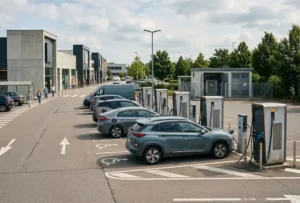
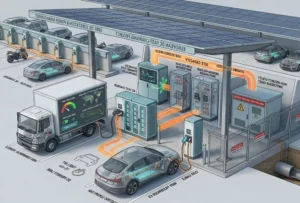
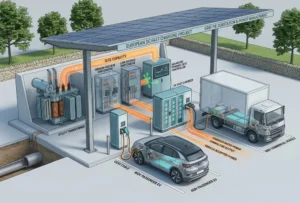
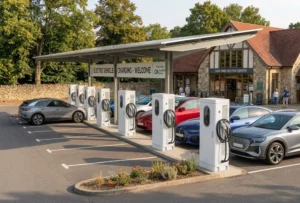
As companies transition their transport and delivery fleets to electric vehicles, the sudden localized demand for high-speed charging can place immense stress on the local grid. BTM solutions act as a localized power buffer, providing high power for fast charging without overloading the site’s local distribution transformer.
Featured Snippet:
Behind-the-meter solutions include battery storage, flexible loads, on-site solar, and EV charging systems that help users optimize energy usage and reduce costs.
Advantages of Behind the Meter Energy Storage Systems
For industrial and commercial users comparing BTM vs FTM energy storage benefits and applications comparison, BTM installations provide a direct financial and operational advantage:
- Lower Energy Costs: Businesses directly reduce demand charges and energy consumption fees, which frequently leads to a 20% to 40% reduction in total electricity expenses.
- True Energy Independence: The localized system functions as an integrated microgrid. In the event of a utility blackout, the battery system quickly isolates the facility’s localized network, providing continuous backup power.
- Fast Deployment: BTM systems typically have simpler regulatory and interconnection requirements than utility-scale installations, allowing facilities to complete projects quickly.
- Smart Integration via Advanced EMS: The integrated energy management system (EMS) uses predictive analytics to optimize charging and discharging cycles in real time, maximizing savings over the life of the system.
Key Advantages of Front of the Meter Energy Storage Systems
While BTM installations focus on localized facility savings, FTM systems provide significant benefits for the broader power grid:
- Regional Grid Stabilization: FTM installations act as primary shock absorbers for the electric utility, providing instant power to manage sudden regional demand spikes.
- Efficient Grid Management: These utility-scale installations balance power supply across large regions, reducing the need for expensive, older peaker plants and keeping the overall network operating smoothly.
- Large-Scale Renewable Integration: FTM installations can store immense amounts of power from utility-scale solar and wind farms, reducing the loss of clean energy and supporting the broader move toward a green grid.
Why Behind the Meter Energy Solutions Are Growing Rapidly
Industrial and commercial adoption of localized behind the meter energy storage has grown significantly in 2025 and 2026. This rapid growth is driven by several convergent market forces.
BTM Growth Drivers: Increasing Grid Vulnerability + Record-Low Battery Costs = Rapid C&I Adoption
Rising Commercial Electricity Rates
According to the latest 2026 BloombergNEF (BNEF) energy reports, commercial electricity rates continue to climb globally. To counter these rising costs, businesses are using localized battery systems to gain predictable energy prices.
Drastic Drops in Battery System Costs
The global supply chain normalization in 2025 has brought costs down dramatically. BNEF’s 2025 survey reports that turnkey stationary battery storage system costs fell over 31% year-on-year to just $117/kWh. This sharp reduction in initial costs has made localized commercial storage a highly compelling financial investment.
Grid Infrastructure Constraints
Upgrading local electrical service to support new manufacturing lines or EV charging hubs can take 12 to 24 months due to long utility lead times. Localized energy systems bypass these delays, providing the power needed right away.
How Behind the Meter Energy Storage Benefits Local Communities
Distributed energy resources offer measurable benefits beyond the facility’s property line:
- Lower Stress on Local Grid Assets: When a large industrial facility uses its own stored power during peak windows, it frees up grid capacity for surrounding homes, lowering the risk of local brownouts.
- Increased System Resilience: A distributed network of BTM systems reduces the grid’s vulnerability to single-point equipment failures, keeping regional networks stable.
- Reduced Local Carbon Emissions: By pairing local batteries with on-site solar generation, communities reduce their reliance on older fossil-fuel peaker plants, improving local air quality.
How Behind the Meter Systems Create Value for Businesses
For facility managers considering a behind the meter vs front of the meter battery storage cost comparison, the long-term return on investment is the critical metric.
Measurable Operating Expense (OpEx) Reductions
By optimizing peak shaving, time-of-use energy use, and backup power configurations, businesses directly lower their operating expenses. This predictable on-site power management provides long-term insulation from volatile regional energy markets.
High ROI and Clear Payback Periods
With equipment prices dropping to record lows in 2025 and 2026, the payback period for typical commercial and industrial localized systems is now between 3 to 6 years.
Payback Period (Years) = Total Turnkey CAPEX / (Annual Shaving Reductions + Annual Energy Arbitrage Savings)
Enhanced Power Quality
Advanced BTM inverters continuously clean incoming power, filtering out transient voltage sags or electrical noise. This protects sensitive industrial machinery from disruptions, extending the operating life of the equipment.
Featured Snippet:
Behind-the-meter energy systems create value by reducing electricity costs, improving energy efficiency, and enabling better control over energy usage.
Key Components & Battery Technologies Explored
A complete localized energy storage system integrates high-performance hardware and software to ensure long-term reliability.
Hardware Infrastructure
- LFP Chemistry: Most commercial BTM installations use Lithium Iron Phosphate (LFP) cells. These provide high safety margins, thermal stability, and over 6,000 charge cycles before reaching notable degradation.
- Alternative Technologies: For long-duration storage needs (>8 hours), technologies like Vanadium Redox Flow are highly effective, as they do not suffer from thermal degradation. Additionally, Sodium-ion chemistry is emerging as a lower-cost option for applications where space is less of a constraint.
Recommended Industrial Product
For large-scale commercial and industrial applications, we recommend the AnengJi Power-Core 500kW/1.2MWh Liquid-Cooled Container. This system uses high-density LFP cells and an integrated liquid-cooling setup to maintain safe, optimal operating temperatures. Its built-in smart EMS integrates seamlessly with building management systems to automate peak shaving and maximize cost savings.
Challenges of Behind the Meter and Front of the Meter Systems
- Capital Cost: While initial costs have dropped, the upfront purchase of a commercial system remains a notable capital commitment. To address this, many companies choose third-party financing or EaaS models to deploy localized storage without significant initial costs.
- Integration Complexity: Connecting localized storage into older electrical panels requires specialized engineering oversight to ensure the system works smoothly with your on-site equipment.
- Permitting and Fire Safety: Large battery installations must strictly adhere to fire safety standards, such as NFPA 855 codes, and receive formal interconnection approvals from the local utility before going live.
Behind the Meter vs Front of the Meter: Which One Is Right for Your Project?
Choosing the right option requires evaluating your primary business goals. This straightforward decision framework can help guide your choice:
Energy Independence or Local Bill Reductions? -> Choose BTM
Grid Ancillary Revenue or Utility-Scale Power Siting? -> Choose FTM
Choose BTM If:
- You are evaluating behind the meter vs front of the meter energy storage which is better for an active commercial or industrial property.
- You need to reduce high monthly demand charges or optimize time-of-use utility tariffs.
- You need a reliable microgrid setup to protect critical automated operations from utility blackouts.
- You plan to install on-site solar panels or EV fast-charging stations without expensive local utility upgrades.
Choose FTM If:
- You are an institutional developer or utility provider building large-scale projects.
- Your goal is to participate in wholesale energy markets or offer frequency regulation to regional grid operators.
- You have access to the extensive transmission line infrastructure needed to interconnect a utility-scale installation.
Featured Snippet:
BTM is ideal for businesses seeking cost savings, while FTM is suitable for large-scale grid applications and energy market participation.
FAQs About Behind the Meter vs Front of the Meter
What is the main difference between BTM and FTM?
The primary difference between BTM and FTM energy storage for commercial projects is physical placement. BTM is installed on the customer’s side of the meter to lower facility costs, while FTM operates on the utility side to support the regional grid and generate market revenue.
Which is more profitable, BTM or FTM?
Profitability depends entirely on your business model. BTM installations save commercial users money by lowering utility demand charges and preventing costly downtime. FTM systems generate profit by selling capacity and ancillary services directly to the wholesale electricity market.
Is BTM easier to deploy than FTM?
Yes. BTM systems typically have simpler regulatory and interconnection requirements than utility-scale projects, which allows them to be permitted and installed more quickly.
When to choose BTM vs FTM energy storage systems?
You should choose a BTM system if you operate a factory, commercial building, or EV fleet hub and want to reduce your utility bills or secure backup power. Choose an FTM system if you are a power developer building large, grid-connected infrastructure assets.
Behind the Meter vs Front of the Meter: Key Takeaways
- Behind the Meter (BTM): Installed directly on the customer’s side of the meter; provides localized power control, peak shaving, and high operational resilience.
- Front of the Meter (FTM): Sited on the utility side of the meter; supports wholesale energy arbitrage, frequency regulation, and regional grid stability.
- Primary Economic Driver: BTM cuts facility operating expenses (OpEx); FTM generates revenue from regional energy markets.
- Best Commercial Choice: BTM is the standard option for optimizing industrial energy bills, building localized solar microgrids, and supporting EV charging fleets.
How to Choose and Implement the Right Energy Storage Strategy
- Analyze Your Energy Profiles: Review your facility’s 15-minute interval data over the past 12 months to identify the timing and magnitude of your highest peak demand events.
- Review Costs vs Benefits: Compare potential savings from lowering demand charges and peak-shaving against the initial system cost.
- Select High-Quality Core Components: Choose durable Tier-1 LFP battery hardware combined with an advanced, automated EMS platform to manage your system performance.
- Partner with Experienced Providers: Work with a deployment partner who can manage the technical integration, fire code compliance, and utility approvals smoothly.
Ready to optimize your facility’s energy strategy? Contact our engineering team today for a comprehensive load-profile analysis to see how a behind-the-meter energy storage system can improve your operational economics and energy resilience.