Introduction
The global energy landscape is undergoing a radical transformation, shifting from centralized fossil fuel generation to a decentralized, digitized, and decarbonized grid. At the center of this evolution is standalone battery energy storage, a technology that has transitioned from a niche grid-balancing tool to a primary infrastructure asset for institutional investors and utility operators. Unlike storage systems tied directly to a specific wind or solar farm, these independent systems provide the “connective tissue” the modern grid needs to handle the intermittency of renewables while maintaining 24/7 reliability. For developers and stakeholders, understanding the nuances of standalone battery energy storage system project development is no longer optional—it is a prerequisite for participating in the 2026 energy market.
What Is Standalone Battery Energy Storage and How Does It Work?
To understand the value of these assets, we must first differentiate them from traditional storage configurations.
Definition of Standalone BESS
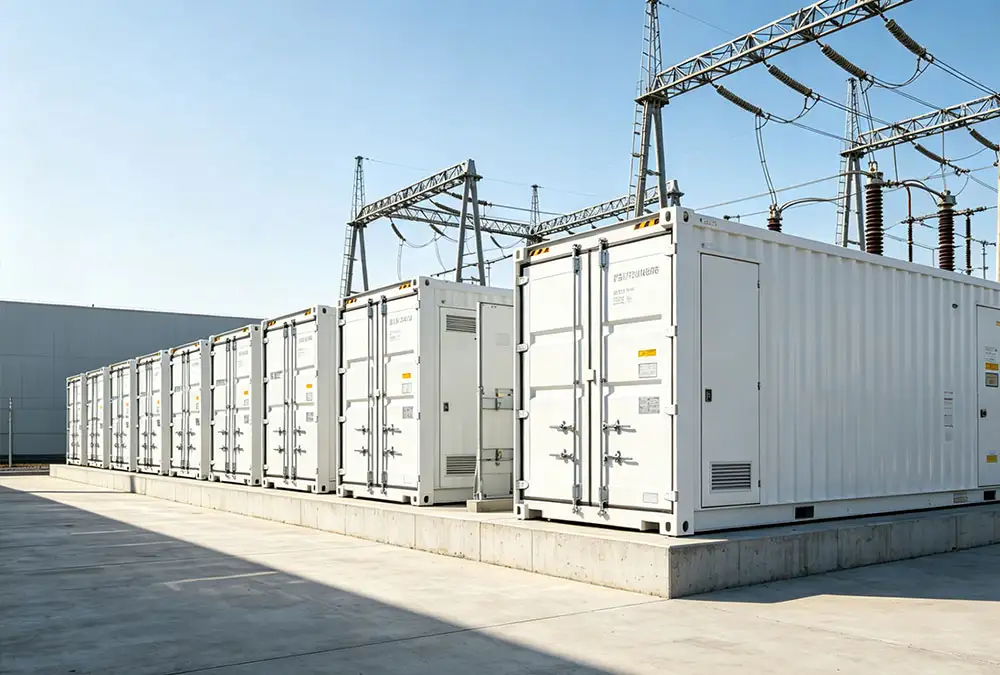
A standalone Battery Energy Storage System (BESS) is a grid-scale facility that operates as a dedicated energy asset. It is not physically co-located or “behind the meter” of a specific generation source (like a solar array). Instead, it connects directly to the transmission or distribution network, functioning as both a load (when charging) and a generator (when discharging).
Difference from Solar+Storage and Hybrid Systems
In a hybrid or solar+storage setup, the battery’s primary job is often “firming” the renewable output—storing excess midday sun to use in the evening. While effective, these systems are often constrained by the generation profile of the primary asset. In contrast, utility scale standalone battery energy storage systems operate with total market freedom. They can buy power from the grid when it is cheapest (often at night or during high wind events) and sell it back when the grid is under maximum stress, regardless of whether the sun is shining at that specific location.
Grid-Connected Independent Operation
These systems are “merchant” assets. They interface with the grid through a dedicated substation and high-voltage interconnection. This independence allows them to participate in multiple markets simultaneously—a strategy known as “revenue stacking.”
Featured Snippet:
Standalone battery energy storage refers to grid-connected battery systems that operate independently from renewable generation, storing and dispatching electricity based on market demand and grid needs.
How Standalone Battery Energy Storage Systems Work in Grid Applications
The operational logic of a standalone plant is driven by sophisticated software rather than weather patterns.
Charging from Grid or Low-Cost Energy Periods
The Energy Management System (EMS) monitors real-time wholesale electricity prices. When supply exceeds demand—causing prices to drop or even turn negative—the system triggers the “Charge” state. The Power Conversion System (PCS) takes AC power from the grid, converts it to DC, and stores it in the battery racks.
Storage in Battery Systems
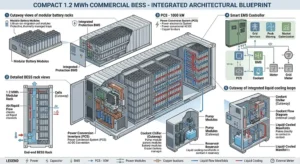
Once stored, the energy is held with minimal loss. Modern standalone BESS units utilize advanced thermal management systems (liquid cooling) to keep the cells within an optimal temperature range, preventing degradation and ensuring the facility is ready to respond in milliseconds.
Discharging During Peak Demand or Grid Events
When the grid frequency drops or demand peaks, the EMS receives a signal (often automated via AGC – Automatic Generation Control). The system reverses the flow, converting DC back to AC and injecting power into the grid. This rapid response is why these systems are the preferred choice for frequency regulation storage.
Role of EMS Optimization
The “intelligence” of the system is the EMS. In 2026, these systems use AI-driven predictive modeling to forecast grid congestion and price spikes. This optimization ensures the battery is never “full” when prices are high or “empty” when the grid needs support, maximizing the standalone battery storage plant cost and ROI analysis outcomes.
Key Advantages of Standalone Battery Energy Storage Systems
Why choose a standalone configuration over a co-located one? The answer lies in flexibility.
Energy Arbitrage Opportunities
Arbitrage is the process of buying low and selling high. Because standalone systems aren’t tied to a local solar farm, they can charge whenever the entire grid has excess power, not just when a local array is producing. This significantly increases the number of profitable cycles per year.
Frequency Regulation Services
The grid must maintain a precise frequency (50Hz or 60Hz). Batteries are uniquely suited for this because they can switch from full charge to full discharge in less than 100 milliseconds. This “ancillary service” often pays a premium compared to simple energy trading.
Grid Flexibility and Stability
Standalone assets can be placed strategically at “weak” points in the grid—near industrial zones or at the end of long transmission lines—to provide localized voltage support, a service known as “SESS” (Storage as a Transmission Asset).
Independent Operation
There is no renewable dependency. If a solar farm’s inverters fail, a co-located battery might sit idle. A standalone system remains operational as long as the grid connection is live.
Featured Snippet:
The main advantage of standalone battery storage is its ability to generate revenue through energy markets without relying on on-site renewable generation.
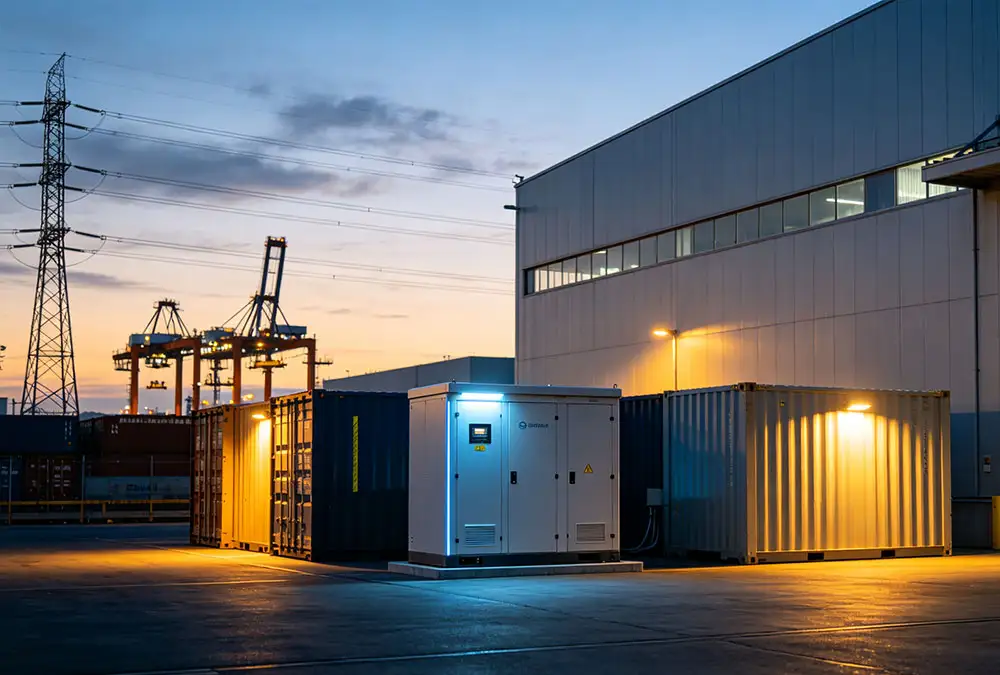
Five Commercial Benefits of Standalone Battery Energy Storage Systems
When evaluating battery storage investment opportunities, standalone systems offer a distinct commercial profile:
- Multiple Revenue Streams: Stack arbitrage, frequency response, capacity markets, and black-start services.
- Faster Deployment: Since you aren’t building a 500-acre solar farm alongside it, the permitting and construction of a standalone BESS can often be completed in 12–18 months.
- Flexible Site Selection: You can build where the grid is “congested” (where prices are high), rather than where the land is flat and sunny.
- Scalable System Expansion: Modular containerized designs allow owners to add capacity (MWh) as market demand grows.
- High Market Participation Potential: These assets are “grid-native,” making them ideal for Merchant Energy Storage strategies where the owner takes full exposure to market price volatility for maximum gain.
Standalone Battery Energy Storage vs Other Energy Storage Systems
| Feature | Standalone BESS | Solar + Storage (Hybrid) | Behind-the-Meter (BTM) |
| Connection Point | Transmission/Distribution Grid | Generation Site | Customer Load Center |
| Primary Goal | Market Revenue/Grid Support | Renewable Firming/Tax Credit | Bill Reduction/Backup |
| Revenue Source | Merchant Markets/Ancillary | PPA / Energy Sales | Demand Charge Reduction |
| Sizing Basis | Grid Node Capacity | Renewable Nameplate | Building Peak Load |
Standalone vs Solar + Storage
In the U.S. and Europe, many developers chose solar+storage to capture tax credits (like the ITC). However, the trend is shifting. As standalone BESS vs solar plus storage comparison data shows, standalone systems often achieve higher capacity factors because they are not limited by solar “clipping” or daytime-only charging.
Standalone vs Behind-the-Meter Storage
BTM systems are sized for a specific building. Standalone systems are utility-scale energy storage plants sized for an entire region. The scale of standalone systems (often 100MW+) allows for much lower “per kilowatt” costs due to bulk procurement.
Standalone vs Hybrid Energy Storage: Which Is Right for Your Project?
Choosing between these two depends on your risk appetite and the local regulatory environment.
- Choose Standalone Systems if: You are a merchant developer looking for maximum market exposure, or if you are locating near a high-demand industrial hub with high grid volatility.
- Choose Hybrid Systems if: You have a Power Purchase Agreement (PPA) that requires “guaranteed” delivery of renewable energy, or if local subsidies heavily favor co-located assets.
Featured Snippet:
Standalone systems are ideal for market-driven energy storage projects, while hybrid systems are better suited for renewable integration and firmed PPA contracts.
How to Size a Standalone Battery Energy Storage System (Capacity & Power)
Sizing is the most critical engineering decision in how to build a standalone battery energy storage project.
Power (MW) vs Energy (MWh)
- Power (MW): The “instantaneous” capacity. This determines how much you can help the grid during a sudden frequency drop.
- Energy (MWh): The “duration.” A 100MW/200MWh system is a “2-hour” battery. In 2026, the market is moving toward 4-hour durations (100MW/400MWh) to capture longer-lasting evening peak price spreads.
Load Profile Analysis
Engineers use “Heat Maps” of historical nodal prices to determine the optimal duration. If price spikes only last 30 minutes, a high-power 1-hour battery is best. If the grid stays expensive for 4 hours, a longer-duration energy system is required.
Core Components of a Standalone Battery Energy Storage System
A professional energy storage system EPC will focus on these five pillars:
- Battery System: Typically Lithium Iron Phosphate (LFP) due to its 6,000+ cycle life and superior thermal stability compared to NCM.
- PCS (Power Conversion System): Bi-directional inverters that manage the AC/DC shift. High-quality PCS units provide “Grid-Forming” capabilities.
- BMS (Battery Management System): The hardware that ensures cell-level safety, monitoring for “voltage outliers” that could indicate internal shorts.
- EMS (Energy Management System): The software that interfaces with the market and the grid operator.
- Auxiliary Systems: Includes HVAC/Liquid Cooling and fire suppression (Clean agent + Deflagration venting).
Lifespan and Maintenance of Standalone Battery Energy Storage Systems
The financial model of independent battery storage systems usually spans 15 years, but the physical battery degrades over time.
Battery Degradation Factors
Degradation is caused by “Cycling” (using the battery) and “Calendar Aging” (time). In 2026, we utilize the following formula to estimate Remaining Capacity:
Capacity_Current = Capacity_Initial * (1 - (Cycles * Degradation_Per_Cycle + Calendar_Loss))
Maintenance Strategies
To reach a 15-year life, we use “Augmentation.” This involves leaving space in the original containers to add new battery modules in Year 7 or 8 to bring the total capacity back to 100%.
Featured Snippet:
Standalone battery energy storage systems typically have an operational lifespan of 10 to 15 years, with capacity augmentation planned to offset natural lithium-ion degradation.
Challenges and Limitations of Standalone Battery Energy Storage
No investment is without risk. Large scale battery storage faces three main hurdles:
- High Upfront Investment: Even with falling prices, a 100MWh plant requires significant CAPEX. Energy storage project financing often requires a “floor” contract to guarantee a minimum revenue level for bankability.
- Market Dependency Risks: If the grid becomes “too stable” (less price volatility), arbitrage profits can shrink.
- Battery Safety Concerns: Thermal runaway is a rare but serious risk. Ensuring compliance with NFPA 855 and UL 9540 standards is non-negotiable.
Why Standalone Battery Energy Storage Is a Strategic Energy Choice in 2026
As we look at the future of standalone battery energy storage systems, three trends dominate:
- The Death of Coal/Gas Peakers: Batteries are now cheaper to build and operate than gas peaker plants for meeting peak demand.
- Increasing Grid Demand: The rise of AI data centers and EV charging hubs is putting unprecedented strain on the grid, making localized standalone storage a necessity.
- Merchant Maturity: In 2026, the “Merchant Storage” model is proven. Banks are now comfortable financing these assets based on historical market performance rather than just long-term government contracts.
Recommended Industrial Solution: AnengJi Power
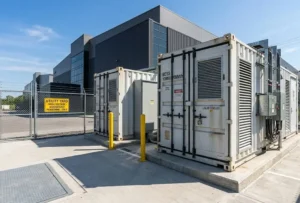
For developers moving into the standalone battery storage plant development phase, the hardware choice is paramount. We recommend the AnengJi , a 2.5MW/5.0MWh containerized solution designed specifically for standalone applications.
- Technology: Ultra-safe LFP cells with a 15-year design life.
- Cooling: Intelligent liquid cooling that maintains cell temperature delta within 3°C, significantly reducing degradation.
- Grid Readiness: Pre-certified for major grid codes (IEEE 1547, UL 1741 SA) for faster interconnection.
FAQs About Standalone Battery Energy Storage
What is the difference between standalone and co-located BESS?
Standalone connects directly to the grid to trade energy; co-located is built next to a wind/solar farm to manage its specific output.
How do standalone batteries make money?
Primarily through “Revenue Stacking”—combining energy arbitrage (buying low, selling high) with grid services like frequency regulation.
Is standalone storage better than solar+storage?
It is more flexible and can often achieve higher ROI in volatile markets, but it lacks the guaranteed “clean energy” production of a solar-coupled asset.
Standalone Battery Energy Storage: Key Takeaways
- Definition: Independent grid-connected storage assets.
- Main Advantage: Unlimited market participation and faster deployment.
- Best Use Case: Grid-scale energy storage projects focused on merchant revenue.
- Technical Core: LFP batteries, liquid cooling, and AI-driven EMS.
How to Plan Your Standalone Battery Energy Storage Project
Identify the Node: Use grid modeling software to find high-volatility points in the transmission network.
Secure Interconnection: Start the “Interconnection Queue” process immediately; this is often the longest lead-time item.
Perform ROI Analysis: Model revenue based on 2025/2026 price forecasts, accounting for battery degradation and augmentation costs.
Partner with a Tier-1 EPC: Ensure your technology provider has a proven track record in utility scale standalone battery energy storage systems.
Are you ready to secure your position in the 2026 energy market? Reach out to our engineering team for a detailed technical consultation on your next standalone energy storage project.