Introduction
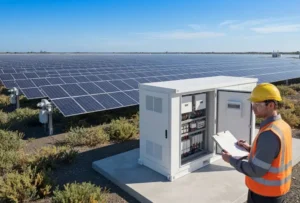
Every commercial developer running a mega-watt scale array eventually hits the exact same wall. You build the panels, the sun hits the silicon, but the grid simply cannot take the power, or worse, the local utility slashes your compensation rates during peak afternoon production. This is where a BESS becomes mandatory rather than optional. Adding a utility-scale battery energy storage system changes your site from a passive weather-dependent asset into a dispatchable powerhouse. It stops the bleeding from solar curtailment and lets you dictate exactly when and at what price you release your power to the grid. Let us look at how this integration actually works on the ground and what it does to your bottom line.
Why Are More Solar Farms Adding Battery Storage?
The Biggest Challenges Facing Modern Solar Farms
- Solar curtailment: Grids are choking on midday generation spikes, forcing operators to shut down active arrays.
- Grid connection limitations: Local substations frequently lack the thermal capacity to accept full solar peak outputs.
- Electricity price volatility: Duck curves depress power values to zero, or even negative territory, during peak sun hours.
- Low utilization of generated electricity: Massive clean energy volumes are wasted instead of serving high-value evening loads.
- Grid code compliance penalties: Sudden cloud cover drops voltage faster than standard grid equipment can stabilize.
How Battery Storage Solves These Challenges
A utility-scale energy storage system takes that unmarketable midday overflow and locks it down. Instead of dumping power for pennies, you store excess daytime solar energy safely inside chemical cells. When the sun drops and regional demand spikes, you deliver electricity during peak-price periods when megawatt-hour rates are highest. This transition completely eliminates immediate curtailment risks while vastly improving overall dispatchability. By acting as a bi-directional shock absorber, it transforms erratic solar curves into flat, predictable baseload blocks, which naturally increases overall project profitability.
Buyer Perspective Check: You might worry that adding huge battery banks complicates your existing grid interconnection agreement. The reality? Modern grid operators actively fast-track solar-plus-storage assets because they ease substation congestion rather than worsening it.
Benefits of Solar Farm Battery Storage
Increase Solar Farm Revenue
Relying solely on power purchase agreements (PPAs) tied to immediate generation limits your upside. A utility-scale BESS unlocks electricity price arbitrage by letting you buy low or self-charge, then sell high when regional grids face stress. Furthermore, you can capture extra cash through capacity market participation by guaranteeing availability during system strain. If your local market supports ancillary services, your asset can generate continuous income via millisecond-level frequency regulation and voltage support programs.
Improve Grid Stability and Reliability
Uncontrolled solar generation causes localized transmission line instability. A large battery system provides synthetic inertia and fast frequency response, damping out sudden grid drops. By acting as a high-speed stabilizer, the system absorbs or injects massive current spikes within fractions of a cycle, making the solar plant a reliable partner for regional grid operators.
Peak Shaving and Energy Shifting
Solar arrays inherently maximize output around noon, yet peak utility demand routinely lands between 5 PM and 9 PM. Energy shifting lets you bridge this gap seamlessly. The battery shaves the top off your solar generation peak and shifts that exact volume into the high-tariff evening slot, maximizing the cash yield per acre of land development.
| Operational Mode | Technical Target | Revenue Mechanism | Direct Benefit to Project Owner |
|---|---|---|---|
| Energy Arbitrage | Shift midday solar peak to evening peak | High-tariff wholesale power sales | Captures top-tier market pricing; avoids zero-value midday generation dampening. |
| Frequency Regulation | Sub-second charge/discharge cycles | Grid stability auxiliary payments | Secures highly lucrative, recurring service contracts with regional transmission operators. |
| Curtailment Mitigation | Absorb localized grid-rejected power | Zero-waste internal power recovery | Recovers up to 15-20% of otherwise lost annual generation in constrained grid zones. |
| Capacity Firming | Guarantee fixed megawatt export limits | Availability capacity payments | Unlocks premium long-term utility PPAs by acting like a reliable baseload generator. |
Reduce Solar Curtailment
When the transmission network gets overloaded, the utility instructs your plant to throttle back. Without a battery, that lost solar generation is gone forever. With a BESS, your plant maintains full panel output by redirecting excess power straight into storage, entirely bypassing grid congestion roadblocks.
Support Renewable Energy Integration
Intermittent generation makes it incredibly difficult for balancing authorities to keep the network stable. Adding modular battery storage transforms your site into a predictable, dispatchable node, smoothing out high-speed weather fluctuations before they cause wider power disturbances.
Reduce Dependence on Fossil Fuels
Traditional grids maintain gas-fired peaker plants to handle sudden load jumps when the sun sets. A massive battery field can displace those dirty peaker systems entirely, providing instantaneous, clean backup power during critical drop-off windows.
Lower Carbon Emissions and Meet ESG Goals
Every megawatt-hour shifted from daytime solar to night replaces fossil generation. This direct displacement optimizes your corporate carbon accounting metrics, paving a clear, verifiable path toward strict institutional ESG mandates and premium green financing criteria.
Can Solar Farm Battery Storage Improve ROI?
Where Does the Revenue Come From?
The financial justification for a BESS lies in stackable revenue streams. You are no longer just selling kilowatt-hours; you are selling flexibility. By combining peak shaving, energy arbitrage, and demand response contracts, an asset opens multiple pocketbooks. In mature power markets, capacity payments provide a steady baseline fee simply for being online, while automated frequency regulation pays out high margins for immediate, short-term power adjustments.
Typical Payback Period
In highly active utility-scale markets like Europe or parts of North America, co-located solar-plus-storage sites are seeing accelerated returns. Depending heavily on local regulatory incentives and the severity of the afternoon price dip, typical payback periods currently range between 5 and 7 years. Projects participating heavily in high-tier ancillary services often beat these estimates if market volatility stays elevated.
Factors That Influence ROI
- Battery duration: Matching your storage capacity (2-hour vs 4-hour systems) directly dictates which energy arbitrage markets you can capture.
- Electricity prices: Wide spreads between minimum afternoon rates and maximum evening peaks yield faster investment returns.
- Cycling frequency: Running multiple cycles per day drives higher service revenue but accelerates cell capacity degradation.
- Government incentives: Local investment tax credits (ITC) or direct clean energy subsidies can immediately slash initial upfront installation costs.
Cost of Solar Farm Battery Storage Systems
Initial Investment Cost
Building out utility-scale battery infrastructure requires a substantial commitment across multiple asset classes. The raw battery modules and containers consume the largest share, but you cannot overlook the essential bi-directional PCS inverters, advanced EMS automation software, and heavy civil foundations. Furthermore, medium-voltage step-up transformers, secure perimeter wiring, and hands-on site installation can add 20% to 30% to your baseline hardware expenses.
Operation & Maintenance Cost
A utility-scale BESS is not a set-and-forget asset. Annual operational expenses cover HVAC cooling system service, routine fire suppression diagnostic testing, and detailed terminal inspections. Smart EMS optimization software licensing and remote engineering diagnostic support are also necessary to keep the asset operating at peak efficiency.
Industry Report Data (2025/2026 Trends): Leading global energy analysts note that while utility-scale battery hardware costs dropped roughly 12-15% over the past year, ongoing site O&M outlays have flattened out due to stricter international fire safety compliance protocols and rising insurance costs.
Battery Replacement Cost
All lithium-based chemistries degrade over time based on operational throughput and temperature stress. Developers must budget for an extensive battery augmentation or replacement cycle around year 10 to 12. Planning this modular stack addition early ensures your system retains its original rated capacity throughout the lifetime of the solar asset PPA.
How to Reduce Total Project Cost
To keep project expenses down, look for systems that utilize smart modular designs and pre-assembled, factory-tested containers. This approach slashes complex on-site mechanical and civil labor expenses. Working with an experienced local EPC partner streamlines your permitting and grid connection path, preventing costly delays, while smart EMS optimization algorithms protect your cells from unnecessary thermal stress to extend overall runtime.
Solar Farm Battery Storage for Agricultural Projects
Benefits for Agricultural Production
Blending massive solar arrays with active livestock or crop farming creates a resilient, dual-income microgrid. A dedicated BESS provides the baseline stability needed to power remote agricultural infrastructure without relying on expensive, unreliable utility line extensions.
Power Supply for Irrigation and Processing
High-power farming machinery, automatic water pumps, and cold-storage processing facilities draw massive current loads that can strain rural utility lines. On-site battery systems store solar energy all day, ensuring you have the high-capacity current required to run heavy pump stations exactly when your crops need water.
Dual Land Utilization
By elevating solar panel structures, sheep can graze comfortably and shade-loving crops can thrive directly underneath the arrays. Adding a compact, weatherized battery container along the property perimeter maximizes the financial yield per acre, generating clean energy revenue without hurting your farm’s food production capacity.
Cost of Adding Battery Storage to Agricultural Solar Farms
While the initial cost of adding a containerized battery system requires careful budgeting, the long-term savings from avoiding utility peak demand charges and diesel generator fuel costs make it a smart investment. Rural energy grants and specialized agricultural development subsidies can also cover a significant chunk of the upfront setup expenses.
Challenges of Solar Farm Battery Storage Deployment
High Initial Investment
Even with dropping technology prices, adding multi-megawatt battery storage to a solar project increases your day-one capital expenditure. Securing institutional project financing requires clear, data-driven financial modeling that proves your stacked revenue streams can comfortably service that extra debt.
Technology Integration
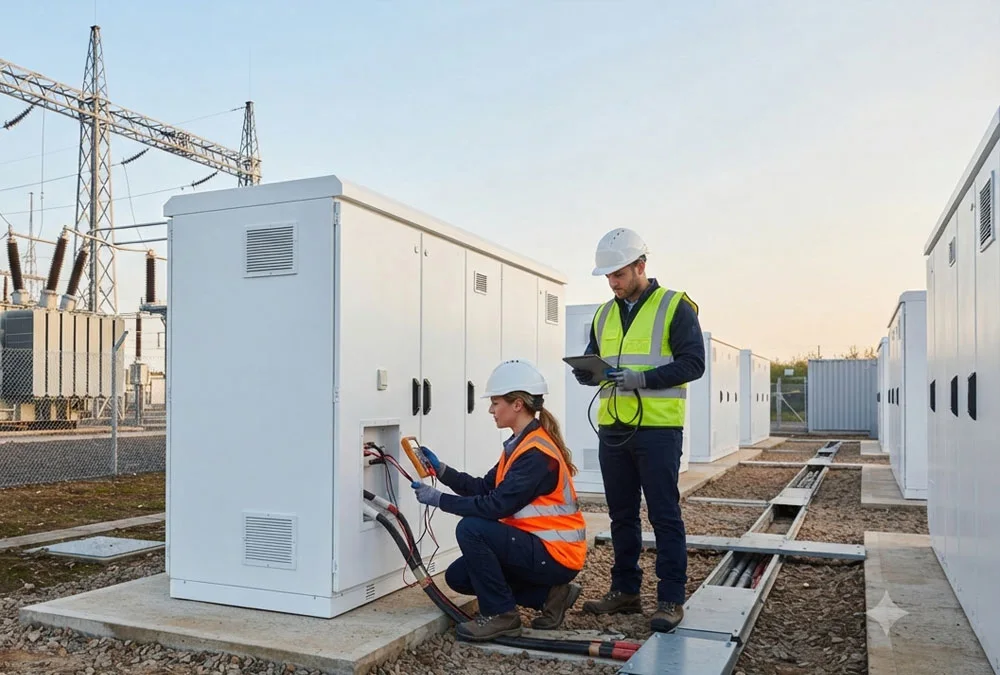
Getting solar panels, DC-coupled or AC-coupled inverters, battery management systems, and high-voltage grid switchgear to work in perfect harmony is a complex task. Minor software communication lag between your EMS and the utility substation can trigger safety trips or cause costly power export inefficiencies.
Regulatory Challenges
Grid connection rules and safety standards are constantly changing. Navigating the long interconnection study process and meeting strict utility compliance checks requires deep technical knowledge and a pro-active approach with local energy regulators.
Environmental Considerations
Operating a large energy storage site means managing its environmental footprint. This requires setting up proper end-of-life battery recycling paths and making sure your site layout avoids sensitive local habitats and water runoff zones.
Battery Safety and Thermal Management
Large lithium installations carry an inherent risk of thermal runaway if they are damaged or poorly managed. Mitigating this risk requires using cells with ultra-stable chemistry, robust liquid-cooling systems, and modern, multi-tier fire suppression systems that meet strict international safety standards.
Choosing the Right Battery Technology for Solar Farms
Lithium Iron Phosphate (LFP)
LFP has become the absolute standard for large-scale utility projects. These systems deliver excellent thermal stability, long cycle life, and zero cobalt dependency, making them a safe and cost-effective choice for long-term grid integration.
Lithium-ion (NMC)
NMC chemistries offer excellent energy density in a compact footprint, but they require much tighter thermal management and stricter safety measures. They are increasingly used in tight urban settings where physical space comes at a premium.
Flow Batteries
Flow systems store energy in liquid electrolyte tanks, making them an excellent option for long-duration storage needs (6+ hours). They suffer from lower round-trip efficiency and higher up-front equipment costs, but they offer an almost unlimited cycle life without chemical degradation.
Technology Comparison Table
Selecting the right technology requires balancing your specific operational needs against upfront costs and long-term performance:
| Battery Technology | Relative Cost | Expected Lifespan | Thermal Safety | Round-Trip Efficiency | Primary Value to User / Decision Benefit |
|---|---|---|---|---|---|
| LFP (Lithium Iron Phosphate) | Moderate to Low | 6,000+ Cycles | Excellent Stability | ~88% – 92% | Best overall financial value. Delivers long operational life and low fire risk, maximizing standard project returns. |
| NMC (Nickel Manganese Cobalt) | Moderate to High | 3,500+ Cycles | Requires Active Cooling | ~92% – 95% | Saves valuable space. Fits high power capacity into tiny footprints, minimizing your civil site footprint. |
| Flow Batteries (Vanadium / Iron) | High Initial Cost | 20,000+ Cycles | Inherent Non-Flammable | ~65% – 75% | Built for long-term reliability. Perfect for 8+ hour deep shifting applications with virtually zero degradation over 20 years. |
How to Choose the Right Solar Farm Battery Storage System
Sizing Your Battery System
Finding the right size for your system means looking closely at your historical solar generation curves, local grid capacity limits, and your primary revenue goals. You need to balance your total power capacity (MW) against your continuous storage duration (MWh) to ensure you can deliver power through peak market windows without paying for over-sized equipment.
Storage Capacity
Your total storage capacity dictates how many hours of full-power electricity you can deliver to the market. A 2-hour system is often perfect for quick frequency response and short peak-shaving needs, while 4-hour setups are better for capturing maximum returns from extended evening price arbitrage.
Round-trip Efficiency
Every time you convert and store energy, you lose a small percentage of power to heat and auxiliary loads. Choosing hardware with high round-trip efficiency means more of your generated solar power actually makes it to the market, directly improving your daily cash flow.
Battery Lifetime
Look for cells that guarantee stable performance over thousands of continuous, deep charge-and-discharge cycles. Choosing durable hardware reduces your long-term maintenance costs and pushes your battery replacement timeline further into the future.
Scalability
Energy market demands and grid conditions will inevitably change over time. Investing in a modular, scalable system layout allows you to easily expand your storage capacity down the road without rewriting your entire site design.
Safety Requirements
Your storage installation must meet strict local safety and fire codes. Make sure your system choice features multi-level BMS monitoring, automated gas detection, and rugged, segregated enclosure designs to ensure smooth project approval.
Operation & Maintenance
Choose an architecture that features clear, accessible layouts and smart remote monitoring tools. Built-in analytics help your service teams quickly find and fix minor issues before they cause unexpected downtime or lost revenue.
Is Solar Farm Battery Storage Right for Your Project?
Ideal Applications
- Utility-scale solar stations: Large arrays facing frequent grid curtailment or low daytime market prices.
- Weak grid connections: Remote installations requiring active voltage support and power smoothing.
- High electricity price zones: Regions with wide price spreads between midday sun hours and evening demand peaks.
- Constrained distribution networks: Sites blocked from expanding their solar export capacity without adding storage buffer.
When Storage May Not Be Necessary
If your solar plant operates in a region with a long-term, fixed-rate PPA that guarantees full payment for every kilowatt-hour you produce regardless of grid conditions, adding storage may not make financial sense right now. In these steady, predictable markets, the extra upfront cost might slow down your time-to-return.
Decision Checklist Before Investing
- Does your local utility allow co-located storage interconnections?
- What is the average price spread between afternoon generation and evening peak demand?
- Are there active local markets for frequency regulation or auxiliary grid services?
- Does your project site have the extra physical space and civil access needed for containerized hardware?
- Can you access local tax credits or green energy financing incentives?
Why Choose AnengJi Power Solar Farm Battery Storage Solutions
Complete Solar + BESS EPC Solutions
AnengJi Power delivers a complete, end-to-end partnership for your clean energy projects. We handle the entire lifecycle of your asset—from initial site layout design and grid engineering studies to hardware integration, civil installation, and final commissioning. This single-source approach eliminates communication gaps, keeps your project on budget, and ensures your system achieves commercial operation as fast as possible.
Customized Utility-scale Energy Storage Design
Every energy market has its own unique challenges and grid rules. Our engineering teams customize every BESS configuration to match your local requirements, ensuring your system delivers the exact power capacity, duration, and response speeds needed to maximize your long-term return on investment.
Containerized Energy Storage Products
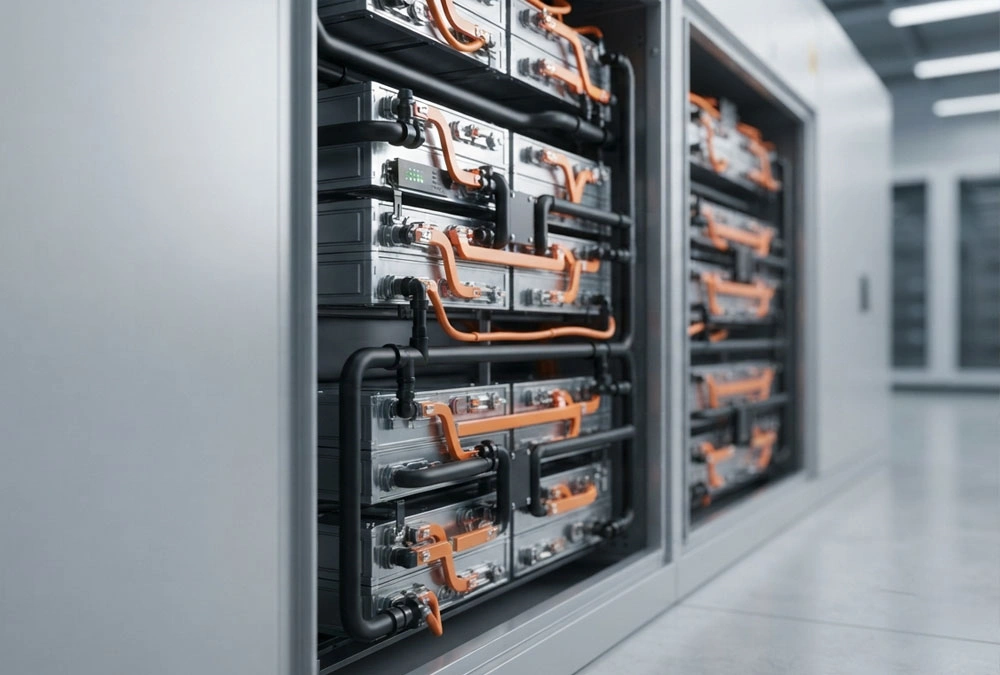
We supply a range of pre-engineered, factory-tested liquid-cooled storage containers built for rapid deployment and maximum safety. Our industrial systems feature high-density LFP cells, smart multi-tier battery management software, and automated fire protection systems enclosed in rugged, weatherized housings:
- 100kWh / 261kWh Enclosures: Ideal for smaller commercial arrays, localized peak shaving, and distributed agricultural projects.
- 418kWh / 1MWh+ Modular Containers: Built for large utility-scale stations, high-volume energy shifting, and multi-stream market arbitrage.
Smart EMS and Remote Monitoring
Our intelligent Energy Management System software serves as the central brain of your storage asset. It tracks real-time market pricing and grid conditions to automate your dispatch strategy, while our secure cloud-based SCADA platform gives your operations team 24/7 visibility into system health and performance.
Global Supply Chain and Local Engineering Support
Combining world-class manufacturing capacity with responsive local engineering teams ensures your project gets reliable equipment delivery and dependable site support. We stand by your asset through every stage of operation, providing the parts, expertise, and service needed to protect your energy investment for decades to come.
Frequently Asked Questions About Solar Farm Battery Storage
How much does a utility-scale battery storage system cost?
Total project costs depend on your required capacity, duration, and local site conditions. While large system hardware prices have fallen significantly, full installation budgets must include PCS inverters, transformers, civil work, and utility connection costs.
How long do solar farm batteries last?
High-quality LFP battery cells generally deliver 15 to 20 years of reliable service when managed by a smart liquid-cooling system. Most utility-scale installations plan a minor cell upgrade cycle around year 10 or 12 to maintain full system capacity over the long haul.
How is battery size calculated?
Engineers determine the right battery size by analyzing your solar plant’s maximum power output, local grid connection limits, and your primary target revenue model to find the ideal balance of megawatts (MW) and megawatt-hours (MWh).
How does BESS improve grid stability?
A battery system acts as a high-speed shock absorber for the local network. It responds within milliseconds to absorb sudden generation spikes or inject extra power to stabilize frequency and voltage drops before they can cause wider power disruptions.
What incentives are available for solar-plus-storage projects?
Incentives vary widely by region, but many major energy markets offer substantial investment tax credits (ITC), accelerated equipment depreciation benefits, or dedicated clean energy development grants that significantly lower your upfront setup costs.
Conclusion: Future-Proof Your Solar Farm with Battery Storage
Integrating an advanced battery storage system is the single most effective way to protect your utility-scale solar investment from shifting market rules and grid congestion. By transforming an intermittent solar asset into a predictable, dispatchable power source, you secure higher long-term returns, help stabilize the local grid network, and gain a major edge in today’s evolving energy landscape. Get in touch with the engineering team at AnengJi Power today to build a high-performance, customized storage solution tailored to your project’s specific goals.