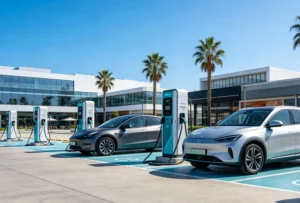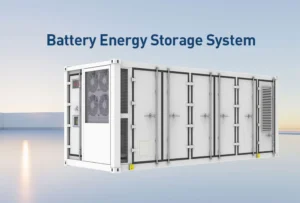

With the rapid growth of the electric vehicle (EV) industry, the safety and protection of EV chargers has become a critical topic for both users and suppliers. Whether it is a portable EV charger, a home wallbox level 2 EV charger, or a large-scale commercial level 3 DC charging station, protection mechanisms directly affect equipment stability, user safety, and business profitability.
For engineering companies, wholesalers, and EV charging station operators, understanding protection methods is essential when choosing products, installing equipment, and providing long-term services to customers.
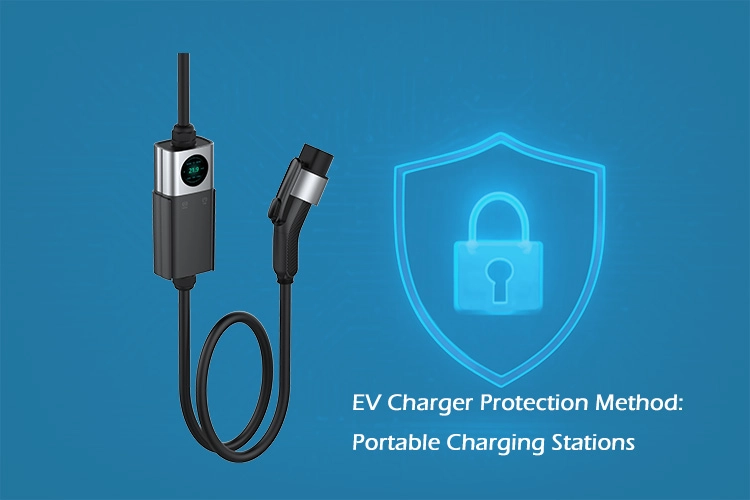
1. Portable EV Charger Protection Methods
Portable EV chargers are widely adopted due to their flexibility, compact size, and cost-effectiveness. They are usually rated for Level 1 charging (110–120V in North America) or portable Level 2 charging (220–240V in Europe and Asia), making them ideal for drivers who need emergency charging or travel convenience.
1.1 Physical Protection
Rugged Enclosure (IP65–IP66): High-level waterproof and dustproof designs ensure safe charging even in rain or snow.
Cable Durability: Reinforced TPE or TPU cables prevent cracking in cold environments and overheating in high temperatures.
Portable Case: Many suppliers offer custom carrying cases for added protection during transport.
1.2 Electrical Protection
Portable EV chargers are equipped with multiple safety mechanisms, including:
Overvoltage / Undervoltage protection
Overload and short-circuit protection
Overtemperature shutdown (smart chips cut off charging automatically)
Surge and lightning protection (essential in outdoor use)
Leakage protection (RCD Type A or Type B)
Relay protection and waterproof circuit design
Business Value: For wholesalers and distributors, offering portable EV chargers with strong multi-layer protection helps improve customer trust and reduce after-sales issues.
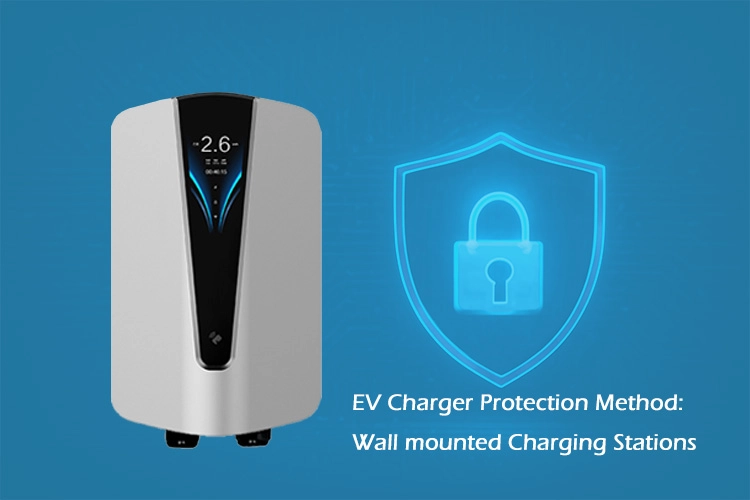
2. Wallbox EV Charger (Level 2 EV Charger) Protection Methods
Wallbox EV chargers—commonly known as Level 2 EV chargers—are the preferred solution for homeowners, residential communities, and office buildings. They provide charging speeds between 7kW and 22kW, making them significantly faster than portable units.
2.1 Physical Protection
Ingress Protection (IP55–IP66) ensures safe outdoor operation.
IK10 impact resistance protects against vandalism and accidental collisions.
Smart installation options: Indoor garage (less exposure, easier maintenance) vs. outdoor installation (requires rain protection and anti-theft locks).
2.2 Electrical Protection
Beyond the portable charger’s functions, wall-mounted chargers include:
Grounding protection: Automatic stop if grounding is faulty.
RFID / App authentication: Prevents unauthorized charging.
Emergency stop switch: Instantly cuts power in emergencies.
Static electricity protection: Ensures safe connection during dry weather.
OCPP communication monitoring: Integrates with cloud platforms for real-time safety data.
Business Value: For charging station operators and contractors, wallbox chargers with advanced protection help reduce liability risks and improve long-term ROI by ensuring safe 24/7 operation.
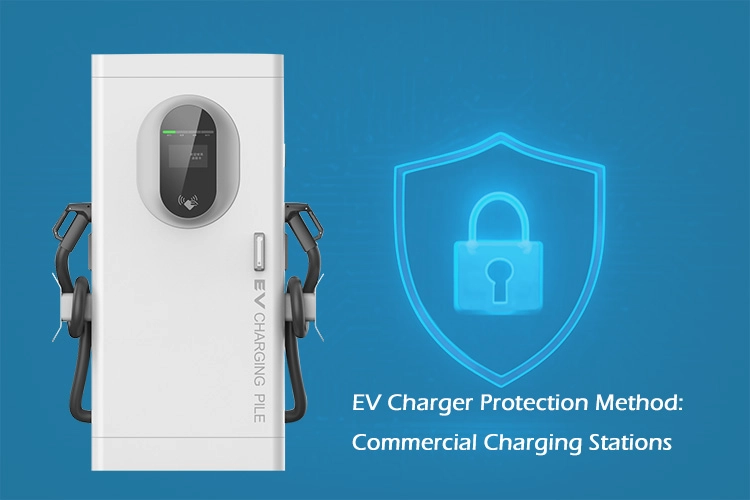
3. Commercial EV Charging Station Protection Methods (Level 3 DC Fast Chargers)
Commercial EV charging stations—also known as Level 3 EV chargers or DC fast chargers—are designed for public networks, fleet operators, and highway service areas. They deliver power from 60kW to 960kW, making them critical for long-distance EV drivers and commercial fleets.
3.1 Physical Protection
Surveillance cameras: Ensure station security and deter vandalism.
Protective canopy design: Shields chargers and users from weather.
Stainless steel enclosures: High corrosion resistance for coastal or industrial areas.
Modular design: Easier maintenance and faster replacement of damaged parts.
3.2 Electrical Protection (12+ Layers)
Commercial DC chargers integrate a comprehensive protection system including:
Overvoltage protection
Undervoltage protection
Overcurrent protection
Short-circuit protection
Overtemperature protection
Insulation monitoring
Grounding fault detection
Leakage current detection
Relay adhesion protection
Surge and lightning protection
Battery overcharge prevention
Communication fault protection (OCPP 1.6/2.0 compliance)
Business Value: For wholesale suppliers and operators, investing in DC fast chargers with advanced protection ensures longer equipment lifespan, reduced downtime, and better charging experience for EV owners.
4. Why Protection Matters for Businesses
From the perspective of engineering companies, wholesalers, and operators, protection systems in EV chargers are not just technical details—they represent market competitiveness:
Safety Compliance: Meeting CE, UL, and IEC standards ensures global market entry.
Reduced Maintenance Costs: Stronger protection = fewer breakdowns = higher profits.
User Confidence: Drivers are more likely to use chargers that feel safe and reliable.
Brand Reputation: Offering safe, certified EV chargers improves brand credibility.
Conclusion
Whether it’s a portable EV charger for personal mobility, a wallbox level 2 EV charger for homes and businesses, or a level 3 DC commercial charging station for public networks, robust protection systems are the foundation of safe, efficient, and profitable EV charging infrastructure.
For 2B buyers—installers, operators, and wholesalers—choosing chargers with advanced safety features means lower risks, higher uptime, and greater trust from end users.