Introduction
In the current global energy landscape, industrial and commercial enterprises face a daunting challenge: skyrocketing electricity costs driven by complex tariff structures. As businesses scale their operations or integrate high-power infrastructure like electric vehicle (EV) charging stations, the “demand charge” portion of the utility bill often becomes the most significant financial burden. Understanding peak shaving explained in a technical and strategic context is no longer just for utility engineers; it is a vital survival skill for facility managers and CFOs alike. By leveraging a peak shaving with battery energy storage system, companies can effectively “shave” off expensive power spikes, ensuring a flatter, more predictable, and significantly cheaper energy profile.
Why Is My Electricity Bill So High?
Many business owners are shocked to find that even if they reduce their overall energy consumption (kWh), their monthly bill remains stubbornly high. The culprit is almost always the demand charge.
What Are Demand Charges and How Are They Calculated?
Utilities don’t just charge you for the total volume of energy you use; they charge you for the intensity at which you use it. This is measured in kilowatts (kW) rather than kilowatt-hours (kWh).
A demand charge is typically based on the highest 15-minute or 30-minute interval of power usage during a billing cycle. If all your heavy machinery, HVAC systems, and EV chargers kick in at 10:00 AM on a Tuesday, that single 15-minute window sets the price for your entire month’s demand fee.
The Calculation Formula:
Monthly Demand Charge = Peak Demand (kW) × Utility Demand Rate ($/kW)
How Peak Demand Drives Up Commercial Electricity Costs
Peak demand puts immense strain on the grid. To ensure reliability, utilities must maintain enough “spinning reserve” (backup power plants) to meet these brief spikes. These costs are passed down to commercial and industrial (C&I) users. In some regions, demand charges can represent 30% to 70% of the total monthly electricity bill.
Real Example: Why One Peak Spike Can Increase Your Bill
Imagine a manufacturing plant that consistently pulls 500 kW. For 29 days, their usage is flat. However, on the 30th day, a technician starts up three large industrial motors simultaneously, causing a brief 15-minute spike to 800 kW. If the utility charges $20 per kW, that single 15-minute event costs the company an extra $6,000 ($20 × 300 kW extra) for the month, even if the total energy (kWh) used was negligible.
What is Peak Shaving and How Does It Work?
To combat these costs, savvy operators use peak shaving energy storage to manage their load profile.
Peak Shaving Definition (Simple Explanation)
Peak shaving is the process of reducing the amount of energy purchased from the utility during periods of maximum demand. Instead of drawing power from the grid when your usage spikes, you draw from an onsite energy source—typically a battery.
Peak Shaving vs. Peak Demand Reduction
While often used interchangeably, “peak demand reduction” is the goal, and “peak shaving” is the specific technique. Peak demand reduction can involve simply turning off lights or equipment, but what is peak shaving in a modern industrial context usually refers to using a battery energy storage system for peak shaving to supplement the grid without interrupting operations.
Typical Peak Shaving Process (Charge–Store–Discharge)
- Charge: During periods of low demand (or when electricity prices are low), the battery system draws power from the grid or onsite solar.
- Store: The energy is held in high-density Lithium-ion or Sodium-ion cells.
- Discharge: When the building’s load exceeds a pre-set threshold, the peak demand management system triggers the battery to discharge, covering the “peak” so the grid meter never sees the spike.
Peak Shaving vs. Load Shifting: Which One is Better for Cost Savings?
Understanding the nuance between these two strategies is essential for energy cost optimization.
What is Load Shifting?
Load shifting involves moving the timing of energy consumption. For example, running a high-energy furnace at night instead of during the day to take advantage of time-of-use electricity pricing.
Key Differences Between Peak Shaving and Load Shifting
| Feature | Peak Shaving | Load Shifting |
| Primary Goal | Lowering Max Power (kW) | Moving Energy Time (kWh) |
| Primary Saving | Demand Charges | Consumption (Energy) Rates |
| Operational Impact | Low (Automatic) | High (Requires schedule changes) |
| Primary Technology | Battery Energy Storage (BESS) | Smart Scheduling / Automation |
| Response Speed | Milliseconds | Minutes/Hours |
When Should You Choose Peak Shaving Instead of Load Shifting?
You should prioritize a peak shaving solution for commercial buildings when your operational schedule is rigid. If you cannot stop your production line or delay EV charging without losing money, peak shaving is the only viable way to reduce electricity bills with battery storage.
How Does Battery Energy Storage Enable Peak Shaving?
In 2026, the technology behind a battery storage peak shaving setup has reached a level of “set-and-forget” reliability.
Role of Battery Energy Storage Systems (BESS)
The BESS acts as a “buffer.” Its two primary characteristics for peak shaving are:
- Fast Response: Modern BESS can transition from standby to full discharge in milliseconds, catching even the sharpest inrush current spikes.
- High Power Output: It provides the “punch” needed to run heavy industrial loads without triggering a grid demand alarm.
Key System Components
- Battery System: Usually Lithium Iron Phosphate (LFP) for safety and longevity.
- PCS (Power Conversion System): The bi-directional inverter that converts AC to DC and vice versa.
- BMS (Battery Management System): Monitors the health, temperature, and voltage of every cell.
- EMS (Energy Management System): The “brain” that uses AI to predict peaks and decide when to discharge for a peak load reduction strategy.
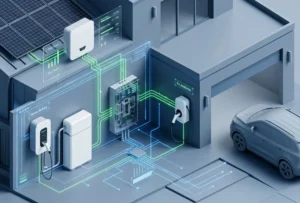
Typical System Configuration for Peak Shaving
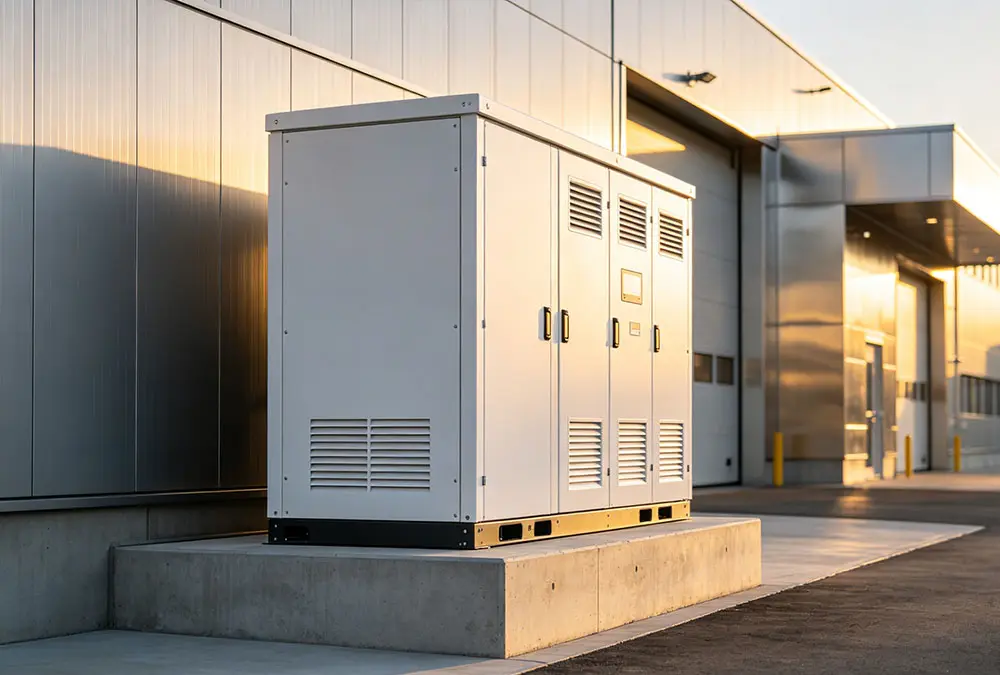
For a medium-sized industrial facility, a 250kW/500kWh all-in-one outdoor cabinet is the gold standard. It combines all four components into a weather-resistant enclosure that can be placed near the main switchgear or an EV charging hub.
What Are the Benefits of Peak Shaving?
Implementing an industrial peak shaving system offers advantages beyond just the monthly bill.
Reduce Demand Charges and Electricity Bills
This is the most immediate benefit. By capping your peak demand, you effectively lower the “ceiling” of your electricity bill. Many companies see a demand charge reduction of 30% or more within the first month.
Improve Energy Efficiency and Load Management
A smart energy management system provides granular data on your power usage. This transparency allows facility managers to identify inefficient equipment that causes unnecessary spikes.
Enhance Grid Stability and Reliability
By reducing your peak pull, you help prevent local transformer overloads. This increases the lifespan of your own electrical infrastructure and reduces the risk of brownouts.
Support Renewable Energy Integration
Peak shaving is the perfect companion for onsite solar. Batteries can store excess solar during the day and discharge it during the evening peak, maximizing the value of your green investment.
How Much Can You Save with Peak Shaving? (ROI & Cost Savings)
Typical Savings for Commercial Users (10–40%)
The energy storage cost savings vary by region, but in high-tariff markets, the savings are substantial. According to 2025 industry reports, C&I users implementing BESS for peak shaving saved an average of $2,500 per 100kW of “shaved” demand per month.
Payback Period of Battery Storage Systems (2–4 Years)
With the falling cost of LFP battery cells and government incentives (such as the ITC in the US or carbon credits in Europe), the ROI has dropped significantly. A well-designed peak shaving solution for commercial buildings now typically pays for itself in 2 to 4 years.
ROI Calculation Example:
Annual Savings = (Monthly Shaved kW × Demand Rate × 12) + (Arbitrage Savings)
Payback Period = Total System Cost / Annual Savings
Key Factors Affecting ROI
- Utility Tariff Structure: The higher the $/kW rate, the faster the ROI.
- Peak Frequency: If you have multiple peaks daily, the battery works harder and saves more.
- Incentives: Local subsidies for commercial energy storage solutions can cover up to 50% of the CAPEX.
What Types of Loads Are Suitable for Peak Shaving?
Industrial Loads (Motors, Compressors)
Large motors used in manufacturing or mining have massive “inrush” currents during startup. A peak load management system handles these brief bursts, preventing them from hitting the grid.
Commercial Buildings (HVAC Systems)
In summer, air conditioning units often cycle on simultaneously. Peak shaving smooths these thermal loads.
EV Charging Stations (Fast Charging Peaks)
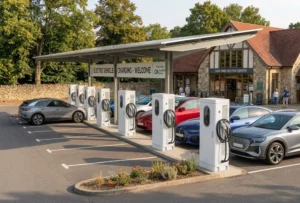
This is the fastest-growing application. An EV charging peak shaving energy storage solution allows a site to install 150kW ultra-fast chargers on a grid connection only rated for 50kW. The battery “boosts” the power during the charge cycle.
Data Centers and High-Power Equipment
Data centers require 100% uptime and high power density. BESS provides both peak shaving and a secondary layer of UPS-like protection.
How Peak Shaving Reduces Carbon Emissions and Energy Costs
It is a common misconception that batteries are only about money. They are a core pillar of decarbonization.
- Reducing Peak Fossil Fuel Generation: “Peaker plants” (natural gas or coal) are the dirtiest plants on the grid. By reducing peak demand, you reduce the need for these plants to run.
- Enabling Higher Renewable Energy Penetration: Since solar and wind are intermittent, battery energy storage for peak shaving provides the “firmness” the grid needs to accept more renewable power.
- Optimizing Energy Consumption Patterns: By smoothing your load, you allow the grid to operate at a higher efficiency, reducing transmission losses.
How to Implement a Peak Shaving Solution (Step-by-Step Guide)
Step 1: Analyze Load Profile
Collect 12 months of “interval data” (15-minute resolution) from your utility. This reveals exactly when and how your peaks occur.
Step 2: Determine System Size (kW/kWh)
Use the data to calculate the “Gap.” If your limit is 400kW and you spike to 600kW, you need at least a 200kW power (kW) rating. The energy (kWh) rating depends on how long that peak lasts.
Step 3: Select Battery Technology (LFP Recommended)
For industrial peak shaving systems, Lithium Iron Phosphate (LFP) is the industry standard due to its 6,000+ cycle life and thermal stability. In 2026, keep an eye on Sodium-ion (Na-ion) for lower-cost, long-duration applications.
Step 4: Integrate EMS Optimization
Ensure your EMS can communicate with your building management system (BMS) and potentially participate in “Virtual Power Plants” (VPP) for additional revenue.
Industry Highlight: Recommended Industrial BESS
For businesses looking to implement these strategies, we recommend the Hyper-Core 215 series. This all-in-one liquid-cooled system is specifically designed for demand charge reduction, featuring a pre-configured EMS optimized for the most common global utility tariffs.
FAQ – Peak Shaving
What is peak shaving?
Peak shaving explained simply: It is the use of onsite energy (like batteries) to lower the maximum power demand from the grid, thereby reducing expensive demand charges.
What is the difference between peak shaving and load shifting?
Peak shaving focuses on reducing the maximum power (kW) spike, while load shifting focuses on moving the total volume of energy usage (kWh) to a different time of day to save on cheaper rates.
How much can peak shaving save?
Most commercial facilities can reduce their total electricity bill by 10% to 40%. The specific savings depend heavily on your local utility’s demand charge rates.
Is battery storage necessary for peak shaving?
While you can shave peaks by manually shutting down equipment, a battery energy storage system for peak shaving is the only way to do it automatically without affecting your facility’s productivity or comfort.
Conclusion: Is Peak Shaving the Right Solution for Your Business?
As we move further into 2026, the volatility of the energy market continues to penalize businesses with irregular power profiles. Peak shaving explained through a technical lens reveals that it is not just an electrical upgrade—it is a financial instrument. By integrating a battery storage for peak demand reduction, you gain control over your energy destiny, turn a variable expense into a predictable one, and future-proof your facility for the electric era.
Ready to stop overpaying for power spikes? Explore our [Commercial Energy Storage Solutions] or [Contact an Engineer] for a free load profile analysis today.