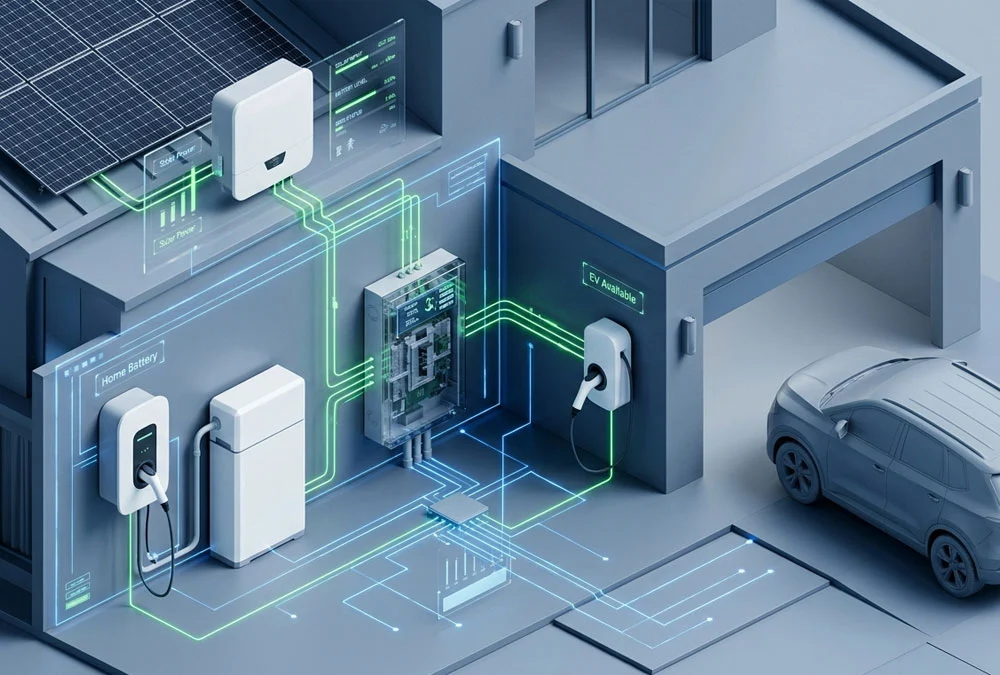
Choosing a home EV charger starts with your vehicle and daily charging needs, not the charger with the highest power rating. Navigating through endless hardware options can feel overwhelming, but this definitive Home EV Charger Buying Guide simplifies the noise by aligning equipment specs with real-world residential electrical limits. Driven by rapid EV adoption across Europe and North America, global residential EVSE market revenue is projected to expand from $4.2 billion in 2024 to $18.6 billion by 2030 (BloombergNEF Electric Vehicle Outlook 2025). Making an informed investment today prevents costly panel overhauls tomorrow while securing long-term charging reliability.
Quick Decision Checklist Covered in This Guide:
- Daily mileage and overnight charging windows
- Vehicle onboard AC charger limits
- Home main panel capacity (100A vs 200A)
- Hardwired vs. plug-in connection types
- Dynamic load management & smart tariffs
Do You Really Need a Home EV Charger?
Before spending hundreds of dollars on a wallbox, take a step back and look at your actual driving habits. Many new EV owners default to buying maximum charging speed without evaluating if their daily routine even demands it.
When a Dedicated Home Charger Makes Sense
A dedicated Level 2 wallbox becomes essential if you drive over 40 miles (65 km) daily. It ensures full battery recovery overnight, supports off-peak automated charging, and provides weather-hardened exterior durability for outdoor parking setups. According to the U.S. Department of Energy (DOE) Vehicle Technologies Office, over 80% of electric vehicle charging takes place at home due to the sheer cost efficiency and convenience of overnight dwell times.
When a Portable Charger May Be Enough
If your daily commute is under 15 miles and your car stays parked for 12+ hours overnight, a standard portable trickle charger (Level 1) plugged into a standard wall socket might suffice temporarily. As frequently noted on EV community forums like Reddit, many drivers who start with simple plug-in gear only upgrade once their travel distance increases or when winter cold hits battery efficiency.
Why Home Charging Is Usually About Convenience, Not Maximum Speed
Residential charging is designed to work while you sleep. You don’t need DC fast charging speeds at home. Replacing 30 to 50 miles of depleted range overnight requires moderate power, making smart energy management far more valuable than sheer wattage.
What Types of Home EV Chargers Are Available?
Charging units come in distinct physical form factors designed for specific mounting conditions and portability needs.
Portable EV Chargers
Compact units stored in your trunk. They plug directly into existing household outlets (Schuko, NEMA 5-15, or NEMA 14-50) and offer ultimate flexibility during road trips.
Wall-Mounted Home EV Chargers
The standard wallbox installation for garages and house side-walls. These units are permanently mounted, providing integrated cable management, high power outputs, and smart software features.
Pedestal-Mounted Home EV Chargers
Designed for open driveways or detached parking spots without nearby structural walls. The charger attaches to a metal post anchored in concrete, requiring underground conduit wiring.
| Form Factor | Best For | Main Advantage | Main Consideration | Buyer Benefit |
|---|---|---|---|---|
| Portable | Flexibility & emergency travel use | No permanent installation required | Lower output speed, manual packing | Zero upfront installation labor cost |
| Wall-Mounted | Standard garage & wall setup | Sleek look, high durability | Fixed mounting spot | Clean setup with fast daily plug-in |
| Pedestal-Mounted | Open driveways & detached yards | Mountable anywhere with trenching | Higher civil works & piping costs | Flexible placement without wall limits |
How Much Charging Power Do You Need at Home?
Power rating directly impacts hardware cost and electrical installation requirements. Following a clear home EV charger buying guide framework helps you pick the right balance between charging speed and home service limits.
3.5 kW Home Charging
Runs on a single-phase 16A circuit (Level 1 / low Level 2). Adds roughly 12-15 miles (20-25 km) of range per hour. Ideal for plug-in hybrids or low-mileage commuters.
7 kW Home Charging
The global benchmark for residential Level 2 charging (single-phase 32A). Adds around 25-30 miles (40-50 km) of range per hour, fully replenishing standard batteries in 6-8 hours overnight.
11 kW Home Charging
Standard in regions with three-phase 400V residential connections (Europe/Australia, 3-phase 16A). Provides up to 45 miles (70 km) of range per hour without pulling excessive current per phase.
14 kW Home Charging
A niche high-output single-phase configuration (60A circuit pulling 48A continuous). Requires robust electrical wiring and a dedicated high-capacity panel connection.
22 kW Home Charging
Maximum AC charging tier using three-phase 32A infrastructure. Note: 22 kW is only useful when both the home electrical system and the vehicle support the required three-phase AC charging power.
How Fast Will a Home EV Charger Actually Charge Your Car?
A common point of confusion among buyers is assuming the wallbox’s rated sticker output guarantees the actual charging rate entering the battery.
Charger Rated Power vs Vehicle AC Charging Limit
Your vehicle’s On-Board Charger (OBC) acts as the ultimate bottleneck. If your EV has a 7.4 kW OBC, plugging into a 22 kW wallbox will still cap your charge at 7.4 kW. The car controls the energy draw, protecting battery thermal health. According to technical standards published by the Society of Automotive Engineers (SAE J1772 / SAE J3400), the charging station acts merely as a control and protection device (EVSE); the actual AC-to-DC rectification takes place inside the vehicle’s internal OBC.
Battery Size and State of Charge
Charging speed slows down near full capacity. The final 20% takes longer due to the battery management system (BMS) tapering off current to prevent cell degradation.
Charging Time vs Energy Added
Calculate your minimum charge duration using this practical estimation metric:
For instance, filling a 60 kWh battery from 20% to 80% requires 36 kWh. On a 7 kW charger: 36 kWh ÷ 7 kW ≈ 5.1 hours (excluding 10% thermal efficiency losses).
Why the Fastest Home Charger Is Not Always the Best Choice
Sizing up to maximum power often incurs thousands in electrical service upgrades. Buying for your daily commute needs—rather than maximum peak hardware numbers—saves substantial upfront costs.
Check Your Home Electrical Capacity Before Choosing a Charger
Plugging a continuous high-draw device into an unprepared main distribution board presents serious thermal risks. Electrical integrity must come first.
What Is Your Home Electrical Service Capacity?
Residential services range from older 100A panels to modern 200A or 400A split services. However, panel size alone does not determine how much EV charging capacity is available.
What Other Loads Does Your Home Have?
HVAC compressors, electric water heaters, induction cooktops, and hot tubs pull massive baseline amperage. Continuous EV charging added on top can easily breach safe operating margins.
Why an Empty Breaker Slot Does Not Mean You Have Enough Capacity
Physical space inside a breaker panel does not equal electrical head-room. A panel can have physical slots open while already operating at peak capacity limits during HVAC usage cycle spikes. According to the U.S. National Renewable Energy Laboratory (NREL) EV Infrastructure Technical Guidelines, over 48% of single-family homes built before 1990 require a dedicated panel load evaluation before installing Level 2 EVSE to comply with National Electrical Code (NEC) continuous load rules.
When Do You Need a Panel or Service Upgrade?
If your calculated peak load leaves less than 32A continuous capacity, an electrical panel upgrade or dynamic energy management device becomes mandatory under safety codes.
Can Load Management Help You Avoid an Electrical Upgrade?
Electrical grid retrofits and panel upgrades can easily exceed $3,000. Dynamic software controls offer a far more cost-effective workaround.
What Is Dynamic Load Management?
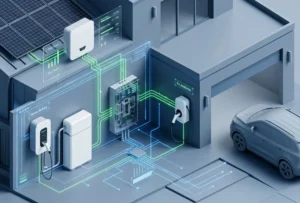
Dynamic Load Management (DLM) monitors household power consumption in real time via current transformer (CT) clamps, automatically throttling EV charge rates down when household usage spikes.
How Dynamic Load Management Works
Imagine a house with a 125A main breaker and a 48A charger. When an electric stove and AC turn on simultaneously, the smart wallbox drops output from 48A down to 16A. Once household appliances switch off, the charger instantly scales back up to 48A speed.
When Load Management Makes Sense
DLM is perfect for older homes with 100A-125A panels, multi-EV households, or installations where upgrading utility service feeder cables is physically impossible.
Load Management vs Panel Upgrade
| Home Electrical Situation | Recommended Engineering Approach | Buyer Financial Benefit |
|---|---|---|
| Plenty of spare capacity (200A+ Panel) | Standard Level 2 Direct Circuit | Lowest overall equipment purchase cost |
| Moderate capacity (125A Panel) | Lower static charging current (16A/24A) | Saves on hardware without extra sensors |
| Limited panel capacity (100A Panel) | Dynamic Load Management (CT Sensors) | Avoids $2,000–$4,000 panel overhaul |
| Severely undersized service limits | Panel/service upgrade required | Future-proofs entire home for electrification |
Note: Load management is not a substitute for safe electrical design; basic circuit protection standards must always be met.
Looking to Power Commercial Fleet Charging or Multi-Family Facilities?
When scaling up from single-family chargers to multi-point commercial EV hubs, transformer grid capacity quickly becomes a major barrier. Commercial Battery Energy Storage Systems (BESS) eliminate expensive utility grid transformer upgrades by shaving peak demand loads and storing low-cost off-peak energy.
- 100kWh BESS Cabinet: Compact liquid-cooled modular unit for commercial EV fast-charging demand buffer and peak shaving.
- 261kWh Industrial Energy Storage System: High-density LFP system designed for medium-scale commercial parking hubs and solar integration.
- 418kWh / 1MWh Utility Energy Storage: Containerized grid-scale storage built to support heavy-duty DC fast-charging plazas without overloading local distribution grids.
Single-Phase vs Three-Phase Home EV Charging
Electrical phase infrastructure determines how much AC power can be delivered safely into your home EVSE unit.
Single-Phase Home Charging
Standard in North America and typical UK residential homes (230V split-phase or single-phase). Capped practically at 7.4 kW (32A) or 9.6 kW (40A continuous draw).
Three-Phase Home Charging
Widespread across Continental Europe and Australia (400V 3-phase). Distributes electrical load across three live conductors, safely enabling 11 kW and 22 kW wallbox connections at lower per-phase currents.
How Phase Configuration Affects 7, 11 and 22 kW Charging
An 11 kW charger requires 3 phases running at 16A each. If connected to a single-phase supply, it drops down to just 3.7 kW. Match your charger’s phase specs with your home’s main distribution setup.
Which Charging Power Is Available in Your Market?
Always check local grid standards. Installing a 22 kW 3-phase wallbox in a region dominated by single-phase residential grids yields zero extra performance for the added investment.
Which Connector and Cable Should You Choose?
Plugs and cables are the primary physical interface for charging. Selecting compatible fittings prevents unnecessary adapter clutter.
Type 2 for Home Charging
The standard socket interface in Europe, UK, and Asia (IEC 62196-2). Supports both single-phase and three-phase AC power lines smoothly.
J1772 and NACS for North American Applications
Type 1 (SAE J1772) handles single-phase AC charging across legacy North American EVs. The North American Charging Standard (NACS / SAE J3400) has rapidly become the new industry norm across major manufacturers.
CCS Is Primarily a DC Fast-Charging Connector
CCS (Combined Charging System) combines standard AC pins with lower DC pins. For home AC charging, your vehicle uses only the upper AC plug section.
Tethered vs Untethered Charging Cable
| Cable Type | Main Advantage | Main Consideration | Buyer Choice Benefit |
|---|---|---|---|
| Tethered (Attached) | Maximum daily plug-and-play convenience | Cable wear requires unit service | No hassle fetching cables from trunk |
| Untethered (Universal Socket) | Universal compatibility & clean wall look | Must manually plug in bring-along cable | Easy cable length swaps as vehicle changes |
What Cable Length Should You Choose?
Standard cable runs measure 16 feet to 25 feet (5m to 7.5m). Always measure the distance from your wallbox to your vehicle’s charging port, accounting for reversing into the garage.
Smart Home EV Charger Features: Which Ones Actually Matter?
Smart features can provide genuine utility or just inflate the overall price. Filter out unnecessary features by focusing on practical value.
Wi-Fi and App Connectivity
Enables remote start/stop, status monitoring, firmware updating, and real-time charging parameter tracking directly from your smartphone.
Scheduled and Off-Peak Charging
Automatically triggers charging during low-cost utility windows (e.g., midnight to 6 AM). According to Eurelectric’s 2025 Smart Energy Report, utilizing dynamic off-peak EV charging tariffs cuts annual residential vehicle charging costs by up to 45% compared to standard flat-rate tariffs.
Dynamic Load Management
Critical for protecting home main breakers while ensuring maximum energy transfer when household demand falls off.
Energy Monitoring
Tracks exact kilowatt-hour consumption figures per session, helping you monitor charging costs accurately for household budgeting or company reimbursement.
Solar-Smart Charging
Integrates directly with rooftop PV inverters to divert excess solar generation into your EV battery rather than feeding it back to the grid for minimal feed-in tariffs.
RFID and Access Control
RFID keys prevent unauthorized charging on outdoor wallboxes installed in shared access driveways, open carports, or apartment building garages.
Should You Choose a Smart EV Charger?
When Smart Charging Is Worth Paying For
Smart wallboxes quickly pay for themselves if your electricity provider offers Time-of-Use (TOU) tariffs, if you own rooftop solar panels, or if your home panel capacity requires active dynamic load balancing.
When a Basic Charger May Be Enough
A simple non-networked charger works well if your utility uses flat electricity rates, your vehicle app already supports charging schedules, and your breaker panel has plenty of spare capacity.
Hardwired vs Plug-In Home EV Charger: Which Is Better?
The connection method directly affects continuous power ratings, installation complexity, and overall weather durability.
Plug-In EV Chargers
Plug into heavy-duty 240V outlets like NEMA 14-50 or CEE sockets. They offer easy removal during home relocations, though socket connections introduce an extra physical junction point that can wear out over time.
Hardwired EV Chargers
Connected directly to the electrical panel via permanent conduit. Hardwiring supports higher continuous current (e.g., 48A output on a 60A circuit under NEC Article 625 rules), offers superior weather resistance, and reduces thermal hotspot risks associated with plug receptacles.
Which Installation Type Fits Your Home?
If you want maximum reliability, faster 48A charging speeds, or an outdoor installation, choose hardwired. If you plan to move within a few years or prefer quick self-replacement, opt for plug-in.
What Should You Consider Before Installing a Home EV Charger?
- Electrical Load Calculation: Perform a formal load assessment with a qualified electrician to determine available service capacity under NEC Section 220 rules.
- Breaker and Circuit Requirements: Sizing rules mandate using a dedicated circuit rated for 125% of the charger’s continuous load (e.g., a 40A charger requires a 50A breaker).
- Cable Run and Installation Distance: Longer wiring runs from the main panel to the charger location increase material costs and voltage drop risks.
- Garage vs Outdoor Installation: Verify weatherproofing ratings. Outdoor chargers should be rated at NEMA 4 / IP65 or higher to handle heavy rain, snow, and dust.
- Local Permits and Electrical Codes: Check local building codes for permit requirements before starting any wiring installation.
- When to Hire a Qualified Electrician: Always hire a licensed electrician to evaluate wiring size, ground fault protection (GFCI), and breaker compatibility.
Compare Home EV Chargers by What Matters Most
Use this Home EV Charger Buyer’s Comparison Matrix to evaluate prospective chargers against real-world installation requirements:
| Evaluation Factor | What to Check | Buyer Advantage When Verified |
|---|---|---|
| Charging Power | Does output match vehicle OBC AC limit? | Avoids paying extra for unrated charger output |
| Home Current | Is panel headroom sufficient for amperage? | Prevents nuisance main breaker trips |
| Connector Standard | Type 2, J1772, or NACS built-in? | Eliminates bulky third-party plug adapters |
| Installation Mode | Hardwired or NEMA/CEE plug-in? | Balances portable flexibility with fixed power |
| Cable Length | Are 16ft-25ft options available? | Reaches car ports regardless of parking direction |
| Smart Load Controls | Is Dynamic Load Management supported? | Prevents costly electrical service upgrades |
| Outdoor Rating | Is enclosure IP65 / NEMA 4 rated? | Ensures safe operation in rain and cold weather |
How Much Does a Home EV Charger Cost?
Budgeting for home charging requires looking beyond the price tag of the wallbox itself.
Charger Hardware Cost
Basic plug-and-play Level 2 wallboxes cost between $250 and $450. Advanced smart chargers with app controls, dynamic load management, and solar integration range from $500 to $900.
Electrical Installation Cost
Standard installation labor and wiring run costs typically range from $300 to $1,000, depending on the distance between your breaker panel and the mounting location.
Panel or Service Upgrade Cost
If your home requires a full panel upgrade to 200A, costs typically range from $1,500 to $3,500. Using Dynamic Load Management helps avoid these high fees.
Smart Charger Software or Connectivity Cost
Most reputable residential chargers include free life-time app access, though commercial software platforms may charge monthly cloud management subscriptions.
Long-Term Operating Cost
Electricity remains your primary recurring cost. According to the International Energy Agency (IEA) Global EV Outlook 2025 report, charging an EV at home costs 60% to 75% less per mile than fueling an internal combustion engine vehicle across major global energy markets.
Why the Cheapest Charger May Not Be the Cheapest Option
Cutting corners on low-cost chargers without safety certifications (such as UL 2594, CE, or IEC 61851) can lead to hardware failures, thermal damage, or early replacements. Calculate your total investment using this simple formula:
AnengJi Home EV Charger Recommendations
Based on extensive engineering deployments across diverse residential environments, here are our top recommended wallbox choices:
Recommended Home AC Charger for Everyday Overnight Charging

Power Rating: 7kW (32A Single-Phase) / 11kW (16A Three-Phase)
Connector Options: Type 1 (J1772) / Type 2 (IEC 62196)
Best For: Standard single-family home garages and routine overnight charging.
Key Advantages: High durability casing, plug-and-play simplicity, compact footprint, and complete weather-sealed safety protection.
Recommended Smart Home EV Charger
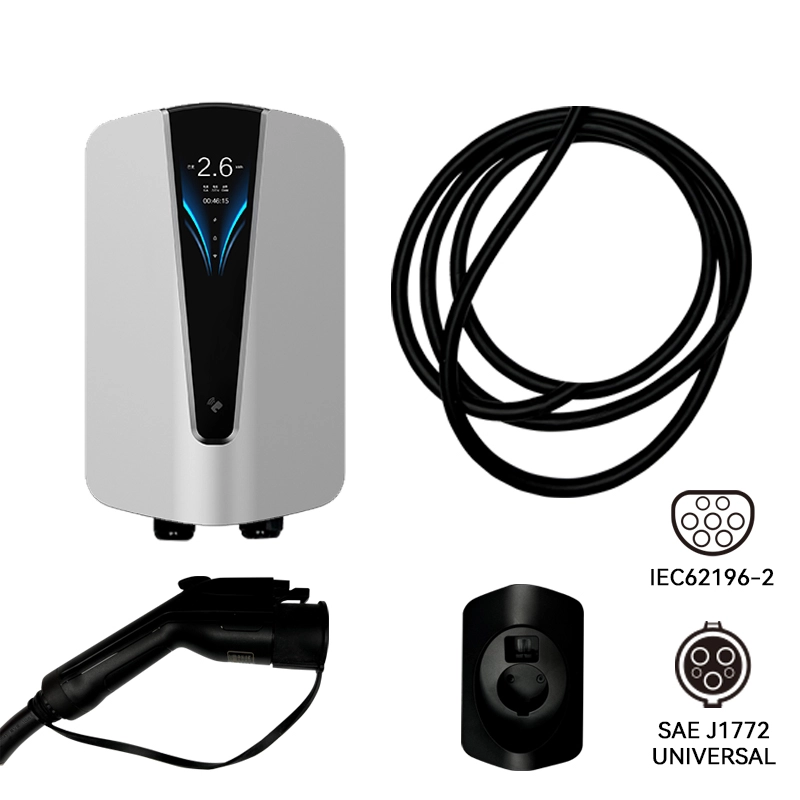
Power Rating: 7kW / 11kW / 22kW
Connectivity: Wi-Fi, Bluetooth, Ethernet & App Control
Best For: Energy-conscious homeowners looking to utilize dynamic load management and off-peak charging schedules.
Why Choose It: Real-time consumption tracking, automated scheduled charging, and dynamic CT load sensing to prevent main panel overloads.
Recommended Higher-Power Home EV Charger
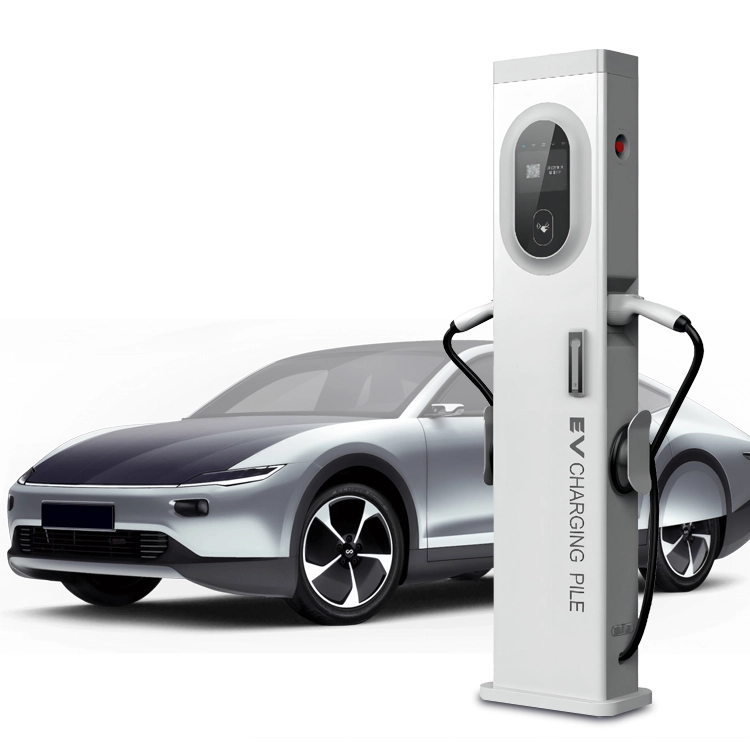
Power Rating: 11kW to 22kW AC Output / 32A-48A high-current configuration
Installation Options: Floor-Mounted Pedestal or Heavy-Duty Wall Mount
Best For: High-mileage drivers, large-capacity battery vehicles, and multi-EV households requiring quick turnaround charging.
Key Features: Industrial-grade heat dissipation, continuous high-current execution, and dual-plug pedestal adaptability.
How to Choose the Right Home EV Charger for Your Situation
Best Choice for Low Daily Mileage
A basic 3.5 kW or standard 7 kW non-smart charger provides reliable power without excess hardware costs.
Best Choice for Overnight EV Charging
A 7 kW to 11 kW smart charger configured with off-peak scheduling offers the ideal balance of charging speed and low electricity costs.
Best Choice for High Daily Mileage
A hardwired 11 kW 3-phase wallbox (or a 48A single-phase unit on a 60A circuit) delivers rapid battery top-offs.
Best Choice for Homes With Limited Electrical Capacity
A smart charger equipped with Dynamic Load Management and current transformer sensors avoids costly main panel overhauls.
Best Choice for Homes With Solar
A solar-matched EV charger configured to track real-time PV generation maximizes self-consumption of clean energy.
Best Choice for Outdoor Charging
A hardwired, IP65-rated wallbox or pedestal unit equipped with an integrated RFID card reader secures your equipment against outdoor elements and unauthorized use.
Home EV Charger Fit Matrix
| Household Scenario | Recommended Charger Specs | Primary Value Benefit |
|---|---|---|
| Low commute mileage + long overnight parking | 3.5kW – 7kW Basic Charger | Saves on hardware costs |
| Standard daily commute driving | 7kW / 11kW Wall-Mounted Charger | Reliable, full overnight battery replenishment |
| High daily travel mileage | 11kW – 22kW Hardwired Charger | Delivers maximum range recovery per hour |
| Older home with limited electrical service | Dynamic Load Management Charger | Prevents costly electrical panel overhauls |
| Rooftop solar PV installation | Solar-Diverting Smart Charger | Charges vehicle using free self-generated solar power |
| Outdoor driveway setup | IP65 Weather-Rated + RFID Lock | Protects hardware from weather and unauthorized access |
Home EV Charger Buying Checklist
- ☐ Step 1: Confirm vehicle maximum AC onboard charger rate (kW)
- ☐ Step 2: Calculate actual daily commute distance and required recovery energy
- ☐ Step 3: Have a licensed electrician assess your home main breaker panel capacity
- ☐ Step 4: Determine if Dynamic Load Management is required to avoid panel upgrades
- ☐ Step 5: Select physical mounting type (Wallbox vs Portable vs Pedestal)
- ☐ Step 6: Choose installation connection method (Hardwired high-power vs Plug-in flexibility)
- ☐ Step 7: Select proper plug fitting (Type 2, J1772, or NACS) and measure cable length
- ☐ Step 8: Evaluate smart features based on your utility’s off-peak rates and solar setup
- ☐ Step 9: Check outdoor IP/NEMA enclosure ratings and safety certifications (UL, CE, IEC)
- ☐ Step 10: Review hardware warranty terms and request installation estimates
Frequently Asked Questions About Home EV Chargers
What size home EV charger do I need?
For most drivers, a 7.4 kW (32A) charger provides the perfect balance of charging speed and electrical compatibility, replenishing 200+ miles of range overnight.
Is 7 kW enough for home EV charging?
Yes, 7 kW adds roughly 25-30 miles of range per hour. This easily fully charges most passenger electric vehicles during standard 8-hour overnight parking windows.
Do I need an 11 kW or 22 kW home charger?
Only if your home features a three-phase electrical supply and your EV’s onboard charger supports 11 kW or 22 kW AC charging. Otherwise, stick with a 7 kW unit.
Can my 100A or 125A electrical panel handle an EV charger?
Yes, but you will likely need to choose a lower current charger (such as 16A or 24A) or install a smart charger with Dynamic Load Management to prevent overloading your main panel.
Should I choose a hardwired or plug-in EV charger?
Choose hardwired for permanent outdoor installations, cleaner mounting, and higher continuous power (48A). Choose plug-in if you prefer simple wallbox removal when relocating.
Can load management avoid a panel upgrade?
Yes. Dynamic Load Management automatically throttles charger output when house household appliances switch on, safely keeping your total electrical draw within main panel limits.
What is the difference between Type 2, J1772 and NACS?
Type 2 is the standard AC connector across Europe. J1772 is the traditional North American AC plug. NACS is Tesla’s unified connector, now widely adopted across North America.
How much does it cost to install a home EV charger?
Typical electrician installation costs range from $300 to $1,000 for standard electrical runs. Complex conduit paths or service upgrades will increase total installation costs.
Find the Right Home EV Charger for Your EV
Need help selecting the right wallbox for your electrical layout and daily commute? Connect with our engineering team for a customized recommendation or explore our certified product lineup today.