Introduction
Let’s face a brutal reality in the energy market: picking wrong solar battery storage suppliers can cripple your business operations for a decade. The marketplace is flooded with flashy marketing sheets and dirt-cheap wholesale offers that fall apart under heavy industrial workloads. If your factory struggles with volatile demand charges, or your solar array wastes power during peak generation, choosing hardware isn’t a minor purchasing task. It is a critical infrastructure commitment. You cannot afford to rely on unverified trading companies or cut-rate assemblers who disappear when field cells fail. To protect your capital investment, you need a strict, engineering-focused strategy to evaluate vendors based on real-world asset lifecycle value.
How You Compare Solar Battery Storage Suppliers?
Featured Snippet:
The best way to compare solar battery storage suppliers is to evaluate their manufacturing capabilities, battery technology, certifications, project experience, engineering expertise, after-sales support, and total lifecycle value—not just product price. A reliable supplier should provide integrated battery systems, BMS, PCS, EMS, international certifications, and long-term technical support for commercial and industrial projects.
Why Choosing the Right Supplier Matters
In high-voltage setups, hardware reliability directly dictates your operational bottom line. A poorly integrated system causes constant micro-shutdowns, eroding your projected financial returns. Selecting a top-tier vendor secures your long-term project performance and keeps your critical facility loads running smoothly. Furthermore, institutional asset backup minimizes financial risk, ensuring your system pays for itself over its intended operational life.
Who Should Read This Guide?
This procurement guide is built for decision-makers handling heavy energy investments:
- Solar EPC Contractors: Looking for bankable partners to de-risk commercial project delivery.
- Energy Developers: Seeking scalable, high-voltage equipment for grid-tied portfolios.
- Industrial Companies: Aiming to slash high capacity fees and secure production continuity.
- Commercial Building Owners: Focused on optimizing time-of-use solar self-consumption curves.
- System Integrators: Needing open-protocol hardware that speaks directly to site software.
- Battery Distributors: Sourcing high-quality equipment backed by clear factory certifications.
What Makes a Reliable Solar Battery Storage Supplier?
You need to look past generic sales pitches and analyze a vendor’s actual physical infrastructure. The line between a true tier-one manufacturer and a middleman broker dictates your long-term support quality.
Manufacturer vs Trading Company
Buying directly from a factory gives you an immediate technical pipeline. You eliminate third-party broker markups and get clear engineering clarity on cell matching. True manufacturers provide customized enclosure modifications and reliable long-term spare parts access. Conversely, a trading company often vanishes when real field hardware issues emerge, leaving you stuck with orphaned machinery.
Manufacturing Capacity and Factory Strength
A reliable supplier must show clear physical scale. Check their automated manufacturing line square-footage and verified annual gigawatt-hour output capacity. High automation levels guarantee tight cell-to-cell performance uniformity. If a vendor relies on manual labor for cell sorting or busbar welding, your pack degradation risks skyrocket. True global delivery requires an established, robust supply chain capable of shipping multi-ton equipment safely across borders.
Research & Development Capability
Energy technology changes fast. Leading vendors invest heavily in internal laboratory testing to push cell boundaries. They control their own firmware updates and refine software safety parameters continuously. Working with an innovative supplier ensures your system won’t become obsolete a few years down the line.
Compare Solar Battery Storage Technologies Before Choosing a Supplier
Before locking in a hardware contract, you must analyze the electrochemical options available. Your choice sets your project’s physical layout, safety profile, and eventual return on investment.
Battery Chemistry
The core chemical makeup determines your system’s operational boundaries:
- LiFePO4 (Lithium Iron Phosphate): The undisputed benchmark for industrial energy projects. LFP eliminates volatile cobalt, delivering exceptional thermal safety and avoiding fire risks.
- Lithium-ion (NMC): Offers high physical energy density but carries higher thermal runaway risks. It requires complex cooling systems, making it less attractive for standard ground-mounted commercial projects.
- Sodium-ion (Emerging): An exciting alternative technology using abundant raw materials to lower base costs. It handles cold environments well but has a lower energy density, restricting its current use to niche setups.
Battery Performance Comparison
To establish a bankable framework, look at how different technologies stack up across key metrics. The recent BloombergNEF (BNEF) 2025/2026 Energy Storage Systems Cost Survey underscores that cell-to-system efficiency gaps heavily impact long-term asset amortization:
| Chemistry Type | Typical Cycle Life (80% DoD) | Round-Trip Efficiency | Thermal Runaway Risk |
|---|---|---|---|
| LiFePO4 (LFP) | 6,000 – 8,000 Cycles | > 92% System Level | Extremely Low / Inherently Stable |
| Lithium-Ion (NMC) | 3,000 – 4,500 Cycles | > 94% Cell Level | Moderate / Requires Active Cooling |
| Sodium-Ion | 2,000 – 4,000 Cycles | ~ 88% – 90% System Level | Low / Highly Stable |
Scalability and Future Expansion
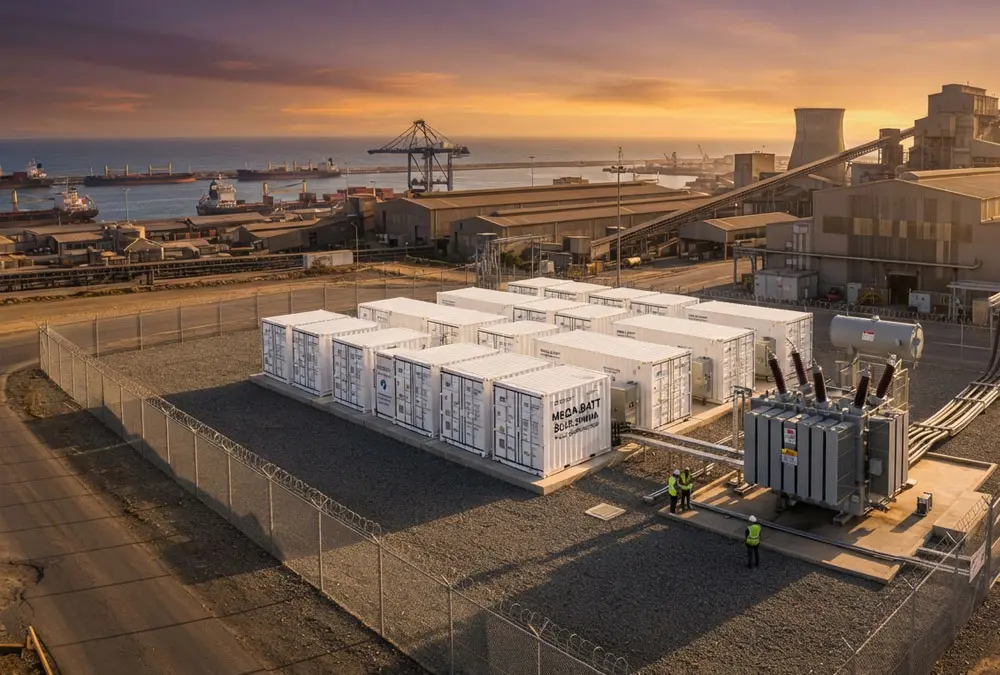
A smart energy system needs room to grow. Look for smart modular block setups that let you add capacity without reworking your main wiring layouts. For larger projects, a pre-assembled, containerized infrastructure lets you drop megawatt-scale power onto a site with minimal civil engineering work.
Evaluate Battery Energy Storage System (BESS) Integration Capabilities
A complete Battery Energy Storage System (BESS) needs multiple sub-systems working together in perfect harmony. You need a supplier who can integrate all these components seamlessly.
Battery Management System (BMS)
The BMS serves as your system’s primary safety guard. It monitors cell-level voltages, tracks temperatures, and stops overcharging before damage occurs. A premium, multi-tiered BMS isolates minor cell faults early, preventing whole-rack shutdowns and maintaining high facility uptime.
Power Conversion System (PCS)
The PCS handles bidirectional power conversion, turning raw DC cell power into grid-compliant AC electricity. A high-quality PCS responds to grid changes within milliseconds, providing clean power formatting and handling sudden machinery startup spikes without tripping.
Energy Management System (EMS)
The EMS serves as the system’s brain, scheduling charging cycles when power is cheap and discharging during peak rates. Top-tier vendors use AI-driven EMS platforms that analyze facility load habits and shifting weather patterns to optimize your financial returns automatically.
Integrated Solar + Storage + EV Charging Solutions
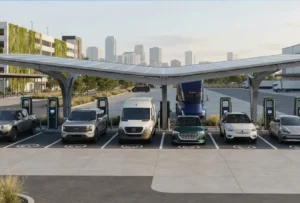
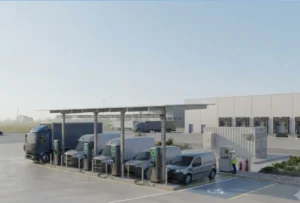
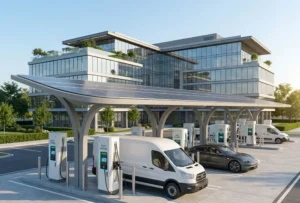
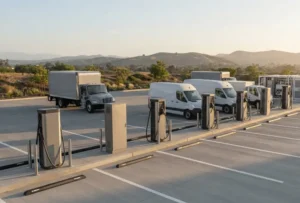
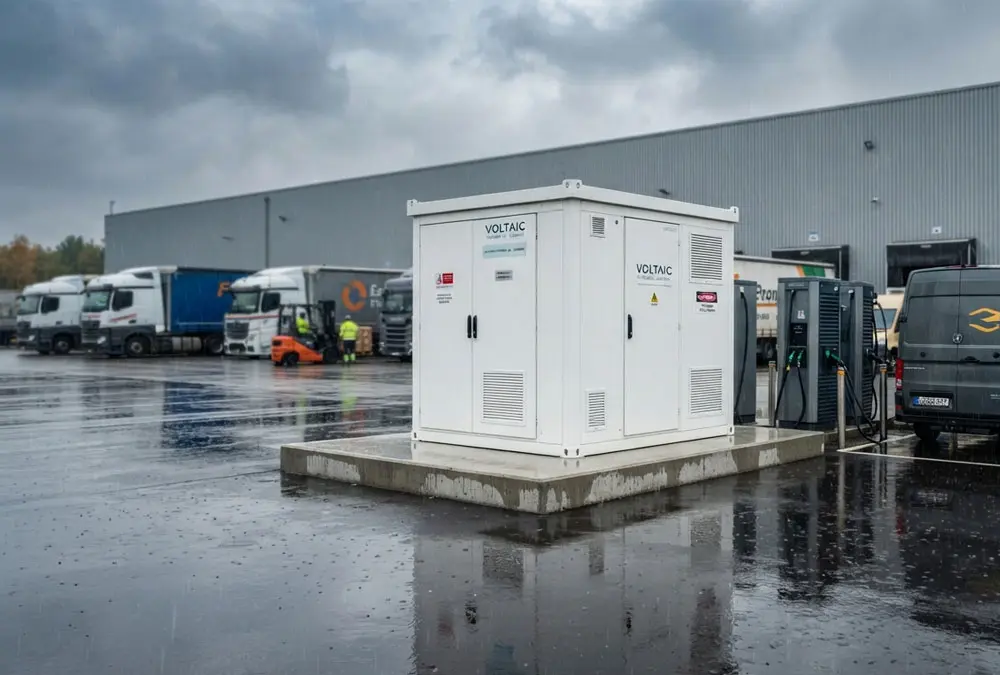
Modern microgrids require smart, multi-energy integration. Choosing a partner who can link your solar arrays, battery bank, and EV charging stations together prevents data communication bottlenecks. This complete engineering approach ensures clean, automated power balancing across your entire corporate property.
How to Compare Solar Battery Storage Suppliers for Commercial & Industrial Projects
Commercial energy profiles vary wildly by industry. Your chosen vendor must show a proven track record handling projects identical to your specific operating environment.
Commercial Battery Storage Experience
Office spaces, hotels, and retail centers operate under tight physical constraints and strict local safety rules. A reliable commercial battery energy storage supplier understands these indoor demands. They design quiet cooling loops and compact footprints that slip into existing utility rooms easily while clearing tough municipal fire codes.
Industrial Battery Storage Experience
Heavy factories and remote mining hubs subject hardware to harsh, demanding conditions like dust, vibration, and massive motor startup spikes. Your chosen industrial solar battery storage suppliers must provide rugged, outdoor-rated enclosures with advanced liquid cooling. This heavy-duty protection ensures stable performance during aggressive daily cycling.
Utility-Scale Energy Storage Projects
Large-scale grid injection and frequency markets require massive power reliability. When reviewing a containerized BESS supplier, check their high-voltage substation experience. Handling large megawatt arrays requires absolute precision across insulation checking, high-voltage switchgear design, and grid compliance testing.
Compare Supplier Certifications and Quality Standards
When assessing solar battery storage suppliers, safety documentation is non-negotiable. Insufficient testing paper trails can stall your project during utility connection reviews.
International Certifications
Verify that your supplier holds full international test clearances. Look for CE and IEC marks for European markets, UL listings for North American grid safety, and certified UN38.3 documentation to ensure safe logistics transport. These independent safety marks confirm the hardware can handle long-term grid stress safely.
Battery Testing Procedures
Ask for a detailed review of the factory’s quality checking workflows. A trustworthy battery energy storage system manufacturer runs strict Factory Acceptance Testing (FAT) before anything ships. These tests subject the integrated setup to simulated grid faults and full thermal stress runs to catch assembly defects early.
Quality Control Throughout Manufacturing
Top manufacturers monitor quality at every step of production. They trace raw materials from delivery to final build and run computerized laser weld checks on every busbar. This deep tracking guarantees cell uniformity, preventing early pack degradation and protecting your project’s financial returns.
Compare Supplier Services Beyond the Product
Hardware represents only a portion of your total project costs. Long-term success depends heavily on your vendor’s engineering support and service capacity.
Engineering Design Support
Every commercial facility has a unique energy footprint. A premier solar battery storage supplier Europe division won’t just sell you a generic cabinet. They run detailed site simulations and calculate correct sizing based on your actual utility bills to maximize your long-term returns.
OEM & ODM Services
For large-scale integrators and brands, customization flexibility is essential. A top-tier OEM solar battery storage suppliers partner can build custom outdoor enclosures and adapt EMS software interfaces to match your exact branding and local grid requirements seamlessly.
EPC and Turnkey Project Support
Moving a project from blue-prints to an active grid requires serious technical execution. Partnering with a comprehensive solar battery storage manufacturers and suppliers network gives you vital field commissioning guidance. Their field technicians oversee installation, program protection relays, and train your staff to minimize deployment errors.
After-Sales Service
A battery installation is a long-term investment. Ensure your vendor provides a solid, long-term performance warranty backed by remote cloud diagnostics. Fast access to spare parts and local technical support ensures your system maintains maximum uptime over its entire operating life.
Common Mistakes When Comparing Solar Battery Storage Suppliers
Avoid these common procurement traps that can quickly ruin your project’s long-term financial returns.
Choosing Based Only on Price
Bargain equipment usually relies on low-grade cells with weak internal management systems. These systems degrade quickly, leaving you with an underperforming asset well before its payback window closes.
Ignoring Total Lifecycle Cost
A cheap initial bid often hides low round-trip efficiency numbers. Over time, that wasted energy translates to lost revenue, making the true lifecycle cost of cheap hardware far higher than a premium system.
Overlooking System Compatibility
Never assume different brands will work together out of the box. If your battery BMS can’t talk to your hybrid inverters, your energy management system will struggle, causing constant fault trips and poor efficiency.
Not Verifying Project References
Always demand real, working proof. A reliable vendor will gladly share case studies of active, high-voltage installations running smoothly under conditions similar to your own site.
Ignoring Local Technical Support
If your system experiences a fault, you cannot afford to wait weeks for overseas responses. A lack of fast, local technical support can turn a minor issue into an expensive extended outage.
Solar Battery Storage Supplier Comparison Checklist
Use this practical engineering matrix to evaluate and grade competitive vendor bids cleanly:
Technical Capability Checklist
- Battery Technology: Grade-A, certified LiFePO4 Battery Storage chemistry with documented cell uniformity testing.
- BMS Integration: Multi-tiered protection architecture tracking cell-level voltages and temperatures in real time.
- PCS Efficiency: Bidirectional conversion efficiency matching your site’s peak power demands.
- EMS Optimization: AI-driven software capable of handling automated peak shaving and spot-market trading.
Business Capability Checklist
- Manufacturing Scale: Proven multi-gigawatt factory capacity utilizing automated laser assembly lines.
- Safety Certifications: Complete independent testing documentation including CE, IEC, UL, and UN38.3.
- Global Logistics: Proven experience shipping heavy hazardous goods through international customs safely.
- Custom Build Services: Full OEM/ODM capabilities to customize enclosures and software parameters.
Service Capability Checklist
- Warranty Support: Clear 10-to-15-year performance warranty backed by a secure capacity guarantee.
- Field Commissioning: Direct on-site engineering support for safe grid connection and utility witness testing.
- Technical Training: Comprehensive operational training for your local maintenance teams.
- Remote Maintenance: Cloud-based diagnostic monitoring to catch performance anomalies early.
Why AnengJi Power Is a Trusted Solar Battery Storage Supplier
AnengJi Power combines advanced manufacturing scale with deep field engineering experience to deliver high-performance energy infrastructure.
Advanced LiFePO4 Battery Technology
Safety drives our manufacturing process. AnengJi Power utilizes premium, cobalt-free LFP chemistry to build high-capacity systems. Our focus on build quality ensures excellent thermal safety and a long operating life, delivering predictable project returns over long horizons.
Integrated BESS Solutions
We eliminate the technical risks of mixing different hardware brands. AnengJi Power builds the entire storage ecosystem in-house, ensuring our battery blocks, power conversion systems, and automated EMS software talk to each other flawlessly from day one.
Commercial, Industrial and Utility-Scale Expertise
Our engineering teams understand the distinct demands of diverse power environments. Whether you need a compact cabinet to shave office peak loads or a rugged, containerized layout for a remote factory, we build reliable hardware tailored exactly to your site conditions.
OEM, ODM and Customized Manufacturing
We provide extensive design flexibility for project developers worldwide. Operating a large, automated production hub allows AnengJi Power to deliver scalable wholesale orders and custom layouts that clear your local municipal grid codes easily.
Global Project Delivery and EPC Support
From initial site simulations and grid path planning right through to final commissioning and utility testing, AnengJi Power provides complete, expert guidance. Our global logistics network ensures your project equipment arrives safely and stays online reliably.
Complete After-Sales Service Network
We stand behind our equipment over its entire operating life. AnengJi Power provides clear performance warranties, fast spare parts logistics, and 24/7 cloud monitoring to ensure your asset delivers maximum uptime and long-term value.
Frequently Asked Questions About Solar Battery Storage Suppliers
How do I know if a battery supplier is reliable?
Look for a strong combination of verified factory automation, a large multi-gigawatt production capacity, complete international safety certifications (CE, UL, IEC), and a proven history of active, working commercial installations.
Should I buy directly from a manufacturer?
Yes, direct procurement cuts out costly middleman fees and gives you direct access to factory engineering teams. This direct path simplifies custom equipment design and ensures reliable access to long-term technical support.
What certifications should a solar battery supplier have?
For safe grid integration and building compliance, your vendor must provide clear CE and IEC documentation for Europe, full UL listings for North American safety compliance, and certified UN38.3 clearance for safe transport.
How important is BMS integration?
The BMS serves as your primary safety layer. True integration ensures the battery cells, inverters, and climate systems talk to each other perfectly, maximizing safety and protecting your cells from premature degradation.
Can suppliers customize battery storage systems?
Top-tier manufacturers provide full OEM/ODM capabilities. They can customize enclosure footprints, adjust voltage platforms, and modify EMS software control parameters to match your specific facility demands.
How long is the warranty for commercial battery storage?
The standard industry baseline is a 10-year performance warranty. High-quality systems should guarantee that the battery cells will retain at least 70% to 80% of their initial capacity over that operating window.
Do suppliers provide EPC services?
Leading suppliers offer comprehensive field support, providing layout design assistance, installation guidance, and on-site commissioning to ensure a smooth, safe connection to your local electrical utility.
How do I compare battery prices fairly?
Look past the initial purchase price sticker. Calculate your true levelized cost of storage by factoring in round-trip efficiency numbers, usable depth of discharge ranges, and total warranted cycle life to find the best long-term value.
Conclusion: Choose a Solar Battery Storage Supplier That Delivers Long-Term Value
Selecting among competitive solar battery storage suppliers requires looking past basic, low-cost bids. A successful commercial energy project demands an integrated approach that prioritizes factory automation scale, verified safety credentials, and complete component compatibility. For complex industrial setups, partnering with an established global manufacturer like AnengJi Power reduces your construction risks and secures your operational continuity. Investing in high-performance hardware paired with smart, automated controls ensures your system functions as a highly profitable asset, delivering absolute energy security and solid financial returns for decades to come.