Introduction
Calculating the true commercial EV charging station cost involves much more than buying a piece of hardware and bolting it to the concrete. For asset managers, fleet directors, and commercial property owners, the initial capital expenditure often acts as a bottleneck, masking the long-term operational expenses and utility requirements. According to real-world deployment data tracking infrastructure rollouts, a standard dual-port setup can see hardware account for less than half of the total budget. The rest is driven by site conditions, grid realities, and civil engineering constraints. If you are budgeting for a project this year, you need a precise look at hardware pricing, site preparation labor, electrical upgrades, and the strategic deployment of energy storage to protect your return on investment.
What Is a Commercial EV Charging Station?
Definition of a Commercial EV Charging Station
Commercial charging refers to infrastructure deployed at non-residential locations to serve vehicles for business, public, or operational purposes. Unlike a simple home setup, these systems rely on ruggedized components, intelligent thermal management, and open-protocol networking via OCPP (Open Charge Point Protocol). These stations typically fall into four distinct operational profiles:
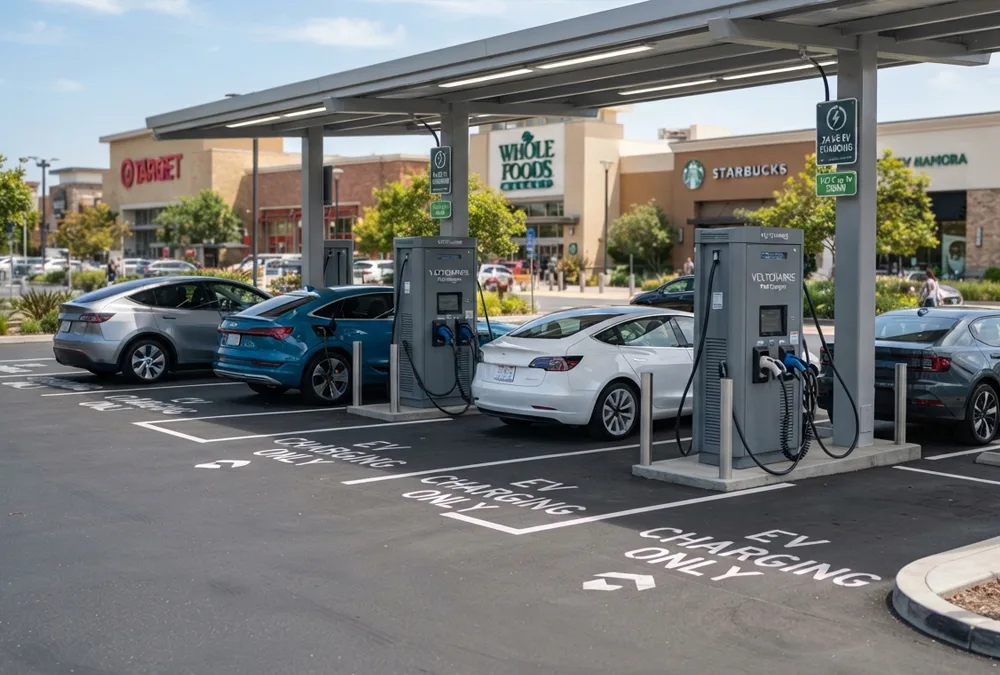
- Public Charging: Retail hubs, municipal lots, and highway travel plazas where drivers pay for convenience and speed.
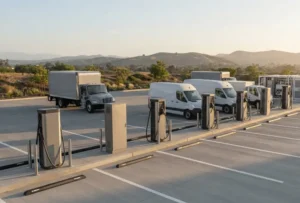
- Fleet Charging: Private depots for logistics vans, transit buses, or corporate motor pools requiring high reliability.
- Workplace Charging: Corporate campuses providing long-duration charging as an employee benefit or ESG initiative.
- Destination Charging: Hotels, resorts, and restaurants where charging infrastructure acts as a primary amenity to attract premium guests.
How Is It Different from Residential Charging?
The operational gap between a residential unit and a commercial installation is massive. Residential units typically deliver 7 to 11 kW of single-phase power, designed for overnight dwell times. Commercial infrastructure regularly handles three-phase power up to 960 kW, cycling through dozens of vehicles daily. This extreme utilization creates distinct technical requirements:
- Power Output: Commercial systems scale from 22 kW AC units up to multi-megawatt high-power DC charging cabinets.
- Number of Chargers: Commercial sites scale from localized clusters of 4 to massive hubs housing dozens of active ports.
- Daily Usage: Heavy cycling demands commercial-grade connectors, active liquid cooling, and robust cable retractor systems.
- Revenue Generation: Integrated credit card readers, RFID authentication, and dynamic billing software process transactional revenue.
- Load Management: Cloud-connected algorithms throttle individual ports to prevent exceeding site peak power limits.
Deploying a robust commercial EV charger ensures long-term operational uptime, while utilizing turnkey commercial charging solutions protects businesses from premature hardware obsolescence.
Types of Commercial EV Charging Stations and Their Costs
The upfront price tag of your project depends directly on the charging topology you select. The primary driver of hardware expense is the transformation mechanism—whether the vehicle converts AC power internally or receives high-voltage DC directly into the battery pack.
Level 2 Commercial EV Chargers
Level 2 AC hardware remains the backbone of long-duration parking environments. Operating at 208V or 240V, a typical dual-port commercial charger delivers 7.4 kW to 22 kW per port. Hardware for a dual-port pedestal runs between $3,500 and $6,000, while utility interconnection and civil trenching add $2,500 to $7,000 per unit. The advantage here is simplicity; most facilities can host a few Level 2 units without triggering an immediate, costly utility transformer replacement.
DC Fast Charging Stations
When drivers need to top off within 15 to 45 minutes, direct current is mandatory. This requires dedicated power cabinets that bypass the vehicle’s onboard rectifier. The investment scales linearly with the power rating:
- 60kW Charger Stations: Ideal for urban fleets and local delivery hubs. Compact footprint, usually around $25,000 to $35,000 for hardware.
- 120kW Charger Stations: The sweet spot for retail centers, balancing vehicle turnover with moderate infrastructure impact. Equipment runs $40,000 to $55,000.
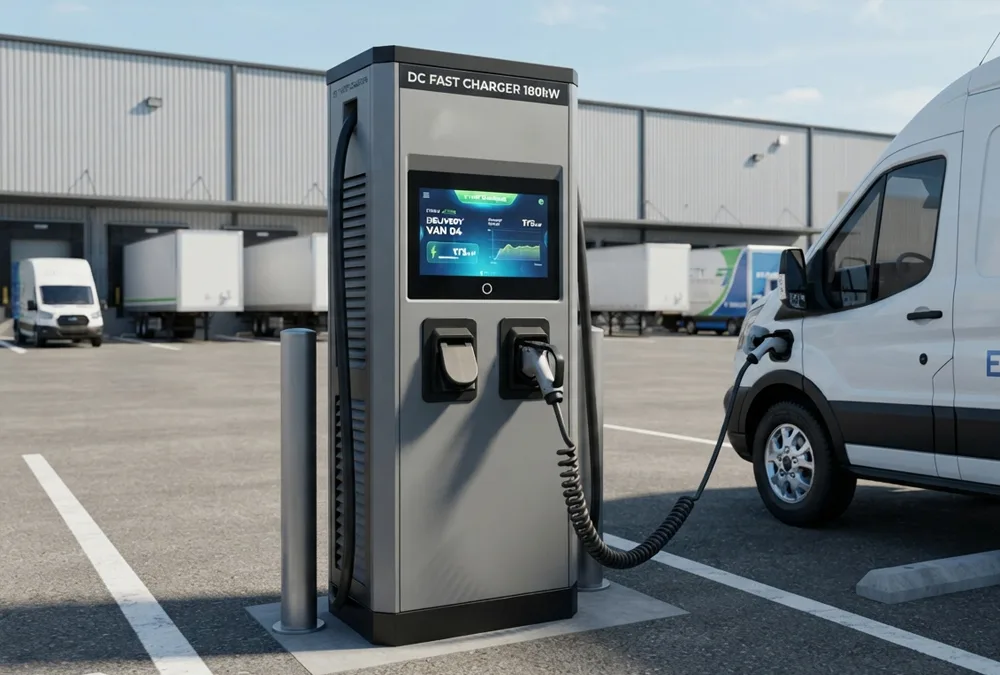
- 180kW Charger Stations: Dual-gun workhorses capable of splitting power dynamically (90 kW + 90 kW) to serve two vehicles simultaneously. Hardware sits around $55,000 to $70,000.
- 240kW to 360kW+Charger Stations Systems: Designed for highway corridors and heavy logistics. These liquid-cooled split architectures run $75,000 to $130,000+.
- 480kW to 900kW Mega-Charging: Specialized setups for public transit depots and heavy-duty class 8 trucks, reaching well into six figures per site.
Ultra-Fast EV Charging Stations
Ultra-fast charging architectures (360 kW to 960 kW) utilize centralized power cabinets coupled with remote dispenser satellites. This configuration is standard for modern highway corridors, large fleet depots, and public charging hubs. By centralizing the heavy power electronics, operators can keep the physical footprint at the parking stall minimal while delivering up to 300 miles of range in under 15 minutes.
Level 2 vs DC Fast Charger Cost Comparison
The table below outlines standard market ranges for equipment and installation across different hardware tiers. Note that retrofitting older properties typically adds a premium to civil work.
| Charger Type | Equipment Cost | Installation Cost | Best For | Strategic Buyer Value Add |
|---|---|---|---|---|
| Level 2 AC (Dual-Port) | $3,500 – $6,000 | $2,500 – $7,000 | Workplaces, Hotels, Multifamily | Minimizes upfront electrical infrastructure cost; ideal for 4+ hour dwell times. |
| 60kW DC Fast Charger | $25,000 – $35,000 | $15,000 – $30,000 | Last-Mile Fleets, Urban Retail | Provides rapid turnover without requiring massive medium-voltage upgrades. |
| 180kW DC Fast Charger | $55,000 – $70,000 | $25,000 – $50,000 | Highway Plazas, Logistics Depots | Dynamic power-sharing handles two vehicles at once, doubling asset utilization. |
| 360kW+ Ultra-Fast System | $95,000 – $140,000 | $40,000 – $90,000+ | Heavy Trucking, En-Route Hubs | Maximizes throughput per square foot, future-proofing for next-gen 800V EV architectures. |
Who Needs Commercial EV Charging Stations?
Understanding your industry’s specific demand profile prevents over-purchasing hardware while ensuring you capture maximum commercial value.
| Industry | Market Trend | Typical Charging Demand | Recommended Solution | Business Benefits |
|---|---|---|---|---|
| Shopping Centers | High Retail Pull | 1 – 2 Hour Dwell Time | Dual-Port AC + 120kW DC Fast Charger | Longer customer stay, higher average basket size, and high-visibility sustainable branding. |
| Hotels | Steady Amenity Pull | Overnight / 8+ Hours | Clusters of Level 2 AC Chargers | Improves guest retention, unlocks premium room rates, and captures loyal business travelers. |
| Office Buildings | Corporate ESG Pressure | 8-Hour Workday Shifts | Smart Networked AC Chargers | Attracts top talent, satisfies corporate carbon mandates, and builds green building credentials. |
| Fleet Operators | Critical Transition | Scheduled Depot Dwell | High-Power DC + Load Management | Eliminates external fueling costs, stabilizes operational forecasting, and lowers maintenance overhead. |
| Logistics Centers | Fast Growing | Rapid Multi-Shift Turnaround | 180kW – 360kW DC Fast Chargers | Maximizes vehicle uptime, reduces dwell bottlenecks, and ensures predictable delivery schedules. |
| Gas Stations | Survival Transition | 15 – 30 Min Top-Offs | Ultra-Fast 360kW+ DC Charging | Replaces declining fuel margins, drives high-margin in-store convenience sales. |
Benefits of Installing Commercial EV Charging Stations
Investing in electrification goes beyond mere compliance. It offers clear operational advantages that directly affect your bottom line:
- Generate New Revenue Streams: Set customized markups on electricity, implement idle fees to ensure rapid turnover, and build a reliable, high-margin revenue loop.
- Increase Customer Dwell Time: Data shows drivers spend significantly more at retail locations while their vehicle is connected to a fast charger.
- Support Corporate ESG Goals: Provides measurable, auditable reductions in Scope 3 emissions for corporate sustainability tracking.
- Future-Proof Your Business: By preparing your site infrastructure today, you avoid the much higher civil costs of retrofitting later as local regulations phase out fossil-fuel vehicles.
- Increase Property Value: Class-A commercial real estate lacking EV amenities faces increasing capitalization rate penalties and tenant churn.
How Much Does a Commercial EV Charging Station Cost?
Average Commercial EV Charging Station Cost
When modeling a project, you must plan for wide variance based on regional utility rules and existing site capacity. For a single site deploying multiple ports, the baseline commercial EV charging station cost scales into clear investment tiers. A standard Level 2 commercial setup averages $6,000 to $13,000 per port all-in. A mid-tier DC fast charging asset (60 kW to 180 kW) runs between $45,000 and $120,000 per completed installation. High-power, multi-dispenser highway hubs frequently exceed $200,000 per port once grid-tied utility upgrades are factored in.
Buyer’s Reality Check: Beware of quotes listing only “hardware prices.” Real-world data shows soft costs, structural trenching, and utility bottlenecks make up the majority of unexpected cost overruns. Over-specifying power requirements early on can unnecessarily double your project budget.
Commercial EV Charging Station Cost Breakdown
Where does your capital actually go during a rollout? The chart below illustrates the typical allocation of capital expenditures for a standard commercial site installation:
- Charger Hardware: 35% (Power modules, housing, payment terminals, cables)
- Installation Labor & Materials: 20% (Conduit running, mounting pedestals, concrete pouring)
- Electrical Infrastructure: 15% (Upgraded distribution panels, safety switchgear, breakers)
- Transformer Upgrade: 10% (Utility-side asset capacity expansion)
- Civil Construction: 8% (Asphalt cutting, horizontal directional drilling, repaving)
- Software Platform: 5% (OCPP cloud integration, network onboarding, billing setup)
- Permits & Engineering: 3% (Structural engineering sign-offs, municipal approvals)
- Contingency / Others: 4% (Site modifications, regulatory adjustments)
Sample Project Cost Examples
To ground these numbers, look at three common actual deployment configurations:
- Retail Workplace (4 × 22kW AC Ports): Hardware costs around $10,000. Civil trenching through 50 feet of asphalt adds $12,000. Panel upgrades add $6,000. Total budget: $28,000.
- Commercial Plaza (2 × 180kW DC Fast Chargers): Split-architecture hardware costs $125,000. A new 500 kVA transformer upgrade from the utility adds $35,000. Heavy civil work and long conduit runs add $40,000. Total budget: $200,000.
- Logistics Depot (10 × 120kW DC Chargers): Centralized 1.2 MW power bank. Heavy utility substation tie-in, full switchgear arrays, automated energy management, and comprehensive site security integration. Total budget easily clears $750,000 to $900,000.
What Factors Affect Commercial EV Charging Station Cost?
Understanding your cost drivers allows you to value-engineer the site layout before ordering equipment. The ultimate commercial EV charging station installation cost depends heavily on three physical variables:
Charging Hardware Cost
The price changes based on build quality, liquid-cooling options, UI touchscreens, and payment terminal integration. Choosing non-proprietary OCPP hardware lets you swap software providers down the road without replacing physical units.
Installation Labor Cost
Union vs. non-union labor, local environmental regulations, and the physical distance between the main electrical room and the parking stalls dictate your labor costs. Trenching through open dirt costs roughly $30 per linear foot, while breaking and replacing reinforced concrete regularly exceeds $150 per foot.
Electrical Infrastructure Upgrades
If your facility lacks spare capacity on its main busbar, you must budget for an upgraded transformer, custom low-voltage switchgear, and thick copper cabling. This factor alone represents a significant portion of the total EV charging infrastructure cost.
Software & Network Fees
Networked chargers require an active data link (cellular or fiber) to communicate with the cloud. Annual subscriptions for asset management dashboards, point-of-sale processing, and remote diagnostics cost roughly $200 to $400 per port annually.
Maintenance & Service Cost
DC fast chargers require preventive maintenance to ensure high uptime. This includes replacing air filters, checking coolant levels in high-power lines, and testing safety breakers. Factoring in an annual charging station maintenance cost of 2% to 4% of hardware value keeps your network operational and avoids costly emergency calls.
5 Hidden Costs You Must Include in Your Budget
Many projects stall during commissioning because the developer overlooked soft costs or operational utility penalties. Keep an eye on these five common line items:
- Utility Grid Upgrade Bottlenecks: Your local utility might require 6 to 12 months and significant capital to bring a new medium-voltage line to your property line. This unexpected delay can quickly disrupt project timelines.
- Demand Charges: Most commercial tariffs include high penalties for short-duration power spikes. If three vehicles pull 180 kW simultaneously during peak facility hours, your monthly electric bill can surge by thousands of dollars due to peak demand surcharges.
- Permits & Local Inspection Fees: Environmental reviews, traffic management plans during construction, and structural engineering approvals can easily add thousands to soft costs.
- Network Subscription Fees: Standard point-of-sale systems take a percentage of transaction revenue alongside flat monthly cellular connectivity charges.
- Future Capacity Expansion Limitations: Laying small conduit today means you must re-trench your entire lot when adding more ports down the line. Choosing scalable charging infrastructure today can significantly reduce future upgrade costs.
How to Reduce Commercial EV Charging Station Costs
Install Smart Load Management
Dynamic Load Balancing (DLB) software actively monitors your building’s total power consumption. When building demand peaks, the software temporarily throttles the EV chargers. This simple adjustment allows you to deploy multiple chargers without paying for a brand-new utility transformer.
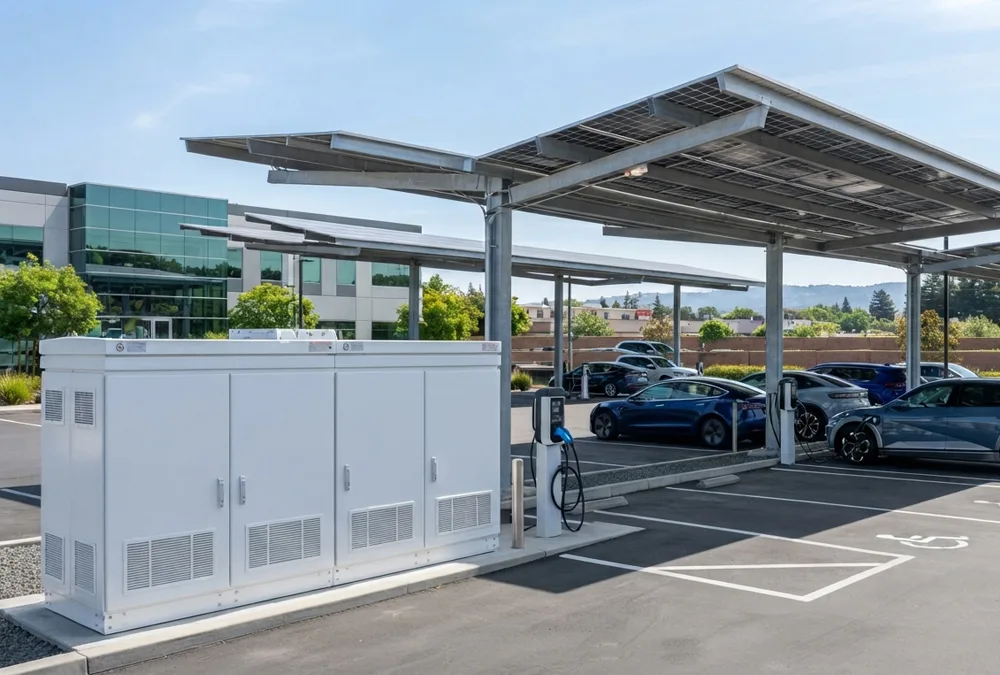
Integrate Solar Power and Add Battery Energy Storage Systems (BESS)
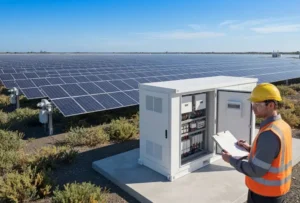
The most reliable way to lower your operational expenses is to decouple your charging hub from direct grid dependency. By pairing your chargers with onsite generation and an industrial battery storage unit, you can insulate your business from volatile utility rates.
| BESS Capacity | Best Match Scenario | Core Value Proposition | Strategic Buyer Value Add |
|---|---|---|---|
| 100 kWh | 4× Level 2 AC or 1× 60kW DC Charger | Peak shaving for mid-sized commercial buildings. | Shaves brief peak demand spikes, keeping the facility below high utility demand charge thresholds. |
| 261 kWh | 2× 120kW or 1× 180kW DC Fast Charger | High-efficiency load buffer for standard retail centers. | Stores solar energy to support high-power fast charging during evening peak hours without grid strain. |
| 418 kWh | 4× 180kW DC Fast Chargers | Robust support for regional logistics and distribution hubs. | Provides dependable backup power for critical fleets, ensuring zero downtime during unexpected grid outages. |
| 1 MWh+ | Multi-MW Highway Travel Hubs / Heavy Transit Depots | Comprehensive infrastructure decoupling and utility arbitrage. | Eliminates the need for expensive substation upgrades, unlocking multi-megawatt rapid charging on constrained grids. |
By utilizing commercial solar battery storage, businesses can capture excess daytime solar generation, store it, and discharge it when multiple vehicles plug in simultaneously. This approach effectively eliminates high demand charges and lowers your overall cost of ownership.
Take Advantage of Government Incentives
Depending on your market, generous financial incentives can offset up to 80% of your total project costs. These include the US Federal Alternative Fuel Infrastructure Tax Credit (Section 30C), regional utility make-ready grants in North America, Europe’s CEF funding programs, and Singapore’s EV Common Charger Grant. Utilizing these programs drastically improves your overall return on investment.
Commercial EV Charging Station Financing Options
You don’t need to exhaust your available capital to roll out an EV infrastructure plan. Several financing models can help align your capital expenditures with your operational realities:
- Direct Purchase (CapEx Model): You own the equipment and retain 100% of the charging revenue. This approach yields the highest long-term ROI but requires substantial upfront capital.
- Equipment Leasing: Spreads hardware costs into fixed, predictable monthly payments. This helps preserve your working capital for core business operations.
- Charging-as-a-Service (CaaS): A turnkey, zero-down model where a provider handles all installation, maintenance, and software updates in exchange for a fixed monthly service subscription.
- Revenue Sharing Model: A third-party operator funds the installation and manages the site, giving you a percentage of the profits in exchange for hosting the location.
Commercial EV Charging Station Installation Process
A successful deployment relies on a structured engineering workflow to avoid unexpected mid-project delays:
- Site Assessment & Feasibility: Mapping existing electrical service panels, identifying structural choke points, and minimizing required trenching runs.
- Load Analysis & Utility Coordination: Reviewing historical energy logs to determine true capacity headroom and filing initial grid connection requests.
- Electrical & Structural Design: Engineering professional-stamped schematics covering protection switchgear, grounding, and concrete pads.
- Permit Approval Path: Navigating local zoning boards, environmental compliance reviews, and building safety departments.
- Civil Construction & Equipment Rigging: Trenching conduit routes, pouring foundations, pulling heavy conductors, and securing the charging cabinets.
- Commissioning & Network Integration: Testing safety systems, verifying OCPP cellular signals, and calibrating dynamic payment configurations.
- Proactive Operation & Maintenance: Initiating automated thermal health tracking and scheduling routine physical inspections to maximize uptime.
How to Choose the Right Commercial EV Charging Solution
To maximize your return on investment, focus on matching hardware selection with actual driver behavior rather than simply buying the highest power rating available. Assess your typical user dwell times; if vehicles stay parked for hours, high-density Level 2 AC clusters are far more economical than single, underutilized DC units. Ensure your equipment supports true open-network communications, allowing you to scale up without being locked into a single software vendor. Finally, prioritize vendors that offer comprehensive asset management platforms that can integrate smoothly with solar array outputs and onsite battery storage arrays.
Why Choose AnengJi for Your Commercial EV Charging Project?
Factory Direct Pricing with No Middleman
AnengJi leverages decades of advanced manufacturing expertise to provide direct factory-level pricing on commercial infrastructure. By controlling the complete engineering, component sourcing, and assembly process, we eliminate middleman markups. This ensures your project receives robust equipment tailored directly to your budget.
Complete Product Portfolio
We manufacture a comprehensive line of electrification hardware designed to integrate seamlessly across diverse field environments:
- Commercial AC Chargers: Smart 7kW, 11kW, and 22kW configurations optimized for workplaces, fleet depots, and long-duration destination hubs.
- High-Power DC Fast Chargers: Highly efficient systems scaling from 30kW compact units up to 900kW liquid-cooled ultra-fast charging cabinets.
- Industrial BESS Solutions: Fully integrated 100kWh, 261kWh, 418kWh, and 1MWh+ battery energy storage units designed for high-stress industrial applications.
- Integrated Microgrids: Fully turnkey “Solar + Storage + Charging” architectures that maximize energy independence.
Advanced Smart Energy Management
The AnengJi software platform uses intelligent dynamic load balancing to optimize energy distribution across all active charging ports. Fully integrated with an enterprise-level Energy Management System (EMS) and open-protocol OCPP 1.6J/2.0.1 architectures, our systems enable automated peak shaving and smooth solar integration. This helps protect your facility from unexpected demand charges and keeps your total cost of ownership as low as possible.
Certified Quality & Global Project Experience
Every piece of hardware we produce carries international safety certifications, including UL, CE, and TÜV, ensuring long-term operational compliance. Backed by an ironclad product warranty, rapid parts access, and global technical support teams, AnengJi delivers reliable infrastructure solutions that protect your investment over the long haul.
Frequently Asked Questions About Commercial EV Charging Station Cost
How much does a commercial EV charging station cost?
An all-in commercial installation scales from $6,000 to $15,000 per port for Level 2 AC networks, and ranges from $45,000 to over $150,000 per station for high-power DC fast charging infrastructure.
How much does it cost to install a DC fast charger?
Installation costs generally run between $20,000 and $60,000 per unit. The final total depends on required civil trenching distances, concrete restoration, and the complexity of your connection to the grid.
How much does electrical infrastructure add to the total cost?
If your site requires a new utility transformer or updated low-voltage distribution panels, infrastructure upgrades can add anywhere from $15,000 to over $80,000 to your initial budget.
How long does a commercial charger installation take?
While physical installation takes under two weeks, soft costs like engineering reviews, utility interconnection capacity checks, and municipal permitting typically take 3 to 6 months.
Are government incentives available for commercial installations?
Yes. Most industrial markets offer tax credits, utility make-ready grants, and environmental rebates that can offset 30% to 80% of total equipment and labor expenditures.
Is battery storage worth adding to a commercial charging site?
Absolutely. Adding an industrial battery unit acts as an electrical buffer, eliminating high utility demand charges and allowing you to deploy fast chargers without expensive grid upgrades.
How profitable is a commercial charging station?
Profitability depends on your local electricity rates and station utilization. Most commercial operators targeting a 15% to 25% daily utilization rate achieve full capital payback within 3 to 5 years.
How many chargers does my business actually need?
We recommend starting with a scalable baseline that meets 10% of your daily parking capacity, making sure to lay down larger conduit paths during the initial civil work to support future expansion.
Can solar panels reduce my ongoing charging costs?
Yes. Integrating solar arrays allows you to offset daylight operational expenses, providing clean energy directly to connected vehicles and reducing your reliance on the grid.
What maintenance costs should I expect?
We recommend budgeting 2% to 4% of your initial hardware expenditure annually to cover routine filter swaps, cable visual checks, and remote software updates.
Get a Custom Commercial EV Charging Station Cost Estimate
Ready to deploy a scalable, cost-effective charging infrastructure tailored to your business needs? Don’t let unexpected utility upgrade costs derail your project budget. Contact our engineering team today to receive a transparent, comprehensive project cost estimate and design a system built for maximum long-term return on investment.