Introduction
The global energy landscape in 2026 is defined by a rapid shift toward decentralization and resilience. For modern enterprises, managing electricity is no longer just a utility expense—it is a strategic operational variable. A commercial energy storage system has transitioned from an “early adopter” luxury to a fundamental infrastructure requirement for factories, commercial real estate, and EV charging hubs. As grid volatility increases and demand charges fluctuate, businesses are turning to integrated energy solutions to stabilize costs and ensure continuity. In this comprehensive guide, we analyze the technical architecture, economic viability, and market trends of commercial battery storage, providing a roadmap for decision-makers navigating the complex transition to a high-efficiency energy future.
What Are Commercial Energy Storage Systems (ESS)?
Definition of Commercial Energy Storage Systems
At its core, a commercial energy storage system is a sophisticated technological suite designed to capture energy from various sources—such as the utility grid or on-site renewables—and store it for later use. Unlike residential units, these systems are engineered for high-duty cycles and multi-megawatt scalability, allowing businesses to bridge the gap between energy supply and demand in real-time.
How Commercial Battery Energy Storage Systems (BESS) Work
A battery energy storage system (BESS) operates through a “charge-store-discharge” cycle. During periods of low electricity demand or high renewable generation (like peak sunlight for solar-equipped sites), the system draws power into the battery cells. When demand spikes or grid prices rise, the system discharges that stored energy. This process, often automated by AI-driven software, ensures the facility uses the most cost-effective and reliable power source available at any given second.
Key Components in Commercial Energy Storage Systems
A professional-grade commercial battery storage system is comprised of four critical subsystems that must work in perfect harmony:
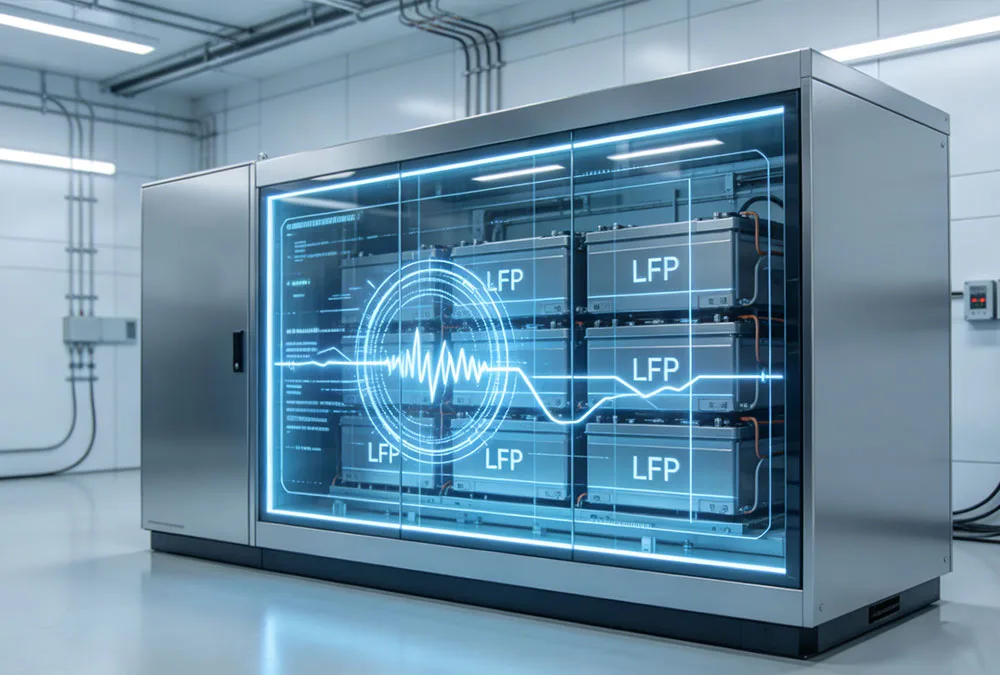
- Battery System: This is the physical storage medium. In 2026, Lithium Iron Phosphate (LFP) has become the dominant chemistry due to its safety and longevity.
- Power Conversion System (PCS): Also known as a bi-directional inverter, the PCS handles the transition between the DC power in the batteries and the AC power used by the building and the grid.
- Battery Management System (BMS): The BMS monitors the state of each cell, ensuring they operate within safe temperature and voltage ranges to prevent thermal runaway and extend cycle life.
- Energy Management System (EMS): The “brain” of the operation. The EMS uses data analytics to predict load patterns and execute discharge strategies that maximize ROI.
Types of Commercial Energy Storage Systems
Selecting the right commercial ESS solution requires understanding the different technological configurations available in today’s market.
Lithium-Ion Battery Energy Storage Systems (LFP vs NMC)
Lithium-ion remains the gold standard for energy storage for commercial buildings. However, the choice between LFP (Lithium Iron Phosphate) and NMC (Nickel Manganese Cobalt) is pivotal. LFP is preferred for its 6,000+ cycle life and thermal stability, whereas NMC is typically reserved for space-constrained applications where energy density is the absolute priority.
Containerized Commercial Energy Storage Systems
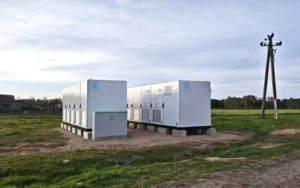
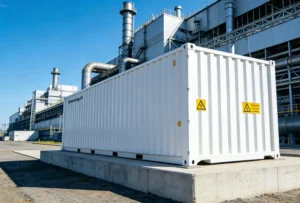
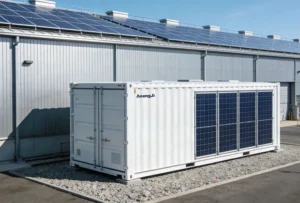
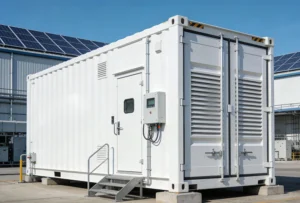
For large-scale industrial and commercial energy storage system projects, containerized solutions offer a “plug-and-play” advantage. These 20-foot or 40-foot ISO containers are pre-integrated with HVAC, fire suppression, and PCS units, significantly reducing on-site installation time and civil engineering costs.
Solar Plus Commercial Energy Storage Systems
A solar plus storage system is the most effective way to maximize the value of on-site generation. By storing excess solar energy produced during the day, businesses can power their operations throughout the night or during cloudy periods, effectively “time-shifting” their renewable energy.
Hybrid Energy Storage Systems for Businesses
Hybrid systems combine different storage technologies—such as lithium-ion batteries and supercapacitors or flywheels—to handle both high-energy duration and high-power transients simultaneously. These are ideal for facilities with heavy machinery that creates sudden, massive power surges.
Distributed Energy Storage Systems for Commercial Use
A distributed energy storage system involves placing multiple storage units across different points of a facility or microgrid. This enhances reliability; if one unit requires maintenance, the others continue to balance the load, providing a redundant safety net for critical operations.
Benefits of Commercial Energy Storage Systems for Businesses
Reduce Electricity Costs with Energy Storage Systems
The primary driver for the commercial energy storage system manufacturer market is cost reduction. This is achieved through two main mechanisms:
- Peak/Off-Peak Arbitrage: Charging the battery when electricity rates are at their lowest (usually at night) and discharging it when rates are highest.
- Demand Charge Reduction: Utilities charge commercial customers based on their highest 15-minute peak usage each month. A BESS “shaves” these peaks, potentially reducing monthly bills by 30% to 50%.
Improve Energy Reliability and Backup Power
For industries like data centers or cold storage, a 10-minute outage can cost millions. A lithium battery energy storage system provides instantaneous backup power, often faster than a traditional diesel generator can start, ensuring seamless business continuity.
Increase Energy Independence with Commercial ESS
By utilizing a grid-connected energy storage system, businesses can minimize their reliance on the utility company. This protects the enterprise from local grid failures and the long-term trend of rising electricity prices.
Support Sustainability and Carbon Reduction Goals
As ESG (Environmental, Social, and Governance) reporting becomes mandatory for many corporations in 2026, the commercial solar battery storage setup is a tangible asset that proves a commitment to carbon reduction by increasing the utilization of renewable energy.
Commercial Energy Storage Systems Applications in Enterprises
The versatility of the commercial battery energy storage system solution allows it to be adapted across various sectors with specific load requirements.
Energy Storage Systems for Factories and Manufacturing
In the manufacturing sector, a commercial energy storage system for factories is used to manage “spiky” loads from heavy motors and robotic assembly lines. According to a 2025 Industrial Energy Report, factories implementing BESS saw a 22% reduction in operational energy overhead by mitigating power quality issues like voltage sags.
Commercial Energy Storage Systems for Office Buildings and Malls
Office complexes use energy storage for commercial buildings to manage HVAC and elevator loads. During extreme weather events, these systems prevent the building from exceeding its grid-allotted capacity, avoiding heavy penalties from utility providers.
Energy Storage for EV Charging Stations in Commercial Sites
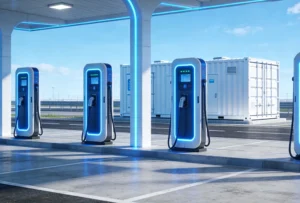
The surge in Electric Vehicle (EV) adoption has put immense pressure on commercial grids. Integrating an EV charging + energy storage integrated solution allows a site to offer ultra-fast charging without needing a multi-million dollar transformer upgrade from the utility company.
Microgrid Energy Storage Systems for Industrial Parks
Many industrial parks are now developing into independent microgrids. A microgrid energy storage system acts as the central balancing authority, integrating wind, solar, and grid power to provide a stable, self-sufficient energy ecosystem for all tenants.
Commercial Energy Storage Systems in Wholesale Electricity Markets
Modern ESS technology allows businesses to turn an expense into a revenue stream by participating in wholesale electricity markets.
Energy Arbitrage in Wholesale Electricity Markets
Beyond simple peak shaving, large-scale distributed energy storage system users can trade electricity on the wholesale market, selling stored power back to the grid during periods of extreme scarcity when prices are highest.
Frequency Regulation with Commercial Energy Storage Systems
Grid operators pay for “ancillary services.” Because batteries can respond in milliseconds, they are perfect for frequency regulation—helping the grid maintain its 50Hz or 60Hz balance. This provides a steady, monthly “availability payment” to the system owner.
Demand Response Programs Using Energy Storage Systems
During grid emergencies, utilities ask large consumers to reduce their load. A business with a commercial ESS solution can “drop off” the grid by switching to battery power, earning significant incentives without actually shutting down their operations.
Commercial Energy Storage System Solutions for Different Scenarios
Solar + Battery Storage Solutions for Businesses
This is the most common commercial battery storage system configuration for 2026. It utilizes a DC-coupled architecture to minimize conversion losses, ensuring that every watt generated by the solar panels is either used or stored with maximum efficiency.
Peak Shaving Energy Storage Solutions
For facilities with high “demand charges” but low overall energy consumption, a power-optimized (high C-rate) battery is used. This system is designed to discharge a high amount of power for a short period to squash peak demand events.
EV Charging + Energy Storage Integrated Solutions
This solution uses the battery as a “buffer.” As EVs pull 150kW or 350kW from the chargers, the battery provides the bulk of the power, while the grid maintains a steady, low-level charge to the battery. This “peak shaving for chargers” is essential for gas stations transitioning to electric mobility.
Commercial Energy Storage System Cost and ROI
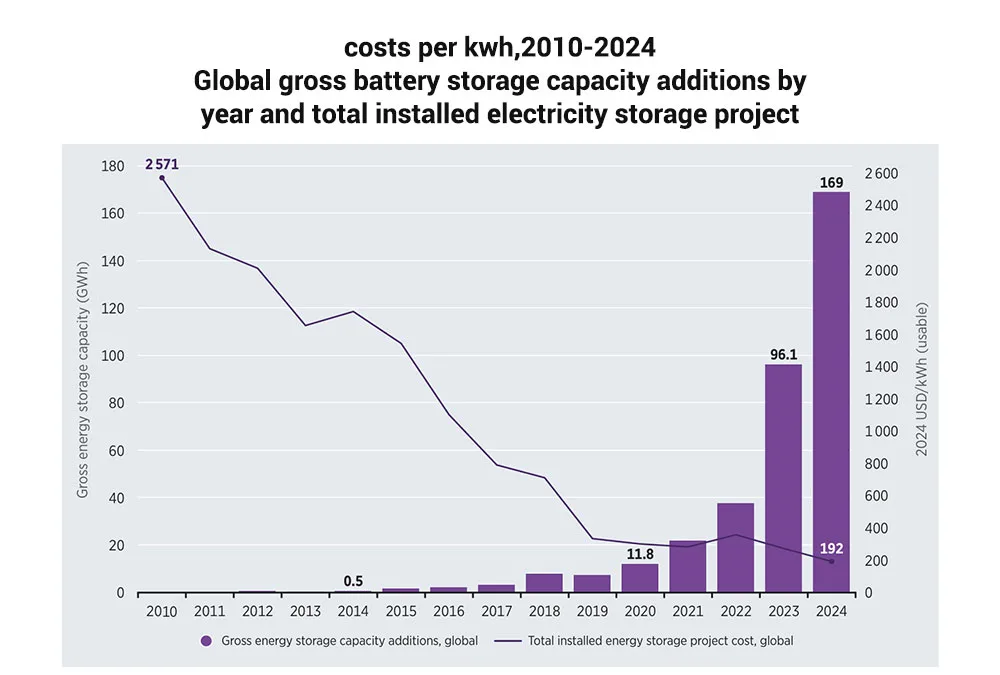
Understanding the commercial energy storage system cost per kWh is essential for calculating the payback period.
Commercial Energy Storage System Cost per kWh
In early 2026, industry benchmarks from BloombergNEF suggest that turnkey commercial battery storage system costs have stabilized. While prices vary based on complexity, the following table provides a standard estimate for LFP-based systems.
| Component | Cost per kWh (Est. 2026) | Percentage of Total CAPEX |
| Battery Modules | $140 – $180 | 50% |
| Inverter (PCS) | $40 – $60 | 15% |
| Installation & Civil Works | $50 – $80 | 20% |
| Soft Costs (Permits/EMS) | $30 – $50 | 15% |
| Total Turnkey Cost | $260 – $370 | 100% |
ROI and Payback Period for Commercial Energy Storage
The typical ROI and payback period for a commercial system currently sits between 3 to 6 years. This is influenced by regional electricity tariffs, available government subsidies (like the Investment Tax Credit in the US), and the intensity of the “peak shaving” requirements. A facility in a high-tariff region like California or Germany often sees a payback in under 4 years.
Challenges in Deploying Commercial Energy Storage Systems
High Initial Investment in Energy Storage Systems
Despite falling prices, the upfront CAPEX for an industrial energy storage system remains significant. Many businesses are now exploring “Storage-as-a-Service” (SaaS) models to move this from a capital expense to an operational expense.
Battery Lifecycle and Degradation Issues
All batteries degrade over time. Maintaining a high ROI requires an advanced BMS and EMS to manage “depth of discharge” (DoD) and thermal cycles, ensuring the system reaches its 10-15 year projected lifespan.
Grid Integration and Regulatory Challenges
Utility companies often have complex “interconnection” requirements. Navigating the legal and technical hurdles of feeding power back into the grid can add months to a project’s timeline if not managed by an experienced energy storage system integration partner.
How to Choose the Right Commercial Energy Storage System
Selecting Battery Technology for Commercial ESS
For most businesses, LFP is the correct choice due to its safety profile. However, if your project involves heavy industrial usage with frequent 2C or 3C discharge rates, you may need to consult with a commercial energy storage system manufacturer about high-performance NMC or solid-state alternatives.
Sizing Energy Storage Systems for Business Needs
Sizing is a data-driven process. We analyze 12 months of “interval data” (15-minute usage increments) to find the “sweet spot” where the battery capacity provides the maximum demand charge reduction without being unnecessarily oversized.
Choosing a Reliable Energy Storage System Supplier
Experience matters. A reliable supplier should provide not just the hardware, but a comprehensive energy storage system integration plan, including long-term O&M (Operations and Maintenance) contracts and performance guarantees.
Future Trends in Commercial Energy Storage Systems
Growth of Battery Energy Storage Systems (BESS) Market
The global market for BESS is projected to grow by 25% annually through 2030. As manufacturing scales up, we expect a continued, though more gradual, decline in the commercial energy storage system cost per kWh.
Integration of Renewable Energy with Commercial ESS
The “standalone” battery is becoming rarer. The future is the solar plus storage system, where the two technologies are designed as a single, unified power plant for the enterprise.
AI and Smart Energy Management Systems (EMS)
AI will soon be mandatory for EMS platforms. These systems will use machine learning to scan weather forecasts, electricity spot prices, and facility schedules to optimize battery usage with a level of precision that human operators cannot match.
FAQ: Commercial Energy Storage Systems
What are commercial energy storage systems?
Commercial energy storage systems are battery-based solutions that store electricity for businesses to reduce energy costs, improve reliability, and support renewable energy integration. They typically consist of batteries, an inverter (PCS), and a management system (EMS).
What are the main types of commercial energy storage systems?
The main types include lithium-ion (LFP/NMC) systems, containerized ESS for large sites, solar plus storage systems, and distributed energy storage solutions for decentralized microgrids.
How do commercial energy storage systems save money?
They save money by charging during low-cost hours and discharging during high-cost hours (arbitrage), and by reducing “demand charges” by capping a facility’s peak electricity draw from the grid.
What industries use commercial energy storage systems?
Manufacturing, hospitals, shopping malls, EV charging stations, and data centers are the primary users. Any industry with high electricity demand or a need for high-reliability power can benefit.
Are commercial energy storage systems worth it?
Yes. With the current commercial energy storage system cost per kWh and rising utility rates, most systems pay for themselves within 3 to 6 years, providing a decade or more of “free” energy management and grid resilience afterward.
Is your business ready to neutralize rising energy costs?
Implementing a commercial energy storage system is a complex engineering task that requires a deep understanding of load dynamics and grid compliance.
[Would you like a complimentary site energy audit to determine your exact BESS sizing and projected ROI?]