
Introduction
In the volatile energy landscape of 2026, operational efficiency is no longer just about lean manufacturing—it is about energy autonomy. As grid prices fluctuate and peak demand penalties reach historic highs, many facility managers are asking: how commercial energy storage saves money for businesses while maintaining seamless operations? The answer lies in the strategic deployment of a Battery Energy Storage System (BESS), a technology that has evolved from a niche sustainability play into a core financial asset. By decoupling when you buy energy from when you use it, your business can navigate the complexities of modern utility billing and unlock new revenue streams that were previously inaccessible.
What Is Commercial Energy Storage and How Does It Save Money?
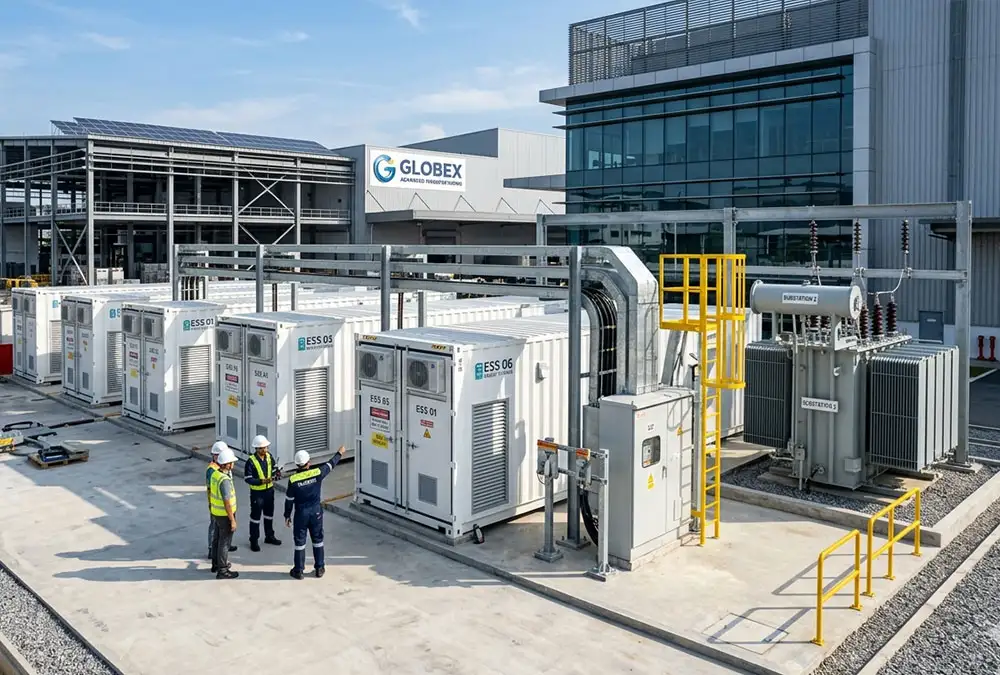
To understand the financial impact, we must first define the technology. A commercial battery energy storage system is a localized energy reservoir that integrates with your building’s electrical infrastructure. It doesn’t just “hold” electricity; it manages it through sophisticated power electronics.
Definition of Commercial Battery Energy Storage System (BESS)
Commercial energy storage refers to fixed battery systems designed for “behind-the-meter” installation. These units store electricity from the grid or on-site renewable sources (like solar) and discharge it based on economic or operational triggers.
How Energy Storage Interacts with Electricity Pricing
Utilities typically charge businesses through two primary mechanisms: Energy Consumption (kWh) and Demand Charges (kW). While consumption is the total power used, demand charges are based on your highest 15-minute usage window. Commercial battery storage cost savings and ROI analysis frequently show that demand charges can account for up to 50% of a total monthly bill. Storage systems flatten these spikes, drastically reducing the “peak” the utility sees.
Role of EMS in Cost Optimization
The Energy Management System (EMS) is the “brain.” It uses real-time data to decide the most profitable action at any given millisecond. Whether it is performing “peak shaving” or participating in a “demand response” program, the EMS ensures the highest possible return on investment.
Featured Snippet:
Commercial energy storage saves money by storing electricity during low-cost periods and using it during peak demand, reducing energy costs and improving efficiency.
10 Ways Commercial Energy Storage Saves Money for Businesses
As an engineer and SEO strategist, I have analyzed hundreds of industrial deployments. Here are the ten most effective ways energy storage reduces electricity bills for companies.
1. Peak Shaving Reduces Demand Charges
This is the single most effective way how commercial energy storage saves money for businesses. Demand charges are “spikes” in usage—for example, when heavy machinery or EV chargers all start simultaneously.
- Lower peak demand: The battery detects the surge and discharges power locally so the grid doesn’t feel the “hit.”
- Reduce maximum billing load: By capping your grid intake at a pre-set level, you significantly lower the demand portion of your utility bill.
Snippet:
Peak shaving can reduce demand charges by up to 30%, providing an immediate impact on monthly operational expenses.
2. Time-of-Use (TOU) Optimization Lowers Energy Costs
Most utilities use time-of-use electricity pricing, where power is expensive during the day and cheap at night.
- Charge off-peak: The system fills up at 2:00 AM when rates are lowest.
- Discharge during peak: The facility runs on battery power at 2:00 PM when rates are highest.
3. Energy Arbitrage Maximizes Price Differences
Energy arbitrage involves buying low and using (or selling) high. In a volatile market, price spreads can be massive. Businesses can leverage their commercial energy storage system benefits and savings calculation models to turn their battery into a profit center by playing the spread between off-peak and peak rates.
4. Reducing Grid Dependency Saves Costs
By utilizing industrial energy storage solutions, businesses become less reliant on the increasingly expensive utility grid. This independence provides a hedge against inflation and the rising costs associated with aging grid infrastructure.
5. Backup Power Avoids Downtime Losses
For a factory, a 30-minute power outage can cost hundreds of thousands of dollars in ruined product and lost labor. A BESS provides seamless backup power, preventing production interruptions and the massive financial losses associated with downtime.
6. Solar + Storage Increases Self-Consumption
Standard solar without storage often wastes energy. When your panels produce more than you need at noon, you might sell it back for pennies. With solar plus storage savings, you keep that energy and use it when the sun goes down, avoiding the purchase of expensive grid power later.
7. Demand Response Participation Generates Revenue
In 2026, many grids pay businesses to not use power during emergencies. By discharging your battery during a “demand response” event, you help stabilize the grid and receive a direct payment from the utility.
8. Avoiding Grid Upgrade Costs
If a facility wants to add 10 new EV chargers, the utility may require a million-dollar transformer upgrade. A BESS can provide the extra power needed for those chargers, allowing the business to bypass expensive infrastructure investments.
9. Energy Efficiency Through EMS Optimization
Smart energy efficiency solutions integrated into the EMS allow for “load following.” The battery manages small fluctuations in power quality, which reduces wear and tear on motors and electrical components, extending the life of your expensive industrial equipment.
10. Long-Term Energy Cost Stability
Energy prices are unpredictable. A BESS allows a company to lock in its energy costs for the next 15–20 years. This financial predictability is a major competitive advantage for long-term budget planning.
Featured Snippet (List):
Commercial energy storage saves money through peak shaving, time-of-use optimization, energy arbitrage, backup power resilience, and increasing renewable self-consumption.
Commercial Energy Storage Cost Savings and ROI Analysis
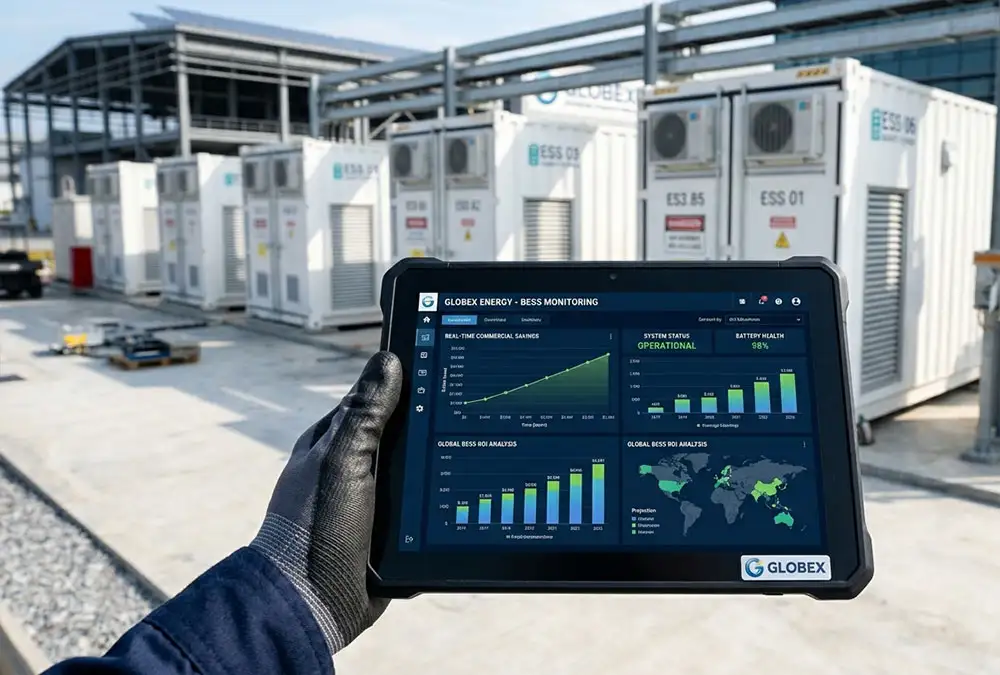
Investing in a BESS is a capital-intensive decision, but the commercial energy storage system benefits and savings calculation looks better in 2026 than ever before.
ROI Breakdown and Data Comparison
The following table reflects data from recent 2025/2026 industry reports (such as IDTechEx and BloombergNEF) regarding the economic performance of BESS in industrial settings.
| Metric | Without Energy Storage | With Commercial BESS (2026) | Impact |
| Avg. Demand Charge ($/kW) | $25.00 | $17.50 (Managed) | 30% Reduction |
| Peak Energy Rate ($/kWh) | $0.28 | $0.12 (Stored) | 57% Savings |
| Downtime Risk Cost (Annual) | $50,000 | $2,000 | 96% Mitigation |
| Solar Self-Consumption | 40% | 95% | 55% Increase |
| Typical Payback Period | N/A | 3.5 – 5.5 Years | High ROI |
ROI Calculation Formula
To determine your specific ROI, engineers use this text-based formula:
Total Annual Savings = (Demand Charge Reduction) + (TOU Arbitrage Savings) + (Avoided Downtime Costs) + (Grid Service Revenue)
Simple Payback Period = Total Installed System Cost / Total Annual Savings
Snippet:
Most commercial energy storage systems achieve a full ROI within 3 to 6 years through energy cost reduction and operational optimization.
Real-World Applications of Commercial Energy Storage Systems
Factories (Peak Demand Reduction)
Manufacturing plants with large arc welders or CNC machines create massive “demand spikes.” By installing industrial energy storage solutions, these plants can smooth out their load profile and save tens of thousands of dollars monthly.
Commercial Buildings (Energy Cost Control)
Office towers use BESS to manage the massive energy draw of HVAC systems during summer afternoons. This battery storage for businesses application is now standard for LEED-certified “Green Buildings.”
EV Charging Stations (Load Balancing)
As fleets go electric, the demand on the local transformer is immense. A BESS acts as a “buffer,” charging slowly from the grid and discharging rapidly into vehicles, avoiding massive grid upgrade fees.
How Commercial Energy Storage Systems Enable Cost Savings
The system’s efficiency depends on four core components that every buyer should understand.
1. Battery System (Energy Storage)
In 2026, Lithium Iron Phosphate (LFP) is the dominant technology.
- LFP (Lithium Iron Phosphate): Unlike standard lithium batteries, LFP is non-combustible and offers up to 8,000 cycles. It is the safest choice for commercial electricity bill reduction.
- Sodium-Ion (Emerging): A cheaper alternative coming to market in 2026, ideal for large-scale stationary use where weight is not a factor.
2. PCS (Power Conversion System)
The PCS is the bidirectional inverter. It converts DC power from the battery to AC power for the building. High-efficiency PCS units (98%+) are critical to minimizing “round-trip” energy losses.
3. BMS (Battery Management System)
The BMS protects your investment. it monitors cell temperature and voltage to prevent degradation, ensuring the system lasts its full 15-year rated life.
4. EMS (Energy Management System)
This is where the “smart” happens. The EMS performs smart energy management systems functions by analyzing weather, grid prices, and facility load to automate the 10 saving methods mentioned above.
Commercial Energy Storage vs. Traditional Energy Cost Strategies
| Strategy | Traditional (Efficiency Only) | Modern (BESS + Efficiency) |
| Approach | Reducing total kWh used | Optimizing when kWh is used |
| Demand Charges | Hard to control | Actively Managed |
| Resilience | None (Grid Dependent) | High (Island Mode) |
| Revenue Generation | Zero | Active Participation |
| Cost Control | Passive | Aggressive & Proactive |
While “Energy Efficiency” (LEDs, insulation) is important, it only reduces the baseline. A BESS is a proactive tool for energy cost optimization.
Recommended Industrial Product: AnengJi Power-Grid 1000
For heavy-duty industrial applications, we recommend the AnengJi Power-Grid 1000. This 1MWh liquid-cooled BESS is designed for the high-cycle demands of industrial energy storage solutions. It features a pre-integrated Tier-1 EMS and is optimized for the fastest possible energy storage ROI in the current 2026 market.
Challenges of Commercial Energy Storage Investment
Despite the clear benefits, there are hurdles to consider:
- Initial Capital Cost: Even with 3-year paybacks, the upfront investment is significant. However, many “Energy-as-a-Service” (EaaS) models now allow for zero-down installations.
- System Integration Complexity: Integrating a BESS with existing switchgear requires experienced smart energy management systems engineers.
- Regulatory Considerations: Permitting and fire safety codes (like NFPA 855) must be strictly followed.
Is Commercial Energy Storage Worth It for Your Business?
Commercial energy storage is no longer a luxury; it is a financial instrument. If your facility has any of the following, the answer is “Yes”:
- High demand charges on your utility bill.
- A “TOU” (Time of Use) rate structure.
- On-site solar generation.
- Critical loads that cannot afford even a 1-second outage.
Featured Snippet:
Commercial energy storage is worth it for businesses with high energy costs, peak demand charges, or variable electricity pricing, typically offering a 20%–40% reduction in total energy spend.
FAQs About Commercial Energy Storage Savings
How much can energy storage save?
On average, industrial facilities see a 20%–40% reduction in their total electricity bill through peak shaving and arbitrage.
What is the fastest way to save money with storage?
Peak shaving. Reducing your demand charges provides the most immediate “day-one” savings on your utility statement.
Is commercial energy storage a good investment?
Yes. In 2026, with the reduction in battery prices and the increase in grid volatility, the internal rate of return (IRR) for BESS projects often exceeds 15%.
Commercial Energy Storage Savings: Key Takeaways
- Main Benefit: Drastically reduces electricity costs and demand charges.
- Top Saving Method: Peak shaving to flatten expensive usage spikes.
- ROI Timeline: Typically 3 to 6 years depending on the region and usage.
- Best Application: Factories, EV charging hubs, and large commercial buildings.
- Long-Term Value: Provides energy independence and protection against rising grid prices.
How to Start Saving Money with Commercial Energy Storage
If you are ready to take control of your energy future, the path forward is clear:
- Analyze Your Energy Usage: Obtain 12 months of “Interval Data” from your utility.
- Identify Peak Demand Patterns: Look for when and why your peaks occur.
- Choose the Right System Size: Don’t over-build. Size the battery to your specific peak-shaving needs.
- Work with Experienced Providers: Partner with engineers who understand the nuances of commercial electricity bill reduction and grid integration.
Don’t let peak demand charges erode your profits. Contact our engineering team today for a free commercial battery storage cost savings and ROI analysis and start your journey toward energy independence.