Introduction
The global energy transition has reached a pivotal juncture in 2026, where the volatility of traditional power grids and the aggressive push for decarbonization have made energy independence a strategic priority for businesses. For most facility managers and CFOs, the primary hurdle remains the commercial battery storage cost, a figure that has seen dramatic shifts over the last 24 months. Understanding the nuances of this investment is no longer just about comparing quotes; it is about analyzing the total cost of ownership against a backdrop of fluctuating utility rates and lucrative grid-service incentives. As the market matures, the efficiency of a commercial energy storage system price is increasingly measured by its ability to deliver high-performance “stacked revenues” over a 15-year lifecycle.
What Is Commercial Battery Storage Cost in Energy Storage Systems?
Definition of Commercial Battery Storage Cost
At its most fundamental level, commercial battery storage cost refers to the total capital expenditure (CAPEX) required to procure, integrate, and commission a battery energy storage system within a commercial or industrial setting. This cost is typically expressed as a “turnkey” figure, covering everything from the raw battery cells to the final utility interconnection. However, savvy investors look beyond the initial price tag to consider the Levelized Cost of Storage (LCOS), which accounts for degradation, maintenance, and operational efficiency over time.
What Is a Commercial Battery Energy Storage System (C&I BESS)?
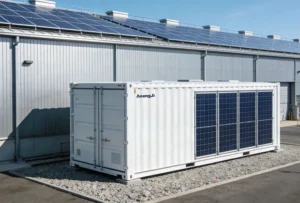
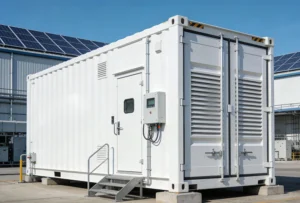
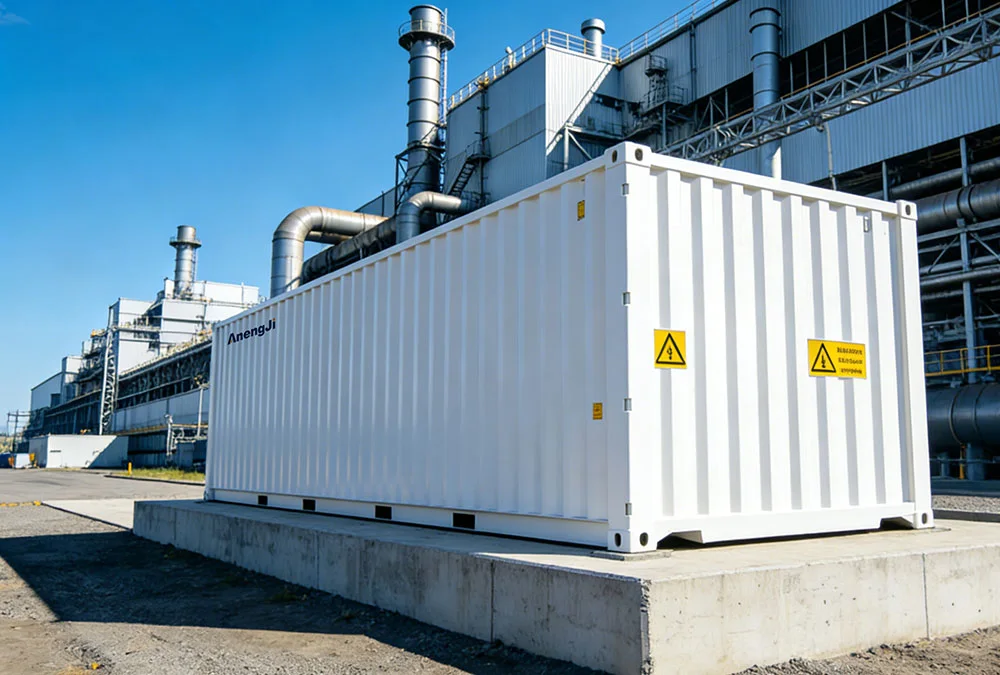
A Commercial and Industrial (C&I) BESS is a sophisticated electrochemical reservoir designed to manage a building’s load profile. Unlike residential units, C&I systems are engineered for high power density and rugged duty cycles. In 2026, a commercial ESS solution cost must be viewed as an infrastructure investment rather than a simple hardware purchase, as these systems now integrate AI-driven forecasting to maximize the value of every stored kilowatt-hour.
Key Components Affecting Energy Storage System Cost
The commercial energy storage system cost breakdown is generally divided into four primary technical categories:
- Battery System (LFP / NMC): The core chemical cells and modules. In 2026, Lithium Iron Phosphate (LFP) has become the industry standard for C&I applications due to its superior safety profile and lower lithium battery storage price compared to Nickel Manganese Cobalt (NMC).
- Power Conversion System (PCS): The bi-directional inverters that manage the $AC \leftrightarrow DC$ flow. The PCS cost scales with the power rating (kW) rather than the energy capacity (kWh).
- Battery Management System (BMS): The “brain” that monitors cell health, voltage, and temperature to prevent thermal runaway and ensure longevity.
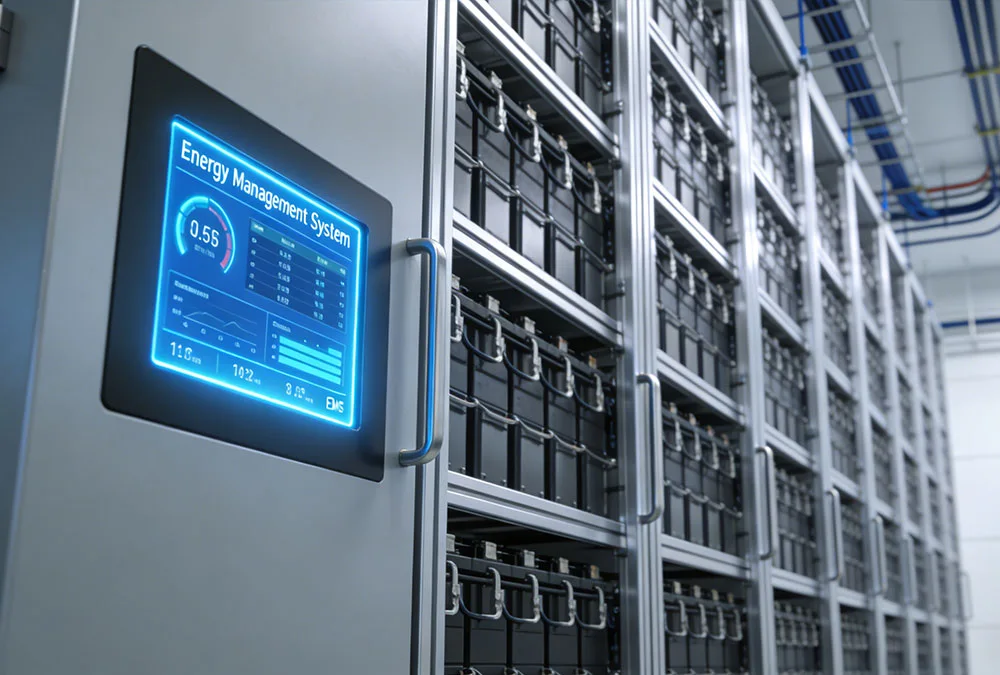
- Energy Management System (EMS): The high-level software that orchestrates when to charge and discharge based on market signals and facility needs.
Commercial Battery Storage Cost per kWh in 2025–2026
The landscape of energy storage cost per kWh has stabilized significantly in 2026, following the supply chain rebalancing of the previous year. While the raw cost of lithium has dropped, the “soft costs” associated with labor and permitting have remained resilient.
Average Commercial Energy Storage Cost per kWh
Currently, the commercial battery storage cost per kWh for a fully installed, medium-scale system (500kWh to 1MWh) typically ranges between $250 and $500 per kWh.
According to the latest 2026 industry benchmarks from BloombergNEF (BNEF), the global average for a 4-hour duration turnkey system has settled near $265/kWh, though smaller, highly customized behind-the-meter projects still command a premium.
| System Type | Capacity | Estimated Cost (Turnkey) | Cost per kWh |
| Small Commercial | 100kWh | $50,000 – $75,000 | $500 – $750 |
| Medium C&I | 500kWh | $145,000 – $220,000 | $290 – $440 |
| Large Industrial | 1MWh+ | $250,000 – $380,000 | $250 – $380 |
| Grid Scale | 10MWh+ | $1,800,000 – $2,400,000 | $180 – $240 |
Cost Differences by System Size (100kWh – 1MWh+)
Scale is the most significant driver of the 1MWh commercial battery storage system cost. Large-scale installations benefit from “balance of system” efficiencies; for example, a 1MWh system does not require ten times the site preparation or permitting effort of a 100kWh system. Consequently, the grid scale battery storage cost is significantly lower on a unit basis, often dipping below the $200/kWh mark for utility-proximate projects.
Regional Cost Variations in Energy Storage Systems
Geography plays a massive role in the energy storage system CAPEX. In the United States, federal incentives like the Investment Tax Credit (ITC) under the Inflation Reduction Act can offset up to 30-50% of the commercial battery storage ROI and payback period calculations. In contrast, the European market faces higher energy storage system installation cost due to more stringent localized safety certifications and labor rates, though high electricity prices often accelerate the ROI regardless.
Key Factors Affecting Commercial Battery Storage Cost
Battery Technology Impact on Energy Storage Cost
Choosing between commercial lithium ion battery storage cost and emerging alternatives like sodium-ion or flow batteries is a balance of density vs. durability.
- LFP (Lithium Iron Phosphate): Currently offers the best C&I battery storage cost efficiency, with cycle lives exceeding 6,000–8,000 cycles.
- NMC: Higher density but higher cost; now mostly relegated to space-constrained urban environments where every square inch matters.
System Integration Cost in Commercial Energy Storage
A significant portion of the commercial ESS solution cost is found in the integration. This includes the “matching” of the PCS to the facility’s peak load. If a facility has high-powered machinery (like an EV fleet hub), the inverter must be sized much larger, increasing the battery storage system pricing even if the total energy capacity (kWh) remains the same.
Installation and EPC Cost for Battery Energy Storage Systems
Engineering, Procurement, and Construction (EPC) services typically account for 15% to 25% of the total energy storage system CAPEX.
- Civil Works: Concrete pads, trenching, and fencing.
- Electrical Interconnection: Transformers, switchgear, and utility witness testing.
- Permitting: Often the most unpredictable part of the industrial battery storage cost, varying wildly by municipality.
Cooling and Safety Systems Impact on Cost
In 2026, liquid cooling has become the gold standard for high-performance C&I systems. While the containerized battery storage price is higher for liquid-cooled units compared to forced-air cooling, the liquid systems offer 15-20% better efficiency and slower degradation, leading to a much better battery storage ROI commercial outcome over 15 years.
Commercial Battery Energy Storage Applications and Use Cases
Understanding how the system will be used is vital, as the “use case” determines the hardware requirements and, by extension, the energy storage investment cost.
Peak Shaving and Demand Charge Reduction
For many factories, demand charges (the fee for the single highest 15-minute spike in usage) can account for 50% of an electricity bill. Using BESS to “shave” these peaks is the most common way to justify the commercial battery storage cost.
Renewable Energy Integration (Solar + Storage Systems)
The combination of solar PV and BESS allows for “Time-Shifting,” where solar energy produced at noon is used at 7 PM. This drastically improves the commercial battery storage ROI and payback period by avoiding high-tariff evening rates.
Backup Power for Industrial and Commercial Facilities
Critical facilities (data centers, cold storage, hospitals) use BESS to replace or supplement diesel generators. The industrial battery storage cost is offset by the elimination of fuel maintenance and the benefit of “instant-on” UPS capabilities.
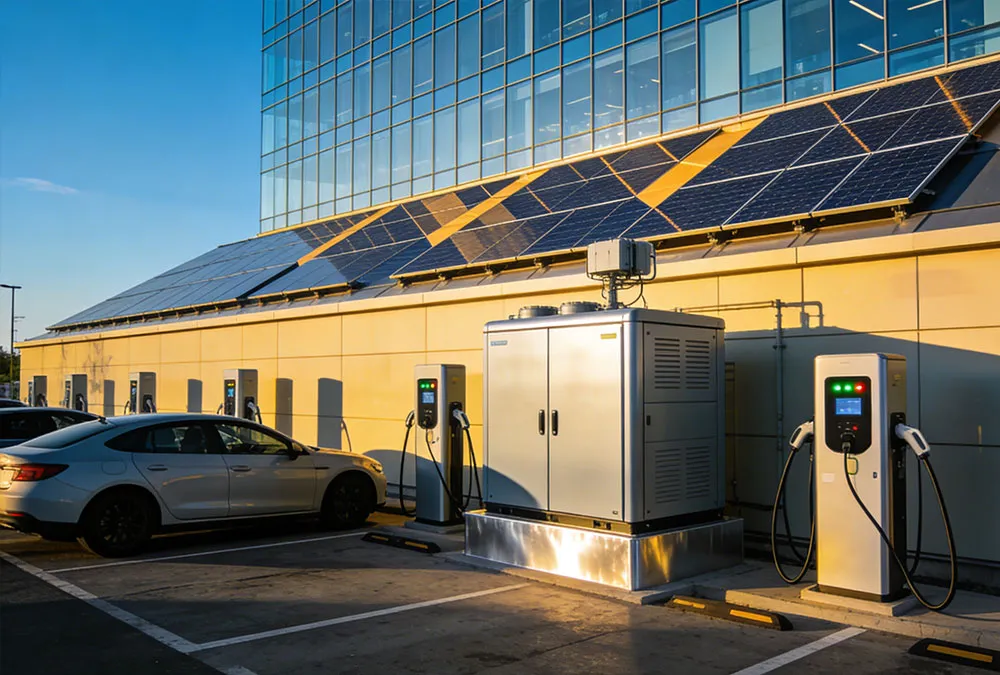
H3: Energy Storage for EV Charging Infrastructure
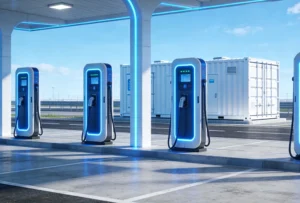
As businesses electrify their fleets, the grid often cannot handle the simultaneous draw of 20 fast chargers. BESS acts as a buffer, allowing for high-speed charging without a massive energy storage system installation cost for grid upgrades.
ROI of Commercial Battery Storage Systems
The most critical question for any board of directors is: When does the system pay for itself?
Revenue Streams in Energy Storage Systems
A modern BESS provides “Value Stacking,” which includes:
- Energy Arbitrage: Buying electricity when it’s cheap (off-peak) and using/selling it when it’s expensive.
- Demand Charge Management: Reducing the “kW” portion of the utility bill.
- Grid Services: Participating in demand response programs or frequency regulation, which provides direct payments from the utility.
Payback Period of Commercial Battery Storage
In 2026, the typical payback period for a well-optimized C&I system ranges between 3 and 6 years. Projects in high-tariff states (like California, New York, or Germany) often see paybacks as short as 3.5 years when state-level subsidies are included.
Factors Influencing ROI in Energy Storage Projects
The battery storage ROI commercial is highly sensitive to the “Cycles per Day.” A system that sits idle provides no value. A system that cycles twice a day to manage both morning and evening peaks will pay for itself much faster, provided the lithium battery storage price was low enough to maintain a healthy LCOS.
Benefits of Commercial Battery Storage Systems
- Reduce Electricity Costs: Directly attacks both the kWh and kW components of the utility bill.
- Improve Energy Reliability: Protects against micro-outages and voltage sags that can damage sensitive industrial electronics.
- Support Sustainability: Helps businesses meet ESG (Environmental, Social, and Governance) targets by maximizing the use of renewable energy.
- Future-Proofing: Prepares the facility for the 2030 “Net Zero” mandates and the inevitable rise in carbon taxes.
Challenges in Commercial Battery Storage Cost and Deployment
Despite the declining BESS cost, several hurdles remain:
- High Initial CAPEX: Even with a high ROI, the upfront commercial battery storage cost can be millions for large facilities.
- Battery Degradation: All batteries lose capacity. If a system is poorly managed by its EMS, it could become a “paperweight” before the ROI is realized.
- Regulatory Complexity: Interconnection agreements with utilities can take 6-12 months, delaying the project’s financial benefits.
Commercial Battery Storage Market Trends and Future Outlook
Declining Energy Storage System Cost Trends
The industry has achieved a remarkable feat: energy storage system cost has declined by over 90% since 2010. Experts suggest that while the rate of decline is slowing, incremental improvements in manufacturing and solid-state technology will continue to shave 3-5% off the commercial energy storage system price annually through 2030.
Rapid Growth of BESS Market
The C&I battery storage cost reduction has opened the floodgates. The market is expected to surpass $100 billion by 2030, with a Compound Annual Growth Rate (CAGR) of over 15%.
Emerging Trends in Commercial Energy Storage
- Long-Duration Energy Storage (LDES): Moving beyond 4 hours to 10+ hours using flow batteries.
- Virtual Power Plants (VPP): Groups of commercial batteries acting together to support the grid, earning a premium for the participants.
- Solar + Storage Standard: By 2027, it will be rare to see a commercial solar installation that does not include a battery.
How to Reduce Commercial Battery Storage Cost
To maximize the value of your energy storage investment cost, follow these strategies:
- Optimize System Sizing: Don’t buy more capacity than you need. A precise load analysis can often reduce the commercial battery storage cost per kWh by ensuring the system isn’t oversized.
- Choose the Right Technology: Don’t pay for NMC if LFP’s safety and cycle life are better for your stationary application.
- Work with Experienced Integrators: A bad installation can lead to thermal issues and rapid degradation, destroying your battery storage ROI commercial.
- Leverage Incentives: Always check for local, state, and federal tax credits and grants. In many regions, these can cover half of the energy storage system CAPEX.
FAQ: Commercial Battery Storage Cost (Featured Snippets Optimization)
How much does commercial battery storage cost?
Commercial battery storage typically costs between $250 and $500 per kWh in 2026. This is a turnkey price that includes battery modules, power conversion systems, installation, and integration. For a large 1MWh commercial battery storage system cost, you can expect to pay between $250,000 and $380,000 depending on the project’s complexity.
What factors affect commercial battery storage cost?
The primary factors affecting BESS cost include the battery chemistry (LFP vs. NMC), the power rating of the inverter (PCS), the complexity of the installation (EPC), and the cooling technology used (liquid vs. air). Additionally, regional labor rates and utility interconnection fees play a significant role.
Is commercial battery storage worth the investment?
Yes, for most commercial and industrial facilities, the investment is highly profitable. With a typical payback period of 3–6 years, the system provides significant long-term savings through peak shaving, energy arbitrage, and improved power reliability.
What are the main uses of commercial battery storage?
The primary applications for commercial ESS solutions are peak shaving (reducing demand charges), renewable energy integration (storing solar power), providing backup power, supporting high-speed EV charging, and participating in grid-service revenue programs.
Will battery storage costs decrease in the future?
Yes, energy storage system cost is expected to continue its downward trend. While the era of 20% annual drops is over, ongoing improvements in energy density, economies of scale in manufacturing, and the maturation of sodium-ion technology will drive prices down by 3-5% annually over the next decade.
Next Steps for Your Facility:
Are you ready to see a precise commercial energy storage system cost breakdown for your specific building? Our team of engineers can provide a free load-profile analysis to determine your optimal system size and projected ROI. [Would you like us to generate a custom 2026 ROI simulation for your facility?]