Introduction
As we navigate the complexities of the global energy transition in 2026, the demand for resilient and flexible power infrastructure has reached an unprecedented peak. For commercial operators, grid managers, and EV charging service providers, the primary challenge is no longer just sourcing energy, but managing its availability. Understanding the various types of battery energy storage systems is now a fundamental requirement for anyone looking to bypass grid constraints and reduce escalating operational costs. By decoupling energy generation from immediate consumption, these systems allow businesses to optimize their power usage, integrate high-capacity renewables, and provide the high-power bursts required for modern DC fast-charging networks. Whether you are managing a logistics hub or a commercial retail center, selecting the right battery technology is the difference between a high-ROI asset and a costly technical bottleneck.
Why Battery Energy Storage Systems Are Important
Before diving into the technical specifications of the different types of battery energy storage systems, it is crucial to understand the economic and operational drivers behind their adoption. In the 2026 market, energy is no longer a static utility; it is a dynamic resource that must be managed strategically.
Reducing Energy Costs and Peak Demand
Most commercial electricity bills are split into two categories: total consumption (kWh) and peak demand (kW). “Demand charges” can often account for up to 50% of a monthly industrial bill. Battery energy storage systems (BESS) allow for peak shaving, where the battery discharges during periods of high demand to keep the grid draw below a specific threshold. This dramatically lowers the utility bill without requiring a change in operational output.
Supporting Renewable Energy Integration
Solar and wind power are inherently intermittent. Without storage, excess solar energy generated at noon is often wasted or sold back to the grid at low rates (curtailment). A BESS captures this “green” electricity and time-shifts it to the evening or peak hours, ensuring that a commercial energy storage battery types selection directly impacts the sustainability rating of a facility.
Improving Grid Stability and Reliability
The aging electrical grids in North America and Europe often struggle with “voltage sags” and frequency fluctuations. A BESS provides millisecond-level response times to balance the load, acting as a high-speed buffer. Furthermore, in the event of a grid outage, these systems can provide critical backup power, allowing businesses to operate in “Island Mode.”
Enabling EV Charging and Industrial Applications
The “Grid Wall” is a real phenomenon where local transformers cannot support the 360kW+ loads of ultra-fast EV chargers. By using an industrial battery storage system, site owners can deploy high-speed chargers on a low-capacity grid connection, using the battery to provide the “heavy lifting” during the charging session.
Types of Battery Energy Storage Systems Explained
The “best” battery technology does not exist in a vacuum; it depends entirely on your specific use case, discharge duration, and budget. Here, we break down the primary types of battery energy storage systems currently shaping the 2026 industrial landscape.
Lead-Acid Battery Energy Storage Systems
Lead-acid is the oldest and most mature technology. While it is rarely used for large-scale energy storage today, it remains a niche player.
- Advantages: Extremely low initial capital cost (CapEx) and highly recyclable.
- Limitations: Very low energy density, short cycle life (typically 500-1,500 cycles), and requires significant maintenance.
- Best For: Simple backup power for telecommunications or low-cost emergency lighting where weight and volume are not constraints.
Lithium-Ion Battery Energy Storage Systems
This is the gold standard for grid-scale battery storage technologies. Lithium-ion (Li-ion) systems have seen a massive price drop—over 80% in the last decade—making them the dominant choice for almost all commercial applications.
- Advantages: High energy density, high round-trip efficiency (>90%), and fast response times.
- Limitations: Requires sophisticated thermal management and Battery Management Systems (BMS) to ensure safety.
Lithium Iron Phosphate (LFP) Battery Systems
LFP is a specific chemistry within the lithium-ion family that has become the preferred choice for stationary storage in 2026. Unlike NMC (Nickel Manganese Cobalt) batteries used in many passenger EVs, LFP uses no cobalt and is significantly more stable.
- Advantages: Superior thermal stability (less fire risk), long cycle life (6,000+ cycles), and lower total cost of ownership (TCO).
- Best For: Industrial battery energy storage system types and applications, specifically EV charging stations and commercial “peak shaving.”
Flow Battery Energy Storage Systems
Flow batteries (typically Vanadium Redox) store energy in liquid electrolyte tanks.
- Advantages: Exceptional longevity (20+ years) with virtually no degradation. They are ideal for “long-duration” storage (8-24 hours).
- Limitations: Low energy density (they require a large physical footprint) and high initial cost.
- Comparison Note: When looking at a lithium ion vs flow battery energy storage comparison, lithium wins on power and space, while flow wins on long-term durability for utility-scale bulk storage.
Sodium-Sulfur (NaS) Battery Systems
NaS batteries operate at high temperatures (typically 300°C to 350°C).
- Advantages: High energy density and long discharge durations.
- Limitations: The high operating temperature requires specialized insulation and safety protocols, making them unsuitable for small-scale commercial use.
- Best For: Large-scale grid stabilization and balancing intermittent wind farms.
Solid-State Battery Storage (The Frontier)
While still in the early stages of commercial scaling in 2026, solid-state batteries replace the liquid electrolyte with a solid ceramic or polymer.
- Advantages: Potential for massive energy density and near-perfect fire safety.
- Limitations: High manufacturing costs and currently limited to high-end niche applications.
Comparison of Battery Energy Storage System Types
To make an informed decision, facility managers must compare different types of energy storage batteries across key performance indicators (KPIs). According to the IEA World Energy Outlook 2025, LFP technology now accounts for over 75% of new stationary storage installations due to its balanced profile.
Key Comparison Table
| Technology Type | Cycle Life | Efficiency (Round-trip) | Depth of Discharge | Best Application |
| Lead-Acid | 500 – 1,500 | 70% – 80% | 50% | Emergency Backup |
| Lithium (LFP) | 6,000 – 10,000 | 90% – 95% | 90% – 100% | EV Charging, C&I |
| Vanadium Flow | 15,000+ | 65% – 75% | 100% | Long-Duration Grid |
| Sodium-Sulfur | 2,500 – 4,500 | 75% – 85% | 80% | Utility-Scale Wind |
Which Battery Type is Best for Different Applications?
- For EV Charging: Lithium Iron Phosphate (LFP) is the clear winner. Its ability to handle high C-rates (fast charge/discharge) and high cycle counts makes it the most cost-effective for the erratic load profiles of a charging hub.
- For Commercial Buildings: LFP is preferred for its safety and compact footprint.
- For Remote Microgrids: A hybrid of solar powered EV charging station with battery storage utilizing LFP or Flow batteries provides the best reliability.
Why Lithium Iron Phosphate (LFP) is the Preferred Choice for Energy Storage
If you are researching which battery energy storage system is best for EV charging, LFP consistently tops the list.
Safety and Thermal Stability
LFP chemistry is chemically stable. Even under physical damage or internal short circuits, LFP is much less likely to experience “thermal runaway” compared to NMC batteries. For indoor commercial installations or dense urban charging stations, this safety profile is non-negotiable.
Long Cycle Life and Low Degradation
An LFP system can easily provide 6,000 to 8,000 cycles at 80% Depth of Discharge (DoD). In a typical commercial environment with one full cycle per day, this translates to a service life of 15 to 20 years.
Cost Efficiency Over Lifetime
While the initial price per kWh might be slightly higher than lead-acid, the “Levelized Cost of Storage” (LCOS) for LFP is the lowest in the industry. Because you don’t have to replace the batteries every 3 years, the long-term ROI is significantly higher.
How to Evaluate Your Battery Energy Storage Needs
When acting as a consultant for industrial battery storage solutions, I always start with three core questions to determine the system sizing.
Key Questions to Ask
- What is your goal? (e.g., Peak Shaving, Backup, or Solar Self-Consumption?)
- What is your Peak Load? (How much power in kW do you need to draw at once?)
- What is your Energy Window? (How many hours in kWh do you need that power for?)
Energy Storage System Sizing Basics
For engineers and facility managers, here is a text-based formula to estimate your required capacity.
Formula:
Required Capacity (kWh) = (Peak Load to Shave (kW) x Duration (Hours)) / (DoD (%) x Efficiency (%))
Example:
If you need to shave 100kW of load for 2 hours, using a battery with 90% DoD and 92% efficiency:
Required Capacity = (100 x 2) / (0.90 x 0.92) = 241.5 kWh
Get a Free System Design
Selecting between types of battery energy storage systems for commercial use can be daunting. We recommend submitting your 12-month utility load profile to a qualified engineer who can model the ROI using software like HOMER Pro.
Factors to Consider When Choosing a Battery Energy Storage System
Beyond the chemistry, several external factors will dictate the success of your BESS project.
Cost and ROI
The payback period for a commercial BESS usually falls between 3 to 6 years. This is driven by “avoided costs” (demand charges) and “revenue generation” (frequency response payments from the grid).
Safety and Certifications
Ensure your system is certified to international standards. For North America, UL9540 and UL9540A (fire propagation test) are mandatory. For Europe, CE and IEC 62619 are the benchmarks for safety.
Government Policies and Incentives
- North America: The Inflation Reduction Act (IRA) provides a 30%+ Investment Tax Credit (ITC) for standalone energy storage.
- Europe: The Green Deal Industrial Plan offers various subsidies for “Carbon-Neutral” infrastructure, significantly lowering the CapEx for renewable energy storage technologies.
Choosing the Right Battery Energy Storage System for Commercial Use
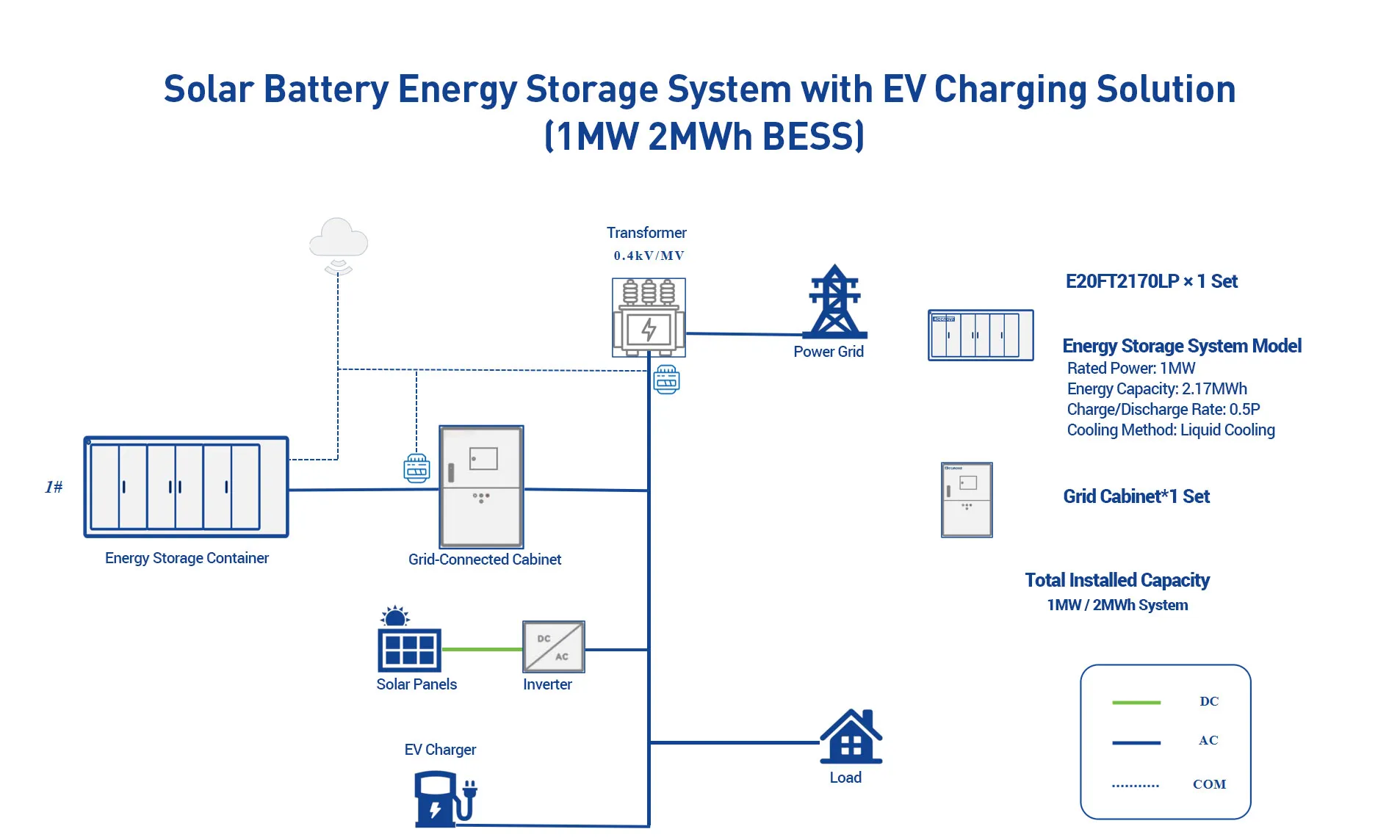
For “Behind-the-Meter” (BTM) applications, we almost exclusively recommend Industrial LFP systems. They offer the best density-to-safety ratio. Integration with EV charging and solar is now standardized via the OCPP (Open Charge Point Protocol) and SunSpec Modbus, allowing the EMS to “talk” to both the chargers and the solar inverters seamlessly.
Why Choose Anengji for Battery Energy Storage Solutions?
As a global leader in integrated energy solutions, Anengji provides factory-direct BESS hardware that eliminates middleman markups while maintaining rigorous engineering standards.
- Proven Experience: Our systems power logistics hubs in the Netherlands, commercial plazas in North America, and remote mining sites in South America.
- Seamless Integration: Anengji BESS units are designed to work out-of-the-box with our high-power DC chargers and PV inverters.
- Global After-Sales: With service centers in Belgium and the Netherlands, we provide 48-hour on-site support for our European clients.
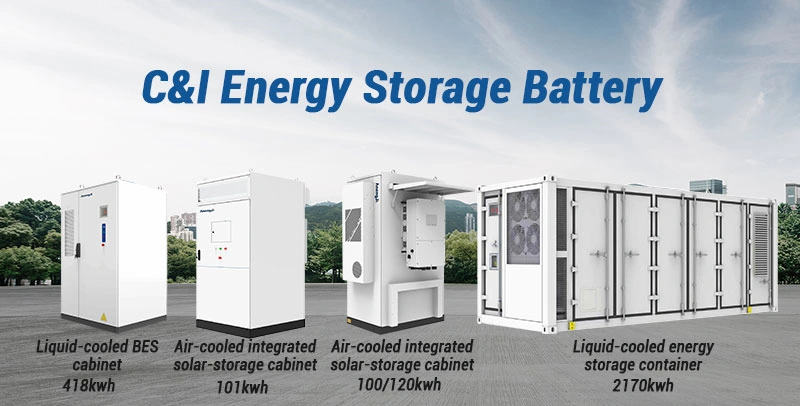
- Tier-1 Components: We utilize high-grade LFP cells and advanced liquid-cooling technology to ensure our systems operate at peak efficiency even in extreme climates.
FAQ – Types of Battery Energy Storage Systems
What are the main types of battery energy storage systems?
The primary types include Lithium-Ion (specifically LFP and NMC), Lead-Acid, Flow Batteries (Vanadium), and Sodium-based batteries. LFP is currently the dominant type for commercial and EV charging use.
Which battery is best for energy storage systems?
For most commercial and industrial (C&I) applications, Lithium Iron Phosphate (LFP) is considered the best due to its high safety, long cycle life (6,000+ cycles), and high round-trip efficiency.
What is the difference between lithium-ion and flow batteries?
Lithium-ion batteries are compact and efficient, making them great for short-duration (1-4 hour) power needs. Flow batteries are bulky but can last much longer (8-12+ hours) without degradation, making them better for large-scale grid storage.
Why is LFP preferred for EV charging and commercial storage?
LFP batteries offer a lower risk of fire (thermal stability) and a much longer lifespan than traditional lithium batteries, making them more cost-effective over a 15-year infrastructure project.
Conclusion: Choosing the Right Battery Energy Storage System
Selecting from the various types of battery energy storage systems is a strategic decision that defines the long-term viability of your energy project. In 2026, the shift toward Lithium Iron Phosphate (LFP) for commercial and industrial use is undeniable. These systems provide the safety, durability, and efficiency required to handle the high-power demands of EV charging and industrial automation.
By understanding your load profile, calculating your sizing needs, and leveraging government incentives, you can transform your energy infrastructure from a passive expense into a dynamic, profit-generating asset. Whether your goal is to reduce demand charges, integrate solar, or scale your EV charging capacity, the right BESS technology is the key to unlocking a grid-independent future.
Ready to optimize your facility’s energy? Contact Anengji today for a custom BESS system design and a direct-from-factory quote.