Solutions, Profitability, and Strategies by Anengjienergy
1. Global Overview: Why Weak-Grid Regions Hold Untapped Potential
The global electric vehicle (EV) transition is accelerating, but not all regions are equally prepared in terms of grid infrastructure. Countries with vast land resources yet limited power networks — such as Brazil, Argentina, Kazakhstan, Uzbekistan, Vietnam, Indonesia, Saudi Arabia, Oman, Finland, and South Africa — are now becoming the next frontier for EV charging investment.
While their grid capacity lags behind, these markets possess ample land availability, lower competition, and growing government interest in renewable energy integration, making them ideal for hybrid EV charging systems.
According to Anengjienergy’s 2025 Global EV Infrastructure Report, weak-grid countries will account for 35% of all new charging station installations by 2030, driven primarily by solar-storage hybrid solutions.
2. Countries with Weak Grid Conditions but Strong Investment Potential
Below are 10 representative countries where grid capacity is limited but EV charging investment potential is high due to available land, energy transition incentives, or growing vehicle electrification policies:
| Region | Country | Key Opportunity | Grid Challenge |
|---|---|---|---|
| Europe (East/South) | Ukraine | Reconstruction-driven EV infrastructure | Grid instability, post-war rebuilding |
| Russia | Russia | Vast land and long-distance logistics routes | Sparse grid coverage in remote regions |
| South America | Brazil | Expanding renewable energy and EV incentives | Voltage fluctuations, regional grid gaps |
| South America | Chile | High solar potential for PV+charging | Rural areas lack reliable grid |
| Middle East | Saudi Arabia | Vision 2030 supports EV adoption | Power distribution imbalance |
| Middle East | Oman | Solar and desert area development | Limited substation capacity |
| Asia (South/Central) | Kazakhstan | Cross-border logistics charging demand | Aging grid infrastructure |
| Southeast Asia | Thailand | Growing EV imports and tourism fleet | Grid congestion in cities |
| Southeast Asia | Vietnam | Fast-developing industrial zones | Rural grid overload |
| Oceania | Indonesia (Bali region) | Tourism-based charging networks | Weak local transformer capacity |
EV Charging Market Opportunity in Weak-Grid Countries (2025–2030)
CAGR (2025–2030)
Insight: Despite limited grid access, these regions show the highest CAGR globally, signaling strong investment prospects for hybrid EV charging.
3. Key Challenges for Investors (Expanded Section)
While opportunities are vast, investors in weak-grid regions face complex technical, operational, and regulatory obstacles. Below are the five key challenges — and how Anengjienergy’s integrated solutions address them:
3.1Limited Grid Capacity and Transformer Overload
Problem:
Many developing or rural areas lack grid infrastructure capable of supporting multiple high-power DC chargers. Voltage instability and transformer overload risks are common.
Solution by Anengjienergy:
Deploy modular DC fast chargers (20kW–1440kW) that adapt to variable grid input.
Integrate energy management systems (EMS) to balance load dynamically.
Use battery-buffered DC systems to absorb peak loads and stabilize the grid.
In regions like Kazakhstan and Uzbekistan, hybrid DC systems reduced peak draw by 40%.
3.2Frequent Power Interruptions and Unstable Supply
Problem:
In places like Indonesia, Vietnam, or Brazil’s rural zones, blackouts and unstable voltage make traditional grid-only stations unreliable.
Solution:
Install solar PV + storage-based systems, ensuring continuous operation during outages.
Utilize smart charging algorithms that prioritize stored or renewable energy first.
Combine with off-grid microgrids, turning the station into a semi-autonomous power hub.
Anengjienergy hybrid systems maintain >98% uptime even during local outages.
3.3High Cost of Grid Expansion
Problem:
Extending grid access to remote or new industrial areas can cost millions of dollars, often delaying ROI.
Solution:
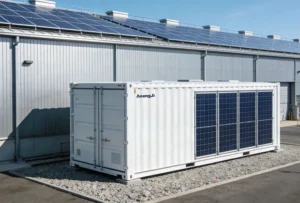
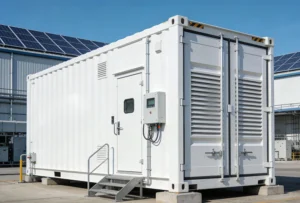
Use containerized EV charging systems with integrated PV and battery modules.
Deploy mobile charging containers (plug-and-play) that require no major grid upgrade.
Gradually scale capacity based on local EV adoption rates.
In Oman and Saudi Arabia, containerized systems reduced setup cost by 30–40%.
3.4Regulatory and Permit Delays
Problem:
Investors often struggle with land-use permits, grid interconnection rules, or unclear tariffs, especially in emerging markets.
Solution:
Partner with local governments to align projects with renewable policies.
Use Anengjienergy’s engineering consultation service to ensure code compliance.
Start with pilot demonstration stations, which fast-track approval.
Pilot projects in Vietnam and Uzbekistan gained operational approval within 3–6 months.
3.5Low Initial EV Density and Utilization Risk
Problem:
In early-stage EV markets, investors fear slow revenue growth due to fewer EVs on the road.
Solution:
Focus on fleet, logistics, and taxi segments with predictable demand.
Combine charging service with energy storage leasing or power resale.
Partner with industrial parks, logistics centers, and municipalities to secure anchor clients.
Hybrid EV + fleet charging hubs in Brazil and South Africa achieved 70%+ utilization within 1 year.
4. Technical Solution Framework
Table: Hybrid Charging Station Energy Composition
| Component | Function | Share of Energy Supply |
|---|---|---|
| Solar PV | Local generation | 50% |
| Battery Storage | Backup power & night supply | 30% |
| Grid Power | Peak hour balance | 20% |
Insight: A hybrid PV-storage-grid model allows 70–80% off-grid operation, ideal for unreliable grid networks.
5. ROI & Profitability
ROI Comparison – Grid-Only vs PV+Storage Hybrid
Insight: Hybrid models achieve breakeven in 2–3 years due to energy savings and government renewable incentives.
Profitability Model by Station Type
| Station Type | CapEx (USD) | Avg. Daily Sessions | Annual Revenue (USD) | Payback Period |
|---|---|---|---|---|
| Grid-only | 200,000 | 20 | 75,000 | 5–6 years |
| PV + Charging | 280,000 | 25 | 110,000 | 3–4 years |
| PV + Storage + Charging | 350,000 | 30 | 145,000 | 2.5–3 years |
| Containerized Mobile | 250,000 | 15 | 90,000 | 3–4 years |
Insight: Despite higher CapEx, PV+Storage systems deliver 40% higher annual ROI and shorter payback.
6. Regional Case Studies — EV Charging Investment in Weak-Grid Regions
To understand how investors can navigate different challenges in various markets, let’s explore real-world examples and strategies from key regions across the globe where Anengjienergy operates or provides support for EV infrastructure deployment.
6.1 Europe — Scandinavia’s Remote Grid Challenge
Countries: Norway, Sweden, Finland
Even though Scandinavia leads Europe in EV adoption rates (with Norway’s EV penetration exceeding 80%), rural and northern regions still face limited grid capacity and harsh weather conditions that affect charging infrastructure reliability.
Key Issues:
Remote areas have unstable grid voltage during winter peaks.
Long transmission distances raise infrastructure costs.
Icing and snow accumulation impact charger durability.
Anengjienergy’s Solution:
Deployed 144kW modular DC chargers with IP66 protection for cold climates.
Implemented dynamic load control to stabilize low-voltage networks.
Integrated PV rooftops and small storage units in parking zones of remote communities.
Result: 32% reduction in grid stress and 20% higher uptime during winter months.
6.2 Russia — Large Land, Sparse Grid
Russia’s vast geography offers abundant space for EV infrastructure but limited high-voltage connectivity outside major cities like Moscow and St. Petersburg.
Key Issues:
Vast distances between substations.
Harsh winter temperatures require robust hardware.
Limited grid modernization in regional towns.
Anengjienergy’s Solution:
Established containerized DC fast-charging hubs (60–360kW) along logistics corridors.
Added thermal management and remote monitoring for -40°C operation.
Partnered with local energy authorities to test hybrid microgrid stations powered by solar + diesel backup.
Result: Reliable 24/7 operation across 1,000 km of highway despite inconsistent grid input.
6.3 Southeast Asia — Urban Density, Weak Infrastructure
Countries: Thailand, Vietnam, Indonesia
Southeast Asia is one of the fastest-growing EV regions but faces urban congestion, limited power distribution, and high humidity challenges.
Key Issues:
Dense cities like Bangkok and Jakarta have insufficient parking space.
Frequent brownouts during peak summer demand.
Regulatory delays in connecting chargers to public grids.
Anengjienergy’s Solution:
Installed AC 22kW dual chargers with shared load management to reduce grid stress.
Promoted solar + storage hybrid hubs on mall rooftops and apartment complexes.
Worked with property developers to deploy roadside smart chargers (low footprint design).
Result: Reduced city load by 35% and enabled private landlords to earn 10–15% ROI annually from shared public chargers.
6.4 Central Asia — Abundant Sun, Limited Power
Countries: Kazakhstan, Uzbekistan, Kyrgyzstan, Tajikistan, Turkmenistan
These nations have high solar potential but outdated power networks, creating ideal conditions for solar-storage EV charging systems.
Key Issues:
Voltage fluctuations and transformer limitations.
Long bureaucratic approval processes for grid connection.
Harsh climates with extreme temperature shifts.
Anengjienergy’s Solution:
Deployed 20–180kW solar-powered DC chargers with built-in 200kWh storage.
Provided containerized “micro-grid” EV stations for remote logistics bases.
Supported government pilot programs in Uzbekistan’s industrial parks.
Result: Hybrid PV-charging stations supplied up to 85% renewable energy, cutting dependence on grid electricity.
6.5 Middle East — High Temperature and Peak Demand
Countries: Saudi Arabia, UAE, Oman, Qatar
The Middle East is rapidly diversifying its energy sector, investing heavily in clean mobility. However, peak electricity demand and extreme heat are major barriers.
Key Issues:
Daytime peak load limits grid expansion.
Chargers must withstand 55°C desert temperatures.
Grid voltage instability in suburban or coastal developments.
Anengjienergy’s Solution:
Introduced liquid-cooled DC chargers (360–720kW) with smart derating in high heat.
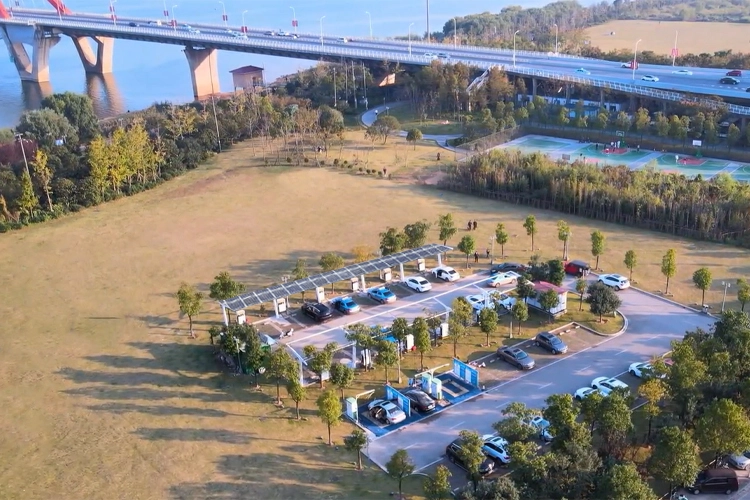
Integrated solar canopy structures providing both shade and renewable energy.
Installed AI-driven power distribution systems to prevent overloading.
Result: Improved station performance by 25% in hot climates and reduced cooling energy consumption by 40%.
6.6 South America — Vast Opportunity, Uneven Distribution
Countries: Brazil, Argentina, Chile, Colombia
South America’s EV market is growing but suffers from regional power inequality — large cities have modern grids while rural areas struggle with reliability.
Key Issues:
Unequal access to high-voltage infrastructure.
Long-distance logistics corridors without fast chargers.
Government subsidies vary widely by region.
Anengjienergy’s Solution:
Installed solar + battery fast chargers (150–300kW) in rural Brazil and northern Argentina.
Used smart grid synchronization to operate even on weak feeders.
Partnered with logistics companies to install private fleet charging depots.
Result: Achieved 3-year ROI with 70%+ daily utilization from logistics fleet operators.
6.7 Africa — Power Scarcity, High Solar Potential
Countries: South Africa, Kenya, Nigeria
Africa’s weak grids and long power outages make off-grid or solar-hybrid charging stations the only viable option.
Key Issues:
Blackouts lasting several hours daily.
Diesel dependence for backup.
Limited access to capital for renewable projects.
Anengjienergy’s Solution:
Provided off-grid 60kW–120kW DC chargers with integrated solar storage.
Developed mobile charging trucks powered by lithium battery containers.
Created flexible leasing models for small investors or municipalities.
Result: Enabled 90% uptime in blackout-prone regions and reduced diesel generator use by 60%.
6.8 Oceania — Space-Rich but Grid-Limited
Countries: Australia, New Zealand
Despite strong EV adoption policies, large parts of rural Australia and New Zealand have weak or single-phase grids.
Key Issues:
Power restrictions limit simultaneous fast charging.
Remote areas lack grid reliability.
Long distances between charging stations increase infrastructure costs.
Anengjienergy’s Solution:
Installed hybrid solar + storage microgrids at remote rest stops.
Offered 44kW AC + 120kW DC combo chargers optimized for load sharing.
Integrated smart monitoring for predictive maintenance across networks.
Result: Reduced energy cost by 35% per station and achieved full ROI within 2.8 years.
7. Summary Chart: Regional Challenges and Solutions
| Region | Main Challenge | Anengjienergy Solution | Result |
|---|---|---|---|
| Europe (North) | Cold, remote, unstable grid | Modular DC chargers + PV storage | 32% grid relief |
| Russia | Long-distance grid, freezing temp | Containerized microgrid hubs | 24/7 uptime |
| Southeast Asia | Urban density, weak grid | Smart AC/DC + solar hybrid | 35% load reduction |
| Central Asia | Outdated grid | PV-storage hybrid hubs | 85% renewable share |
| Middle East | Extreme heat | Liquid-cooled solar canopy chargers | 40% energy saving |
| South America | Unequal grid access | Smart fast chargers for logistics | 3-year ROI |
| Africa | Frequent blackouts | Off-grid + mobile charging trucks | 90% uptime |
| Oceania | Sparse grid, remote | Hybrid microgrids | 35% cost reduction |
8. Conclusion: A Global Path Forward
Across all these regions, the message is clear — weak-grid conditions don’t limit growth, they inspire smarter innovation.
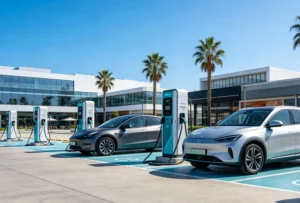
Anengjienergy’s AC chargers (7–44kW), DC chargers (20–1440kW), and solar-storage hybrid systems offer scalable, reliable, and profitable pathways for investors seeking to enter emerging EV markets.
Anengjienergy transforms power limitations into opportunities — helping investors, governments, and developers build the future of green mobility across every continent.
9. Investment Risk, Return, and Mitigation Strategies
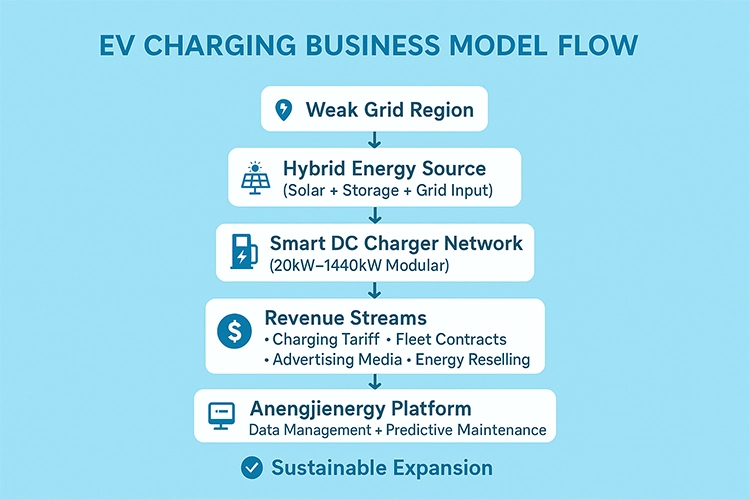
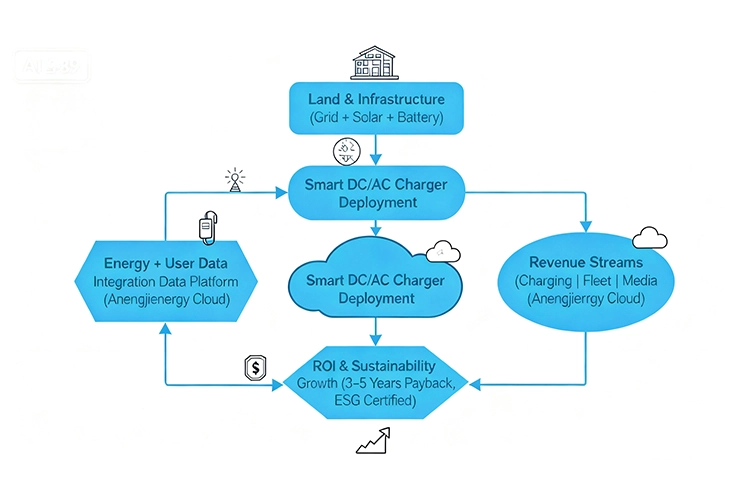
Anengjienergy provides DC fast chargers (20kW–1440kW) and AC chargers (3.5kW–44kW) designed for adaptability, durability, and high efficiency.
DC chargers: Ideal for highways, industrial parks, and fleets.
AC chargers: Perfect for commercial parking lots, hotels, and retail areas.
Hybrid containers: Integrated solar-storage solutions for off-grid or semi-grid operation.
All systems are equipped with smart monitoring, load balancing, and remote control, ensuring stable operations even in weak-grid environments.
14. Future Outlook & Sustainability Trends
The future of EV charging in weak-grid regions lies in distributed energy, hybridization, and digital management.
Governments are introducing incentives for solar-based charging stations — particularly in Central Asia, Southeast Asia, and Africa — to encourage private-sector investment.
Anengjienergy continues to expand its global partnerships, offering turnkey EPC services, energy audits, and financial modeling support to help investors navigate complex markets.
15. Conclusion: Turning Challenges into Profit
While weak-grid conditions pose real challenges, they also present high-entry-barrier opportunities with long-term rewards.
By adopting hybrid PV-storage-charging systems, investors can minimize risk, maximize ROI, and accelerate regional electrification.
16. Call to Action
Build the Future of EV Charging with Anengjienergy
Whether in Africa, Central Asia, or South America, Anengjienergy helps investors overcome infrastructure limits with flexible, modular, and profitable EV charging systems.
💬 Contact us today for a customized ROI analysis and project proposal tailored to your local grid conditions.