Quick Summary: Battery energy storage systems (BESS) in Poland help industrial manufacturers reduce electricity costs, improve power reliability, and integrate renewable energy through peak shaving, load shifting, and smart energy management systems (EMS). For factories facing rising energy prices, selecting the right battery energy storage companies in Poland is the first step toward energy independence and long-term ROI.
Introduction
The rapid evolution of the Polish energy landscape has made selecting the right energy partner a strategic priority. As of early 2026, Poland’s industrial sector faces a unique combination of high electricity prices and an aging grid infrastructure. According to the latest reports from the IEA, industrial electricity prices in Europe have remained volatile, making on-site storage a financial necessity. For any modern facility, an industrial battery energy storage system for factories is no longer just a “green” initiative—it is a critical tool for operational resilience. By leveraging a high-performance BESS solution for manufacturing plants cost reduction, companies can insulate themselves from volatile energy markets while ensuring production lines remain powered during grid fluctuations.
Industry Insight: The BESS Surge in 2026
- BloombergNEF: Global BESS installations are projected to grow significantly through 2030, with Poland emerging as a Top 5 European market.
- IRENA: Energy storage is highlighted as the single most critical factor for renewable integration in coal-transition economies like Poland.
Overview of Battery Energy Storage Market in Poland (BESS Market Poland)
The Polish BESS market has entered a phase of exponential growth as of early 2026. This surge is not merely a local trend but a strategic component of the broader European energy security architecture.
Market Size & Growth of Battery Energy Storage in Poland
Poland has solidified its position as a Top 5 European energy storage hub. According to the latest reports from the National Fund for Environmental Protection and Water Management (NFOŚiGW) in 2026, the government has allocated over PLN 41.5 billion (approximately USD 10.5 billion) to support the expansion of battery storage infrastructure. This initiative aims to deploy 3,900 MW of power capacity and 14,500 MWh of storage capacity by 2028. For industrial users, this means enhanced grid flexibility and new subsidy opportunities for commercial and industrial energy storage system suppliers Europe to deploy localized solutions.
Role of BESS in Industrial Manufacturing
In a 2026 manufacturing environment, a battery storage for peak shaving in industrial facilities serves as a vital energy buffer. It manages the three pillars of industrial energy management:
- Peak Shaving & Demand Charge Reduction: Shifting heavy loads from high-tariff periods to off-peak hours.
- Backup Power for Factories: Ensuring that precision manufacturing lines remain operational during grid sags or outages.
- Integration with EV Charging Infrastructure: Supporting the electrification of corporate fleets and heavy-duty electric trucks (e-HDVs) without triggering expensive grid upgrades.
Local vs. International BESS Suppliers in Poland
The landscape is characterized by a “Dual-Track” supply chain. While local Polish integrators excel in rapid on-site service and local permitting, global battery energy storage companies in Poland—such as AnengJi Power—provide the high-level technological integration (BMS/EMS) and global manufacturing scale required for large-scale industrial reliability.
Key Technologies Behind Industrial BESS (PCS BMS EMS Energy Storage)
To achieve the E-E-A-T (Expertise, Authoritativeness, and Trustworthiness) standards required for industrial decision-making, it is essential to understand the engineering parameters that differentiate a “reliable” system from a “budget” one.
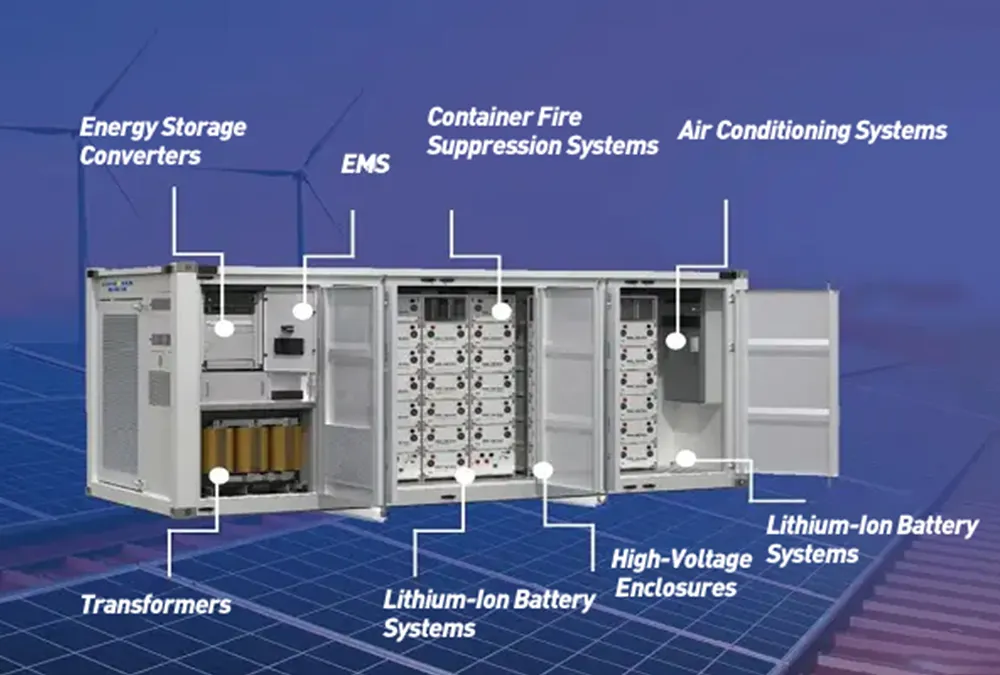
Core Components of Battery Energy Storage Systems
A high-performance lithium-ion BESS for factories is an integrated ecosystem:
- Battery System (LFP Dominance): By 2026, Lithium Iron Phosphate (LFP) has become the undisputed industrial standard due to its thermal stability and 10-year+ lifecycle.
- PCS (Power Conversion System): The inverter that manages the bi-directional flow of energy. Modern PCS units now achieve a Round-Trip Efficiency (RTE) of over 95%.
- BMS (Battery Management System): The sentinel of the system, monitoring cell voltage, temperature, and State of Charge (SoC) to prevent thermal runaway.
- EMS (Energy Management System): The AI-driven brain that facilitates industrial BESS with EMS integration for smart factories.
Certifications and Safety Standards for Industrial BESS
In the European market, insurance and compliance are paramount. Any industrial BESS must meet:
- UL9540 / UL9540A: Testing for large-scale fire spread and thermal management.
- IEC 62619: Safety requirements for secondary lithium cells in industrial applications.
- NFPA 855: The standard for stationary energy storage installations.
Key Technical Parameters for Engineering Evaluation
| Parameter | Industrial Standard (2026) | High-End C&I Target |
| Cycle Life | 6,000 Cycles | 8,000 – 10,000 Cycles |
| C-rate | 0.5C (2-hour duration) | 1C (1-hour high power) |
| Response Time | <1 second | <100ms (UPS Grade) |
| Depth of Discharge (DoD) | 85% | 90% – 95% |
Why BESS for Industrial Manufacturing is Growing in Poland
The primary catalyst is the economic pressure of rising electricity costs in Poland. As of the first half of 2025, Polish industrial electricity prices grew at one of the fastest rates in the EU, approximately 20% year-on-year.
Grid Stability and Energy Security Challenges
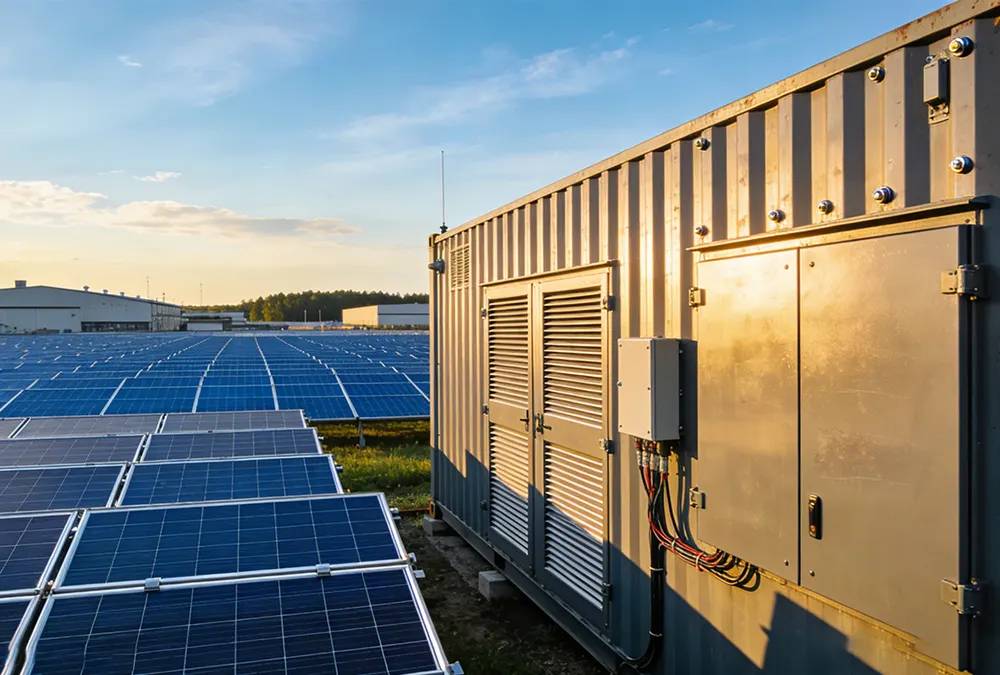
The Polish grid, originally built for centralized coal power, struggles with the intermittent nature of the country’s 20GW+ solar capacity. This leads to voltage fluctuations that can damage sensitive industrial equipment. An industrial energy storage system acts as a “giant stabilizer,” filtering grid noise and providing grid stability for manufacturing.
Renewable Energy Integration in Industry
Many Polish factories are now installing rooftop PV arrays. However, without a smart energy management system (EMS) and storage, up to 40% of generated solar energy is often wasted or sold back to the grid at unfavorable rates. A BESS solution for manufacturing plants cost reduction allows for “Solar Self-Consumption” rates of over 90%.
Top 10 Battery Energy Storage Companies in Poland
1.Northvolt (Gdańsk)
Northvolt operates the “Northvolt Dwa” facility in Gdańsk, which is among the largest battery system manufacturing sites in Europe. In 2026, they have integrated advanced liquid-cooling technology into their Voltpack Core systems. Their focus is on sustainability, utilizing high-recycled-content cells and a localized European supply chain.
2.LG Energy Solution (Wrocław)
With the world’s largest lithium-ion battery plant in Wrocław, LG is the backbone of the Polish BESS market. Their 2026 C&I solutions feature high-density LFP cells designed for 20-year operational lives. They offer deep integration with European grid operators, making them a safe choice for utility-scale and large-scale industrial projects.
3. BMZ Group (Gliwice)
BMZ maintains a significant R&D and production presence in Gliwice. They are specialists in industrial microgrid solutions, providing customized battery packs for specialized manufacturing equipment and high-power factory power backup systems.
4. Fluence Energy
A joint venture between Siemens and AES, Fluence is the leader in software-defined storage. Their Nispera and Mosaic platforms allow Polish industrial parks to participate in the “Capacity Market,” earning revenue by supporting the national grid during peak hours.
5. Sungrow
Sungrow has recently expanded its presence in the Polish market with high-efficiency liquid-cooled BESS containers. Their PowerStack series is a top-tier demand charge reduction solution for energy-intensive sectors like steel and cement manufacturing.
6.AnengJi Powe (AnengJi)
As a premier global provider, AnengJi Power (AnengJi) stands out for its “4S Integration” (Cell, PCS, BMS, EMS). Their Aneng-Series 215kWh outdoor cabinets are specifically designed for the Polish C&I market, offering:
- Fast Deployment: Modular designs that can be installed in under 48 hours.
- Safety: Multi-level fire suppression systems exceeding UL9540 standards.
- ROI Optimization: Integrated AI-EMS that automatically tracks the Polish electricity exchange (TGE) prices for energy arbitrage.
7. Huawei Digital Power
Huawei’s “String BESS” architecture is revolutionary for Polish factories. By treating each battery string independently, they eliminate the “weakest link” effect, ensuring that one failing module doesn’t reduce the performance of the entire system.
8. Tesla Energy
Tesla’s Megapack 2 XL remains a popular choice for massive industrial sites in Poland. Their Opticaster software is widely regarded as the industry standard for predictive load management and cost-optimized discharging.
9. BYD
BYD’s Blade Battery technology offers unparalleled safety for indoor industrial installations. Their modular Battery-Box Commercial series is ideal for small-to-medium Polish manufacturers looking for a 100kW–500kW entry point into storage.
10. CATL
As the global leader in cell manufacturing, CATL’s EnerOne liquid-cooled BESS units are designed for extreme longevity. With a cycle life exceeding 10,000 cycles, they offer the lowest “Levelized Cost of Storage” (LCOS) for long-term industrial projects in Central Europe.
Industrial BESS Solutions by Factory Size
Selecting from the many battery energy storage companies in Poland requires matching system capacity to your facility’s specific load profile.
Small Factories (100kW – 500kW)
- Primary Goal: Demand charge reduction solution and emergency backup for critical IT or CNC systems.
- Recommended Hardware: All-in-one outdoor cabinets (e.g., AnengJi 215kWh or BYD Battery-Box).
- Payback Period: 3.5 – 4.5 years.
Medium Manufacturing Plants (500kW – 2MW)
- Primary Goal: Peak shaving, load shifting, and high-rate solar self-consumption.
- Recommended Hardware: Modular rack systems or small 10ft containers with integrated EMS.
- Payback Period: 4 – 5.5 years.
Large Industrial Facilities (2MW+)
- Primary Goal: Grid frequency regulation, massive energy arbitrage, and full industrial microgrid solutions.
- Recommended Hardware: 20ft/40ft liquid-cooled BESS containers (e.g., Northvolt, Tesla, or AnengJi).
- Payback Period: 5 – 7 years (often accelerated by Capacity Market revenue).
Future Trends of Battery Energy Storage in Poland
The “Grid Act” (UC84) passed in March 2026 has introduced flexible connection agreements, allowing factories to bypass traditional “Grid Bottlenecks.”
Smart Energy Management Systems (EMS Growth)
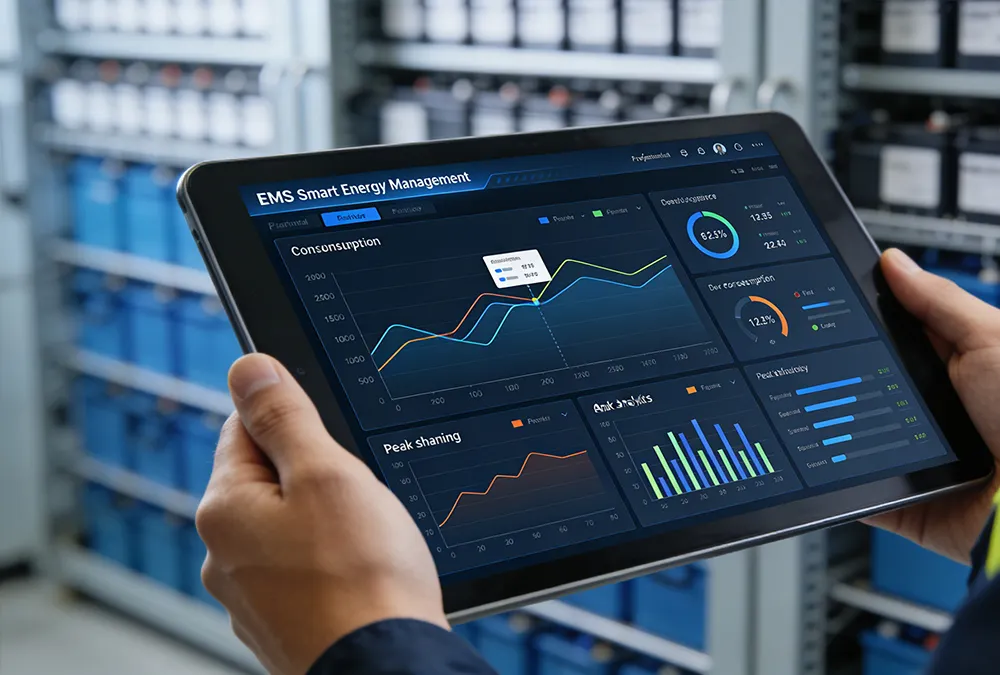
AI-driven EMS is no longer an optional add-on. By 2026, companies like AnengJi Power have integrated “Digital Twins” into their monitoring platforms, allowing facility managers to simulate cost savings before the system is even installed.
Virtual Power Plants (VPP)
Polish industrial sites are increasingly becoming part of Virtual Power Plants. By aggregating their BESS capacity, multiple factories can act as a single “Power Plant” to stabilize the national grid, earning significant monthly “Flexibility Payments.”
Market Opportunities for Industrial BESS in Poland
Why Invest in BESS Now?
- High ROI: Typical payback periods have dropped by 15% due to the 2026 NFOŚiGW grants.
- Energy Independence: Protect your factory from the 50% jump in the cogeneration fee expected by the end of 2026.
- Sustainability Compliance: Meet EU Corporate Sustainability Reporting Directive (CSRD) requirements by reducing Scope 2 emissions.
Get Your Industrial BESS Solution in Poland
Don’t let energy volatility dictate your production schedule. Our engineering and marketing teams provide:
- Free Energy Audit: 15-minute load data analysis for your facility.
- Custom ROI Simulation: Guaranteed financial report within 24 hours.
- Turnkey Deployment: From grid connection permitting to AI-EMS optimization.
👉 Request your quote today and secure your facility’s energy future.
FAQ – Battery Energy Storage in Poland
What is a battery energy storage system (BESS)?
A battery energy storage system (BESS) is an electrochemical setup that stores electrical energy during periods of low demand (or high production) and releases it when needed, helping industrial users manage costs and improve grid stability for manufacturing.
How does BESS reduce electricity costs for factories?
BESS reduces costs through peak shaving (avoiding high-demand charges), energy arbitrage (buying low, using high), and increasing solar self-consumption, which directly impacts the BESS solution for manufacturing plants cost reduction.
Is BESS suitable for industrial manufacturing in Poland?
Yes. With the Polish government’s 2026 funding of PLN 41.5 billion and the high industrial “Power Fee,” BESS is currently the most effective way for Polish factories to remain competitive.
How to choose the best BESS supplier in Poland?
Evaluate battery energy storage companies in Poland based on their system integration capability (Battery + PCS + EMS), their local service network, and their adherence to safety standards like UL9540A and IEC 62619.
What is the ROI of industrial battery storage systems?
In 2026, the typical ROI ranges from 3 to 7 years, depending on the factory’s energy profile, local utility rates, and participation in the Polish Capacity Market.