Installation Method:Vertical
Feeding Method:Bottom in and out
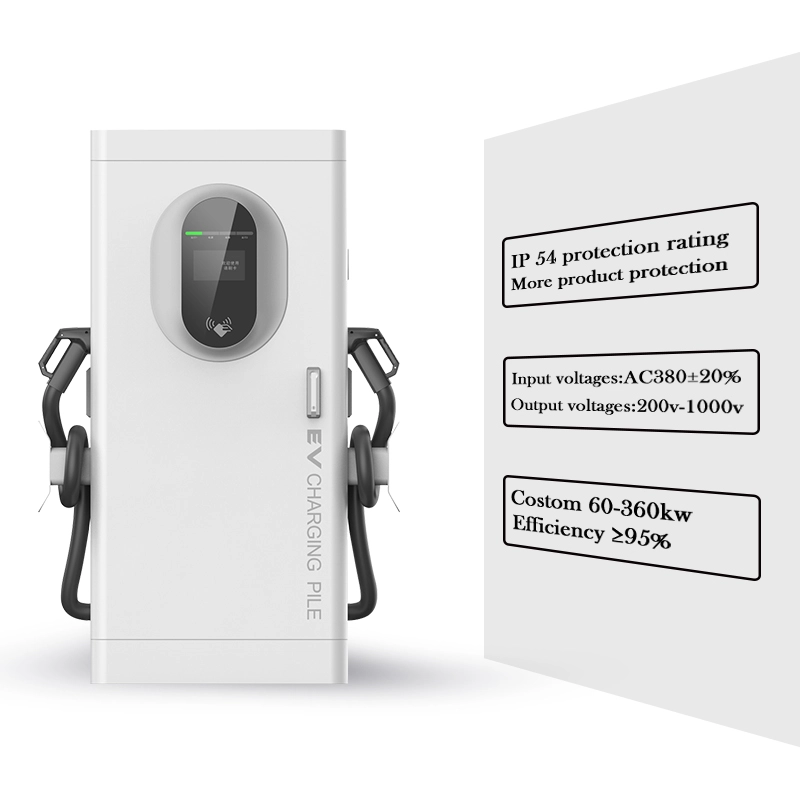
Equipment Dimension:1800*800*600 mm
Input Voltage:AC380V±15%
Input Frequency:50±10 Hz
Output Voltage:200-(750 )1000VDC
Single Gun Output Current Range:0-200A
Cable Length:5m ( Optional )
Metering Accuracy:1.0 Level
Current Limit Protection Value:≥110%
Voltage Stabilization Accuracy:≤±0.5%
Current Stabilization Accuracy:≤±1%
Ripple Ratio:≤±0.5%
Efficiency:≥95%
Power Factor:≥0.99 (above 50% load)
Harmonic Content THD:≤5% (above 50% load)
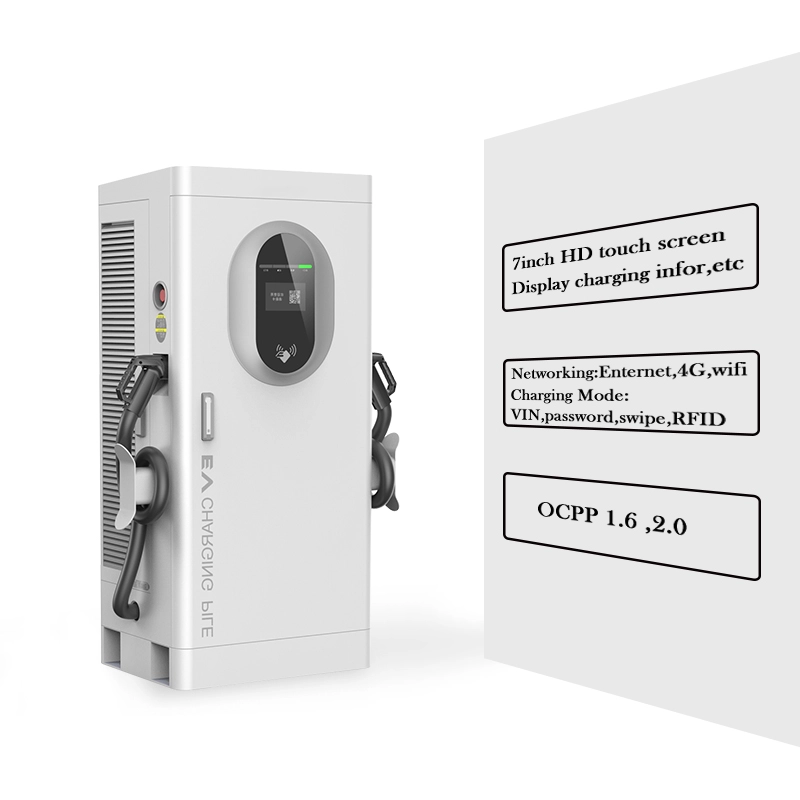
HMI:7- inch highlight color touch screen
Charging Mode:Automatic charging full / Fixed power / Fixed Amount / Fixed time
Charging Method:Swipe card / Password / Scan code
Mode Of Payment:Credit card / Scan code
Operation Mode:Offline no billing, Offline billing, Online billing
Communication Protocol:OCPP 1.6J
Network Way:Ethernet / 4G
Operative NormIEC:61851-1:2017,ICE 62196-2:2016
Working Temperature:-20℃ ~ +50℃
Working Humidity:5%~95% non-condensing frost
Working Altitude:<2000m
Ingress Protection:IP54
Cooling Method:Air-cooled
Noisy Control:≤60dB
MTBF:30,000 hours
3 Phase Electric Car Charger – High Speed Charging for Modern EVs
3 Phase Electric Car Charger solutions are becoming the preferred choice for both residential and commercial EV charging due to their faster charging speeds and higher efficiency. Unlike single-phase chargers, three-phase models can deliver more power in less time, making them ideal for high-demand environments.
Most electric vehicles operate on a DC battery system, but their onboard chargers convert AC from the grid into DC for storage.
Single-phase AC: typically 230V (Europe) or 120V/240V (North America)
Three-phase AC: typically 400V in most countries
For example, a 3 phase 22kW AC charger using 400V can fully charge many EVs within just a few hours. Always check your vehicle’s onboard charger rating to ensure full compatibility.
When selecting a 3 phase electric car charger, focus on:
Power Output – 7kW, 11kW, and 22kW options available to match your needs.
Smart Functions – RFID access, OCPP protocol, and app-based monitoring.
Safety Features – Overcurrent, overvoltage, leakage, and surge protection.
3 phase EV chargers are suitable for:
Commercial properties such as parking lots, hotels, and shopping malls.
Fleet operators managing electric taxis, buses, or delivery vans.
Private garages where faster turnaround is needed.
Shorter charging time compared to single-phase chargers
Stable power delivery for long-term battery health
Compatible with most EV brands, including Tesla (with adapter), BMW, Nissan, BYD, and Hyundai
We manufacture our chargers under strict quality control, following CE and TUV standards. Each unit is tested for performance and safety before shipment. With intelligent charging technology and durable construction, our chargers are built for long-term reliability.
Dual EV Charger High Adaptability – Compatible with 99% of EVs
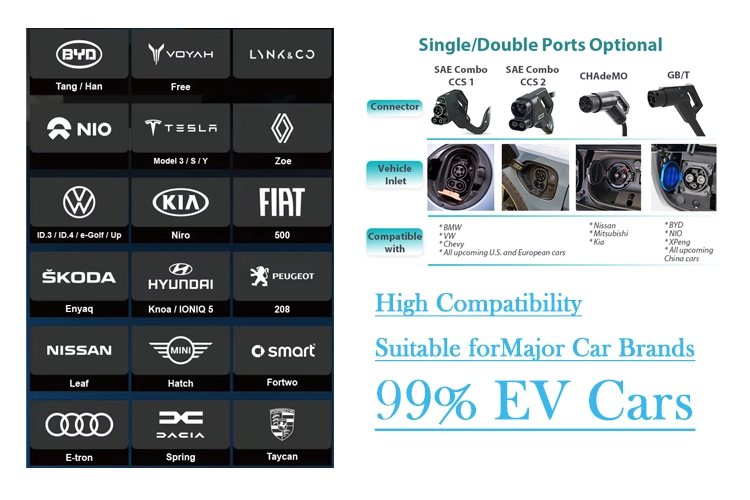
The Dual EV Charger from anengjienergy offers high adaptability to meet the charging needs of diverse electric vehicles worldwide. Equipped with CCS1, CCS2, GBT, and CHAdeMO connectors, it is designed to serve 99% of electric vehicle models on the market, making it the ideal solution for commercial charging stations, fleet operators, and public charging networks.
Multiple Plug Standards – Supports CCS1, CCS2, GBT, and CHAdeMO for maximum compatibility.
Universal Charging Capability – Covers almost all EV brands and models in North America, Europe, Asia, and other regions.
High Power Output – Ensures fast charging speeds for both passenger and commercial EVs.
Durable & Weather-Resistant – Built for reliable performance in various environmental conditions.
Smart Management System – Enables remote monitoring, billing, and usage statistics.
As a professional EV charger manufacturer, anengjienergy provides customized dual charging solutions tailored to your project needs. Our chargers meet international safety certifications such as CE and TUV, ensuring stable, efficient, and safe charging operations.
Whether you need a public fast charging station, a commercial fleet solution, or a customized EV infrastructure plan, the Dual EV Charger High Adaptability delivers performance, versatility, and long-term value.
High-Quality 480V EV Charger
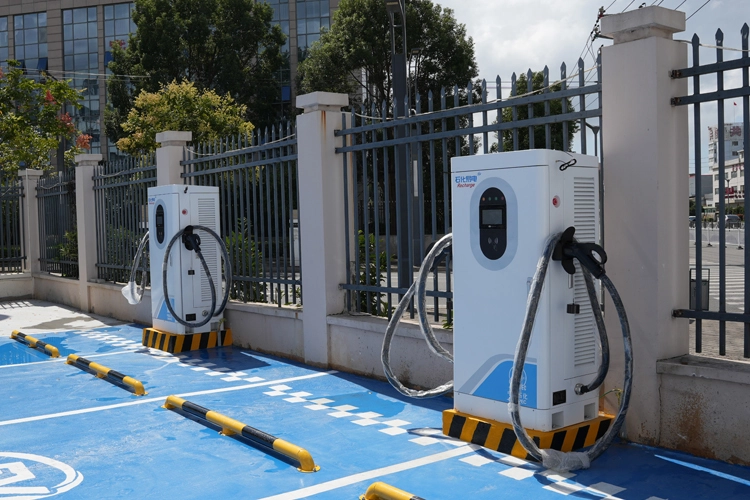
Our 480V EV chargers are engineered for high-performance commercial and industrial use, delivering efficient and reliable charging for electric vehicles of various models. Equipped with OCPP 1.6 protocol, these chargers ensure seamless integration with different charging networks and management platforms.
Manufactured in strict compliance with international standards, each unit has passed CE และ TÜV certifications, guaranteeing safety, durability, and energy efficiency. We also work closely with customers to support additional certifications based on regional or project requirements, ensuring full compliance in your target markets.
Whether for public charging stations, fleet operations, or high-demand commercial sites, our 480V EV chargers provide fast, stable, and intelligent charging solutions that meet global market needs.
Charging Station Management
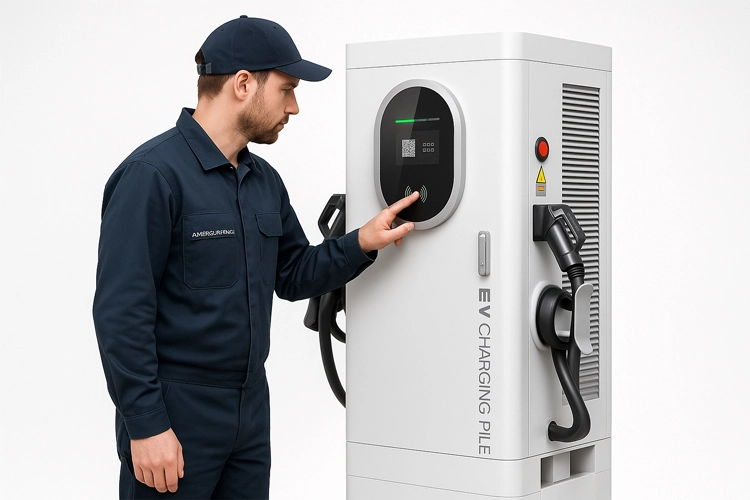
Our intelligent charging station management system allows operators to monitor, control, and optimize their EV charging infrastructure with ease. The platform offers real-time data tracking, remote diagnostics, and automated alerts, ensuring smooth operation and reducing downtime.
With a user-friendly interface, maintenance becomes simple and efficient, enabling quick troubleshooting and minimal on-site intervention. Operators can easily manage pricing, user access, and energy distribution, ensuring maximum utilization and profitability.
Whether for public networks or private fleets, our smart management solution provides the tools you need for easy maintenance and seamless operations.
Service of 480 Volt 3 Phase EV Charger
Our 480 Volt 3 Phase EV Charger service ensures your charging stations remain in peak operating condition. We offer professional installation, regular inspections, and preventive maintenance to maximize uptime and extend equipment lifespan.
With expertise in OCPP integration, fault diagnostics, and firmware upgrades, our technicians can quickly resolve issues and optimize charger performance. We also assist with certifications and compliance to meet local and international standards.
Whether for commercial, fleet, or public charging stations, our service packages provide reliable support, minimizing downtime and protecting your investment.
Custom Commercial EV Charging Station
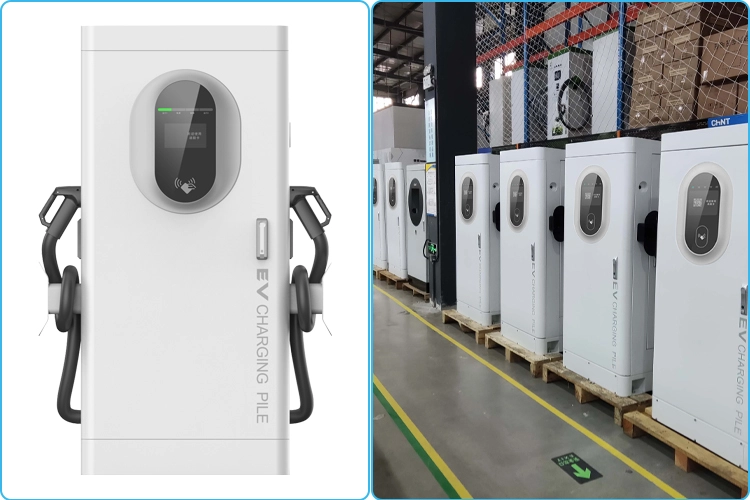
Our custom commercial EV charging station solutions are designed to meet the unique needs of businesses, fleets, and public charging networks. From AC to high-power DC fast chargers, we offer flexible configurations with OCPP 1.6/2.0 compatibility, load balancing, and smart payment systems.
We provide tailored designs, supporting different power levels, plug standards (Type 1, Type 2, CCS, CHAdeMO, GB/T), and branding customization. Our engineering team ensures compliance with CE, TUV, UL, and other certifications to match your target market.
Whether you need wall-mounted units, pedestal chargers, or multi-gun fast charging hubs, we deliver turnkey solutions from design and manufacturing to installation and after-sales support.

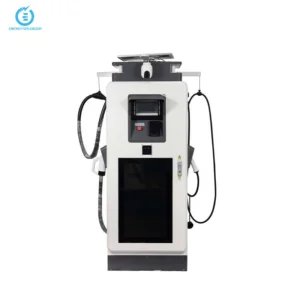

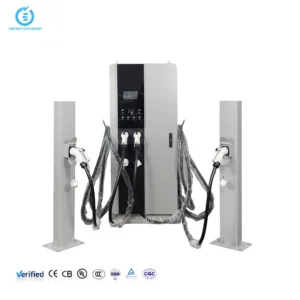
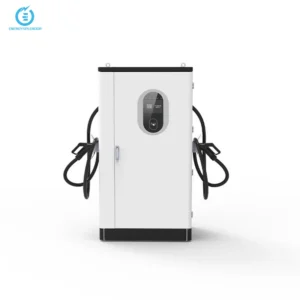
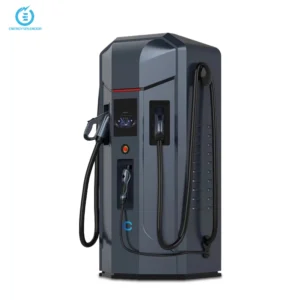


As a charging station contractor, we’ve been using the 3 phase EV chargers from this supplier for multiple commercial projects, and the performance has been outstanding. The fast charging speed significantly reduces waiting times, making them ideal for high-traffic locations like shopping malls and fleet depots.
The build quality is solid, with CE and TUV certifications ensuring safety and compliance for our European clients. Installation is straightforward, and the compatibility with various plug standards (Type 2, CCS, CHAdeMO) makes it easy to serve different EV models.
From a business perspective, the reliability of these chargers helps minimize maintenance costs and ensures uninterrupted service for end-users. Our customers appreciate the consistent performance and smart management features, which allow remote monitoring and easy fault detection.
If you’re a charging station operator, product distributor, or engineering contractor looking for a dependable, high-efficiency solution, this 3 phase EV charger is definitely worth recommending.
As a commercial EV charging station operator, we have been using the 480V EV charger for several months, and it has exceeded our expectations. The high-voltage 480V three-phase design ensures ultra-fast charging speeds, significantly reducing vehicle downtime and increasing customer turnover at our stations.
From an engineering standpoint, the build quality is robust, and the charger operates reliably under heavy daily usage. The unit supports OCPP 1.6, making it easy to integrate into our existing charging management system for real-time monitoring, remote diagnostics, and smart billing.
We also appreciate that the charger meets CE and TUV certifications, which reassures our customers and helps us comply with international safety and quality standards. Our installation team noted that the setup was straightforward, with clear technical documentation and responsive technical support.
Overall, the 480V EV charger is a high-performance solution perfectly suited for commercial, fleet, and industrial applications, helping us offer faster, safer, and more efficient EV charging services to our clients.
As a charging station operator, we have deployed this 480V car charger across multiple commercial projects with outstanding results. The high-voltage design supports ultra-fast charging, effectively reducing vehicle wait times and increasing throughput at our charging stations. The charger is compatible with a wide range of EV models, meeting diverse market demands and ensuring broad applicability.
From an installation and engineering perspective, the unit is robust and durable, certified by CE and TUV standards, guaranteeing safety and quality. It supports the OCPP 1.6 protocol, enabling seamless integration with backend management systems for remote monitoring, smart billing, and fault diagnosis, which greatly reduces maintenance costs.
Additionally, the charger operates reliably with excellent heat dissipation, suitable for high-intensity continuous use. Our technical team has found installation straightforward, and the supplier provides timely and effective after-sales support. Overall, this 480V car charger delivers an efficient, safe, and reliable charging solution, making it an ideal choice for commercial and industrial-grade EV charging stations.
As a commercial EV charging station operator, we have integrated the 480 Volt EV charger into multiple projects with excellent results. The three-phase 480V input enables ultra-fast charging, significantly reducing vehicle downtime and improving throughput at busy locations like fleet depots and retail centers. Its robust construction meets CE and TUV certifications, ensuring safety and reliability under continuous heavy use.
The charger supports OCPP 1.6 protocol, allowing smooth backend integration for real-time monitoring, remote diagnostics, and efficient billing management. Compatibility with a broad range of EV models and plug types makes it flexible for diverse user needs. Our installation team found it straightforward to set up, and responsive technical support helped resolve any minor issues quickly.
Overall, the 480 Volt EV charger delivers a high-performance, scalable, and reliable solution for commercial EV charging infrastructure. It helps us maintain superior service quality, reduce maintenance costs, and future-proof our charging stations as EV adoption grows.
We recently deployed Level 3 EVSE units across several fast-charging hubs, and the performance has been exceptional. These DC fast chargers provide rapid energy delivery—up to 350 kW—dramatically reducing charging times for EV drivers. The units support multiple fast charging standards including CCS and CHAdeMO, ensuring broad compatibility with various EV brands.
From an installation perspective, the Level 3 EVSE’s modular design simplifies setup and maintenance, which helps reduce downtime and operational costs. The equipment is built to endure harsh outdoor conditions with robust enclosures and advanced thermal management systems, guaranteeing reliable performance even under heavy daily use.
Integrated OCPP protocol support enables real-time remote monitoring, user authentication, and efficient billing management, streamlining operations for station operators. Our customers appreciate the fast, reliable charging experience, which increases user satisfaction and repeat visits.
Overall, this Level 3 EVSE solution offers high power, flexibility, and durability—making it an ideal choice for commercial fast-charging stations and fleet operators looking to deliver premium charging services.
As a charging station operator, we have deployed Level 3 charging stations at multiple fast-charging hubs with impressive results. These DC fast chargers deliver up to 350kW of power, significantly reducing EV charging times and enhancing user satisfaction. The stations support both CCS and CHAdeMO protocols, ensuring compatibility with a wide range of electric vehicles on the market, which makes it convenient for diverse users.
From an installation and maintenance perspective, the Level 3 chargers feature a modular design that simplifies on-site setup and reduces downtime and operational costs. Their rugged enclosures and efficient thermal management systems guarantee stable performance under harsh weather conditions and heavy usage.
Additionally, the smart management system supports the OCPP protocol, enabling efficient backend monitoring, user authentication, and billing processes. Our clients report that this solution is reliable and has improved the operational efficiency and service quality of our commercial charging stations.
Overall, Level 3 charging stations are an ideal choice to meet the demands of commercial fast charging, helping to accelerate EV adoption and improve customer experience.
How Long Does It Take To Charge An Electric Car?
| Charger Type | Power Output | Typical Charging Speed | Approximate Time to Full Charge* |
|---|---|---|---|
| ระดับ 1 (AC) | 1.4 kW (120V) | ~4–5 miles range per hour | 12–24+ hours (home/overnight) |
| ระดับ 2 (AC) | 7–22 kW (240V) | ~20–60 miles range per hour | 3–8 hours |
| DC Fast Charger | 50–350+ kW (480V) | 100–300+ miles range per 30 minutes | 20–60 minutes (to 80% charge) |
*Charging speed depends heavily on the EV’s onboard charger, battery capacity, and state of charge.
Battery Size (kWh): Larger batteries take longer to charge.
State of Charge (SoC): Charging slows down as the battery approaches full capacity.
Charger Power Rating: Higher power chargers reduce charging time but require compatible EVs.
Temperature & Battery Management: Cold batteries may charge slower due to thermal management.
Vehicle’s Onboard Charger Limits: Maximum AC charging rate depends on the vehicle’s built-in charger.
A Tesla Model 3 (approx. 75 kWh battery):
Level 2 charger (11 kW): ~7 hours full charge
DC fast charger (150 kW): ~30 minutes to 80% charge
A Nissan Leaf (40 kWh battery):
Level 2 charger (7 kW): ~5–6 hours full charge
DC fast charger (50 kW): ~40 minutes to 80% charge
Level 2 AC chargers are ideal for workplaces, retail, and multi-family properties where cars park for several hours.
เครื่องชาร์จไฟฟ้ากระแสตรงแบบเร็ว suit highway stops, fleet depots, and commercial hubs needing rapid turnaround.
Charging time planning is critical for infrastructure design and user experience optimization.
How Much Does 480v 3 Phase EV Charger Cost To Charge An Electric Vehicle?
The primary cost is the electricity price, usually measured in cents per kilowatt-hour (kWh).
Commercial electricity rates vary by location and utility but typically range between:
$0.10 to $0.30 per kWh in the U.S.
Industrial rates for 480V 3-phase supply may be lower or have demand charges.
Charging losses typically range from 5% to 15% depending on charger quality and battery management.
Effective energy consumed = Battery capacity (kWh) / (1 – Loss %)
Suppose an EV battery capacity is 75 kWh (like Tesla Model 3).
Assume charging efficiency of 90% (10% loss).
Electricity rate: $0.15/kWh.
Energy needed=75 kWh0.9=83.3 kWh\text{Energy needed} = \frac{75 \text{ kWh}}{0.9} = 83.3 \text{ kWh}Energy needed=0.975 kWh=83.3 kWh Charging cost=83.3 kWh×0.15=$12.50\text{Charging cost} = 83.3 \text{ kWh} \times 0.15 = \$12.50Charging cost=83.3 kWh×0.15=$12.50
Demand charges: For commercial 3-phase setups, utilities may charge based on peak power usage, increasing operational costs.
Network & service fees: Some commercial chargers include subscription or transaction fees (e.g., $0.10–$0.30 per kWh or flat session fees).
Maintenance & amortized equipment costs: For business ROI, include hardware depreciation, installation, and upkeep costs.
| Cost Element | Typical Range | Notes |
|---|---|---|
| Electricity Rate | $0.10–$0.30 per kWh | Varies by utility and contract |
| Charging Efficiency Loss | 5%–15% | Reduces effective energy delivered |
| Demand Charges | Variable | Depends on peak load and utility tariffs |
| Network Fees | $0–$0.30 per kWh or flat | Optional, depends on charging network |
Electricity rate negotiation with utilities is critical for controlling operational costs of 480V 3-phase charging stations.
Smart load management can minimize demand charges.
Include network fees and maintenance in your commercial pricing models.
Charging costs at 480V 3-phase DC fast chargers typically range $10–$20 for a full charge of a mid-size EV, depending on rates and fees.
What are the advantages of a 480 volt 3 phase EV charger?
Supports fast and ultra-fast charging (typically 30 kW up to 350+ kW DC chargers).
Enables quick turnaround times for commercial fleets, retail, and highway charging hubs.
Reduces charging time significantly compared to single-phase chargers.
3-phase power balances load across three conductors, improving electrical efficiency.
Minimizes voltage drop and energy losses during charging.
Supports stable and continuous power delivery for high-demand charging.
Ideal for multi-port charging stations serving multiple vehicles simultaneously.
Facilitates load management and power sharing among connected chargers.
Compatible with smart grid and demand response systems to optimize energy use.
Matches standard industrial/commercial power supplies, simplifying installation.
Compatible with existing 480V 3-phase service common in commercial buildings and warehouses.
Enables easier utility coordination and reduces additional infrastructure costs.
Powers Level 2 AC chargers (up to ~22 kW per port) efficiently.
Powers DC fast chargers that require 3-phase AC input to convert internally to DC.
Versatile for different EV charging solutions in one location.
Commercial-grade 480V 3-phase chargers often come with robust build quality.
Designed for continuous heavy usage in demanding environments.
Better thermal management for longer charger lifespan.
| Advantage | Benefit |
|---|---|
| High power output | Fast charging, shorter downtime |
| Electrical efficiency | Lower losses, cost savings |
| Commercial grid compatibility | Simplified installation & scaling |
| Multi-vehicle support | Increased throughput & revenue |
| Flexibility (AC/DC) | Supports wide EV compatibility |
| Robustness & durability | Reliable operation, less maintenance |
How Many kWh to Charge an Electric Car?
EV batteries typically range from 20 kWh (small cars) up to 100+ kWh (large SUVs and performance vehicles).
Examples:
Nissan Leaf: ~40 kWh battery
Tesla Model 3 Standard Range: ~55 kWh
Tesla Model S Long Range: ~100 kWh
Charging from 0% to 100% requires energy roughly equal to the battery capacity plus charging losses.
Charging from 20% to 80% (typical fast charging range) requires less energy proportionally.
Energy loss during charging is typically 5%–15% depending on charger quality, cable length, and battery management systems.
Effective energy input needed = Battery size ÷ (1 – loss %)
| EV Model | Battery Size (kWh) | Charging Loss (%) | Effective Energy Needed (kWh) |
|---|---|---|---|
| Nissan Leaf | 40 | 10% | 44 |
| Tesla Model 3 | 55 | 10% | 61 |
| Tesla Model S | 100 | 10% | 111 |
To fully charge an EV, you generally need to supply energy equal to or slightly more than the battery’s rated capacity (kWh) due to losses.
For partial charges (e.g., fast charging to 80%), calculate proportionally.
Accurate kWh estimates help plan energy supply, demand management, and billing for commercial charging stations.
What is a 480 Volt 3-Phase EV Charger?
A 480 Volt 3-Phase EV Charger is a commercial-grade electric vehicle charging station designed to operate on a three-phase electrical power supply at 480 volts. This setup is common in industrial and commercial buildings, enabling the delivery of higher power levels necessary for fast and efficient EV charging.
Three-Phase Power Supply:
Uses three alternating currents offset in phase, providing a more stable and efficient power delivery than single-phase systems.
High Voltage (480 V):
Enables fast charging with power outputs typically ranging from 7 kW (Level 2 AC) up to 350 kW+ (DC fast chargers).
Commercial & Industrial Use:
Ideal for workplaces, fleet depots, shopping centers, highway rest stops, and multi-unit residential complexes.
Supports Both AC and DC Chargers:
Level 2 AC chargers use 480V 3-phase input to deliver up to ~22 kW per port.
DC fast chargers convert 3-phase AC input to DC internally for rapid charging.
Load Balancing & Smart Charging:
Often integrated with smart management systems to optimize power distribution and reduce demand charges.
| Benefit | Explanation |
|---|---|
| High Power Delivery | Enables fast and efficient charging sessions |
| Energy Efficiency | Balanced load reduces losses and improves stability |
| Infrastructure Compatibility | Matches common commercial electrical setups |
| Scalable Deployment | Supports multiple chargers and smart energy management |
| Durability & Reliability | Designed for heavy commercial use environments |
What is a Type 3 EV Charger?
Type 1: Single-phase AC connector (mainly used in North America and Japan), usually a 5-pin SAE J1772 plug.
Type 2: Three-phase AC connector (widely used in Europe and increasingly globally), standardized by IEC 62196-2, with 7 pins.
Type 3 was originally a European standard (France and Italy), defined by a special connector with an additional shutter for safety, known as Type 3A or Type 3C.
It was designed for single-phase or three-phase AC charging but never gained widespread adoption.
The standard has largely been phased out in favor of the Type 2 connector across Europe and other markets.
The term “Type 3 EV charger” is rarely used today in commercial or industrial EV charging.
Most commercial and public charging stations use Type 2 connectors for AC charging or CCS/CHAdeMO for DC fast charging.
Some confusion arises because in some regions “Type 3” refers to combined charging systems (CCS) or other proprietary connectors, but this is non-standard.
| Aspect | Details |
|---|---|
| Type 3 | Mostly obsolete European AC charging connector |
| Replaced by | Type 2 connector as EU and global standard |
| Current relevance | Very limited; focus on Type 2 (AC) and CCS/CHAdeMO (DC) for commercial deployment |
| Recommendation | For commercial projects, specify Type 2 and CCS/CHAdeMO connectors instead |
ค้นพบเพิ่มเติม
ผลิตภัณฑ์สถานีชาร์จรถยนต์ไฟฟ้า
ยินดีต้อนรับสู่การสื่อสาร